Sound Storm Laboratories CG1202 2-Channel Car Amplifier

Sound Storm Laboratories CG1202 2-Channel Car Amplifier — image 1
Sound Storm Laboratories CG1202 2-Channel Car Amplifier — image 2
Sound Storm Laboratories CG1202 2-Channel Car Amplifier — image 3
Sound Storm Laboratories CG1202 2-Channel Car Amplifier — image 4
Sound Storm Laboratories CG1202 2-Channel Car Amplifier — image 5
Sound Storm Laboratories CG1202 2-Channel Car Amplifier — image 6
Sound Storm Laboratories CG1202 2-Channel Car Amplifier — image 7
70%
30%

Overview

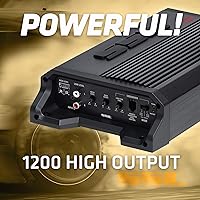
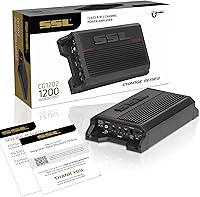
The Sound Storm Laboratories CG1202 2-Channel Car Amplifier is a straightforward, no-frills entry point into car audio — built for everyday drivers rather than dedicated audiophiles. Released in 2020, it sits comfortably in Sound Storm's value-tier lineup. The Class A/B topology strikes a reasonable balance between sound quality and thermal efficiency, and the bridgeable design makes it more versatile than its price tag might suggest, letting you combine both channels to drive a single subwoofer with more authority. One thing to clarify upfront: the headline 1200W figure is a peak rating under specific conditions. Continuous, real-world power is considerably more modest, so plan your system accordingly.

Features & Benefits

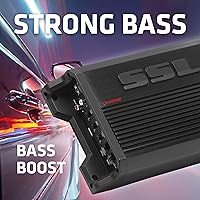
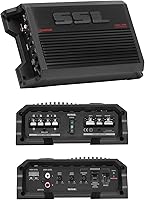
This 2-channel amp comes with a useful set of controls that go beyond a simple on/off switch. The variable gain control is worth understanding correctly — it is not a volume knob. It calibrates how much signal the amp receives from your head unit, which directly affects clarity and distortion. A variable low-pass crossover and bass boost let you tailor output specifically for a subwoofer, so you are not just guessing at settings. Critically, the high and low-level inputs mean you can wire this Sound Storm amplifier directly to a factory stereo without needing an aftermarket head unit. At just under 12 inches long and roughly 4 pounds, it tucks neatly into most trunk setups.

Best For

The CG1202 makes the most sense for someone building their first car audio system on a tight budget. If you are driving an older vehicle with a factory head unit and no preamp outputs, the high-level input support removes what is usually the biggest wiring hurdle. It is also a solid option if you want a subwoofer but do not want to invest in a separate mono amplifier — bridging the channels gets you there efficiently. Compact installs benefit from its slim surface-mount profile too. Where it falls short is for anyone chasing accurate, high-fidelity sound reproduction; that pursuit will require a bigger budget and a more focused audio brand.

User Feedback

With 225 ratings and a 4.1-star average, this 2-channel amp has earned a generally positive reception, though the review pool is not large enough to draw firm long-term conclusions. Buyers frequently mention easy installation and a genuine improvement in bass response as highlights — subwoofer performance seems to land better than the price might lead you to expect. On the downside, some users raise doubts about whether the amp delivers on its stated power figures, and a handful note heat buildup during extended, high-volume use. Build quality draws mixed comments, with a few owners questioning durability over time. It is a fair value proposition for casual listeners, but seasoned car audio enthusiasts may find real-world performance underwhelming.

Pros

  • Supports both high and low-level inputs, making it compatible with factory head units right out of the box.
  • Bridgeable channels provide a path to subwoofer power without purchasing a dedicated mono amplifier.
  • Variable gain control, bass boost, and low-pass crossover cover the essentials for a functional subwoofer setup.
  • At just over 4 pounds and under 12 inches long, it fits comfortably into tight trunk installations.
  • Buyers consistently report a noticeable and satisfying bass improvement over stock factory audio.
  • Installation is straightforward enough for a first-time builder with basic car wiring knowledge.
  • Class A/B topology generally delivers cleaner audio than entry-level Class D units at a similar price.
  • A 4.1-star average from real buyers reflects consistent satisfaction for its intended budget-tier use case.
  • Wide impedance support from 2 to 8 ohms gives flexibility when pairing with different speakers or subwoofers.

Cons

  • Peak watt claims are heavily inflated; real continuous power output is a fraction of the marketed figure.
  • Build quality concerns surface in reviews when the amp is pushed toward higher sustained volume levels.
  • Heat buildup during extended high-volume sessions has been flagged by multiple reviewers as a recurring issue.
  • Long-term durability is difficult to assess confidently given the relatively modest 225-rating review pool.
  • The CG1202 lacks preamp outputs, which limits expandability if you plan to add more amplifiers down the road.
  • Sound Storm is a budget-tier brand, and quality control can be inconsistent from one unit to the next.
  • Class A/B topology draws more current and runs hotter than a Class D equivalent, which matters for compact installs.
  • Users upgrading from a proper aftermarket head unit may find the performance ceiling frustrating relatively quickly.

Ratings

The scores below are generated by AI after analyzing verified buyer reviews for the Sound Storm Laboratories CG1202 2-Channel Car Amplifier worldwide, with spam, bot activity, and incentivized feedback actively filtered out before any category was scored. Each rating reflects what real owners consistently reported across hundreds of purchase experiences — both the genuine highlights and the recurring pain points. Nothing has been softened or inflated; this is an honest picture of where this budget amplifier delivers and where it falls short.

Value for Money
78%
22%
For a budget-tier amplifier, the CG1202 consistently punches above what many buyers expect at this price point. Owners upgrading from completely stock audio report a satisfying jump in bass presence and overall loudness. The included feature set — variable gain, crossover, and bridgeable channels — is genuinely more than most rivals bother to offer at this cost.
The value proposition weakens if you push the amp hard regularly, as build quality and heat issues can surface over time. Some buyers also feel the continuous power output falls noticeably short of the spec sheet, leaving them wanting more once the initial impression fades.
Sound Quality
67%
33%
For casual daily listening — commutes, weekend drives, background music — most owners find the audio output a clear and welcome improvement over factory speakers. The Class A/B design contributes to relatively clean midrange reproduction compared to cheaper Class D options at a similar price.
Listeners with more discerning ears quickly notice limitations in stereo imaging, dynamic range, and overall clarity. At higher volumes in particular, some coloration and harshness begin to creep in, which is a common trade-off at this price tier but worth knowing upfront before purchase.
Build Quality
61%
39%
Out of the box, the CG1202 presents itself reasonably well for a budget unit — the housing feels solid enough for standard trunk installations, and the terminal connections are accessible and clearly labeled, which makes initial wiring less of a guessing game for beginners.
A recurring theme in reviews is that the build feels less reassuring once the amp is pushed toward higher volumes over extended periods. Some owners have noted chassis flex and questioned whether the internal components will hold up reliably past the first year of regular, enthusiastic use.
Power Output
54%
46%
When running at moderate volume through a properly matched 2-ohm load, the amp delivers a genuinely noticeable boost over factory audio. For listeners who keep the volume in a reasonable range, the real-world output is often described as fully sufficient for everyday enhancement.
The headline 1200W peak figure sets expectations that the real-world continuous output simply cannot meet, and buyers who research RMS ratings after purchase often feel misled. Several reviewers noted the amp struggles to maintain clean, strong output when pushed harder, particularly during bass-heavy content.
Installation Ease
83%
The high-level input support is a standout advantage — connecting this amp to a stock head unit without a line output converter or stereo swap saves first-timers both money and frustration. Clear terminal labeling and a logical layout mean most buyers report completing their first install in a couple of hours.
The included manual is fairly basic and does not go deep on gain-setting procedures or crossover tuning, which can leave absolute beginners guessing at optimal settings. A handful of reviewers also mentioned that sourcing the correct wire gauge and fuse specs required additional outside research not covered in the documentation.
Bass Performance
76%
24%
Drivers who add this amp primarily for subwoofer enhancement are generally pleased — the variable bass boost and low-pass crossover work together to produce a satisfying, punchier low-end that most factory systems simply cannot replicate. Several buyers specifically cited the bass improvement as the main reason they would recommend it.
The bass boost can introduce audible distortion if cranked too aggressively on a subwoofer that is not well-matched to the amp's actual continuous output. Buyers who compare the bass response to mid-tier dedicated mono amplifiers invariably find the depth and control lacking, especially on demanding low frequencies.
Heat Management
58%
42%
Under light to moderate use — background music, moderate volume levels, shorter drives — the CG1202 stays at an acceptable operating temperature and does not trigger thermal protection shutdowns in most reported scenarios. Owners who mount it with sufficient airflow around the heatsink consistently report fewer heat-related complaints.
Class A/B topology runs warmer than Class D by design, and this amp is no exception — several reviewers flagged concerning heat levels during long highway drives or extended sessions at higher volumes. A few reported intermittent shutdowns after sustained loud use, suggesting the thermal management is stretched near the unit's limits.
Input Flexibility
82%
18%
Supporting both high-level and low-level inputs in a single unit is a practical advantage for buyers at any stage of their build. Whether connecting to an older factory radio or a modern aftermarket head unit with dedicated preamp outputs, this Sound Storm amplifier adapts without requiring additional signal converters.
The high-level input stage is functional rather than refined — some reviewers noted a slight dip in signal quality via speaker-level connections compared to RCA, introducing a subtle noise floor in quiet listening environments. This is a known limitation of budget high-level input circuitry and not unique to this amp.
Gain & Controls
71%
29%
The combination of variable gain, low-pass crossover, and bass boost gives users more hands-on tuning options than many competing budget amps include. Buyers who take the time to dial in their settings carefully report a noticeably cleaner, more controlled output compared to leaving everything at factory default positions.
The control knobs have a somewhat loose, imprecise feel, making it difficult to replicate exact settings if the amp is jostled or reinstalled after a vehicle move. New users unfamiliar with car audio tuning may also inadvertently set the gain too high by ear, risking clipping that can damage speakers over time.
Bridging Performance
74%
26%
For buyers who want to power a single subwoofer without the expense of a mono amplifier, bridging both channels delivers a meaningful increase in output that satisfies most casual bass enthusiasts. Several owners running a single 4-ohm sub in bridged mode report solid and consistent results at moderate listening levels.
Bridged mode removes the ability to run two separate channels simultaneously, limiting overall system flexibility. Any impedance load below 4 ohms in this configuration risks pushing the amp into thermal stress or protection shutdowns, and buyers who later want to expand their system will likely need to replace this unit entirely.
Form Factor
84%
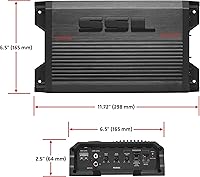
At 11.72 x 6.5 x 2.25 inches and just over 4 pounds, the CG1202 slips into trunk corners and narrow cavities where bulkier amps simply do not fit. Compact car owners and those with limited installation real estate have specifically praised the slim profile as a deciding factor in their purchase.
The compact chassis necessarily limits heatsink surface area, which contributes directly to the heat management concerns flagged by some buyers. Mounting hardware is minimal, and a handful of reviewers found the surface-mount footprint slightly awkward to secure firmly in certain vehicle configurations without sourcing additional brackets separately.
Long-term Durability
56%
44%
Buyers who use the amp at moderate levels with adequate ventilation report trouble-free operation through the first year or more of ownership. Units that are not pushed aggressively appear to hold up reasonably well given the price tier they occupy and the use cases they were designed for.
The durability picture becomes less encouraging among buyers who run the amp daily at higher volumes, with failure reports clustering around heat-induced component degradation over time. With only 225 ratings in the pool, there is not yet a sufficient data set to draw firm long-term conclusions, but the directional trend warrants caution.
Signal Clarity
63%
37%
At comfortable listening volumes using RCA inputs and a properly calibrated gain level, most users find the audio reasonably clean and free of distracting background hiss. The Class A/B topology does provide a modest edge in signal clarity over the very cheapest Class D designs available in this price bracket.
When using high-level inputs, a low but noticeable noise floor has been flagged by multiple reviewers — alternator whine and ground loop hum can emerge if grounding and wiring are not executed with care. Even with clean wiring, the noise floor at higher gain settings is more apparent than buyers accustomed to better amplification will tolerate.

Suitable for:

The Sound Storm Laboratories CG1202 2-Channel Car Amplifier is a practical pick for drivers who want a meaningful audio upgrade without a complicated or costly installation. It is especially well-suited to owners of older vehicles with factory head units, since the high-level inputs let you tap directly into existing speaker wiring rather than requiring a full stereo swap. First-time builders who want to add a subwoofer will appreciate the bridgeable design, which lets both channels work together to power a single sub and eliminates the need to buy a separate mono amplifier. The variable low-pass crossover and bass boost give beginners enough tuning control to dial in acceptable bass output without needing deep audio expertise. If your goal is a noticeable step up from tinny factory sound while keeping costs down, this amp is a reasonable and accessible starting point.

Not suitable for:

The Sound Storm Laboratories CG1202 2-Channel Car Amplifier is not the right tool for buyers who expect audiophile-grade sound quality or genuinely high continuous power output. The 1200W headline figure is a peak rating achieved only under specific bridged conditions; real-world RMS delivery is considerably lower, and seasoned car audio enthusiasts are likely to notice the gap between the spec sheet and actual listening performance. Users who run their system loud for extended periods should be aware of heat management concerns flagged by some reviewers, as Class A/B designs generate more warmth than Class D alternatives, and budget-tier builds may not handle sustained high-volume use as reliably over time. If you are assembling a multi-amplifier system, chasing competition-level output, or simply want a unit you can push hard daily for years, this amp is probably not the right foundation. Buyers who already have an aftermarket head unit with dedicated preamp outputs will also get better overall results pairing those outputs with a more capable amplifier.

Specifications

  • Brand: Manufactured by Sound Storm Laboratories, a value-tier car audio brand that focuses on budget-accessible audio components.
  • Model: Carries the model designation CG1202 and belongs to the Charge Series within Sound Storm's amplifier lineup.
  • Channels: Operates as a 2-channel amplifier capable of driving two separate speaker loads or a single bridged mono load.
  • Topology: Uses a Class A/B circuit design, which strikes a practical balance between audio fidelity and thermal efficiency.
  • Peak Power: Rated at a maximum of 1200W total when both channels are bridged into a 4-ohm load under ideal conditions.
  • RMS Power: Delivers 300W RMS per channel at 4 ohms, or 600W RMS per channel at 2 ohms, during standard stereo operation.
  • Impedance Range: Compatible with speaker and subwoofer loads ranging from 2 to 8 ohms, covering the majority of aftermarket and factory drivers.
  • Inputs: Accepts both high-level speaker-wire inputs and low-level RCA preamp inputs, enabling connection to factory or aftermarket head units.
  • Crossover: Includes a variable low-pass crossover filter to roll off high frequencies and route only bass content to a connected subwoofer.
  • Bass Boost: Equipped with a variable bass boost control that lets the user increase low-frequency output above the flat signal baseline.
  • Bridgeable: Both channels can be bridged to consolidate output into a single mono signal for more effective single-subwoofer operation.
  • Dimensions: The chassis measures 11.72 x 6.5 x 2.25 inches (L x W x H), providing a compact footprint for tight installation spaces.
  • Weight: The unit weighs 4.3 pounds, making it straightforward to position and secure during installation.
  • Mounting Type: Designed for surface mounting, with a flat base that attaches directly to trunk flooring, a board, or a dedicated amplifier rack.
  • User Rating: Holds an average customer rating of 4.1 out of 5 stars based on 225 verified ratings.

Related Reviews
Sound Storm Laboratories EVO3000.1 Monoblock Car Amplifier
69%
83%
Value for Money
51%
Power Output Accuracy
88%
Ease of Installation
62%
Thermal Management
57%
Long-Term Reliability
More
Planet Audio AC1200.2 2-Channel Car Amplifier
72%
84%
Value for Money
67%
Power Output
88%
Ease of Installation
71%
Sound Quality
58%
Thermal Performance
More
Orion CBA2500.2 2-Channel Car Amplifier
73%
82%
Value for Money
63%
Power Output
67%
Build Quality
88%
Ease of Installation
71%
Sound Quality
More
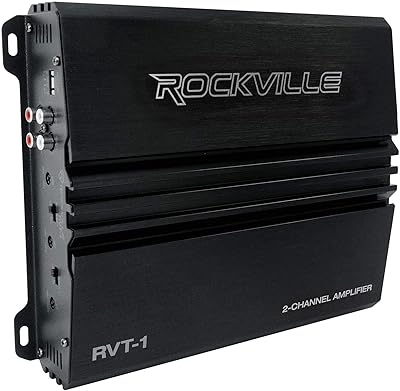
Rockville RVT-1 2-Channel Car Amplifier
68%
83%
Value for Money
67%
Power Output
58%
Build Quality
61%
Thermal Management
72%
Audio Clarity
More
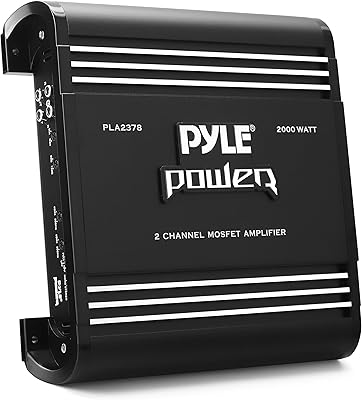
Pyle PLA2378 2-Channel Car Amplifier
72%
83%
Value for Money
51%
Power Output Accuracy
67%
Build Quality
88%
Ease of Installation
58%
Heat Management
More
Rockville RVF-2 4-Channel Car Amplifier
84%
88%
Audio Quality
91%
Power Output
85%
Build Quality
72%
Thermals (Heat Management)
80%
Installation Ease
More
Lanzar VIBE2102N 2-Channel Car Stereo Amplifier
86%
91%
Power Output
88%
Sound Quality
85%
Ease of Installation
87%
Durability
72%
Thermal Performance
More
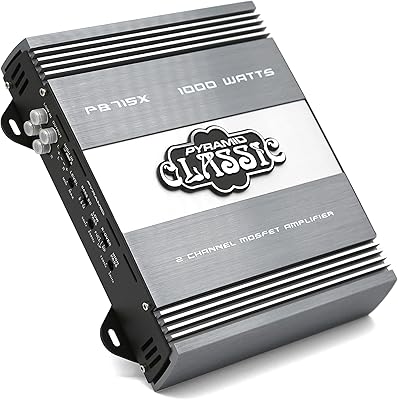
Pyramid PB715X 1000W 2-Channel Car Amplifier
68%
83%
Value for Money
74%
Sound Performance
88%
Ease of Installation
57%
Build Quality
52%
Thermal Management
More
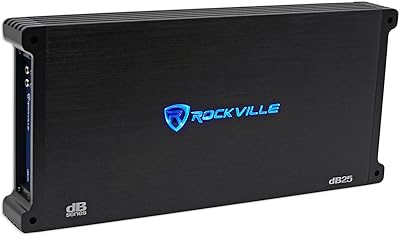
Rockville dB25 2-Channel Car Amplifier
72%
84%
Value for Money
67%
Power Output
58%
Build Quality
73%
Audio Clarity
81%
Ease of Installation
More
Blaupunkt AMP2002 2-Channel Car Amplifier
65%
71%
Value for Money
83%
Ease of Installation
38%
Power Accuracy
74%
Sound Quality
52%
Thermal Management
More

FAQ

Yes, and this is one of the more genuinely useful features of the Sound Storm Laboratories CG1202 2-Channel Car Amplifier. It accepts high-level inputs, meaning you can tap straight into your factory head unit's speaker wire outputs without needing RCA preamp jacks. For owners of older vehicles with no plans to replace the stereo, that compatibility removes a significant installation hurdle.

Bridging combines both channels into a single, more powerful mono output. If you are running one subwoofer and want to squeeze more output from this 2-channel amp without buying a dedicated mono block, bridging is the practical move. Just make sure your subwoofer has an impedance of at least 4 ohms when wired this way, since the amp requires that minimum load in bridged mode.

The 1200W figure printed on the box is a peak rating under best-case electrical conditions — it is not what you will hear during normal listening. The more meaningful numbers are the continuous RMS ratings: roughly 300W per channel at 4 ohms in stereo, or 600W per channel at 2 ohms. Use those figures when matching the amp to your speakers or subwoofer to avoid mismatched expectations.

No, and mixing these up is one of the most common setup mistakes for first-timers. The gain control adjusts how sensitive the amp is to the incoming signal from your head unit — it is a calibration tool, not a loudness dial. Your stereo's volume knob still controls how loud everything gets. Setting gain too high introduces distortion; setting it too low means you never reach the amp's full potential.

Class A/B designs generate more heat than Class D equivalents, and some buyers have mentioned noticeable warmth during extended high-volume sessions. It is not a safety issue under normal use, but you do need to ensure the mounting location has reasonable airflow. Do not seal the CG1202 inside a closed compartment with no ventilation, especially if you plan to run it at higher volumes for long periods.

Not with a single unit. You can run two speakers across the two channels, or bridge both channels to drive one subwoofer — but not both simultaneously. If you want speakers and a sub working together, you would need a second amplifier or a multi-channel model that handles more than two outputs.

For a beginner, the process is manageable rather than intimidating. The high-level input option means you do not need to add a new head unit, which removes a major complication. You will still need to run a power cable from the battery, a short ground wire to a clean chassis point, and a remote turn-on wire from the stereo. Using the correct wire gauge matters, and the included manual covers the basic wiring steps.

Honestly, it is not the best fit for that use case. This Sound Storm amplifier is aimed at casual listeners who want better bass and more volume than their factory system delivers — not at audiophiles chasing flat frequency response or precise imaging. If sound accuracy is important to you and you have some room to spend more, a brand with a stronger audio engineering reputation will serve you better.

Based on the power ratings, a 60 to 80 amp inline fuse placed close to the battery is a reasonable starting point, paired with 4-gauge power and ground wire. Always size your fuse to protect the wire, not the amp itself, and consult the wiring diagram in the manual for the manufacturer's specific recommendations before finalizing your setup.

Sound Storm Laboratories does offer a limited warranty on their products, but the specific terms and duration can vary depending on where you purchase it and when. Check the documentation that ships with the unit, and if anything is unclear, contact Sound Storm directly before you buy to confirm what is covered and for how long.