
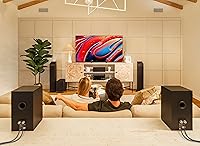
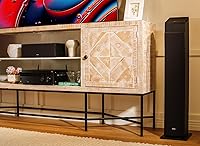
Overview

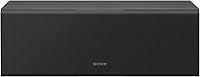
The Sony SS-CS8M2 2025 Center Channel Speaker is Sony's latest take on a component that most home theater buyers underestimate until they hear a poorly mixed system without one. The center channel handles the bulk of on-screen dialogue — it's the speaker that keeps voices anchored to the TV and out of the walls. This Sony center speaker sits comfortably in the mid-range segment, currently ranking among the top center channels on Amazon. Its 3-driver, 2-way configuration separates it from bare-bones single-driver alternatives, and it's designed to slot naturally into the CS-series family. That said, it's a dedicated center channel — not a stereo speaker, not a standalone unit.

Features & Benefits

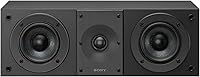
At the heart of this center channel speaker are two 3.94-inch woofers that share the load of reproducing midrange frequencies — the range where most human voices live. During a tense drama or a fast-moving action sequence, that dual-woofer setup gives the midrange extra body so dialogue doesn't get buried. A high-precision tweeter handles the upper registers, keeping consonants crisp and voices naturally placed behind the screen. The bass reflex enclosure does a solid job managing lower frequencies without adding the kind of bloat that blurs detail. Add a reinforced cellular cone that resists unwanted vibration and you get a speaker built to stay composed when the receiver is pushed hard. The 290-watt power handling also means it won't strain in larger rooms.

Best For

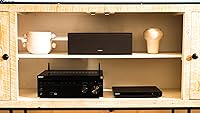
The Sony CS8M2 makes the most sense for someone building or expanding a 5.1 or 7.1 surround system, especially if they're already running other CS-series floor or bookshelf speakers. Matching timbres across your front soundstage matters more than most buyers realize — mismatched speakers create an audible seam between the center and the mains. It also fits well in apartments and mid-size rooms, given its compact, low-profile cabinet that slides easily under most flat-panel TVs. Dialogue-focused viewers — think binge-watchers, news junkies, and drama fans — will appreciate it most. And if you're leaving a soundbar behind for the first time, this Sony center speaker is a capable, non-intimidating entry into dedicated multi-channel audio.

User Feedback

With nearly 9,500 ratings and a 4.6-star average, buyer satisfaction here is hard to ignore. The most consistent praise is around how cleanly voices come through during scenes where music, effects, and dialogue all compete for the same sonic space — exactly what a center channel is supposed to fix. Users who already own other Sony CS-series speakers frequently mention how well the timbres align, avoiding that hollow, disconnected feeling between channels. On the critical side, some buyers wish it reached lower without a subwoofer, which is fair — the dual woofers help, but this isn't a bass-heavy speaker by design. A few reviewers also noted the grille and cabinet feel somewhat plasticky at this price point.

Pros

  • Dialogue clarity is noticeably strong, even during loud, effects-heavy movie scenes.
  • The 3-driver, 2-way design gives voices more presence than basic single-driver center channels.
  • Pairs naturally with other Sony CS-series speakers for a tonally consistent front soundstage.
  • Bass reflex enclosure keeps low-frequency reproduction clean and controlled without added distortion.
  • At nearly 9,500 ratings and a 4.6-star average, the track record of buyer satisfaction is hard to dismiss.
  • Compact cabinet dimensions make it easy to place under most flat-panel TVs without blocking the screen.
  • 290-watt power handling gives it comfortable headroom for mid-size rooms pushed at higher volumes.
  • Several buyers report it competes favorably with center channels sold at significantly higher prices.
  • Setup is straightforward — no complicated configuration required beyond standard speaker wire connections.
  • A genuinely capable entry point for first-time surround sound buyers stepping up from a soundbar.

Cons

  • Low-end extension is limited without a subwoofer, which is an added cost to factor into the budget.
  • Cabinet and grille materials feel somewhat plasticky relative to what the price point implies.
  • Sold as a single unit only — there is no bundled option if you need multiple speakers for a full system.
  • The published weight figures in product listings appear inconsistent, which raises minor questions about listing accuracy.
  • Drivers are relatively modest in diameter, which puts a ceiling on how far the sound projects in very large rooms.
  • Not a fit for music-focused listening — this speaker is optimized for movie and TV dialogue, not stereo imaging.
  • Buyers without an AV receiver or multi-channel amp will need to purchase that equipment separately before this speaker is usable.
  • The finish and build quality may disappoint anyone coming from premium speaker brands with better cabinet craftsmanship.

Ratings

The scores below for the Sony SS-CS8M2 2025 Center Channel Speaker were generated by our AI after systematically analyzing thousands of verified buyer reviews from global markets, with spam, bot-submitted, and incentivized feedback actively filtered out before scoring. Every category reflects the full picture — what real home theater owners praised most and where they ran into genuine frustration. Nothing is glossed over.

Dialogue Clarity
93%
This is the category where this center channel speaker genuinely pulls ahead of the competition in its class. Reviewers consistently describe voices as sharp, stable, and easy to follow even during chaotic action sequences where effects and music are competing hard for the same sonic space.
A small number of users in larger rooms with highly reflective surfaces noted that extreme high-frequency consonants could occasionally sound slightly forward at high volumes. It's a narrow complaint, but worth flagging for those with bare-wall, hard-surface listening rooms.
Value for Money
88%
Buyers repeatedly compare this Sony center speaker favorably to options priced significantly higher, and the consensus is that the performance-to-cost ratio is one of its strongest selling points. For a first dedicated center channel or a CS-series upgrade, most reviewers feel the investment is clearly justified.
A portion of critical reviewers feel the cabinet materials and grille quality don't fully match the price expectation — they'd expect a more premium physical finish at this tier. The sound justifies the cost for most, but the tactile experience of handling the cabinet is a weaker point.
Tonal Balance
84%
The 2-way, 3-driver configuration gives this Sony center speaker a more natural midrange presence than budget single-driver alternatives, and users who run it alongside matched CS-series front speakers report a cohesive, well-blended soundstage with no obvious frequency gaps in the critical vocal range.
Without a subwoofer, the lower registers feel noticeably thin during bass-heavy content. Buyers who expected the dual woofers to eliminate the need for a sub were disappointed — this speaker is tuned for dialogue-band performance, not full-range output.
Build Quality
71%
29%
The overall structure is solid enough for standard tabletop use, and buyers report no rattling, port noise, or driver issues even after extended high-volume listening sessions. For an everyday home theater application, the construction holds up reliably.
The cabinet finish and grille feel noticeably plasticky up close, which is a recurring theme in critical reviews. Several buyers noted that the build feel lags behind what competing brands offer at a similar price, which can be a turn-off for buyers who handle or inspect their equipment carefully before committing.
CS-Series Compatibility
91%
Buyers who pair this center channel speaker with Sony CS-series floor or bookshelf speakers consistently describe the tonal match as natural and cohesive, with no audible seam between the center dialogue and the front mains. For those already invested in the CS ecosystem, this is the most straightforward upgrade path available.
The benefit is really only relevant if you're already using CS-series speakers — buyers with mixed or non-Sony setups won't notice any particular advantage here. It's an ecosystem benefit, not a universal one.
Bass Extension
58%
42%
The bass reflex enclosure does a reasonable job of controlling what low-frequency output the dual woofers produce, keeping it clean and free from the port chuffing or cabinet resonance that plagues cheaper alternatives. For a center channel, that controlled quality matters more than raw depth.
The low-end simply doesn't reach far enough for listeners who watch a lot of action films or listen at high volumes without a subwoofer. Buyers who tested this speaker solo were consistently underwhelmed by its bass reach, and a subwoofer is essentially non-negotiable if you want a full-range experience.
Setup Ease
89%
Nearly every reviewer who commented on setup described it as painless — standard speaker wire, clearly labeled binding posts, and a footprint that fits naturally on most media consoles. First-time surround sound buyers specifically called out how approachable the installation process was.
The speaker ships with no wire or accessories, so buyers new to passive speakers need to source their own speaker cable and verify their receiver has an available center channel output. For complete beginners, that gap isn't always obvious from the product listing.
Placement Flexibility
79%
21%
The slim, low-profile cabinet is genuinely easy to position — it slides under a wide range of flat-panel TVs without blocking the screen, and its modest depth means it doesn't push far off the shelf. Most buyers found a workable placement on the first try.
It's tabletop-only by design, with no included wall-mount hardware and no keyhole slots on the cabinet. Buyers who need a wall-mounted center channel will need a third-party bracket solution, which adds cost and complexity to what should be a simple install.
High-Volume Performance
82%
18%
Reviewers who push their systems hard during movie nights report that the Sony CS8M2 stays composed at elevated volume levels, with no obvious compression or distortion intruding on dialogue clarity. The 290-watt power handling gives it headroom that many similarly priced speakers can't match.
In very large rooms with high ceilings, a few buyers noted that the speaker begins to lose some of its authority at the upper end of its volume range — not a failure, but a reminder that its physical driver size has practical limits in genuinely demanding acoustic environments.
Tweeter Performance
86%
The high-precision tweeter gets frequent praise for keeping sibilants under control — something cheaper tweeters fail at badly. Voices sound natural and detailed rather than harsh, which matters enormously when the center channel is carrying the bulk of on-screen audio for hours at a time.
Some listeners with particularly bright room acoustics or forward-sounding receivers found the tweeter slightly prominent in the upper midrange. It's a system-dependent observation rather than a universal flaw, but it's worth testing in context before finalizing your setup.
Grille Quality
62%
38%
The grille does its job of protecting the drivers during everyday use, and it attaches and detaches cleanly without requiring tools. For buyers who prefer the covered look, it sits flush enough not to be distracting.
The grille material feels noticeably budget-grade — thin, flexible, and prone to attracting dust. Several buyers removed it permanently after finding the bare cabinet more visually appealing, which suggests the grille is more of a protective afterthought than a finished design element.
Soundstage Integration
83%
When dialed in correctly with a calibrated AV receiver, this Sony center speaker blends naturally into the front soundstage, keeping on-screen action anchored to the visual source rather than drifting toward the main speakers. Home theater enthusiasts running room correction software reported particularly strong results.
Without receiver-level calibration, the center channel can feel slightly disconnected from the front mains if the gain levels aren't matched carefully. Buyers who skipped the setup process and simply plugged it in noted a less cohesive experience than those who took the time to balance levels properly.
Long-Term Reliability
81%
19%
Given the volume of reviews available, the absence of widespread reports about driver failure, port degradation, or connection issues is itself a meaningful data point. Buyers who have owned previous CS-series products also describe consistent durability over multi-year ownership periods.
The sample of long-term ownership data for the 2025 model specifically is still relatively limited given the product's recent launch date. Early impressions are positive, but it's reasonable to reserve full judgment on durability until more buyers have lived with the speaker through multiple years of use.

Suitable for:

The Sony SS-CS8M2 2025 Center Channel Speaker is a strong match for anyone serious about building a proper home theater setup where dialogue intelligibility is the priority. If you're already running Sony CS-series floor or bookshelf speakers as your front mains, this center channel slots in with matched timbre — meaning voices won't sound disconnected or tonally off compared to the rest of your soundstage. It works particularly well in apartments or living rooms of small to mid-size proportions, where its slim cabinet fits cleanly on a media console or directly beneath a flat-panel TV without dominating the space. Drama fans, news watchers, and anyone who regularly finds themselves reaching for the subtitle button will notice an immediate improvement in how cleanly voices cut through competing sound. It's also a genuinely smart first dedicated center channel for someone upgrading from a soundbar into a 5.1 or 7.1 system, offering a meaningful performance jump without requiring a deep dive into boutique audio brands.

Not suitable for:

The Sony SS-CS8M2 2025 Center Channel Speaker is not the right call if you're hoping to run it without a subwoofer and still get satisfying bass response — the dual woofers add midrange body, but low-end extension is limited by design, and a sub is essentially required for a full-range home theater experience. Listeners who want a single speaker to cover stereo or multi-purpose audio duties should look elsewhere entirely, since this is purpose-built as a center channel and nothing more. If your budget extends comfortably into the premium tier and you're building a high-end reference system, you'll likely outgrow this speaker's cabinet construction and want something with more robust internal bracing and a higher-grade enclosure finish. It's also a poor fit if your room is large and your receiver is underpowered, since even with 290 watts of handling capacity, the physical driver size has limits at distance. Finally, buyers who aren't already running a multi-channel amplifier or AV receiver should know this speaker requires that infrastructure — it cannot connect directly to a TV or streaming device on its own.

Specifications

  • Speaker Type: This is a dedicated 2-way, 3-driver center channel speaker designed exclusively for home theater use.
  • Woofer Drivers: Two 3.94-inch woofers handle midrange and lower-frequency reproduction, working together to reinforce dialogue presence.
  • Tweeter: A single high-precision tweeter manages upper-frequency detail, prioritizing vocal clarity and on-screen sound localization.
  • Enclosure Design: The bass reflex enclosure uses a rear port to extend low-frequency output while minimizing distortion at higher volumes.
  • Cone Material: The woofer cones are constructed from a reinforced cellular material engineered to reduce unwanted resonance during dynamic audio passages.
  • Max Power Output: The speaker is rated for a maximum output of 290 watts, providing headroom for mid-to-large room installations.
  • Dimensions: The cabinet measures 8.66″ deep, 16.93″ wide, and 5.75″ tall, making it a compact, low-profile unit suited for placement under most flat-panel TVs.
  • Mounting Type: This speaker is designed for tabletop mounting, sitting flat on a media console, AV shelf, or TV stand surface.
  • Connectivity: The speaker uses coaxial connectivity, compatible with standard binding post speaker wire terminals found on most AV receivers.
  • Speaker Series: This model belongs to Sony's CS speaker lineup, which is designed for tonal consistency when mixed with other CS-series floor and bookshelf speakers.
  • Model Year: This is the 2025 edition of the SS-CS8M2, reflecting Sony's latest driver and enclosure refinements in this product line.
  • Included Contents: The package includes the center channel speaker unit only — no speaker wire, receiver, or mounting hardware is included.
  • Unit Count: Sold as a single speaker unit, as is standard for center channel speakers used in surround sound configurations.
  • Amazon Rating: This speaker holds a 4.6 out of 5 star rating based on approximately 9,467 verified buyer ratings on Amazon.
  • Category Rank: At the time of listing, this speaker ranked #11 in the Center-Channel Speakers category and #2,579 overall in Electronics on Amazon.
  • UPC: The Universal Product Code for this item is 027242932593, which can be used to verify authenticity at retail.
  • Manufacturer: This speaker is designed and manufactured by Sony, a globally recognized consumer electronics brand headquartered in Tokyo, Japan.
  • Item Model Number: The official Sony item model number for this speaker is SSCS8M2.UC, used for warranty and service identification.

Related Reviews
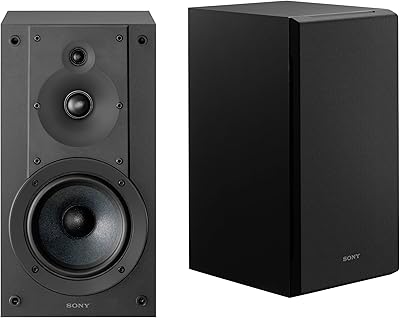
Sony SS-CS5M2 (2025)
81%
88%
Sound Quality
91%
Treble & High-Frequency Detail
72%
Bass Performance
89%
Soundstage & Imaging
83%
Build Quality & Materials
More
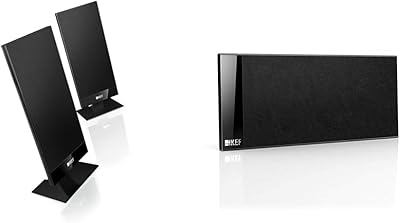
KEF T101 Satellite and Center Channel Speakers
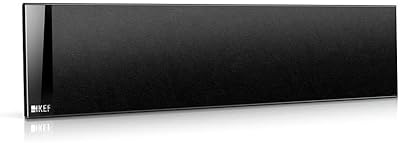
80%
88%
Sound Clarity
91%
Build Quality
94%
Design & Aesthetics
89%
Dialogue Intelligibility
62%
Value for Money
More
NEUMI CS5 Center Channel Speaker
74%
88%
Dialogue Clarity
84%
Value for Money
57%
Bass Performance
67%
Build Quality
83%
Ease of Setup
More
KEF Q250c Center Channel Speaker
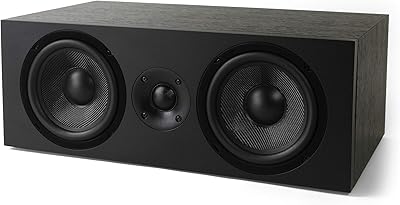
80%
93%
Dialogue Clarity
88%
Build Quality
91%
Off-Axis Performance
79%
Value for Money
67%
Bass Performance
More
KEF T301C Center Channel Speaker
80%
93%
Dialogue Clarity
96%
Design & Aesthetics
88%
Build Quality
67%
Value for Money
48%
Bass Performance
More
Klipsch R-34C Center Channel Speaker
89%
93%
Sound Clarity
89%
Dialogue Reproduction
84%
Bass Performance
90%
Build Quality
88%
Ease of Setup
More
Klipsch RP-450C Center Channel Speaker
86%
92%
Sound Quality
88%
Build Quality
94%
Dialogue Clarity
84%
Bass Performance
87%
Ease of Integration
More
Klipsch RP-504C Center Channel Speaker
87%
91%
Sound Clarity
87%
Bass Response
90%
Build Quality
85%
Aesthetic Design
82%
Ease of Installation
More
Yamaha NS-C210 Center Channel Speaker
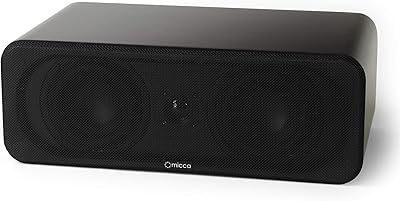
82%
93%
Dialogue Clarity
88%
Value for Money
86%
Build Quality
58%
Bass Response
91%
System Compatibility
More
Klipsch R-30C Center Channel Speaker
79%
93%
Dialogue Clarity
88%
Soundstage Dispersion
74%
Tonal Balance
81%
Build Quality
91%
Efficiency & Receiver Compatibility
More

FAQ

A subwoofer is strongly recommended. The Sony CS8M2 handles midrange and upper frequencies well, but its dual 3.94-inch woofers have physical limits when it comes to deep bass. For movie explosions and low-frequency effects, a dedicated subwoofer is what fills that gap — this center channel is built to anchor dialogue, not rumble the floor.

It works with virtually any AV receiver that has standard speaker output terminals — Sony, Denon, Yamaha, Marantz, you name it. The coaxial speaker wire connection is universal. You don't need Sony-branded electronics to use it, though pairing it with other Sony CS-series speakers does give you a more tonally consistent front soundstage.

Yes, that's exactly what it's designed for. This Sony center speaker is meant to serve as the center channel in a multi-channel surround setup, anchoring dialogue while your front left, right, and surround speakers handle the rest of the soundstage.

In most setups, yes. At just 5.75 inches tall and 16.93 inches wide, it's a compact footprint that slides comfortably under a flat-panel TV on the majority of media consoles and AV shelving units. That said, measure the gap between your TV stand surface and the bottom of your screen before purchasing, just to be sure.

You connect it using standard speaker wire — strip both ends, connect one end to the speaker's binding post terminals and the other to your receiver's center channel output. No special cables or adapters are required. If you're new to this, most AV receivers include clear labeling on their rear panels to make the center channel terminal easy to identify.

Electrically, yes — it will work with any receiver that accepts passive speaker connections. However, tonal matching works best when paired with other current CS-series Sony speakers. If your existing system uses older Sony speaker lines with different driver configurations, the timbre may not align as naturally as it would with a matched CS-series setup.

The speaker is officially rated for tabletop placement only, and no wall-mounting hardware is included in the box. Some users do mount center channels on a wall bracket using third-party solutions, but you'd need to source a compatible universal speaker bracket and verify it can safely support the speaker's weight. We recommend confirming with the bracket manufacturer before attempting this.

Yes, the grille is removable, which is standard for this type of speaker. Removing the grille can have a very slight effect on high-frequency dispersion, though for most listeners in a typical room it's not a noticeable difference. Some buyers prefer the look of a bare cabinet; others keep the grille on for dust protection.

The difference is meaningful. Single-driver center speakers ask one driver to cover the entire frequency range, which creates compromises in both clarity and dynamic range. This Sony center speaker uses two dedicated woofers plus a separate tweeter, meaning each driver focuses on the frequencies it handles best. In practice, this translates to cleaner dialogue, especially during louder or more complex scenes where a single-driver speaker would start to sound congested.

For most home theater setups with runs under 50 feet, 16-gauge speaker wire is entirely adequate. If your run is longer or you want extra headroom, stepping up to 14-gauge is a reasonable choice. Avoid going thinner than 18-gauge, as resistance increases noticeably at that point and can affect dynamics at higher volume levels.

Where to Buy