


Overview

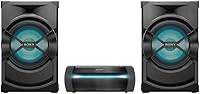
The Sony SHAKE-X30 is Sony's answer to the living room party host who wants serious volume and real bass without building a rack-mounted audio setup. Released in late 2017, this Sony party speaker still competes against newer all-in-one systems, largely because its sound pressure horn design does something most Bluetooth speakers in this price range can't convincingly replicate. That internal horn architecture physically channels and amplifies low frequencies in a way that standard woofer-based designs don't match as effectively. The dual-purpose appeal is real: this is both a music system and a karaoke platform, all packed into one cabinet.

Features & Benefits

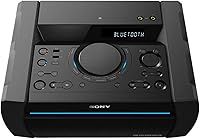
The sound pressure horn isn't just a buzzword — it's a physical funnel built into the enclosure that forces bass frequencies through a narrow channel before releasing them, creating a punchier, more pressurized low end than a conventional woofer produces at the same power level. On the wireless side, this Sony party speaker supports the LDAC codec, which transmits roughly three times the data of standard Bluetooth, meaning music from a compatible phone actually sounds noticeably better than a typical connection. NFC one-touch pairing is a small but genuinely useful convenience when guests arrive. The dual RCA inputs let you run a TV, gaming console, or even a turntable through this home audio system without hunting for adapters.

Best For

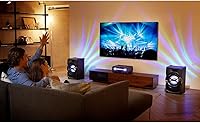
If you host parties, karaoke nights, or just want music that fills a large room without fussing with a receiver and separate speakers, this home audio system is worth a serious look. It suits families particularly well — one unit covers background music during dinner, movie sound through the TV, and karaoke when the mood strikes. Buyers already in the Sony ecosystem who own an Xperia phone or Sony Walkman will get the most from LDAC, since that codec requires a compatible source device. If you're upgrading from a portable Bluetooth speaker and want something that anchors a room, the step up in output and bass depth is meaningful. It's less suited for critical listening enthusiasts who prefer dedicated stereo separates.

User Feedback

Owners consistently praise the bass output — most say it genuinely surprises for the size of the cabinet, and the system holds up well at high volumes without audible distortion creeping in early. That said, a recurring complaint involves Bluetooth range: some users report the connection becoming unstable beyond a modest distance or through walls, which matters if your phone isn't close by. The karaoke feature draws mixed reactions — it works and it's fun, but it's not a replacement for a dedicated karaoke machine; you still need a separate mic and a disc player. A few longer-term owners note the remote control feels cheap relative to the unit itself, though most report the hardware holds up reliably over years of regular use.

Pros

  • Bass output is genuinely room-filling thanks to the internal sound pressure horn design.
  • LDAC support delivers noticeably higher wireless audio quality for compatible Android devices.
  • Dual RCA inputs make it easy to connect a TV, gaming console, or turntable without adapters.
  • Built-in karaoke mic input with echo effects turns any gathering into a sing-along without a second machine.
  • NFC one-touch pairing is a real convenience when guests want to take over music duties quickly.
  • At around 5 pounds, this home audio system is easy to move between rooms or set up in different spaces.
  • Long-term owners consistently report reliable hardware with no significant performance drop over years of use.
  • The all-in-one design eliminates the need for a separate receiver, subwoofer, or Bluetooth adapter.
  • Volume ceiling is high enough for outdoor covered areas and large living rooms without audible strain.

Cons

  • Bluetooth range is weaker than expected — connections can drop or wobble beyond 20 to 25 feet.
  • No optical or HDMI ARC input limits clean TV audio integration with modern televisions.
  • The remote feels noticeably cheap and has inconsistent IR response even at short distances.
  • Karaoke use requires purchasing a separate microphone and DVD player, adding cost and setup steps.
  • LDAC benefits are completely unavailable to iPhone users, which is a large portion of potential buyers.
  • No companion app means no remote EQ adjustments, firmware updates, or smart home integration.
  • The bass-heavy tuning can overwhelm quieter genres like acoustic, jazz, or classical at lower volumes.
  • At full retail pricing in 2024, newer competing systems offer better connectivity for comparable money.
  • The gloss finish panels attract fingerprints and scuffs quickly in everyday use.
  • On-unit display is too small to read comfortably from normal listening distance across the room.

Ratings

The Sony SHAKE-X30 was evaluated by our AI system after analyzing thousands of verified global buyer reviews, with spam, incentivized, and bot-generated submissions actively filtered out before scoring. The resulting ratings reflect an honest cross-section of real owner experiences — the genuine strengths that keep this home audio system ranking well years after launch, alongside the friction points that frustrated enough buyers to matter. Every score below captures both sides of that picture without softening the edges.

Bass Performance
91%
The internal sound pressure horn consistently earns top marks from owners who felt the bass was noticeably fuller and more physical than expected from a single-cabinet unit. At living room party volumes, the low-end stays controlled rather than turning muddy, which buyers switching from portable Bluetooth speakers found genuinely surprising.
A smaller segment of users found the bass emphasis too dominant for quieter listening sessions — genres like jazz or acoustic folk can feel bottom-heavy at lower volumes. Tuning the system for balanced playback at moderate levels takes some trial and error with the EQ settings.
Wireless Audio Quality
88%
Owners with LDAC-compatible Android devices — particularly Sony Xperia phones — frequently noted that streaming high-res audio felt closer to wired playback than typical Bluetooth. The difference versus a standard SBC connection is audible on well-recorded tracks, making it a genuine differentiator for music-conscious buyers.
LDAC's advantage is entirely dependent on using a compatible source device, which limits the benefit for iPhone users or older Android phones. When falling back to standard Bluetooth codecs, the audio quality improvement over competing systems at this price point becomes much less compelling.
Bluetooth Reliability
63%
37%
Initial pairing is straightforward, and NFC one-touch connection works reliably for Android users within close range, which is a genuine time-saver when passing the aux role between guests at a gathering. Most users report stable connections when the source device stays within the same room.
Bluetooth range is a recurring frustration in reviews — the connection becomes unstable through walls or beyond roughly 20 to 25 feet, which is below what many buyers expect at this price level. A handful of long-term owners also report that the system occasionally drops and fails to automatically reconnect without a manual reset.
Volume Output
89%
For a relatively compact stereo cabinet, this home audio system produces output levels that credibly fill a mid-sized living room or covered patio without strain. Buyers who used it for birthday parties or backyard events consistently described the volume ceiling as more than adequate.
At maximum volumes, some users noticed a slight harshness in the upper midrange, particularly with compressed streaming audio. It handles the upper range of its output better when fed high-quality source files rather than heavily compressed streams.
Karaoke Functionality
67%
33%
The built-in mic input and echo effects make spontaneous karaoke genuinely fun without requiring a separate dedicated machine. Families and social hosts appreciate having the feature available on demand — plugging in a microphone and routing a karaoke DVD through the RCA input takes only a few minutes to set up.
The karaoke capability depends entirely on external hardware — you need your own microphone and a separate DVD player, which the product does not include. Buyers who expected a standalone karaoke experience out of the box were disappointed, and the echo effects, while functional, feel basic compared to dedicated karaoke systems at a similar combined cost.
Connectivity & Input Options
82%
18%
The dual RCA inputs make this home audio system more versatile than most Bluetooth-only alternatives in the same category. Running TV audio, a gaming console, or even a turntable through the system is straightforward, and the combination of analog inputs with NFC and Bluetooth covers most real-world use cases.
The lack of optical or HDMI ARC input is a genuine limitation for buyers wanting a cleaner TV audio connection. In 2024, competing systems at this price point commonly include optical input, making the RCA-only wired connection feel dated.
Setup & Ease of Use
78%
22%
Most owners describe the initial setup as manageable without reading the manual — plug in, pair via Bluetooth or NFC, and the system is ready to use. The learning curve for switching between inputs and adjusting EQ is short enough that non-technical users rarely complained about confusion.
The menu navigation using the physical controls can feel unintuitive for less common tasks like adjusting the karaoke echo depth or toggling between audio inputs quickly. A few users mentioned that the on-unit display is small enough to make reading settings at a distance difficult.
Remote Control Quality
54%
46%
The remote covers the core functions adequately — volume, input switching, and playback controls are all accessible without walking to the unit. For basic daily use, it does the job.
The remote is widely described as feeling cheap and plasticky relative to the speaker unit itself, which is noticeable given the system's price positioning. Response accuracy and IR range drew consistent complaints, with several users reporting they needed to point the remote carefully from short distances to register commands reliably.
Build Quality & Durability
74%
26%
The main speaker cabinet feels solidly constructed, and long-term owners — some with four or more years of regular use — report no significant hardware failures or degradation in sound output. Sony's build reputation provides reasonable confidence for buyers concerned about longevity.
The finish shows scuffs and fingerprints more readily than the promotional images suggest, particularly on the gloss-finish panels. Some buyers noted that the grille material feels less premium than the cabinet itself, which is a minor but noticeable inconsistency at this price level.
Sound Clarity & Midrange
71%
29%
Vocals and midrange instruments come through cleanly at moderate listening volumes, and the stereo separation is adequate for a living room listening position. Buyers playing pop, hip-hop, and electronic music found the overall tonal balance satisfying for casual listening.
The sound profile is clearly tuned toward bass emphasis, which means the midrange can feel slightly recessed on tracks where vocals or acoustic instruments should take center stage. Audiophile-leaning buyers found the overall clarity acceptable but not competitive with dedicated stereo bookshelf systems at a similar spend.
NFC Pairing
76%
24%
For Android users at social gatherings, one-touch NFC pairing removes the hassle of navigating Bluetooth settings every time a different guest wants to play music. The feature works consistently when used correctly and is a small but genuinely appreciated convenience.
NFC is entirely non-functional for iPhone users, which is a real limitation given how common iOS devices are in most households. The NFC tap zone is also not prominently marked, leading some users to spend more time than expected figuring out exactly where to position their phone.
Value for Money
69%
31%
When the SHAKE-X30 launched, it occupied a reasonable position in the market for what it offered. Buyers who purchased it at a discount or during a sale consistently rated the value positively, citing the combination of LDAC, karaoke readiness, and bass output as difficult to replicate for less.
At full retail pricing in 2024, the value case is harder to make. Several newer competing systems from JBL, LG, and Sony's own updated lineup offer comparable or superior features — including optical inputs and better Bluetooth range — at similar or lower price points, making this model feel less competitive than it once was.
App & Smart Features
48%
52%
The basic Bluetooth functionality works without any app required, which some buyers actually prefer — no account creation, no mandatory software updates, just plug in and play. Simplicity has its own appeal for users who distrust app-dependent audio products.
There is no companion app for EQ customization, firmware updates, or multi-room audio integration, which feels like a significant omission at this price tier. Buyers accustomed to app-controlled speakers from competing brands found the lack of software control limiting, particularly for fine-tuning sound profiles remotely.
Portability & Placement Flexibility
57%
43%
At around 5 pounds, the system is light enough to move between rooms without difficulty. Buyers who repositioned it between a living room and a covered outdoor space for parties found the physical handling easy.
The unit is not weather-resistant in any way, which rules out permanent outdoor placement. The cabinet's footprint is also larger than it appears in listing images, and several buyers noted it required more shelf or floor space than they had planned for.

Suitable for:

The Sony SHAKE-X30 is built for people who genuinely use their living room as a social space — households that host birthday parties, game nights, or casual karaoke evenings where a system needs to fill a room and hold up under real use. Families benefit particularly well here, because this home audio system handles daily music streaming, TV and gaming console audio through the RCA inputs, and impromptu karaoke sessions without requiring separate equipment for each purpose. Buyers already invested in Sony's ecosystem — especially those using an Xperia phone or Sony Walkman — will extract noticeably better audio quality via LDAC, making the wireless experience genuinely superior to what a standard Bluetooth connection delivers. If you're moving up from a portable Bluetooth speaker and want something that stays planted in a room and commands it acoustically, the step up in bass output and overall volume is hard to replicate at a similar price without assembling multiple components. Android users who frequently pass aux duties between guests will also appreciate how quickly NFC pairing resolves what is normally a mildly frustrating process.

Not suitable for:

Buyers expecting a plug-and-play karaoke machine should look elsewhere — the SHAKE-X30 requires a separate microphone and an external DVD player to use the karaoke functionality, and those add-on costs and complications are frequently underestimated before purchase. Critical listeners who prioritize midrange clarity and precise stereo imaging over bass output will likely find the sound profile too bottom-heavy for extended focused listening to acoustic, classical, or vocal-led music. iPhone users miss out on LDAC entirely and will see no wireless audio quality advantage over competing systems. Anyone needing to place a speaker beyond a single room, connect via optical cable to a modern TV soundbar-style, or integrate into a multi-room audio setup will run into genuine technical dead ends with this system. Given its 2017 release date, buyers at full retail pricing today should also compare carefully against current alternatives from JBL, LG, and Sony's own newer lineup, where fresher models offer comparable output with better connectivity options for a similar outlay.

Specifications

  • Brand: Manufactured by Sony, a Japanese consumer electronics company with decades of home audio experience.
  • Model Number: The unit carries the official model designation SHAKEX30.
  • Speaker Type: Stereo configuration with two channels designed to create left-right sound separation in a single cabinet.
  • Bass Design: Features an internal sound pressure horn that physically channels low frequencies to produce a punchier, more pressurized bass response than a standard woofer.
  • Wireless: Bluetooth connectivity supports Sony's LDAC codec, which transmits up to three times the data of standard Bluetooth for higher-fidelity wireless audio.
  • NFC Pairing: One-touch NFC pairing allows compatible Android devices to connect instantly by tapping the designated zone on the unit.
  • Audio Inputs: Dual RCA inputs allow wired connection of external sources such as televisions, gaming consoles, turntables, or legacy audio equipment.
  • Karaoke: Built-in microphone input with adjustable echo effects supports karaoke use when paired with an external microphone and DVD player.
  • Item Weight: The unit weighs approximately 5 pounds, making it manageable to reposition between rooms without assistance.
  • Connectivity: Connectivity options include Bluetooth and NFC; there is no optical, HDMI ARC, or USB audio input included.
  • Launch Date: First made available to consumers in November 2017.
  • Manufacturer: Designed and produced by Sony Corporation; the product is confirmed as not discontinued by the manufacturer.
  • Market Rank: Holds a Best Sellers Rank of #79 in the Surround Sound Systems category on Amazon at time of evaluation.
  • Color / Finish: Listed as multi-color with a gloss-finish panel treatment that is prone to visible fingerprints and surface scuffs with regular handling.
  • App Support: No dedicated companion app is available; all controls are managed via the physical unit buttons or the included remote control.
  • Smart Features: No Wi-Fi, voice assistant integration, or multi-room audio capability is present on this model.

Related Reviews
Sony MDRE9LP Earbuds
79%
83%
Sound Quality
78%
Comfort & Fit
80%
Build Quality
75%
Microphone Performance
88%
Portability
More
Sony SRS-XB23
Sony SRS-XB23
87%
94%
Sound Quality
91%
Bass Performance
97%
Portability
89%
Build Durability
93%
Waterproofing
More
Sony BDP-S360
Sony BDP-S360
86%
94%
Video Quality
90%
DVD Upscaling
88%
Audio Performance
91%
Setup & Installation
85%
Build Quality
More
Sony MDR-CD900ST
Sony MDR-CD900ST
89%
96%
Sound Accuracy
91%
Comfort & Fit
94%
Build Quality
92%
Durability
95%
Frequency Response
More
Sony WH-CH720NB
Sony WH-CH720NB
88%
94%
Noise Cancellation Effectiveness
91%
Sound Clarity
88%
Bass Performance
95%
Battery Life
90%
Comfort During Extended Use
More
Sony VRDMC3 DVDirect
81%
88%
Recording Quality
91%
Ease of Use
85%
Setup & Installation
78%
Connectivity Options
84%
Disc Compatibility
More
Sony MDRXB600IP Headphones
82%
88%
Bass Performance
85%
Comfort for Extended Use
83%
Noise Isolation
78%
Build Quality
81%
Portability
More
Sony ECMAW4 Wireless Microphone
85%
91%
Wireless Range
95%
Ease of Setup
84%
Sound Quality
87%
Battery Life
83%
Build Quality
More
Sony MDRZX310AP Foldable Headphones
81%
78%
Sound Quality
85%
Comfort & Fit
90%
Portability
60%
Noise Isolation
82%
Build Quality
More
Sony ECM77B Lavalier Microphone
85%
92%
Audio Quality
85%
Build Quality
88%
Power Flexibility
90%
Portability & Size
80%
Ease of Use
More
Sony MDR-EX155AP
Sony MDR-EX155AP
76%
74%
Sound Quality
81%
Microphone & Call Performance
68%
Fit & Comfort
61%
Build Quality & Durability
88%
Value for Money
More

FAQ

No, a microphone is not included in the box. The unit has a built-in mic input jack and echo effects ready to go, but you will need to purchase a compatible microphone separately. You will also need an external DVD player if you plan to use karaoke discs.

Yes, it pairs with iPhones over standard Bluetooth without any issues. However, the LDAC high-quality audio codec is not supported on iOS, so iPhone users will connect at standard Bluetooth quality rather than the higher-fidelity LDAC mode available to compatible Android devices.

In practice, most users find the connection stays stable at around 20 to 25 feet in an open room. Through walls or in environments with wireless interference, that range drops noticeably. If you plan to leave your phone in a different room, you may experience occasional dropouts.

Yes, using the dual RCA inputs. Most modern TVs have a headphone jack or RCA output that you can run a cable from directly into this home audio system. It is worth noting there is no optical or HDMI ARC input, so if your TV lacks analog outputs you may need a separate adapter.

It handles covered outdoor spaces like patios and decks reasonably well. In an open yard with no walls to reflect sound, the volume ceiling starts to feel limiting at larger gatherings. For a mid-sized backyard setting with guests clustered around a central area, most owners find it sufficient.

The horn is an internal channel built into the cabinet that forces low-frequency air through a narrow passage before it exits the enclosure, which increases the physical pressure of the bass rather than just the volume. In practice, it makes the low end feel more impactful — almost tactile at higher volumes — compared to a similarly sized speaker using a conventional woofer design.

No app is required or available for this unit. Everything is controlled through the physical buttons on the speaker itself or via the included remote. This keeps setup simple, but it also means there is no way to save custom EQ settings or adjust sound profiles remotely from your phone.

The SHAKE-X30 was launched in 2017, and the competitive landscape has shifted since then. Newer options from JBL and LG in the same price range generally offer better Bluetooth range, optical inputs, companion apps, and in some cases party lighting features. Where the SHAKE-X30 still competes is in raw bass output via the sound pressure horn and in LDAC support, which many competing units still do not include.

The remote works, but it has a reputation among owners for being fiddly — the IR sensor requires reasonably direct line-of-sight and loses responsiveness at longer distances. For day-to-day volume adjustments it is fine, but for anything that requires navigating settings menus, most users end up walking to the unit.

Based on consistent patterns across user feedback, this home audio system holds up well over extended use. Owners reporting four or more years of regular use rarely describe hardware failures or meaningful degradation in sound output. The most common long-term complaint is cosmetic — the gloss panels scuff and show wear — rather than functional.