Overview

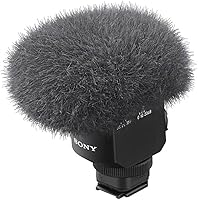
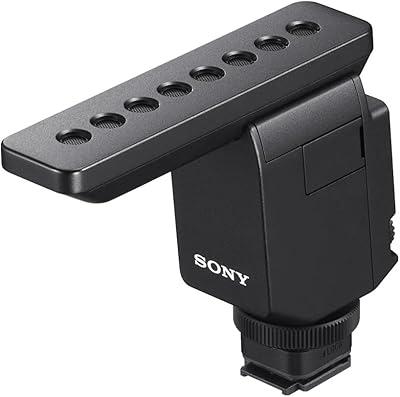
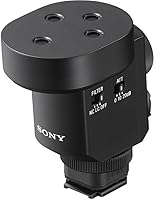
The Sony ECM-M1 Digital Shotgun Microphone represents a meaningful shift in how on-camera audio can work, bringing beamforming array technology to a form factor most shooters have long treated as an afterthought. Unlike analog mics that have dominated camera hotshoes for years, this digital shotgun mic connects via Sony's Multi Interface Shoe, transmitting audio as a clean digital signal rather than through a traditional analog chain. Out of the box, the plastic construction might surprise buyers expecting something more substantial at this price tier, but the overall package feels purposeful. It fills a real gap in Sony's lineup, sitting above basic analog options without requiring a separate audio recorder.
Features & Benefits

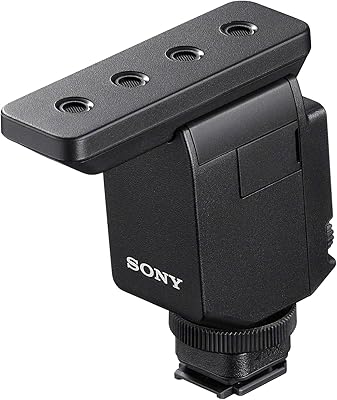
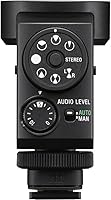
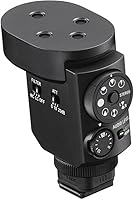
What makes the ECM-M1 stand out is the combination of its four-capsule beamforming array and the eight dial-selectable modes on the rear. Turning that dial shifts the mic between patterns — tight shotgun for isolating a subject, wide stereo for capturing an environment, even a zoom mode that tightens pickup as you push in — without touching a single menu. Plugging into the MI Shoe means the camera's preamps are bypassed entirely, which is where the real-world payoff shows: background hiss almost inevitable with analog on-camera mics simply isn't there. The backup safety recording feature quietly catches a lower-level track whenever audio peaks unexpectedly, offering real peace of mind on important shoots.

Best For

This digital shotgun mic makes the most sense for shooters already in the Sony ecosystem — specifically those with A7, FX, or ZV-series cameras where the MI Shoe connection works natively, delivering power and digital audio in one slot. Run-and-gun videographers and solo creators who need to adapt quickly between interview setups and wider environmental recording will find the mode dial actually useful in the field. Streamers working without a separate audio interface can also benefit from the clean digital signal going straight into the camera. That said, if you're shooting on Canon, Nikon, or any non-Sony body, this mic offers no real advantage over cheaper alternatives. XLR routing for broadcast or studio work is also outside its scope.

User Feedback

With around 74 ratings and a 4.6-out-of-5 average, the early reception for Sony's beamforming microphone has been positive — though the sample size is still fairly small for drawing firm conclusions. Owners who shoot regularly on Sony bodies consistently point to one thing: the near-silent noise floor from the digital MI Shoe connection is a real improvement over what they were getting from analog alternatives. The eight-mode dial gets credit too, with users finding it practical rather than gimmicky. On the critical side, a handful of reviewers call out the all-plastic body as feeling underwhelming for the price. A few also note the investment is harder to justify if you occasionally shoot on non-Sony gear or don't need the full range of recording modes.

Pros

  • The digital MI Shoe connection eliminates the background hiss that has long been a frustration with analog on-camera mics.
  • Eight dial-selectable recording modes give shooters real flexibility — from tight shotgun to wide stereo — without touching a menu.
  • Beamforming technology with four capsules captures audio far more precisely than a standard single-capsule hotshoe mic.
  • Backup safety recording quietly captures a lower-level track, providing a lifeline when audio unexpectedly peaks or clips.
  • At just 2.3 ounces, the ECM-M1 adds almost no meaningful weight to a mirrorless camera rig.
  • The 78 dB signal-to-noise ratio delivers genuinely clean dialogue even in moderately noisy environments.
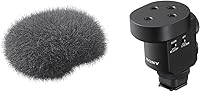
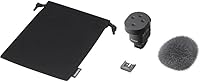
  • Included windscreen, carry bag, and MI Shoe cap make it road-ready out of the box without extra purchases.
  • Powered entirely through the MI Shoe — no batteries required, one less thing to manage on a shoot.
  • The rear dial design is tactile and quick to use, even when the camera is up on your shoulder.

Cons

  • Strictly limited to Sony cameras with a Multi Interface Shoe — non-Sony shooters have no practical way to use it.
  • The all-plastic body feels underwhelming for what is a premium-priced piece of audio equipment.
  • No XLR output or professional audio routing options, limiting use in broadcast or studio production contexts.
  • With just over 70 ratings at the time of writing, long-term reliability data is still relatively thin.
  • The price is difficult to justify for occasional or hobby-level shooters who rarely need more than basic on-camera audio.
  • No analog 3.5mm output means you cannot use this mic as a fallback on a different camera body or recorder.
  • Frequency response starts at 40 Hz, which is adequate but not exceptional for capturing the full range of some instruments or deep voices.
  • Shooters who prefer wireless audio setups will find no path to integrate this mic into that kind of workflow.

Ratings

The scores below for the Sony ECM-M1 Digital Shotgun Microphone were generated by our AI system after analyzing verified buyer reviews from multiple global markets, with spam, bot-submitted, and incentivized feedback actively filtered out before scoring. Each category reflects both the genuine enthusiasm and the honest frustrations that real owners have reported across a range of shooting environments and use cases. Where trade-offs exist, they are reflected transparently — no category has been inflated to protect brand reputation.
Audio Clarity
91%
The digital signal path through the MI Shoe is consistently praised as the ECM-M1's standout quality. Shooters recording interviews in moderately noisy environments — coffee shops, outdoor locations, busy offices — report a noticeably cleaner result than they were getting from analog alternatives, with dialogue sitting clearly above the noise floor without aggressive post-processing.
A handful of users note that in extremely reverberant spaces, such as tiled rooms or large halls, the mic picks up more room character than expected even in shotgun mode. It is not a flaw exactly, but it is a reminder that no on-camera mic fully substitutes for a boom or lav in acoustically challenging environments.
Noise Floor Performance
88%
For an on-camera mic, the self-noise performance is genuinely impressive. Owners who previously dealt with audible preamp hiss from their camera's analog input describe the difference as immediately obvious, particularly when recording in quiet settings like voice-over, product narration, or sit-down interviews where background silence matters.
The improvement is most pronounced when using the MI Shoe connection on compatible Sony bodies — and some users point out that the benefit essentially disappears if you attempt to use the mic through a standard 3.5mm adapter on another device. The digital advantage is real, but it is tightly bound to the right hardware pairing.
Recording Mode Versatility
84%
Having eight distinct pickup patterns in one mic — accessible via a physical dial rather than buried in a menu — is something owners use more than they expected. Documentary shooters in particular appreciate being able to flip between a tight pattern during a close interview and a wider stereo setting when capturing ambient sound, all without stopping to adjust camera settings.
A few users feel some of the eight modes overlap enough that the practical count is closer to four or five meaningfully distinct options. The zoom mode, while clever in concept, receives mixed reviews for how precisely it tracks subject isolation compared to dedicated zoom microphones.
Ecosystem Compatibility
47%
53%
For Sony mirrorless camera owners — specifically those using A7, FX, or ZV-series bodies — the MI Shoe integration works exactly as advertised. No adapters, no cables, no secondary settings to configure; mount the mic, power on the camera, and it is recognized and ready. That kind of frictionless setup genuinely matters on a fast-moving shoot.
Outside of the Sony ecosystem, this mic is effectively non-functional for its intended purpose. There is no 3.5mm analog output that preserves the key digital benefits, and non-Sony camera users have no path to access the beamforming processing. For anyone who shoots across multiple camera brands, this is a hard limitation that no amount of audio quality can offset.
Build Quality
61%
39%
The ECM-M1 is light enough that you genuinely forget it is mounted during long shooting days, and the overall assembly feels solid enough for regular field use. The dial mechanism has a satisfying click, and the MI Shoe connection sits securely without wobble on compatible camera bodies.
The all-plastic construction is the most consistently cited disappointment among owners who paid a premium price expecting a more substantial feel. Compared to competitors at similar or lower price points that use metal housings, the ECM-M1 feels slightly fragile — and a few users have expressed concern about long-term durability if the mic is regularly packed and unpacked from a camera bag.
Value for Money
73%
27%
For committed Sony shooters who record audio daily and want to eliminate a separate recorder from their kit, the ECM-M1 delivers a meaningful upgrade that most users feel justifies the investment. The combination of clean audio, flexible modes, and zero-battery convenience adds up to real value when evaluated against the total cost of an equivalent analog mic plus a portable recorder.
For occasional shooters, hobbyists, or anyone on the fence about the Sony ecosystem, the price is difficult to rationalize. Competing mics at meaningfully lower price points offer strong audio performance without the ecosystem lock-in, and the plastic build makes it harder to argue that the premium reflects material quality rather than technology alone.
Ease of Use
89%
The setup process is about as straightforward as an audio accessory can get — mount it, and it works. The rear dial for switching modes is tactile and legible even in low-light conditions, which matters when you are adjusting on location rather than at a desk. No apps, no Bluetooth pairing, no firmware updates needed to get started.
New users occasionally find it non-obvious which mode they are in without reading the manual first, as the dial positions are labeled with icons rather than text descriptors. A brief learning curve applies before the mode selection becomes second nature in the field.
Wind Noise Handling
67%
33%
The included foam windscreen paired with the onboard low-cut filter handles light outdoor breezes reasonably well during casual exterior shooting. Vloggers recording in parks or near mild outdoor environments report acceptable results without any additional accessories beyond what is in the box.
In anything beyond a gentle breeze, wind noise becomes intrusive even with the foam windscreen in place. Serious outdoor shooters consistently recommend investing in a third-party furry windshield cover for reliable exterior performance, which adds cost and bulk to what is otherwise a compact setup.
Backup Safety Recording
86%
The dual-track safety recording feature is something owners notice and appreciate most after they have actually needed it. Wedding videographers and event shooters — contexts where a single clipped take cannot be re-done — describe the safety track as genuine insurance that has already saved recordings during unexpectedly loud moments.
The feature requires camera support for dual-track recording, and not every compatible Sony body handles the secondary track in exactly the same way. A small number of users report needing to dig through camera audio settings to confirm the safety track is being captured correctly, which reduces its plug-and-play appeal slightly.
Portability & Weight
93%
At 2.3 oz, this is one of the lightest feature-rich on-camera microphones available. Solo creators who carry a mirrorless camera all day — street photographers adding occasional video, travel vloggers, or documentary shooters moving between locations — consistently note that the mic adds no meaningful fatigue to a day of shooting.
The compact size means there is limited internal space for acoustic engineering, and the trade-off in low-frequency extension compared to larger dedicated microphones is real. For use cases where capturing deep bass-heavy sources is important, the size-driven frequency limitations become apparent.
Digital Noise Filtering
82%
18%
The digital noise cut filter performs noticeably better than the analog high-pass filters found on most competing mics, primarily because it operates after the analog-to-digital conversion rather than before it. Users recording in urban environments — near traffic, HVAC systems, or crowd noise — find it does a solid job of keeping dialogue intelligible without the artificial thinness that aggressive analog filtering sometimes introduces.
At its most aggressive settings, some users detect a slight processing artifact on voice frequencies, particularly on deeper or more resonant voices. It is a minor issue in practice, but users who prioritize absolute tonal transparency may prefer to use light filtering rather than the maximum cut setting.
Included Accessories
78%
22%
The carry bag is a practical inclusion that many competing mics in this category do not bother to provide, and the MI Shoe cap genuinely protects the connector contacts during transport. Buyers appreciate that the kit feels thoughtfully assembled rather than padded with throwaway extras.
The foam windscreen, while useful for gentle conditions, is on the thinner side compared to aftermarket options. Given the price tier, some buyers feel a more robust deadcat-style windscreen should have been included, particularly since outdoor shooting is an obvious and marketed use case for this mic.
Stereo Imaging Quality
76%
24%
When used in stereo or wide recording modes, the ECM-M1 captures a convincing stereo image that holds up well in edited video. Nature documentary creators and travel vloggers who want ambient sound to feel immersive rather than flat describe the stereo modes as a genuine asset that adds production value to their work.
The stereo image width is inherently constrained by the physical spacing of the capsules within a compact housing. Compared to dedicated stereo microphones with wider capsule separation, the stereo field can sound somewhat narrow, especially when monitored on headphones with exaggerated stereo reproduction.

Suitable for:

The Sony ECM-M1 Digital Shotgun Microphone is built squarely for video creators who are already shooting on Sony mirrorless cameras and want noticeably better audio without adding a separate recorder to their kit. If you own an A7, FX, or ZV-series body, the Multi Interface Shoe connection does real work here — it pulls power from the camera and sends back a clean digital signal, cutting out the analog noise that plagues most hotshoe mics. Solo filmmakers doing interviews, documentary work, or street shooting will appreciate being able to twist a dial between tight and wide pickup patterns without stopping to dig through menus. The backup safety recording is a genuine safety net for anyone who has ever blown out audio on an important take. Streamers and vloggers who want broadcast-quality sound from a single compact unit, rather than a full audio rig, will find the ECM-M1 punches well above what standard on-camera mics have historically offered.
Not suitable for:

If you shoot on Canon, Nikon, Fujifilm, or any camera without Sony's Multi Interface Shoe, the Sony ECM-M1 Digital Shotgun Microphone is essentially not an option — the MI Shoe connection is the core of what makes it work, and there is no standard 3.5mm analog fallback that preserves the digital advantage. Casual shooters or beginners who only record in controlled, quiet environments may find it difficult to justify the price when simpler, cheaper mics would cover their needs without issue. Professional broadcast crews or audio engineers who need XLR outputs, phantom power routing, or integration with a dedicated mixer will find this mic falls short of those workflows entirely. It is also worth noting that the all-plastic construction may frustrate buyers who expect the physical build quality to reflect the price point. If your shooting kit frequently crosses brands or you plan to use this mic across multiple camera systems, the ecosystem dependency here becomes a practical and financial liability.
Specifications

  • Brand: Manufactured by Sony, a professional audio and imaging brand with decades of experience in camera-integrated audio equipment.
  • Model: The ECM-M1 is Sony's first on-camera digital shotgun microphone featuring a multi-capsule beamforming array.
  • Form Factor: Compact shotgun-style microphone designed to mount directly on a camera via the Multi Interface Shoe.
  • Capsules: Uses four independent mic capsules arranged in a beamforming array to enable directional audio processing across eight recording modes.
  • Recording Modes: Offers eight dial-selectable audio recording modes including shotgun, wide stereo, zoom, and others, selectable via a rear-mounted physical dial.
  • Connectivity: Connects exclusively via Sony's Multi Interface (MI) Shoe, transmitting both power and digital audio through a single proprietary connection.
  • Signal-to-Noise: Rated at 78 dB signal-to-noise ratio, delivering a clean audio signal with minimal self-noise suitable for dialogue and narration recording.
  • Sensitivity: Audio sensitivity is rated at 38 dB, providing responsive pickup of voices and ambient sound across a range of recording distances.
  • Frequency Response: Captures audio from 40 Hz upward, covering the full range of human speech and most practical on-location sound sources.
  • Weight: Weighs just 2.3 oz (approximately 65 g), adding negligible load to a mirrorless camera body during handheld or shoulder shooting.
  • Dimensions: Measures 2.53 x 1.57 x 2.84 inches, making it a compact unit that does not significantly extend the camera profile when mounted.
  • Material: Housing is constructed from plastic, keeping overall weight low while providing basic protection for the internal electronics during everyday use.
  • Power Source: Draws power directly through the MI Shoe connection from the host camera, requiring no batteries or external power supply.
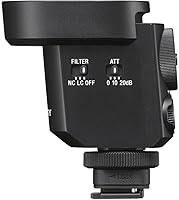
  • Noise Filters: Includes both a digital noise cut filter and a low-cut filter to reduce wind noise, handling rumble, and background interference in practical environments.
  • Safety Recording: Features a backup safety recording mode that simultaneously captures a second track at a lower level to protect against unexpected clipping or audio overload.
  • Included Accessories: Ships with a foam windscreen, a Multi Interface Shoe cap for protection when not in use, and a soft carry bag for storage and transport.
  • Compatible Devices: Designed for use with Sony cameras equipped with a Multi Interface Shoe, including select models in the A7, FX, and ZV series.
  • Availability Date: First made available for purchase in July 2023, establishing it as a relatively recent addition to Sony's on-camera audio lineup.

Related Reviews

Sony ECM-B10 Shotgun Microphone
80%
91%
Audio Clarity
83%
Beamforming Performance
88%
Polar Pattern Versatility
79%
Noise Filtering
67%
Wind Noise Handling
More
Sony ECM-CG50 Shotgun Microphone
86%
91%
Audio Performance
87%
Build Quality
89%
Portability & Weight
92%
Ease of Use
85%
Signal Clarity
More
Sony ECM-MS2 Stereo Shotgun Microphone
81%
91%
Sound Quality
88%
Portability
87%
Build Quality
83%
Ease of Use
90%
XLR Connectivity
More
Sony ECM-680S Stereo Shotgun Microphone
85%
94%
Sound Quality
88%
Noise Reduction
91%
Versatility (Stereo/Mono Modes)
85%
Build Quality
80%
Portability
More
Sony ECM-B1M
Sony ECM-B1M
86%
93%
Sound Quality & Voice Isolation
96%
Form Factor & Portability
64%
Camera Compatibility
98%
Battery Independence
89%
Recording Versatility
More
Sony ECM-VG1 Electret Condenser Shotgun Microphone
88%
89%
Sound Quality
92%
Portability & Design
72%
Wind Noise Suppression
95%
Ease of Use
87%
Build Quality
More
Sony ECM-CS3 Microphone
83%
85%
Sound Quality
90%
Ease of Use
92%
Portability
80%
Build Quality
65%
Noise Handling
More
Sony ECM674/9X Shotgun Microphone
86%
92%
Audio Quality
89%
Noise Isolation
88%
Ease of Use
75%
Build Quality
90%
Portability
More
Sony ECM678/9X Shotgun Microphone
85%
93%
Sound Quality
88%
Build Quality
91%
Portability
85%
Ease of Use
90%
Compatibility with Camcorders
More
Sony ECM-44 Lavalier Microphone
85%
88%
Sound Quality
92%
Portability
85%
Build Quality
89%
Ease of Setup
80%
Battery Life
More

FAQ

Unfortunately, no. The ECM-M1 connects exclusively through Sony's Multi Interface Shoe, which is a proprietary connection not found on Canon, Nikon, Fujifilm, or most other camera brands. If you are not shooting on a compatible Sony body, this mic simply will not function as intended, and there is no analog adapter that preserves the digital audio benefits.

No batteries needed at all. The Sony ECM-M1 Digital Shotgun Microphone draws its power directly from the camera through the MI Shoe connection, so there is nothing extra to charge or carry. Just mount it and you are ready to record.
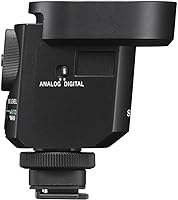
The eight modes include settings like tight shotgun for isolating a single subject, wide stereo for capturing an environment, a zoom mode that narrows pickup as you zoom in optically, and several variations in between. In practice, most shooters will rely on two or three modes regularly, but having the full range on a physical dial rather than in a menu means switching mid-shoot is quick and practical rather than disruptive.

The biggest real-world difference is noise floor. Analog on-camera mics pass audio through the camera's internal preamps, which almost always introduces a layer of background hiss, especially at higher gain settings. The ECM-M1 bypasses that entirely by sending a digital signal through the MI Shoe, and owners consistently report a noticeably cleaner result, particularly in quieter recording environments like interviews or narration.

It records a second audio track simultaneously at a significantly lower level. The idea is that if your main recording suddenly clips — say, a subject raises their voice unexpectedly or there is a loud sound event — you have a safety copy that stayed within a clean range. It is particularly useful for documentary-style shooting where you cannot always predict what is going to happen in front of the camera.

It is a fair point to raise. The housing is entirely plastic, and at this price point, some buyers reasonably expect metal construction. That said, the plastic keeps the weight extremely low, and for a mic that mounts on a camera rather than getting handled directly, it is generally adequate for normal use. Just be mindful not to drop it, as there is no meaningful shock resistance built into the design.

No. The MI Shoe is a camera-specific connection, and there is no way to connect this mic to a smartphone, tablet, or computer directly. If mobile recording is your main use case, you would be better served by a mic with a standard 3.5mm or Lightning connection.

Like most compact on-camera mics, the ECM-M1 does pick up wind noise outdoors, particularly in anything above a light breeze. The included foam windscreen handles gentle outdoor conditions reasonably well, and the onboard low-cut filter takes another edge off low-frequency rumble. For serious outdoor shooting in windy conditions, a furry windscreen cover (often called a deadcat) would give you noticeably better results than the stock foam.

Yes, the mode you select directly changes how the mic processes and captures audio in real time. Switching from shotgun to wide stereo, for example, will audibly change how directional the pickup is and how the stereo field sounds in your recording. There is no post-processing step — what the mic captures is what gets written to your camera's audio track.

It can work well in that context, particularly for streamers who output directly from a Sony camera to a capture card or streaming interface. The clean noise floor and the ability to focus pickup on the speaker rather than the room are genuine advantages in a streaming setup. Keep in mind that if your streaming workflow centers on a PC with a USB interface, a dedicated USB or XLR microphone will give you more flexibility and often better value for that specific use case.

Where to Buy