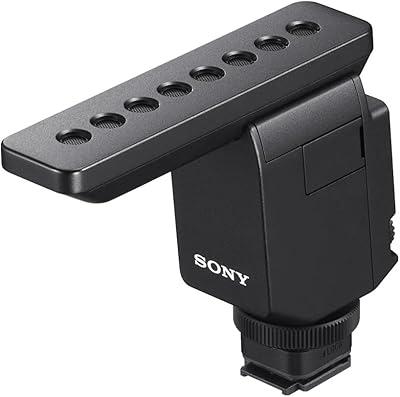
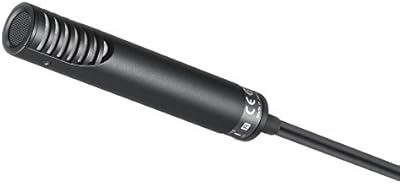
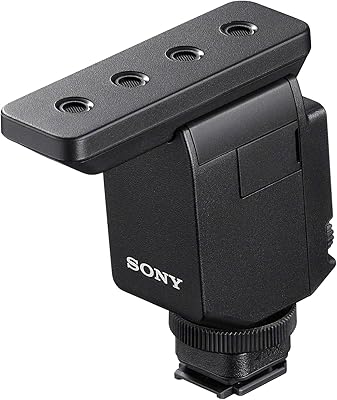
Overview

The Sony ECM-VG1 Shotgun Microphone is a professional-grade directional mic built for videographers who need dependable, clean audio without the bulk of a full broadcast kit. It sits in a practical middle ground — XLR-based and camcorder-compatible, fitting comfortably into run-and-gun documentary work and controlled interview setups alike. Sony's long history in audio engineering carries genuine weight here; this is a thoughtfully built tool, not a rebadged budget component. The all-metal body feels purposeful and the compact dimensions keep camera balance in check. That said, this shotgun mic demands a proper XLR input — anyone without phantom power capability should factor that in before buying.
Features & Benefits

The ECM-VG1's super-cardioid polar pattern is what separates it from lesser on-camera options — point it at your subject and the sides go noticeably quiet, a real advantage when shooting in loud environments like busy streets or crowded venues. Its frequency response runs from 40 Hz to 20 kHz with a flat, even character, so dialogue lands naturally without sounding processed or hyped. The two-position low-cut filter lets you knock out low-frequency rumble fast — handy when HVAC systems or ground vibration would otherwise creep into your track. And the windscreen isn't just cosmetic; the internal frame creates a true air gap that meaningfully reduces wind noise artifacts compared to a standard foam cover.

Best For

Sony's short shotgun makes the most sense for documentary and ENG videographers who are already operating within an XLR workflow — paired with a Sony camcorder or a prosumer body with dedicated audio inputs, it performs with real confidence. Interview work is another natural fit; the tight pickup keeps the subject's voice front and center while ambient noise drops away without needing a full boom setup. Content creators ready to leave their camera's built-in mic behind will hear a genuine step up. What it isn't suited for: anyone still building out their kit without a phantom-powered XLR recorder, or anyone whose workflow requires wireless or USB connectivity.

User Feedback

Those who have spent real time with the ECM-VG1 consistently highlight its natural, uncolored sound as the standout quality — dialogue in particular comes through clean and present without heavy post-processing. The windscreen earns specific praise from outdoor shooters; people who've run it alongside basic foam alternatives notice a meaningful improvement in windy conditions. Where the feedback gets more cautious is around preamp dependency — this shotgun mic rewards a good front end, and users running it through weaker inputs report needing to push gain into noisier territory than ideal. Long-term durability, though, draws consistent approval; owners using it across years of regular fieldwork rarely mention wear or reliability issues.

Pros

  • Clean, natural-sounding dialogue reproduction that holds up well without heavy post-processing.
  • Super-cardioid pattern tightly rejects off-axis noise, making it reliable in loud or unpredictable shooting environments.
  • The included windscreen uses an internal frame design that outperforms basic foam covers in real wind conditions.
  • Flat frequency response across 40 Hz to 20 kHz captures sound without artificial coloring or boosted frequencies.
  • Compact and light enough to mount on prosumer camcorders without creating front-heavy balance issues.
  • Built-in two-position low-cut filter handles rumble and interference quickly without touching your recorder settings.
  • All-metal construction has proven durable for owners who have used it heavily across multiple years of fieldwork.
  • XLR connectivity integrates cleanly into professional rigs, mixers, and portable recorders with phantom power.
  • Sony's manufacturing consistency means unit-to-unit quality is reliably stable, reducing the lottery factor of buying audio gear.

Cons

  • Requires phantom power via XLR — unusable without a compatible recorder or camera input, which is a hard barrier for many buyers.
  • Performance is noticeably dependent on preamp quality; weaker front ends push this shotgun mic into noisier territory.
  • No wireless option or digital connectivity makes it impractical for run-and-gun shooters who need cable-free freedom.
  • At 13.4 ounces, it is heavier than some competing short shotgun mics, which matters during extended handheld shoots.
  • No included shock mount means buyers may need to purchase additional accessories to reduce handling and vibration noise.
  • The two-position low-cut filter, while useful, offers limited flexibility compared to stepless filter controls on higher-end mics.
  • Buyers on tighter budgets may find the overall system cost high once a capable preamp or XLR recorder is factored in.
  • Not designed for multi-subject or wide-area pickup — the narrow polar pattern can be limiting in group interview scenarios.

Ratings

Our AI has analyzed verified buyer feedback for the Sony ECM-VG1 Shotgun Microphone from sources worldwide, actively filtering out incentivized, bot-generated, and spam reviews to surface what real users genuinely experience. The scores below reflect a transparent synthesis of both consistent praise and recurring frustrations across a broad range of professional and prosumer use cases. Where this shotgun mic excels is clearly reflected — and where it falls short of expectations, that is shown just as honestly.

Audio Clarity
88%
Videographers consistently praise the ECM-VG1 for producing dialogue that sounds natural and unprocessed straight off the recorder. In interview setups and documentary fieldwork, users report that voices land with genuine presence without the artificial brightness or harshness that cheaper mics often introduce.
A portion of users note that clarity is meaningfully dependent on the quality of the preamp in the signal chain. Those running it through lower-end camera preamps at high gain levels report a muddiness that is difficult to trace back to the mic itself until they upgrade their front end.
Directional Rejection
86%
The super-cardioid polar pattern draws consistent praise from ENG shooters and interview videographers who need to isolate a single voice in a noisy environment. Users filming in busy public spaces or crowded venues note a noticeable reduction in ambient bleed compared to standard cardioid mics.
The tight pickup angle requires deliberate aiming — even slight misalignment during handheld shooting can cause the subject's voice to thin out unexpectedly. Some users filming moving subjects find the narrow pattern less forgiving than they anticipated during fast-paced runs.
Wind Noise Handling
81%
19%
The internal-frame windscreen design earns genuine appreciation from outdoor shooters who have compared it side by side with basic foam covers. Users filming in moderate outdoor wind report a real, audible improvement in how cleanly dialogue cuts through without the low-frequency buffeting that plagues standard accessories.
In stronger gusts or sustained outdoor wind, the supplied windscreen reaches its limit and residual noise becomes noticeable. Several users recommend adding a full furry deadcat-style cover for any serious exterior work, which adds cost and bulk not reflected in the base purchase.
Build Quality
91%
The all-metal body is a frequent highlight in long-term owner feedback, with users who have carried this shotgun mic through years of heavy field use reporting no meaningful wear, rattles, or structural degradation. It feels like professional kit, not a consumer accessory that needs babying.
The solid metal construction adds weight compared to some plastic-shell competitors in the same category, which becomes relevant during extended handheld or shoulder-rig sessions where every ounce accumulates. A small number of users also note that bare metal can transfer handling noise without a proper shock mount.
Low-Cut Filter Utility
78%
22%
Field users appreciate having the low-cut switch accessible directly on the mic body, allowing quick adjustments between interior and exterior shooting without touching recorder settings. The V position measurably cleans up HVAC hum and traffic rumble in controlled listening tests that users describe in their feedback.
The filter offers only two fixed positions with no variable control, which limits fine-tuning for mixed environments. Users shooting in locations with moderate rather than heavy low-frequency interference sometimes find the V setting cuts more than they want, with no middle option available.
Preamp Dependency
63%
37%
Users pairing this shotgun mic with quality external recorders — such as the Sony XLR adapter series or higher-end Zoom and Sound Devices units — consistently report a clean, low-noise signal floor that showcases what the mic is genuinely capable of delivering at its sensitivity level.
This is one of the most recurring pain points in user feedback: the mic does not flatter weak preamps. Buyers using it with budget camera bodies or entry-level portable recorders frequently report needing to push gain to levels where noise becomes an audible problem, leading to disappointment that is really a system-level mismatch.
Camera Compatibility
74%
26%
Users pairing this shotgun mic with Sony camcorders and prosumer bodies that have dedicated XLR audio inputs report a smooth, reliable experience with no signal interference or ground noise. The compact dimensions allow it to mount cleanly on a wide range of camera rigs without awkward overhang.
Compatibility drops sharply for anyone outside the XLR ecosystem. Users with DSLRs or mirrorless cameras without XLR ports quickly discover they need an additional adapter or recorder, adding cost and complexity that is not immediately obvious at the point of purchase.
Ease of Setup
71%
29%
For users already familiar with XLR audio workflows, setup is described as refreshingly straightforward — connect, engage phantom power, select the appropriate filter position, and start recording. There are no apps, drivers, or pairing procedures to navigate.
For buyers new to professional audio, the XLR-only connection and phantom power requirement introduce a steeper learning curve than many expect. Several first-time buyers describe a frustrating initial experience when they discover their camera cannot power the mic without an additional device.
Accessories & Inclusions
58%
42%
The included windscreen with its internal frame is a genuinely useful inclusion that many users say they rely on immediately, rather than setting aside as a formality. It adds practical value from the first shoot rather than feeling like a token accessory.
The absence of a shock mount is a frequently mentioned omission in user feedback. Handling vibration and footstep noise are real issues without one, and buyers who did not factor in the cost of a separate mount often feel the out-of-box experience is incomplete for professional use.
Value for Money
76%
24%
Users operating within a proper XLR setup consistently express satisfaction with the value proposition, citing the durable build and clean audio output as justification for the investment. Long-term owners who have used it for multiple years tend to feel the cost per shoot amortizes well.
Buyers who later realize they need to purchase a shock mount, quality preamp, or XLR recorder to get the most from the mic feel the total system cost was not clearly anticipated. The sticker price of the mic alone does not fully represent what it costs to deploy it effectively.
Size & Weight Balance
83%
Users mounting this shotgun mic on compact and mid-size camcorders report good front-to-back balance without the forward tipping that plagues longer shotgun mics. The physical dimensions are well-suited to handheld documentary and ENG-style shooting where mobility matters.
At 13.4 ounces, it is not the lightest option in the short shotgun category, and a handful of users running it on lighter mirrorless bodies with an XLR adapter note that the combined rig becomes noticeably top-heavy during extended takes.
Long-Term Durability
92%
Among the most consistent positives across long-term owner feedback is the mic's reliability over time. Users who have put this shotgun mic through years of regular professional fieldwork — including travel, location shoots, and variable weather — rarely report any performance decline or mechanical failure.
There is little meaningful negative feedback on durability itself, though a small number of users note that the windscreen mesh can show cosmetic wear over time with heavy use. No structural or capsule-related failures appear as a pattern in the broader user feedback pool.
Frequency Response Accuracy
84%
Audio professionals in the user base appreciate the flat, wide-range frequency response that avoids the mid-frequency push common in consumer-grade mics. Dialogue and ambient sound are captured with a balanced character that experienced editors find easier to shape in post without fighting an artificially colored source.
For users who prefer a slightly warmer or more presence-boosted sound out of the box — common in broadcast-style dynamics or consumer condensers — the neutral response can initially feel underwhelming before its post-processing advantages become clear during editing.
Noise Floor Performance
77%
23%
In well-matched systems, the sub-18 dB SPL self-noise specification translates to recordings that are clean and quiet enough for demanding professional applications including documentary narration and controlled interview setups where any background hiss would be immediately noticeable.
As noted across multiple areas of feedback, the realized noise floor in practice is heavily influenced by the preamp being used. The mic's inherent noise performance is solid, but it cannot overcome the noise added by a weak gain stage — a distinction that not all buyers fully understand before purchasing.

Suitable for:

The Sony ECM-VG1 Shotgun Microphone is purpose-built for videographers and filmmakers who are already operating within a professional audio chain and need a compact directional mic that keeps up with demanding field conditions. Documentary shooters and ENG crews will find it particularly well-matched to their workflow — the tight super-cardioid pickup pattern keeps subject audio clean even in unpredictable environments, and the lightweight metal build won't throw off camera balance during long handheld runs. Interview videographers benefit from the natural frequency response, which captures dialogue with an honest, unprocessed quality that holds up well in post. Content creators ready to invest in a real XLR setup will hear a substantial improvement over any built-in or basic clip-on mic. If your camera or recorder already handles phantom power, this shotgun mic slots into a professional workflow without friction.
Not suitable for:

The Sony ECM-VG1 Shotgun Microphone is a poor fit for anyone who hasn't yet built out an XLR-capable recording chain — without a camera body, mixer, or portable recorder that supplies phantom power, this mic simply won't function. Beginners who want a straightforward plug-and-play audio upgrade should look at USB or 3.5mm condenser options instead, as the ECM-VG1 assumes a level of technical familiarity that not every buyer has. Podcasters, streamers, and home studio users recording directly to a computer will find the XLR-only connection a genuine obstacle rather than a minor inconvenience. The sensitivity level also means that users pairing it with low-quality preamps may end up amplifying noise alongside their signal, which undermines the mic's core strengths. Those needing wireless freedom or multi-channel recording capability will also want to look elsewhere.
Specifications

  • Microphone Type: Electret condenser shotgun microphone designed for professional video and field recording applications.
  • Polar Pattern: Super-cardioid pickup pattern provides tight directional focus with strong rejection of off-axis sound sources.
  • Frequency Response: Captures audio across a flat, wide range from 40 Hz to 20 kHz for natural, uncolored sound reproduction.
  • Sensitivity: Rated at -33 dB (0 dB = 1 V/Pa), requiring a capable preamp to achieve optimal signal levels without added noise.
  • Inherent Noise: Self-noise level is less than 18 dB SPL, keeping background hiss low during quiet dialogue or ambient recording.
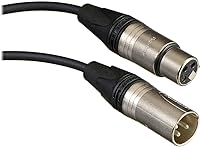
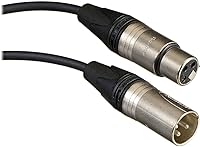
  • Connector: Balanced XLR output provides a professional-grade signal path compatible with cameras, mixers, and portable recorders.
  • Power Source: Operates via phantom power supplied through the XLR connection; no internal battery is required or supported.
  • Impedance: Output impedance is rated at 1000 Ohm, suited for connection to standard professional mic preamp inputs.
  • Low-Cut Filter: Built-in two-position switch offers M (flat) and V (low-cut) modes to reduce low-frequency rumble and wind interference.
  • Body Material: Full metal construction provides durability and resistance to wear during regular fieldwork and travel use.
  • Windscreen: Supplied windscreen features an internal rigid frame that creates an air gap between the mic capsule and outer mesh, improving wind noise rejection.
  • Dimensions: The microphone measures 9.5 x 5 x 3 inches, keeping it compact enough to mount on prosumer and professional camcorders without excessive overhang.
  • Weight: At 13.4 ounces, the ECM-VG1 is light enough to maintain good camera balance when mounted on compact camcorder bodies.
  • Compatible Devices: Designed primarily for use with camcorders and video cameras equipped with XLR audio inputs and phantom power capability.
  • Channels: Single-channel (mono) output, standard for on-camera shotgun microphones used in dialogue and field recording.
  • Manufacturer: Designed and manufactured by Sony, a company with decades of experience producing professional audio and video equipment.
  • Warranty: Includes a USA manufacturer warranty provided directly through Sony for domestic buyers.
  • First Available: This model was first made available in July 2011 and has remained in active production since its launch.

Related Reviews
Sony ECM-CG50 Shotgun Microphone

71%
83%
Audio Clarity
79%
Noise Rejection
44%
Wind Noise Handling
51%
Compatibility
62%
Build Quality
More
Sony ECM-MS2 Stereo Shotgun Condenser Microphone
76%
91%
Audio Clarity
88%
Stereo Performance
86%
Build Quality
67%
Ease of Use
62%
Compatibility
More
Sony ECM-B1M
Sony ECM-B1M
86%
93%
Sound Quality & Voice Isolation
96%
Form Factor & Portability
64%
Camera Compatibility
98%
Battery Independence
89%
Recording Versatility
More
Sony ECM-M1 Digital Shotgun Microphone
78%
91%
Audio Clarity
88%
Noise Floor Performance
84%
Recording Mode Versatility
47%
Ecosystem Compatibility
61%
Build Quality
More
Sony ECM-680S MS Stereo Shotgun Microphone
77%
93%
Audio Quality
91%
Stereo Imaging
88%
Build Quality
86%
Self-Noise
54%
Connectivity
More
Sony ECM-B10 Shotgun Microphone
80%
91%
Audio Clarity
83%
Beamforming Performance
88%
Polar Pattern Versatility
79%
Noise Filtering
67%
Wind Noise Handling
More
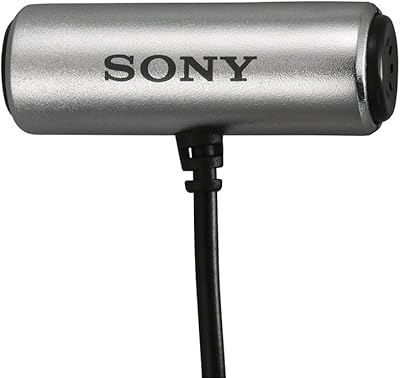
Sony ECM-CS3 Clip-on Microphone
72%
83%
Voice Call Clarity
91%
Ease of Setup
78%
Clip & Wearability
67%
Background Noise Rejection
74%
Build Quality
More
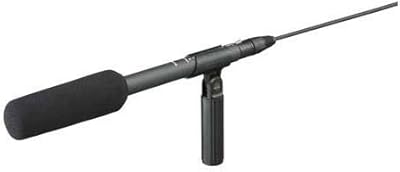
Sony ECM678/9X Shotgun Microphone
72%
91%
XLR & Phantom Power Integration
89%
Long-Term Reliability
88%
Directional Audio Capture
86%
Build Quality
83%
Signal-to-Noise Performance
More
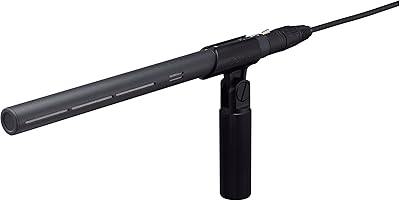
Sony ECM674/9X Shotgun Microphone
71%
83%
Audio Directivity
78%
Build Quality
81%
Power Flexibility
74%
Signal-to-Noise Ratio
86%
Compatibility
More
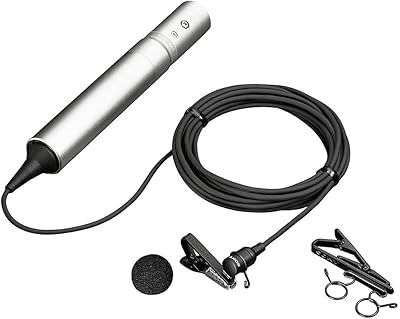
Sony ECM-44 Lavalier Microphone
85%
88%
Sound Quality
92%
Portability
85%
Build Quality
89%
Ease of Setup
80%
Battery Life
More

FAQ

No, the ECM-VG1 runs entirely on phantom power delivered through its XLR connection. As long as your camera, recorder, or mixer supplies standard 48V phantom power, you are good to go — no batteries to carry or replace.

It depends entirely on whether your camera has an XLR input with phantom power. Most DSLRs and mirrorless cameras only have a 3.5mm mic jack, which is not compatible with this shotgun mic. If that is your setup, you would need an external XLR audio interface or recorder like the Sony XLR-K series or a Zoom F-series device placed between the mic and the camera.

The low-cut filter reduces low-frequency rumble — things like HVAC hum, traffic vibration, or wind-induced bass buildup. The M position is flat and captures everything; switch to V when you are outdoors or in a space with noticeable low-frequency interference. It is a simple toggle that can save you significant cleanup time in post.

More effective than a typical foam slip-on cover. The internal frame design creates a physical air gap between the capsule and the outer mesh, which disrupts airflow more efficiently before it reaches the mic element. For light-to-moderate wind, it performs well. In heavy or gusting wind, you may still want a full deadcat-style cover for added protection.

Honestly, it depends on your current setup. If you already have a camera or recorder with XLR phantom power inputs and a decent preamp, this mic delivers a real jump in quality. But if you are starting fresh with a basic mirrorless camera and no XLR chain, the additional investment in compatible hardware makes this a more advanced purchase than most beginners need right away.

A super-cardioid has a noticeably tighter pickup angle in front, which means it is better at rejecting side noise — ambient room sound, off-camera voices, or background activity. The trade-off is a small rear lobe of sensitivity, so placement behind the mic matters slightly more than with a cardioid. For field interviews and documentary work, the tighter pattern is generally a significant advantage.

The included accessories are the microphone itself and the windscreen. A dedicated shock mount is not included, which is worth noting because handling vibration and footstep rumble can be picked up without one. Many videographers purchase a compatible shock mount and cold shoe adapter separately for cleaner results in active shooting situations.

Field reports from long-term owners are generally very positive on durability. The all-metal body resists the kind of wear that plastic-shell mics often show after heavy use, and the XLR connector is a mechanically robust interface compared to 3.5mm plugs. Users who have owned it for several years and used it regularly in professional contexts tend to report no significant degradation in performance.

Technically yes, but it is not an ideal choice for that application. This shotgun mic is optimized for on-camera mounting and field recording where directional rejection is the priority. For a desk-based voice setup, a large-diaphragm condenser or a dynamic broadcast mic typically delivers better results at a similar or lower total system cost, and without needing an XLR phantom power chain.

The most likely culprit is preamp quality. Sony's short shotgun has a sensitivity rating that benefits from a clean, low-noise preamp to reach healthy recording levels without amplifying circuit noise. If you are using a budget recorder or a camera preamp pushed to high gain, that noise floor belongs to the preamp, not the mic itself. Pairing this mic with a better front end almost always resolves the issue.

Where to Buy