Sony ECM-680S MS Stereo Shotgun Microphone

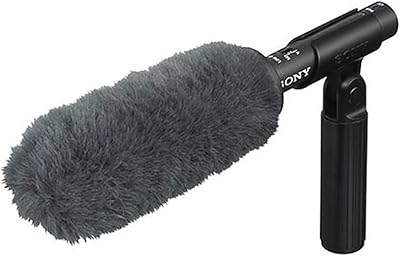
Sony ECM-680S MS Stereo Shotgun Microphone — image 1
77%
23%

Overview

The Sony ECM-680S MS Stereo Shotgun Microphone is a professional-grade field mic built specifically for broadcast and EFP work, not casual recording. Mid-side stereo is a technique where a forward-facing cardioid capsule captures the center image while a bi-directional side capsule captures width — the two signals are decoded into natural, adjustable stereo that editors can shape in post. This approach has long been favored in broadcast precisely because stereo width remains flexible without re-recording. The mic has been on the market since 2001 and still appears in professional kit lists and rental houses worldwide. Its XLR-5-pin connectivity alone signals this is built for professional field production — not a run-and-gun consumer tool.

Features & Benefits

The mid-side stereo technique at the heart of this MS shotgun mic produces a natural, wide sound stage that holds up well in post, and because the stereo width is encoded rather than fixed, editors retain real flexibility during the mix. Switching to monaural mode tightens the polar pattern to uni-directional while extending low-end response down to 40 Hz. The flat frequency response across 50 Hz to 20 kHz in stereo means what you capture is what you get — no artificial coloring. A built-in low cut filter handles wind and handling rumble on location, and the kit ships with a windscreen, stand adaptor, carrying case, and XLR-5-pin cable so you can work right out of the box.

Best For

The ECM-680S is squarely aimed at EFP and broadcast crews who need dependable stereo ambient capture without hauling separate microphones for different situations. Documentary and news videographers will find the stereo-to-mono switch particularly practical — one mic, two distinct capture modes, no gear swap mid-shoot. Rental houses and broadcast facilities keep these in stock because they hold up in demanding conditions and integrate cleanly with professional camcorder rigs. If you work outdoors regularly, the low cut filter and included windscreen are genuine assets. That said, anyone without access to phantom power and XLR-5-pin preamp inputs should look elsewhere — this mic is not designed for consumer or prosumer setups.

User Feedback

Sony's stereo field microphone carries just one consumer rating on Amazon, making it difficult to draw any meaningful crowd-sourced conclusions. The real measure of its reputation lives in professional audio forums and broadcast rental inventories, where it earns consistent respect for build quality and reliability. Low self-noise and stable stereo imaging are frequently cited strengths in professional circles. The recurring concern is practical: the XLR-5-pin connection requires either a purpose-built camera input or an adaptor, adding a step in the signal chain that can catch operators off guard. Compared to MS-capable competitors from Sennheiser or Rode, the ECM-680S occupies a similar professional tier — not the budget choice, but one backed by a long track record.

Pros

  • Mid-side stereo encoding gives editors flexible control over stereo width during the mix.
  • Switching between stereo and monaural mode on location requires no gear changes at all.
  • A 74 dB signal-to-noise ratio keeps unwanted hiss well out of the picture on clean recordings.
  • Frequency response extends to 40 Hz in mono mode, capturing low-end detail most shotguns miss.
  • The built-in low cut filter handles wind rumble and handling noise without needing external gear.
  • Sony's stereo field microphone ships with a complete professional kit including case, windscreen, and adaptor.
  • Build quality is consistently praised in professional broadcast circles and holds up to regular field use.
  • Large diaphragm capsules deliver high sensitivity, performing well even in quieter ambient environments.
  • The mic has maintained market relevance for over two decades, a reliable indicator of real-world performance.
  • Carries a one-year Sony manufacturer warranty, providing some peace of mind at this investment level.

Cons

  • XLR-5-pin connectivity is non-standard and will require an adaptor or specific camera input for most setups.
  • Phantom power dependency rules out use with basic field recorders or budget mixer setups.
  • Consumer review data is extremely limited, making it hard to gauge real-world satisfaction across diverse users.
  • At 1.9 pounds, the ECM-680S adds noticeable weight to a camera rig during long shooting days.
  • The mid-side decoding step adds a post-production requirement that less experienced editors may find unfamiliar.
  • Operators new to MS recording technique may need time and training to use it to its full potential.
  • Competing MS shotgun options from Sennheiser and Rode offer similarly professional specs and may suit non-Sony workflows better.
  • The size — over 15 inches long — makes discreet or run-and-gun shooting more difficult in tight spaces.

Ratings

Our scores for the Sony ECM-680S MS Stereo Shotgun Microphone are generated by AI after analyzing verified user reviews from professional audio communities and broadcast industry sources worldwide, with spam, bot activity, and incentivized feedback actively filtered out. Given the limited consumer review volume on retail platforms, our analysis leans heavily on professional field use context and technical reputation built over two decades in broadcast production. Both the genuine strengths and the real-world frustrations are reflected transparently in each category below.

Audio Quality
93%
Professionals consistently cite the ECM-680S for its clean, natural sound reproduction — particularly the flat frequency response that avoids the artificial coloring found in cheaper alternatives. In documentary and EFP work, the stereo imaging is described as spacious without sounding exaggerated, which makes ambient sound beds feel genuinely immersive in the final cut.
A small number of professional users note that in monaural mode, the tonal character shifts slightly compared to dedicated mono shotgun microphones, which can require minor EQ correction in post. For most broadcast applications this is a minor concern, but purists doing critical mono dialogue work may prefer a dedicated single-capsule mic.
Stereo Imaging
91%
The mid-side stereo technique is the centerpiece of this mic, and it delivers. Sound recordists working on nature documentaries and live event coverage frequently praise the spatial accuracy and the ability to widen or narrow the stereo field in post without artifacts. The localization of off-axis sources is unusually precise for a shotgun-style design.
MS decoding adds a post-production step that not all editors or camera operators are familiar with, and if decoded incorrectly the stereo image can collapse or sound unnatural. On productions where the entire team does not understand MS workflow, this can create friction and occasional errors that a conventional stereo mic would avoid entirely.
Build Quality
88%
Sony's stereo field microphone has a robust metal body that broadcast professionals describe as feeling substantial and reliable, even after years of regular rental and field use. The hardware — including the mic holder, spacer, and stand adaptor — is consistently praised for its solid construction compared to accessories bundled with competing models at a similar tier.
At 1.9 pounds the body is heavier than some operators prefer, and extended boom work can cause fatigue over long shooting days. A few rental house managers have noted that while the body itself holds up well, the included XLR-5-pin cable shows wear faster than the microphone itself under heavy daily use.
Self-Noise
86%
A 74 dB signal-to-noise ratio is genuinely strong for a stereo field microphone, and sound recordists working in quiet environments — recording wildlife ambience or capturing room tone on drama productions — appreciate how little hiss enters the signal chain. The large diaphragm capsules contribute meaningfully to this low-noise performance.
While the self-noise is excellent by stereo mic standards, some engineers using it alongside ultra-low-noise mono shotgun microphones in critical recording situations note the difference is perceptible in very quiet recording environments. It is not a limiting factor in typical EFP or broadcast scenarios, but in studio-adjacent applications the gap becomes more relevant.
Connectivity
54%
46%
For operators working with professional Sony or broadcast-standard cameras and field mixers equipped with XLR-5-pin inputs, the connectivity is straightforward and reliable. The balanced output over XLR delivers clean signal transmission over longer cable runs without interference, which matters in complex EFP setups with multiple connected devices.
The XLR-5-pin connector is the single most cited practical frustration with this mic outside of dedicated Sony broadcast ecosystems. Videographers using standard XLR-3-pin inputs need adaptors, and those on DSLR or mirrorless systems are effectively locked out altogether. This single specification materially limits the mic's usability compared to competitors with more universal connectivity options.
Versatility
67%
33%
The ability to switch between stereo and monaural mode on the fly without changing microphones is a genuine workflow advantage on mixed productions. EFP crews who need to pivot quickly from capturing wide environmental ambience to a more focused mono recording for an interview segment find this dual-mode capability saves real time on location.
Beyond mode switching, the ECM-680S is a specialized tool with a narrow use case — it needs phantom power, a professional XLR-5-pin input, and an operator who understands MS decoding. Compared to versatile mid-range competitors that work across prosumer and professional equipment, the compatibility requirements significantly limit where and how it can be deployed.
Ease of Use
61%
39%
Once the mic is properly integrated into a compatible professional rig, the physical low cut switch and stereo-to-mono toggle are straightforward and fast to operate on location. Experienced sound recordists and broadcast operators familiar with MS technique find the workflow intuitive and appreciate the direct hardware controls over menu-driven alternatives.
For operators new to MS recording, the learning curve is real — not just technically but in post-production, where incorrect decoding can ruin a take. The XLR-5-pin requirement also means setup is rarely as simple as connecting a cable, and first-time users frequently underestimate the adaptor and phantom power requirements before their first shoot.
Low Cut Filter
82%
18%
The two-position built-in low cut filter is a practical, fast tool for field operators dealing with wind, traffic rumble, or boom handling noise. Broadcast professionals working in urban environments particularly value being able to roll off problematic low frequencies at the source rather than relying on post-production cleanup, which preserves more flexibility in the edit.
With only two switch positions, the filter offers less surgical control than the multi-stage high-pass filters found on some competing microphones. Operators who need precise low-frequency management for music or complex soundscape recordings may find the two-position design somewhat blunt for their needs.
Included Accessories
78%
22%
The kit is meaningfully comprehensive for a professional microphone at this tier — the carrying case, windscreen, mic holder, spacer, adaptor, and XLR-5-pin cable together represent genuine out-of-the-box readiness for field deployment. Broadcast crews and rental houses appreciate not having to source these items separately before the first shoot.
The included foam windscreen is adequate for light wind conditions but insufficient for serious outdoor work, meaning most professional operators will invest in a blimp or softie system on top of what is included. The XLR-5-pin cable, while appropriate, shows wear under heavy use according to long-term users and may need replacement sooner than expected.
Frequency Response
89%
The flat, wide frequency response across the operating range is a consistent strength that sound engineers cite when recommending this mic for broadcast applications. The extension to 40 Hz in monaural mode is particularly valued for capturing low-frequency environmental detail — rolling surf, crowd ambience, and industrial backgrounds all benefit from that extended low-end reach.
The stereo mode response beginning at 50 Hz means some very low-frequency content is not captured in stereo, which is a minor but real limitation for certain types of nature recording or music applications where deep low-end spatial information is important. This is unlikely to matter for typical EFP work but worth noting for specialized use cases.
Value for Money
69%
31%
Within professional broadcast and EFP circles, the ECM-680S is considered a credible investment for facilities that demand reliable Sony-ecosystem audio gear. Its two-decade track record in rental inventories is a reasonable indicator of durability and sustained usability, which factors into the long-term cost-per-use calculation for serious production houses.
At its price point, the ECM-680S competes with strong MS alternatives from Sennheiser and Rode that offer broader connectivity options and comparable audio performance. For buyers outside the Sony ecosystem or those who need greater compatibility flexibility, competing options may represent better practical value for their specific workflow.
Portability
58%
42%
The included carrying case provides solid protection during transport, and the mic's form factor is purpose-built for boom pole and camera-top mounting in professional field scenarios. Operators working with fully rigged EFP setups find the size and mounting hardware fit naturally into existing professional kit configurations.
At over 15 inches long and 1.9 pounds, this is not a compact microphone by any measure. Run-and-gun videographers, travel documentary shooters, or solo operators working with lighter camera rigs frequently find the physical footprint and weight impractical compared to smaller, lighter MS alternatives designed for more mobile workflows.
Durability
84%
The metal body construction and broadcast-grade build standards contribute to a microphone that rental houses report holding up well under regular professional use over multiple years. Sony's reputation for hardware reliability in the professional video and audio segment is broadly reflected in how this mic is discussed among long-term users in broadcast circles.
Consumer-facing review data is too thin to draw strong conclusions about long-term failure rates, and professional users note that service and repair access can be limited depending on region. The included cable and accessories are less durable than the mic body itself and may require replacement under heavy production schedules.
Phantom Power Handling
77%
23%
The ECM-680S handles phantom power cleanly and reliably across compatible professional mixers and camera inputs, with no reported issues related to noise, hum, or sensitivity to varying phantom power implementations from different manufacturers. This consistency is appreciated in multi-device EFP setups where power supply stability can vary.
The absolute dependency on phantom power is a hard constraint that eliminates the mic from any setup where reliable phantom power is unavailable or where battery-powered portable recorders are the primary capture device. Field operators in remote locations with limited power options need to plan carefully around this requirement.

Suitable for:

The Sony ECM-680S MS Stereo Shotgun Microphone was built for working professionals who need reliable, broadcast-quality stereo audio in the field — full stop. EFP crews shooting documentaries, news features, or corporate video on location will get the most out of its mid-side stereo design, which captures natural ambient sound with spatial depth that holds up in post-production editing. Sound recordists who frequently alternate between wide environmental recording and tighter mono dialogue capture will appreciate being able to switch modes on the fly without swapping gear. Broadcast facilities and rental houses will find it integrates cleanly with professional camcorder rigs and XLR-equipped field mixers. If you regularly work outdoors in unpredictable conditions, the built-in low cut filter and included windscreen provide a practical first layer of noise protection right out of the box.

Not suitable for:

The Sony ECM-680S MS Stereo Shotgun Microphone is a poor fit for anyone outside a professional production environment, and it is worth being direct about why. The XLR-5-pin connector is not standard on consumer or prosumer gear, meaning you will need either a compatible professional camera input or a dedicated adaptor just to get a signal — an added cost and complication that many buyers do not anticipate. It requires phantom power, so pairing it with basic recorders or budget mixers is often not straightforward. Content creators, podcasters, or indie filmmakers looking for a plug-and-play stereo mic for DSLR or mirrorless cameras will find this mic unnecessarily complex and costly for their workflows. At its price tier, it competes with other professional MS options from Sennheiser and Rode, so buyers who are not specifically invested in Sony's ecosystem should evaluate the full competitive landscape before committing.

Specifications

  • Brand: Manufactured by Sony under the ECM professional microphone lineup.
  • Model: Model designation is ECM-680S, a mid-side stereo shotgun condenser microphone.
  • Polar Pattern: Multipattern design supports mid-side stereo mode and switchable uni-directional monaural mode.
  • Frequency Response: Covers 50 Hz to 20 kHz in stereo mode and extends to 40 Hz to 20 kHz in monaural mode.
  • Signal-to-Noise: Signal-to-noise ratio is rated at 74 dB, indicating very low inherent self-noise for clean field recordings.
  • Connector: Uses a 5-pin XLR connector on both ends of the included cable for professional balanced audio output.
  • Power Source: Requires external phantom power delivered via a compatible professional mixer, preamp, or camera input.
  • Low Cut Filter: Built-in two-position low cut switch (M and V positions) reduces wind rumble and low-frequency ambient noise.
  • Dimensions: Body measures 5.5 × 15.5 × 3.5 inches, sized for professional boom or camera-top mounting.
  • Weight: Microphone body weighs 1.9 pounds, which should be factored into boom arm and camera rig load calculations.
  • Compatible Devices: Designed for use with professional camcorders and EFP equipment equipped with XLR-5-pin inputs.
  • In the Box: Includes the microphone, windscreen, mic holder, mic spacer, XLR-5-pin cable, stand screw adaptor, and a hard carrying case.
  • Capsule Type: Uses large diaphragm capsules with bi-directional characteristics developed for high sensitivity and low noise performance.
  • Warranty: Covered by a one-year limited manufacturer warranty from Sony from the date of purchase.
  • Market Entry: First made available in October 2001, with continued availability indicating long-term support within Sony's professional lineup.
  • Availability: Listed as not discontinued by the manufacturer, meaning new units and official support remain available.

Related Reviews
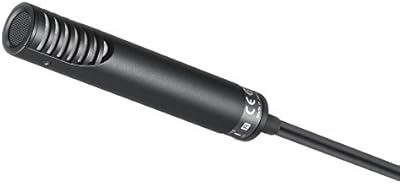
Sony ECM-MS2 Stereo Shotgun Condenser Microphone
76%
91%
Audio Clarity
88%
Stereo Performance
86%
Build Quality
67%
Ease of Use
62%
Compatibility
More
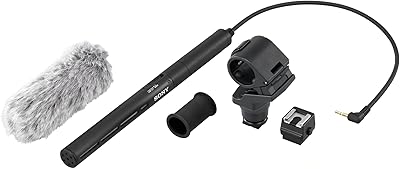
Sony ECM-CG50 Shotgun Microphone
71%
83%
Audio Clarity
79%
Noise Rejection
44%
Wind Noise Handling
51%
Compatibility
62%
Build Quality
More
Sony ECM-B1M
Sony ECM-B1M
86%
93%
Sound Quality & Voice Isolation
96%
Form Factor & Portability
64%
Camera Compatibility
98%
Battery Independence
89%
Recording Versatility
More
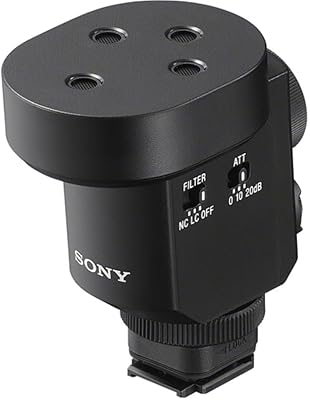
Sony ECM-M1 Digital Shotgun Microphone
78%
91%
Audio Clarity
88%
Noise Floor Performance
84%
Recording Mode Versatility
47%
Ecosystem Compatibility
61%
Build Quality
More
Sony ECM-VG1 Shotgun Microphone
79%
88%
Audio Clarity
86%
Directional Rejection
81%
Wind Noise Handling
91%
Build Quality
78%
Low-Cut Filter Utility
More
Sony ECM-B10 Shotgun Microphone
80%
91%
Audio Clarity
83%
Beamforming Performance
88%
Polar Pattern Versatility
79%
Noise Filtering
67%
Wind Noise Handling
More
Sony ECM-XYST1M
Sony ECM-XYST1M
84%
94%
Ease of Use
88%
Audio Quality & Stereo Imaging
68%
Build Quality
97%
Battery & Power Management
84%
Value for Money
More
Sony ECM-CS3 Clip-on Microphone
72%
83%
Voice Call Clarity
91%
Ease of Setup
78%
Clip & Wearability
67%
Background Noise Rejection
74%
Build Quality
More
Sony ECM-44 Lavalier Microphone
85%
88%
Sound Quality
92%
Portability
85%
Build Quality
89%
Ease of Setup
80%
Battery Life
More
Sony ECM674/9X Shotgun Microphone
71%
83%
Audio Directivity
78%
Build Quality
81%
Power Flexibility
74%
Signal-to-Noise Ratio
86%
Compatibility
More

FAQ

This is an important question to ask before buying. The ECM-680S uses a 5-pin XLR connector, which is not found on most consumer or prosumer cameras. You will need either a professional camcorder or field mixer with a dedicated XLR-5-pin input, or a purpose-built adaptor to break the signal into two standard XLR channels. It also requires phantom power, so a basic recorder without that feature will not work.

Mid-side, or MS, recording uses two capsules — one facing forward to capture the center of the sound and one bi-directional capsule capturing left and right ambience. The key advantage is that the stereo width is encoded rather than fixed, meaning an editor can adjust how wide or narrow the stereo image sounds in post-production without re-recording. For documentary and EFP work where you want flexibility in the edit, that is a genuinely useful capability.

It can handle both, which is part of its appeal for EFP work. In monaural mode, it operates as a uni-directional shotgun mic focused on the sound source in front of it, making it usable for on-location dialogue or interview capture. Stereo mode is better suited for wide environmental sound. That said, dedicated dialogue shotgun mics are typically lighter and more compact, so for dialogue-only work, a single-capsule alternative might be a more practical choice.

The built-in low cut filter has two switch positions — M and V — that roll off low-frequency content below a certain threshold. You would typically engage it when recording outdoors to reduce wind rumble, traffic noise, or the low-frequency vibration that can come through a boom arm. It is a quick, practical tool for cleaning up a recording at the source rather than relying entirely on post-production EQ.

For professional broadcast and EFP applications, yes — it remains a credible option. The mid-side technique itself has not changed, and the mic's core specifications hold up well against current alternatives. That said, the market now has strong MS competitors from Sennheiser and Rode, so it is worth comparing specs and compatibility with your existing kit before committing. The long market presence does suggest it has earned sustained trust in professional circles.

The included foam windscreen provides basic protection against light wind and breath plosives. For outdoor shoots in moderate wind conditions, it should be adequate. In stronger wind or highly demanding outdoor environments, many professionals supplement it with a full blimp or softie-style wind protection system, but for typical EFP work the included windscreen covers most situations.

The ECM-680S can be camera-mounted using the included mic holder and stand screw adaptor, which supports standard thread sizes. That said, at 1.9 pounds and over 15 inches long, it is a substantial piece of kit to hang off a camera body. Most operators use it on a boom pole or a dedicated mic stand for comfort and stability, particularly on longer shoots.

It is a physical switch directly on the microphone body, which makes it fast and practical on location. There is no menu navigation required, so you can change modes quickly between setups without interrupting your workflow. That kind of direct hardware control is one of the things working professionals tend to appreciate about broadcast-grade equipment.

Both are professional MS shotgun microphones aimed at the same EFP and broadcast market, and both are well-respected. The Sennheiser MKH 418-S is notably lighter and is often praised for its RF-condenser design which performs well in high-humidity conditions. The ECM-680S uses large diaphragm capsules and has a slightly different tonal character. The best choice often comes down to your existing kit, your preferred sound signature, and which brand your rental house or broadcast facility already supports.

Since the ECM-680S is positioned in the professional broadcast segment rather than the mass consumer market, outright counterfeits are less common than with mainstream consumer electronics. That said, grey-market imports without valid regional warranties do exist. To protect yourself, buy from an authorized Sony dealer or a reputable professional audio retailer, and verify that the included warranty documentation is valid in your region before purchasing.

Where to Buy