

Overview

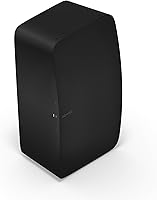
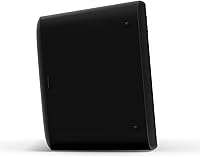
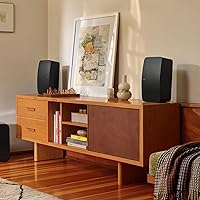
The Sonos Five is Sonos's most capable single-speaker offering, and it carries that status seriously — its sound profile was shaped with input from acclaimed producer Giles Martin, who also contributed to remastering The Beatles catalog. It succeeds the well-regarded Play:5, refining the acoustic architecture rather than rethinking it entirely. Worth noting upfront: this is a corded, indoor-only unit — no battery, no weather resistance, no portability. It plugs into a wall and stays put. Physically, you can orient it horizontally for built-in stereo output or stand it upright when pairing two units for enhanced separation. At this price tier, it targets dedicated home audio listeners, not casual buyers.

Features & Benefits

The driver layout inside the Five is where things get interesting. Three high-excursion woofers sit within a sealed acoustic enclosure, which prevents air from cycling in and out of the cabinet — ported designs can introduce low-frequency muddiness, so this matters. Bass here is controlled and defined rather than boomy. Two tweeters are angled outward to push sound toward the room's edges, while a center-facing tweeter handles vocal frequencies directly. Vocals stay grounded while the stereo image spreads wide. The 3.5mm line-in port lets you hook up a turntable or CD player without additional hardware — a practical feature many competing speakers have quietly dropped. Add Hi-Res Audio support and AirPlay 2, and streaming quality holds up at any volume.

Best For

This wireless HiFi speaker is a natural fit for anyone already invested in the Sonos ecosystem — it drops into an existing multi-room setup without friction. If you own vinyl, the analog line-in means your turntable feeds directly into the speaker with no receiver, no converter, no fuss. It also performs well in open-plan living spaces where most single speakers run out of steam. One unit covers a lot of ground. That said, it's not the right call for buyers who want portability or outdoor use. The people who get the most from this Sonos speaker are those building a permanent, app-managed home audio setup and willing to invest accordingly.

User Feedback

With over a thousand ratings averaging 4.3 stars, the Five earns its reputation more through consistency than hype. Buyers frequently highlight the depth and control of the bass, reliable Wi-Fi performance, and how confidently the speaker holds up in a large room. The app experience divides opinion — many find it clean and intuitive, but a meaningful number of users chafe at having no hardware controls whatsoever. The price is the most common sticking point, and fairly so. Several reviewers also note that the stereo pairing feature requires buying a second unit at full cost — worth knowing before committing. Long-term owners generally report strong build durability and steady software support, which adds some weight to the investment argument.

Pros

  • Bass is controlled and physically present without needing a separate subwoofer.
  • The sealed cabinet design keeps low-frequency reproduction clean and defined rather than bloated.
  • Angled side tweeters create a soundstage that extends well beyond the speaker's physical width.
  • The 3.5mm line-in port lets turntable owners plug in directly — no receiver or converter required.
  • Drops into an existing Sonos multi-room setup quickly and stays reliably in sync.
  • Hi-Res Audio support means streaming quality holds up at high volumes without noticeable compression.
  • Horizontal or vertical placement both work well, with automatic output adjustment for each orientation.
  • Build feels solid and consistent — long-term owners frequently report no degradation after years of daily use.
  • Vocal clarity is a genuine strength, keeping lead instruments and voices grounded and present in the mix.
  • Software support history is longer than most consumer electronics brands at this price tier.

Cons

  • No physical controls on the unit — every adjustment depends entirely on the Sonos app.
  • Recent app updates removed features and introduced instability that frustrated a significant portion of owners.
  • No Bluetooth support means guests or users away from the home Wi-Fi have no fallback connection option.
  • The full stereo pairing experience requires buying two units, at double the already-premium price.
  • Single-unit performance in very large or loft-style rooms can feel underpowered, especially in the low end.
  • Polycarbonate finish attracts fingerprints and surface scratches more visibly than fabric or metal alternatives.
  • Value proposition leans heavily on ecosystem loyalty rather than standalone hardware merit.
  • Some owners report intermittent Wi-Fi dropouts on older routers or congested home networks.
  • No wired Ethernet port available as a fallback for users with unstable wireless environments.
  • The 2024 app overhaul introduced lingering uncertainty about the brand's long-term software decision-making.

Ratings

The scores below for the Sonos Five were generated by our AI system after analyzing thousands of verified owner reviews from global markets, with spam, bot-submitted, and incentivized feedback actively filtered out. Each category reflects the full spectrum of real buyer experience — from what genuinely impressed long-term owners to the friction points that came up repeatedly and honestly. Nothing has been smoothed over to flatter the product.

Sound Quality
93%
Owners consistently describe the audio reproduction as unusually honest — instruments sit in defined positions, vocals stay centered and clear, and bass hits with weight without muddying the midrange. The sealed cabinet design pays off noticeably in real listening rooms where cheaper ported speakers tend to sound bloated.
A handful of critical listeners feel the tuning skews slightly warm, which can soften the top-end detail on busy orchestral tracks or complex electronic mixes. At very high volumes, a small number of users noticed subtle compression in the upper frequencies.
Bass Performance
91%
The low-end is widely praised as the speaker's standout trait. In open-plan kitchens and living rooms, owners report that bass feels genuinely physical without requiring a separate subwoofer — a real differentiator at this form factor. Electronic music and hip-hop listeners in particular find the response satisfying.
In very large rooms or loft-style spaces, a few buyers found that bass presence drops off more than expected without pairing a second unit. Those who went in expecting subwoofer-level output from a single speaker occasionally came away with adjusted expectations.
Soundstage & Stereo Imaging
88%
The angled side tweeters do meaningful work here — buyers frequently note that sound appears to come from well beyond the physical width of the cabinet, which is unusual for a single-box speaker. Positioned horizontally on a shelf or sideboard, it produces a convincing stereo spread across a medium-sized room.
The stereo imaging advantage compounds significantly when two units are paired, and some owners feel the single-unit experience — while good — leaves them wanting more. A couple of reviewers noted that off-axis listening positions, such as from an adjacent room, reduce the spatial effect considerably.
Multi-Room Integration
89%
For households already running Sonos hardware, adding this speaker is genuinely frictionless. It joins the existing network quickly, groups with other rooms reliably, and stays in sync without the latency hiccups that plague some competing ecosystems. Long-term Sonos users describe it as the anchor piece their setup was missing.
Buyers coming from non-Sonos ecosystems face a steeper onboarding curve and may need to replace or supplement existing hardware to get full value. A few reviewers on mixed smart-home setups flagged occasional sync delays when grouping across many rooms simultaneously.
Connectivity & Input Options
84%
The 3.5mm line-in port is a genuine asset that many premium wireless speakers have quietly removed. Turntable owners in particular appreciate being able to pipe analog audio directly into the speaker without an external phono preamp or hub. AirPlay 2 works reliably for iOS households.
There is no Bluetooth — connectivity depends entirely on Wi-Fi and AirPlay 2, which means guests on a different network or users in a spotty Wi-Fi area face real limitations. Android users who rely on Spotify Connect or the Sonos app get a functional but occasionally clunkier experience compared to Apple device owners.
App Experience
66%
34%
The Sonos app handles multi-room grouping, EQ adjustments, and source switching cleanly enough for most daily use. Owners who use it as a set-and-forget control layer tend to be satisfied, and the Trueplay tuning feature — which calibrates sound to your room — is a legitimate differentiator.
A notable portion of reviews criticize the app harshly following recent updates that removed features and altered the interface. There are no physical controls on the speaker itself, so any app instability directly impacts the listening experience — a design choice that frustrates users when their phone is across the room or the app misbehaves.
Build Quality & Materials
82%
18%
The polycarbonate shell feels solid and purposeful in hand — not hollow or plasticky — and the overall fit and finish reads as premium for the price tier. Long-term owners frequently comment that the speaker looks and performs the same after several years of daily use, which speaks to Sonos's manufacturing consistency.
Polycarbonate does attract fingerprints and fine surface scratches over time, particularly on the black finish. A few buyers expressed a preference for a more premium material like aluminum or fabric-wrapped options, especially given the asking price.
Setup & Ease of Use
78%
22%
Initial setup through the Sonos app is relatively guided and straightforward for most users. The automatic orientation detection — where the speaker identifies whether it is placed horizontally or vertically and adjusts its output accordingly — is a thoughtful hardware touch that removes a configuration step.
First-time Sonos buyers occasionally struggle with network requirements, particularly in homes with mesh Wi-Fi systems or dual-band routers. A handful of reviewers reported needing to reset and re-add the speaker after firmware updates disrupted connectivity.
Value for Money
61%
39%
Buyers who are firmly committed to the Sonos ecosystem and use the speaker daily in a large room tend to conclude that the price is justified over a multi-year horizon. The software support longevity and audio performance combination is hard to match at the single-speaker level.
For buyers evaluating it purely as a standalone speaker against the wider market, the price is difficult to defend — competing options from other manufacturers deliver comparable or near-comparable audio performance for significantly less. The value proposition leans heavily on ecosystem lock-in rather than hardware alone.
Volume & Room Coverage
86%
In standard living rooms and open-plan kitchens up to roughly 400 square feet, a single unit fills the space without straining. Owners consistently report that the speaker maintains composure and tonal balance at high volumes rather than distorting or thinning out the way smaller speakers do.
In genuinely large spaces — open lofts, extended open-plan areas, or rooms with high ceilings — a single unit can feel underpowered, particularly at the low end. The speaker performs best as a room anchor rather than a whole-floor solution.
Stereo Pair Performance
87%
Reviewers who made the commitment to buy two units describe the stereo pair experience as transformative compared to a single speaker — the soundstage broadens dramatically and each unit automatically switches to mono, delivering a clean left-right separation that audiophile listeners find genuinely satisfying.
The core caveat is cost: achieving this setup means spending double the already-premium single-unit price. Several reviewers felt the marketing undersells how much the single-unit experience pales relative to a pair, making them feel the full product vision requires a budget many buyers will not anticipate.
Wi-Fi Reliability
83%
The majority of long-term owners report stable, drop-free wireless performance once the speaker is properly set up on a reliable home network. Background switching between rooms in a multi-speaker setup is smooth for most users who have invested in a solid router.
Users with older routers, congested 2.4GHz networks, or certain ISP-provided gateway devices report intermittent dropouts that are difficult to diagnose. The lack of a wired Ethernet port — present on some older Sonos models — is occasionally lamented by users who would prefer a hardwired fallback.
Vocal & Midrange Clarity
88%
The dedicated center tweeter handling vocal frequencies is not a marketing abstraction — owners who listen to jazz, acoustic music, and spoken-word content describe voices as anchored and present in a way that smaller or less deliberately engineered speakers rarely achieve. Podcast listening and vocal-led music both benefit noticeably.
In very dense mixes with competing midrange elements — think dense rock recordings or layered electronic music — the vocal clarity advantage becomes less obvious. A small number of users felt the midrange tuning lacks a degree of edge or bite that certain music genres call for.
Long-Term Software Support
74%
26%
Sonos has a longer track record of supporting older hardware with firmware updates than most consumer electronics brands. Several Five owners note that the speaker continues to receive meaningful software updates years after purchase, adding to the sense of long-term investment value.
The company's 2024 app overhaul drew sustained criticism from owners across the product lineup, including Five users, for removing features and degrading stability. This has introduced some uncertainty about future software decisions and tempered confidence in the brand's long-term software stewardship.

Suitable for:

The Sonos Five is purpose-built for a specific kind of buyer, and it delivers best when that buyer knows exactly what they want. If you already own Sonos hardware and need a high-output speaker to anchor a main living space, this is the obvious next step — it integrates without friction and raises the audio ceiling noticeably. Open-plan rooms, where most single speakers run out of authority halfway across the space, are where the Five genuinely earns its place. Vinyl listeners will appreciate the 3.5mm line-in port, which lets a turntable connect directly without any additional hardware in the chain. Buyers who prioritize accurate sound staging and clear vocal reproduction over raw loudness or portability will find the driver layout genuinely well-matched to their listening habits. If you are building a long-term whole-home audio system managed through a single app and want a speaker that holds its value across firmware updates and hardware generations, this wireless HiFi speaker is a credible investment.

Not suitable for:

If portability or outdoor use is anywhere on your list of requirements, the Sonos Five is simply the wrong tool — it is a corded, indoor-only unit with no battery and no weather resistance, full stop. Budget-conscious buyers comparing it purely on audio performance against the wider speaker market will find the price hard to justify when alternatives deliver competitive sound for significantly less. Buyers hoping to unlock the full stereo experience should also understand that achieving proper left-right separation requires purchasing a second unit, which effectively doubles an already steep cost — that reality is not always made clear at the point of sale. Android-first households or users with fragmented smart-home setups may find the app-dependent control model limiting, particularly following recent updates that reduced functionality and frustrated a vocal portion of the user base. Anyone without an existing Wi-Fi network, or with a weak or unstable home network, should know there is no Bluetooth fallback and no wired Ethernet port to compensate. If your goal is a portable speaker for the garden, kitchen counter versatility, or travel use, this Sonos speaker is overkill in price and underequipped in form.

Specifications

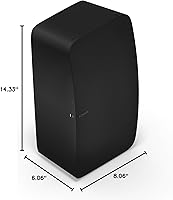
  • Dimensions: The speaker measures 8.06″ deep, 14.33″ wide, and 6.06″ tall, making it a substantial unit suited to shelves, sideboards, or dedicated speaker stands.
  • Weight: At 14 pounds (6,350g), the unit is heavy enough to stay firmly planted but requires a surface rated for the load.
  • Driver Configuration: Three high-excursion woofers handle bass and low-midrange frequencies, while two angled side tweeters and one center-facing tweeter manage spatial and vocal reproduction respectively.
  • Tweeter Diameter: Each tweeter measures 1 inch in diameter, tuned for precise high-frequency dispersion across the listening space.
  • Frequency Response: The speaker reproduces frequencies down to 48 Hz, covering a wide range without the need for a separate subwoofer in most standard room sizes.
  • Audio Driver Type: The unit uses a hybrid driver design, combining elements optimized for both accuracy and output efficiency across the full frequency range.
  • Connectivity: Wireless connectivity is handled via Wi-Fi and AirPlay 2, with NFC also supported for compatible devices.
  • Line-In Port: A 3.5mm analog line-in port allows direct connection of a turntable, CD player, or other analog audio source without additional hardware.
  • Audio Output Modes: The speaker operates in stereo mode when placed horizontally as a single unit, and automatically switches to optimized mono when paired vertically with a second unit.
  • Placement Orientation: The speaker supports both horizontal and vertical placement, with onboard detection that adjusts the audio output configuration automatically based on orientation.
  • Power Source: The unit is powered by a corded electric connection and includes a power cable in the box; there is no internal battery or option for wireless power.
  • Material: The outer casing is constructed from polycarbonate (PC), offering a solid, lightweight shell with a consistent matte finish.
  • Water Resistance: The speaker carries no water resistance rating and is strictly intended for indoor use only — it should not be exposed to moisture or outdoor conditions.
  • Control Method: All primary controls including volume, grouping, EQ, and source selection are managed through the Sonos app; there are no physical buttons on the unit.
  • Hi-Res Audio: The speaker supports Hi-Res Audio playback, allowing lossless and high-bitrate streaming services to deliver their full audio quality without downsampling.
  • Multi-Room Audio: Full multi-room audio functionality is available through the Sonos ecosystem, allowing the speaker to be grouped with other Sonos devices for synchronized whole-home playback.
  • Surround Configuration: The speaker supports a 2.0 channel surround configuration, delivering stereo output without a dedicated subwoofer channel built in.
  • Included Components: The package includes the speaker unit itself, a power cable, and product and warranty documentation.
  • Warranty: Sonos provides a limited warranty with the unit; buyers should verify the duration and terms applicable in their region at the time of purchase.
  • Indoor Use: The speaker is designed and rated for indoor use only, and Sonos does not recommend or support outdoor or semi-outdoor placement.

Related Reviews
Sonos Amp
Sonos Amp
88%
94%
Sound Quality
88%
Ease of Setup
91%
Integration with Sonos System
90%
Build Quality
85%
Size and Design
More
SHANLING SONO
SHANLING SONO
89%
95%
Sound Clarity
88%
Bass Response
92%
Midrange Detail
90%
Treble Resolution
89%
Build Quality
More
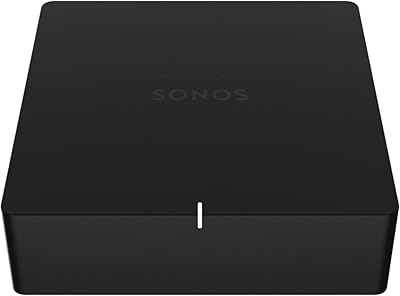
Sonos Port
Sonos Port
82%
93%
Ecosystem Integration
89%
Multi-Room Audio Performance
86%
Setup & Installation
84%
Wireless Connectivity Reliability
88%
Apple AirPlay 2 Support
More
Sonos Outdoor by Sonance
85%
93%
Sound Quality
89%
Build Quality/Durability
72%
Ease of Installation
94%
Water Resistance
91%
Integration with Sonos Amp
More
Sonos Era 300
Sonos Era 300
77%
93%
Spatial Audio Performance
89%
Sound Quality (Overall)
61%
Value for Money
86%
Build Quality & Materials
91%
Ecosystem Integration
More
Sonos Sub Mini
Sonos Sub Mini
88%
92%
Bass Performance
90%
Integration with Sonos Devices
88%
Size and Design
87%
Wi-Fi Connectivity
93%
Setup Process
More
Sonos Ray Soundbar
Sonos Ray Soundbar
85%
85%
Sound Quality
91%
Setup Ease
89%
Connectivity
67%
Bass Performance
80%
Build Quality
More
Sonos Roam 2
Sonos Roam 2
87%
93%
Sound Quality
95%
Portability
92%
Build Quality
78%
Battery Life
88%
Connectivity and Pairing
More
Sonos Era 100
Sonos Era 100
76%
91%
Sound Quality
87%
Trueplay Room Calibration
58%
App Experience & Setup
93%
Multi-Room Integration
84%
Connectivity & Compatibility
More
Sonos Move 2
Sonos Move 2
81%
93%
Sound Quality
88%
Bass Performance
91%
Battery Life
61%
Portability
89%
Build Quality & Durability
More

FAQ

Yes, it works as a standalone speaker right out of the box — you just need the Sonos app and a Wi-Fi network. That said, the speaker is clearly designed with multi-room expansion in mind, so buyers who plan to keep it as a single, isolated unit may find some of the app's features feel underused.

Yes, the Five has a 3.5mm line-in port that accepts analog audio from a turntable, CD player, or any device with a standard headphone or RCA-to-3.5mm output. If your turntable has a built-in phono preamp, you can plug it straight in. If it does not, you will need an external phono stage between the turntable and the speaker.

Not really — this wireless HiFi speaker has no physical buttons or dials on the unit itself. AirPlay 2 lets you control volume and playback directly from an Apple device, which bypasses the app for day-to-day use. But for anything beyond basic playback — grouping rooms, adjusting EQ, switching sources — the Sonos app is required.

When you place two units upright and pair them in the app, each speaker automatically configures itself as either the left or right channel, delivering true stereo separation. The difference in soundstage compared to a single unit is genuinely noticeable. The honest caveat is that pairing two means spending double the price of one — that is a real financial commitment, and worth factoring into your budget before assuming the single-unit experience is the full picture.

Yes, most major streaming services are supported through the Sonos app, including Spotify, Apple Music, Tidal, Amazon Music, and others. Spotify Connect also works independently of the Sonos app, which is handy. The exact service library can shift with app updates, so it is worth checking the current Sonos supported services list if a specific platform is critical to you.

The speaker connects over Wi-Fi but is primarily designed to work on 2.4GHz networks. Some mesh network setups and modern dual-band routers handle the handshake automatically, but users on strictly 5GHz-only networks have occasionally reported setup difficulties. If you run into connection issues during setup, temporarily switching your phone to 2.4GHz usually resolves it.

The Five can be paired as surround speakers in a Sonos home theater configuration alongside a compatible Sonos soundbar and subwoofer. Two units placed as rear surrounds is a recognized use case within the ecosystem. Used as a standalone speaker, it does not function as a surround sound processor on its own.

The Five is the direct successor to the Play:5, retaining the same core driver layout and form factor while updating the acoustic tuning — the current version was shaped with input from producer Giles Martin. The practical differences are most apparent in the refinement of sound staging and the updated app ecosystem rather than any dramatic hardware overhaul. If you own a Play:5 and are happy with it, the upgrade is meaningful but not urgent.

The polycarbonate shell wipes down easily with a dry or slightly damp cloth. The grille is fixed rather than removable, so internal dust accumulation is not something users typically need to address. Avoid any liquid cleaners near the line-in port or power connection.

This is a fair concern given Sonos's 2024 app update, which drew criticism for removing features that owners had relied on. Sonos has historically maintained hardware support for a longer period than many consumer electronics brands, but the app controversy has introduced some reasonable skepticism. The speaker will continue to function as long as the app and firmware remain operational — but unlike a traditional amplifier, its feature set is tied to ongoing software decisions that are ultimately outside the buyer's control.