Overview

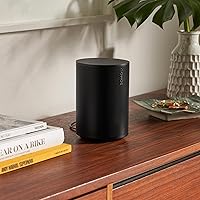
The Sonos Era 100 arrived in early 2023 as a genuine step forward from the One SL, and its most significant upgrade is immediately obvious: dual-tweeter stereo from a speaker small enough to sit on a nightstand. That's not a minor tweak — single-driver speakers simply cannot produce real stereo separation, and most compact smart speakers don't even try. This Sonos speaker sits at a premium price point, targeting listeners who care about sound quality and already own, or plan to build, a multi-room audio setup. One honest caveat upfront: it runs on mains power only. No battery, no outdoor use. If portability is your priority, this smart speaker is not the right fit.

Features & Benefits

What makes the Era 100 worth serious consideration is the acoustic engineering packed into its compact frame. Two tweeters fire at slightly different angles, creating a soundstage that genuinely spreads beyond the cabinet — something you feel as much as hear. The Trueplay room calibration feature is legitimately useful: the Sonos app uses your phone's microphone to measure how sound bounces around your space, then adjusts the EQ accordingly. It takes under a minute and makes a real difference, especially near walls or corners. Connectivity covers Wi-Fi, AirPlay 2, Bluetooth, and Spotify Connect. And if you own a turntable, the optional Line-In Adapter opens up an analog input — a thoughtful addition for vinyl listeners.

Best For

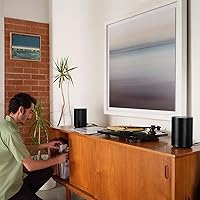
The Era 100 is a strong fit for anyone who wants genuine stereo quality in a compact form factor and isn't looking to carry it around. Desk listeners, in particular, benefit from the stereo spread at close range — it's a noticeable upgrade over a typical mono Bluetooth speaker. Existing Sonos owners will appreciate how naturally this smart speaker fits into a multi-room setup; adding a new room takes minutes. Vinyl fans should note the Line-In compatibility (adapter sold separately), which gives record players a direct path into the Sonos ecosystem. AirPlay 2 and Spotify Connect users will also find the integration intuitive and reliable.

User Feedback

Buyers consistently praise the improved bass response over the previous generation — deeper and more present without overwhelming the mids, though it's clearly sized bass, not room-filling. Trueplay gets frequent positive mentions too, with many noting it made a meaningful difference in acoustically tricky rooms. The recurring criticism is the app dependency: setting up and controlling this Sonos speaker requires the Sonos app, which frustrated some users — particularly after Sonos rolled out a widely criticized redesign in 2024. Complaints about missing features and instability surfaced across forums and review threads, and it's worth knowing before you buy. The corded form factor draws occasional pushback from those who switched from portable speakers.

Pros

  • Dual-tweeter stereo separation is a real, audible upgrade over single-driver smart speakers in the same size class.
  • Trueplay room calibration noticeably improves sound quality in acoustically tricky spaces with minimal user effort.
  • Multi-room grouping with other Sonos speakers is rock-solid and one of the most reliable in the category.
  • AirPlay 2 and Spotify Connect work without switching inputs or jumping through extra hoops.
  • Volume control is unusually precise — 128 steps means no jarring jumps between levels.
  • Compact enough for a nightstand or desk without dominating the space visually.
  • Turntable owners can route analog audio directly into the Sonos ecosystem via the Line-In Adapter.
  • Alexa integration handles smart home commands and playback controls reliably in daily use.
  • Build quality feels solid and the design stays understated enough to fit most home environments.

Cons

  • The Sonos app is mandatory for setup — there is no way around it, even for basic first-time use.
  • The 2024 Sonos app redesign stripped features and introduced instability that frustrated long-term users.
  • Analog line-in requires a separate adapter purchase that should arguably be included at this price.
  • Bass performance is good for the cabinet size but not impressive in absolute terms — bass-heavy listeners will want a Sub.
  • No Google Assistant support leaves Android-first households with a narrower voice control experience.
  • Trueplay room calibration requires an iOS device, which is an unexpected limitation for Android-only users.
  • Long-term reliance on Sonos cloud software and app updates introduces uncertainty that purely hardware-focused buyers dislike.
  • Maximum volume in larger or open-plan rooms reveals the limits of this smart speaker fairly quickly.

Ratings

Our scores for the Sonos Era 100 are generated by AI after systematically analyzing thousands of verified buyer reviews from global markets, with spam, bot activity, and incentivized feedback actively filtered out. The result is an honest, balanced picture — standout strengths and genuine frustrations weighted equally. Whether you are considering this smart speaker for a dedicated listening room or an expanding whole-home setup, the scores below reflect what real owners experience day to day.

Sound Quality
91%
The dual-tweeter stereo design consistently earns praise from buyers upgrading from single-driver smart speakers. Listeners describe a noticeably wider soundstage during everyday music sessions — streaming playlists, podcasts, or background jazz at a dinner table all benefit from the stereo spread that most compact speakers simply cannot reproduce.
Bass is satisfying for the cabinet size but should not be mistaken for deep, room-filling low end. Buyers expecting subwoofer-level punch without pairing a Sonos Sub will find the low frequencies adequate rather than impressive, particularly with bass-heavy genres like hip-hop or electronic music at higher volumes.
Trueplay Room Calibration
87%
Trueplay draws consistently positive feedback, especially from buyers who placed the Era 100 in acoustically awkward spots — tight shelves, corner desks, or rooms with hard floors. The automatic EQ adjustment takes under a minute and many users report it made a clearly audible difference without any manual fiddling.
Trueplay requires an iOS device to run the room calibration process, which frustrates Android-only households. A subset of users also noted that the tuning felt overly aggressive in very small rooms, slightly dulling the high-end sparkle that the dual tweeters are capable of producing.
App Experience & Setup
58%
42%
Initial pairing is genuinely quick — plug in, open the app, follow a handful of steps, and the speaker is producing sound within minutes. Users with existing Sonos systems appreciate how effortlessly adding a new room fits into the app workflow, with grouping and scheduling already in place.
The 2024 Sonos app redesign drew significant backlash across forums and review threads, with long-standing users reporting missing features, slower navigation, and occasional instability. For a premium-priced speaker that is entirely dependent on an app for setup and advanced controls, this is a real friction point that has visibly dented buyer confidence.
Multi-Room Integration
93%
Existing Sonos owners repeatedly highlight multi-room grouping as a core reason they chose this smart speaker. Syncing audio across multiple rooms — kitchen, office, bedroom — is reliable and low-latency compared to most competing ecosystems. It just works, consistently, which buyers in large households genuinely value.
The multi-room strengths are largely locked inside the Sonos ecosystem. Buyers mixing brands or hoping to group this speaker with non-Sonos devices over standard Bluetooth will find the experience limited. The ecosystem advantages come with an implicit commitment to staying within the Sonos family.
Connectivity & Compatibility
84%
AirPlay 2 and Spotify Connect work reliably without switching inputs or changing modes, which daily Apple and Spotify users find genuinely convenient. Bluetooth pairing is straightforward for guests or devices not connected to the home Wi-Fi, and NFC support adds a modern touch to quick device switching.
There is no 3.5mm auxiliary input built in — analog connectivity requires purchasing the Sonos Line-In Adapter separately, adding cost and a dongle to the setup. Buyers who assumed analog input was included out of the box have flagged this as an unexpected extra expense in reviews.
Build Quality & Design
82%
18%
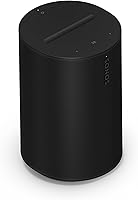
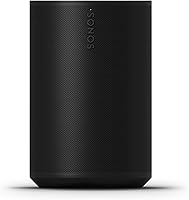
The polycarbonate housing feels sturdy and well-finished, with a clean, fabric-wrapped aesthetic that sits unobtrusively on a shelf or desk. Buyers appreciate the compact rectangular form factor — at roughly 7 inches tall, it occupies minimal space while projecting a premium visual impression consistent with its price tier.
The all-plastic construction, while solid, does not feel as premium to the touch as the price tag might suggest. A small number of reviewers noted that the fabric grille shows lint and dust relatively quickly in high-traffic environments, requiring occasional cleaning to maintain its appearance.
Ease of Setup
76%
24%
For users already in the Sonos ecosystem, adding this smart speaker to an existing system takes only a few minutes. The physical setup is minimal — one power cable, no separate hub required — and the app guides first-time users through each step with clear visual prompts.
The entire setup process is gated behind the Sonos app, which is a dealbreaker for buyers who prefer not to create an account or install additional software. Users without a stable Wi-Fi connection during setup also reported frustration, as the speaker cannot be configured or used offline.
Voice Assistant Performance
71%
29%
Alexa integration works reliably for standard smart home tasks — adjusting playback, checking timers, controlling compatible smart devices. Buyers who are already embedded in the Amazon ecosystem find the hands-free controls a genuine daily convenience, particularly in kitchen or desk setups where touching a phone is impractical.
Voice assistant functionality is limited to Alexa; there is no native Google Assistant support. Users who prefer Google Home or Apple Siri voice control will find the experience either absent or requiring workarounds, which is a genuine gap given the premium positioning of this smart speaker.
Value for Money
74%
26%
For listeners who genuinely prioritize stereo sound in a compact, network-connected form factor, the Era 100 delivers a level of audio quality that noticeably outperforms cheaper alternatives. The Trueplay calibration and multi-room capabilities add meaningful utility that buyers with larger homes or multiple speakers tend to justify readily.
At this price tier, the lack of a built-in analog input, the app dependency, and the 2024 software controversy make the value proposition harder to defend against competing options. Buyers comparing it strictly on specs will find areas where less expensive speakers perform comparably.
Portability & Flexibility
41%
59%
The compact footprint gives the Era 100 genuine placement flexibility indoors — bookshelf, desk, kitchen counter, or nightstand all work well. At roughly 4.5 lbs, it is light enough to move between rooms without effort, as long as you are near a power outlet.
This smart speaker is entirely corded, making it a poor fit for anyone coming from a portable Bluetooth speaker. There is no battery, no outdoor capability, and no water resistance. Buyers who expected flexibility beyond the walls of their home will need to look elsewhere — this is a stationary indoor speaker, full stop.
Vinyl & Analog Source Support
69%
31%
For turntable owners, the ability to route a vinyl signal through the Sonos ecosystem is a niche but genuinely appreciated feature. Users report the analog signal sounds clean and natural once the Line-In Adapter is connected, and the ability to sync vinyl playback across multiple rooms is a distinct advantage over standalone speakers.
The required Line-In Adapter is sold separately, which adds cost and feels like an afterthought for a premium product. The extra accessory also introduces one more potential point of failure, and buyers who missed the footnote during purchase have voiced frustration at the unexpected additional expense.
Volume Range & Dynamics
83%
With 128 discrete volume steps, volume control is unusually precise — no sudden jumps between too-quiet and too-loud, which is a small but satisfying detail in daily use. Buyers note that the speaker maintains consistent audio quality across a wide volume range, from low-level background listening to filling a mid-size room.
At maximum volume in larger rooms, the Era 100 begins to lose composure slightly — particularly in the low-mids. It is not designed to be a party speaker or to fill open-plan spaces without support, and buyers who expected room-dominating output at this size will find the ceiling lower than anticipated.
Long-Term Reliability
78%
22%
Hardware reliability reports from buyers who have owned the Era 100 for over a year are generally positive. The speaker maintains consistent performance over time, and Sonos has a reasonable track record of pushing firmware updates that add features or address performance issues post-launch.
The 2024 app controversy raised broader questions about Sonos's software stewardship — some firmware updates temporarily disabled features that buyers relied on. For a device whose functionality is deeply tied to cloud software and ongoing app support, this history introduces a degree of long-term uncertainty that cautious buyers flag.

Suitable for:

The Sonos Era 100 is the right call for listeners who want genuine stereo sound from a compact, shelf-friendly speaker and have no intention of moving it around the house. If you already own other Sonos speakers, adding this one to your setup is a natural, low-friction expansion — the multi-room grouping works reliably and the whole ecosystem feels cohesive in a way that genuinely improves daily listening at home. Desk workers who spend long hours at a computer will appreciate the stereo separation at close range, which makes a meaningful difference compared to a standard mono smart speaker sitting nearby. Vinyl enthusiasts with a turntable are also well served here, provided they budget for the separate Line-In Adapter — the ability to pipe analog audio into the Sonos ecosystem is a niche but genuinely useful feature. AirPlay 2 and Spotify Connect users will find the wireless streaming experience reliable and intuitive, especially if those services are already central to how they listen to music every day.

Not suitable for:

If portability matters to you at all, the Sonos Era 100 is not the right speaker — it runs on mains power only, has no battery, and is not built for outdoor or on-the-go use. Buyers coming from portable Bluetooth speakers expecting the same flexibility will be disappointed; this smart speaker is a stationary, indoor-only device, full stop. Android users should also know that Trueplay room calibration requires an iOS device, which is a real limitation if you are an all-Android household. Those who are uncomfortable with app-dependent hardware should think carefully here — setup, advanced controls, and ongoing management all run through the Sonos app, and following the troubled 2024 redesign, confidence in that software layer has taken a hit among long-term users. Budget-conscious buyers comparing raw specs will find competing options at lower price points that cover basic smart speaker functionality, making the premium harder to justify unless the stereo audio quality and ecosystem integration are priorities you genuinely value.

Specifications

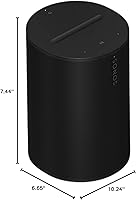
  • Dimensions: The speaker measures 7″ deep, 5.1″ wide, and 7.22″ tall, making it compact enough for a bookshelf, desk, or nightstand.
  • Weight: It weighs 2020 g (approximately 4.45 lbs), giving it a solid, premium feel without being difficult to reposition indoors.
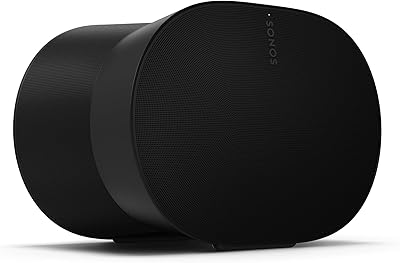
  • Driver Configuration: Two angled tweeters (each 1″) paired with an enlarged midwoofer (13.06 cm woofer diameter) deliver genuine stereo separation from a single cabinet.
  • Wireless Connectivity: Supports Wi-Fi (2.4 GHz and 5 GHz), Bluetooth 5.0, AirPlay 2, NFC, and Spotify Connect for flexible streaming across platforms and devices.
  • Analog Input: Line-in connectivity is available via the optional Sonos Line-In Adapter (sold separately), enabling connection of a turntable or other analog audio source.
  • Voice Assistant: Amazon Alexa is built in, allowing hands-free playback control, smart home commands, and other Alexa-compatible functions without a separate device.
  • Room Calibration: Trueplay automatic EQ uses the microphone in a paired iOS device to analyze room acoustics and optimize the speaker's output for its specific placement.
  • Volume Control: The speaker supports 128 discrete power levels, providing unusually fine-grained volume adjustment to avoid jarring jumps in loud or quiet environments.
  • Power Source: Powered exclusively via the included corded electric cable; there is no internal battery, and the speaker is not designed for portable or outdoor use.
  • Multi-Room Audio: Fully compatible with Sonos multi-room grouping, allowing synchronized playback across multiple Sonos speakers throughout a home via the Sonos app.
  • Housing Material: The outer casing is constructed from polycarbonate (PC) with a fabric grille, offering durability in a lightweight, clean aesthetic.
  • Water Resistance: The speaker carries no water or moisture resistance rating and is rated for indoor use only; exposure to rain, humidity, or liquids is not supported.
  • Surround Config: Operates as a 2.0 stereo speaker by default, and two units can be stereo-paired via the Sonos app for an expanded left-right channel setup.
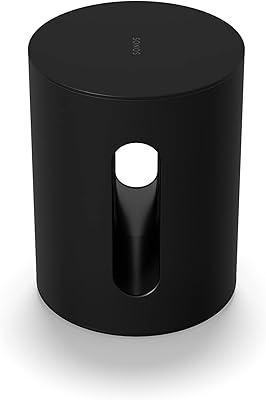
  • Subwoofer Support: Compatible with the Sonos Sub and Sub Mini wirelessly, allowing buyers to add dedicated low-frequency output if the built-in bass is insufficient for their needs.
  • Bluetooth Range: Bluetooth connectivity is rated up to 10 meters (approximately 33 feet) in open conditions, though walls and interference will reduce effective range in practice.
  • App Requirement: The Sonos app (available for iOS and Android) is required for initial setup, Trueplay calibration, and access to advanced features and multi-room controls.
  • Warranty: Covered by a limited manufacturer warranty; buyers should verify the specific duration and terms through Sonos directly at the time of purchase.
  • In the Box: The package includes the speaker unit and a power cable; the Sonos Line-In Adapter and any stereo-pair second unit are sold separately.

Related Reviews
Sonos Era 300
Sonos Era 300
77%
93%
Spatial Audio Performance
89%
Sound Quality (Overall)
61%
Value for Money
86%
Build Quality & Materials
91%
Ecosystem Integration
More
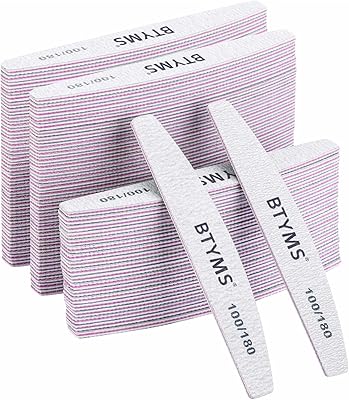
BTYMS 100/180 Grit Nail Files (100 Pcs)
87%
92%
Value for Money
89%
Durability
85%
Ease of Use
88%
Effectiveness on Acrylic Nails
87%
Performance on Gel Nails
More
AWOL VISION MW-100 100-inch Projector Screen
86%
94%
Image Quality
91%
Viewing Angle
88%
Setup Ease
85%
Build Quality
90%
Compatibility
More
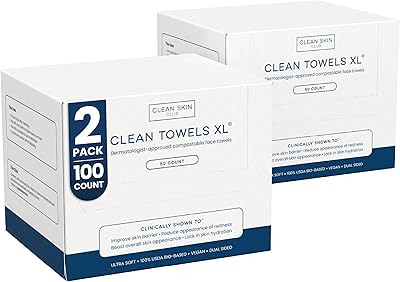
Clean Skin Club Clean Towels XL, 100% Biobased Face Towels, 100 Count
89%
93%
Softness & Texture
89%
Effectiveness in Makeup Removal
92%
Eco-Friendly Features
90%
Skin Sensitivity & Irritation
87%
Convenience for On-the-Go Use
More
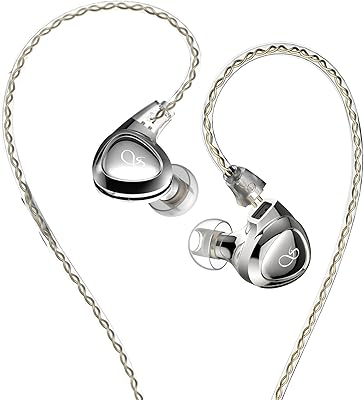
SHANLING SONO
SHANLING SONO
89%
95%
Sound Clarity
88%
Bass Response
92%
Midrange Detail
90%
Treble Resolution
89%
Build Quality
More
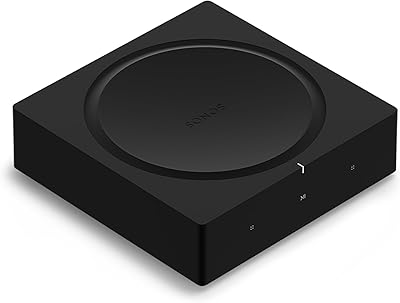
Sonos Amp
Sonos Amp
88%
94%
Sound Quality
88%
Ease of Setup
91%
Integration with Sonos System
90%
Build Quality
85%
Size and Design
More
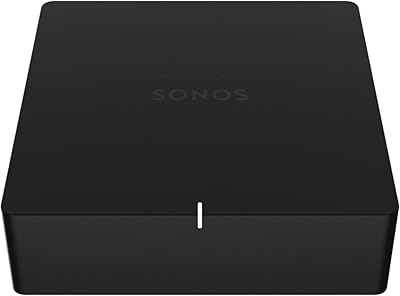
Sonos Port
Sonos Port
82%
93%
Ecosystem Integration
89%
Multi-Room Audio Performance
86%
Setup & Installation
84%
Wireless Connectivity Reliability
88%
Apple AirPlay 2 Support
More
Sonos Sub Mini
Sonos Sub Mini
88%
92%
Bass Performance
90%
Integration with Sonos Devices
88%
Size and Design
87%
Wi-Fi Connectivity
93%
Setup Process
More
Sonos Outdoor by Sonance
85%
93%
Sound Quality
89%
Build Quality/Durability
72%
Ease of Installation
94%
Water Resistance
91%
Integration with Sonos Amp
More
Sonos Roam 2
Sonos Roam 2
87%
93%
Sound Quality
95%
Portability
92%
Build Quality
78%
Battery Life
88%
Connectivity and Pairing
More

FAQ

Yes, the Sonos Era 100 requires a Sonos account and the Sonos app to complete initial setup. You cannot configure or use the speaker without going through the app, which means an account is effectively mandatory. It is a genuine friction point worth knowing about before you buy.

You can stream audio to the Era 100 via Bluetooth once it has been set up, but the initial setup itself requires a Wi-Fi connection and the Sonos app. After that, Bluetooth works as an ongoing option for guests or devices not on your network, though some features like Trueplay and multi-room grouping only function over Wi-Fi.

Yes, this smart speaker supports a wide range of streaming services including Spotify (via Spotify Connect), Apple Music (via AirPlay 2), Amazon Music, Tidal, and many others. You can also cast directly from most streaming apps on your phone without needing to use the Sonos app as an intermediary.

Yes, but not out of the box. You need to purchase the Sonos Line-In Adapter separately, which plugs into the USB-C port on the back of the speaker and provides a 3.5mm analog input. Once connected, you can route a phono preamp output directly into the Sonos ecosystem and even sync vinyl playback across multiple Sonos speakers.

Trueplay is one of the more genuinely useful automatic EQ features in this category. It uses your phone's microphone to measure how sound reflects off your walls and surfaces, then adjusts the speaker's output accordingly. The difference is most noticeable when the speaker is placed near a wall, in a corner, or on a hard surface — in those situations, many users report a clearly audible improvement after calibration.

The 2024 Sonos app redesign did cause real problems — missing features, slower performance, and instability that frustrated many long-term users. Sonos has since released updates aimed at addressing the complaints, but the episode understandably affected buyer confidence. It is worth checking recent user feedback closer to your purchase date to get a current picture of where the app stands.

Yes, two units can be stereo-paired through the Sonos app, assigning one as the left channel and one as the right. This creates a proper separated stereo setup rather than the simulated stereo you get from a single cabinet. It is a great option for a home office or listening room where you want a more immersive sound field.

They serve quite different purposes. This Sonos speaker is a stationary, mains-powered indoor device that prioritizes audio quality, stereo separation, and smart home integration. A portable Bluetooth speaker at a similar price offers freedom to move around and go outdoors, but typically cannot match the stereo soundstage or Wi-Fi streaming capabilities. If portability is important to you, this speaker is the wrong choice — if sound quality in a fixed spot is the priority, it is hard to beat in its size class.

Alexa is the only built-in voice assistant. That said, AirPlay 2 support means you can use Siri on your iPhone or iPad to control playback by directing audio to the speaker. Google Assistant is not natively supported, and Android users looking for full voice assistant integration will find the experience limited compared to what Alexa users get.

The bass is genuinely strong for a speaker this size — richer and more present than most compact smart speakers. For casual listening, background music, podcasts, and even moderate-volume music across most genres, it holds up well. If you listen to bass-heavy music like hip-hop or electronic at high volumes and expect deep, room-filling low end, you will eventually want to pair it with a Sonos Sub. But for the majority of everyday listening scenarios, the built-in bass is satisfying without any additions.