Overview

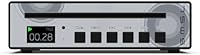
The SMSL PL100 CD Player arrived in late 2024 as one of the more compelling budget hi-fi releases in recent memory — a compact disc player that packs a DAC, headphone amp, and digital transport into a chassis barely wider than a paperback book. SMSL has built a reputation for affordable audiophile gear that punches above its price class, and the PL100 fits squarely in that tradition. Physical media is making a quiet comeback among listeners who value the ritual of spinning a disc, and this unit lands at exactly the right moment to serve that growing crowd without demanding a premium outlay.

Features & Benefits

At the heart of the PL100 is the CS43131 DAC chip, a component that delivers a THD+N of 0.001% and a signal-to-noise ratio of 110dB — numbers that translate to genuinely clean, quiet playback whether you are running it through RCA into a stereo amplifier or plugging headphones directly into the front 3.5mm jack. A second-generation PLL circuit tightens clock accuracy and keeps jitter in check, which matters more than many buyers realize over long listening sessions. The unit also handles CD-R, CD-RW, and MP3 CDs, includes MQA decoding support, and draws just 4 watts while spinning — practically nothing on your power bill.

Best For

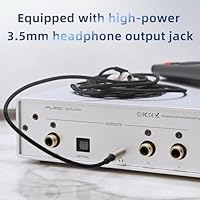
This compact disc player makes the most sense for a specific kind of listener: someone rebuilding or starting a physical media setup who wants more than a bare-bones transport. The built-in headphone output is convenient for desk or bedroom use, though 60mW into 32 ohms is on the modest side — efficient dynamic headphones will be fine, but planars or high-impedance cans may leave you short on volume and headroom. Anyone who needs a flexible digital source — optical or coaxial into a receiver or external DAC — will find the PL100 surprisingly capable given its compact footprint and accessible price point.

User Feedback

Early buyers have been largely positive about this SMSL unit, with sound quality and build quality earning the most consistent praise — people seem genuinely surprised by how quiet and detailed the playback sounds given the price tier. The remote performs reliably and the chassis feels solid. On the downside, a recurring concern involves disc reading reliability: older or heavily scratched CDs can trip the PL100 up more than a dedicated transport might. The headphone stage is adequate for casual listening but not exceptional, particularly with harder-to-drive headphones. Overall, a 4.4 out of 5 average across early reviewers is a strong opening for a player this new.

Pros

  • Clean, low-distortion audio output with a quiet noise floor that outperforms expectations at this price tier.
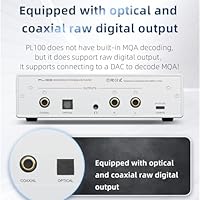
  • Multiple output options — RCA, optical, coaxial, and 3.5mm headphone — make the PL100 easy to integrate into almost any system.
  • The CS43131 DAC chip delivers genuinely hi-fi measured performance, with THD+N of 0.001% and SNR of 110dB.
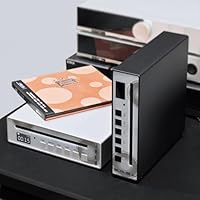
  • Compact chassis under 6.5 inches wide fits neatly on a crowded desk or shelf without dominating the space.
  • Supports CD-R, CD-RW, and MP3 CDs, giving it more everyday versatility than many single-format players.
  • Full-function remote control is included and users report it responds reliably from a reasonable distance.
  • Build quality feels solid and well-matched to the price point — nothing feels flimsy or cheap in hand.
  • Standby power draw under 0.1W means leaving it plugged in costs virtually nothing over time.
  • MQA decoding adds a modern feature rarely found in budget disc players, regardless of how often you use it.
  • Early user satisfaction is strong, with a 4.4 out of 5 average across dozens of real-world buyers.

Cons

  • The built-in headphone amp at 60mW into 32 ohms struggles with power-hungry or high-impedance headphones.
  • Older or scratched discs can cause read errors — the transport is not especially robust with imperfect media.
  • No balanced output option limits appeal for listeners with balanced amplifier or DAC inputs.
  • MQA support sounds compelling on paper but offers limited practical benefit for standard CD playback.
  • The 3.5mm headphone jack is serviceable but not ideal for serious desktop headphone listening sessions.
  • No display of track metadata beyond basic disc and track information — nothing like artist or album name readout.
  • As a relatively new product with under 100 reviews, long-term reliability data is still limited.
  • Coaxial and optical digital outputs share the same source signal, so there is no independent output configuration.

Ratings

The scores below for the SMSL PL100 CD Player were generated by our AI rating engine after analyzing verified buyer reviews from multiple global markets, with spam, bot activity, and incentivized feedback actively filtered out before any scoring took place. The result is a transparent look at where this compact disc player genuinely earns its praise — and where real buyers have run into friction. Both the highs and the honest shortcomings are reflected in every category score.

Sound Quality
88%
Buyers consistently describe the playback as clean and detailed, with a noise floor low enough that quiet passages in classical or jazz recordings feel genuinely immersive. The CS43131 DAC chip and second-generation PLL circuit work together to keep the signal transparent and free from the grain that plagues many budget players.
A small number of listeners feel the sound leans slightly analytical rather than warm, which may not suit those used to the smoother character of older CD players or tube-based equipment. At very high volumes through RCA into a sensitive amplifier, a trace of harshness has been noted by a few critical ears.
Headphone Performance
63%
37%
For casual listening with efficient earphones or easy-to-drive dynamic headphones, the built-in 3.5mm output is perfectly adequate — it handles desk listening sessions with budget IEMs or standard on-ear headphones without complaint. The convenience of not needing a separate amp for lighter headphone use is genuinely appreciated by the target audience.
The 60mW output into 32 ohms is a real ceiling. Anyone reaching for planar magnetic headphones or high-impedance models like 250-ohm or 300-ohm dynamics will find the stage running out of headroom well before a satisfying listening volume is reached. This is probably the most commonly cited disappointment among technically aware buyers.
Build Quality
81%
19%
The chassis feels more solid than the price point might suggest — panels are tight, there is no flex when handling the unit, and the disc tray or slot mechanism operates smoothly on initial use. Buyers setting this on a desk or shelf alongside pricier gear report that it does not look or feel out of place.
Some buyers note that the overall aesthetic is purely functional rather than premium, with a plastic-forward construction that shows fingerprints easily on the black finish. Long-term durability of the disc mechanism beyond the first year or two remains an open question given the limited time this model has been on the market.
Disc Reading Reliability
67%
33%
On clean, well-pressed standard audio CDs and freshly burned CD-Rs, the transport reads consistently and without audible hiccups. For buyers spinning discs they bought new and stored carefully, day-to-day reliability has been largely problem-free.
Older discs with surface wear, light scratches, or age-related oxidation are where the transport shows its limits — read errors and occasional track-skipping have been reported more frequently than users expected from a dedicated player. This is a meaningful concern for anyone with a large collection of secondhand or heavily used discs.
Output Versatility
93%
Having RCA analog, optical, coaxial, and a headphone output all on one unit at this price is genuinely unusual and gives buyers real flexibility — whether they are feeding a stereo amplifier, a home theater receiver, or an external DAC. Users frequently highlight this as a key reason they chose the PL100 over simpler, single-output alternatives.
There are no digital inputs, no balanced outputs, and no USB audio capability, so buyers hoping to expand functionality over time will find the connectivity is fixed entirely around disc playback output. The optical and coaxial outputs also share the same signal path with no independent level or routing control.
Remote Control
79%
21%
The included remote covers all core playback functions and responds reliably from across a room, which buyers in living room or bedroom setups particularly appreciate — no getting up to skip tracks or pause mid-listening session. Button layout is logical enough that most users get comfortable with it after a session or two.
The remote is not backlit, which makes low-light operation a matter of muscle memory rather than convenience. It also feels lightweight in hand, and the button travel is shallow enough that a few users have accidentally pressed the wrong control during relaxed listening.
MQA Decoding
58%
42%
Having MQA decoding built into a budget disc player is a genuine differentiator on paper, and buyers who have specifically burned MQA-encoded files to CD-R and tested the feature report that it functions correctly. It adds a layer of future-relevant capability that similar-priced players simply do not offer.
For the overwhelming majority of users spinning standard Red Book CDs, MQA decoding is entirely inert — it has no effect on everyday playback. The feature is also the subject of ongoing debate about its audible value, and several informed buyers note they paid no attention to it whatsoever in their purchasing decision.
Value for Money
91%
Across user feedback, the consistent theme is surprise — buyers did not expect this level of measured audio performance, output flexibility, and build quality at this price. Comparisons to single-purpose players costing two or three times as much come up repeatedly, particularly around digital output options and DAC quality.
Buyers who push into headphone listening with demanding cans, or who have large collections of aged discs, may feel the value equation shifts — those specific use cases expose limitations that make the price feel less like a bargain and more like a trade-off.
Setup & Ease of Use
86%
There is genuinely nothing complicated about getting the PL100 running — plug in power, connect your output cable of choice, load a disc, and press play. First-time CD player buyers and returning physical media listeners alike report being up and running within minutes of opening the box.
The manual is minimal and translated from Chinese with some awkward phrasing, which can cause minor confusion around less obvious settings. Users who want to use the digital outputs alongside the analog RCA simultaneously may need to experiment briefly to confirm both are active.
Size & Footprint
89%
At under 6.5 inches wide and just over 1.6 inches tall, the PL100 slips into tight spots that full-size CD players cannot — on a small bookshelf, a crowded desk, or tucked beneath a compact stereo amplifier. Minimalist system builders specifically call out the dimensions as a deciding factor.
The compact size does mean disc loading requires a bit more care than with a large-tray player, and there is limited room for ventilation if the unit is enclosed in a tight cabinet stack. A few users in warm environments have noted the chassis gets mildly warm during extended playback sessions.
Noise Floor
87%
The 110dB signal-to-noise ratio is not just a number on a spec sheet — listeners switching from older budget players to the PL100 frequently note that the background silence during quiet passages is a noticeable and welcome improvement. Late-night listening at low volume through sensitive speakers is particularly clean.
A very small number of buyers with especially revealing systems or highly sensitive in-ear monitors have detected a faint hiss through the headphone output at maximum gain. This is the exception rather than the rule, but it is worth noting for users with particularly sensitive setups.
Power Efficiency
94%
Drawing just 4 watts during active playback and falling below 0.1 watts in standby, the PL100 is about as energy-efficient as a dedicated audio component gets — buyers who leave it plugged in continuously can do so without any meaningful energy cost. This also means it runs cool and quiet in normal operation.
There is no auto power-off or sleep timer function reported by buyers, which is a minor oversight for users who sometimes fall asleep to music and would prefer the unit to shut itself down after a disc ends.
Format Compatibility
76%
24%
Beyond standard audio CDs, support for CD-R, CD-RW, and MP3 CDs covers the realistic range of disc formats most buyers actually encounter today. Being able to burn a playlist to a CD-R and play it back on the same device that handles your original pressed albums is a practical convenience.
There is no support for DTS CDs, HDCD decoding, or SACD — none of which are surprising omissions at this price, but worth knowing for buyers with specific format libraries. MP3 CD navigation can also feel slow when discs contain large numbers of files, according to a handful of users.

Suitable for:

The SMSL PL100 CD Player is a strong fit for listeners who are returning to physical media after years of streaming and want a capable, compact unit without spending on a high-end separates system. If you have a small stereo setup or a desktop hi-fi and need a source that can feed an amplifier via RCA or pass a clean digital signal through optical or coaxial, the PL100 covers all of that in a single, tidy box. Headphone listeners who want to spin discs directly at their desk will also find it practical, provided they are pairing it with efficient, easy-to-drive headphones. It suits budget-conscious audiophiles who want measured specs — low distortion, a solid signal-to-noise ratio — without paying a premium for a brand name. Home theater owners looking for an affordable CD source to round out an existing receiver-based system will appreciate having both digital output options available out of the box.

Not suitable for:

The SMSL PL100 CD Player is not the right tool for every listener, and it is worth being clear about where it falls short. If you own planar magnetic or high-impedance headphones, the built-in headphone stage — rated at 60mW into 32 ohms — will likely leave you underwhelmed in terms of volume and dynamic punch; a dedicated headphone amplifier would serve you better. Listeners with large collections of aging, well-worn discs may run into occasional read errors, since the transport mechanism is not particularly forgiving of physical imperfections. Audiophiles chasing the absolute best digital transport performance at any price should look toward dedicated transports costing several times more. The MQA decoding feature, while present, is a point of debate in audio circles — if MQA compatibility was a primary motivation for your purchase, temper expectations around its real-world impact on everyday CD playback.

Specifications

  • DAC Chip: The PL100 uses the CS43131 DAC chip, which delivers low-noise, high-resolution digital-to-analog conversion suitable for critical listening.
  • THD+N: Total harmonic distortion plus noise measures at 0.001%, indicating an exceptionally clean audio signal with minimal coloration.
  • SNR: The signal-to-noise ratio is rated at 110dB, meaning background hiss is virtually inaudible during quiet passages.
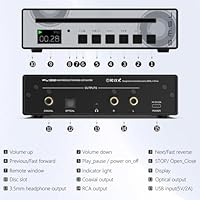
  • Headphone Output: The built-in headphone amplifier delivers 60mW into 32 ohms via a front-panel 3.5mm jack.
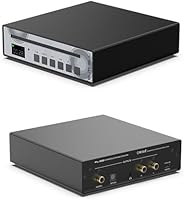
  • Analog Output: A stereo RCA output pair is provided on the rear panel for connection to an integrated amplifier or receiver.
  • Digital Outputs: Both optical (TOSLINK) and coaxial (RCA) digital outputs are available simultaneously on the rear panel.
  • Disc Formats: The player reads standard audio CDs, CD-R, CD-RW, and MP3 CDs without requiring any format switching.
  • MQA Decoding: Full MQA decoding is built in, allowing the unit to unfold MQA-encoded audio files burned to compatible discs.
  • PLL Circuit: A second-generation Phase-Locked Loop circuit reduces clock jitter for more accurate digital signal processing during playback.
  • Power Draw: Active power consumption is 4W during playback; standby draw falls below 0.1W, keeping idle energy costs negligible.
  • Dimensions: The chassis measures 6.3″ wide by 6.38″ deep by 1.65″ tall, making it one of the more compact disc players available.
  • Weight: The unit weighs 2.64 lbs, light enough to reposition easily but substantial enough to feel solidly constructed.
  • Remote Control: A full-function remote control is included in the box, covering playback, track navigation, and volume functions.
  • Color: The reviewed model is finished in black; availability in additional colors may vary by market and retailer.
  • Manufacturer: The PL100 is designed and manufactured by S.M.S.L (Shenzhen Shuangmushenglang Electronic Co.), a Chinese audio brand established in 2009.
  • Release Date: The PL100 first became available in December 2024, making it one of SMSL's most recent product releases.

Related Reviews
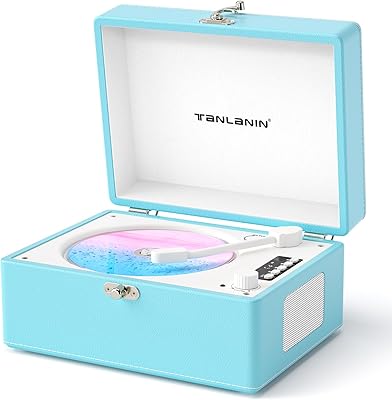
TANLANIN CD-001BE Portable Bluetooth CD Player
75%
91%
Ease of Setup
74%
Bluetooth Performance
61%
Speaker Volume & Output
69%
Sound Quality
67%
Battery Life
More
Jensen PRSNL CD Player CD-60C
85%
91%
Portability & Design
88%
Anti-Skip Performance
85%
Battery Life
78%
Sound Quality
92%
Ease of Use
More
Coby CD191BLK Portable CD Player
75%
91%
Ease of Use
88%
Value for Money
71%
Anti-Skip Performance
58%
Battery Life
67%
FM Radio Quality
More
Sunoony CD-20 Portable CD Player
71%
83%
Value for Money
91%
Ease of Setup
67%
Anti-Skip Performance
61%
Build Quality
78%
Power Flexibility
More
Jensen CD-120
Jensen CD-120
71%
84%
Value for Money
71%
Anti-Skip Performance
91%
Ease of Use
63%
Sound Quality
58%
Battery Life
More
Sunoony CD-35H Portable CD Player
76%
84%
Value for Money
76%
FM Transmitter Performance
62%
Bluetooth Reliability
81%
Battery Life
78%
Anti-Skip Protection
More
Greadio CD-X9B Bluetooth Portable CD Player Boombox
77%
88%
Value for Money
91%
Ease of Setup
82%
CD Playback Performance
84%
FM Radio Reception
79%
Bluetooth Connectivity
More
Greadio CD-BT01 Desktop CD Player
77%
88%
Ease of Setup
83%
Bluetooth Performance
67%
Sound Quality
61%
Build Quality
86%
Value for Money
More
Weeuus CD-806 Portable Bluetooth CD Player
74%
88%
Ease of Setup
79%
Bluetooth Performance
67%
Speaker Sound Quality
61%
Build Quality & Materials
58%
FM Radio Reception
More
KLIM Boombox CD Cassette Combo Player
79%
91%
Versatility
88%
Ease of Use
83%
Cassette Recording
67%
Sound Quality
82%
Bluetooth Performance
More

FAQ

Yes, as long as your powered speakers have RCA inputs. Just run a standard RCA stereo cable from the rear of the unit to your speakers and you are good to go. If your speakers only have a 3.5mm input, you will need an RCA-to-3.5mm adapter cable.

Probably not well. The headphone output on the PL100 puts out 60mW into 32 ohms, which is fine for efficient, low-impedance headphones but not enough to properly drive 250-ohm or 300-ohm cans. You would likely find the volume and dynamic headroom disappointing. For demanding headphones, pairing the unit with a dedicated headphone amp via the RCA output is the better route.

No, there is nothing to install or configure. It is a standalone device that operates entirely through the front panel controls and the included remote. Just plug it in, load a disc, and press play.

Both outputs are present on the rear panel, but they carry the same signal from the same source. You can connect two devices simultaneously if needed, though there is no independent routing or switching between them.

It depends on how badly scratched the disc is. Like most slot-loading or tray-loading CD mechanisms at this price point, the PL100 can struggle with heavily worn or damaged discs. Minor surface scratches are usually handled fine, but deep gouges or heavily oxidized discs may cause read errors or skipping. Keeping your discs clean and handled carefully will help a lot.

Not directly. Standard Red Book CDs are not MQA-encoded, so that feature only comes into play if you burn MQA-encoded audio files to a CD-R. For everyday CD listening, the CS43131 DAC chip is doing the heavy lifting, and MQA decoding simply sits unused. It is a nice-to-have rather than a core selling point for most buyers.

No. The PL100 is a dedicated disc player with no Bluetooth, Wi-Fi, or USB audio input. It reads physical discs only. If you want to stream, you would need a separate device feeding into one of its digital inputs — though it has no digital inputs either, only outputs. Think of it purely as a source component.

In practice, the unit is very quiet during normal operation. The disc motor produces minimal noise, and there is no active cooling fan. In a quiet room you may hear a faint mechanical spin when a disc is first loaded and being read, but during actual playback it is essentially inaudible from a normal listening distance.

The remote is a standard infrared unit, and while the buttons are logically laid out, they are not backlit. In a very dark room you may need to feel for the right button. Most users adapt to the layout quickly, but if you regularly listen in total darkness this is worth knowing.

SMSL typically offers a one-year manufacturer warranty, though you should verify coverage terms with the retailer you purchase from, as warranty handling for international brands can vary. SMSL does have an active support presence online, and replacement parts or service inquiries can generally be directed through their official channels or the authorized reseller.