Benewake TF-Luna LiDAR Distance Sensor


Overview
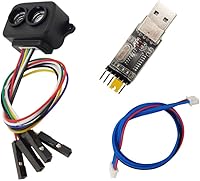
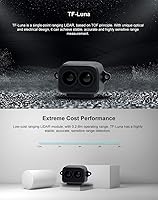
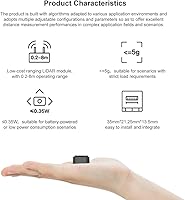
The Benewake TF-Luna LiDAR Distance Sensor is a compact, single-point ranging module that uses Time-of-Flight technology to measure distances between 0.1 and 8 meters with reliable accuracy. At just 5 grams and barely larger than a postage stamp, this LiDAR module punches well above its weight class in terms of practical utility. It supports both UART and I2C communication, which means dropping it into a Raspberry Pi project or a Pixhawk-based flight controller is straightforward for anyone already comfortable with serial or two-wire interfaces. With power consumption under 0.35W, it fits naturally into battery-powered embedded systems where every milliwatt matters.
Features & Benefits
Where ultrasonic sensors struggle with beam spread and inconsistent readings, the TF-Luna sensor uses a focused optical design to deliver stable, repeatable measurements across its full rated range. The dual-interface support — UART or I2C — gives you flexibility to match whatever communication bus your platform already uses, no adapter boards required. Physical integration is equally painless: at 35mm x 21.25mm x 13.5mm, it slides into tight drone frames or robot chassis without demanding layout compromises. The manufacturer maintains a wiki accessible via document code LD0023, and direct tech support is reachable through the seller channel — both meaningful assurances when you are working with a component-level part.
Best For
This ranging module is a strong fit for drone builders who need altitude hold or obstacle detection without adding meaningful weight or complexity to their airframe. Robotics hobbyists running Raspberry Pi or Arduino-based platforms will find the I2C interface particularly convenient for fall-detection or proximity-sensing tasks. Students working on embedded sensing projects benefit from the low power budget and approachable size. It is also a solid step up for anyone currently relying on ultrasonic sensors and frustrated by their limitations — the accuracy improvement is real within the rated range. That said, expect some soldering and basic firmware configuration; this is not a plug-and-play consumer gadget.
User Feedback
Across 54 ratings averaging 4.2 out of 5 stars, this LiDAR module holds up well in real-world use. Pixhawk integration earns the most consistent praise — users report it working with minimal fuss once wired correctly. The compact size and low weight get repeated mentions, even from otherwise critical reviewers. On the downside, a few buyers were caught off guard by the soldering requirements, and readings near the 8-meter ceiling can be less consistent than those in the mid-range. Documentation takes some effort to locate, but the manufacturer wiki exists and support is reachable through the seller — just do not expect step-by-step hand-holding.
Pros
- TOF-based ranging is noticeably more accurate and stable than comparable ultrasonic sensors at similar distances.
- At just 5 grams and smaller than a matchbox, this ranging module fits into almost any weight-sensitive build.
- Dual UART and I2C support means it drops into most existing wiring setups without extra hardware.
- Power draw under 0.35W makes it a practical choice for battery-operated and always-on embedded applications.
- Pixhawk integration is well-documented in the community and generally works with minimal effort once wired.
- Consistent performance indoors and outdoors thanks to a focused single-point optical design.
- Manufacturer wiki and accessible seller support reduce the risk of being stuck without guidance post-purchase.
- Priced accessibly for a LiDAR-based solution, making it realistic for student projects and hobby builds.
- The 4.2 out of 5 star average across real buyers reflects solid real-world satisfaction for its intended use cases.
Cons
- Soldering is required in many common setups, which can catch less experienced buyers off guard.
- Documentation requires active hunting — there is no included quick-start guide in the box.
- Readings near the 8-meter maximum range are inconsistent enough that you should not depend on that ceiling in critical applications.
- Single-point measurement only — useless for area scanning or mapping without significant additional hardware and software.
- No onboard mounting holes or standardized bracket, so physical integration requires some DIY ingenuity.
- I2C address conflicts can arise in multi-sensor setups and require firmware workarounds to resolve.
- 54 total ratings is a relatively thin review pool, making it harder to judge long-term reliability with confidence.
- Buyers unfamiliar with UART or I2C protocols will face a real learning curve before getting useful data out of this module.
Ratings
The scores below were generated by our AI rating engine after analyzing verified global buyer reviews for the Benewake TF-Luna LiDAR Distance Sensor, with automated filtering applied to remove incentivized, duplicate, and bot-flagged submissions. Each category reflects the honest distribution of real user experiences — strengths and frustrations weighted equally — so you get a clear picture of where this ranging module genuinely delivers and where it falls short.
Measurement Accuracy
Build & Integration Size
Platform Compatibility
Ease of Setup
Documentation Quality
Power Efficiency
Value for Money
Weight
Repeatability & Stability
Seller Support
Outdoor Performance
Community & Ecosystem Support
Physical Connector & Wiring
Suitable for:
The Benewake TF-Luna LiDAR Distance Sensor is purpose-built for makers, engineers, and hobbyists who need accurate short-range distance sensing without sacrificing weight or power budget. Drone builders integrating Pixhawk flight stacks will find it particularly well-matched — it connects cleanly over UART or I2C and has a track record of working reliably in altitude hold and obstacle avoidance configurations. Robotics enthusiasts running Raspberry Pi or Arduino-based platforms can drop it into proximity sensing or fall-detection systems with minimal rework to existing wiring. Students and educators building embedded sensing prototypes will appreciate that it draws under 0.35W and weighs around 5 grams, leaving plenty of headroom for the rest of the system. Anyone currently working around the limitations of ultrasonic sensors — beam spread, temperature sensitivity, inconsistent readings — will find this ranging module a meaningful step forward in measurement quality within the 0.1 to 8 meter window.
Not suitable for:
The Benewake TF-Luna LiDAR Distance Sensor is not the right pick for buyers who expect a finished, plug-and-play peripheral with zero assembly or configuration. This is a bare module intended for integration into a larger system, which means soldering may be required depending on your setup, and some firmware-level configuration is typically needed before it produces useful data. If your application demands multi-point or wide-area scanning rather than single-point ranging, this module simply will not cover that use case — it measures one distance at a time along a narrow axis. Buyers who need reliable readings beyond 8 meters should look at longer-range alternatives, as real-world performance near the rated ceiling has drawn mixed feedback. Those without a working knowledge of serial communication protocols like UART or I2C may also find the learning curve steeper than expected, since documentation requires some active searching rather than arriving in a tidy quick-start guide.
Specifications
- Ranging Technology: The sensor uses Time-of-Flight (TOF) optical measurement to calculate distance by timing how long a light pulse takes to return from the target.
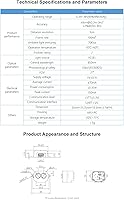
- Measurement Range: Effective single-point ranging covers distances from 0.1 meters up to 8 meters under rated operating conditions.
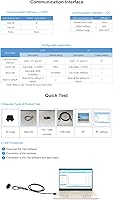
- Communication Interfaces: Both UART and I2C protocols are supported, allowing flexible integration with a wide range of microcontrollers and single-board computers.
- Dimensions: The module body measures 35mm x 21.25mm x 13.5mm, equivalent to approximately 1.38″ x 0.84″ x 0.53″.
- Weight: At approximately 5 grams (0.176 oz), this is one of the lightest LiDAR modules available in its range class.
- Power Consumption: Operating power draw is rated below 0.35W, making it well-suited for battery-powered and low-energy embedded systems.
- Compatible Platforms: Verified compatible with Pixhawk flight controllers and Raspberry Pi single-board computers, among other UART/I2C-capable platforms.
- Measurement Type: This is a single-point ranging module, meaning it measures one distance value per reading along a fixed narrow axis.
- Model Number: The official model designation is TF-Luna, manufactured by Benewake and distributed via SmartFly Tech.
- Availability: This product has been commercially available since August 2020 and is listed as not discontinued by the manufacturer.
- Use Cases: Documented applications include drone obstacle avoidance, altitude hold, robot fall detection, pedestrian detection, and traffic monitoring systems.
- User Rating: The module holds a 4.2 out of 5 star rating based on 54 verified buyer ratings on Amazon as of the time of writing.
- Market Rank: Currently ranked #1,204 in the Single Board Computers category on Amazon, reflecting consistent and ongoing buyer demand.
- Interface Voltage: The TF-Luna operates on a 5V supply with logic levels typical of standard embedded development boards; always verify your specific board's tolerances before wiring.
- Documentation: Manufacturer wiki documentation is accessible online using the document code LD0023, covering setup, protocol details, and integration guidance.
- Support Channel: Post-purchase technical support is available through the seller channel on the product listing page, which is notable for a bare-module component.
Related Reviews
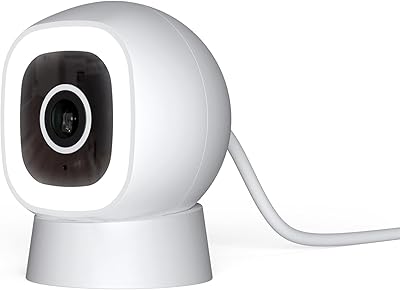
LUNA HOME Luna Magnet Cam
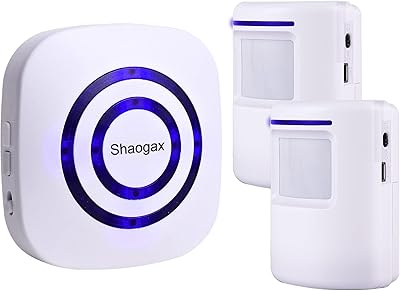
Shaogax Wireless Motion Sensor Driveway Alarm System
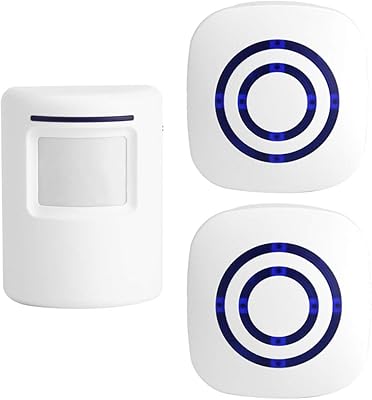
Actpe Wireless Motion Sensor Driveway Chime
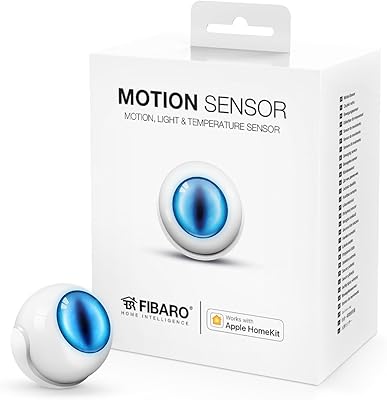
Fibaro Motion Sensor HomeKit Multisensor
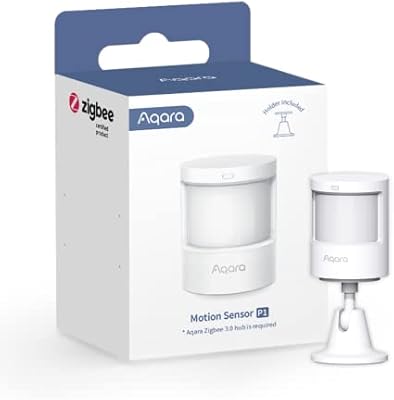
Aqara Motion Sensor P1 Zigbee Sensor
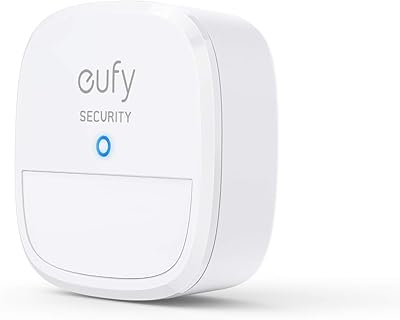
eufy Security Motion Sensor
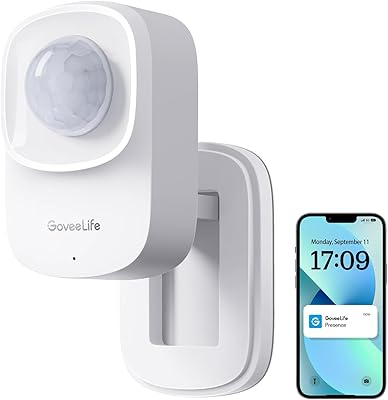
GoveeLife H5127 mmWave Presence Sensor
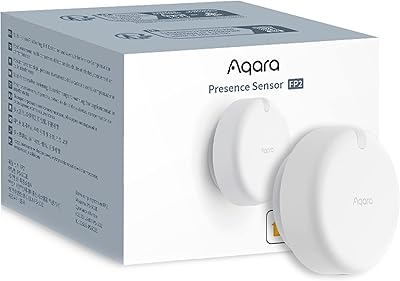
Aqara FP2 mmWave Presence Sensor
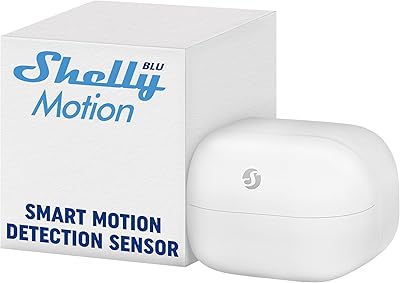
Shelly BLU Motion Bluetooth Motion Sensor