Overview

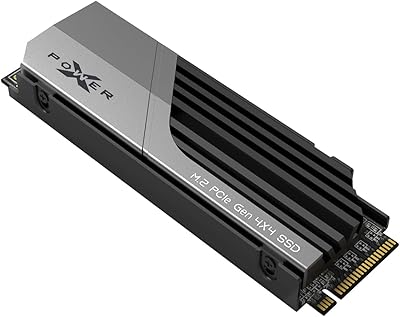
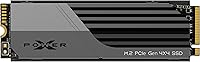
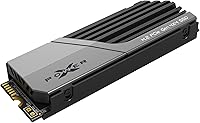
The Silicon Power US75 4TB NVMe M.2 SSD is Silicon Power's push into the high-capacity Gen4 storage space, targeting power users who need fast, large local storage without juggling multiple drives. Silicon Power is a Taiwanese brand with a solid reputation for delivering reliable storage at competitive prices — not flashy, but consistently respectable. This NVMe drive launched in December 2024, which means long-term reliability data is still thin; early impressions are encouraging, but it's worth keeping that in mind. One practical standout is the bundled heatsink, a bonus not every drive at this tier includes. Sequential speeds look strong on paper, though real-world performance depends heavily on your specific workload and system configuration.
Features & Benefits

Running on a PCIe Gen4 x4 interface, this NVMe drive hits sequential reads up to 7,000 MB/s and writes up to 6,500 MB/s — numbers that translate to noticeably faster large file transfers, application launches, and boot times compared to Gen3 drives. The NVMe 1.4 protocol brings lower latency and better power efficiency, which matters when your system runs demanding workloads for extended periods. The included heatsink helps prevent thermal throttling during sustained transfers, though for light desktop use the temperature difference is modest. At 4TB in a single M.2 2280 slot, consolidating your storage becomes straightforward. The 2,400 TBW endurance rating is generous, and the drive works in Gen3 boards too, though full speeds require a Gen4 system.

Best For

Silicon Power's Gen4 SSD makes the most sense for desktop PC builders who want one fast, spacious drive handling both the OS and large files without compromise. Video editors and 3D artists dealing with multi-gigabyte raw files will appreciate the sustained bandwidth when scrubbing timelines or rendering scenes. Gamers tired of managing separate drives for sprawling game libraries will find the 4TB capacity genuinely practical. That said, this is primarily a desktop-oriented drive — the heatsink makes it a poor fit for most laptop M.2 slots. If you are migrating from a SATA SSD or a spinning hard drive, the performance difference will be immediately obvious. Just confirm your motherboard supports Gen4 before buying, or you will leave significant speed on the table.

User Feedback

With a 4.6-star average across nearly 950 ratings, the US75 4TB earns broadly positive marks, and the pattern in reviews is fairly consistent. Most buyers confirm that real-world speeds track closely with advertised figures in benchmark tests, and heatsink installation is generally described as straightforward. On the downside, a handful of users note the heatsink can be tight-fitting on certain motherboards with dense component layouts. A few reviewers also mention minor confusion around Gen3 versus Gen4 compatibility — a reminder to check your board specs before ordering. Since this drive only appeared in late 2024, long-term durability remains an open question; there are no significant failure clusters reported yet, but it is simply too early to draw firm conclusions about multi-year reliability.

Pros

  • Gen4 speeds of up to 7,000 MB/s make large file transfers noticeably faster in real desktop workloads.
  • 4TB capacity in a single M.2 slot keeps your build clean and eliminates the need for secondary drives.
  • The bundled heatsink helps maintain consistent performance during extended, write-heavy sessions.
  • NVMe 1.4 protocol delivers lower latency compared to older controller generations.
  • A 2,400 TBW endurance rating gives heavy users years of headroom before wear becomes a concern.
  • The five-year limited warranty provides solid peace of mind for a relatively new product.
  • Backward compatibility with Gen3 slots means it will physically work in older boards, just at reduced speeds.
  • Nearly 950 user ratings averaging 4.6 stars reflect a broadly satisfied buyer base.
  • Real-world benchmark results from buyers closely match the advertised sequential speed figures.
  • The per-terabyte cost sits at a competitive level for a Gen4 drive with a heatsink included.

Cons

  • As a late 2024 release, long-term reliability and failure rate data simply do not exist yet.
  • The heatsink can be too tall to fit comfortably on motherboards with tightly spaced M.2 slots or covers.
  • Buyers on Gen3 systems get none of the speed advantage they are paying for with this drive.
  • Completely unsuitable for laptops due to heatsink dimensions and desktop-only design positioning.
  • Some users report confusion around compatibility requirements — Gen4 board support must be verified before purchasing.
  • Sequential speed ratings reflect ideal conditions; random read/write performance in mixed workloads will be lower.
  • Silicon Power lacks the brand recognition of Samsung or WD, which may affect resale value or perceived reliability.
  • No software bundle or monitoring utility is included, unlike some competing drives in this category.

Ratings

The scores below reflect an AI-driven analysis of verified global buyer reviews for the Silicon Power US75 4TB NVMe M.2 SSD, with spam, bot-generated, and incentivized feedback actively filtered out before scoring. Each category captures both what users genuinely praised and where real frustrations surfaced — nothing has been softened to favor the product. The result is a transparent, balanced picture of how this drive performs across a range of real-world desktop use cases.

Sequential Read Speed
91%
Users running benchmark tools consistently report sequential read results that track closely with the advertised 7,000 MB/s ceiling, which translates to noticeably faster large file loads and application launches in practice. Video editors in particular highlight how quickly the drive ingests large RAW footage files compared to their previous Gen3 drives.
Sequential read performance is most evident in controlled, single-file scenarios. In mixed desktop workloads with many simultaneous small file reads, the advantage narrows, and a handful of buyers note the difference feels less dramatic than the spec sheet implies.
Sequential Write Speed
88%
Sustained write speeds impressed users doing large exports, backup transfers, and game installations, with real-world figures frequently landing in the 6,000 MB/s range during extended tests. Content creators moving large project files between drives describe the experience as significantly less frustrating than with older storage.
Some users observed speed drops during very prolonged write sessions, which is typical behavior when the SLC cache fills and the drive writes directly to the NAND. This is most noticeable when writing hundreds of gigabytes in a single uninterrupted session.
Thermal Management
83%
The included heatsink earns consistent praise from users running sustained workloads, with several noting that temperatures stayed stable during long video renders and large file copy operations where bare drives on the same platform throttled noticeably. For desktop builders, it removes the need to budget for a separate heatsink solution.
Users with dense motherboard layouts report that the heatsink can conflict with adjacent components or the board's own M.2 shield, requiring removal of one or the other. For light desktop tasks like browsing or office work, the thermal benefit is essentially invisible, making it a neutral factor for that audience.
Value for Money
86%
Buyers consistently highlight that the per-terabyte cost for a Gen4 drive with a bundled heatsink represents strong value, especially compared to more established brands at similar capacities. Users upgrading from SATA SSDs describe feeling they received far more performance than the price difference would suggest.
A few buyers shopping specifically for budget Gen4 storage found cheaper alternatives without heatsinks at marginally lower prices, questioning whether the bundle premium is worth it if their motherboard already includes an M.2 cover. Those on Gen3 systems feel they overpaid given the speed cap they ended up with.
Capacity & Storage Density
93%
Having 4TB on a single M.2 2280 stick is the most frequently praised aspect across all user reviews — builders love eliminating a second drive bay entirely, and gamers mention fitting their entire library plus OS on one device without compromise. The storage density genuinely simplifies both the build process and long-term file management.
A small number of users note that for their workflow, 4TB is more capacity than they realistically need, making the lower-capacity variants potentially better value for their situation. There are no complaints about the capacity itself, only about whether they personally required this much storage.
Installation & Setup
84%
Most buyers describe the installation process as straightforward for anyone familiar with M.2 drives, with the standard 2280 form factor fitting virtually every compatible desktop motherboard without modification. The heatsink attaches cleanly in most cases, and users appreciated not needing to purchase thermal pads separately.
The heatsink fitment generates the most installation friction in user feedback, with some reporting it does not sit flush on specific boards, particularly those with raised screw standoff positions. A small number of buyers also note the drive was not immediately recognized on first boot and required a BIOS update on their platform.
Compatibility
74%
26%
The drive functions across a wide range of Gen4 and Gen3 desktop boards without driver installation, and most users report it was detected correctly on the first power-on. Buyers with recent AMD and Intel Gen4 platforms had universally smooth experiences.
Compatibility confusion is one of the more recurring pain points in reviews, driven largely by buyers installing it in Gen3 systems and not getting expected speeds. A few users also attempted installation in laptops despite the heatsink incompatibility, leading to fitment failures that generated negative reviews unrelated to the drive itself.
Build & Component Quality
79%
21%
The drive itself feels solid and well-manufactured, and the aluminum heatsink has a quality that users describe as noticeably better than the flimsy plastic shields included with some competing drives. Silicon Power's component sourcing has historically been reliable in this category.
Since the US75 4TB only launched in late 2024, there is a genuine lack of multi-year durability data to draw from. A handful of early buyers flagged concerns about long-term NAND quality compared to more established brands with deeper independent teardown histories, though no significant failure clusters have emerged yet.
Endurance & Longevity
81%
19%
The 2,400 TBW rating is among the more generous endurance figures in its class, and technically savvy buyers doing the math note it would take extraordinary daily write volumes to approach the rated limit within the warranty period. The five-year warranty reinforces confidence in the drive's intended lifespan.
Because the drive is new, real-world longevity beyond 12 months is still an open question. Buyers who specifically prioritize drives with years of field reliability data — like certain Samsung or WD models — feel less comfortable relying solely on a TBW number from a brand with a shorter Gen4 track record.
Benchmark Consistency
77%
23%
Users running repeated benchmark passes report consistent sequential results across multiple runs, with scores rarely deviating significantly between tests. This consistency suggests the thermal and controller management are working as intended under typical benchmark conditions.
Random 4K read and write performance — which reflects real application load behavior more accurately than sequential benchmarks — draws less enthusiastic comments, with some users noting it is competitive but not class-leading among Gen4 peers at this price point.
Noise & Vibration
97%
As a solid-state drive with no moving parts, the US75 4TB operates in complete silence under all workloads, which users migrating from mechanical hard drives specifically mention as a welcome change. There are zero complaints about audible noise or vibration from any reviewed user.
This is essentially a non-issue for the product category. The only marginal note is that some users feel the heatsink could theoretically buzz at very specific resonant frequencies inside certain cases, though no buyer has actually reported this occurring in practice.
Software & Ecosystem
58%
42%
The drive works out of the box with standard NVMe drivers on Windows, macOS on compatible hardware, and Linux without any additional software required. Users who simply want plug-and-play storage with no setup complexity find this refreshingly simple.
Silicon Power provides no proprietary monitoring utility, health dashboard, or cloning software with the US75, which frustrates buyers accustomed to Samsung Magician or WD Dashboard. Users who want drive health visibility or easy migration tools must source and configure third-party software independently.
Packaging & Unboxing
72%
28%
Buyers generally describe the packaging as clean and protective, with the heatsink and drive arriving intact and well-secured. The overall unboxing experience is considered appropriate and functional for a storage product at this tier.
A few buyers note the packaging feels basic compared to premium competitors, with minimal documentation included and no quick-start guide addressing common compatibility or heatsink installation questions. For first-time builders, slightly more guidance in the box would have been appreciated.

Suitable for:

The Silicon Power US75 4TB NVMe M.2 SSD is a strong fit for desktop PC builders and workstation users who want a single, high-performance drive that handles both the operating system and large data storage without compromise. Video editors, 3D animators, and photographers working with multi-gigabyte raw files will benefit most, since the Gen4 bandwidth means less waiting during file imports, exports, and timeline scrubbing. Gamers building out a primary rig will appreciate having 4TB of fast storage in a single slot, eliminating the need to juggle multiple drives or shuffle games between slower secondary storage. The included heatsink adds real value for users running sustained write-heavy workloads, where thermal throttling on bare drives can quietly erode performance. Anyone upgrading from a SATA SSD or a mechanical hard drive will notice an immediate and significant improvement in nearly every storage-related task.
Not suitable for:

The Silicon Power US75 4TB NVMe M.2 SSD is not the right choice for every buyer, and a few scenarios stand out where it falls short. Laptop users should stay away entirely — the bundled heatsink is incompatible with most notebook M.2 slots, and the drive is explicitly positioned as a desktop component. Buyers with older systems running PCIe Gen3 can technically install it, but they will pay for Gen4 performance they simply cannot unlock, making cheaper Gen3 alternatives a more sensible investment. For light everyday computing — basic web browsing, office tasks, casual use — the raw throughput this drive offers is overkill, and the value proposition weakens considerably at that usage level. Finally, buyers who prioritize proven, multi-year reliability data above all else may want to wait; launched in late 2024, this drive has not yet accumulated the long field history that more established models carry.

Specifications

  • Brand: Manufactured by SP Silicon Power, a Taiwanese storage brand with over two decades of experience in flash storage products.
  • Capacity: Available in this configuration at 4TB, with the US75 family also offered in smaller capacities down to 1TB.
  • Form Factor: Uses the M.2 2280 form factor, measuring 22mm wide and 80mm long, the most common M.2 size in desktop motherboards.
  • Interface: Connects via PCIe Gen4 x4, delivering up to four lanes of fourth-generation PCI Express bandwidth.
  • Protocol: Operates on the NVMe 1.4 specification, which reduces latency and improves power efficiency compared to NVMe 1.3 controllers.
  • Sequential Read: Rated for sequential read speeds of up to 7,000 MB/s under optimal conditions.
  • Sequential Write: Rated for sequential write speeds of up to 6,500 MB/s under optimal conditions.
  • Endurance: Carries a TBW (terabytes written) endurance rating of 2,400, suitable for years of heavy write workloads.
  • Warranty: Backed by a five-year limited warranty, with coverage contingent on the TBW rating or warranty period, whichever is reached first.
  • Heatsink: Ships with an aluminum heatsink pre-included in the package to assist with thermal management during sustained operations.
  • Compatibility: Backward compatible with PCIe Gen3 M.2 slots, though maximum speeds will be significantly reduced on Gen3 systems.
  • Installation Type: Designed as an internal drive for desktop installations; not recommended for laptop use due to heatsink dimensions.
  • Weight: The drive package weighs approximately 1.13 ounces, making it lightweight relative to its storage capacity.
  • Package Dimensions: The retail package measures approximately 4.84 x 3.31 x 0.47 inches.
  • Launch Date: First became available in December 2024, making it a relatively recent product with limited long-term field data.

Related Reviews

Silicon Power 2TB US75 NVMe PCIe Gen4 M.2 SSD
88%
94%
Performance for Gaming
96%
Read Speed
92%
Write Speed
88%
Compatibility with PS5
90%
Ease of Installation
More
Silicon Power 2TB XS70 NVMe PCIe Gen4 M.2 SSD
89%
94%
Performance
91%
Read Speed
89%
Write Speed
96%
Compatibility with PS5
88%
Build Quality
More
Silicon Power UD90 4TB NVMe SSD
89%
94%
Performance
92%
Speed (Read/Write)
90%
Reliability under Load
91%
Value for Money
88%
Compatibility
More
Silicon Power 4TB XS70 NVMe SSD
88%
95%
Performance
94%
Speed
88%
Thermals
90%
PS5 Compatibility
87%
Build Quality
More
Silicon Power US75 1TB NVMe SSD
88%
93%
Performance
89%
Compatibility with PlayStation 5
92%
Value for Money
94%
Read/Write Speeds
88%
Reliability and Durability
More
Kingston NV2 4TB M.2 NVMe SSD
90%
94%
Read Performance
88%
Write Performance
91%
Reliability
95%
Installation Ease
89%
Compatibility
More
TEAMGROUP MP44Q 4TB M.2 NVMe SSD
88%
95%
Read Speed
92%
Write Speed
90%
PS5 Compatibility
75%
Thermal Performance
88%
Value for Money
More
ORICO IG740PRO 4TB M.2 NVMe SSD
79%
91%
Sequential Read Performance
88%
Endurance & Longevity
84%
Thermal Management
79%
Value for Money
74%
PS5 Compatibility
More
fanxiang S660 4TB NVMe M.2 SSD
88%
92%
Performance
89%
Cooling Efficiency
91%
Ease of Installation
96%
Compatibility with PS5
87%
Build Quality
More
fanxiang S770 4TB NVMe M.2 SSD
84%
88%
Read Speed Performance
82%
Write Speed Consistency
93%
PS5 Compatibility
86%
Thermal Management
84%
Value for Money
More

FAQ

You do not strictly need one — the drive will physically fit and function in a Gen3 M.2 slot. However, you will only achieve Gen3 speeds, which are roughly half of what this drive is capable of. If you are buying specifically for the fast performance, a Gen4-compatible motherboard is essential.

That depends on your specific board. Many modern motherboards include their own M.2 heatsinks or covers, and adding the included heatsink on top may create clearance issues. It is worth checking your board manual — in some cases, you will need to choose between the bundled heatsink and your board's built-in cover.

No, not really. The bundled heatsink adds height that will not fit inside most laptop M.2 slots, and the drive is designed with desktop workloads in mind. If you need a Gen4 drive for a laptop, look for a bare drive without a heatsink attachment.

Based on user benchmarks, sequential speeds in controlled tests generally come close to the rated figures. Practical performance in mixed workloads — copying many small files, running applications simultaneously — will be lower, as is the case with any NVMe drive. For large sequential transfers like video exports, the numbers hold up well.

Absolutely, and that is one of the main reasons to buy a 4TB drive in the first place. You can install your operating system and keep all your frequently used applications and files on the same drive without running out of space anytime soon.

For most users, 2,400 TBW is more endurance than they will ever realistically use. Even if you write 100GB to the drive every single day, it would take over 65 years to exhaust that rating. Heavy prosumer workflows with constant large file writes might see more wear, but it is not a practical concern for the vast majority of buyers.

Silicon Power does not bundle proprietary migration software with the US75. You would need to use a third-party tool like Macrium Reflect Free or AOMEI Backupper to clone an existing drive, both of which work reliably with NVMe drives.

The PS5 does accept M.2 NVMe SSDs, and the Gen4 speeds are compatible — but you should verify that the specific slot dimensions and clearance in your PS5 accommodate the included heatsink before installing. Some users remove or swap the heatsink for a slimmer one to ensure a clean fit in the console bay.

Silicon Power handles warranty claims through their official support channels, and their five-year coverage is considered straightforward by most accounts. Keep your purchase receipt, as proof of purchase is typically required. Given that this drive launched in late 2024, there is not yet a large body of warranty claim experiences to draw from, but the brand has a generally responsive reputation.

Honestly, for everyday tasks like web browsing, opening documents, or launching common applications, the difference is subtle. Gen4 advantages become tangible when you are moving large files, loading big game levels quickly, or doing sustained reads and writes for creative work. If your daily workflow involves those tasks, the upgrade is worthwhile — if not, a solid Gen3 drive might serve you just as well for less.

Where to Buy