Overview

The Shure VP64A Omnidirectional Handheld Microphone has been a trusted tool in broadcast and electronic news gathering for over two decades — and that kind of staying power says something real. This isn't a studio mic chasing flat response curves; it's built for the field, where conditions are unpredictable and you need audio that just works. The XLR connection and corded design signal its professional intent immediately. If you're a videographer, journalist, or field producer, this mic fits naturally into your workflow. If you're looking for a home recording or music production mic, this broadcast-style mic isn't what you need.
Features & Benefits

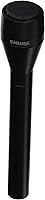
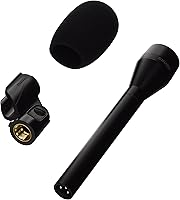
The omnidirectional polar pattern is the defining characteristic here. Unlike cardioid mics that require careful aim, the VP64A picks up audio from all directions equally — handy when you're holding a mic toward multiple interview subjects or when the speaker keeps moving. A neodymium magnet boosts output and contributes to a clean 78 dB signal-to-noise ratio, which matters when you're cutting audio in post. The internal isolation mount quietly does a lot of work, dampening the handling noise that would otherwise ruin a take. And the water-resistant grille, paired with the included windscreen, means rain or wind won't end your shoot.

Best For

Journalists and documentary filmmakers will find the VP64A fits their workflow almost immediately. Its omnidirectional pattern removes the stress of mic positioning during fast-moving street interviews — just hold it out and speak. Event videographers who shoot run-and-gun style appreciate not having to obsess over angle during unpredictable moments. The swivel adapter included in the box makes camera-mounting straightforward, and the XLR connection plays nicely with professional-grade recorders and cameras. This broadcast-style mic also handles karaoke and live vocal settings competently. Where it struggles is in loud, echo-heavy spaces, where that open pickup pattern simply can't ignore the room.

User Feedback

With a 4.5-star average across over 100 ratings, this handheld dynamic mic has clearly earned its reputation with the people who use it most. Buyers frequently praise the rugged build quality — several note using it for years through demanding fieldwork without any issues. Vocal clarity and natural voice reproduction come up often, with some comparing it favorably against mics at higher price points. That said, reviewers are candid about one real limitation: in loud or crowded environments, the open pickup pattern captures ambient noise along with the subject. Not a flaw in design, but an honest trade-off worth knowing before you buy.

Pros

  • Rugged build quality holds up to years of demanding fieldwork without signs of wear
  • Omnidirectional pattern removes the pressure of precise mic positioning during interviews
  • The internal isolation mount meaningfully reduces handling noise during active, on-the-go shooting
  • Water-resistant mesh grille keeps outdoor and weather-exposed shoots viable
  • Ships ready to use with a swivel adapter and windscreen already in the box
  • Speech intelligibility is strong and natural, with a mid-range tuning that flatters the human voice
  • No battery required — XLR power means one less thing to manage in the field
  • Vocal presence compares favorably to broadcast mics at significantly higher price points
  • Shure's track record and two-decade production run signal long-term parts and support availability
  • Lightweight enough at under 12 ounces to hold extended without fatigue

Cons

  • Omnidirectional pattern captures ambient noise and crowd sound in loud environments, which can complicate post-production cleanup
  • No USB connectivity means you must have an XLR-compatible recorder or interface to use it at all
  • Frequency response tops out at 12,000 Hz, which limits its usefulness beyond voice and speech applications
  • Not suited for studio recording or any context where room isolation matters
  • The rubber body, while durable, feels utilitarian and may not inspire confidence next to premium metal-bodied competitors
  • Mono output only, which restricts creative flexibility in certain production setups
  • Buyers in extremely noisy environments — concerts, protests, trade shows — will struggle with background bleed
  • No onboard controls such as a low-cut filter or pad, which some field recordists would find useful
  • The VP64A variant length may be awkward for certain camera-top mounting configurations without additional rigging

Ratings

The scores below for the Shure VP64A Omnidirectional Handheld Microphone were generated by our AI after analyzing verified buyer reviews from across the globe, with spam, bot activity, and incentivized feedback actively filtered out. What you see reflects the honest consensus of working professionals and enthusiasts who have used this broadcast-style mic in the field. Both the genuine strengths and the real frustrations are represented transparently here.
Build Quality
93%
Long-term users consistently describe the VP64A as a mic that simply doesn't break. Journalists and videographers report using it for years through rough travel, outdoor conditions, and repeated drops without any structural or functional failure. The rubber-coated body and solid XLR connector both hold up to daily professional punishment.
The rubber exterior, while durable, can attract lint and surface grime over time and lacks the premium feel of a metal-bodied competitor. A few users noted that the grille can dent if the mic is dropped directly on its head, which isn't uncommon during active field work.
Audio Clarity
88%
Speech intelligibility is the clear standout here. The mid-range presence rise built into the frequency response makes voices sound natural and forward without harshness, which reviewers working in broadcast and documentary settings find extremely practical. Many note that minimal EQ is needed in post when using this mic for interviews.
The frequency ceiling of 12,000 Hz means the top-end air and detail that studio condensers deliver simply isn't present. For speech this is rarely an issue, but buyers hoping for any musical application will hear the limitation almost immediately in high-frequency content.
Handling Noise
84%
The internal isolation mount does genuinely useful work. Users who conduct walking interviews or frequently reposition the mic mid-shoot report noticeably less handling noise compared to mics without internal shock absorption. For run-and-gun video work, this translates directly into cleaner raw audio files.
It is not completely silent under aggressive handling. When the mic is gripped tightly or tapped, some low-frequency thump still comes through. Users doing highly active handheld work — walking fast, passing the mic between subjects — occasionally flag residual noise in quieter audio segments.
Ambient Noise Rejection
51%
49%
In controlled or moderately quiet environments, the omnidirectional pattern actually captures a pleasing natural ambience around the subject, which some documentary-style creators prefer over the tight, isolated sound of a cardioid mic. For seated interviews in offices or quiet outdoor settings, this trade-off rarely causes problems.
This is the most consistently cited weakness across user reviews. In loud environments — busy streets, crowded venues, live events — the open pickup pattern captures ambient noise almost as prominently as the intended source. It requires careful placement and often significant post-production noise reduction to salvage recordings from noisy situations.
Value for Money
82%
18%
Relative to professional broadcast mics that cost significantly more, the VP64A punches well above what its price bracket might suggest. Several reviewers with ENG and broadcast backgrounds explicitly compare it favorably to more expensive alternatives they've used on assignment, praising its vocal presence and reliability.
For buyers who don't specifically need omnidirectional pickup or XLR connectivity, there are more versatile options at a similar price point. If your use case is casual or USB-first, the value proposition weakens considerably because you're paying for pro-tier features you may not fully utilize.
Outdoor Performance
87%
The water-resistant mesh grille and the included foam windscreen make this one of the better-prepared dynamic mics for outdoor field use straight out of the box. Users report confident operation in light rain, high humidity, and windy conditions that would concern them with a standard dynamic or any condenser mic.
The included windscreen handles moderate wind adequately, but in strong gusts, users find they need a deadcat or blimp-style windshield to keep wind rumble under control. This adds to the total cost and kit weight for anyone doing serious outdoor audio work in exposed locations.
Ease of Use
91%
There are no switches, filters, or settings to worry about — plug it in and it works. Field producers and solo videographers consistently mention this simplicity as a genuine asset when they're focused on capturing a moment rather than managing equipment. The included swivel adapter makes camera-mounting quick and intuitive.
The XLR-only connection is a barrier for beginners or anyone without an interface or compatible recorder already in their kit. New users unfamiliar with XLR gain staging occasionally report recordings that come in too quiet, which is a setup issue rather than a mic flaw but still adds friction for first-time buyers.
Microphone Placement Flexibility
89%
The omnidirectional pattern is a real practical advantage for situations where mic placement can't be controlled precisely. Whether it's a multi-person roundtable, a moving subject, or a camera-mounted setup where pointing the mic isn't possible, this broadcast-style mic captures usable audio without demanding technical precision.
That same flexibility disappears in any context requiring sound isolation. You cannot use proximity or angle to reject noise the way you can with a directional mic, so in uncontrolled environments, placement choices have limited impact on the signal-to-noise performance of the recording.
Compatibility
86%
The standard XLR output integrates cleanly with the overwhelming majority of professional field recorders, cinema cameras, broadcast cameras, and audio interfaces. Users working across multiple camera systems appreciate that the VP64A doesn't require any proprietary adapters or brand-specific accessories to function at full performance.
Connecting it to consumer devices requires adapters that can introduce noise or impedance mismatches, and not all adapters are created equal. For smartphone or laptop recording — an increasingly common use case — the workaround chain (XLR to 3.5mm to device) can introduce quality compromises that undercut the mic's inherent performance.
Accessories Included
78%
22%
Shipping with both a swivel adapter and a foam windscreen is a meaningful head start. The swivel adapter in particular is practical for camera-top mounting, and not having to source it separately saves time and a small but real additional expense for new buyers.
There is no carrying pouch or hard case included, which feels like an oversight for a mic intended for field use. Buyers putting this in a bag with other gear need to source their own protection to avoid grille damage, and a simple padded sleeve would have cost the manufacturer very little to include.
Vocal Presence
83%
The tailored mid-range response makes voices sound clear and present without any post-processing, which experienced field recordists specifically call out as a differentiator. Interview subjects recorded with this mic tend to sound natural and authoritative on playback, requiring less corrective EQ than recordings made with cheaper alternatives.
The presence rise that helps speech intelligibility can occasionally make voices sound slightly forward or fatiguing when listened to over long stretches — a minor issue for broadcast but more noticeable in longer podcast-style recordings. It is a character built into the mic that cannot be switched off.
Durability Over Time
91%
The track record here is unusually consistent. Buyers who have owned the VP64A for five or more years report that the audio performance has not degraded, and the XLR connection remains solid. For a mic purchased as a professional investment, this long-term reliability is reflected repeatedly in the most detailed user reviews.
Replacement parts and service availability, while generally good given Shure's market presence, can be slow to access depending on region. International buyers outside major markets occasionally mention difficulty sourcing manufacturer support, which matters more for a mic this well-built only if something unusual goes wrong.
Weight & Ergonomics
74%
26%
At just under 12 ounces, the VP64A sits in a comfortable range for extended handheld use. The rubber body provides grip without requiring a tight squeeze, and the overall balance feels deliberate rather than front-heavy, which reduces fatigue during long interview sessions.
Some users with smaller hands or those transitioning from lighter consumer mics find it noticeably hefty, especially when used on a boom pole for extended periods. It is not uncomfortable for most adults, but it is not a lightweight mic, and that distinction matters for certain production setups.

Suitable for:

The Shure VP64A Omnidirectional Handheld Microphone was purpose-built for professionals who need dependable audio capture in unpredictable, fast-moving environments. Journalists conducting street interviews, documentary filmmakers working without a dedicated sound crew, and broadcast ENG teams will find it slots into their workflow without friction. Because the omnidirectional pattern captures sound from all directions equally, you don't need to carefully angle the mic during a moving conversation — it simply picks up what's in front of it, beside it, and around it. Field videographers who shoot run-and-gun style will particularly appreciate how the internal isolation mount handles the inevitable bumps and repositioning that happen mid-shoot. The included swivel adapter and windscreen mean you're ready to record the moment you unbox it, whether you're mounting it to a camera or clipping it to a boom pole. Broadcasters, event hosts, and even karaoke setups benefit from the natural vocal presence this mic delivers without requiring any special technique.

Not suitable for:

The Shure VP64A Omnidirectional Handheld Microphone is not the right tool if your primary recording environment is a studio or a controlled acoustic space where you need tight, directional sound capture. The same omnidirectional pattern that makes it so forgiving in the field becomes a liability indoors or in crowded venues, where it will pick up room noise, crowd chatter, and ambient sound right alongside your intended source. Musicians, podcasters recording at a desk, and voiceover artists will find the lack of a cardioid or supercardioid pattern frustrating for their needs. This is also a corded XLR mic, which means it requires a compatible recorder, camera input, or audio interface — anyone expecting plug-and-play USB connectivity will need to look elsewhere. If you're hoping to use it for music production or vocal tracking in any serious capacity, the frequency response ceiling and its speech-optimized tuning will leave you wanting more. Budget-conscious buyers who need a do-everything microphone will likely find it too specialized for general-purpose use.

Specifications

  • Polar Pattern: The mic uses a true omnidirectional polar pattern, capturing sound evenly from all directions with no off-axis coloration.
  • Connector: Terminates in a standard 3-pin XLR connector, compatible with professional cameras, recorders, and audio interfaces.
  • Impedance: Output impedance is rated at 300 Ohm, suitable for use with professional balanced audio inputs.
  • Signal-to-Noise Ratio: Delivers a 78 dB signal-to-noise ratio, providing clean audio capture with minimal self-noise for a dynamic mic.
  • Frequency Response: Covers a frequency range optimized for speech clarity, with response extending up to 12,000 Hz and a tailored mid-range presence rise.
  • Power Source: Fully passive dynamic design requiring no battery or phantom power — signal is generated by the neodymium capsule alone.
  • Magnet Type: Uses a neodymium magnet in the capsule assembly, which increases output sensitivity compared to older alnico or ceramic designs.
  • Weight: The mic body weighs 11.7 ounces, making it substantial enough to hold steadily without being fatiguing during extended use.
  • Dimensions: Physical dimensions measure 11.2 x 4.9 x 2.7 inches, sized for a confident one-hand grip in field recording situations.
  • Body Material: The outer body is constructed from rubber-coated material, providing grip and basic impact resistance during field use.
  • Grille: Features a water-resistant mesh grille designed to repel moisture during outdoor shoots or adverse weather conditions.
  • Isolation Mount: An internal shock isolation mount is built into the capsule housing to dampen mechanical and handling vibrations before they reach the element.
  • Channels: Operates as a single-channel mono microphone, outputting one audio signal through the XLR connector.
  • Included Accessories: Ships with a swivel adapter (model A57F) for stand or camera mounting, and a foam windscreen (model 49A130) for outdoor use.
  • Color: Available in black as the standard colorway, consistent with professional broadcast and ENG equipment conventions.
  • Manufacturer: Designed and manufactured by Shure Incorporated, a company with a longstanding reputation in professional audio equipment.
  • Model Variants: Available in two length variants — the standard VP64A and the longer VP64AL — sharing the same capsule and electrical specifications.
  • Market Availability: First made available in June 2003, with continuous production maintained since then and no discontinuation by the manufacturer.

Related Reviews

Shure KSM9HS Condenser Handheld Vocal Microphone
82%
93%
Vocal Clarity
86%
Polar Pattern Flexibility
81%
Feedback Rejection
89%
Build Quality
67%
Handling Noise
More
Shure SM63LB Omnidirectional Dynamic Microphone
85%
93%
Build Quality
88%
Audio Clarity for Speech
84%
Omnidirectional Performance
94%
Durability in Field Use
81%
Handling Noise Rejection
More
Shure SM48 Handheld Dynamic Microphone
83%
91%
Build Quality
88%
Value for Money
74%
Sound Quality
89%
Feedback Rejection
83%
Handling Noise
More
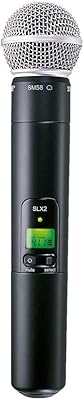
Shure SLX2/SM58 Handheld Wireless Microphone Transmitter
77%
91%
Vocal Sound Quality
84%
Wireless Reliability
88%
Build Quality
53%
Setup & Compatibility
67%
Battery Life
More
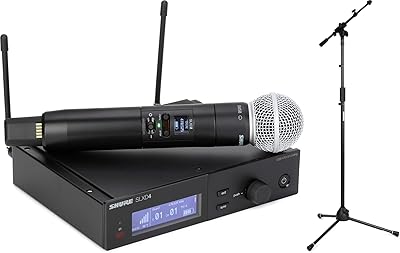
Shure SLXD24/SM58 Wireless Microphone System
83%
93%
Audio Quality
91%
Signal Reliability
92%
Capsule Performance
86%
Ease of Setup
74%
Value for Money
More
Shure SM7B
Shure SM7B
83%
98%
Vocal Sound Quality
96%
Background Noise Rejection
94%
Build Quality & Durability
41%
Ease of Setup
88%
Plosive & Sibilance Control
More
Shure VP89L Long Shotgun Microphone
81%
94%
Directional Accuracy
88%
RF Interference Rejection
91%
Modular Capsule System
89%
Build Quality
62%
Value for Money
More
Shure Beta 57A
Shure Beta 57A
90%
97%
Build Quality
93%
Feedback Rejection
91%
Midrange Clarity
89%
Off-Axis Bleed Control
88%
Handling Noise Suppression
More
Shure MVL Lavalier Microphone
80%
83%
Audio Clarity
88%
Build Quality
91%
Plug-and-Play Simplicity
79%
RF & Interference Rejection
71%
Omnidirectional Performance
More
Shure MV7i
Shure MV7i
78%
91%
Audio Clarity
94%
Ease of Setup
88%
Auto Level Mode
89%
Built-in Audio Interface
76%
Noise Reduction & DSP
More

FAQ

Yes, and that's actually one of its practical strengths. The VP64A is a passive dynamic microphone, so it generates its own signal through the neodymium capsule with no battery or phantom power required. You just plug it into any XLR input and go.

It will work with cameras that have a 3.5mm mic input if you use an XLR-to-3.5mm adapter, but the impedance mismatch can affect audio quality. For best results, connect it to a dedicated field recorder or a camera with a proper XLR input, like many cinema cameras or audio interfaces with camera output.

Not really, as long as you're not in a loud environment. For a standard sit-down or street interview, the pattern works well because you don't need to angle it precisely — just hold it between you and the subject. The trade-off is that it will also pick up surrounding ambient noise, so noisy locations require more care in post-production.

Quite well for a dynamic mic. The water-resistant mesh grille handles light rain and humidity without issue, and the included foam windscreen helps manage wind noise. It's been used extensively in ENG and documentary work precisely because it doesn't need to be babied in the field.

You can, and the omnidirectional pattern actually works in your favor here since singers don't have to maintain a precise distance or angle. That said, in a loud PA environment, feedback management becomes more important with an omni pattern than with a cardioid mic, so your sound setup matters.

The VP64AL is simply a longer version of the same mic — it shares the same capsule, polar pattern, and electrical specs. The extended length gives it a slightly different feel in hand and may suit certain on-camera or boom-pole configurations better. The audio performance between the two is identical.

For a handheld dynamic mic, it's genuinely good. The internal isolation mount does meaningful work dampening the vibration and noise that typically comes from gripping and repositioning a mic. Reviewers who use it during moving interviews consistently mention this as a real-world benefit, not just a spec claim.

The box includes a swivel adapter (A57F) and a foam windscreen (49A130), but no dedicated carrying case. If you're throwing it in a bag with other gear regularly, a padded mic pouch is worth picking up separately to protect the grille.

Technically yes, but it's not the ideal choice for that setup. The omnidirectional pattern will capture room reflections, keyboard noise, and ambient sound along with your voice. A cardioid condenser or dynamic mic designed for close-miked desk use will give you cleaner, more isolated results for a podcast.

Very durable, based on long-term user reports. The rubber-coated body handles drops and rough handling well, and the XLR connector is solid. Multiple reviewers specifically mention using this broadcast-style mic for years of heavy professional fieldwork without any functional degradation.

Where to Buy