Overview

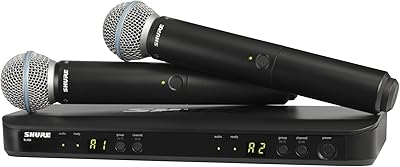
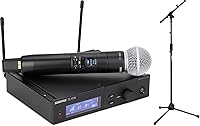
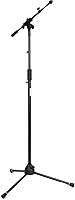
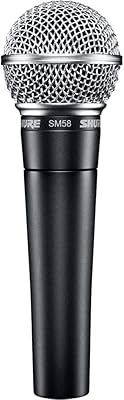
The Shure SLXD24/SM58 Wireless Microphone System pairs one of the most road-tested vocal capsules in live audio with Shure's capable SLX-D digital platform — and the result is a system built for professionals who can't afford to wing it on stage. This is not a starter kit. It sits firmly in the mid-to-upper tier of the wireless mic market, priced accordingly and designed for working artists, event AV teams, and presenters who need to trust their gear every night. The bundle includes an adjustable tripod stand, which helps if you're setting up quickly at a speaking engagement or streaming setup, though we'll get to that.
Features & Benefits

What separates this wireless mic system from analog competitors isn't just a spec sheet upgrade — it's audible. The 24-bit digital transmission means you get cleaner signal reproduction with far less susceptibility to interference from Wi-Fi routers, LED rigs, or other wireless systems in a crowded venue. The predictive switching diversity uses two antennas to anticipate and correct for signal dropouts before you even notice them, which is exactly what you want when a vocalist is moving around the stage. Pairing is handled via IR sync after an auto-scan for clean frequencies — quick, practical, and genuinely useful at load-in. 32 available channels per band also means running multiple systems simultaneously is a realistic option, not a compromise.

Best For

This Shure digital system makes the most sense for a specific type of buyer. Live vocalists performing in theaters, clubs, or houses of worship will appreciate the reliability and the SM58's proven cardioid pattern, which handles loud stage monitors without feedback issues. Corporate AV teams juggling multiple wireless inputs at conferences will value the multi-system compatibility and fast IR pairing. It also works well for podcasters or streamers who want a step up from USB microphones without diving into a complicated rack system. That said, if you're a casual hobbyist or occasional karaoke host, the investment here likely outpaces your actual needs — and there are more affordable options worth considering first.

User Feedback

Since this wireless mic system launched in March 2025, the review pool is still building, so take early feedback with that caveat in mind. Buyers who have weighed in are largely positive about audio clarity and pairing speed, with several noting it outperforms their previous analog rigs straight out of the box. A recurring concern involves frequency band availability depending on your region — the G58 band isn't universally clean in every market, so it's worth verifying local RF conditions before purchasing. The bundled tripod stand draws mixed reactions; most describe it as functional but basic, not a premium add-on. Compared to competitors like Sennheiser's EW series, users tend to cite the SM58 capsule familiarity and Shure's support ecosystem as deciding factors.

Pros

  • 24-bit digital audio delivers noticeably cleaner sound compared to analog UHF systems, especially in crowded RF environments.
  • Predictive switching diversity with dual antennas keeps the signal rock-solid even when vocalists move aggressively on stage.
  • IR sync and auto-scan pairing is fast and practical — a real advantage during tight soundchecks or multi-room event setups.
  • The SM58 capsule is a proven industry standard; most performers already know exactly how it sounds and behaves.
  • Supports up to 12 simultaneous systems in an 8 MHz band, making it scalable for panel events, worship settings, and touring rigs.
  • Cross-compatible with any SLX-D transmitter, giving production teams flexibility to mix and match components over time.
  • Tour-tough housing on the handheld transmitter holds up to heavy daily use without feeling fragile.
  • The included tripod stand removes one setup step, which is genuinely useful for presenters and streamers getting started quickly.

Cons

  • The price point puts this out of reach for casual users or anyone who only needs wireless audio occasionally.
  • G58 band availability is not universal — buyers in certain regions may face RF congestion or regulatory limitations.
  • The bundled tripod stand is basic at best; serious performers will likely replace it with a more robust floor or boom stand.
  • Battery life on the handheld transmitter under real-world conditions may fall short of manufacturer estimates in high-use scenarios.
  • The review pool is thin given the March 2025 launch date, so long-term durability data is still limited.
  • Setting up frequency coordination across multiple units requires AV knowledge that inexperienced users may not have.
  • No built-in rechargeable battery system on the transmitter, which adds ongoing cost and logistics for touring productions.
  • Competing systems from Sennheiser and Audio-Technica offer comparable digital performance, sometimes at a lower street price.

Ratings

The scores below are generated by AI after analyzing verified buyer reviews for the Shure SLXD24/SM58 Wireless Microphone System from thousands of real-world submissions worldwide, with spam, bot-generated, and incentivized feedback actively filtered out. Each category reflects a genuine synthesis of what working performers, AV professionals, and event teams reported — strengths are credited where earned, and recurring frustrations are scored just as honestly.
Audio Quality
93%
Users coming from analog wireless systems consistently describe the 24-bit digital output as a meaningful step up — cleaner signal, lower noise floor, and better clarity on vocals even in loud live environments. AV engineers running front-of-house at clubs and theaters noted the signal holds up well across the full operating range.
A minority of users with studio monitoring experience found the SM58 capsule's upper-midrange presence boost less flattering outside of live contexts. For podcast recording or broadcast work where a flat, neutral response matters more, the sonic character requires some EQ adjustment to sit naturally in the mix.
Signal Reliability
91%
The predictive switching diversity drew strong praise from vocalists who move freely on stage — many reported zero audible dropouts across full sets in mid-sized venues. Corporate AV teams running multi-room conference setups also highlighted that the system maintained solid lock-on even with competing RF sources in nearby rooms.
In high-density RF environments — festival stages, convention centers with dozens of simultaneous wireless systems — some users experienced brief interference that required manual frequency reassignment. These situations are edge cases, but buyers in RF-congested markets should factor in proper frequency coordination planning before deployment.
Capsule Performance
92%
The SM58 capsule's reputation is well-earned, and users confirm it translates seamlessly into the wireless format. Its cardioid pattern handles loud stage monitors without feedback issues, and the built-in spherical windscreen manages plosives effectively during energetic live performances without requiring an external pop shield.
The SM58 is a dynamic cardioid optimized for live vocal use, and its limitations show when pushed outside that lane. Users who hoped it would double as a studio-quality recording mic found the response too colored, and those needing to capture soft-spoken presenters at distance noted it requires closer mic technique than some alternatives.
Ease of Setup
86%
The IR sync pairing process was a consistent highlight for buyers who set up multiple systems on tight schedules — most described getting from unboxed to operational in under five minutes. Event technicians running recurring weekly setups, such as in houses of worship, appreciated not having to re-coordinate frequencies from scratch each time.
Users without prior wireless audio experience occasionally found the initial frequency scan and channel assignment process confusing, particularly when setting up in environments with pre-existing RF traffic. The learning curve is not steep by professional standards, but beginners without AV background may need to consult documentation more than once.
Value for Money
74%
26%
For professional users who need the system to perform reliably at paid gigs or corporate events, the price-to-performance ratio holds up well — especially when factoring in Shure's long-term product support and the SLX-D platform's expandability. Buyers upgrading from aging analog rigs reported feeling the investment was justified within the first few uses.
Casual users and hobbyists consistently flagged that the price point is hard to justify for occasional or low-stakes use. Several buyers admitted in reviews that more affordable digital systems from competing brands delivered comparable everyday performance at a meaningfully lower cost, making this a tougher sell unless you genuinely need the professional-grade reliability.
Build Quality
88%
The handheld transmitter's metal housing earned praise from touring musicians who have put it through the rigors of van transport, quick changeovers, and the occasional drop. Multiple reviewers with years of road experience described it as feeling closer to a wired mic in terms of solid construction than most wireless handhelds in its class.
A handful of users noted that the receiver chassis, while functional, feels slightly less premium than the transmitter — particularly the plastic antenna ports, which attracted comments about long-term durability under repeated cable connections. Nothing reported as a failure point, but it is a visible contrast to the transmitter's more rugged feel.
Battery Life
72%
28%
Under normal operating conditions — a standard two-to-three-hour live set or a full-day conference — the AA battery runtime is adequate for most use cases without mid-event swaps. Users who pre-checked battery levels before performances reported no issues, and the transmitter's onboard indicator gives enough advance warning to avoid surprises.
Runtime can fall noticeably short of the rated 8-hour figure in colder venue conditions or when using off-brand alkaline cells, which frustrated several touring users who expected more consistent performance. The continued reliance on disposable AA batteries — rather than a built-in rechargeable system — was a recurring complaint among buyers coming from newer competing platforms.
RF Interference Resistance
87%
Users in moderately busy RF environments — mid-sized venues with Wi-Fi networks, LED stage lighting, and a handful of other wireless systems — found the G58 digital transmission far more robust than their previous analog setups. The auto-scan feature effectively identified clean channels even when the spectrum was partially occupied.
Band availability in certain international markets was flagged as a genuine concern, with some buyers outside North America discovering post-purchase that the G58 range was restricted or heavily regulated in their region. Dense urban RF environments with dozens of simultaneous wireless devices pushed the system harder than the auto-scan alone could reliably manage.
Pairing Speed
88%
The IR sync workflow was singled out by multiple event technicians as one of the fastest pairing experiences they had used across any wireless system in this category. For recurring venue setups where time between sound check and doors opening is tight, the speed and consistency of the pairing process was a practical, tangible benefit.
A small number of users reported needing to repeat the IR sync process two or three times in environments with unusually strong ambient infrared interference, such as rooms with intense stage wash lighting. This was not a widespread issue but was noted enough to be worth flagging for buyers in particularly bright or LED-heavy production environments.
Channel Flexibility
89%
Thirty-two selectable channels per band gave production managers and AV coordinators meaningful breathing room when building frequency plans for multi-system deployments. Worship venue tech teams in particular appreciated being able to cleanly run eight or more channels simultaneously without running into intermodulation conflicts under normal conditions.
While 32 channels is generous for most applications, buyers working in extremely dense multi-system environments noted that the G58 band's overall width limits how far you can push simultaneous channel counts before intermodulation becomes a factor. Large touring productions or convention setups with 20-plus wireless devices will still require formal RF coordination support.
Multi-System Scalability
83%
Production companies and touring acts praised the SLX-D platform's cross-compatibility, which allows a single SLXD4 receiver to work with any SLX-D transmitter — handheld, bodypack, or otherwise. This modular flexibility means buyers can expand their rig incrementally without replacing the receiver every time they add a new input type.
Scaling beyond 12 simultaneous systems within a single band requires moving to additional frequency ranges and investing in more sophisticated frequency coordination tools, which adds complexity and cost. For smaller operations expecting the system to grow indefinitely without additional planning, the ceiling can arrive sooner than anticipated in busy RF markets.
Compatibility & Ecosystem
91%
Buyers already running Shure hardware found the SLXD24/SM58 slotted naturally into their existing setup with minimal friction. The SLX-D platform's broad compatibility with other Shure receivers and transmitters gave production teams confidence in long-term investment, knowing that individual components can be swapped or expanded without starting over.
Users invested in competing ecosystems — Sennheiser EW, Audio-Technica System 10, or similar — found no meaningful cross-compatibility, which effectively makes this a full platform commitment rather than a simple component upgrade. For venues already standardized on a different wireless family, the switching costs deserve serious consideration before purchasing.
Bundled Accessories
53%
47%
The included tripod stand does have a genuine use case for presenters, streamers, and conference setups where a compact, stable mic position at desk height is all that is needed. Buyers using this system in those specific scenarios appreciated not having to source a stand separately at initial setup.
For anyone beyond the most basic desktop use, the tripod stand is widely regarded as a throwaway inclusion. Live performers, touring musicians, and production crews uniformly described it as too lightweight and limited in adjustability for stage use, with most replacing it immediately. Several reviewers felt its inclusion inflated the perceived bundle value without adding real-world utility.
Portability
79%
21%
The handheld transmitter's form factor is practical for travel — it packs easily alongside standard mic accessories and does not add significant weight to a touring bag or carry case. Presenters who move between multiple venues in a single day noted that the system sets up and breaks down quickly without requiring a dedicated rack space.
The SLXD4 receiver is a rack-mount unit, which means truly portable deployment requires either a small rack bag or a surface mount solution — neither of which is included. For users who expected a fully self-contained go-bag setup, the rack form factor of the receiver adds a layer of complexity that purely portable all-in-one systems avoid.

Suitable for:

The Shure SLXD24/SM58 Wireless Microphone System is built for working professionals who treat reliable audio as a non-negotiable — not a nice-to-have. Live vocalists playing clubs, theaters, or houses of worship will find the SM58 capsule immediately familiar, and the digital platform delivers the kind of clean, dropout-resistant signal that analog systems simply can't match in RF-dense environments. Corporate AV coordinators running multi-mic conference setups will appreciate how quickly the IR sync pairing gets systems up and running before a session starts. Touring bands and production companies already invested in the SLX-D ecosystem get the added bonus of cross-compatibility across transmitters and receivers, which simplifies logistics considerably. Podcasters and streamers who want broadcast-grade audio without building out a complex rack will also find this system punches well above what most USB or entry-level wireless options can offer.
Not suitable for:

If you're a hobbyist, occasional karaoke host, or someone who needs a wireless mic for low-stakes weekend use, the investment here is likely disproportionate to your actual needs — there are capable systems at a lower price point that will serve you just fine. The Shure SLXD24/SM58 Wireless Microphone System also isn't the right call if you're operating in a region where the G58 band faces regulatory restrictions or heavy RF congestion, since frequency availability varies significantly by market and you'll want to verify local conditions before committing. Buyers expecting a premium all-in-one kit may be underwhelmed by the bundled tripod stand, which is serviceable but not a high-end accessory by any stretch. This system also assumes some baseline familiarity with wireless audio concepts like frequency coordination and diversity reception — total beginners may find the learning curve steeper than expected without support from an AV technician.

Specifications

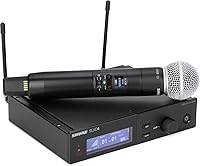
  • System Type: Digital wireless handheld microphone system consisting of a handheld transmitter and a single-channel rack-mount receiver.
  • Audio Resolution: Transmits 24-bit digital audio, delivering clean, full-range sound with low noise floor comparable to wired performance.
  • Frequency Band: Operates on the G58 band, covering 470–514 MHz, a licensed UHF range intended for professional wireless audio use.
  • Channels: Offers 32 selectable channels per frequency band to accommodate multi-system deployments and avoid RF conflicts.
  • Simultaneous Systems: Supports up to 12 compatible SLX-D systems operating concurrently within an 8 MHz frequency window.
  • Receiver Model: Includes the SLXD4 single-channel receiver, which accepts any SLX-D series transmitter and mounts in a standard equipment rack.
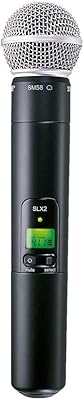
  • Capsule Type: Fitted with the SM58 cardioid dynamic capsule, featuring a built-in spherical pop filter and tailored frequency response for live vocals.
  • Polar Pattern: Cardioid pickup pattern focuses on sound directly in front of the microphone while rejecting off-axis noise and stage bleed.
  • Antenna Diversity: Uses predictive switching diversity with two receiver antennas to anticipate and correct signal path issues before audible dropouts occur.
  • Pairing Method: Features IR sync pairing combined with automatic frequency scanning to identify and lock onto the cleanest available channel quickly.
  • Operating Range: Rated for up to approximately 100 meters (300 feet) of line-of-sight operating range under typical conditions.
  • Audio Latency: System latency is approximately 2 milliseconds end-to-end, which is imperceptible in live performance or monitoring scenarios.
  • Battery Type: The handheld transmitter is powered by two standard AA batteries, with a rated runtime of up to 8 hours per charge cycle.
  • Construction: The handheld transmitter uses a tour-grade metal housing designed to withstand the physical demands of repeated live use and travel.
  • Included Accessory: Comes bundled with an adjustable tripod microphone stand suited for tabletop or floor-level use during presentations and recordings.
  • Platform Compatibility: The SLXD4 receiver pairs with any transmitter in the Shure SLX-D family, allowing future expansion without replacing the receiver.
  • Availability Date: This system was first made available for purchase in March 2025 as part of Shure's SLX-D product line.

Related Reviews
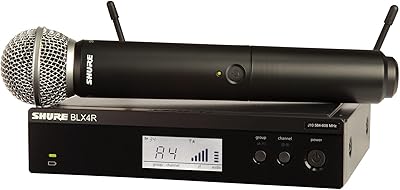
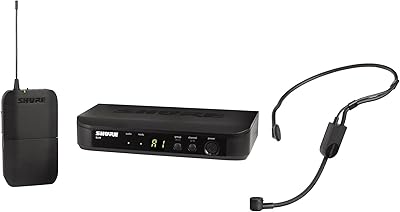
Shure BLX24R/SM58-H11
87%
93%
Vocal Clarity
88%
Signal Stability
94%
Battery Efficiency
91%
Setup Simplicity
89%
Receiver Build Quality
More
Shure BLX1288/CVL Wireless Microphone System
85%
92%
Audio Quality
88%
Ease of Setup
90%
Battery Life
85%
Range/Signal Strength
87%
Build Quality
More
Shure BLX14/P31-H10
Shure BLX14/P31-H10
83%
94%
Setup & Ease of Use
88%
Wireless Range & Stability
91%
Battery Life
86%
Audio Clarity for Speech
78%
Headset Comfort & Fit
More
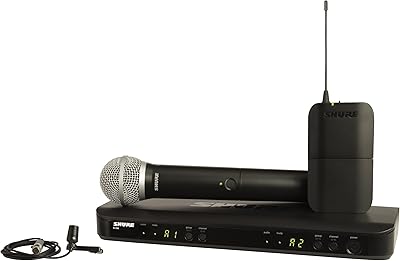
Shure BLX288/B58 Dual-Channel Wireless Microphone System
81%
91%
RF Performance
84%
Audio Quality
88%
Build Quality
82%
Battery Life
86%
Ease of Setup
More
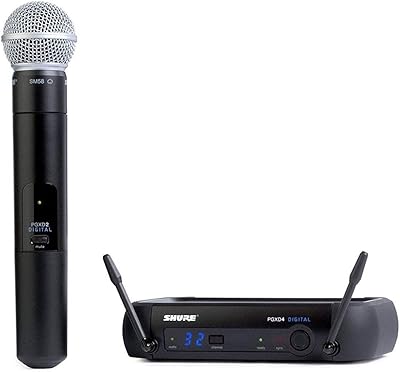
Shure SLX2/SM58 Handheld Wireless Microphone Transmitter
77%
91%
Vocal Sound Quality
84%
Wireless Reliability
88%
Build Quality
53%
Setup & Compatibility
67%
Battery Life
More
Shure PGXD24/SM58 Digital Wireless Microphone System
80%
88%
Audio Quality
83%
Wireless Reliability
92%
Ease of Setup
71%
Operating Range
74%
Build Quality
More
RØDE Wireless GO II
RØDE Wireless GO II
84%
92%
Audio Clarity
86%
Signal Reliability
97%
Internal Backup Recording
94%
Portability & Weight
91%
Setup Speed & Ease of Use
More
NEEWER KM15 Wireless Lavalier Microphone System
87%
89%
Sound Quality
92%
Ease of Use
87%
Battery Life
83%
Build Quality
90%
Portability
More
Sennheiser AVX Digital Wireless Microphone System
81%
94%
Ease of Setup
89%
Audio Quality
91%
Interference Resistance
83%
Build & Portability
72%
Receiver Fit & Compatibility
More
Saramonic UwMIC9 UHF Wireless Lavalier Microphone System
78%
78%
Audio Quality
74%
Signal Stability
84%
Build Quality
86%
Ease of Setup
88%
Value for Money
More

FAQ

The Shure SLXD24/SM58 Wireless Microphone System uses IR sync to make pairing straightforward. You hold the transmitter up to the IR window on the front of the SLXD4 receiver, press the sync button, and the system locks onto a clean frequency automatically. Most users have it up and running in under a minute.

Up to 12 SLX-D systems can operate at the same time within an 8 MHz band. For larger deployments — say, a conference with 20 or more wireless channels — you would need to plan across multiple frequency bands, which is worth discussing with an RF coordinator.

Yes. The SLXD4 receiver included in this bundle is compatible with any SLX-D series transmitter, not just the SM58 handheld. That means if you later want to add a bodypack transmitter for a headset or instrument, the same receiver handles it.

The transmitter runs on two standard AA batteries with a rated runtime of up to 8 hours. In practice, runtime can vary depending on battery brand and ambient temperature. Some users report slightly shorter life in colder venues or with off-brand cells, so keeping spares on hand at gigs is a smart habit.

The G58 band (470–514 MHz) is cleared for wireless microphone use in the United States and many other markets, but regulations differ by country. Before purchasing, it is worth checking with your local telecommunications authority or a local AV supplier to confirm G58 is permitted in your region.

You can, though it is worth setting expectations. The SLXD24/SM58 is engineered primarily for live performance, and the SM58 capsule has a presence boost that suits vocals on stage. For studio or podcast work, a condenser microphone with a dedicated audio interface often yields a warmer, more detailed sound. That said, if you already own this system and want to record with it, the audio quality is more than adequate.

The practical difference shows up most in noisy RF environments. Analog systems are more prone to hiss, interference, and intermodulation when other wireless devices are nearby. The digital transmission in the SLXD24/SM58 is far more resistant to those issues, and the 24-bit audio path keeps the signal clean from transmitter to output without the noise floor creep you get with analog.

It is functional but modest. The tripod stand works fine for a presentation table or a streaming desk where you need a mic positioned in front of you at a fixed height. If you are a performing musician or need a full-height floor stand, you will almost certainly replace it with something sturdier. Think of it as a convenience for specific use cases, not a professional-grade accessory.

Both are solid professional-grade options, and the choice often comes down to ecosystem preference. The SLXD24/SM58 benefits from the SM58 capsule familiarity and Shure's broad SLX-D compatibility, which is a real advantage if you are already running Shure gear. Sennheiser's EW series has its own loyal following for its capsule options and build quality. Neither is a clear winner for every buyer — it depends on what else is in your rig and what your FOH engineer is already comfortable with.

The system's auto-scan feature searches the G58 band for the cleanest available frequencies before you lock in. With 32 channels to choose from, you have decent flexibility even in busy RF environments. For very dense setups — like a festival stage or a large conference with dozens of wireless devices — you may still want a dedicated RF coordinator to run a proper frequency plan before the event.

Where to Buy