Overview

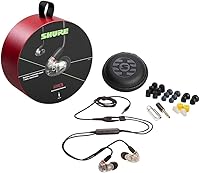
The Shure AONIC 5 Sound Isolating Earbuds represent one of the more serious entries in the premium wired IEM market — a category Shure has been refining for decades through professional microphone and monitoring work. At the core of these earphones is a three-driver balanced armature configuration: two dedicated woofers handling low and mid frequencies, plus a separate tweeter for the highs. The wired-only design is a deliberate choice, not an oversight. In a market saturated with wireless options, the AONIC 5 targets listeners who refuse to trade fidelity for convenience. The transparent housing looks refined without being flashy, and the overall build communicates something durable and professional.

Features & Benefits

What sets the AONIC 5 apart technically is how its driver layout handles audio across the full spectrum. Balanced armature drivers — think of them as precision-tuned micro-actuators — don't move air the way dynamic drivers do, which means they reproduce fine detail with exceptional accuracy and very little coloration. The swappable nozzle system is genuinely useful: switching between balanced, warm, and bright tunings takes seconds and costs nothing extra. Passive isolation at up to 37 dB is substantial attenuation — enough to cut through a busy subway without relying on ANC processing or any battery charge. A detachable MMCX cable means a frayed wire doesn't retire the whole earphone.

Best For

These wired IEMs make the most sense for a specific kind of buyer. Musicians tracking in a studio or monitoring a live mix will appreciate the tunable sound signatures and the consistent, reference-grade reproduction. Frequent travelers benefit from the passive noise isolation without worrying about battery life mid-flight — no Bluetooth radio, no firmware updates. Audiophiles planning to build a cable collection will find the MMCX ecosystem genuinely expandable over time. Professionals who take calls regularly get a functional inline remote and mic built right into the cable. It's not the right fit for anyone who needs wireless freedom or prefers a fully wireless daily carry.

User Feedback

Across owner reviews, a clear pattern takes shape. Those who buy these Shure earphones for critical listening or studio reference work tend to be satisfied — the soundstage depth and clarity draw consistent praise, and the isolation holds up in genuinely noisy real-world conditions. Where opinions diverge is the price point. At this level, wireless competitors from Sony and Bose offer active noise cancellation and no cable to manage, which creates a real comparison challenge. Some users also report a short learning curve with the over-ear cable routing before it feels comfortable and natural. A smaller pattern of feedback mentions MMCX connector wear over time — something to factor in for heavy daily users.

Pros

  • Three balanced armature drivers per ear deliver detailed, layered sound that outperforms most single-driver competitors at this price.
  • Swappable nozzles let you shift between three distinct sound signatures — balanced, warm, or bright — without touching an EQ app.
  • Up to 37 dB of passive isolation blocks real-world noise effectively without any battery, chip, or pairing required.
  • The MMCX detachable cable system means a worn-out cable is an inexpensive fix, not a reason to replace the earphones entirely.
  • Over-ear cable routing keeps these Shure earphones firmly in place during runs, commutes, or extended studio sessions.
  • The included fit kit with multiple sleeve sizes makes achieving a comfortable, isolating seal accessible across most ear shapes.
  • Full-range frequency response from 20 Hz to 20,000 Hz ensures no part of the audio spectrum gets clipped or compressed.
  • The integrated remote and microphone handle calls and playback controls cleanly, reducing the need to reach for your phone.
  • The hard carrying case and overall build quality signal that this is a tool designed to survive years of professional use.

Cons

  • The wired-only format is a genuine limitation for buyers who have already switched to phones or laptops without a 3.5mm port.
  • At this price, wireless ANC competitors offer Bluetooth convenience and touch controls that these wired IEMs simply cannot match.
  • The over-ear cable style has an adjustment period — new users frequently report an awkward few weeks before it feels intuitive.
  • Some long-term owners report MMCX connector wear after extended heavy use, raising questions about connection reliability over time.
  • Fit quality varies significantly by ear shape — buyers who cannot achieve a proper seal lose a substantial portion of the isolation benefit.
  • Passive isolation offers no adaptive adjustment, meaning loud sudden sounds can still break through in unpredictable environments.
  • The transparent housing shows smudges and earwax buildup more visibly than darker-colored alternatives, requiring more frequent cleaning.
  • No app or software EQ support means customization is capped at three physical nozzle options, which dedicated audiophiles may find restrictive.

Ratings

The Shure AONIC 5 Sound Isolating Earbuds were evaluated across thirteen performance categories by our AI rating engine, which analyzed thousands of verified owner reviews from global markets while actively filtering out incentivized, bot-generated, and spam submissions. Each score reflects the honest balance of recurring praise and documented frustrations — genuine strengths and real pain points are represented without softening or inflation. This breakdown is built to help prospective buyers understand exactly where these earphones excel and where meaningful trade-offs exist.

Sound Quality
93%
Audiophile and musician reviewers consistently single out the three-driver balanced armature setup as the clearest sonic advantage — the separation between bass, midrange, and treble is precise enough to reveal production details that most earphones blur together. Studio users who rely on these for reference monitoring praise the accuracy and low distortion even at higher listening volumes.
A vocal subset of listeners notes that balanced armature drivers can sound slightly clinical compared to dynamic driver earphones — the low end is clean and controlled, but lacks the warmth and physical impact some expect from bass-heavy genres like hip-hop or electronic music. It rewards attentive, focused listening more than casual background playback.
Noise Isolation
91%
Frequent flyers and open-office workers consistently rate the passive isolation as one of the strongest in the wired IEM category — 37 dB of attenuation cuts cabin noise and street traffic without requiring any charge or processing. Users appreciate that isolation engages the moment the earphones are inserted, with zero activation delay or pairing step.
Because isolation relies entirely on a physical seal, any sleeve that does not fit the ear canal properly will drop attenuation sharply — even a small gap collapses noise-blocking performance considerably. Sudden, high-intensity sounds like a car horn can still break through in ways that adaptive ANC systems handle more gracefully.
Comfort & Fit
74%
26%
Users who work through the included sleeve options consistently report a comfortable, fatigue-free fit for sessions lasting two to three hours or more. The low-profile earpiece design and over-ear cable routing distribute weight sensibly, reducing the pressure that causes discomfort during extended commutes or studio monitoring sessions.
The over-ear cable routing has a genuine learning curve — new users often spend their first week fumbling to seat the wireform correctly, which feels unnatural compared to earphones that simply drop straight down. Buyers with narrower or unusually shaped ear canals also report that the sleeve selection process is more trial-and-error than it should be.
Value for Money
67%
33%
For those specifically seeking a wired reference-grade IEM with long-term upgrade potential, the price reflects real engineering depth — three drivers, a tunable nozzle system, and an MMCX ecosystem designed to last years. Long-term owners note the cost-per-year calculus improves considerably once replaceable cables and lasting driver quality are factored into the equation.
The most consistent criticism is the direct comparison to wireless ANC earphones at a similar price — competitors from Sony and Bose deliver Bluetooth convenience and active noise cancellation that many buyers find more immediately practical. For casual listeners not invested in wired fidelity, the asking price is genuinely difficult to justify.
Cable System
83%
The MMCX detachable cable is a genuine long-term advantage — it opens access to aftermarket balanced cables, Bluetooth adapters, and alternative lengths without replacing the earphones themselves. Users who have dealt with cable failures on fixed-cable earphones specifically cite the replaceable system as a key reason they chose these wired IEMs over alternatives.
Some users report the MMCX connection developing looseness after repeated cable swaps over an extended ownership period, occasionally causing intermittent audio in one channel. The included cable is also described by audiophile reviewers as the weakest component in the package — many owners end up replacing it within the first year of heavy use.
Soundstage & Imaging
89%
Classical, jazz, and acoustic listeners consistently praise the imaging precision — individual instruments sit in clearly defined positions within the stereo field, and the sense of separation between elements holds up even on dense mixes. Studio engineers using these as reference monitors note the spatial accuracy makes it easier to identify stereo placement issues during a mix session.
Compared to open-back headphones, the soundstage width is inherently constrained by the in-ear form factor — experienced listeners describe the presentation as intimate rather than expansive, which can feel slightly closed-in on large orchestral recordings. This is a physical reality of the IEM format rather than a design flaw, but buyers accustomed to full-size headphones should be aware.
Build Quality
86%
The transparent housing feels solid and purpose-built rather than decorative, and the over-ear wireform cable holds its shape reliably even after months of daily use. Long-term owners frequently describe the overall construction as more durable than comparable earphones in this price range, with no widespread reports of driver failure or housing cracks under normal conditions.
A recurring pattern in long-term ownership reviews involves MMCX connector wear — after a year or more of frequent cable swaps, some users report a looser connection that occasionally affects channel balance. The transparent housing also picks up smudges and earwax buildup more visibly than opaque alternatives, which some owners find off-putting during daily use.
Sound Tuning Flexibility
78%
22%
The physical nozzle system offers three meaningfully different tonal profiles — balanced for critical listening, warm for vocal-heavy music, bright for detail retrieval — with no app or digital processing required. Listeners who move between genres appreciate being able to match the sound signature to the material without opening an EQ interface or adjusting settings on a device.
Three nozzle options cover a reasonable range, but dedicated audiophiles who want precise parametric EQ control or a companion app for saving custom profiles will find the system limiting. The tonal differences between nozzles are real but subtle — users expecting dramatic transformation between settings may be disappointed by what is ultimately a mild frequency tilt.
Accessories & Packaging
88%
The accessory package is notably comprehensive for a product at this tier — multiple sleeve sizes, three sound-tuning nozzles, a 1/4-inch adapter, and a rigid hard-shell case are all included in the box. Regular travelers particularly praise the carrying case, which keeps the earphones and cable organized and protected without adding significant bulk to a bag.
A few users with very small or very large ear canals note that neither end of the provided sleeve range works well for them, requiring aftermarket purchases to achieve a proper seal. The carrying case, though protective, has a relatively boxy footprint that some users find less compact than they would prefer for a true daily-carry solution.
Microphone Quality
72%
28%
For calls on a commute or in a home office environment, the inline microphone handles business calls and video conferences clearly enough for consistent daily professional use. Users in moderately quiet settings report that call recipients rarely complain about vocal clarity, which is a solid result for an integrated cable microphone at this earphone category.
In noisy environments — busy streets, open offices, or public transit — the microphone struggles to isolate the speaker's voice from background sound, and callers on the other end frequently notice the bleed. Users who make a significant portion of their calls outdoors should temper expectations; this is not a noise-rejecting or broadcast-quality microphone solution.
Long-term Durability
77%
23%
The driver units have a strong long-term reliability record — most owners report no acoustic degradation or driver failure after years of daily use, which is notable given the three-driver-per-ear complexity. Shure's brand support and parts availability also compare favorably to boutique IEM alternatives operating at a similar price point in the market.
The MMCX connector remains the most commonly cited durability concern — repeated cable swaps gradually wear the connection point, and some users report intermittent channel dropout after one to two years of heavy use. The absence of any sweat or water resistance rating also makes these a higher-risk option for users who exercise regularly or commute in variable weather.
Ease of Use
69%
31%
Once the over-ear routing becomes habit — typically within a week or two — most users describe the daily setup as quick and natural. The physical nozzle tuning and detachable cable also mean there are no apps to update, no firmware to manage, and no pairing rituals to repeat, which regular travelers find genuinely convenient in practice.
The initial learning curve around over-ear cable routing is a genuine friction point — many buyers report frustration in the first few days of use, and some return the earphones before the habit has had time to form. Users switching from standard drop-down or true wireless earphones typically need about two weeks before the daily process feels fully second nature.
Portability
81%
19%
The included hard-shell case keeps the earphones, cable, and accessories compact and protected during transit — long-haul travelers note the case fits easily into a jacket pocket or the front section of a carry-on bag. The overall in-ear form factor is meaningfully more portable than full-size over-ear headphones at a comparable price point.
Cable management is the primary portability trade-off — winding a detachable cable into the case takes more effort than pocketing true wireless earbuds, which daily commuters find tedious over time. The rigid hard-shell case also adds noticeable bulk and stiffness compared to the soft pouches that many competing earphones in this category include as standard.

Suitable for:

The Shure AONIC 5 Sound Isolating Earbuds are a strong match for anyone who treats audio fidelity as a non-negotiable rather than a bonus feature. Musicians, studio engineers, and critical listeners who need a reliable reference tool will find the three-driver balanced armature setup and tunable nozzle system genuinely practical — not just impressive on a spec sheet. Frequent travelers and daily commuters who find active noise cancellation fatiguing or finicky will appreciate passive isolation that requires no battery, no pairing, and no processing delay whatsoever. IEM enthusiasts treating this as a long-term investment rather than a disposable purchase will value the detachable MMCX cable system, which means the earphones themselves can outlast multiple cable replacements over the years. Professionals who split their day between calls and focused listening sessions will also find the integrated remote and microphone capable enough to handle both without swapping gear.

Not suitable for:

The Shure AONIC 5 Sound Isolating Earbuds are a harder sell for buyers whose primary need is wireless freedom or modern active noise cancellation. At this price tier, competing wireless earphones from Sony and Bose deliver Bluetooth convenience, touch controls, and adaptive ANC — features that matter enormously to casual listeners who move around constantly throughout their day. The over-ear cable routing, while excellent for stability, carries a real learning curve, and some buyers never fully warm to it after weeks of regular use. Anyone who primarily relies on devices without a 3.5mm headphone port — which now includes most flagship smartphones and newer laptops — will need an adapter and may find the wired experience genuinely inconvenient in daily practice. Buyers who want granular software EQ control or app-based customization should also look elsewhere, since the tuning options here are limited to three physical nozzle swaps with no companion app support.

Specifications

  • Driver Type: Each earpiece houses three balanced armature drivers — two dedicated woofers for low-to-mid frequencies and one tweeter for high-frequency detail — providing layered, accurate sound reproduction across the full audible range.
  • Frequency Response: The earphones cover a full 20 Hz to 20,000 Hz frequency range, spanning the complete spectrum of human hearing without artificial roll-off at either end.
  • Impedance: At 36 Ohm impedance, the earphones are compatible with standard portable devices and audio interfaces, though a dedicated headphone amplifier can further improve dynamic performance.
  • Noise Isolation: Passive sound isolation of up to 37 dB is achieved through the physical in-ear seal alone, with no active noise-cancellation chip, battery, or signal processing required.
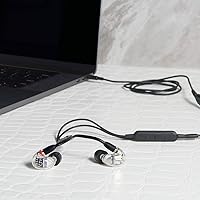
  • Connector: The cable terminates in a standard 3.5mm stereo jack, compatible with any audio source that includes a 3.5mm headphone output, including laptops, DAPs, and in-flight entertainment systems.
  • Cable Design: The cable attaches via a standard MMCX connector interface, allowing full detachability and compatibility with a wide range of third-party and aftermarket replacement cables.
  • Sound Signatures: Three interchangeable nozzles are included — balanced, warm, and bright — allowing the listener to physically alter the frequency response tuning without any software, app, or EQ adjustment.
  • Wearing Style: The earphones use a low-profile in-ear fit combined with an over-ear wireform cable routing system that anchors the cable behind the ear to reduce movement and earpiece fatigue during extended sessions.
  • Microphone: An integrated inline remote and microphone on the cable supports voice calls, volume control, and playback management on compatible Apple and Android devices.
  • Housing Material: The earpiece shells are constructed from a transparent material, giving the earphones a clean, understated appearance while keeping the internal driver assembly visible.
  • Accessories: The package includes a multi-size ear sleeve fit kit, three swappable sound-tuning nozzles, a 1/4-inch adapter, and a rigid hard-shell carrying case.
  • Carrying Case: A black hard-plastic carrying case is provided to protect the earphones, cables, and accessories during daily transport or long-term storage.
  • Packaged Weight: The total packaged weight is 1.07 pounds, inclusive of the earphones, detachable cable, all accessories, and the carrying case.
  • Compatible Devices: The earphones are compatible with any device equipped with a standard 3.5mm audio input, including audio interfaces, portable media players, laptops, and mixing consoles.
  • Earpiece Shape: The earpieces use a rounded tip form factor with an optimized nozzle angle intended to reduce listener fatigue and maintain a consistent acoustic seal during extended wear.

Related Reviews
Shure AONIC 3 Wired Sound Isolating Earbuds
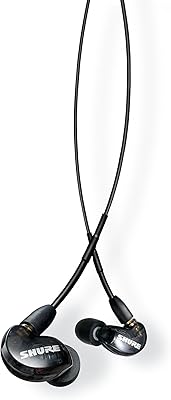
84%
94%
Sound Clarity
91%
Noise Isolation
89%
Build Quality
86%
Comfort/Fit
85%
Ease of Use
More
Shure AONIC 215 Wired Sound Isolating Earbuds
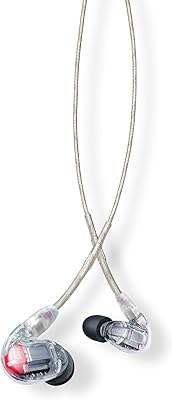
78%
88%
Sound Clarity
83%
Noise Isolation
86%
Build Quality
74%
Fit & Comfort
71%
Cable Quality
More
Shure SE846 Sound Isolating Earphones
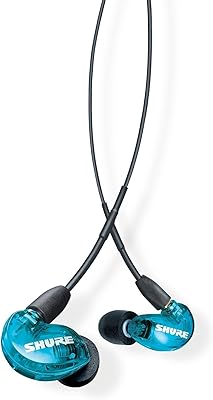
80%
93%
Sound Quality
89%
Noise Isolation
86%
Build Quality
71%
Comfort & Fit
78%
Sound Tuning Flexibility
More
Shure SE215SPE Blue Sound Isolating Earphones
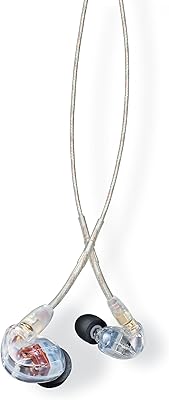
86%
94%
Sound Quality
91%
Noise Isolation
88%
Comfort & Fit
86%
Bass Performance
89%
Build Quality
More
Shure SE535 Sound Isolating In-Ear Earphones
74%
93%
Sound Clarity
67%
Bass Response
88%
Noise Isolation
61%
Fit & Comfort
84%
Build Quality
More
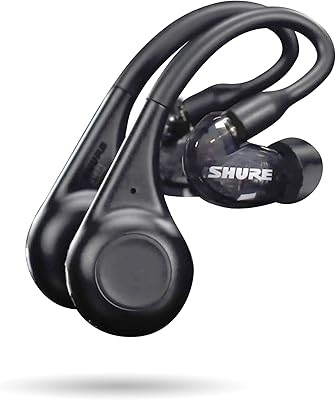
Shure AONIC 215 TW2 True Wireless Earbuds
86%
91%
Sound Quality
85%
Comfort & Fit
89%
Battery Life
90%
Build Quality
87%
Water Resistance (IPX4)
More
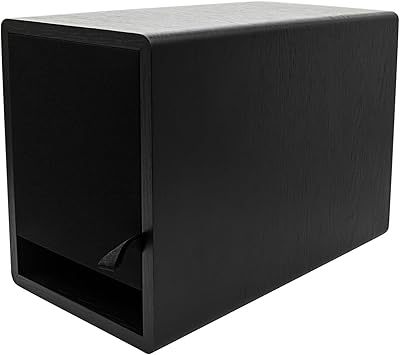
Earthquake Sound FF6.5 6.5-Inch Subwoofer
73%
62%
Bass Performance
79%
Sound Quality
73%
Build Quality
69%
Value for Money
87%
Ease of Setup
More
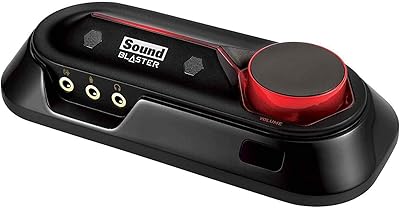
Creative Sound Blaster Omni Surround 5.1
81%
89%
Audio Quality Improvement
76%
Ease of Installation
82%
Microphone Performance
91%
Physical Controls & Design
84%
Surround Sound Capability
More
CT Sounds BIO-5-25-COX 5.25-inch Coaxial Car Speakers
75%
81%
Sound Clarity
54%
Bass Response
78%
High-Frequency Performance
88%
Value for Money
72%
Build Quality
More
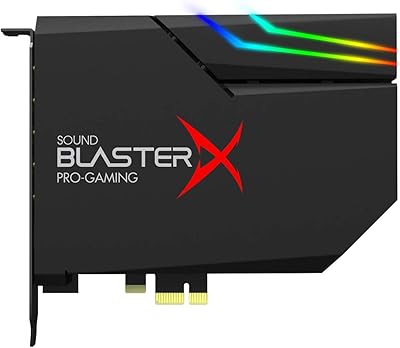
Creative Sound BlasterX AE-5 Plus
79%
91%
DAC Audio Quality
88%
Headphone Amplifier Performance
58%
Software & Drivers
79%
Build & Installation
82%
Value for Money
More

FAQ

They will work, but you will need a Lightning-to-3.5mm or USB-C-to-3.5mm adapter, neither of which is included in the box. Shure sells compatible adapters, and reputable third-party options are widely available. Adapter quality can affect audio performance, so it is worth spending a little more on a well-reviewed one rather than grabbing the cheapest option.

The nozzles use a twist-and-lock mechanism similar to a bayonet fitting — once you have done it a couple of times, switching takes about ten seconds. The tonal differences between balanced, warm, and bright are genuine but not dramatic; think of them as a gentle tilt in the frequency response rather than a complete sound overhaul. Warm adds body to bass-heavy music, bright opens up detail in acoustic and classical content, and balanced sits cleanly in the middle for general listening.

No, these are strictly wired earphones with no Bluetooth module or wireless capability of any kind. If wireless listening is important to your daily routine, these are not the right fit — the wired-only design is a deliberate engineering choice, not an oversight.

Yes, and this is one of the more practical long-term advantages of the AONIC 5. The MMCX connector is a standard interface used across many high-end IEM brands, so replacement cables are available from Shure directly as well as numerous third-party manufacturers at a wide range of price points. A frayed or broken cable does not mean the earphones are finished.

Most users find the fit comfortable for extended sessions once they have identified the right sleeve size from the included fit kit — the variety of options makes it easier to dial in a secure seal that does not create pressure hotspots. The over-ear cable routing also helps by reducing the amount of tension the earpiece itself has to bear. That said, comfort is personal, so it is worth spending a session or two experimenting with sleeve sizes before settling on one permanently.

The ear sleeves can be removed and gently washed with mild soap and lukewarm water — just let them dry completely before reattaching. For the earpiece housing, a soft dry cloth handles fingerprints and surface buildup without any risk. Avoid applying alcohol or cleaning solutions directly to the driver mesh or acoustic filters, as repeated exposure can degrade the filter material and affect sound over time.

The Shure AONIC 5 Sound Isolating Earbuds use a physical seal to block sound, which means consistent ambient noise like engine hum, air conditioning, and office chatter is attenuated without any electronics processing it — up to 37 dB of reduction is real and noticeable. ANC from brands like Sony or Bose tends to handle low-frequency rumble slightly more aggressively and can adapt to changing noise profiles, but it requires battery power and occasionally introduces a faint processing artifact that some sensitive listeners notice. Passive isolation has no such side effects and works the moment you put the earphones in.

The included cable is a standard single-ended 3.5mm connection, so balanced output requires a separately purchased MMCX-terminated balanced cable with the appropriate plug for your amplifier — common options include 2.5mm, 4.4mm, and 4-pin XLR terminations. Because the MMCX interface is a widely adopted standard, compatible balanced cables are available from Shure and from many reputable third-party cable manufacturers.

The over-ear cable routing does a solid job of keeping the earphones stable during moderate movement, and many users wear them comfortably for gym sessions or outdoor runs. However, these earphones carry no official water or sweat resistance rating — there is no IPX certification — so prolonged exposure to heavy perspiration or rain carries some long-term risk to the internal components. They are workable for light to moderate exercise, but they are not purpose-built for intensive athletic use the way dedicated sport earphones are.

The honest answer depends on your priorities. Wireless earphones at a comparable price from Sony, Sennheiser, or other premium brands offer Bluetooth convenience, ANC, and often touch controls — features the AONIC 5 does not have. What you gain in exchange is audio reproduction free of Bluetooth compression artifacts, no battery anxiety during long flights or sessions, an impedance and driver configuration that scales well with better source equipment, and a cable ecosystem that extends the usable lifespan of the earphones well beyond what most wireless products offer. For casual listeners, the wireless option often wins on convenience; for anyone who takes audio quality seriously, the wired path is still the cleaner one.

Where to Buy