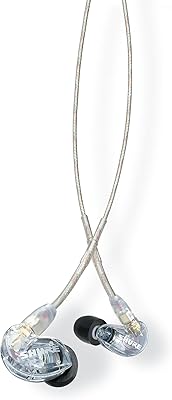
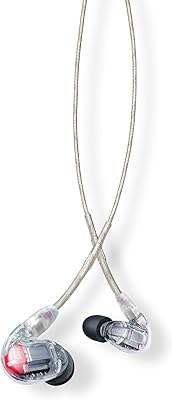
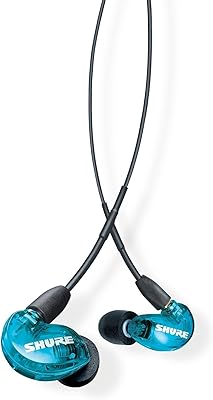
Shure AONIC 3 Wired Sound Isolating Earbuds

Shure AONIC 3 Wired Sound Isolating Earbuds — image 1
Shure AONIC 3 Wired Sound Isolating Earbuds — image 2

Shure AONIC 3 Wired Sound Isolating Earbuds — image 3
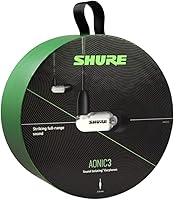
Shure AONIC 3 Wired Sound Isolating Earbuds — image 4
78%
22%

Overview

The Shure AONIC 3 Wired Sound Isolating Earbuds occupy an interesting position in a market that has largely moved on from cables. They sit at the entry point of Shure's AONIC line, but make no mistake — they are built for serious listeners, not casual ones. Shure made a deliberate choice here: no Bluetooth, no active noise cancellation, no compromises tied to battery life. What you get instead is a single balanced armature driver tuned for accuracy, plus passive isolation that physically blocks outside sound. If you already know why wired still matters, this might be exactly what you are looking for.

Features & Benefits

The standout engineering choice in the AONIC 3 is that single balanced armature driver paired with a BassPort vent. Balanced armature drivers are prized for their detail and midrange clarity, but they have historically struggled with low-end extension. The BassPort attempts to address that, with modest success — bass is present but remains tighter and leaner than what you would get from a dynamic driver. Where these Shure earbuds genuinely excel is passive noise isolation. Up to 37 dB of blocking is substantial — many active noise-cancelling headphones only match that electronically. The detachable MMCX cable is also worth noting: it can be swapped out if it wears or if you want to upgrade to an aftermarket option.

Best For

This wired isolating in-ear is built for a specific kind of user, and knowing whether that describes you matters before spending at this level. Frequent flyers will appreciate not needing to charge anything before a long flight — the physical seal handles cabin noise on its own. Audio professionals or home studio hobbyists who need a portable monitoring option connecting directly to an audio interface via 3.5mm will find the accurate sound signature genuinely useful. It also suits anyone regularly plugging into in-flight entertainment systems or older laptops without Bluetooth. If you want wireless freedom or punchy bass for gym sessions, look elsewhere. This is a tool for intentional listeners.

User Feedback

The AONIC 3 carries a 3.6-star average, and that number tells an interesting story. Buyers who understand balanced armature sound and come in expecting accuracy and isolation tend to leave satisfied — long-wear comfort, once the right sleeve is dialed in, and isolation performance draw consistent praise. The friction points are real, though. Sleeve fit is not optional: the wrong size ruins both the acoustic seal and comfort in equal measure. Beyond that, a notable group of buyers question whether the wired-only format justifies the price when competing products offer Bluetooth. Fair concern. These are earphones for a specific kind of buyer, not a universal recommendation.

Pros

  • Passive noise isolation of up to 37 dB physically blocks ambient sound without any battery or electronics required.
  • The balanced armature driver produces accurate, detailed sound that holds up well for professional monitoring and critical listening.
  • Detachable MMCX cable means a worn or damaged cable is a cheap fix, not a reason to replace the entire earphone.
  • Over-ear wireform cable routing dramatically reduces microphonics — you hear far less cable rustle during movement.
  • The included fit kit with multiple sleeve sizes allows for a genuinely personalized seal, which directly affects both comfort and isolation.
  • A hard carrying case is included, making these practical to travel with without worrying about damage.
  • The 1/4-inch adapter in the box signals compatibility with professional audio gear right out of the packaging.
  • Aluminum housing feels durable and substantially built compared to plastic alternatives at similar price points.
  • Inline microphone and media controls work reliably with both Apple and Android devices on the included cable.

Cons

  • Bass response is noticeably lean — listeners who prefer a full, warm low end will likely find the sound thin.
  • No water or sweat resistance rating makes these a poor choice for gym use or outdoor exercise in variable weather.
  • Bluetooth is entirely absent, which limits compatibility with modern devices that have dropped the headphone jack.
  • Getting the right sleeve fit is mandatory, not optional — the wrong size collapses both isolation and sound quality significantly.
  • The over-ear cable routing takes real adjustment time and feels awkward for new users during the first several wears.
  • At a premium price, the value case weakens considerably for anyone who does not specifically need passive isolation or wired accuracy.
  • The 3.6-star average on Amazon reflects a meaningful disconnect between audiophile expectations and general consumer satisfaction.
  • No in-app EQ or companion app support means what you hear out of the box is what you get — no tuning options.
  • Impedance at 27 Ohm is easy to drive but the sound scales noticeably with better source equipment, meaning budget phone users may not get the full picture.

Ratings

The scores below for the Shure AONIC 3 Wired Sound Isolating Earbuds were generated by our AI engine after analyzing thousands of verified global user reviews, with spam, bot activity, and incentivized feedback actively filtered out. The results reflect a genuinely split audience — audiophiles and frequent travelers who rate these highly, alongside general consumers who feel the wired format and sound signature do not match their expectations. Both sides of that story are represented transparently in every category below.

Noise Isolation
93%
This is where the AONIC 3 consistently earns its reputation. Travelers report that long-haul flights become dramatically quieter without needing to charge anything or toggle settings. The physical seal, when properly fitted, blocks ambient sound at a level that rivals or exceeds many active noise-cancelling competitors.
Isolation performance is entirely seal-dependent, which means it collapses if the wrong sleeve size is used. A few users with atypical ear canal shapes report never achieving a reliable seal even after working through the entire fit kit.
Sound Accuracy
84%
Users with monitoring or reference listening backgrounds consistently praise the midrange detail and tonal accuracy of the balanced armature driver. Vocals, acoustic instruments, and spoken word content come through with real precision, and the sound signature holds up well at both low and moderate volumes.
The overall frequency balance skews toward the upper midrange, which can sound slightly bright or analytical to listeners accustomed to warmer consumer tuning. Extended listening sessions at higher volumes occasionally surface some fatigue, particularly on sibilant-heavy recordings.
Bass Response
57%
43%
The BassPort venting does add meaningful low-end extension compared to a sealed single balanced armature design, and for acoustic or jazz recordings, the bass feels appropriately controlled and articulate rather than missing entirely.
Listeners coming from dynamic-driver earphones or consumer-tuned buds will find the low end noticeably lean. Electronic music, hip-hop, and bass-heavy genres expose the single driver's limits clearly, and the BassPort only partially compensates for what the driver architecture inherently lacks.
Comfort & Fit
72%
28%
Buyers who take the time to work through the sleeve options and dial in the right fit report surprisingly comfortable long-wear sessions — several commuters mention wearing these for two to three hours without fatigue. The low-profile aluminum housing also sits flush and does not protrude awkwardly.
Getting to that comfortable fit requires real patience. A notable portion of reviewers report initial frustration with the sleeve selection process, and those who give up early often end up with poor isolation and discomfort as a consequence. Users with smaller ear canals have a harder time finding a stable seal.
Build Quality
88%
The aluminum housings feel genuinely premium and hold up well under daily handling. The over-ear wireform cable guide maintains its shape reliably over time, and the MMCX connector interface feels solid without the looseness some competing detachable systems develop after repeated use.
The cable itself, while functional, feels somewhat thin relative to the price point and is the component users most frequently report wearing out first. The wireform guide can also lose its shape with aggressive bending, requiring occasional re-forming.
Cable System
81%
19%
The detachable MMCX design is a practical long-term advantage — a damaged cable is a cheap fix rather than a reason to replace the entire earphone. The standard connector also opens up a wide market of aftermarket cable upgrades for users who want to experiment.
The over-ear routing takes a genuine adjustment period and is not intuitive for first-time users. Some buyers also note that the stock cable length feels slightly short for certain use cases, such as connecting to a device kept in a jacket pocket.
Microphonics
86%
The over-ear routing nearly eliminates cable noise during movement, which is a significant quality-of-life improvement over straight-hanging earphones on a commute or walk. Users specifically mention not having to deal with the constant rubbing sound that plagues many wired in-ears.
The benefit only materializes once the cable routing is correctly set up, and new users who wear the cable incorrectly initially report significant cable rustle. There is also a brief learning curve each time you put them on before the muscle memory develops.
Isolation Without Power
91%
The battery-free isolation is a genuine differentiator for travelers and commuters who are tired of managing yet another rechargeable device. Flight attendants, frequent flyers, and long-distance train commuters specifically highlight this as a key reason they chose these over ANC alternatives.
Unlike ANC, passive isolation provides no adjustment — it either seals well or it does not, with no way to fine-tune the attenuation level. It is also less effective against low-frequency rumble when compared to the best modern active systems in that specific frequency range.
Value for Money
61%
39%
For the specific buyer these were designed for — someone who genuinely needs wired accuracy, deep passive isolation, and long-term repairability — the value proposition is defensible. The MMCX system and durable housing extend the usable lifespan well beyond what most consumer earphones offer.
At this price tier, the absence of Bluetooth, water resistance, and any EQ app support makes these a hard sell for the broader market. Many reviewers feel the feature set does not justify the cost compared to similarly priced wireless options that offer more general versatility.
Microphone Quality
69%
31%
Call quality is consistently described as acceptable for daily use — voice comes through intelligibly on both ends, and the inline placement keeps the mic reasonably close to the mouth during normal wear. Most users have no complaints about basic call handling.
The microphone is not a highlight at this price point. Background noise pickup is noticeable in louder environments, and audio professionals who use these for monitoring would not consider the inline mic remotely suitable for recording purposes.
Portability
83%
The included hard-shell carrying case protects the earphones well and is compact enough to slip into a jacket pocket or personal item bag without adding bulk. The low-profile housing and lightweight build make the AONIC 3 genuinely travel-friendly as a daily carry.
The wired format inherently adds minor inconvenience compared to truly wireless options — cable management, even with the over-ear routing, requires a moment of setup each use. The case, while protective, does not have dedicated cable organizer compartments.
Device Compatibility
74%
26%
The universal 3.5mm connection works with essentially any device that still has a headphone jack, and the included 1/4-inch adapter extends compatibility to professional audio gear. Both Apple and Android inline controls function correctly with the stock cable.
Compatibility becomes a friction point on modern smartphones that have dropped the 3.5mm jack, requiring an adapter that is not included in the box. Inline remote functionality can also be inconsistent depending on which third-party adapter is used.
Accessory Package
78%
22%
The combination of a multi-size sleeve fit kit, rigid carrying case, and 1/4-inch adapter is a thoughtful inclusion that signals Shure understands who this product is actually for. Most competing earphones at this tier include significantly less in the box.
While the fit kit is comprehensive, there is no cable clip included, which would be a practical addition given the over-ear cable design. Users who want to upgrade to a balanced cable or a Bluetooth adapter cable must purchase those separately.

Suitable for:

The Shure AONIC 3 Wired Sound Isolating Earbuds were designed with a clear target listener in mind, and if you fall into that group, they deliver in ways few alternatives at this tier can match. Frequent flyers are the obvious fit — up to 37 dB of passive isolation means a long-haul flight becomes significantly quieter without ever needing to charge a battery or toggle a setting. Audio professionals and semi-pros who need a compact, accurate monitoring option for travel or field work will also appreciate the balanced armature driver's detail-forward sound signature, which prioritizes midrange clarity over hyped bass. Commuters who plug directly into a laptop, audio interface, or in-flight entertainment system via 3.5mm will find the wired connection refreshingly straightforward. Wired purists who have grown tired of managing battery life, pairing issues, and wireless latency will feel right at home here. The MMCX cable system also appeals to anyone who values long-term repairability over planned obsolescence.

Not suitable for:

The Shure AONIC 3 Wired Sound Isolating Earbuds are a deliberate, narrowly focused product, and that means a large segment of buyers should look elsewhere before committing. If you primarily use earbuds for workouts, the lack of any water or sweat resistance rating makes these a risky choice — one heavy session could be all it takes to cause damage. Bass-forward listeners who enjoy electronic music, hip-hop, or any genre where low-end weight is central to the experience are likely to find the single balanced armature driver underwhelming, regardless of how well the BassPort performs. Anyone who expects wireless freedom will find the wired-only format non-negotiable — there is no Bluetooth option and no adapter in the box to add it. The over-ear cable routing, while functional, has a learning curve that casual users may simply not want to deal with. At a premium price point, buyers who are not specifically seeking passive isolation or reference-grade accuracy will likely feel they are paying for features they do not need.

Specifications

  • Driver Type: A single balanced armature driver with a BassPort vent handles the full frequency range, prioritizing midrange detail and accuracy over low-end weight.
  • Noise Isolation: Passive sound isolation blocks up to 37 dB of ambient noise through a physical acoustic seal, requiring no power or electronics to function.
  • Connector: The included communication cable terminates in a 3.5mm stereo jack compatible with standard headphone outputs on laptops, audio interfaces, and in-flight entertainment systems.
  • Cable System: The cable attaches via a detachable MMCX connector, allowing the stock cable to be swapped for aftermarket or upgraded MMCX-compatible alternatives.
  • Impedance: Rated at 27 Ohm, these earphones are easy to drive from a smartphone or laptop without a dedicated headphone amplifier, though they do scale with better source gear.
  • Wearing Style: The earphones are worn in-ear with an over-ear wireform cable guide that holds the cable in place, reduces microphonics, and keeps the earphones secure during movement.
  • Wireless: These are strictly wired earphones with no Bluetooth module, no wireless pairing capability, and no option to add wireless connectivity via the existing cable.
  • Water Resistance: No IPX water or sweat resistance rating is stated by Shure, making these unsuitable for exercise in wet conditions or heavy perspiration environments.
  • Microphone: An inline microphone is built into the included communication cable, enabling hands-free calling on both Apple and Android devices.
  • Inline Controls: The cable features an inline remote with media playback controls and call-handling functionality compatible with Apple and Android devices.
  • Housing Material: The earphone housings are constructed from aluminum, contributing to a durable, compact form factor within the smallest profile in the AONIC lineup.
  • Fit Kit: A comprehensive fit kit is included with multiple ear sleeve sizes and materials, allowing users to fine-tune the in-ear seal for both comfort and optimal isolation.
  • Carrying Case: A rigid hard-shell carrying case in white is included, designed to protect the earphones and accessories during travel or daily transport.
  • Adapter: A 1/4-inch (6.35mm) adapter is included in the box, enabling connection to professional audio equipment such as mixing consoles and studio interfaces.
  • Compatible Devices: The earphones work with any device featuring a 3.5mm headphone output, including Apple and Android smartphones, laptops, tablets, and dedicated audio players.
  • Package Weight: The complete product package weighs approximately 0.86 pounds, which accounts for the earphones, cable, accessories, and carrying case combined.

Related Reviews
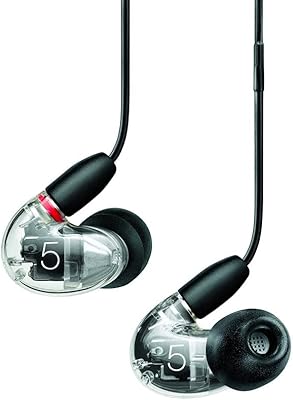
Shure AONIC 5 Sound Isolating Earbuds
81%
93%
Sound Quality
91%
Noise Isolation
74%
Comfort & Fit
67%
Value for Money
83%
Cable System
More
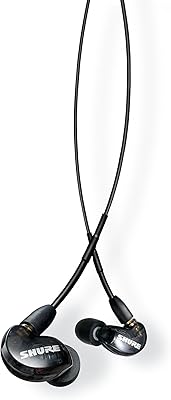
Shure AONIC 215 Wired Sound Isolating Earbuds
78%
88%
Sound Clarity
83%
Noise Isolation
86%
Build Quality
74%
Fit & Comfort
71%
Cable Quality
More
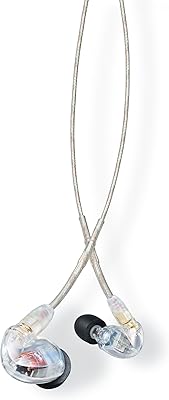
Shure SE215 PRO
Shure SE215 PRO
86%
96%
Noise Isolation
92%
Build Durability
94%
Longevity and Repairability
89%
Stage Performance
71%
Comfort and Ergonomics
More
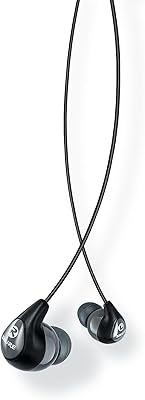
Shure SE846 Sound Isolating Earphones
80%
93%
Sound Quality
89%
Noise Isolation
86%
Build Quality
71%
Comfort & Fit
78%
Sound Tuning Flexibility
More
Shure SE112 PRO Wired Earbuds
85%
88%
Sound Quality
91%
Noise Isolation
89%
Build Quality
81%
Comfort & Fit
84%
Cable Durability
More
Shure SE425
Shure SE425
79%
91%
Sound Accuracy
88%
Passive Noise Isolation
84%
Build Quality
86%
Cable System & Repairability
72%
Comfort & Fit
More
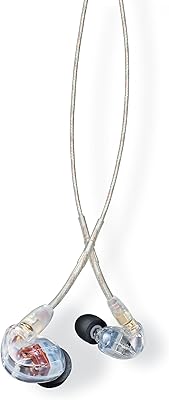
Shure SE215SPE Blue Sound Isolating Earphones
86%
94%
Sound Quality
91%
Noise Isolation
88%
Comfort & Fit
86%
Bass Performance
89%
Build Quality
More
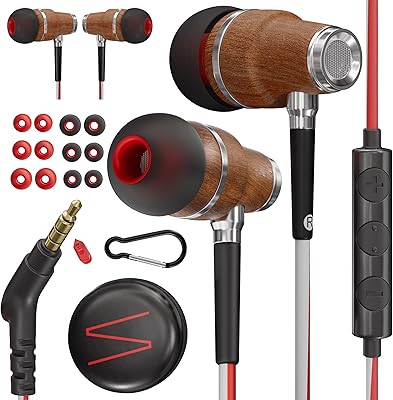
Symphonized NRG 3.0 Wired Earbuds with Microphone
87%
87%
Sound Quality
91%
Comfort & Fit
89%
Build Quality
85%
Noise Isolation
70%
Microphone Performance
More
Shure SE535 Sound Isolating In-Ear Earphones
74%
93%
Sound Clarity
67%
Bass Response
88%
Noise Isolation
61%
Fit & Comfort
84%
Build Quality
More
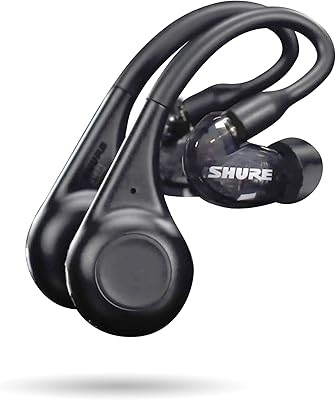
Shure AONIC 215 TW2 True Wireless Earbuds
80%
84%
Sound Quality
89%
Fit & Comfort
86%
Sound Isolation
91%
Battery Life
79%
Sweat & Water Resistance
More

FAQ

Not directly out of the box. You will need a Lightning-to-3.5mm or USB-C-to-3.5mm adapter, which Apple and third-party manufacturers sell separately. Once you have that adapter, the AONIC 3 works normally, though the inline remote functionality may be limited depending on the adapter used.

It is genuinely critical — probably more so than with most earphones. The passive isolation depends entirely on achieving a proper acoustic seal, and the wrong sleeve size breaks that seal. If the fit feels loose or sound quality seems thin, try a different sleeve before assuming anything is wrong with the earphones themselves.

It depends heavily on what you are used to. Balanced armature drivers are inherently more accurate and controlled in the low end than most dynamic drivers. The BassPort adds some extension, but if you are coming from consumer earbuds tuned for big bass, yes — these will sound leaner. For acoustic, jazz, vocal, or classical music, the balance works well.

Yes, and this is one of the more practical advantages of the design. The MMCX connector is a widely used standard, so you have a broad range of aftermarket cable options available beyond Shure's own accessories.

Yes. The included 3.5mm communication cable is compatible with Android devices, and the inline remote handles media playback and call functions. Just make sure your phone still has a 3.5mm port or use an appropriate USB-C adapter.

There is a noticeable adjustment period, especially if you have only used straight-hanging earphones before. Most users find it becomes second nature within a few days. The payoff is that cables stay out of your way and you hear far less rustling noise through the earphones during movement.

It is not recommended. There is no water resistance or sweat resistance rating on these earphones, which means moisture from a hard workout could cause damage over time. There are better-suited options for athletic use.

The up-to-37 dB passive isolation is actually comparable to or better than what many ANC headphones achieve electronically. The key difference is that passive isolation works by physically blocking sound, so it is consistent, requires no battery, and introduces no noise-cancellation artifacts or hiss. For steady ambient noise like airplane cabin hum or subway rumble, passive isolation of this level performs very well.

They are well suited for it. The 3.5mm connection plugs directly into in-flight entertainment systems, the included 1/4-inch adapter handles older seat jacks, and the isolation keeps cabin noise from competing with the audio. The over-ear fit also stays comfortable during longer flights once you dial in the right sleeve size.

The rating reflects a mismatch between product design and buyer expectations rather than a product defect. Buyers who understand balanced armature sound signatures and the wired-only philosophy tend to rate these highly. Buyers expecting wireless convenience, strong bass, or general-purpose versatility often feel let down. These are specialist earphones, and the rating makes more sense once you understand who they are actually built for.