





Overview
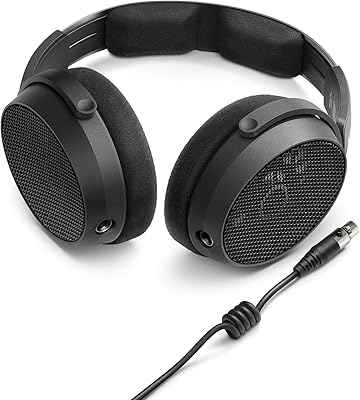
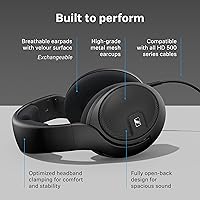
The Sennheiser HD 560S sits squarely in the entry-to-mid audiophile range, pitched at listeners who are ready to leave consumer headphones behind and start hearing music the way it was actually recorded. This open-back headphone carries forward lessons from the well-regarded HD 558/559 generation, but with a sharper focus on neutral, reference-grade sound. It is wired-only — no Bluetooth, no active noise cancellation — which tells you something about its priorities. At 240 grams with velour earcups and a padded headband, it is built for long desk sessions rather than commutes or gym bags.
Features & Benefits
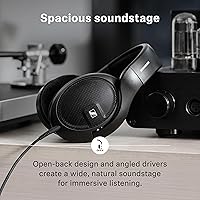
The 38mm dynamic driver is tuned for an analytical, flat response — what you hear is an honest representation of the source, not a hyped-up version of it. Sennheiser's E.A.R. technology angles the drivers slightly toward your ears, mimicking how loudspeakers project sound in a room and producing a wider, more convincing stereo image than most closed-back headphones can manage. The 120-ohm impedance means a decent amp will unlock noticeably more control and clarity, though these Sennheiser cans still function at lower volumes straight from a laptop. The detachable cable also supports balanced connections, leaving room to grow alongside your setup.
Best For
This open-back headphone is a natural fit for home listening environments where sound leakage is not a concern — open-back designs breathe sound in both directions, so offices and public transport are firmly out. Mixing engineers and podcast editors who need to catch every nuance in a recording will appreciate how analytically honest these Sennheiser cans can be. Classical, jazz, and acoustic listeners benefit most from the wide, airy soundstage. And if you already own a DAC or headphone amp, or plan to pick one up, you will find this headphone responds noticeably well to better source equipment.
User Feedback
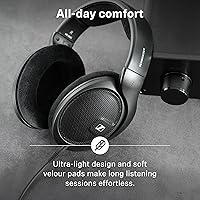
Owners consistently highlight comfort during long sessions — the velour pads and light weight make multi-hour listening genuinely painless, which is not always guaranteed at this tier. The soundstage width gets mentioned repeatedly as a real differentiator against closed-back alternatives in a similar price range. That said, not everyone is fully satisfied: the plastic construction draws criticism from buyers who expected a more substantial feel for the asking price, and the stock cable is a frequent upgrade target. A smaller group of listeners finds that poorly mastered recordings can expose a slightly edgy top-end — a byproduct of that honest, flat tuning rather than any design flaw.
Pros
- Exceptionally accurate, neutral sound that reveals genuine detail in well-recorded music.
- The open-back design produces a wide, natural soundstage that closed-back rivals struggle to match.
- Velour earcups and a lightweight build make extended listening sessions genuinely comfortable.
- Detachable cable design means a worn-out lead does not end the headphone's useful life.
- Balanced cable compatibility gives room to grow as your audio setup improves over time.
- These Sennheiser cans perform respectably even without amplification for moderate-volume listening.
- Midrange clarity makes vocals and acoustic instruments sound transparent and well-defined.
- Strong long-term value for critical listening and home monitoring applications.
- Treble extension adds real air and detail to acoustic and classical recordings.
- Replacement earpads and cables are available, supporting a longer ownership lifespan.
Cons
- Plastic build quality feels noticeably cheaper than the price tier suggests it should.
- The stock cable is thin, tangles easily, and most serious users replace it quickly.
- No noise isolation whatsoever makes these completely impractical outside a quiet private room.
- Bass response is lean and will disappoint listeners who enjoy impact and warmth in their music.
- Full sonic potential requires a dedicated DAC or amp, adding to the real total cost.
- Treble can turn harsh on poorly mastered or heavily compressed streaming tracks.
- Headband stress fractures have been reported by some users after extended daily use.
- Proprietary cable connector limits the range of compatible third-party replacement options.
- First-time buyers unfamiliar with open-back headphones are often caught off guard by the sound leakage.
- Clamping force straight out of the box feels tight until the headband loosens over time.
Ratings
The Sennheiser HD 560S has been scored by our AI system after processing thousands of verified global buyer reviews, with spam, bot-generated, and incentivized submissions actively filtered out. The result is an honest, balanced picture of where these open-back headphones genuinely shine and where real users have run into frustration. Both the standout strengths and the recurring pain points are reflected transparently in every category below.
Sound Accuracy
Soundstage & Imaging
Comfort & Fit
Build Quality
Amplifier Dependency
Cable Quality
Treble Extension
Bass Response
Midrange Clarity
Value for Money
Detachable Cable System
Noise Isolation
Long-Term Durability
Ease of Setup
Suitable for:
The Sennheiser HD 560S was built for a specific kind of listener, and if you fit the profile, it is hard to argue with the choice. Home studio engineers, podcast editors, and anyone doing serious mixing work will find the flat, analytical tuning genuinely useful — it tells the truth about a recording rather than flattering it, which is exactly what critical listening demands. Audiophiles who are stepping up from mainstream consumer headphones for the first time will likely find these cans revelatory, particularly for classical, jazz, acoustic, and any music where instrument separation and spatial positioning matter. Desktop listeners who already own a DAC or headphone amp — or who are planning to buy one — will get noticeably more out of this open-back headphone than users relying solely on a phone or laptop output. If your listening happens in a quiet private space and you value accuracy over excitement, this headphone punches well above casual expectations for its price tier.
Not suitable for:
The Sennheiser HD 560S has real limitations that make it a wrong fit for a surprisingly large group of buyers, and it is worth being honest about that before committing. The open-back design means sound leaks freely in both directions — these cans are completely impractical for offices, libraries, public transport, or any shared environment where your audio would disturb others or ambient noise would disturb you. Listeners who primarily enjoy bass-heavy music genres like EDM, hip-hop, or modern pop may find the neutral, lean tuning underwhelming compared to consumer headphones specifically tuned for impact and warmth. Anyone expecting a premium physical experience will likely feel let down by the plastic construction, which does not match the acoustic performance in terms of tactile quality. Finally, buyers without access to a dedicated headphone amp should know upfront that these headphones, while functional from a phone, do not fully come alive without proper amplification — factoring in that additional cost changes the value calculation meaningfully.
Specifications
- Driver Type: Each earcup houses a 38mm dynamic driver tuned for a flat, reference-grade frequency response.
- Frequency Range: The headphone reproduces audio from 6 Hz to 38,000 Hz, extending well beyond the typical limits of human hearing in both directions.
- Impedance: Rated at 120 ohms, these headphones benefit meaningfully from a dedicated headphone amplifier or DAC for full dynamic performance.
- Weight: The headphone weighs 240g (8.5 oz), keeping it comfortable for multi-hour listening sessions without neck or head fatigue.
- Ear Coupling: Over-ear, open-back design allows air and sound to pass freely through the earcups, producing a natural, room-like soundstage.
- Earcup Material: Earpads are covered in soft velour fabric, which remains breathable and cool against the skin during extended wear.
- Headband: The headband is constructed from padded plastic with an adjustable slider mechanism to fit a range of head sizes.
- Cable Length: The included detachable cable measures 3 meters, sized for stationary desktop use rather than portable listening.
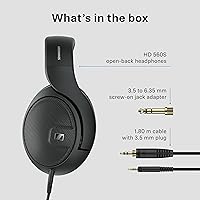
- Connector: The cable terminates in a 3.5mm plug and ships with a screw-on 6.3mm adapter for use with standard amplifier outputs.
- Balanced Output: The headphone supports aftermarket balanced cables, allowing compatibility with 4.4mm or 2.5mm balanced amplifier outputs.
- Noise Isolation: The open-back construction provides zero passive noise isolation, making these headphones unsuitable for noisy or shared environments.
- Connectivity: Wired-only connection with no Bluetooth, wireless, or active noise-cancellation circuitry of any kind.
- Cable Design: The cable is detachable via a locking 3.5mm connector at the earcup, allowing replacement or upgrade without tools.
- Color: Available in matte black with dark grey earcup grilles and matching headband padding.
- Recommended Use: Designed primarily for critical listening, audio monitoring, home studio mixing, and reference-grade playback at a desktop setup.
- Compatible Devices: Works with any device featuring a 3.5mm or 6.3mm audio output, including DAC/amp units, audio interfaces, and computers.
- SPL Sensitivity: Rated at 110 dB SPL (1 kHz, 1 Vrms), indicating a reasonable sensitivity level that benefits from amplification at higher volumes.
- What's Included: The package contains the headphones, a 3-meter detachable cable, a 6.3mm screw-on adapter, and a user manual.
Related Reviews
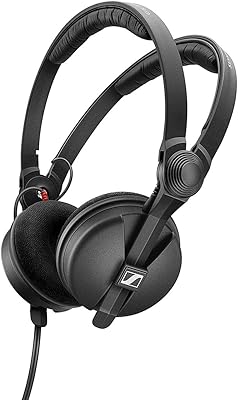
Sennheiser HD 25 Special Edition
Sennheiser HD 600
Sennheiser HD 280 Pro
Sennheiser HD 300 Closed-Back Over-Ear Headphones
Sennheiser HD 400S
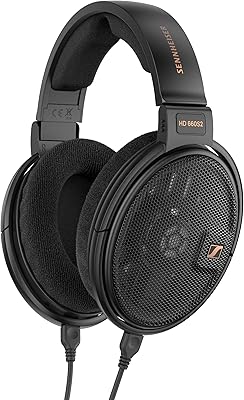
Sennheiser HD 660S2
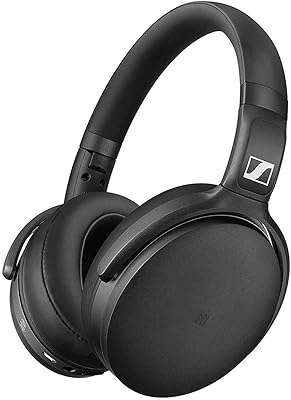
Sennheiser HD 4.50 SE Wireless Headphones
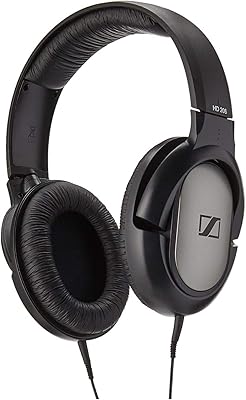
Sennheiser HD 206 Stereo Headphones