Overview

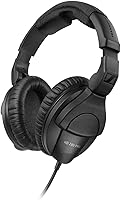
The Sennheiser HD 280 Pro has been a reliable fixture in recording studios and DJ booths for well over a decade, and its staying power says a lot. Sitting at a mid-range price point, it occupies an interesting space — more capable than typical consumer headphones, yet accessible enough for beginners setting up their first home studio. The closed-back, over-ear design isn't just aesthetic; it exists to keep outside noise out and recorded sound in. With over 12,000 ratings and a top placement in the over-ear category, it has earned genuine credibility. Just know going in: these are built for accurate monitoring, not the bass-boosted, hyped sound many casual listeners expect.
Features & Benefits

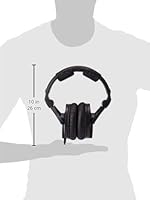
The passive noise attenuation on this closed-back studio headset reaches up to 32 dB, which proves genuinely useful when tracking vocals in a live room or mixing in a noisy environment. The frequency response runs from 8 to 25,000 Hz, tuned to reproduce audio honestly rather than flatter it. At 64 Ohms, these Sennheiser monitoring headphones pair cleanly with most standard audio interfaces — no headphone amp required. The earcups fold and rotate for compact storage, a practical detail for engineers moving between sessions. A single-sided cable keeps desk clutter down, and the oval faux-leather earpads form a consistent acoustic seal that supports extended wear and solid isolation in one design.

Best For

This closed-back studio headset earns its place wherever noise leakage or ambient sound would compromise the work. Home studio recording is the natural fit — the closed design prevents bleed when a vocalist is tracking near an open microphone. DJs working loud venues rely on the isolation to stay locked into the mix. Podcast producers and voiceover artists will appreciate the honest playback that adds no artificial warmth to the source material. One honest caveat: if you mainly listen for pleasure and enjoy a wide, open soundstage or punchy bass, these Sennheiser monitoring headphones will likely feel too analytical for casual everyday listening.

User Feedback

Across thousands of reviews, long-term durability stands out as the most consistent praise — many users report daily use stretching five years or more without meaningful issues. The clamping force reads as firm but not punishing, which most find reassuring rather than uncomfortable. On the downside, the faux-leather earpads trap heat during long sessions, and some users find the cable a touch stiff at first. The neutral sound signature divides opinion cleanly: working professionals value the accuracy, while casual listeners sometimes wish for more color. Importantly, replacement earpads are widely available, meaning the headset can be maintained and kept functional long after the original pads wear through.

Pros

  • Passive noise attenuation reaches up to 32 dB — effective without any electronics or batteries involved.
  • The flat frequency response reliably exposes mixing problems that hyped consumer headphones would hide.
  • Drives cleanly from standard audio interfaces and mixers with no headphone amp required.
  • Foldable earcups collapse to a compact shape, practical for engineers moving between sessions.
  • Single-sided cable keeps the studio desk tidy and reduces tangling during active use.
  • Build durability is a standout — many users report years of daily professional use without failure.
  • Replacement earpads are widely available, extending the headset lifespan well beyond pad wear.
  • The included quarter-inch screw adapter means immediate compatibility with professional audio hardware.
  • Clamping force is firm enough to stay in place during movement without causing jaw pressure.
  • At its price point, these Sennheiser monitoring headphones deliver professional monitoring capability that is hard to match.

Cons

  • The faux-leather earpads trap heat noticeably during sessions longer than two hours.
  • The fixed, non-detachable cable means a single point of damage can sideline the entire headset.
  • Earpad faux-leather coating begins to peel and flake within one to two years of regular use.
  • The stiff cable does not soften significantly and can feel restrictive when moving around a studio.
  • Headband padding compresses and flattens over time, reducing cushioning noticeably after extended ownership.
  • No carrying case is included, which is a real omission for a folding headset marketed at working professionals.
  • Users with wider heads report the clamp feeling tight, with limited gradual adjustment in the headband.
  • The plastic construction develops minor stress marks around flex points after years of folding and unfolding.

Ratings

The Sennheiser HD 280 Pro scores below are generated by AI after analyzing thousands of verified global user reviews, with spam, incentivized, and bot-flagged feedback actively filtered out. This closed-back studio headset has accumulated one of the strongest review bases in its category, and both its genuine strengths and recurring frustrations are reflected transparently in each score.

Noise Isolation
91%
The passive attenuation is one of the most cited reasons buyers choose these Sennheiser monitoring headphones over competing options. Vocalists tracking in home studios and DJs working loud booths consistently note that outside noise drops away enough to focus on what is coming through the mix, without any electronic noise cancellation involved.
The isolation relies entirely on a good physical seal from the earcups, so users with smaller or differently shaped heads occasionally report gaps that reduce effectiveness. It is also worth noting that isolation is unidirectional — sound bleed out from high volumes can still be audible to people nearby.
Sound Accuracy
88%
Working audio professionals repeatedly describe the frequency response as honest and uncolored, which is exactly what you need when making mixing decisions. Podcast editors and voiceover producers find that these headphones reveal sibilance, room noise, and EQ problems that consumer-tuned headphones would mask entirely.
That same flatness makes them feel dry or lifeless to casual listeners who are used to boosted bass and scooped mids. If your primary use is enjoying music rather than analyzing it, the analytical signature can feel like a chore rather than a pleasure over time.
Build Quality
86%
The construction holds up well under consistent daily abuse. Many verified buyers report using the same pair across multiple years of studio and live work, with the headband and housing showing minimal deterioration even after heavy rotation across sessions and gigs.
The plastic construction, while durable, does not feel premium in the hand when compared to higher-end metal-framed competitors. A small number of users have reported headband stress fractures after extended use, particularly when the headset is folded and unfolded repeatedly over years.
Comfort Over Long Sessions
63%
37%
The clamping force strikes most users as firm but tolerable — secure enough for active movement without creating the jaw pressure that tighter monitoring headphones sometimes cause. For sessions under two hours, the majority of buyers report no significant discomfort.
The faux-leather earpads trap heat noticeably, and during longer recording or mixing sessions this becomes a real issue. Several reviewers specifically mention needing to take breaks every hour or so, and users in warmer climates find the pad temperature problem more pronounced than those in cooler environments.
Passive Attenuation Performance
89%
Up to 32 dB of passive blocking is a specification that holds up in real-world conditions. Users working in shared apartments or open-plan home studios consistently mention the isolation being strong enough to track without hearing room conversation or ambient traffic noise bleed into their monitoring.
The attenuation figure assumes an ideal fit, and users who wear glasses or have facial features that prevent a full seal will fall short of that headline number. There is no active noise cancellation as a fallback, so the seal quality is everything.
Value for Money
84%
At its price point, the HD 280 Pro punches above its weight for professional applications. Home studio beginners and working semi-professionals consistently call it out as the most capable wired monitoring option available without crossing into significantly higher price territory.
As purely consumer headphones for music enjoyment, there are more enjoyable-sounding options at a similar price. The value case is strong specifically for monitoring and studio use — buyers who want a fun listening headphone may feel they paid for capabilities they do not actually need.
Cable Quality & Design
71%
29%
The single-sided cable routing is a thoughtful choice for studio environments where cable management matters. The included screw-on quarter-inch adapter means these monitoring headphones connect directly to professional interfaces and mixing desks without needing a separate adapter purchase.
The cable itself has a stiffness that multiple users describe as annoying during the first weeks of use, though it does soften somewhat over time. It is also a fixed, non-detachable cable, so damage to it means either a repair job or replacement of the full unit.
Foldability & Portability
77%
23%
The folding and rotating earcup mechanism is genuinely practical for engineers who move between studios or carry gear in a bag daily. The collapsed footprint is compact enough to fit in most laptop bags alongside other kit without dedicated headphone case space.
The folding mechanism is functional rather than elegant — it lacks the smooth, satisfying action found on more premium travel-focused headphones. A dedicated carrying pouch or case is not included, which feels like an oversight given the professional positioning of this closed-back studio headset.
Impedance & Amplifier Compatibility
87%
At 64 Ohms, these Sennheiser monitoring headphones sit in a practical sweet spot. They drive clearly from laptop headphone jacks, USB audio interfaces, and mixing consoles alike, without requiring users to invest in a dedicated headphone amplifier as a mandatory companion purchase.
While 64 Ohms is manageable for most setups, it does draw slightly more power than lower-impedance consumer headphones. On underpowered mobile devices or older laptop outputs, maximum volume may feel limited compared to what a proper interface output would deliver.
Earpad Longevity & Replaceability
78%
22%
The fact that replacement earpads are widely available from Sennheiser and third-party suppliers genuinely extends the useful life of this headset. Several long-term owners mention having replaced pads once or twice across several years of ownership, keeping the headset functional and hygienic at low additional cost.
The original faux-leather pads do show wear — peeling and flaking is a reported issue after one to two years of regular use, which is earlier than most buyers expect from a professional-grade product. The degradation is cosmetic at first but eventually affects the acoustic seal.
Headband Padding
66%
34%
The headband padding is sufficient for most average-duration sessions and distributes weight reasonably well given the lightweight overall construction. At just over four ounces, the headset never feels heavy on the head even during longer work periods.
The padding itself is thin by current standards and does not carry the same longevity as the earcups. Several reviewers note the headband foam compresses and flattens over time, with a noticeable reduction in cushioning that becomes apparent after extended ownership.
Frequency Extension
82%
18%
The extended low-end response down to 8 Hz and high-frequency reach to 25,000 Hz gives these Sennheiser monitoring headphones an impressive technical range for the price tier. Audio engineers working with sub-bass content or high-frequency transient detail find this breadth genuinely useful in a critical listening context.
While the frequency range is wide, the presentation is analytical, meaning the headset does not flatter low-end content the way consumer headphones do. Bass is present and accurate, but it will not satisfy listeners who associate good bass with weight and warmth rather than precision.
Setup & Ease of Use
93%
There is essentially no setup friction with this closed-back studio headset. Plug in, connect to an interface or mixer, and the headphones are ready to use without drivers, apps, or pairing procedures. The included adapter covers both consumer and professional output jacks in one accessory.
The wired-only connectivity is a deliberate professional choice, but it does mean the headset is tethered at all times. Users who have grown accustomed to wireless monitoring options may find the cable an adjustment, particularly when moving around a studio space during sessions.
Clamp Force & Fit Security
74%
26%
The firm clamp is consistently appreciated by users who need the headset to stay in place during active work — DJs who move between equipment and engineers who nod along while tracking both mention that the grip prevents the headset from shifting mid-session.
Users with wider heads have flagged the clamp as noticeably tight, and while most report adapting within a few sessions, those particularly sensitive to pressure around the ears or temples may find extended wear uncomfortable. The fit does not adjust as gradually as some competing headbands allow.

Suitable for:

The Sennheiser HD 280 Pro is built for people who need their headphones to work as a tool rather than a luxury accessory. Home studio recording is the strongest use case — the closed-back design prevents microphone bleed during vocal or instrument tracking, which is a problem that open-back headphones simply cannot solve. DJs working loud club environments or live events will appreciate the passive isolation that lets them cue tracks accurately without fighting ambient noise. Podcast producers and voiceover artists benefit from the flat, honest playback that reveals actual recording problems rather than flattering the source material. Musicians who are just starting to build a home setup and want a single reliable headset that bridges studio monitoring and casual production work will find this closed-back studio headset punches well above typical entry-level options. Anyone who needs a wired monitoring solution that plugs straight into a standard audio interface without extra gear will find the 64 Ohm impedance hits a practical sweet spot.
Not suitable for:

The Sennheiser HD 280 Pro is a poor fit for buyers whose primary goal is enjoying music rather than working with it. The flat, analytical sound signature is a deliberate engineering choice that serves critical listening but feels sterile compared to consumer-tuned headphones that boost bass and add warmth. If you spend most of your listening time on long commutes, workouts, or travel, the wired-only connection and the lack of a carrying case make these Sennheiser monitoring headphones awkward companions outside a studio context. Listeners who prioritize a wide, immersive soundstage will also be disappointed — closed-back isolation inherently narrows the stereo image compared to open-back alternatives. People who run long sessions of four hours or more back-to-back should be aware that the faux-leather pads retain heat, and the comfort ceiling is lower than dedicated long-wear headsets at a similar price. Finally, buyers expecting premium build materials or a refined unboxing experience will find the utilitarian plastic construction and basic packaging underwhelming for the brand name on the headband.

Specifications

  • Type: Closed-back, over-ear (circumaural) dynamic headphone designed for professional studio monitoring and isolation applications.
  • Driver Type: Dynamic driver with a focus on linear, accurate sound reproduction across the full audible frequency range.
  • Frequency Response: 8 Hz to 25,000 Hz, providing extended low-end reach and high-frequency detail beyond standard consumer headphone specifications.
  • Impedance: 64 Ohm nominal impedance, compatible with most standard audio interfaces, mixers, and portable devices without a dedicated amplifier.
  • Max SPL: Maximum sound pressure level of 113 dB, suitable for high-volume monitoring environments including live DJ booths and loud studios.
  • Noise Attenuation: Up to 32 dB of passive ambient noise attenuation achieved through closed-back housing and sealed oval earpads — no active electronics required.
  • Cable: Single-sided, fixed cable terminating in a 3.5mm stereo jack, with a screw-on quarter-inch adapter included for professional interface compatibility.
  • Connectivity: Wired only; compatible with any 3.5mm or quarter-inch audio output including interfaces, mixers, laptops, and portable players.
  • Earpads: Oval-shaped faux-leather earpads with circumaural fit designed to create a full acoustic seal around the ear for passive isolation.
  • Folding Mechanism: Earcups fold inward and rotate flat, allowing compact storage and reduced footprint when transported in a bag or case.
  • Weight: 4.2 ounces total headset weight, keeping the unit light enough for extended sessions without significant neck or head fatigue.
  • Dimensions: Overall product dimensions measure approximately 9.64 x 7.36 x 3.3 inches when unfolded and in standard wearing position.
  • Headband: Adjustable padded headband with a firm, fixed arc that provides consistent clamping force across a range of adult head sizes.
  • Earpiece Shape: Oval earpiece geometry accommodates most ear shapes and contributes to the acoustic seal necessary for the rated 32 dB attenuation.
  • Model Number: Official Sennheiser model number is 506845, also sold under the product designation HD 280 Pro across global markets.
  • Manufacturer: Designed and manufactured by Sennheiser, a German audio brand with decades of presence in professional studio and broadcast equipment.
  • Included Accessories: Package contains one pair of headphones and one screw-type quarter-inch adapter; no carrying case or replacement pads are included.
  • Earpad Material: Faux leather outer surface over foam cushioning; replacement pads are available separately from Sennheiser and third-party suppliers.
  • Water Resistance: Not rated for water or moisture resistance; not suitable for outdoor sports use or environments with exposure to rain or sweat.
  • Availability: In continuous production since 2013 with no manufacturer discontinuation announced, and replacement parts remain actively available.

Related Reviews
Sennheiser HD 490 PRO Plus Headphones
82%
94%
Sound Quality
91%
Comfort for Long Sessions
88%
Build Quality
45%
Noise Isolation
85%
Ease of Setup
More
Sennheiser HD 200 PRO Over-Ear Studio Headphones
84%
87%
Sound Quality
82%
Comfort for Long Sessions
80%
Build Quality
85%
Noise Isolation
92%
Value for Money
More
Sennheiser HD 560S
Sennheiser HD 560S
74%
93%
Sound Accuracy
91%
Soundstage & Imaging
88%
Comfort & Fit
63%
Build Quality
71%
Amplifier Dependency
More
Sennheiser HD 650
Sennheiser HD 650
84%
96%
Sound Clarity
88%
Bass Response
94%
Midrange Accuracy
91%
Treble Detail
89%
Comfort
More
Sennheiser HD 25 Special Edition
85%
94%
Build Durability
89%
Ambient Noise Isolation
86%
Professional Sound Accuracy
68%
Ergonomics & Comfort
91%
Overall Value
More
Sennheiser HD 300 Over-Ear Headphones
82%
85%
Sound Quality
87%
Comfort & Fit
82%
Noise Isolation
88%
Portability
80%
Build Quality
More
Sennheiser IE 100 Pro Wireless
85%
91%
Sound Quality
88%
Comfort & Fit
87%
Battery Life
85%
Build Quality
83%
Connectivity
More
Sennheiser HD 660S2
Sennheiser HD 660S2
80%
93%
Sound Quality
84%
Bass Performance
91%
Soundstage & Imaging
58%
Amplifier Dependency
88%
Comfort & Wearability
More
Logitech HD Pro Webcam C910
85%
89%
Video Quality
85%
Audio Quality
92%
Ease of Setup
88%
Low-Light Performance
78%
Autofocus
More
Sennheiser HD 600
Sennheiser HD 600
75%
94%
Sound Accuracy & Neutrality
91%
Soundstage & Imaging
88%
Comfort & Wearability
61%
Amplifier Dependency
72%
Build Quality
More

FAQ

No, you do not. At 64 Ohms, these Sennheiser monitoring headphones sit in a range that most standard audio interfaces and USB audio devices drive without any issue. You may notice a slight volume ceiling on underpowered laptop headphone jacks, but a dedicated amp is not a required purchase for typical studio use.

They work well for both, with some caveats. The flat, analytical response makes them genuinely useful for identifying frequency imbalances and spotting mix problems. That said, many engineers recommend cross-referencing mixes on multiple playback systems, and these closed-back studio headphones are a solid first reference point rather than the only one you would ever use.

The passive isolation here — up to 32 dB — is surprisingly competitive with entry-level active noise-cancelling options for consistent ambient noise like HVAC systems, street traffic, or studio room noise. Where active cancellation tends to do better is with low-frequency rumble specifically. These monitoring headphones handle broadband ambient noise well without any electronics or battery drain involved.

Yes, and this is one of the more practical long-term advantages of owning this closed-back studio headset. Sennheiser sells official replacement earpads, and several third-party manufacturers produce compatible alternatives at lower cost. Many long-term owners have replaced pads once or twice and consider it a minor maintenance cost that keeps an otherwise durable headset running well.

The cable is fixed and non-detachable, which is a genuine limitation. If the cable is damaged near a stress point, you would need to either repair it yourself with soldering skills or send the unit in for service. It is worth handling the cable carefully near the plug end, as that junction is the most common failure point on fixed-cable headphones generally.

Honestly, they are comfortable for sessions up to around two hours for most people, but beyond that the faux-leather pads start to generate noticeable heat against the ears. The clamping force is firm — most users adapt to it within a few sessions, but people particularly sensitive to lateral pressure around the temples may find long sessions uncomfortable. Taking a short break every 90 minutes or so is a practical workaround many studio users already follow regardless of headphone type.

Yes, this is actually one of the stronger use cases for these headphones. The 32 dB passive attenuation and the secure clamping fit mean you can cue tracks accurately even in a loud booth environment. The single-sided cable also keeps things tidy when one ear is off the cup for monitoring. The headset does not fold as quickly as some DJ-specific models, but the performance holds up well under live conditions.

They will work through the 3.5mm jack on any device that has one, though volume output from phones and tablets is lower than from a proper interface. The included adapter is only useful for quarter-inch professional outputs, so smartphone use just requires plugging in the 3.5mm cable directly. Sound quality will be fine for playback; just do not expect the same headroom you get from a dedicated audio interface.

Both are closed-back monitoring headphones in a similar price range and professional use category, but they have distinct character. The HD 280 Pro tends to have a slightly more extended low end and a broader soundstage by closed-back standards, while the MDR-7506 is often described as brighter and more forward in the upper midrange. Neither is strictly better — the choice comes down to personal preference and which frequency range you find easier to work with during critical listening.

For semi-regular gigging and studio rotation, the build holds up well based on the experience of many working users over multiple years. The plastic construction is functional rather than rugged, so these monitoring headphones would not be the first choice for applications involving heavy physical stress or outdoor festival conditions. For typical live DJ work, rehearsal monitoring, or regular studio sessions, the durability track record is genuinely solid at this price point.