Overview

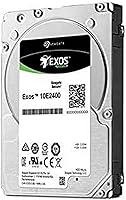
The Seagate Exos ST1200MM0009 1.2TB Internal Hard Drive is a purpose-built enterprise SAS drive designed for the kind of sustained, high-demand workloads that would push consumer-grade storage to its limits. Seagate has long been a trusted name in storage infrastructure, and this Exos drive sits firmly in the mid-to-high tier of mechanical storage options — not cheap, but not unjustifiably priced for what it delivers. At its core, the identity of this unit comes down to two things: 1.2TB capacity paired with a 10,000 RPM spindle speed. Introduced in late 2017, it has aged well enough to remain relevant in both legacy server refreshes and active enterprise deployments today.
Features & Benefits

The headline spec here is straightforward: spinning at 10,000 RPM, this Seagate Exos drive reads and writes data noticeably faster than the 7,200 RPM drives that dominate the consumer and budget enterprise market. That speed advantage matters in transactional environments where latency accumulates. The 128MB cache buffer helps smooth out bursty workloads, keeping throughput steady under sustained I/O pressure. At 2.5 inches, the ST1200MM0009 fits cleanly into rack-dense server bays without consuming the space a 3.5-inch drive would. The 512n sector format maintains backward compatibility with older storage controllers that newer 4Kn drives would not support. This is a practical internal drive, not a flashy one, but the spec sheet holds up well for its intended role.

Best For

This enterprise hard drive is most at home in the hands of IT administrators managing SAS-based storage arrays — whether that means swapping out a failing unit or expanding capacity in an existing setup. Small and mid-sized businesses running database servers or virtualization platforms will find the 10K RPM performance worthwhile compared to slower alternatives. It also suits data centers where SAS 12Gb/s backplane compatibility is a firm requirement. That said, this is not a drive for everyone. Consumer desktop users, home lab builders on a budget, and anyone expecting SSD-level speeds should look elsewhere. If your infrastructure already runs on SAS and you need dependable mechanical storage, the ST1200MM0009 checks the right boxes.

User Feedback

With over 200 ratings and a 4.1-star average, the reception for this Seagate Exos drive skews positive but is not without nuance. The most consistent praise centers on compatibility and reliability in server environments — buyers report that the drive slots into existing SAS arrays cleanly and performs as expected under consistent workloads. On the critical side, some users note that mechanical noise and heat output are noticeable compared to SSDs, which is expected but still worth flagging for noise-sensitive environments. A handful of negative reviews mention DOA units or shipping damage, pointing more to fulfillment issues than product defects. Cost-versus-value perception divides opinion: for those already in a SAS ecosystem the pricing makes sense, while those comparing it against flash storage often feel it is harder to justify.

Pros

  • Spins at 10,000 RPM, offering noticeably faster data access than standard 7,200 RPM enterprise drives.
  • The 2.5-inch form factor fits high-density rack environments without sacrificing performance.
  • 128MB cache buffer handles bursty I/O workloads without significant throughput dips.
  • 512n sector format ensures smooth compatibility with older SAS controllers and legacy systems.
  • Well-rated by enterprise users for reliable day-to-day operation in server arrays.
  • SAS 12Gb/s interface delivers higher throughput and better error recovery than SATA alternatives.
  • At 1.2TB, the ST1200MM0009 balances usable capacity with the speed demands of transactional workloads.
  • Seagate Exos branding reflects a purpose-built enterprise lineage, not a repurposed consumer drive.
  • Compact and lightweight at under 4 ounces, making physical installation and handling straightforward.

Cons

  • Mechanical noise and heat output are noticeable in quiet or thermally constrained environments.
  • Not usable on consumer hardware — requires a SAS controller or compatible enterprise backplane.
  • Raw random I/O speed cannot compete with even budget SSDs, which matters for latency-sensitive applications.
  • Some buyers have reported receiving units damaged in transit, suggesting inconsistent packaging from certain sellers.
  • A small but consistent number of reviews mention DOA units, which can be disruptive in production environments.
  • The cost per terabyte is high compared to larger SATA HDDs, making it a tough sell purely on storage value.
  • No native hot-swap support guarantee outside of compatible enterprise enclosures — check your chassis specs.
  • As a mechanical drive, it carries inherent long-term failure risk that solid-state alternatives largely avoid.

Ratings

The Seagate Exos ST1200MM0009 1.2TB Internal Hard Drive has been evaluated through AI-assisted analysis of verified global user reviews, with spam, incentivized, and bot-generated feedback actively filtered out. Scores across each category reflect the honest consensus of real enterprise buyers — from IT administrators managing multi-drive arrays to SMB owners running virtualization workloads. Both consistent strengths and recurring pain points are represented transparently, so you can make a confident, informed decision.

Read/Write Performance
83%
Enterprise users running transactional databases and virtualized environments consistently note that the 10,000 RPM spin speed delivers a meaningful step up from slower mechanical alternatives. In active server deployments with high I/O demands, the drive handles concurrent read and write operations without obvious bottlenecking under typical workloads.
Against modern SSDs, the performance gap is significant — random I/O latency in particular is not in the same league. Buyers who have migrated portions of their infrastructure to flash storage often find it difficult to justify spinning disks for latency-sensitive tasks.
SAS Compatibility
91%
One of the most frequently praised aspects is how cleanly this drive integrates into existing SAS 12Gb/s environments. IT administrators replacing aging drives in Dell, HP, and IBM server enclosures report smooth recognition and immediate functionality with no controller configuration needed.
The SAS interface is a hard requirement, not a flexible one — and that trips up a small number of buyers who did not verify their hardware before ordering. There is no fallback SATA compatibility, which narrows the audience considerably and makes pre-purchase due diligence essential.
Build Quality
78%
22%
The physical construction feels solid and well-suited for dense rack environments. At under 4 ounces, it handles the mechanical stresses of continuous operation without obvious structural concerns, and most long-term users report consistent performance without physical degradation over the first few years.
A recurring thread in negative reviews involves units arriving with physical damage, suggesting that packaging quality from some sellers does not always match the build quality of the drive itself. DOA reports, while not dominant, appear often enough to warrant noting.
Reliability Over Time
74%
26%
The majority of users who have run this drive continuously in production environments for extended periods report stable, predictable performance. In server contexts where uptime matters, the drive has earned a reputation for doing its job without unexpected failures during normal duty cycles.
Mechanical drives carry an inherent failure curve that no brand reputation fully negates, and some buyers have encountered early failures that disrupted production environments. Seagate's broader reliability history adds a layer of caution for buyers considering this without a robust backup strategy in place.
Value for Money
61%
39%
For IT teams locked into SAS infrastructure who need a reliable replacement or expansion drive, the pricing is defensible — especially when weighed against the cost of downtime from a failed drive. The drive earns its keep in environments where SAS is a non-negotiable requirement.
Buyers comparing cost per terabyte against SATA HDDs or even entry-level enterprise SSDs often come away feeling the price is steep for what is ultimately aging mechanical technology. Unless SAS compatibility is a hard constraint, the value proposition weakens considerably in 2024 and beyond.
Noise & Vibration
57%
43%
In standard server room environments where ambient noise is already elevated, the drive's operational hum and seek noise go largely unnoticed. Users in well-ventilated data centers with proper rack isolation rarely flag this as a concern in day-to-day use.
At 10,000 RPM, the acoustic footprint is noticeably higher than 7,200 RPM drives, and several buyers have specifically called out seek noise as disruptive in quieter office server setups or small business environments where the server lives near people. Vibration in high-density multi-drive arrays can also compound over time.
Thermal Management
63%
37%
Under typical enterprise workloads with adequate airflow, the drive maintains operating temperatures within acceptable ranges. IT administrators who have deployed it in properly ventilated enclosures report no thermal throttling or heat-related instability during sustained use.
Heat output is a recurring complaint, particularly in chassis with limited airflow or high drive density. Without adequate cooling, operating temperatures can climb in ways that concern long-term reliability, and a handful of reviewers attribute early drive failures to thermal stress in undersized enclosures.
Installation Ease
86%
The 2.5-inch form factor snaps into standard enterprise bays without adapters or extra hardware in most compatible enclosures. Experienced IT administrators consistently describe the physical installation as fast and uncomplicated, with the drive ready to use quickly after seating.
The installation experience is only as smooth as the buyer's hardware compatibility knowledge. Those who discover mid-installation that their enclosure requires a tray or adapter not included in the box — or that their controller does not support SAS — face delays that could have been avoided with better product research.
Capacity Adequacy
69%
31%
For transactional workloads where performance per drive matters more than raw capacity, 1.2TB hits a practical balance point. Database administrators and virtualization engineers managing tightly provisioned storage pools find the capacity workable, especially in RAID configurations.
By modern standards, 1.2TB is on the modest side for a drive at this price point. Buyers with bulk storage needs or those building out large-scale archival systems quickly find that higher-capacity SATA alternatives offer more storage per dollar without meaningful trade-offs for their use case.
Enterprise Ecosystem Fit
88%
This drive fits naturally into established enterprise storage ecosystems from major OEM vendors. IT teams maintaining HP ProLiant, Dell PowerEdge, or IBM server environments report that the ST1200MM0009 integrates without firmware conflicts or compatibility warnings in most tested configurations.
Outside of validated enterprise environments, fit is less predictable. Third-party SAS controllers and white-box server builds occasionally surface compatibility quirks that require firmware updates or manual configuration, adding friction for administrators running less standardized infrastructure.
Packaging & Shipping
54%
46%
When orders arrive in good condition, the standard anti-static packaging is adequate for protecting the drive during typical transit. Buyers who purchase from well-rated fulfillment sources generally report no issues with how the drive is presented on arrival.
A disproportionate share of critical reviews specifically cite damage on arrival or poor secondary packaging protection — not from Amazon directly, but from third-party sellers. This is a product category where the difference between a functioning drive and a paperweight can come down to how carefully it was packed for shipping.
Documentation & Support
59%
41%
Seagate provides online resources including spec sheets, compatibility guides, and a warranty lookup tool that experienced IT buyers can navigate efficiently. For straightforward deployments in known environments, most administrators find they do not need to consult documentation at all.
Out-of-box documentation is minimal, and buyers expecting printed setup guides or detailed compatibility matrices in the box will be disappointed. Customer support quality for warranty claims has drawn mixed feedback, with some buyers reporting slow resolution times on DOA or early-failure cases.
Longevity Expectation
71%
29%
Seagate designed the Exos line for continuous 24/7 operation, and buyers who have run these drives in always-on environments for two to three years largely report that performance remains consistent. The enterprise-grade duty cycle specification gives IT teams a reasonable baseline for deployment planning.
Five-plus year longevity is not guaranteed, and several reviewers who experienced failures inside the two-year mark expressed frustration given the price paid. Mechanical drives at 10,000 RPM carry more wear stress than slower alternatives, and responsible deployment should always factor in mean time between failure estimates alongside real-world review data.

Suitable for:

The Seagate Exos ST1200MM0009 1.2TB Internal Hard Drive is squarely aimed at IT professionals and systems administrators who are operating within existing SAS-based infrastructure. If your server rack already runs a SAS 12Gb/s backplane, this drive slots in without compatibility headaches and delivers the kind of sustained performance that transactional workloads — think active databases, virtualization hosts, or ERP systems — genuinely require. Small and mid-sized businesses that need to expand or replace storage in blade servers, SANs, or NAS enclosures will find the 10,000 RPM speed and 1.2TB capacity a practical combination. The 512n sector format is a specific but important advantage for environments running older storage controllers that cannot handle 4Kn drives. For anyone maintaining legacy enterprise hardware, this is one of the more straightforward and dependable mechanical options still available at this capacity tier.

Not suitable for:

The Seagate Exos ST1200MM0009 1.2TB Internal Hard Drive is not a drive you should be shopping for if your setup lives outside the enterprise SAS ecosystem. Home users, gaming PC builders, and general desktop workstation owners will find no practical use here — consumer motherboards do not support SAS interfaces, and the drive will simply not connect. Anyone comparing this to modern SSDs on speed alone will be disappointed; a mid-range SATA SSD will outperform it on random read/write benchmarks at a lower cost. Budget-conscious buyers who are not locked into SAS infrastructure would be better served by higher-capacity SATA drives or entry-level NVMe storage. It is also worth noting that, like all mechanical drives, long-term reliability is not guaranteed — this is not a set-and-forget solution, and any critical deployment should include a proper backup strategy regardless of brand reputation.

Specifications

  • Brand: Manufactured by Seagate, a long-established name in enterprise and consumer storage solutions.
  • Model Number: The exact model identifier for this drive is ST1200MM0009, part of the Seagate Exos series.
  • Capacity: This drive provides 1.2TB of raw mechanical storage, suited for transactional and archival server workloads.
  • Form Factor: Built in a 2.5-inch form factor, making it compatible with rack-mounted servers, blade enclosures, and dense storage arrays.
  • Interface: Uses a SAS 12Gb/s interface, which offers higher throughput and more robust error recovery than standard SATA connections.
  • Rotational Speed: The platters spin at 10,000 RPM, enabling faster sequential and random data access than typical 7,200 RPM drives.
  • Cache Buffer: Equipped with a 128MB cache buffer to help sustain throughput during intensive or bursty read/write operations.
  • Sector Format: Formatted with 512n (512 native) sectors, ensuring backward compatibility with older enterprise storage controllers.
  • Drive Type: This is a traditional mechanical hard disk drive (HDD), not a solid-state or hybrid storage device.
  • Installation: Designed exclusively for internal installation within a compatible server, NAS enclosure, SAN, or blade system.
  • Dimensions: Physical dimensions measure 4.72 x 1.18 x 4.33 inches, conforming to standard 2.5-inch enterprise drive bay specifications.
  • Weight: The drive weighs 3.53 ounces, keeping it lightweight for high-density multi-drive installations.
  • Release Date: This model first became available in December 2017 and remains in active circulation for enterprise replacement and expansion use.
  • BSR Ranking: Ranked #844 in the Internal Hard Drives category on Amazon, reflecting steady demand among enterprise buyers.
  • User Rating: Holds a 4.1 out of 5 star average across over 215 customer ratings at the time of this review.

Related Reviews
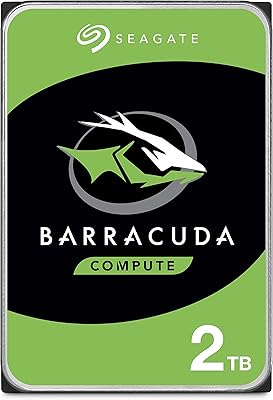
Seagate BarraCuda 2TB Internal Hard Drive
79%
91%
Value for Money
74%
Transfer Speed
77%
Reliability & Longevity
93%
Installation Ease
79%
Noise Level
More
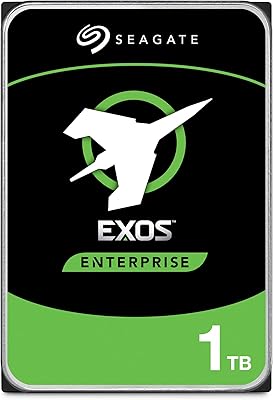
Seagate Exos 1TB Internal Hard Drive
80%
91%
Reliability & Uptime
67%
Value for Money
78%
Sequential Performance
88%
Noise Level
84%
Build & Durability
More
Seagate Exos X10 10TB Internal Hard Drive
85%
88%
Performance
91%
Reliability
82%
Ease of Installation
86%
Data Transfer Speed
65%
Power Consumption
More
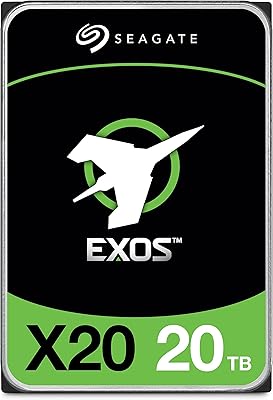
Seagate Exos X20 20TB Recertified Hard Drive
77%
88%
Value for Money
93%
Storage Capacity
79%
Drive Performance
74%
Reliability & Build
51%
Warranty Coverage
More
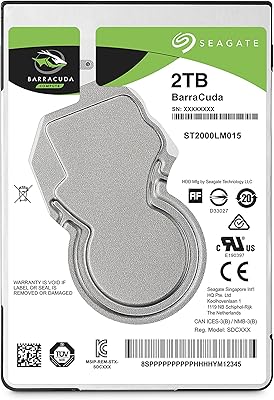
Seagate 2TB BarraCuda 2.5-Inch Internal Hard Drive
86%
89%
Performance
91%
Quiet Operation
88%
Energy Efficiency
93%
Installation Ease
90%
Reliability
More
Seagate Game Drive for PlayStation 2TB
79%
94%
Ease of Setup
91%
Storage Capacity
93%
PS4 Compatibility
72%
PS5 Compatibility
74%
Transfer Speed
More
Seagate Exos 7E10 4TB Internal Hard Drive
75%
83%
Sustained Reliability
81%
Read/Write Performance
78%
Value for Money
89%
NAS Compatibility
61%
Vibration & Noise
More
Seagate Portable 2TB (STGX2000400)
84%
93%
Value for Money
91%
Portability
94%
Setup Experience
88%
Operating Noise
67%
Cable Utility
More
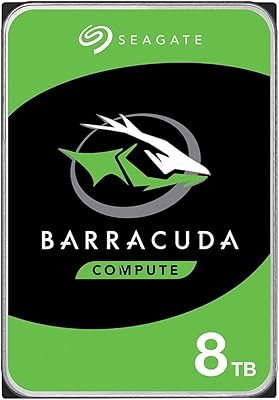
Seagate BarraCuda ST8000DM004 8TB Internal Hard Drive
73%
93%
Storage Capacity Value
67%
Reliability & Longevity
61%
Read & Write Performance
89%
Installation & Compatibility
63%
Noise & Vibration
More
Seagate BarraCuda 4TB Internal Hard Drive
87%
86%
Performance
90%
Reliability
93%
Setup & Installation
95%
Storage Capacity
72%
Data Transfer Speed
More

FAQ

No, it will not. This drive uses a SAS interface, and consumer motherboards do not include SAS controllers. You would need a dedicated SAS host bus adapter (HBA) or a server with a compatible SAS backplane for this drive to function.

SAS (Serial Attached SCSI) and SATA are both storage interfaces, but SAS is built for enterprise environments with higher throughput, dual-port redundancy, and stronger error recovery. The ST1200MM0009 uses SAS 12Gb/s, which means it is faster and more resilient than SATA under sustained workloads, but it requires compatible enterprise hardware to operate.

Only if your NAS enclosure explicitly supports SAS drives, which most consumer-grade NAS units do not. Enterprise NAS systems from vendors like NetApp or Dell EMC typically do. Check your enclosure specifications before purchasing.

In practical terms, the higher spin speed reduces rotational latency — the time the drive waits for the right sector to pass under the read head. For databases and virtualization workloads that generate lots of small, random I/O requests, this adds up to meaningfully faster response times compared to a 7,200 RPM drive.

Yes, and that is one of the most common use cases for this drive. As long as your server or storage controller supports SAS 12Gb/s and the 2.5-inch form factor, the ST1200MM0009 is a straightforward drop-in replacement. Just verify that your controller also supports the 512n sector format if it is older hardware.

It is audible. At 10,000 RPM, mechanical drives produce a noticeable hum and seek noise during active use. Several buyers have flagged this as a consideration in environments where noise matters. In a standard server room it is not an issue, but in a quiet office setting you will hear it.

Seagate typically covers Exos drives with a five-year limited warranty, though you should verify this through the official Seagate warranty lookup using your drive serial number, as warranty terms can vary depending on the purchase channel and region.

It depends on your workload. For transactional databases, virtual machine storage, and log management where speed matters more than raw capacity, 1.2TB is often sufficient per drive in a multi-drive array. If you need bulk cold storage, higher-capacity SATA drives will give you more space at lower cost.

A small number of buyers have reported DOA units or shipping damage with this model. If that happens, your best course of action is to contact the seller immediately for a replacement and, if the unit was purchased through Amazon, file a return through their standard process. Always test new drives with a diagnostic tool before deploying them in production.

An SSD at this capacity tier will outperform this enterprise hard drive significantly on random I/O and latency benchmarks, and it will run quieter and cooler. The trade-off is cost and the specific context: if your infrastructure is already built around SAS mechanical drives and you need a reliable, compatible unit, this drive makes sense. If you are building fresh and budget allows, enterprise SSDs are worth considering.