Overview

The Seagate ST1000NM0023 1TB Enterprise SAS Hard Drive is not a desktop drive wearing enterprise clothing — it was built from the ground up for server and storage array environments. Where SATA drives rely on a shared bus architecture, the SAS 6Gb/s interface provides point-to-point connectivity, better error handling, and the dual-port redundancy that mission-critical infrastructure demands. Part of Seagate's Enterprise Capacity lineup, it spins at 7200 RPM with a 128MB cache, giving it the sustained throughput profile you expect from a workhorse drive. At its price point, it sits squarely in secondary-market territory, making it worth serious consideration for budget-conscious builds.
Features & Benefits

The 128MB cache buffer is more than a spec sheet number — in sustained sequential workloads like large file writes or backup streams, it smooths out the kind of I/O bursts that would cause a consumer drive to stutter. Rotational vibration compensation is built into the firmware, which matters considerably when this Seagate server hard drive is mounted alongside a dozen other spinning disks in a dense chassis. The Power Choice feature lets administrators reduce idle power draw without pulling the drive offline, a practical advantage in rack environments where heat and wattage budgets are real constraints. The standard 3.5-inch LFF form factor means it drops into virtually any enterprise server bay without adapter brackets.

Best For

This enterprise SAS drive makes the most sense for IT administrators already running a SAS infrastructure — whether that is a dedicated storage array, a rack server with onboard SAS controllers, or a homelab built around an LSI HBA. Small businesses repurposing enterprise gear for on-premises backup or secondary NAS storage will find the price-to-reliability ratio compelling. Archival workloads are another natural fit; the drive holds up well under the long, monotonous write cycles that characterize cold storage tiers. That said, if high random IOPS are the priority, an SSD or higher-capacity SAS drive would serve better. At 1TB, capacity is modest but purposeful for the right workload.

User Feedback

Buyers running the ST1000NM0023 in RAID configurations tend to report solid reliability over extended periods, with several noting it held up through multiple array rebuilds without issue. Compatibility with the LSI 9211 and similar HBAs comes up frequently as a positive. On the noise front, expect it to run louder than a consumer drive — that is normal for an enterprise spindle at this speed, and most server rooms mask it anyway. The most consistent complaint is not about drive engineering at all; it is about condition transparency. Refurbished pulls with accumulated power-on hours occasionally arrive without adequate disclosure, so running a full S.M.A.R.T. check immediately on arrival is strongly advised.

Pros

  • RAID-optimized firmware shortens array rebuild times and reduces the risk of cascading failures.
  • The SAS 6Gb/s interface delivers more reliable throughput than SATA under sustained enterprise workloads.
  • Rotational vibration compensation keeps performance stable in densely populated multi-drive chassis.
  • Power Choice technology gives administrators real flexibility in managing rack-level power budgets.
  • The 128MB cache handles sequential I/O bursts well, making it a solid performer for backup and archival streams.
  • Standard 3.5-inch LFF form factor fits virtually every enterprise server bay without adapters.
  • Broadly compatible with common SAS HBAs, including the widely used LSI 9211 series.
  • At its price point, this Seagate server hard drive offers genuine enterprise engineering without a premium price tag.
  • Proven reliability in RAID environments, with multiple users reporting consistent performance across extended operational periods.

Cons

  • Requires a dedicated SAS HBA — incompatible with standard consumer or prosumer motherboards out of the box.
  • Many units on the secondary market are refurbished pulls with logged power-on hours; always run a S.M.A.R.T. check immediately on arrival.
  • Seller condition disclosures vary widely, making unit quality inconsistent depending on the listing source.
  • At 1TB, capacity is limited for use cases involving large media libraries or modern high-density storage needs.
  • Audibly louder than consumer drives, which can be disruptive outside of a dedicated server room environment.
  • No native support for SATA environments, ruling out most consumer NAS enclosures entirely.
  • Power Choice configuration requires familiarity with enterprise tooling — not straightforward for first-time server builders.
  • Older sixth-generation drive technology means it lags behind newer enterprise SAS options in raw throughput ceiling.

Ratings

The Seagate ST1000NM0023 1TB Enterprise SAS Hard Drive has been scored by our AI system after analyzing verified global user reviews, with spam, bot-generated, and incentivized submissions actively filtered out before any scores were calculated. The ratings below reflect both the genuine strengths that experienced administrators and homelabbers consistently praise and the real friction points that show up repeatedly across independent buyer accounts. Nothing has been smoothed over — if a category has a mixed record, the score shows it.
Reliability in RAID Arrays
88%
Users running this enterprise SAS drive in multi-drive RAID configurations — particularly RAID 5 and RAID 6 setups — report strong long-term stability with very few mid-array failures. Several administrators noted it survived multiple full rebuild cycles without issue, which is the kind of endurance that matters when a single drive failure is already stressful enough.
A subset of buyers received units with elevated prior power-on hours that were not disclosed upfront, and a handful of those drives showed early failure signs within months. The reliability record is genuinely strong, but it is conditional on receiving a drive that has not been silently run into the ground before resale.
Interface & Connectivity
91%
The SAS 6Gb/s interface performs exactly as enterprise administrators expect: point-to-point connectivity, clean error handling, and dual-port support for path redundancy in supported enclosures. Users pairing it with LSI 9211 HBAs in particular report rock-solid detection and consistent throughput with no link drops.
The SAS interface is also the drive's biggest barrier to entry. If your setup does not already include a compatible HBA, the added cost and configuration effort can catch first-time buyers off guard. There is essentially zero plug-and-play convenience compared to a SATA drive.
Sequential Throughput
83%
For archival writes and large sequential workloads — think nightly backup jobs, cold storage fills, or bulk media ingestion — the 7200 RPM spindle and 128MB cache deliver consistent, predictable throughput. Users running backup pipelines to these drives rarely report bottlenecks at the drive level.
This is a mechanical spinning drive, and its sequential ceiling reflects that. Administrators expecting SSD-class speed for database or virtualization workloads will be disappointed. The ST1000NM0023 is tuned for sustained throughput, not burst performance, which limits its appeal for latency-sensitive applications.
Random I/O Performance
57%
43%
For light mixed workloads and typical file-serving tasks in a small business environment, random I/O performance is adequate and rarely becomes a chokepoint in practice. Users who set expectations correctly — using this Seagate server hard drive as a secondary or archival tier — report no complaints about everyday responsiveness.
Random IOPS is genuinely the weakest area here, and it is a notable limitation for anyone considering this drive for virtualization hosts, database storage, or anything requiring fast small-block reads and writes. Multiple users who deployed it in primary storage roles reported visible latency that pushed them toward SSD alternatives.
RAID Firmware Behavior
86%
The RAID-optimized firmware handles error recovery in a way that cooperates with hardware RAID controllers rather than fighting them — a common pain point with consumer drives repurposed in arrays. Administrators reported faster rebuild times and fewer timeout events compared to budget SATA alternatives they had tried previously.
Firmware behavior is excellent in standard RAID configurations but can occasionally surface as an edge case issue with older or less common SAS controllers. A small number of users noted unexpected behavior in non-standard RAID modes, though these cases appear to be controller compatibility issues rather than drive-side problems.
Vibration Tolerance
82%
18%
In high-density chassis where a dozen or more spinning drives operate simultaneously, vibration-induced performance degradation is a real problem — and the rotational vibration compensation in this drive handles it noticeably better than uncompensated drives. Users with fully populated 24-bay enclosures specifically called this out as a deciding factor in choosing Seagate over alternatives.
The compensation is effective but not magic. In extremely dense and poorly dampened chassis configurations, some users still observed minor throughput inconsistency during peak I/O from neighboring drives. It improves the situation materially but does not eliminate the physics of vibration entirely.
Power Efficiency
74%
26%
Power Choice technology gives rack administrators a meaningful lever for managing idle power draw, which adds up significantly across a storage array with dozens of drives. Users who took the time to configure it via Seagate tooling reported measurable reductions in idle wattage without affecting drive availability.
The power configuration tooling is not particularly intuitive for admins who are new to Seagate's enterprise software stack. Several users noted they never used the feature simply because accessing it required tooling they did not already have deployed. Out of the box, there is no automatic power optimization.
Value for Money
79%
21%
At its secondary-market price point, this enterprise SAS drive delivers engineering that would cost significantly more if purchased as new hardware. Homelabbers and small businesses consistently highlight the value proposition as a primary reason for choosing it — genuine enterprise-grade reliability at a fraction of the original cost.
The value calculus shifts if you receive a unit with undisclosed heavy use history, since a drive with thousands of power-on hours already logged carries real replacement risk. When condition disclosure is poor, the apparent savings can evaporate quickly if a replacement is needed within months of purchase.
Noise Level
61%
39%
In a proper server room or network closet with ambient fan noise, the operational sound of this drive is essentially irrelevant. Users in those environments never flagged noise as a concern, and the audible profile is no worse than any comparable enterprise spindle at this speed.
In a quiet home office or bedroom homelab setup, the seek noise and operational hum of a 7200 RPM enterprise drive is noticeable and can be distracting. Several homelab users specifically mentioned regretting running it in open-air or acoustically untreated spaces, which is a real consideration for the homelab segment.
Compatibility
84%
Compatibility with mainstream SAS HBAs — particularly the widely deployed LSI 9211 and its successors — is consistently reported as smooth and reliable. The drive is recognized cleanly, negotiates the correct link speed, and behaves predictably under both IT mode and RAID firmware configurations.
Compatibility narrows sharply outside the SAS HBA ecosystem. Users who attempted to use the drive via SAS-to-SATA adapters or in hybrid environments with mixed controller generations occasionally ran into detection issues. It performs best in a clean, purpose-built SAS environment rather than a patchwork setup.
Condition on Arrival
52%
48%
When units arrive in accurately described condition — clearly marked as refurbished pulls with realistic power-on hours — buyers generally report a positive unboxing experience and find the physical condition acceptable for secondary hardware. Honest sellers generate very few complaints about arrival condition.
This category has the most polarized feedback of any aspect of the buying experience. A meaningful portion of negative reviews trace directly to units arriving with higher-than-disclosed usage hours, no S.M.A.R.T. data transparency, or signs of physical wear inconsistent with the listing description. It is the single biggest source of buyer dissatisfaction.
Ease of Installation
77%
23%
For anyone with hands-on experience in a server environment, installation is entirely straightforward — standard LFF bay dimensions, familiar SAS connectors, and no proprietary mounting requirements. Users praised the drop-in compatibility with standard rack-mounted servers and storage enclosures without needing adapters.
The installation experience assumes prior familiarity with SAS infrastructure. Buyers new to enterprise hardware who underestimated the HBA requirement reported a frustrating experience when the drive failed to show up in their system. The barrier is not the drive itself but the prerequisite knowledge and hardware it demands.
Longevity & Durability
81%
19%
Units with clean S.M.A.R.T. histories and reasonable prior usage hours tend to demonstrate strong longevity in the field. Multiple users reported running these drives continuously for years in production-adjacent homelab environments without failure, which speaks well to the underlying engineering of the Enterprise Capacity platform.
Longevity is inherently harder to predict on secondary-market hardware with unknown operational histories. Drives with high prior hours may behave perfectly for years or fail earlier than expected — the variance is real, and there is no way to fully eliminate that uncertainty even with a thorough S.M.A.R.T. check at arrival.

Suitable for:

The Seagate ST1000NM0023 1TB Enterprise SAS Hard Drive is a strong fit for anyone already operating within a SAS ecosystem who needs dependable, cost-effective bulk storage. IT administrators expanding an on-premises storage array, whether in a small business server room or a homelab rack, will appreciate the drive's RAID-optimized firmware and dual-port SAS reliability without paying a premium for higher-capacity units they do not need. Homelabbers running an LSI or similar SAS HBA will find this Seagate server hard drive slots right in without compatibility headaches. It is also well-suited to archival and backup tiers, where sequential write endurance matters far more than random IOPS. Organizations that have standardized on Seagate Enterprise Capacity drives will value the consistency in spare management and firmware behavior across their fleet.
Not suitable for:

The Seagate ST1000NM0023 1TB Enterprise SAS Hard Drive is simply the wrong tool if your system does not have a dedicated SAS HBA or SAS-capable controller — it will not connect to a standard consumer or prosumer motherboard, full stop. Buyers looking for high random I/O performance for database workloads or virtualization-heavy environments will find that modern SAS SSDs or even NVMe options serve them significantly better at this price tier. If raw capacity is the priority, 1TB is modest by today's standards, and spending slightly more on a higher-capacity SATA or SAS drive would be a smarter allocation of budget. This enterprise SAS drive is also not appropriate for NAS builds that rely on SATA-only enclosures, which covers most consumer and prosumer NAS devices. Buyers sensitive to noise should look elsewhere as well — a 7200 RPM enterprise spindle in a quiet home office environment will be noticeably audible.

Specifications

  • Model Number: The drive carries the model designation ST1000NM0023, part of Seagate's Enterprise Capacity series.
  • Storage Capacity: This drive provides 1TB of raw storage capacity suited for bulk-data and archival applications.
  • Interface: It uses a SAS 6Gb/s interface, requiring a compatible SAS HBA or SAS-capable controller for operation.
  • Form Factor: The drive uses a standard 3.5-inch LFF (Large Form Factor) design that fits enterprise server and storage array bays.
  • Spindle Speed: It spins at 7200 RPM, delivering the sustained sequential throughput expected in enterprise storage workloads.
  • Cache Buffer: A 128MB cache buffer helps manage I/O bursts during sustained read and write operations.
  • RAID Support: The firmware is optimized for enterprise RAID environments, supporting faster rebuild cycles and improved array stability.
  • Vibration Control: Built-in rotational vibration compensation maintains consistent performance when the drive operates in a densely populated multi-drive chassis.
  • Power Feature: Power Choice technology allows system administrators to configure the drive's idle power consumption to suit their rack infrastructure requirements.
  • Installation Type: This is an internal bare drive intended for direct installation into a server or storage system chassis.
  • Compatible Platform: It is designed exclusively for SAS-based server and storage systems; it is not compatible with standard consumer desktop motherboards.
  • Dimensions: The drive measures 5.88 x 4.01 x 1.03 inches, conforming to standard LFF bay specifications.
  • Weight: It weighs 1.54 pounds, consistent with standard 3.5-inch enterprise hard drive assemblies.
  • Color: The drive housing is silver, typical of Seagate's enterprise-class bare drive finish.
  • Drive Series: It belongs to the Seagate Enterprise Capacity lineup, which is engineered for always-on, high-availability server environments.

Related Reviews
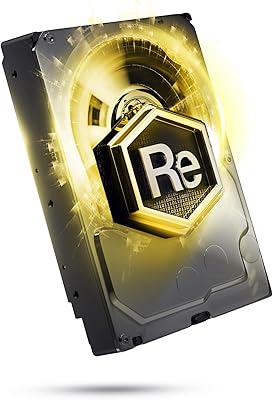
WD RE4 1TB Enterprise Hard Drive
85%
91%
Performance in Demanding Environments
94%
RAID Compatibility and Stability
89%
Durability and Long-Term Reliability
88%
Vibration Tolerance
70%
Noise Level
More
Seagate BarraCuda ST1000DM010 1TB Internal Hard Drive
77%
91%
Value for Money
74%
Reliability & Longevity
79%
Read & Write Performance
93%
Installation Ease
68%
Noise & Vibration
More
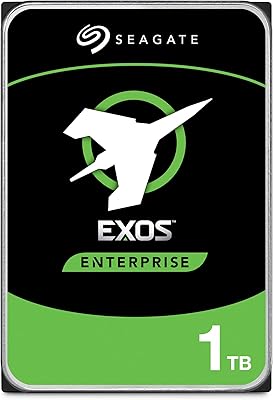
Seagate Exos 1TB Internal Hard Drive
80%
91%
Reliability & Uptime
67%
Value for Money
78%
Sequential Performance
88%
Noise Level
84%
Build & Durability
More
Seagate FireCuda Gaming Hard Drive 1TB
84%
88%
Performance
91%
Data Transfer Speed
94%
Ease of Setup
80%
RGB Lighting Customization
85%
Compatibility with PC & Mac
More
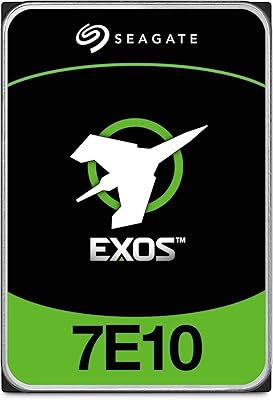
Seagate Exos 7E10 6TB SAS Hard Drive
87%
94%
Performance in RAID Setups
92%
Reliability & Durability
90%
Workload Capacity
89%
Compatibility with Data Centers
60%
Noise Levels
More
Seagate Basic 1TB Portable External Hard Drive
85%
90%
Value for Money
95%
Portability
88%
Transfer Speed
80%
Build Quality
91%
Ease of Use
More
Seagate Expansion Portable 1TB External Hard Drive
85%
88%
Performance
94%
Setup & Installation
91%
Portability & Size
89%
Compatibility
87%
Value for Money
More
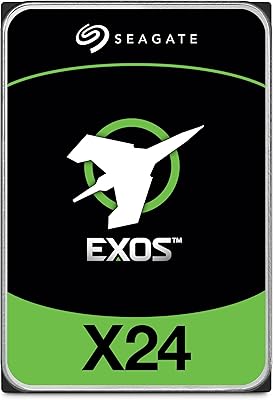
Seagate Exos X24 24TB Enterprise Hard Drive
83%
97%
Storage Capacity
88%
Read/Write Performance
91%
Reliability & Longevity
86%
Thermal & Acoustic Performance
83%
Value for Money
More
Seagate One Touch 1TB Portable Hard Drive
76%
93%
Ease of Setup
91%
Portability
58%
Transfer Speed
84%
Build Quality
76%
Encryption & Security
More
Seagate FreeAgent GoFlex Desk 1TB Hard Drive
71%
93%
Ease of Setup
52%
Transfer Speed
81%
Build Quality
84%
Reliability & Longevity
76%
Modular Adapter System
More

FAQ

No, it will not. The SAS interface requires a dedicated SAS HBA or a SAS-capable controller, neither of which is present on standard consumer or prosumer motherboards. Most consumer NAS enclosures are SATA-only, so this drive would not connect in those either. If you need a drop-in drive for a home desktop or a typical consumer NAS, a SATA drive is what you want.

The LSI 9211 series is the most frequently cited compatible HBA among users, and it works reliably in IT mode for direct JBOD use or with RAID firmware loaded. Other LSI-based cards flashed to IT mode also work well. As long as the HBA supports SAS 6Gb/s, compatibility is generally straightforward.

At the price this drive commonly sells for, many units on the market are refurbished pulls sourced from decommissioned enterprise hardware. This is not inherently a problem, but you should run a full S.M.A.R.T. diagnostic immediately upon receiving it to check accumulated power-on hours and verify drive health before putting it into production.

SAS has a few practical advantages over SATA in a RAID context: point-to-point connectivity means a failed drive does not affect others on the same bus, error recovery behavior is better suited to RAID controllers, and dual-port support adds path redundancy. For a serious on-premises storage array, SAS is the more robust choice if the budget and infrastructure support it.

It depends entirely on the workload. For archival tiers, cold backup targets, or secondary storage pools where cost-per-terabyte matters more than raw capacity, 1TB per drive is still a practical option. For primary storage or high-density applications, you would likely want higher-capacity drives. Think of the Seagate ST1000NM0023 1TB Enterprise SAS Hard Drive as a building block for arrays where multiple drives work together, not as a single standalone volume.

Louder than a consumer drive, frankly. Enterprise spindles at 7200 RPM produce noticeable seek noise and a low operational hum. In a proper server room or data closet, this is a non-issue. If you plan to run it in a quiet home office or bedroom lab setup, expect it to be audible, especially during heavy I/O.

Yes, absolutely — this is a popular use case. As long as your homelab server has a SAS HBA installed and configured, TrueNAS, Proxmox, and similar platforms will recognize the drive without any special setup. Many homelab enthusiasts specifically seek out enterprise SAS drives for their reliability characteristics relative to cost.

It lets you configure the drive's power behavior through Seagate's management tools, specifically around how aggressively the drive reduces power consumption during idle periods. In a rack environment where heat dissipation and power draw are budgeted carefully, being able to tune this at the drive level rather than relying solely on the controller gives administrators more granular control.

Boot into a Linux environment or use a tool like CrystalDiskInfo on Windows to pull the S.M.A.R.T. data. Key attributes to check are Reallocated Sectors Count, Uncorrectable Sector Count, and Power-On Hours. A drive with thousands of power-on hours is not automatically bad, but reallocated sectors or uncorrectable read errors are red flags worth taking seriously before you deploy it.

Seagate's enterprise drives typically carry a five-year limited warranty when purchased new through authorized channels. However, refurbished or secondary-market units may have reduced or no remaining warranty coverage depending on the seller and the drive's history. Always confirm the warranty terms with the specific seller before purchasing, especially at secondary-market price points.