Overview

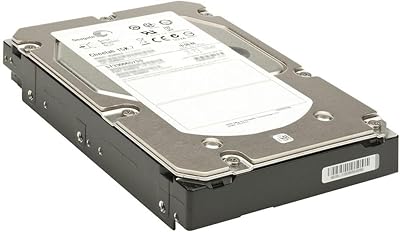
The Seagate Cheetah 15K.7 300GB SAS Hard Drive is a purpose-built enterprise drive designed for server and data center environments where speed and reliability matter more than raw capacity. Part of a generation of high-performance 3.5-inch SAS spindles, this SAS hard drive runs at 15,000 RPM — a spec that predates NVMe but still holds legitimate value in legacy SAS infrastructure. The SAS 6 Gb/s interface delivers dual-port connectivity and better fault tolerance than SATA alternatives at this tier. At 300GB, storage is intentionally modest; this is a drive that trades volume for low latency. For buyers sourcing it on the used or surplus market, the enterprise-grade spec set at a realistic price makes a compelling case.

Features & Benefits

At the heart of this Cheetah 15K.7 drive is a 15,000 RPM spindle speed that delivers the kind of low-latency random I/O that database servers and transaction-heavy workloads genuinely demand. The SAS interface adds dual-port redundancy — something SATA simply cannot provide — making it a far safer choice in RAID environments where path failover matters. A 16MB cache buffer helps manage burst workloads without overwhelming the drive during heavy operations. Seagate's PowerTrim technology adjusts power draw dynamically, which keeps thermals manageable in dense rack configurations. The RAID-optimized firmware is worth noting specifically: it actively reduces unrecoverable read error exposure during rebuilds, a real concern that trips up cheaper consumer drives regularly.

Best For

This SAS hard drive makes the most sense in a few specific scenarios. IT admins refreshing or expanding existing SAS RAID arrays on a budget will find it a practical fit, especially as a hot spare or array replacement in Dell PowerEdge or HP ProLiant servers. Homelab users running VMware or Proxmox who want enterprise-grade spindles without enterprise-level costs will also appreciate what the Cheetah 15K.7 brings. Small businesses running older database or ERP setups on legacy tower servers are another natural match. That said, if you are building fresh infrastructure today, NVMe SSDs will outperform this drive in virtually every metric. This is a drive for people already operating in a SAS ecosystem, not a reason to build one from scratch.

User Feedback

Across roughly 97 ratings, the Cheetah 15K.7 holds a 4.2 out of 5, which is respectable for a niche enterprise product. Most positive feedback centers on consistent RAID performance and low failure rates in systems running around the clock. Buyers using RAID 5 and RAID 10 arrays regularly note that these drives simply keep working without drama. The main complaints worth flagging are noise and vibration — 15,000 RPM is audible, and anyone installing this in a quiet desktop enclosure will notice immediately. There is also a refurbished unit concern: a meaningful portion of buyers received previously used drives, so sourcing from a verified seller is genuinely important here. Overall, satisfaction is high among buyers who understood exactly what they were purchasing.

Pros

  • Genuine 15,000 RPM performance delivers low latency that spinning SATA drives cannot match in database workloads.
  • Dual-port SAS connectivity provides path redundancy that adds real fault tolerance in RAID environments.
  • RAID-optimized firmware actively reduces unrecoverable read error risk during array rebuilds.
  • PowerTrim technology keeps power draw and heat output manageable in dense multi-drive configurations.
  • Fits standard 3.5-inch LFF server bays, making it a drop-in replacement for Dell and HP servers.
  • Consistently praised for low failure rates in around-the-clock server environments by real buyers.
  • Solid 4.2 out of 5 rating across nearly 100 reviews reflects genuine satisfaction among its target audience.
  • Available on the surplus market at a fraction of original enterprise pricing, making it accessible for budget-conscious builds.
  • 16MB cache buffer smooths burst workloads during heavy concurrent read/write operations.

Cons

  • 300GB capacity is modest by any modern standard and will feel restrictive in storage-heavy environments.
  • Requires a dedicated SAS HBA to function, adding cost and complexity for buyers without existing SAS infrastructure.
  • Audible noise and vibration at 15,000 RPM make this drive a poor fit for quiet home or office setups.
  • A notable share of buyers have received refurbished or previously used units when expecting new stock.
  • No native compatibility with standard SATA controllers, limiting installation options significantly.
  • As a mature platform, this SAS hard drive has no upgrade path and will eventually face end-of-life parts availability issues.
  • Power consumption is higher than equivalent-capacity SSDs, which adds up in energy costs over long deployment cycles.
  • Sourcing a verified new unit is increasingly difficult as the product ages in the market.
  • Not suitable for direct consumer NAS boxes or desktop builds without significant additional hardware investment.

Ratings

Our AI rating engine analyzed verified global user reviews for the Seagate Cheetah 15K.7 300GB SAS Hard Drive, actively filtering out incentivized, bot-generated, and duplicate submissions to surface what real buyers actually experienced. The scores below reflect a balanced picture: where this SAS hard drive genuinely excels in its intended environment, and where real-world frustrations consistently surfaced across the reviewer base.

Random I/O Performance
91%
Users running SQL databases and VMware datastores consistently report that this Cheetah 15K.7 drive handles concurrent query loads without the latency spikes common on slower spindles. The 15,000 RPM speed translates to snappy virtual machine boot times and noticeably responsive transaction processing in real server environments.
Sequential throughput is where the gap with modern SSDs becomes obvious; buyers who tested it on large file transfers noted it is far less impressive there. For workloads that mix large sequential reads with random I/O, the performance advantage narrows considerably.
Build Quality
88%
Multiple long-term users running these drives in 24/7 server environments for several years report zero failures, which speaks to Seagate's enterprise-grade manufacturing standards for this product line. The metal casing feels dense and well-machined, consistent with what you expect from a drive built for data center abuse.
A subset of buyers who received units through third-party listings reported drives that showed prior wear indicators in S.M.A.R.T. data, suggesting the units had significant previous runtime. This is not a manufacturing defect, but it does make sourcing from a verified seller critical.
RAID Reliability
89%
Buyers using this SAS hard drive in RAID 5 and RAID 10 arrays repeatedly praise its stability during long rebuild operations, crediting the RAID-optimized firmware for reducing the nail-biting risk of a second failure mid-rebuild. Several IT admins noted they specifically prefer this drive as a hot spare because of its predictable behavior under sustained stress.
A small number of users noted inconsistent RAID controller recognition when mixing this drive with older SAS 3 Gb/s infrastructure, requiring firmware updates to the HBA before the array would stabilize. This is an edge case but worth flagging for anyone running very old SAS controllers.
Compatibility
84%
The Cheetah 15K.7 slots cleanly into Dell PowerEdge and HP ProLiant server bays without adapter plates, and buyers confirm it appears correctly in server management interfaces like iDRAC and ILO with minimal configuration. The standard LFF form factor means there are no mechanical surprises during installation.
Compatibility outside of enterprise SAS ecosystems drops sharply; the drive simply will not function without a proper SAS HBA, which rules out a large portion of potential buyers. Users attempting to use SAS-to-SATA adapters reported complete non-recognition, causing confusion among less experienced buyers.
Noise & Vibration
51%
49%
In properly dampened server racks with vibration isolation mounts, most enterprise users report the acoustic profile is entirely acceptable and no worse than other 15K drives in the same class. Buyers who knew what they were purchasing and installed it in server enclosures had no complaints here.
Anyone installing this in a desktop chassis, open homelab shelf, or quiet home office environment will find the constant 15,000 RPM whir and physical vibration genuinely intrusive. This is one of the most consistent pain points across negative reviews, with several buyers specifically warning others who underestimated the noise level.
Power Efficiency
73%
27%
Seagate's PowerTrim technology does produce measurable results in multi-drive configurations; buyers managing dense storage shelves noted lower ambient rack temperatures compared to previous-generation 15K drives. The dynamic power scaling means idle power draw is noticeably lower than peak consumption during heavy I/O.
Compared to any modern SSD alternative, the power consumption of this SAS hard drive remains significantly higher per gigabyte of usable storage. Buyers running it in home environments on consumer UPS units noticed the additional draw more than they expected from a single drive.
Value for Money
78%
22%
Sourced on the surplus or refurbished market, this Cheetah 15K.7 drive offers enterprise-class 15K SAS performance at a price point that would have been unthinkable when these drives were new. For homelab builders and budget-conscious IT shops, the cost-to-performance ratio within its niche is genuinely strong.
At 300GB, the cost-per-gigabyte ratio looks poor if you are comparing it to bulk storage alternatives; you are essentially paying for speed, not space. Buyers who did not fully understand this trade-off before purchasing expressed disappointment when they ran out of capacity faster than anticipated.
Heat Management
76%
24%
With PowerTrim active and adequate airflow, most server users report that this SAS hard drive runs within acceptable temperature ranges even during sustained workloads. Buyers in properly cooled racks saw S.M.A.R.T. temperature readings stay well within Seagate's specified operating range.
In poorly ventilated homelab setups or single-drive enclosures without active cooling, temperature readings climbed higher than some buyers expected. A few users in warm climates noted the drive ran hot enough to trigger thermal warnings in their monitoring software without additional cooling measures.
Ease of Installation
69%
31%
For anyone already familiar with enterprise SAS hardware, installation is straightforward: drop it in an LFF bay, confirm the backplane connection, and the controller picks it up. Experienced sysadmins described it as a non-event.
Less experienced homelab users consistently reported confusion around SAS HBA requirements, cabling compatibility, and backplane power connectors, resulting in frustration before the drive was even recognized. The lack of consumer-friendly setup documentation makes this a drive for buyers who already know what they are doing.
Longevity & Durability
86%
Drives from this product line have accumulated impressive run-hour tallies in reported user environments, with several buyers sharing S.M.A.R.T. data showing tens of thousands of operational hours with no reallocated sectors. Seagate's enterprise-grade components appear to hold up well beyond typical consumer drive expectations.
The caveat here is the refurbished unit problem: drives arriving with high pre-existing power-on hours have a statistically shorter remaining lifespan, and buyers have no easy way to verify prior usage before purchase unless they pull S.M.A.R.T. data immediately on receipt.
Sequential Throughput
67%
33%
For a spinning drive, sequential read speeds are respectable and adequate for workloads that involve moderate sequential access patterns alongside heavier random I/O tasks. In mixed workload server scenarios, buyers generally found throughput more than sufficient.
The gap between this drive and even mid-range NVMe SSDs on sequential throughput is substantial, and buyers who benchmarked it directly against modern storage felt the difference immediately. It is not a drive to choose if sequential performance is a primary requirement.
Firmware & Software
72%
28%
The RAID-optimized firmware works quietly in the background, and most buyers never needed to interact with it directly; it simply does its job during array operations without requiring manual tuning. Seagate's enterprise firmware reputation holds up here according to IT professionals who have managed large fleets of these drives.
Firmware update tooling for this older product line has become harder to access as Seagate shifts focus to newer platforms, and a handful of buyers reported difficulty finding current firmware versions through official channels. This is a minor but growing concern as the product ages further.
Packaging & Delivery
58%
42%
Buyers who received new units through reputable channels noted that Seagate's certified frustration-free packaging kept drives well-protected during shipping, with no reports of physical transit damage in those cases.
The packaging concern is mostly tied to third-party sellers rather than Seagate directly; a recurring complaint involves drives arriving in inadequate secondary packaging with visible signs of prior use or wear. Buyers are strongly advised to inspect the drive and run diagnostics immediately upon arrival regardless of packaging condition.

Suitable for:

The Seagate Cheetah 15K.7 300GB SAS Hard Drive is a strong fit for anyone already operating within a SAS infrastructure who needs dependable, high-speed spindle storage without sourcing new enterprise hardware at full price. IT administrators managing legacy Dell PowerEdge or HP ProLiant servers will find this drive slots right into existing LFF bays with minimal friction, making it a practical choice for array expansion or hot-spare inventory. Homelab enthusiasts running VMware, Proxmox, or TrueNAS on refurbished rack hardware will appreciate the enterprise-grade reliability that consumer drives simply cannot replicate in 24/7 workloads. Small businesses keeping older database or ERP servers alive on tight maintenance budgets also stand to benefit, particularly where replacing the entire storage stack is not financially viable. If your workload is IOPS-heavy and latency-sensitive — think SQL databases, virtual machine storage, or active archive tiers — this SAS hard drive punches well above what its market price suggests.

Not suitable for:

The Seagate Cheetah 15K.7 300GB SAS Hard Drive is not the right call for anyone building fresh infrastructure from the ground up in 2024 or beyond. NVMe SSDs now offer dramatically higher throughput, lower latency, and better watt-per-gigabyte efficiency at prices that make spinning 15K SAS drives hard to justify in new deployments. The 300GB capacity is genuinely limiting for modern workloads — if you need bulk storage for backups, media, or large datasets, this drive will fill up fast and leave you wanting more. Buyers without an existing SAS HBA or SAS expander will also face additional hardware costs to even connect this drive, since it cannot plug into a standard SATA or consumer motherboard port. Anyone sensitive to drive noise should look elsewhere too; a 15,000 RPM spindle in a home or office environment produces noticeable acoustic and vibration output that most people find disruptive outside of a proper server room.

Specifications

  • Capacity: This drive provides 300GB of formatted storage, optimized for high-speed transactional access rather than bulk data retention.
  • Spindle Speed: The drive operates at 15,000 RPM, delivering low rotational latency suited for IOPS-intensive server workloads.
  • Interface: It uses a SAS 6 Gb/s interface, offering dual-port connectivity and higher sustained throughput compared to SATA alternatives.
  • Form Factor: The 3.5-inch LFF form factor fits standard server bays found in Dell PowerEdge, HP ProLiant, and similar enterprise platforms.
  • Cache: A 16MB buffer cache helps manage burst read/write activity during heavy concurrent server operations.
  • Model Number: The official model identifier is ST3300657SS, useful for verifying compatibility with server vendor hardware qualification lists.
  • Dimensions: Physical dimensions measure 5.79 x 4.01 x 1.03 inches, conforming to standard 3.5-inch internal drive specifications.
  • Weight: The drive weighs 1.48 pounds, typical for a full-height 3.5-inch enterprise spindle drive.
  • Power Management: Seagate PowerTrim technology dynamically adjusts power consumption based on workload demand to reduce heat output in dense configurations.
  • RAID Support: The drive includes RAID-optimized firmware that reduces unrecoverable read error exposure and shortens array rebuild windows.
  • Dual-Port SAS: Dual-port SAS connectivity enables path failover, allowing continued operation if one data path experiences a fault.
  • Installation Type: This is an internal bare drive intended for installation inside compatible server chassis with an appropriate SAS backplane or HBA.
  • Compatible Devices: Designed for use in enterprise servers and hardware RAID arrays; notably labeled as compatible with Dell server platforms.
  • Manufacturer: Manufactured by Seagate, a major producer of enterprise storage hardware with a long track record in mission-critical drive segments.
  • Discontinuation Status: As of the available product listing, the manufacturer has not officially discontinued this drive model.

Related Reviews
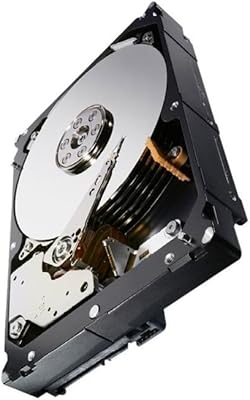
Seagate Cheetah 15K.7 600GB 15000RPM SAS Internal Hard Drive
83%
94%
Performance under Load
90%
Data Transfer Speed
89%
Reliability for Enterprise Use
64%
Heat Generation
78%
Ease of Installation
More
Seagate Exos 7E10 6TB SAS Hard Drive
87%
94%
Performance in RAID Setups
92%
Reliability & Durability
90%
Workload Capacity
89%
Compatibility with Data Centers
60%
Noise Levels
More
Seagate Constellation ES 4TB Internal Hard Drive
75%
88%
Reliability & Uptime
86%
RAID Performance
57%
Interface Compatibility
83%
Encryption & Security
54%
Ease of Installation
More
Dell 91K8T 3TB 3.5″ SAS Hard Drive
70%
89%
Server Compatibility
83%
Value for Money
81%
Installation Experience
51%
Drive Condition Transparency
86%
RAID Performance
More
Seagate Game Drive for PlayStation 2TB
79%
94%
Ease of Setup
91%
Storage Capacity
93%
PS4 Compatibility
72%
PS5 Compatibility
74%
Transfer Speed
More
Seagate Exos X14 12TB Hard Drive
88%
91%
Performance
94%
Reliability & Durability
88%
Value for Money
89%
Energy Efficiency
92%
Build Quality
More
Seagate Portable 2TB (STGX2000400)
84%
93%
Value for Money
91%
Portability
94%
Setup Experience
88%
Operating Noise
67%
Cable Utility
More
Seagate Exos 7E10 4TB Internal Hard Drive
75%
83%
Sustained Reliability
81%
Read/Write Performance
78%
Value for Money
89%
NAS Compatibility
61%
Vibration & Noise
More
Seagate BarraCuda 2TB Internal Hard Drive
79%
91%
Value for Money
74%
Transfer Speed
77%
Reliability & Longevity
93%
Installation Ease
79%
Noise Level
More
Seagate IronWolf 6TB NAS Hard Drive
87%
89%
Performance
91%
Reliability
85%
Setup/Installation
87%
Build Quality
75%
Noise Level
More

FAQ

Yes, in most cases it will. The Cheetah 15K.7 is specifically noted as compatible with Dell server platforms, and the ST3300657SS model number appears on Dell's hardware qualification lists for several PowerEdge generations. That said, always cross-check your specific server model against Dell's HCL to be sure.

No, you cannot plug it directly into a standard consumer motherboard. This drive uses a SAS interface, which requires either a dedicated SAS host bus adapter (HBA) or a SAS RAID controller card. Standard SATA ports are not compatible with SAS connectors.

This depends heavily on your seller. A meaningful number of buyers have reported receiving previously used or refurbished units, particularly when purchasing through third-party marketplace listings. If you need a verified new drive, buy directly from a reputable seller that explicitly states new condition, and check the warranty terms before purchasing.

Noticeably loud compared to a standard 7,200 RPM desktop drive. The high spindle speed produces both audible whirring and physical vibration. In a proper server rack or closet environment this is perfectly acceptable, but if you plan to run it in a home office or quiet workspace, the noise will likely bother you.

RAID 5 and RAID 10 are the most commonly reported setups among buyers, and feedback is consistently positive for both. The drive's RAID-optimized firmware helps reduce rebuild risk, which matters especially in RAID 5 where a second drive failure during a rebuild can be catastrophic.

It depends on what you already have. If your homelab server already has a SAS backplane or HBA installed, this drive is a cost-effective way to add fast, reliable spindle storage. If you are starting from scratch, NVMe SSDs will outperform it in nearly every metric and are easier to set up. Buy it for an existing SAS ecosystem, not as a reason to build one.

SAS drives are not compatible with SATA controllers even with an adapter cable. The protocols are fundamentally different. You need a genuine SAS HBA or SAS RAID card. Note that SATA drives can use SAS backplanes, but the reverse does not apply.

It excels at random I/O workloads where low latency matters: SQL databases, virtual machine storage, active transaction logs, and similar applications. It is not the right choice for bulk sequential storage like video archives or backup targets, where capacity and cost-per-GB matter more than raw IOPS.

PowerTrim dynamically reduces the drive's power draw during lower-demand periods rather than running at peak consumption constantly. In a dense rack with many drives, this translates to measurably lower heat output and potentially lower electricity costs over time. It has no negative impact on peak performance when the drive is under full load.

First, confirm your SAS controller or backplane supports SAS 6 Gb/s devices. Second, verify that mixing this drive with existing drives in your array is supported by your RAID controller, particularly for capacity and rotational speed matching. Third, if you are expanding an existing RAID 5 array, understand that adding a non-identical drive can affect rebuild behavior and overall array performance.