Overview

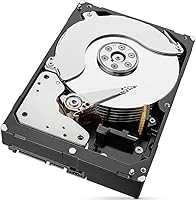
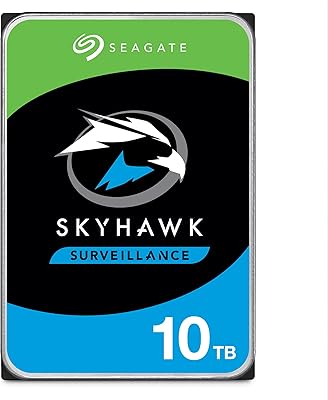
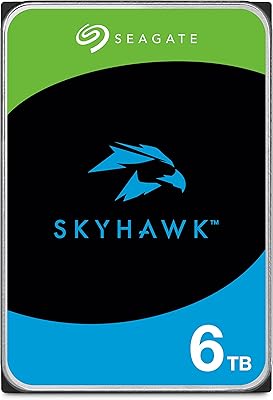
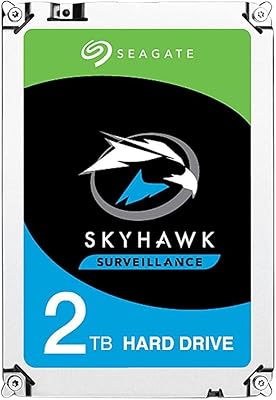
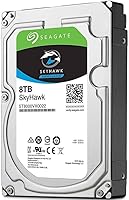
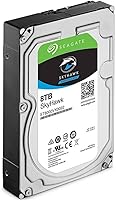
The Seagate SkyHawk 8TB Surveillance Internal Hard Drive is built from the ground up for one job: keeping security footage recording without interruption. Unlike a standard desktop drive pulled off the shelf, this surveillance drive is engineered specifically for the constant, write-heavy demands of always-on camera systems. At 8TB, it hits a practical sweet spot for home and small business setups — enough headroom to store weeks of HD footage without constant overwrite cycles. The price puts it firmly in mid-to-upper territory, which means buyers should expect genuine surveillance-grade engineering, not just a rebranded general-purpose disk.
Features & Benefits

The standout here is ImagePerfect firmware, which tells the drive to prioritize continuous video writing over the read-optimized behavior you would find in a desktop or NAS unit. In practice, that means fewer dropped frames when multiple cameras record simultaneously. The 180TB/year workload rating — roughly three times what a typical desktop drive handles — matters because surveillance systems push data to disk constantly, not occasionally. Add rotational vibration sensors that compensate for interference in multi-drive enclosures, plus Drive Health Management for early warning signals, and this Seagate HDD covers most of the bases a serious installer actually cares about.

Best For

The SkyHawk 8TB makes the most sense for home and SMB security setups running anywhere from 8 to 16 camera channels around the clock. It is especially worth considering if you are currently running a desktop drive in a DVR or NVR — the difference in workload tolerance becomes very real after months of continuous recording. Installers working with multi-bay enclosures will appreciate the vibration compensation. One clear boundary: this surveillance drive is not the right choice for general file storage, media serving, or NAS applications outside of security. Buying it for anything other than a camera system means paying for features you simply will not use.

User Feedback

With a 4.3-star average across 126 ratings, the SkyHawk 8TB sits in comfortable but not exceptional territory. Long-term reliability and quiet operation are the most consistent praise points — buyers running the drive for a year or more tend to be satisfied. The negatives worth noting: a subset of users report dead-on-arrival units, and some encounter compatibility confusion with specific DVR brands that do not recognize the drive immediately out of the box. Neither issue is rampant, but they are real. Short-term reviews do not tell you much with surveillance drives — longevity is everything, and this Seagate HDD has enough long-run positive reports to feel like a reasonable bet.

Pros

  • Purpose-built firmware prioritizes continuous video writes, reducing dropped frames in multi-camera setups.
  • A 180TB/year workload rating means this surveillance drive is rated to handle what desktop drives are not.
  • Rotational vibration sensors help maintain consistent performance in enclosures with multiple spinning drives.
  • Drive Health Management provides early warning of potential failures before footage is lost.
  • At 8TB, there is enough capacity to store weeks of HD video without frequent overwrite cycles.
  • Installation is straightforward — most users report a clean drop-in experience with common DVR and NVR systems.
  • Runs quietly under sustained load, which matters in office or home environments where noise is noticeable.
  • The 1-million-hour MTBF rating reflects a drive designed for always-on duty, not occasional use.
  • Compatible with systems supporting up to 16 bays, giving it room to grow with larger installations.

Cons

  • A subset of buyers have reported dead-on-arrival units, which points to inconsistent quality control.
  • Some DVR and NVR brands do not recognize the drive immediately, requiring firmware updates or manual configuration.
  • The price premium is hard to justify for small setups running only one or two camera channels.
  • Short-term reviews are largely unreliable for this drive category — failure patterns only emerge after a year or more of use.
  • No USB connectivity — this is strictly an internal drive, which limits flexibility for temporary or portable use cases.
  • The 3.5-inch form factor rules it out entirely for compact or embedded security systems with space constraints.
  • Warranty and RMA experiences have drawn criticism in some reviews, with slow resolution times reported by affected buyers.
  • Overkill for anyone repurposing an old PC as a light-duty DVR with just one or two cameras.

Ratings

The scores below reflect AI-driven analysis of verified global buyer reviews for the Seagate SkyHawk 8TB Surveillance Internal Hard Drive, with spam, bot-generated, and incentivized feedback actively filtered out before scoring. Each category is weighted against real installation experiences, long-term reliability reports, and documented pain points — not just first impressions. Both the strengths that keep buyers recommending this drive and the frustrations that pushed others toward alternatives are transparently reflected in every score.

Recording Reliability
88%
Users running 8 to 16 cameras continuously report that this surveillance drive keeps recording without dropped frames or unexpected pauses — even during high-motion events that spike write demand. The ImagePerfect firmware is consistently credited for the smooth, gap-free footage that desktop drives in the same role failed to deliver.
A small but notable share of buyers experienced recording interruptions or drive recognition drops within the first few months, often tied to compatibility quirks with specific DVR firmware versions rather than the drive itself. These cases are not widespread, but they are real and worth factoring in.
Workload Durability
84%
The 180TB/year workload rating translates into genuine peace of mind for installers who know what punishing a drive around the clock actually looks like. Buyers who previously burned through desktop drives in NVR systems within a year report this Seagate HDD holding up substantially longer under identical conditions.
Longevity data in the review pool is uneven — many reviewers are still in their first year of use, making it hard to draw firm conclusions about multi-year durability. A subset of buyers report failures in the 12-to-18-month window, which is earlier than the workload specs would suggest.
Installation Ease
91%
Drop-in installation is one of the most consistently praised aspects across the review base. Most buyers — including those with no prior hardware experience — describe a clean, straightforward swap into their existing DVR or NVR enclosure using standard SATA cables, with the recorder auto-detecting the drive on first boot.
A handful of users ran into initialization failures where their recorder did not recognize the drive without a firmware update on the recorder side. This is not a widespread issue, but it catches some buyers off guard, particularly those using older or budget-tier DVR brands.
Multi-Drive Performance
79%
21%
The rotational vibration sensors are a practical feature for anyone stacking multiple drives in a larger NVR enclosure — vibration interference from neighboring drives is a real and underappreciated cause of performance degradation, and buyers building out multi-bay systems note the SkyHawk 8TB holds its sequential write speed better than non-sensor-equipped drives.
The benefit of RV sensors is only apparent in genuinely multi-drive setups, and buyers running a single-drive DVR report no perceptible difference compared to less expensive alternatives. The feature is meaningful for the right use case but irrelevant for a significant share of the buyer base.
Drive Health Monitoring
82%
18%
Built-in Drive Health Management provides early warning signals that show up in compatible NVR interfaces, giving system owners a chance to replace the drive before a failure wipes hours of footage. Users who have had drives fail in the past specifically call out SHM as a meaningful reason they chose this drive over competitors.
SHM only surfaces useful data if the recorder supports it natively — a meaningful limitation since many budget DVRs do not. Buyers using unsupported systems effectively lose access to this feature and have to rely on manual S.M.A.R.T. checks through a separate PC connection.
Noise & Heat
86%
Under sustained 24/7 operation, the drive runs noticeably quieter than buyers expected for a 7200 RPM mechanical drive — a real quality-of-life benefit for home installations where the recorder sits in a living space or office. Heat output under normal airflow conditions is described as modest and manageable.
In poorly ventilated enclosures or rack setups with restricted airflow, a few users report the drive running warmer than comfortable for sustained use. This is more an enclosure design issue than a drive flaw, but it is worth noting for buyers planning tight installations.
Compatibility
74%
26%
The SATA 6Gb/s interface covers the vast majority of DVR and NVR systems on the market, and most buyers experience immediate, hassle-free recognition without any configuration steps. Compatibility with mainstream brands like Hikvision, Dahua, and Q-See is well-documented in the review base.
Compatibility problems are the single most common theme in negative reviews, with some users reporting that specific recorder models refuse to initialize the drive or misreport its capacity. The issue appears to be more prevalent with off-brand or older recorders, but it is unpredictable enough to warrant checking compatibility lists before purchasing.
Value for Money
71%
29%
For buyers coming from a desktop drive that failed in a surveillance role, the price premium over a generic HDD feels fully justified — the workload-rated design solves a real and expensive problem. Installers who factor in the cost of failed footage and drive replacements consider the SkyHawk 8TB a sound long-term investment.
For lighter deployments — two or three cameras, lower resolution, or systems that are not truly running 24/7 — the surveillance-specific premium is hard to justify when a well-regarded desktop drive would handle the load adequately at a lower cost. The value equation only really works at the higher end of its intended use case.
Write Speed Consistency
83%
At 7200 RPM with a 256MB cache, the drive handles simultaneous writes from multiple HD camera streams without the stuttering that plagues slower surveillance drives. Buyers running 10 or more channels of 1080p footage report smooth, consistent recording even during high-activity periods that spike write demand.
Write speed consistency under extreme multi-stream loads — think 16 channels of high-bitrate 4K footage — has not been thoroughly validated in the available review data, and Seagate does not publish explicit stream-count benchmarks for this model. Buyers at the upper end of the bay count should verify with their specific recorder before committing.
Quality Control
63%
37%
The majority of buyers receive a fully functional drive that works as described from day one, and the overall 4.3-star average across 126 ratings reflects a generally positive ownership experience for most purchasers. Units that pass the first 30 days of use tend to be described as stable and consistent going forward.
DOA and early-failure reports appear with enough frequency in the review pool to represent a genuine quality control concern rather than random statistical noise. Buyers should test the drive immediately after installation and not wait until the return window closes before confirming it is functioning correctly.
Capacity Utility
87%
At 8TB, the drive hits a practical ceiling for most home and SMB setups — enough to retain weeks of HD footage across 8 to 16 channels before the oldest recordings are overwritten. Buyers consistently report that the storage depth gives them a comfortable buffer without the need to manually manage or archive footage constantly.
For high-density 4K installations or setups where extended retention is a legal or operational requirement, 8TB can fill up faster than expected. Buyers with those needs may find themselves shopping for a 10TB or 12TB option rather than doubling up on 8TB units.
Brand Support & Warranty
67%
33%
Seagate is a well-established name with documented RMA processes and a manufacturer warranty that provides a backstop if the drive fails outside the retailer return window. Some buyers report straightforward warranty claims resolved without significant friction.
Warranty resolution experiences are inconsistent in the review data, with a vocal subset of users describing slow response times and frustrating back-and-forth with Seagate support before getting a replacement. The warranty exists, but buyers should not count on a seamless process if they need to use it.

Suitable for:

The Seagate SkyHawk 8TB Surveillance Internal Hard Drive is the right call for anyone running a dedicated security camera system at home or in a small-to-medium business environment. If your setup involves 8 or more IP cameras writing continuously to a DVR or NVR, this drive is built precisely for that workload — a standard desktop drive simply was not. Installers populating multi-bay enclosures will particularly benefit from the rotational vibration sensors, which help maintain stable performance when several drives spin side by side. It is also a strong fit for anyone who has already burned through a desktop drive in a surveillance role and wants something rated to actually survive the job long-term. The built-in Drive Health Management adds a layer of proactive monitoring that reduces the risk of losing footage to a silent drive failure — genuinely useful when the system runs unattended for weeks at a time.
Not suitable for:

The Seagate SkyHawk 8TB Surveillance Internal Hard Drive is not the right tool if your storage needs go beyond security cameras. Buyers looking for a high-capacity drive to handle general file storage, media streaming, or NAS duties will find they are paying for surveillance-specific firmware optimizations that offer no real benefit outside that context — and possibly a small disadvantage, since the drive is tuned to prioritize writes over the balanced read-write profile better storage applications demand. It is also not the right choice for anyone building a high-performance desktop workstation or editing rig, where drive responsiveness across varied workloads matters more than sustained sequential writes. Shoppers on a tight budget should weigh whether the surveillance-grade workload rating justifies the price premium over a comparable desktop drive for lighter camera setups running only two or three channels. If your DVR or NVR brand has a known compatibility quirk with third-party drives, it is worth verifying support before purchasing, as a handful of users have reported recognition issues out of the box.
Specifications

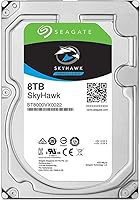
  • Capacity: The drive provides 8TB of usable storage, enough to retain several weeks of continuous HD footage depending on camera count and resolution settings.
  • Form Factor: It is a 3.5-inch internal hard drive designed for installation inside desktop DVR and NVR enclosures.
  • Interface: Uses a SATA 6Gb/s interface, which is the standard connection type found on the vast majority of consumer and prosumer surveillance recorders.
  • Cache: A 256MB cache buffer helps manage the steady stream of incoming video data from multiple channels without bottlenecking the write pipeline.
  • Rotational Speed: The drive spins at 7200 RPM, supporting the sustained sequential write speeds that continuous surveillance recording demands.
  • Workload Rating: Rated for up to 180TB of data written per year, roughly three times the tolerance of a typical desktop-class hard drive.
  • MTBF: Seagate rates this drive at a mean time between failures of 1 million hours, reflecting its design for always-on operational environments.
  • RV Sensors: Rotational vibration sensors are included on 4TB and higher capacities to compensate for performance degradation in multi-drive enclosures.
  • Health Management: Drive Health Management (SHM) is built in, allowing compatible systems to monitor drive condition and surface early warning indicators before failure occurs.
  • Firmware: ImagePerfect firmware is optimized to prioritize write continuity, reducing the risk of frame drops or recording gaps during peak multi-camera loads.
  • Bay Support: Compatible with systems housing up to 16 drive bays, making it suitable for both compact home recorders and larger SMB NVR installations.
  • Compatible Devices: Designed for use with DVRs, NVRs, and standalone security camera recording systems that accept 3.5-inch SATA hard drives.
  • Installation Type: This is strictly an internal drive and requires installation inside a compatible enclosure; it does not include an external housing or USB connectivity.
  • Dimensions: The drive measures 5.79 x 4.01 x 1.03 inches, matching the standard 3.5-inch HDD footprint used across most surveillance enclosures.
  • Weight: It weighs 1.43 pounds, consistent with other 3.5-inch mechanical hard drives in this capacity range.
  • Power Interface: Uses a standard SATA power connector, compatible with the power supplies found in virtually all DVR and NVR systems.
  • Manufacturer: Made by Seagate, a company with decades of experience producing hard drives for consumer, enterprise, and specialized surveillance markets.

Related Reviews
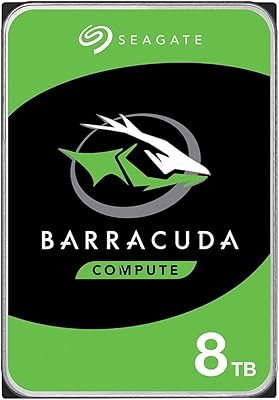
Seagate BarraCuda ST8000DM004 8TB Internal Hard Drive
73%
93%
Storage Capacity Value
67%
Reliability & Longevity
61%
Read & Write Performance
89%
Installation & Compatibility
63%
Noise & Vibration
More
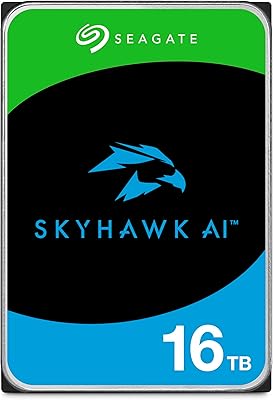
Seagate SkyHawk AI 16TB (ST16000VE004)
89%
98%
Recording Capacity
94%
Continuous Workload Endurance
93%
Frame Consistency
91%
AI Processing Support
87%
RAID Integration
More
Seagate SkyHawk 2TB Surveillance Hard Drive
80%
83%
Reliability & Uptime
91%
NVR & DVR Compatibility
78%
Value for Money
87%
Noise & Vibration
74%
Heat Management
More
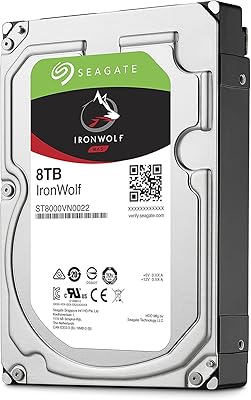
Seagate IronWolf 8TB NAS Internal Hard Drive
88%
88%
Performance
92%
Reliability
85%
Ease of Setup
89%
Data Transfer Speed
94%
Noise Levels
More
Seagate SkyHawk 6TB Surveillance Hard Drive
82%
91%
Recording Reliability
88%
Compatibility with NVR/DVR Systems
86%
Noise & Vibration
83%
Heat & Power Efficiency
79%
Value for Money
More
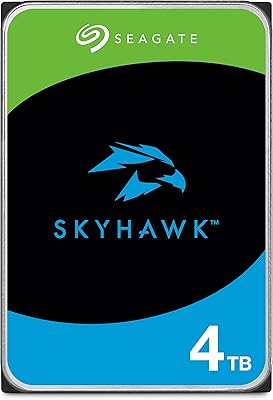
Seagate SkyHawk 4TB Surveillance Hard Drive
81%
88%
Long-Term Reliability
91%
Recording Performance
93%
Installation Ease
67%
Thermal Management
78%
Compatibility
More
Seagate Skyhawk AI 10TB Internal Hard Drive
80%
91%
Reliability & Uptime
88%
Stream Handling
67%
Value for Money
86%
Drive Health Management
58%
Noise Level
More
Seagate Exos 1TB Internal Hard Drive
80%
91%
Reliability & Uptime
67%
Value for Money
78%
Sequential Performance
88%
Noise Level
84%
Build & Durability
More
Seagate BarraCuda 2TB Internal Hard Drive
79%
91%
Value for Money
74%
Transfer Speed
77%
Reliability & Longevity
93%
Installation Ease
79%
Noise Level
More
Seagate BarraCuda 4TB Internal Hard Drive
87%
86%
Performance
90%
Reliability
93%
Setup & Installation
95%
Storage Capacity
72%
Data Transfer Speed
More

FAQ

In most cases, yes — the SATA interface is universal and compatible with the overwhelming majority of DVR and NVR systems on the market. That said, a small number of users have reported that certain brands require a firmware update on the recorder before the drive is recognized. It is worth checking your recorder manufacturer's compatibility list before purchasing, just to be safe.

That depends heavily on the resolution and frame rate of your cameras, but as a general guideline, 8TB at standard HD resolutions can comfortably handle 8 to 16 camera channels recording continuously. Higher resolution cameras like 4K units will consume storage faster and reduce how many channels you can sustain before footage starts overwriting sooner than expected.

The core difference is workload tolerance and firmware behavior. A desktop drive is designed for occasional use — light reads and writes throughout the day. A surveillance drive like the SkyHawk 8TB is rated to handle 180TB of writes per year, running non-stop, with firmware that prioritizes continuous video recording over everything else. Using a desktop drive in a surveillance role is one of the most common reasons DVR systems develop dropped frames or premature drive failures.

Technically it will work, but it is not the right tool for that job. The firmware is optimized for sequential surveillance writes, not the varied read-write patterns that file storage or NAS use cases demand. You would be paying a premium for surveillance-specific features that provide no benefit — and in some workloads, the drive may actually perform worse than a purpose-built NAS drive.

Seagate rates it at 1 million hours MTBF, which is a statistical reliability estimate rather than a guarantee. In practice, many users report years of trouble-free operation when the drive is used as intended in a surveillance system. The honest caveat is that any mechanical hard drive can fail early, and a small percentage of buyers have received units that failed within the first few months — so having a backup or RAID redundancy is always a smart precaution.

The drive includes Drive Health Management built into the hardware, which works with compatible DVR and NVR systems to report drive health status. However, standalone software is not bundled in the box. If your recorder does not support SHM natively, you can use third-party tools like CrystalDiskInfo on a Windows PC to check S.M.A.R.T. data when needed.

Not at all — this is one of the most consistently praised aspects of the drive. You physically mount it inside your recorder using the standard SATA data and power cables already present, secure it with the provided screws or tray, and the recorder handles the rest during its initialization process. Most users describe it as a straightforward swap, even without prior hardware experience.

At typical 1080p surveillance compression rates, 8TB can store roughly 8,000 to 10,000 hours of footage, though that figure varies significantly with camera count, frame rate, motion-triggered vs. continuous recording, and the compression format your recorder uses. Your DVR or NVR's storage calculator — if it has one — will give you a much more precise estimate based on your specific setup.

The majority of users report that this surveillance drive runs cool and quiet under normal operating conditions. Noise and heat are rarely called out as issues in real-world feedback. That said, adequate airflow inside your enclosure is always important for any spinning drive running 24 hours a day — a well-ventilated recorder will extend the life of any HDD.

A small number of buyers have reported receiving units that failed very quickly or arrived non-functional. If that happens, your first step should be to contact the retailer for a return or replacement under their standard policy. Seagate also offers a manufacturer warranty, so filing a claim directly with them is an option if you are outside the retailer return window. Keep your purchase receipt and note the drive's serial number as soon as you unbox it.

Where to Buy