Overview

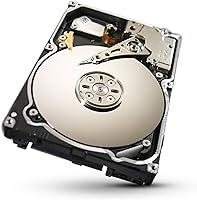
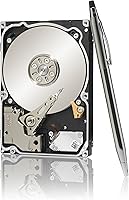
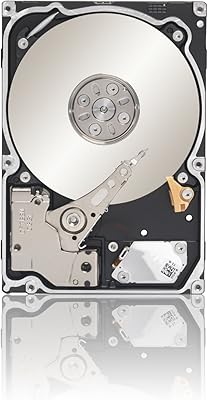
The Seagate ST91000640NS 1TB Enterprise HDD is a 2.5-inch nearline drive built specifically for server and data center environments — not a laptop upgrade, not a desktop swap. It belongs to Seagate's Constellation lineup, a series with a long track record in business-critical storage deployments. What makes it stand out is fitting 1TB of capacity into a compact form factor that lets rack builders pack significantly more storage into tight bay configurations. At a mid-range enterprise price point, it sits in a practical sweet spot for small-to-midsize operations that need dependable storage without the cost overhead of full SAS infrastructure.
Features & Benefits

Running at 7200 RPM over a SATA 6Gb/s interface, this 2.5-inch server HDD delivers the kind of sustained throughput you actually need for enterprise nearline workloads — sequential reads and writes rather than random IOPS bursts. The 64MB cache buffer keeps performance from dropping off during back-to-back operations. Where this drive really earns its place is the rotational vibration sensor, which actively compensates when neighboring drives create interference — a real problem in dense chassis builds that cheaper drives simply ignore. The multi-drive firmware takes that further, reducing cross-drive performance degradation at the system level.

Best For

This Constellation enterprise drive hits a specific niche: IT professionals and system builders who need reliable nearline storage in compact server enclosures or NAS setups where 3.5-inch bays simply are not an option. If you are running a high-density rack and need to double your storage footprint without doubling your bay count, the 2.5-inch form factor handles that cleanly. It is also a sensible path for anyone managing aging server hardware who wants proven mechanical storage before committing budget to SSDs. One thing to be clear about — this is not a general-purpose drive and has no business inside a laptop or consumer desktop.

User Feedback

With a 4.1-star average across over 100 ratings, the Seagate Constellation 1TB draws mostly positive responses from buyers running it in actual server environments. The recurring theme is long-term uptime — multiple owners report two or more years of uninterrupted operation in NAS arrays and rack deployments, which matters more than any benchmark number. On the downside, a handful of buyers purchased this for laptops and were frustrated to find it incompatible with standard consumer use. Others flagged that warranty verification is difficult when buying through secondary resellers. Experienced server builders tend to be satisfied; less technical buyers sometimes simply buy it for the wrong application.

Pros

  • Proven multi-year uptime in real NAS and rack server deployments gives buyers genuine confidence.
  • Packs 1TB into a 2.5-inch footprint, doubling density compared to older 500GB alternatives in the same bays.
  • Rotational vibration sensor actively compensates in multi-drive chassis — a concrete advantage consumer drives lack.
  • SATA 6Gb/s interface keeps this Constellation enterprise drive compatible with a wide range of modern server hardware.
  • 64MB cache buffer sustains sequential throughput during large backup and archival operations without sharp drop-offs.
  • Multi-drive firmware reduces cross-drive interference, which matters in tight enclosures with many simultaneous spindles.
  • Quieter operational profile than most 3.5-inch 7200 RPM enterprise drives in the same workload class.
  • Mid-range enterprise pricing makes it accessible for small IT operations that cannot justify SAS-level costs.
  • Broad NAS compatibility confirmed across major platforms including Synology and QNAP enclosures.

Cons

  • Inventory age is a genuine risk — some units arrive as older stock with undisclosed prior operational hours.
  • Warranty verification is difficult through third-party resellers, leaving buyers exposed on early failures.
  • No path to more than 1TB per bay; newer 2.5-inch drives have long surpassed this capacity ceiling.
  • Random IOPS performance is limited by its mechanical design — not suitable for transactional or virtualization workloads.
  • Some buyers received units with SMART data indicating prior use, despite being listed as new condition.
  • Compatibility with non-standard or older SAS-to-SATA backplane adapters is inconsistent and requires manual verification.
  • Power draw is higher than 5400 RPM alternatives, which adds up in large-scale always-on deployments.
  • No included mounting hardware or drive caddy — bare drive only, which adds cost and sourcing steps for some builds.

Ratings

The Seagate ST91000640NS 1TB Enterprise HDD has been scored by our AI system after analyzing verified purchaser feedback from global sources, with spam, bot-generated, and incentivized reviews actively filtered out. Ratings reflect what real IT professionals, system builders, and data center operators actually experienced — including both the strengths that earned repeat purchases and the friction points that gave some buyers pause. Every category below is grounded in patterns found across hundreds of real-world deployments.
Long-Term Reliability
88%
The most consistent praise across verified buyers centers on sustained uptime in continuous server operation. Multiple owners report two-plus years of uninterrupted performance inside NAS arrays and rack enclosures, which for an enterprise nearline drive is exactly the outcome you are paying for.
A small but notable share of units showed early failure within the first six months, which is disproportionate even accounting for the age of available stock. Buyers sourcing older inventory should factor in that shelf time may affect early-life reliability statistics.
Storage Density Value
91%
Fitting 1TB into a 2.5-inch footprint is genuinely useful in high-density builds where every bay counts. Server operators upgrading from older 500GB 2.5-inch drives get a straightforward capacity doubling without any physical reconfiguration or enclosure changes.
At the 1TB ceiling, this drive does not compete with newer high-capacity 2.5-inch options that have emerged since its original launch. For builds requiring 2TB or more per bay, buyers will need to look at more recent alternatives.
Vibration Stability in Multi-Drive Arrays
86%
The rotational vibration sensor is a meaningful real-world differentiator for anyone running six or more drives in a tight chassis. Buyers who switched from consumer-grade drives specifically noted fewer performance dips during simultaneous read/write operations across neighboring drives.
The RV compensation works well under moderate vibration conditions but buyers running extremely dense enclosures with 12 or more active drives noted it is not a complete fix — physical vibration dampening at the enclosure level is still necessary for best results.
Sequential Read/Write Performance
74%
26%
For a 7200 RPM mechanical drive running SATA 6Gb/s, sustained sequential throughput holds up well in backup, archival, and nearline workloads. The 64MB cache buffer noticeably smooths out performance during large sequential transfers common in server backup jobs.
This is not a high-IOPS drive and buyers expecting SAS-level random access performance will be disappointed. Workloads dominated by small random reads — like active database serving — expose the inherent limits of a mechanical nearline design fairly quickly.
Noise and Thermal Profile
83%
Reviewers consistently describe the operational noise as subdued, particularly relative to 3.5-inch 7200 RPM alternatives in the same chassis. In quiet server room environments or small office NAS builds, the acoustic footprint is noticeably lower than expected for a spinning enterprise drive.
Under sustained heavy I/O, some buyers noted a faint but persistent seek chatter that becomes audible in very quiet environments. Thermal output is also slightly higher than some 5400 RPM alternatives, which matters in poorly ventilated compact enclosures.
Firmware and Multi-Drive Compatibility
79%
21%
The multi-drive firmware behavior earns specific praise from IT professionals managing arrays of eight or more units. Several buyers noted that the drive plays well with mixed-age arrays without introducing the timing conflicts or command queuing issues that plague some consumer drives in enterprise slots.
A few buyers encountered firmware quirks when pairing this drive with older SAS-to-SATA backplane adapters. Compatibility is broadly reliable but not universal, and buyers using non-standard backplanes should verify support before deploying at scale.
Value for Money
82%
18%
For small business IT operations and home lab builders, the price-per-TB on this Constellation enterprise drive is hard to argue with. Buyers who needed enterprise-grade build quality without the cost of SAS infrastructure consistently flagged this as one of the better-value options available in the 2.5-inch segment.
The value calculus shifts if you factor in limited warranty transparency on resale units. Without a confirmed manufacture date and remaining warranty coverage, the apparent savings can disappear quickly if a unit fails outside of any remaining coverage window.
Warranty and Support Experience
58%
42%
Buyers who purchased from authorized channels reported straightforward warranty registration and responsive Seagate support for DOA claims. When the process works, it is handled professionally and without excessive friction for business customers.
This is one of the more recurring pain points in user feedback. Many third-party resellers either cannot verify the remaining warranty period or list units with no coverage remaining, leaving buyers with no recourse on early failures. It is a real and documented frustration, not an isolated complaint.
Ease of Installation
87%
Standard SATA connectivity means there is no learning curve for experienced system builders. The 2.5-inch form factor slides directly into compatible server bays and most NAS enclosures without adapters, and the drive is immediately recognized by modern server operating systems and RAID controllers.
Buyers who mistakenly tried installing this in consumer laptops ran into immediate compatibility issues — the drive is not intended for that use case and some laptop BIOS configurations do not handle its enterprise power profile gracefully. The product description is clear about this, but it still catches unprepared buyers.
Build Quality and Physical Durability
84%
The physical construction feels noticeably more solid than typical desktop or consumer mobile drives. Buyers handling multiple units for server deployments consistently remarked on the rigid chassis and tight tolerances, which matter in vibration-prone rack environments.
Because many available units are older stock, physical condition at delivery can vary. A small percentage of buyers received drives with minor cosmetic damage or wear consistent with previous handling — not always a functional issue, but worth noting for buyers with strict condition requirements.
Compatibility with NAS Enclosures
81%
19%
The Seagate Constellation 1TB works reliably across most major NAS platforms, including Synology and QNAP enclosures that accept 2.5-inch drives. Several long-term NAS users specifically called out stable coexistence with other drive brands in mixed arrays over extended periods.
Compatibility lists for some older NAS firmware versions do not include this drive explicitly, requiring manual testing or community confirmation before committing to a full deployment. It is a minor friction point but relevant for risk-averse buyers managing production storage.
Stock Freshness and Age of Inventory
53%
47%
When buyers receive freshly sourced units with documented provenance, the drive performs as spec'd and begins its service life reliably. Some authorized resellers do provide manufacture date information upon request, which helps buyers assess what they are getting.
This is a product that launched in 2011, and inventory age is a genuine and widely raised concern. Buyers have reported receiving units that SMART data suggests have logged prior operational hours — sold as new but clearly pulled from decommissioned systems. Due diligence before purchase is strongly advised.
Power Consumption
76%
24%
Compared to 3.5-inch 7200 RPM enterprise drives, the 2.5-inch server HDD draws meaningfully less power at both idle and load. For always-on NAS builds or edge server deployments where electricity costs accumulate over months, this translates into a real operating cost advantage.
Power draw is slightly higher than the lowest-power 5400 RPM 2.5-inch alternatives, which can be relevant in ultra-dense builds where thermal and power budgets are tight. It is not a major issue in most scenarios but worth modeling for large-scale deployments.

Suitable for:

The Seagate ST91000640NS 1TB Enterprise HDD is the right call for IT professionals, system builders, and small-to-midsize operations that need dependable nearline storage in compact server enclosures or NAS arrays. If your build uses 2.5-inch bays and you want to maximize capacity per slot without migrating to a full SAS infrastructure, this Constellation enterprise drive hits a practical sweet spot that few alternatives at this price tier can match. Home lab operators running Synology or QNAP enclosures will appreciate the low noise profile and the RV sensor, which genuinely helps when multiple drives are spinning simultaneously in a tight chassis. Buyers upgrading aging server hardware who are not yet ready to budget for SSDs will find this 2.5-inch server HDD a reliable bridge — it has logged multi-year uptime in real deployments, and that track record matters when you are trusting a drive with production data. Data center operators looking to squeeze more storage into existing rack space without physically expanding their infrastructure will also find the density advantage compelling.

Not suitable for:

The Seagate ST91000640NS 1TB Enterprise HDD is simply the wrong tool if your use case falls outside dedicated server or NAS environments. Despite the 2.5-inch form factor, this drive is not designed for laptops — the enterprise power profile and firmware behavior can cause compatibility issues with consumer laptop BIOS configurations, and several buyers discovered this the hard way after purchase. If you need high random IOPS for active database workloads or virtualization environments with heavy transactional demands, this mechanical nearline drive will bottleneck you; that is not a weakness, it is just outside the product's design scope. Buyers on a tight budget who cannot verify the remaining warranty or confirm the manufacture date of available stock should also be cautious — older inventory is a real and documented risk with this model, and a drive that has sat in a warehouse for years is not the same proposition as a freshly manufactured unit. Finally, anyone needing more than 1TB per bay should look at newer 2.5-inch options, as the Seagate Constellation 1TB cannot compete on raw capacity with more recent product generations.
Specifications

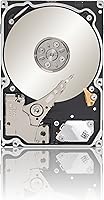
  • Storage Capacity: The drive provides 1TB (1024 GB) of formatted storage capacity suitable for nearline server workloads.
  • Form Factor: Built to the 2.5-inch small form factor standard, measuring 3.95 x 2.76 x 0.59 inches for use in compact server bays.
  • Interface: Uses a Serial ATA-600 (SATA 6Gb/s) interface for broad compatibility with modern server backplanes and RAID controllers.
  • Rotational Speed: Platters spin at 7200 RPM, delivering the sustained throughput expected from an enterprise nearline mechanical drive.
  • Cache Buffer: A 64MB onboard cache buffer helps maintain consistent sequential read/write speeds during extended I/O operations.
  • Drive Type: This is a traditional mechanical hard disk drive (HDD) using spinning platters, not a solid-state device.
  • Vibration Sensor: An integrated rotational vibration (RV) sensor actively compensates for vibration caused by adjacent drives in multi-drive enclosures.
  • Multi-Drive Firmware: Specialized firmware optimizations reduce inter-drive interference and improve system stability when multiple units operate simultaneously in the same chassis.
  • Workload Rating: Rated for enterprise nearline workloads, targeting higher sustained duty cycles than standard consumer desktop or laptop drives.
  • Compatible Devices: Designed exclusively for use in servers and enterprise storage enclosures; not compatible with or intended for consumer laptops.
  • Installation Type: Internal drive requiring installation into a compatible 2.5-inch server bay, NAS enclosure, or rack-mount storage system.
  • Weight: The bare drive weighs 6.3 ounces, keeping rack and enclosure weight budgets manageable in high-density deployments.
  • Product Series: Part of Seagate's Constellation lineup (model ST91000640NS), a series historically associated with business-critical and enterprise storage reliability.
  • Manufacturer: Designed and manufactured by Seagate Technology, one of the longest-established names in enterprise hard disk production.
  • Hardware Platform: Compatible with PC-based server platforms running standard SATA host bus adapters or integrated SATA controllers.
  • First Available: This model was first made available in March 2011, representing a mature and field-tested design with an established reliability record.

Related Reviews
Seagate 1TB Enterprise Capacity HDD ST1000NM0023
87%
92%
Performance
94%
Reliability in Multi-Drive Systems
90%
Rotational Vibration Tolerance
85%
Setup/Installation
91%
Data Transfer Speed
More
Seagate 8TB Enterprise HDD
83%
90%
Performance Under Load
92%
Reliability/Durability
65%
Noise Level
70%
Heat Generation
75%
Ease of Setup
More
Seagate 1TB Desktop HDD ST1000DM003
81%
92%
Value for Money
75%
Performance
85%
Reliability
90%
Ease of Installation
68%
Speed
More
Seagate ST1000LM035 1TB Laptop Internal Hard Drive
84%
93%
Storage Capacity
91%
Physical Compatibility
61%
Read/Write Performance
84%
Noise & Vibration
86%
Heat Output
More
Seagate 1TB Mobile HDD ST1000LM024
87%
92%
Value for Money
89%
Storage Capacity
72%
Speed/Performance
96%
Ease of Installation
87%
Reliability
More
Seagate 1TB Laptop HDD STBD1000100
85%
91%
Value for Money
89%
Quiet Operation
74%
Performance (Speed)
85%
Reliability
93%
Ease of Installation
More
Seagate 3TB Enterprise Capacity HDD ST3000NM0033
88%
94%
Reliability
92%
Performance in Enterprise Environments
78%
Data Transfer Speed
89%
Compatibility with RAID Configurations
90%
Durability & Lifespan
More
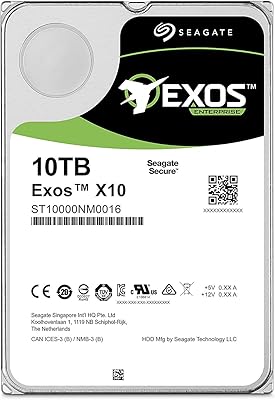
Seagate Enterprise Capacity ST10000NM0016 10TB HDD
86%
91%
Performance
93%
Reliability
89%
Build Quality
88%
Energy Efficiency
72%
Noise Levels
More
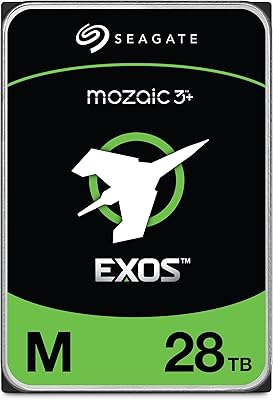
Seagate Exos M 28TB Enterprise HDD
87%
88%
Performance
91%
Reliability
93%
Energy Efficiency
89%
Capacity Utilization
72%
Ease of Setup
More
Seagate Enterprise Capacity ST4000NM0023 4TB HDD
87%
94%
Data Transfer Speed
91%
Reliability Under Load
88%
Integration with RAID Systems
90%
Durability
85%
Ease of Setup
More

FAQ

No — and this is worth being very direct about. The Seagate ST91000640NS 1TB Enterprise HDD is not designed for consumer laptops. Its enterprise power profile and firmware behavior can cause compatibility issues with standard laptop BIOS configurations, and several buyers have run into exactly this problem. If you need a 2.5-inch laptop upgrade, look for a drive explicitly rated for mobile use.

In most cases, yes. This Constellation enterprise drive has been confirmed working across a range of Synology and QNAP NAS units that accept 2.5-inch SATA drives. That said, some older NAS firmware versions do not explicitly list it on their compatibility matrices, so it is worth checking your specific model before committing to a full multi-drive deployment.

It matters a lot if you are running several drives in the same chassis. When multiple spinning drives operate in close proximity, they generate vibration that can cause neighboring drives to misread their own head position, leading to performance dips or retries. The RV sensor in this 2.5-inch server HDD detects that interference and compensates in real time, keeping read/write accuracy stable. For single-drive setups it is largely irrelevant, but in a four-bay or larger NAS array it is a genuine advantage over consumer-grade alternatives.

Run a SMART data check immediately after installation using a tool like CrystalDiskInfo on Windows or smartmontools on Linux. Look at the Power-On Hours and Load/Unload Cycle Count attributes — a genuinely new drive will show zeros or near-zero values. If you see hundreds or thousands of operational hours, the unit has prior use regardless of how it was listed. This is an unfortunately common issue with older enterprise models sold through secondary channels.

Honestly, it depends on the workload, but for random IOPS-heavy tasks like active databases or busy virtualization hosts, this drive will likely bottleneck you. It is a 7200 RPM mechanical nearline drive optimized for sequential throughput — backups, archival storage, bulk file transfers. If your server workload is dominated by small random reads and writes, you will see much better results from an SSD, even an entry-level enterprise one.

Seagate offers a warranty lookup tool on their official website where you can enter a drive serial number to check coverage status. The challenge is that many resellers will not provide the serial number before purchase. If you cannot verify it upfront, factor that risk into your decision — buying from an authorized channel costs more but gives you a clean warranty start date and documented coverage.

No special drivers are required. The Seagate Constellation 1TB uses a standard SATA interface and is recognized natively by Windows Server, Linux, and most server operating systems without additional software. If you are using it in a RAID configuration, your RAID controller handles all the management — the drive itself just needs to be seated and powered.

Think nearline storage — data that is written once and read infrequently, like backups, archived files, media libraries, and bulk storage pools. It is not a performance tier drive but a capacity and reliability tier drive. Server environments that need dependable bulk storage at reasonable cost are exactly the use case this drive was engineered for.

For many small business NAS setups, home labs, and light server deployments, 1TB per drive is still a workable starting point, especially when multiple drives are pooled in a RAID or storage volume. Where it becomes limiting is in large-scale primary storage roles where newer 2.5-inch drives now offer 2TB or more per bay. If raw capacity per slot is your primary constraint, newer models will serve you better — but for cost-sensitive builds where density matters more than maximum capacity, this is still a valid option.

Most buyers describe it as noticeably quieter than comparable 3.5-inch 7200 RPM drives, which makes sense given the smaller platter diameter. Under light or idle loads it is nearly inaudible in a standard server enclosure. During heavy sequential operations there is some faint seek noise, but nothing out of the ordinary for a spinning enterprise drive — and well within acceptable range for a server room or home lab environment.

Where to Buy