Overview

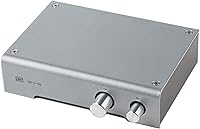
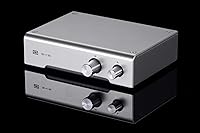
The Schiit SYS Passive Preamp is exactly what it claims to be: a no-frills box that lets you control volume and switch between two sources without fuss. Schiit has built a reputation on honest, straightforward audio gear made in the USA, and this little unit fits squarely into that philosophy. Because it uses a fully passive design, there are no active components in the signal path — nothing to add noise, nothing to color your sound. Don't expect tone controls or multiple outputs. This is a purpose-built utility device, and its compact, solid metal chassis reflects that focus: understated, practical, and built to last on a desktop.

Features & Benefits

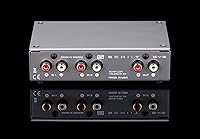
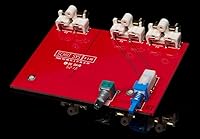
At its core, the SYS offers two RCA stereo inputs fed into a single toggle switch, so flipping between your DAC and a turntable preamp takes about half a second. Volume is handled by an Alps potentiometer — a component audiophiles actually respect, known for smooth travel and consistent channel tracking. The signal path is purely passive, meaning the unit introduces zero gain and zero distortion; it only attenuates. It plays nicely with virtually any line-level source, from DACs to headphone amps to powered monitors. Physically, it measures 5.25 x 4 x 2.25 inches and weighs just one pound, yet feels reassuringly solid on a desk. Designed and assembled in the USA.

Best For

This passive preamp earns its place in a desktop audio setup where powered monitors are the endgame and you just need a single, reliable volume knob in the chain. It is particularly useful if you are juggling two sources — say, a DAC for streaming and a phono preamp for vinyl — and you are tired of swapping cables. Anyone who distrusts active preamps for adding unwanted character to the sound will appreciate the transparency here. Home studio owners who want basic monitor routing without committing to a full mixer will also find it practical. One caveat: if your amplifier has low input sensitivity, passive attenuation may leave you with less headroom than expected.

User Feedback

Long-term owners consistently highlight dead-silent operation as the standout quality — no hiss, no interference, nothing between you and the music. The volume knob and input toggle get frequent praise for feeling well-built rather than cheap and plasticky. People seem genuinely surprised that something this small holds up for years without issue; the SYS has been on the market since 2014 and still earns fresh positive reviews. On the downside, a handful of users report output level drops when pairing this little Schiit box with less sensitive amplifiers — a real passive design limitation worth knowing upfront. A few buyers also wished for a third input option or a headphone jack, which simply is not part of what this device does.

Pros

  • Fully passive signal path means zero noise, zero coloration, and nothing added to your audio.
  • The Alps potentiometer feels smooth and precise — a component audiophiles genuinely respect.
  • Two-input toggle switch makes source switching instant, with no cable swapping required.
  • Dead-silent operation is consistently reported even in sensitive, high-resolution setups.
  • Compact footprint takes up almost no desk space while remaining solid and well-built.
  • Compatible with virtually any line-level source, from DACs to phono preamps to headphone amps.
  • Designed and assembled in the USA with quality components that hold up over years of daily use.
  • Has maintained a strong reputation since 2014, with long-term owners still recommending it.

Cons

  • Passive attenuation can cause output level drops when paired with low-sensitivity amplifiers or monitors.
  • Only two inputs — a third source means unplugging something, which defeats part of the purpose.
  • No headphone output, so it cannot double as a listening station for late-night headphone use.
  • Zero gain means it cannot compensate for a weak source signal under any circumstances.
  • No remote control makes it impractical if your desk is not within arm's reach of the unit.
  • Single output only — you cannot simultaneously feed two sets of monitors or switch speaker pairs.
  • Impedance mismatches with certain source and amplifier combinations can subtly affect frequency response.
  • No built-in protection against accidental input switching mid-listening, which can produce audible pops.

Ratings

The scores below reflect our AI-driven analysis of verified global buyer reviews for the Schiit SYS Passive Preamp, with spam, incentivized, and bot-generated feedback actively filtered out before any scoring was applied. Each category captures what real owners consistently praised or complained about over years of hands-on use, not a sanitized promotional summary. Both the standout strengths and the genuine frustrations are reflected honestly in every score.

Audio Transparency
96%
Owners consistently report that the SYS adds absolutely nothing to the signal — no hiss, no hum, no tonal shift. Audiophiles who swapped out active preamps specifically to remove a layer of coloration from their chain found exactly what they were looking for. In sensitive desktop setups with revealing speakers, the silence between tracks is genuinely black.
A small number of users with particularly high-impedance sources noted a slight high-frequency rolloff at very low volume settings, which is an inherent physics limitation of passive designs rather than a manufacturing flaw. It is rare but worth knowing if your rig is unusually impedance-mismatched.
Build Quality
88%
The metal chassis feels punchy and substantial for a compact unit — nothing rattles, nothing flexes. The Alps potentiometer has a smooth, damped rotation that inspires confidence, and the input toggle clicks with a satisfying, positive action that users contrast favorably with the mushy switches found on cheaper alternatives.
A handful of buyers noted that the RCA jacks, while functional, grip cables with only moderate firmness compared to higher-end units. The silver finish, though clean, can show fingerprints and light scratches over time with regular repositioning on a busy desk.
Volume Control Quality
91%
The Alps pot is the real hero here. It tracks left and right channels consistently even at low volume positions, which is a common failure point on cheaper potentiometers that go audibly lopsided before nine o'clock. Daily users report smooth, repeatable adjustment with no scratchy or static-like artifacts after years of use.
Because this is a passive attenuator with no gain stage, the useful range of the volume knob is compressed when sources output a strong signal — most of the practical adjustment happens in a narrow band of rotation, which can feel imprecise when trying to land on a specific level quietly.
Source Switching
89%
For anyone who used to physically unplug and replug RCA cables every time they wanted to switch between a DAC and a turntable preamp, the two-input toggle is a small but meaningful quality-of-life upgrade. The switch itself is reliable and shows no signs of degradation or channel bleed in long-term use, which is exactly what you want in a daily-use device.
Flipping the toggle without first lowering the volume can produce an audible pop, particularly when the two sources are at noticeably different output levels. The SYS also maxes out at two inputs with no expansion option, which becomes a limiting factor for anyone whose desktop setup grows over time.
Value for Money
84%
For a device assembled in the USA with a quality volume control component, the price point sits in a range that owners describe as fair rather than cheap. Users who previously tried no-name passive boxes at half the cost found the build and sonic consistency of this little Schiit box to be a meaningful step up that justified the difference.
A minority of buyers feel the two-input limitation is a constraint that should not exist at this price, and point to import alternatives offering three or four inputs at similar or lower cost. Whether the USA assembly and Alps pot justify the premium is ultimately a values question each buyer has to answer for themselves.
Ease of Setup
93%
Setup is as close to foolproof as audio gear gets — plug two sources into the inputs, run the output to your monitors or amp, and you are done. There are no drivers, no firmware, no configuration menus, and no power cable to route. First-time passive preamp buyers consistently describe setup as taking under five minutes.
The lack of any labeling on the rear panel for input 1 versus input 2 can cause brief confusion when initially wiring up, since you have to toggle the switch to discover which position corresponds to which input. It is a minor inconvenience but one that appears in enough reviews to be worth flagging.
Long-Term Reliability
92%
Having been on the market since 2014, the SYS has the kind of real-world longevity track record that newly released products simply cannot claim. Owners who have run it daily for five or more years report no degradation in the pot, no intermittent channel dropout, and no physical failures — a strong vote of confidence in the component selection.
Because the device has no serviceable internal components for most buyers and Schiit does not broadly publicize repair options for this entry-level unit, a hardware failure after the warranty window would likely mean a full replacement rather than a repair. This is a minor concern given the reliability data, but it is not zero.
Compatibility
82%
18%
The passive design and standard RCA connectivity mean this device works with virtually any line-level source in existence — DACs, CD players, streaming preamps, phono stages with built-in RIAA, and headphone amps with a line output. Users appreciate not having to verify driver support or voltage specs before plugging in.
Compatibility breaks down at the amplifier or monitor end if those devices have low input sensitivity. In those setups, the volume headroom is genuinely limited, and some users have had to return the unit because their powered speakers simply were not a good passive-preamp match. Checking your monitor specs before buying is strongly advised.
Desktop Footprint
87%
At 5.25 x 4 x 2.25 inches and a single pound, the SYS fits naturally between a DAC and a pair of monitors without demanding dedicated shelf space or cable management creativity. Users in small apartment setups or those running minimalist one-desk audio rigs specifically call out the compact form factor as a practical advantage.
The unit has no mounting or stacking options, so it sits loose on the desk and can shift when cables are tugged. Users who run tidy, organized cable setups sometimes find themselves adding adhesive feet or velcro to keep it reliably positioned, which is a small but recurring complaint.
Signal-to-Noise Ratio
94%
Because there is no amplification stage generating thermal noise or introducing interference from a power supply, the noise floor of this passive preamp is essentially governed by the quality of your sources and cables. Owners with high-resolution DACs and sensitive monitors describe the noise floor as effectively inaudible under all normal listening conditions.
If RF interference or grounding issues exist elsewhere in the signal chain, the SYS offers no active rejection or filtering to compensate — it will pass those problems through to the output just as faithfully as it passes the music. Ground loop issues upstream need to be resolved at the source, not here.
Input/Output Flexibility
57%
43%
For users with exactly two sources and one output destination, the fixed two-in one-out configuration is perfectly adequate and introduces no unnecessary complexity. Many buyers emphasize that simplicity is the point, and in that context the limited I/O is a feature rather than a flaw.
Anyone who wants three or more inputs, multiple output zones, a headphone jack, or balanced XLR connections will hit a hard wall immediately. The I/O configuration is completely fixed with no expansion path, and this is the single most common reason buyers return or replace the unit as their setups grow.
Aesthetic Design
74%
26%
The silver anodized metal chassis has a clean, no-fuss industrial look that pairs well with most desktop audio gear without trying too hard to stand out. Buyers who run all-silver or mixed-metal setups appreciate that it blends in rather than clashing, and the minimal front-panel layout looks intentional rather than sparse.
Schiit does not offer this model in black or other finishes, which limits its visual compatibility with darker desktop setups. The design has also not been updated since the product launched in 2014, so next to newer gear it can look slightly dated despite the clean lines.
Country of Manufacture
88%
Schiit's commitment to USA design and assembly resonates strongly with a subset of buyers who make purchasing decisions based on origin and support for domestic manufacturing. Long-term owners frequently cite it as a trust signal, reasoning that a company building product locally has more accountability for quality consistency.
USA assembly contributes to a price point that is slightly higher than comparable import alternatives offering similar or broader functionality. For buyers who are indifferent to country of origin and are purely optimizing for features per dollar, this aspect of the product adds cost without adding capability.

Suitable for:

The Schiit SYS Passive Preamp is a natural fit for desktop audio enthusiasts who have powered monitors and want a clean, central point to manage volume without adding anything unwanted to the signal. If you are running two line-level sources — a DAC for digital streaming and a phono preamp for vinyl, for instance — and you are tired of physically swapping RCA cables every time you switch, this little box solves that problem elegantly and permanently. It also appeals strongly to the audiophile mindset of doing less to preserve more: because no active circuitry touches your signal, what comes out is as faithful to the source as physics allows. Home studio owners who need a quick way to route audio to a pair of monitors without investing in a full mixer will find it genuinely useful. Anyone who has been burned by cheap active preamps adding hiss or a thin coloration to their sound will feel right at home here.

Not suitable for:

The Schiit SYS Passive Preamp is not the right tool if you need more than two inputs, a headphone output, tone controls, or any form of signal amplification. Because it is a purely passive design with zero gain, it will not rescue a weak signal — and if your amplifier or powered monitors have low input sensitivity, you may find yourself running the volume knob uncomfortably close to maximum with little dynamic range left. Users who expect a traditional preamplifier that can drive long cable runs or multiple output zones will be frustrated by its single-output, single-zone design. It also lacks any form of remote control, which matters if your setup is across the room rather than arm's reach. If your listening habits require more routing flexibility or you regularly connect more than two sources, a small active mixer or a proper integrated amplifier with multiple inputs would serve you far better.

Specifications

  • Product Type: Fully passive stereo preamplifier with input switching and volume attenuation.
  • Inputs: Two RCA stereo inputs (left and right channels per input) selectable via a front-panel toggle switch.
  • Outputs: One RCA stereo output for connection to a power amplifier, powered monitors, or active speakers.
  • Volume Control: Single Alps potentiometer providing smooth, channel-balanced attenuation across the full rotation range.
  • Signal Path: Entirely passive with no active components, delivering zero gain and introducing no measurable noise or distortion.
  • Gain: Zero gain; the unit only attenuates the input signal and cannot boost it under any circumstances.
  • Dimensions: Chassis measures 5.25 x 4 x 2.25 inches (L x W x H), designed for compact desktop placement.
  • Weight: Unit weighs 1 pound, combining a light footprint with a solid, rattle-free metal construction.
  • Compatibility: Works with any line-level audio source including DACs, phono preamps, CD players, headphone amplifiers, and streaming devices.
  • Power Required: No external power supply is needed; the passive design operates entirely off the audio signal itself.
  • Connector Type: All connections use standard RCA (phono) connectors, compatible with the vast majority of consumer and prosumer audio gear.
  • Input Selector: Front-panel two-position toggle switch allows instant source selection without any signal degradation or audible artifacts.
  • Color: Silver anodized metal chassis finish that matches most desktop audio equipment from mainstream and boutique brands.
  • Model Number: Official model designation is SCH-13-FA as assigned by the manufacturer Schiit Audio.
  • Manufacturer: Designed and assembled by Schiit Audio in the United States using quality-grade components.
  • Availability: First made available in April 2014 and remains an active, non-discontinued product in Schiit Audio's current lineup.

Related Reviews
Schiit Mani 2 Phono Preamplifier
80%
93%
Sound Quality
91%
Cartridge Compatibility
94%
Value for Money
89%
RIAA Accuracy
86%
Subsonic Filter
More
Schiit Modi+ Digital-to-Analog Converter
82%
88%
Sound Quality
91%
Build Quality
93%
Value for Money
89%
Input Flexibility
86%
Ease of Setup
More
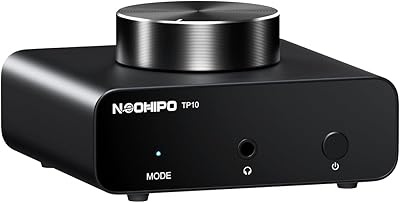
NEOHIPO TP10 Phono Preamp
87%
88%
Sound Accuracy
93%
Build Quality
91%
Signal-to-Noise Ratio
94%
Value for Money
86%
Connectivity Versatility
More
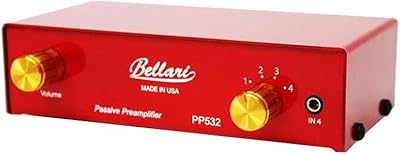
Bellari PP532 Passive Preamplifier
80%
93%
Signal Purity
88%
Input Versatility
91%
Ease of Setup
74%
Build Quality
61%
Volume Control Feel
More
PROZOR PRR019 MM Phono Preamplifier
79%
88%
Value for Money
82%
Signal Clarity & Noise Floor
79%
Build Quality
91%
Dual Output Flexibility
68%
Volume Control Usability
More
AIYIMA T1 Pro Tube Preamplifier
78%
83%
Sound Warmth & Tube Character
67%
Bluetooth Reliability
78%
Build Quality & Fit/Finish
81%
12V Trigger Functionality
72%
Tone Control Usefulness
More
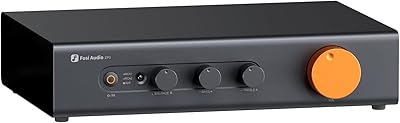
Fosi Audio P4
Fosi Audio P4
81%
88%
Build Quality
84%
Sound Quality
91%
Motorized Volume Control
79%
Remote Control
86%
Input Flexibility
More
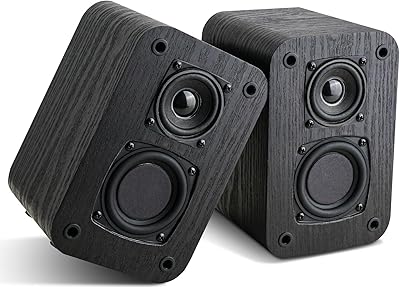
Saiyin SDS6400M Passive Bookshelf Speakers
73%
78%
Sound Clarity (Mids & Highs)
44%
Bass Performance
91%
Installation & Setup
86%
Mounting Bracket Flexibility
58%
Build Quality
More
Edifier P12
Edifier P12
78%
83%
Sound Clarity
61%
Bass Performance
79%
Treble Quality
86%
Build Quality
91%
Wall-Mount Bracket
More
Audioengine P4 Passive Bookshelf Speakers
84%
92%
Sound Quality
89%
Build Quality
80%
Ease of Setup
74%
Bass Response
82%
Compatibility with Amplifiers
More

FAQ

No, the SYS requires no power whatsoever. Because it is a purely passive device, it runs entirely off the audio signal passing through it. Just connect your sources and output, and you are ready to go.

Yes, that is actually one of the most common uses for this passive preamp. You connect your sources to the two inputs and run the single output straight to your powered monitors. It gives you a central volume knob and the ability to switch sources without touching the speakers themselves.

Only if your turntable has a built-in phono preamp or you are already running it through a separate phono stage. The SYS accepts line-level signals only, so a raw moving-magnet or moving-coil cartridge output will not be compatible without a phono preamp in between.

Technically you can daisy-chain two units, but it is not ideal since each passive stage in series will further attenuate your signal. If you regularly need three or more inputs, you would honestly be better served by a small active switcher or an integrated amplifier with multiple inputs.

There is a potential for a small audible pop when flipping the input toggle, especially if the two sources are at different signal levels. It is good practice to turn the volume down before switching inputs, both to protect your ears and to keep stress off your drivers.

This is a known limitation of passive preamp designs. If your amplifier or powered monitors have low input sensitivity, a passive attenuator may not give you enough headroom to reach satisfying listening levels. The fix is usually on the source side — increase the output level of your DAC or source device if that option is available — or consider whether an active preamp is a better fit for your specific gear.

For what it costs, the build quality is genuinely solid. The chassis is metal, not plastic, the Alps volume pot feels smooth rather than scratchy, and the toggle switch has a satisfying, positive click. It is not a boutique hand-wired piece, but it does not feel like it either.

You can use the headphone amp as a source going into the SYS, yes. But the SYS itself has no headphone output, so if you are hoping to switch between headphones and speakers from a single box, this is not the right device for that job.

This little Schiit box has been in continuous production since April 2014 and is listed as an active product — not discontinued. Its longevity is actually a quiet endorsement of how useful and reliable it has proven to be for a large number of buyers over more than a decade.

By design it is as transparent as a passive volume control can be. There are no active components adding character, and the Alps pot is well-regarded for channel tracking accuracy at various attenuation levels. That said, at very low attenuation settings or with mismatched source and load impedances, there is a theoretical possibility of mild high-frequency rolloff — but for the vast majority of typical desktop setups, this is not something you will notice in practice.

Where to Buy