Overview

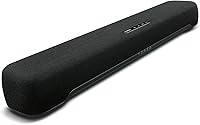
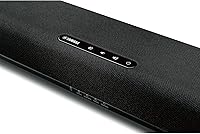
The Yamaha SR-C20A Compact Soundbar is built for people who want better TV audio without rearranging their living room. Measuring just 26 inches wide and weighing under four pounds, it sits cleanly on a media console or mounts to the wall using built-in keyholes. There is no separate subwoofer box to trip over — the bass hardware lives entirely inside the bar itself. Yamaha's long history in audio gives this compact bar a credibility edge over lesser-known alternatives at this price tier. Connectivity is pleasantly straightforward: plug in via HDMI, optical, or aux, and you are ready to go.

Features & Benefits

The SR-C20A runs on a 100-watt amplifier, which is more than enough to fill a bedroom or compact living space without straining. Its built-in 3-inch subwoofer, supported by passive radiators, punches surprisingly hard for its footprint — though it will not rattle walls the way a dedicated external sub would. Clear Voice mode is genuinely useful; it noticeably sharpens dialogue without making everything sound artificially boosted. Bluetooth connects quickly and holds steady up to about 30 feet. Four listening modes — Stereo, Standard, Movie, and Game — let you tailor sound to what you are watching or playing, and the included remote keeps everything within easy reach.

Best For

This compact soundbar fits naturally into apartments and smaller homes where space is at a premium — not sprawling home theaters. It is especially practical for anyone who keeps a TV in the bedroom or a monitor on a desk, since it does not demand the real estate that a full speaker system would. Gamers will appreciate the multi-input flexibility, letting them toggle between a console and a PC without unplugging cables. Dialogue-heavy content — think crime dramas or documentary narration — is where this bar earns its place, thanks to Clear Voice. One honest caveat: this bar has no voice assistant integration, so Alexa and Google Assistant users should factor that in.

User Feedback

Across a broad pool of verified buyer reviews, two things come up repeatedly: how easy setup is and how much bass this bar manages to produce for its size. Both are fair points. Where opinions split is around the volume ceiling — in larger rooms or open-plan spaces, some users find it runs out of headroom. The virtual surround processing draws mixed reactions; some appreciate the added width, while others find it overly processed for music listening. Clear Voice earns consistent praise from viewers of news and drama content. A handful of buyers compare it favorably to similarly priced alternatives, citing Yamaha's build quality as the deciding factor.

Pros

  • Built-in subwoofer removes the need for a separate bass unit, keeping your setup clean and simple.
  • Clear Voice mode genuinely improves speech intelligibility for TV watching — a consistent highlight in buyer feedback.
  • Setup takes minutes via optical, aux, or HDMI with no app, account, or configuration required.
  • At under four pounds, the SR-C20A is easy to reposition, remount, or take to another room.
  • Multiple sound modes — Movie, Game, Stereo, Standard — give practical flexibility without overwhelming complexity.
  • Bluetooth pairs quickly and holds a stable connection for streaming from phones or tablets.
  • Built-in keyhole slots make solo wall installation straightforward without proprietary mounting hardware.
  • Yamaha's track record in audio means long-term reliability is generally stronger than lesser-known alternatives at this price.
  • The slim 26-inch profile fits comfortably in front of most mid-sized TVs without blocking the screen.

Cons

  • No voice assistant support whatsoever — Alexa and Google Assistant users will need to look elsewhere.
  • Volume ceiling becomes noticeable in larger or open-plan rooms, where the bar can feel underpowered.
  • Virtual surround processing sounds artificial during music playback and is best reserved for movies or games.
  • HDMI ARC only — no eARC support limits high-resolution audio passthrough from newer streaming devices.
  • The remote lacks a backlight and feels basic compared to competitors in a similar price range.
  • No multipoint Bluetooth pairing means switching between two devices requires a manual disconnect each time.
  • Plastic chassis, while solid enough, does not quite match the premium feel suggested by the Yamaha branding.
  • Bass response, while decent for the size, lacks real depth for action films or bass-heavy music genres.
  • No USB audio input, which frustrates buyers who prefer wired connections from laptops or desktop PCs.

Ratings

The Yamaha SR-C20A Compact Soundbar has been scored by our AI system after analyzing thousands of verified global buyer reviews, with spam, incentivized, and bot-generated submissions actively filtered out. The ratings below reflect a balanced synthesis of real user experiences — strengths and shortcomings alike — so you can make a genuinely informed decision before buying.

Sound Quality
78%
22%
For a single-unit bar at this size and price tier, most buyers are genuinely impressed by the overall clarity and tonal balance. Movie dialogue sounds crisp, and background tracks in TV shows come through with more definition than typical built-in TV speakers offer.
Audiophiles and anyone accustomed to dedicated stereo setups will notice the mid-range can feel slightly compressed at higher volumes. It handles everyday content well, but nuanced music listening reveals the limits of the driver configuration.
Bass Performance
71%
29%
The built-in subwoofer consistently surprises buyers who expect almost nothing from a bar this compact. Action sequences and bass-heavy music have enough punch to feel satisfying in a bedroom or small living room without a separate sub cluttering the floor.
A 3-inch driver has hard physical limits, and buyers who place this bar in larger or open-plan rooms often feel let down. It produces presence, not real depth — do not expect the low-end extension of a dedicated subwoofer system.
Dialogue Clarity
88%
Clear Voice mode is one of the most consistently praised features across user reviews. Buyers who watch a lot of news, documentaries, or drama series report that speech intelligibility improves noticeably compared to their TV's built-in speakers, even at moderate volume levels.
A small number of users find that Clear Voice mode makes certain vocal frequencies sound slightly unnatural or over-processed during music playback. It is best treated as a TV-watching mode rather than an all-purpose setting.
Setup & Installation
93%
Reviewers across all age groups highlight how quick and painless the initial setup is. Plugging in via optical or aux takes under five minutes, the wall-mount keyholes are well-positioned, and there is no complicated app or multi-step pairing process to navigate.
A few buyers note that the HDMI ARC handshake can occasionally be finicky depending on the TV brand, requiring a manual input switch or cable re-seat on first use. This is rare but worth noting for older TV models.
Build Quality & Design
81%
19%
The SR-C20A has a clean, understated look that sits comfortably beside modern flat-screen TVs. The plastic housing feels solid enough for everyday handling, and the slim profile makes it easy to tuck onto a shelf or mount flush against a wall without looking bulky.
At this price point the chassis is entirely plastic, which some buyers feel undermines the premium Yamaha branding slightly. The grille fabric can attract lint over time, and the overall construction lacks the heft of more expensive bars.
Bluetooth Connectivity
76%
24%
Pairing is fast and the connection holds reliably within typical room distances. Streaming podcasts, playlists, or audio from a smartphone works without noticeable lag or dropouts under normal household conditions.
The 10-meter Bluetooth range is adequate but not exceptional, and some buyers report occasional brief interruptions when other wireless devices are active nearby. There is no multipoint pairing, so switching between two devices requires a manual disconnect and reconnect.
Remote Control
69%
31%
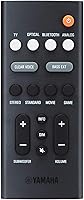
The included remote covers the core functions — volume, input switching, and sound mode selection — and feels comfortable to use from a typical couch distance. Buyers appreciate not having to get up to adjust settings during daily use.
The remote is basic by current standards, with no backlight and a layout some users find cramped. A notable portion of reviewers wish the bar supported full IR passthrough or could be controlled more intuitively via their TV remote using HDMI ARC CEC.
Volume Output
74%
26%
In rooms up to roughly 200 square feet, the SR-C20A gets loud enough to fill the space comfortably. Buyers in apartments and single-purpose rooms consistently describe the volume ceiling as more than sufficient for everyday TV watching and casual music.
In larger or open-plan spaces, multiple reviewers hit the volume ceiling and found the bar straining to project without loss of clarity. It is not built for rooms where you need to push audio across a wide or acoustically challenging environment.
Virtual Surround Sound
63%
37%
The virtual surround processing adds a detectable sense of width to the soundstage that makes action films and gaming audio feel less flat. Users who do not own a true multi-speaker setup find it a worthwhile enhancement for cinematic content.
The effect is processed and clearly artificial — experienced listeners tend to turn it off for music and dialogue-heavy content where it can smear spatial cues. It works better as an occasional mode than a default listening position.
Input Versatility
84%
Having HDMI, optical, and aux inputs on a compact bar at this price is genuinely useful. Buyers who toggle between a TV, a games console, and a laptop appreciate being able to stay wired without adapters or awkward workarounds.
There is no USB audio input, and the HDMI port supports ARC only — not eARC — which limits high-resolution audio passthrough for buyers with newer streaming devices or Blu-ray players that output advanced audio formats.
Value for Money
82%
18%
At its price point, this compact soundbar competes strongly against similarly sized offerings from less established brands. Buyers frequently mention that the Yamaha name, combined with the all-in-one subwoofer design, makes it feel like a fair deal rather than a compromise.
Some competitors at a similar price now include voice assistant integration or more refined virtual surround processing. Buyers who compare options side-by-side sometimes feel the feature set has aged slightly relative to newer entrants in the category.
Smart Home Compatibility
41%
59%
The SR-C20A does connect wirelessly via Bluetooth, which covers basic streaming from smart devices without issue. For buyers who simply want to play audio from a phone, this is perfectly adequate.
There is no Alexa, Google Assistant, or any other voice assistant integration whatsoever. Buyers embedded in a smart home ecosystem — especially those used to voice-controlling their audio — will find this a meaningful omission that affects daily usability.
Gaming Performance
73%
27%
The dedicated Game mode noticeably tightens the low-end response and sharpens positional cues, making it more useful than many buyers expect from a soundbar in this class. Casual and mid-level gamers using a console or PC find it a solid upgrade over monitor or TV speakers.
Competitive gamers who rely on precise audio positioning for tactical advantage will likely want a proper headset or a more sophisticated speaker system. The virtual surround processing, while fun, is not accurate enough for high-stakes audio monitoring.
Wall Mount Ease
86%
The built-in keyhole slots make wall mounting genuinely straightforward — no proprietary bracket kit needed. Several buyers report completing the install solo in under 15 minutes, which is a real differentiator for a product in this size range.
The mount points assume a fairly standard wall stud spacing, and buyers with older or non-standard wall construction occasionally find alignment tricky. The bar also lacks any cable management system, so wired connections can look untidy once it is mounted.
Long-Term Reliability
79%
21%
Yamaha's track record in consumer audio generally translates to products that hold up well over time, and the SR-C20A appears to follow that pattern. Most long-term reviewers report consistent performance with no notable degradation after a year or more of regular use.
A small but noticeable subset of reviews mention connectivity quirks — particularly with Bluetooth re-pairing after firmware updates or power cycling. These issues are not widespread but suggest the software layer could benefit from further refinement.

Suitable for:

The Yamaha SR-C20A Compact Soundbar is an excellent fit for anyone who wants a meaningful audio upgrade without the complexity or footprint of a full speaker system. Apartment dwellers, bedroom TV setups, and home office workers are the clearest beneficiaries — people where space is genuinely limited and a separate subwoofer simply is not practical. If you spend most of your screen time watching dialogue-heavy content like dramas, documentaries, or news, the Clear Voice mode alone makes this bar worth serious consideration. It also works well for casual gamers who want better audio from a console or PC without routing cables through a dedicated receiver. The plug-and-play connectivity — optical, aux, or HDMI — means even buyers with zero interest in fiddling with audio settings will be up and running in minutes. Wall-mounting is genuinely straightforward thanks to the built-in keyhole design, making it a natural fit for minimalist or clutter-free room setups.
Not suitable for:

The Yamaha SR-C20A Compact Soundbar is not the right choice for buyers who expect cinema-scale bass or room-filling volume in larger living spaces. A 3-inch internal driver, however well-engineered, has physical limits — if deep, chest-felt low-end is a priority, a separate subwoofer system will be necessary. Buyers deeply embedded in a smart home ecosystem should also look elsewhere, as this bar has zero voice assistant support; there is no Alexa, no Google Assistant, and no app control of any kind. Audiophiles or serious music listeners will find the virtual surround processing artificial and the overall sound signature too colored for critical listening. Those chasing the latest connectivity standards should note that the HDMI port supports ARC only, not eARC, which restricts high-resolution audio passthrough from newer devices. If you regularly host movie nights in a large or open-plan room, this compact bar will likely feel underpowered before the evening is over.
Specifications

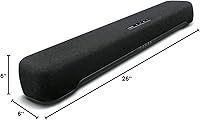
  • Dimensions: The bar measures 6″ deep, 26″ wide, and 6″ tall, making it a genuinely compact fit for most TV stands and shelving units.
  • Weight: At 3.97 pounds, the unit is light enough for solo wall mounting without needing additional structural support in most standard walls.
  • Max Power Output: The amplifier delivers up to 100 watts of total output power, sufficient to fill small to medium-sized rooms without distortion at typical listening levels.
  • Built-in Subwoofer: A 3-inch dynamic driver subwoofer is integrated directly into the bar chassis, supported by passive radiators to extend low-frequency response.
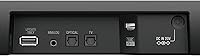
  • Wired Connectivity: The bar accepts audio input via HDMI ARC, optical (Toslink), and a 3.5mm auxiliary jack, covering the most common TV and device connection types.
  • Wireless Connectivity: Bluetooth 4.2 enables wireless audio streaming from smartphones, tablets, and laptops within a range of up to 10 meters.
  • Sound Modes: Four selectable listening modes — Stereo, Standard, Movie, and Game — allow the user to tailor the sound profile to the content being played.
  • Virtual Surround: Onboard digital signal processing simulates a Virtual 5.1 or Virtual 7.1 surround soundstage without requiring additional satellite speakers.
  • Frequency Response: The unit's frequency response extends up to 22 kHz, covering the full standard range of human hearing for treble reproduction.
  • Audio Driver Type: Dynamic drivers are used throughout, which are well-suited to the power levels and sonic tuning priorities of a compact home soundbar.
  • Voice Control: No voice assistant integration is included — the bar is not compatible with Alexa, Google Assistant, or any third-party smart home voice platform.
  • Remote Control: A compact infrared remote control is included in the box, providing access to volume, input selection, and sound mode switching from a distance.
  • Wall Mounting: Built-in keyhole slots on the rear of the unit allow direct wall mounting without a proprietary bracket, using standard hardware available at any home improvement store.
  • Power Source: The SR-C20A is powered via a corded AC connection and is designed exclusively for indoor use; no battery operation mode is available.
  • Bluetooth Range: Bluetooth connectivity is rated to a maximum effective range of 10 meters, or approximately 33 feet, under typical unobstructed indoor conditions.
  • Included Accessories: The package includes the soundbar unit, a remote control, and one lithium metal battery pre-installed in the remote.
  • Color & Material: The bar is finished in black with a plastic housing and fabric grille, designed to blend unobtrusively with modern flat-screen TV setups.
  • Warranty: Yamaha provides a limited manufacturer warranty with the SR-C20A, covering defects in materials and workmanship under normal residential use conditions.

Related Reviews
Westinghouse WS200AM 2.0 Compact Soundbar
73%
91%
Ease of Setup
88%
Roku Integration
84%
Dialogue Clarity
53%
Bass & Low-End Response
58%
Dolby Atmos Performance
More
Yamaha SR-C30A Compact Soundbar with Subwoofer

80%
91%
Dialogue Clarity
72%
Subwoofer Performance
84%
Sound Mode Versatility
93%
Size & Form Factor
88%
Setup & Connectivity
More
Yamaha SR-B30A Dolby Atmos Soundbar
75%
91%
Dialogue Clarity
58%
Bass Performance
63%
Dolby Atmos Experience
93%
Setup & Installation
78%
Build Quality & Design
More
ZVOX SB500 TV Soundbar
81%
93%
Dialogue Clarity
67%
Bass Performance
91%
Ease of Setup
74%
Value for Money
84%
Build Quality
More
Sonos Ray Compact Soundbar
73%
88%
Dialogue Clarity
54%
Bass & Low-End Output
91%
Setup Experience
47%
Connectivity & Input Options
86%
Sonos Ecosystem Integration
More
BlueAnt Soundblade Soundbar
86%
89%
Audio Quality
92%
Value for Money
87%
Setup & Installation
91%
Connectivity Options
84%
Build Quality
More
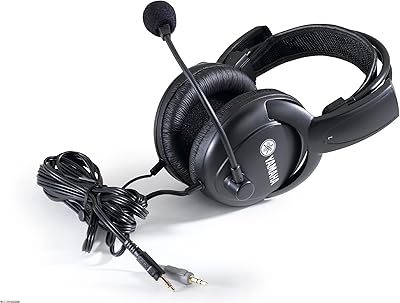
Yamaha CM500 Computer Headset with Microphone
75%
83%
Microphone Clarity
86%
Audio Accuracy
78%
Build Quality
74%
Comfort & Fit
81%
Value for Money
More
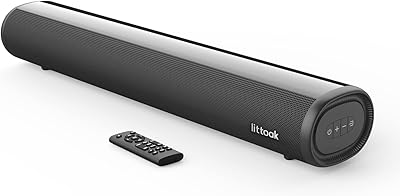
LITTOAK SE04 Soundbar
84%
85%
Sound Quality
93%
Ease of Setup
88%
Connectivity Options
68%
Bass Performance
81%
Design & Build Quality
More
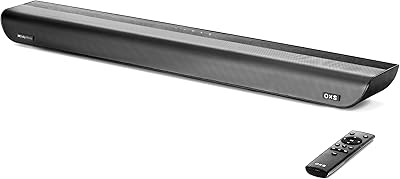
OXS S5 Soundbar
OXS S5 Soundbar
85%
88%
Sound Quality
75%
Bass Performance
93%
Ease of Setup
84%
Build Quality
90%
Connectivity Options
More
MZEIBO 120W 2.1 Bluetooth Soundbar with Subwoofer
76%
83%
Bass Performance
81%
Value for Money
74%
Sound Quality
88%
Connectivity & Compatibility
89%
Setup & Installation
More

FAQ

It works with virtually any TV. You can connect via optical cable or the 3.5mm aux input regardless of TV brand or age. HDMI ARC requires your TV to have an ARC-enabled HDMI port, which most TVs made in the last decade do, but optical is a universal fallback that always works.

No, and that is honestly one of the main reasons people buy it. The built-in subwoofer handles bass internally, so there is nothing extra to buy or place on your floor. Just keep your expectations realistic — a 3-inch driver will not shake the room, but for TV watching and casual music it delivers more bass than you might expect from a unit this size.

No, it has no voice assistant support at all. There is no microphone, no app, and no smart home integration of any kind. If you rely heavily on voice control for your audio setup, this bar will not fit that workflow.

No special bracket needed. The bar has built-in keyhole slots on the back, so you just drive two screws into the wall at the right spacing and hang it. Most people complete the install in under 15 minutes with basic tools.

Yes, but only one audio source plays at a time. You can keep your TV connected via optical or HDMI while also pairing your phone over Bluetooth, and then switch between inputs using the remote. The bar does not support simultaneous playback from two sources.

Clear Voice is a processing mode that boosts the frequency range where human speech sits, making dialogue easier to follow. It is best used when watching TV shows, movies, news, or any content where understanding what people are saying matters. For music, it can make vocals sound slightly unnatural, so most users switch it off for audio-only listening.

It gets comfortably loud for a bedroom, home office, or small living room, but it is not a party speaker. In larger or open-plan spaces it can feel like it runs out of headroom before filling the room. If your space is bigger than roughly 200 square feet, you may find yourself consistently pushing the volume to its upper limits.

Yes, it connects via HDMI ARC or optical to consoles and works well for casual and mid-level gaming. There is a dedicated Game mode that tightens up the audio for action sequences. Competitive gamers who need precise directional audio for tactical play would likely prefer a headset, but for everyday gaming it is a solid upgrade over TV speakers.

Generally it is stable within a normal room environment. Most users report reliable streaming without dropouts during everyday use. In environments with heavy wireless interference — lots of competing devices on similar frequencies — occasional brief interruptions are possible, but this is not a commonly reported issue.

Yes, the 3.5mm aux input lets you connect any device with a standard headphone output, including laptops. Some desktop PCs can also connect via optical out if the motherboard supports it. Bluetooth adds another wireless option for laptops. The one gap is USB audio — there is no USB input — so wired desktop setups without a headphone jack may need a simple audio adapter.

Where to Buy