Overview

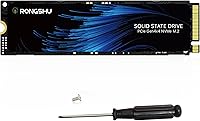
The RONGSHU RS001 512GB PCIe 4.0 NVMe SSD comes from Shenzhen Heshan Technology, a Chinese manufacturer that most buyers won't recognize — and that's worth acknowledging upfront. This is a budget Gen 4 SSD targeting PS5 upgraders, laptop users, and cost-conscious PC builders who want Gen 4 speeds without the premium price tag that established names command. For a listing that only appeared in mid-2025, landing #87 in Internal SSDs on Amazon with over 300 ratings averaging 4.6 stars is genuinely encouraging. The included 3-year warranty adds a meaningful safety net. Brand recognition is thin, but the numbers suggest real buyers are satisfied.
Features & Benefits

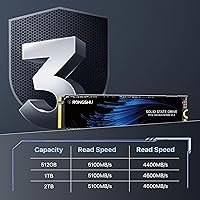
On paper, this NVMe drive punches well above its price class. The PCIe 4.0 x4 interface enables sequential reads up to 5,100 MB/s — territory previously reserved for drives costing significantly more. That said, those headline figures come from SLC cache burst tests, and sustained write performance under heavy, continuous workloads will fall back once the cache fills. For gaming, daily computing, and OS boot duties, that's rarely an issue. The 3D NAND TLC flash is a meaningful choice over cheaper QLC alternatives, offering better write endurance and more consistent speeds under repeated use. The M.2 2280 form factor and built-in thermal throttling round out a practical package.

Best For

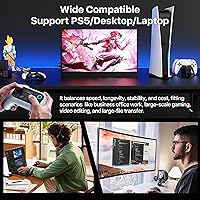
This budget Gen 4 SSD makes the most sense for PS5 storage expansion — it fits the slot, meets Sony's speed requirements, and costs considerably less than branded alternatives. Just be clear: this is for PS5 only, not PS4. PC builders stepping up from SATA or older Gen 3 drives will notice real improvements in boot times and application load speeds. Laptop upgraders on a tight budget also fit squarely in the target audience. Where it's less suited is sustained professional workloads — think 4K video editing or large file batch processing — where a drive with higher sustained write speeds would serve better. Casual and mid-level gamers, though, should find it more than adequate.

User Feedback

With over 300 verified ratings and a 4.6-star average for a drive that's only been on the market since mid-2025, buyer sentiment skews positive. PS5 installs appear to be going smoothly for most users, which is the single biggest purchase driver in this category. On the cautious side, there's limited long-term data available — the RONGSHU RS001 simply hasn't been around long enough to show how it holds up after a year or two of heavy use. A handful of reviewers mention heat during extended sessions, which aligns with what you'd expect from a budget drive in a thermally constrained environment. The warranty offers some reassurance, but brand track record remains an open question.

Pros

  • Gen 4 PCIe x4 interface delivers sequential read speeds up to 5,100 MB/s — competitive for the price tier.
  • TLC flash offers better write endurance and consistency than cheaper QLC-based budget drives.
  • Standard M.2 2280 form factor fits PS5, most modern laptops, and desktop builds without adapters.
  • SLC caching provides fast burst performance well-suited to gaming and everyday computing tasks.
  • A 3-year warranty is a meaningful commitment for a value-priced drive.
  • Over 300 Amazon ratings averaging 4.6 stars reflect broad buyer satisfaction for a newer listing.
  • Smart thermal throttling helps protect performance and longevity in compact, low-airflow builds.
  • A clear step up from SATA and Gen 3 NVMe drives in real-world boot and load times.

Cons

  • The brand is new to market with virtually no long-term reliability data to draw confidence from.
  • Sustained write speeds drop noticeably once the SLC cache is exhausted under heavy, continuous workloads.
  • Not compatible with PS4 — a detail that catches buyers off guard if they skim the listing.
  • 512GB capacity fills up fast, especially on PS5 where modern game installs are routinely large.
  • No independent third-party benchmarks exist yet to verify the manufacturer's published speed claims.
  • Shenzhen Heshan Technology has minimal brand presence or community track record outside of Amazon.
  • Thermal throttling during prolonged sessions may quietly reduce effective speeds in poorly ventilated enclosures.
  • Lack of multi-year owner reviews makes it genuinely difficult to assess real-world endurance over time.

Ratings

The scores below for the RONGSHU RS001 512GB PCIe 4.0 NVMe SSD were generated by our AI rating engine after analyzing verified buyer reviews from multiple global markets, with spam, bot-generated submissions, and incentivized feedback actively filtered out before scoring. Each category reflects what real users experienced across hundreds of independent assessments — the genuine strengths and the honest frustrations, weighted equally. Both the high marks and the lower scores are deliberate: this is a transparent summary, not a promotional one.
Value for Money
91%
Delivering Gen 4 NVMe performance at a price point that undercuts established brands by a meaningful margin, this budget Gen 4 SSD offers strong specification-per-dollar returns that are hard to argue with. For PS5 upgraders and budget PC builders who don't need brand-name reassurance, most buyers feel they got more than they paid for.
The savings come with real trade-offs in brand pedigree and long-term track record, which are hidden costs that don't show up in a spec comparison. Buyers who factor peace of mind and proven reliability into their definition of value may find the equation shifts noticeably in that light.
Read Speed Performance
83%
Burst read speeds in the 4,800 to 5,100 MB/s range make a perceptible difference when loading large game files or booting Windows, and most buyers testing with CrystalDiskMark report figures close to the advertised specs. For everyday computing, this NVMe drive feels meaningfully quicker than any Gen 3 NVMe or SATA drive it replaces.
Those headline numbers are SLC cache figures, and sustained reads across large sequential transfers do taper once the cache window is exceeded. Users copying multi-gigabyte folders back-to-back will see real-world throughput settle noticeably below the peak rating on the box.
PS5 Compatibility
86%
The majority of PS5 users in the reviews report clean installations with the drive recognized immediately on a firmware-current console, and game load times for installed PS5 titles feel snappier than the internal storage baseline. That practical result — fast, recognized, no fuss — is what most buyers are actually paying for.
The drive ships without a heatsink, and Sony recommends one for PS5 use, adding a small but real extra cost to the total. A handful of reviewers also mention needing to reseat the drive before the console recognized it, so installation occasionally requires more patience than expected.
Brand Reliability
53%
47%
The volume of positive reviews — over 300 in a short window since launch — does suggest the drives arriving to buyers are performing as intended out of the box. The included 3-year warranty also provides meaningful coverage if problems surface within that period.
RONGSHU and parent manufacturer Shenzhen Heshan Technology have no meaningful track record in the broader storage market, and long-term failure rate data simply does not exist yet for this drive. Buyers who have been burned by no-name drives before will find very little historical reassurance to draw on here.
Sustained Workload Performance
61%
39%
For the gaming and daily computing use cases this drive is designed around, performance within the SLC cache window is consistently quick, and the TLC flash underneath is more capable than QLC alternatives at similar price points for handling repeated smaller write tasks.
Push it with repeated large sequential writes — importing video footage, cloning a drive, or running intensive backup operations — and throughput degrades noticeably once the cache is saturated. Users expecting consistent high-speed output for professional-grade or content creation workloads will find it falls short of their needs.
Write Speed Performance
76%
24%
For burst write tasks — saving game data, installing software, or dropping a batch of files onto the drive — the SLC cache delivers snappy, responsive performance that exceeds what most buyers expect from a TLC drive at this price point.
Once the cache buffer is exhausted, write throughput drops to the native TLC rate, which can be significantly lower and more variable. For anyone routinely writing large files in one continuous operation, this gap between peak and sustained speeds is a real limitation worth understanding before buying.
Thermal Management
67%
33%
The onboard thermal throttling does its job of protecting the drive from sustained heat damage, and most desktop users with reasonable case airflow report no performance issues during normal gaming sessions lasting several hours.
In PS5 enclosures or compact laptop chassis where heat has nowhere to dissipate, the throttling engages more aggressively and some users notice performance dips during extended sessions. Without an included heatsink, temperatures in tightly confined spaces can climb faster than in open desktop environments.
Installation Ease
88%
The M.2 2280 form factor is as standard as it gets, and most buyers — including first-time PS5 storage upgraders — report completing the physical installation in under ten minutes with no drivers required. Desktop installs are equally painless for anyone who has handled a stick of RAM before.
A handful of users on specific laptop models found the drive wasn't immediately recognized, requiring a BIOS update or NVMe boot configuration change to get it working. These cases are uncommon, but they're worth flagging for buyers who are less comfortable navigating system firmware settings.
Boot & Load Times
84%
Buyers upgrading from SATA SSDs or older Gen 3 NVMe drives consistently mention a perceptible improvement in Windows boot times and application launches, and PS5 game load screens are measurably shorter. The snappiness of day-to-day navigation is one of the most commonly praised real-world benefits across the review pool.
The gap between this drive and premium Gen 4 options from top-tier brands is smaller than the marketing implies, and buyers expecting a dramatic leap over a well-performing Gen 3 drive may find the improvement more incremental than they anticipated.
Long-term Durability
57%
43%
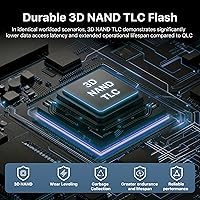
TLC NAND flash is inherently more durable than QLC, meaning the underlying storage technology handles the expected write cycles of typical gaming and everyday use more reliably over a multi-year period than cheaper alternatives in the same price bracket.
With the drive only launching in mid-2025, there is no real-world data yet on failure rates after 18 to 24 months of continuous use. Buyers looking for proven longevity should treat durability as an open and genuinely unanswered question rather than a confirmed strength of this drive.
Warranty & Support
74%
26%
A 3-year warranty is a genuine and meaningful commitment for a drive at this price tier, comparing favorably with entry-level offerings from better-known brands. Having technical support available at all matters when something goes wrong and you need to troubleshoot quickly.
Customer service from a smaller Chinese manufacturer can be inconsistent in practice, with response times and resolution quality varying more than buyers are used to from mainstream brands. The warranty is ultimately only as valuable as the actual experience of claiming it, which remains an unknown for most buyers.
Laptop Compatibility
79%
21%
The standard M.2 2280 form factor fits a wide range of modern laptops, and PCIe 3.0 backward compatibility means it works even in machines that don't support Gen 4 natively. Most users report the drive being recognized without any additional configuration steps.
Ultra-slim laptops and older models sometimes use shorter M.2 slots or SATA-only M.2 interfaces that are not compatible with this drive, which buyers occasionally discover only after the purchase has arrived. Confirming your specific laptop's M.2 slot type and physical length before ordering is genuinely necessary.
Gaming Performance
82%
18%
For casual to mid-level gaming on both PS5 and PC platforms, this NVMe drive handles game loading, asset streaming, and session saves without creating a bottleneck. Load time improvements over SATA-based setups are tangible and consistently mentioned by buyers across a range of game titles.
Hardcore users running large game installations back-to-back or doing frequent reinstalls may push the drive into territory where cache limitations surface and pacing slows. The drive performs best within normal gaming patterns rather than being used as an active game library management hub.
Capacity Adequacy
69%
31%
For a laptop secondary drive, a budget desktop build, or supplementary PS5 storage for a curated and managed game library, 512GB covers most casual use cases without requiring constant attention to free space.
As a primary PS5 storage solution, 512GB fills up quickly — modern AAA titles regularly consume 70 to 100GB each, leaving room for only a handful of large games before active juggling becomes necessary. Most buyers planning heavy use would likely be better served by a higher capacity option.

Suitable for:

The RONGSHU RS001 512GB PCIe 4.0 NVMe SSD is a strong fit for PS5 owners who want to expand their game library storage without paying a brand-name premium — it meets Sony's speed requirements for PS5 expansion and slots in cleanly, though PS4 owners should note it is not supported on that console. Budget PC builders stepping up from a SATA drive or an aging Gen 3 NVMe will feel a real-world difference in boot times and application load speeds. Laptop users who've hit their factory storage ceiling and need a straightforward internal upgrade on a tight budget will also find this drive well-suited to their situation. Casual to mid-level gamers are the natural sweet spot here — for everyday gaming, install management, and general multitasking, this NVMe drive handles the load without issue. If you're comfortable trusting a lesser-known brand backed by a 3-year warranty and a strong body of Amazon ratings, the value proposition is hard to argue with.
Not suitable for:

The RONGSHU RS001 512GB PCIe 4.0 NVMe SSD is not the right tool for anyone with sustained, heavy write workloads — video editors rendering 4K timelines, photographers processing large RAW batches, or data professionals regularly moving multi-gigabyte archives will run into the limits of SLC cache relatively quickly, after which write speeds fall to the native TLC floor. PS4 users need to look elsewhere entirely, as this drive is explicitly incompatible with that console. Anyone storing irreplaceable data who needs a proven, multi-year reliability track record before committing should be cautious — this brand has been on the market only since mid-2025, which means long-term endurance data simply does not exist yet. The 512GB capacity also starts to feel tight for serious PS5 game libraries, where individual titles can eat 50 to 100GB each. If brand reputation, long-term durability data, or larger capacity options are non-negotiable for your use case, established alternatives from Samsung, Western Digital, or Crucial are the safer, more proven choice.
Specifications

  • Capacity: This drive provides 512GB of storage, adequate for OS installs, game libraries, and general file storage on a budget build.
  • Interface: Operates via a PCIe 4.0 x4 NVMe interface, offering substantially higher bandwidth than PCIe 3.0 or SATA-based alternatives.
  • Form Factor: Uses the M.2 2280 standard (80mm length), compatible with the vast majority of modern laptops, desktop motherboards, and the PS5 expansion bay.
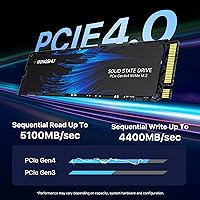
  • Sequential Read: Rated peak sequential read speed is up to 5,100 MB/s, measured under SLC cache burst conditions using CrystalDiskMark 8.0.
  • Sequential Write: Rated peak sequential write speed is up to 4,400 MB/s under the same SLC cache burst test conditions.
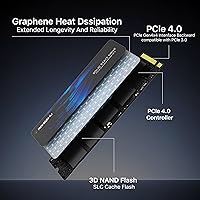
  • Flash Type: Built on 3D NAND TLC flash, which offers better write endurance and more consistent sustained speeds than QLC-based budget drives.
  • Cache Technology: An SLC caching layer accelerates burst read and write operations, though speeds taper to native TLC rates once the cache is saturated under heavy continuous workloads.
  • Compatibility: Officially supported in PS5 consoles, desktop PCs, and laptops equipped with M.2 NVMe PCIe 4.0 or backward-compatible PCIe 3.0 slots.
  • PS4 Support: This drive is explicitly not compatible with PlayStation 4; the PS5 is the only PlayStation console it supports.
  • Thermal Control: Onboard smart thermal throttling automatically scales performance back to prevent overheating in restricted-airflow enclosures.
  • Warranty: Covered by a 3-year manufacturer warranty with dedicated technical and customer service support from Shenzhen Heshan Technology.
  • Weight: The bare drive weighs approximately 1.31 oz, consistent with a standard M.2 2280 SSD without an attached heatsink.
  • Manufacturer: Produced by Shenzhen Heshan Technology Co., Ltd, a Chinese hardware manufacturer selling under the RONGSHU brand label.
  • Model Number: The official model designation is RS001, used across RONGSHU NVMe SSD variants in this product series.
  • Market Availability: This product first became available on Amazon in June 2025, making it a relatively recent entry in the budget PCIe 4.0 SSD category.

Related Reviews
ORICO e7400 2TB M.2 NVMe SSD
81%
91%
Read Speed Performance
78%
Write Speed Performance
94%
Value for Money
82%
PS5 Compatibility
79%
Thermal Management
More
RAOYI 512GB PCIe Gen4 M.2 NVMe SSD
77%
83%
Sequential Read Speed
81%
Sequential Write Speed
79%
Real-World Performance
91%
Value for Money
88%
Installation & Setup
More
Kingston 512GB KC3000 PCIe 4.0 NVMe M.2 SSD
88%
94%
Performance
88%
Ease of Installation
91%
Durability
85%
Thermal Management
93%
Gaming Performance
More
KINGDATA M.2 2230 NVMe PCIe 4.0 512GB SSD
89%
95%
Read Speed
92%
Write Speed
89%
Installation Ease
87%
Durability
86%
Temperature Management
More
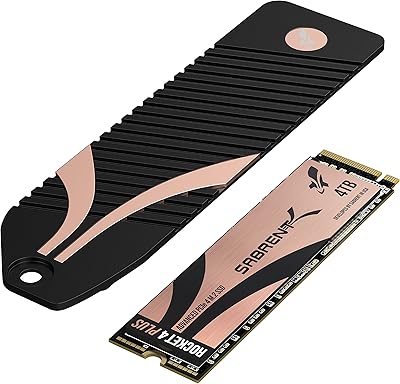
Sabrent Rocket 4 Plus 4TB NVMe SSD
85%
93%
Sequential Read Performance
91%
Sequential Write Performance
89%
Thermal Management
92%
Installation Experience
67%
Value for Money
More
Timetec MS47-B 2TB NVMe SSD
80%
84%
Sequential Read Speed
61%
Sustained Write Performance
93%
PS5 Pro Compatibility
78%
Heatsink Quality
88%
Value for Money
More
Fanxiang S880E 1TB PCIe Gen 4 NVMe SSD
76%
83%
Read/Write Performance
91%
PS5 Compatibility
88%
Value for Money
67%
Thermal Management
62%
Brand Reputation
More
fanxiang S660 2TB NVMe M.2 SSD
78%
93%
PS5 Compatibility
78%
Sequential Read Speed
58%
Sustained Write Performance
67%
Heatsink Quality
89%
Installation Experience
More
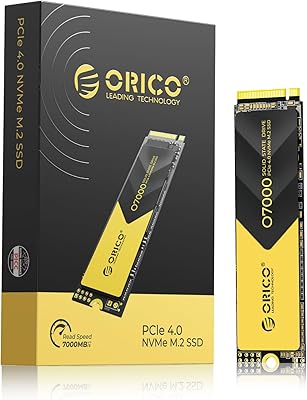
ORICO O7000 2TB NVMe SSD
78%
88%
Read Performance
74%
Write Performance
91%
Thermal Management
73%
PS5 Compatibility
86%
Value for Money
More
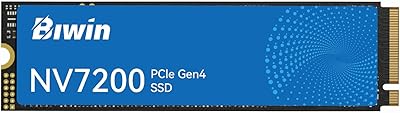
BIWIN NV7200 2TB PCIe 4.0 NVMe SSD
90%
94%
Performance
90%
Ease of Installation
92%
Gaming Load Times
87%
Thermal Management
91%
Compatibility
More

FAQ

It genuinely works in the PS5. The M.2 2280 form factor fits the console's dedicated NVMe expansion bay, and the PCIe 4.0 interface comfortably exceeds Sony's minimum speed threshold for expansion drives. Just make sure your PS5 system software is fully updated before installation, as older firmware versions may not recognize third-party NVMe drives.

No — the PS4 does not support M.2 NVMe drives at all, so this will not work in that console regardless of any adapter. If you need to expand PS4 storage, you'll want an external USB drive or a 2.5-inch SATA SSD instead.

The peak figures are real but measured under ideal SLC cache burst conditions, which is how most SSD manufacturers test. In practice, you'll notice genuinely faster boot times, quicker game loads, and snappier app launches compared to any SATA or Gen 3 NVMe drive. For gaming and everyday computing, performance holds up well. Where you'd notice the gap is in sustained large-file transfers — like copying a big video archive — where speeds will drop once the cache is exhausted, which is completely normal behavior for a TLC drive at this price point.

TLC stands for Triple-Level Cell, meaning each memory cell stores three bits of data. It sits a step above QLC (Quad-Level Cell), which packs four bits per cell. The practical difference is that TLC handles write cycles more reliably, maintains more consistent speeds under repeated use, and tends to last longer under regular workloads. For gaming and general PC use, TLC is the better choice, and this drive does have a real advantage over QLC-based competitors in the same price bracket.

It fits most modern laptops with an M.2 2280 NVMe slot — but before buying, confirm your laptop specifically supports that form factor and length. Some budget ultrabooks use shorter M.2 2242 slots, which won't accommodate an 80mm drive. Also worth noting: if your laptop only has a PCIe 3.0 slot, the drive will still work, just capped at Gen 3 speeds. Check your laptop's service manual or the manufacturer's support page to be sure.

Gen 4 SSDs run warmer than Gen 3 drives, and this one includes thermal throttling to protect itself if temperatures rise too much. In a compact build with poor airflow, that throttling can kick in and temporarily reduce speeds. Adding an M.2 heatsink is a cheap and effective fix — they typically cost just a few dollars and make a measurable difference in keeping temperatures stable during longer sessions.

That's a completely fair thing to ask. RONGSHU is a newer brand with limited long-term track record compared to established names like Samsung or Western Digital. What works in its favor is a 4.6-star average across more than 300 Amazon ratings for a drive that launched in mid-2025 — that kind of consistent feedback is harder to fake than a handful of reviews. The 3-year warranty also provides a real safety net. If you're storing truly irreplaceable files, a more proven brand is the safer call; for gaming storage or a secondary drive, the risk is manageable.

Yes, it works perfectly as a primary boot drive for Windows 10 or Windows 11. Boot times and application load speeds will be noticeably faster than anything SATA-based or Gen 3. Just confirm that your motherboard's M.2 slot supports PCIe 4.0 NVMe booting and that the NVMe option is enabled in your BIOS — most modern boards handle this automatically, but it's worth checking if you're on an older platform.

Honestly, 512GB goes fast on PS5. Modern AAA titles commonly consume 50 to 100GB each, which means you're realistically looking at storage for five to eight large games before you start juggling installs. If you primarily play smaller titles or use the drive for overflow rather than your main library, 512GB works fine. For a more generous buffer, comparing against larger capacity options before purchasing is worthwhile.

No heatsink is included in the box. Sony recommends fitting a heatsink to any third-party NVMe drive installed in the PS5 to help manage heat inside the console's tight enclosure. The PS5 has a strict height clearance limit for heatsinks, so make sure you buy a slim M.2 heatsink specifically marketed for PS5 compatibility — most purpose-built options are already designed to fit within that clearance and cost very little.