Overview

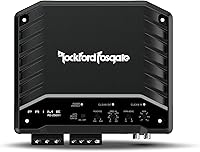
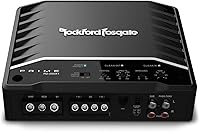
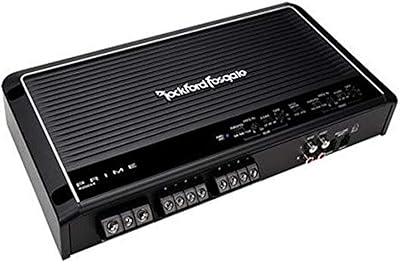
The Rockford Fosgate R2-250X1 Prime Mono Amplifier sits in Rockford Fosgate's entry-to-mid Prime lineup — a tier aimed at buyers who want genuine brand credibility without paying flagship prices. This mono amp runs on Class D topology, which keeps heat and current draw low, a real advantage when you're working with a stock alternator and limited trunk space. It's built specifically for subwoofer duty, so don't expect it to drive door speakers — that's simply not what it was designed for. The chassis feels solid for the price point, and a 1-year warranty adds quiet reassurance for first-time installers upgrading from a factory system.
Features & Benefits

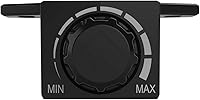
What sets this Prime-series amplifier apart from generic no-name units is how thoughtfully its features address real installation headaches. The C.L.E.A.N. gain setup guides you through matching input sensitivity to your head unit's output, preventing the clipping distortion that quietly destroys subwoofers over time. Power delivery scales with your vehicle's voltage through the P.O.W.E.R. Supply circuit, so the amp stays strong even when electrical demand spikes. The built-in Punch EQ adds targeted bass lift to compensate for the acoustic dampening inside most car cabins. A variable infrasonic filter and an included remote volume knob round out a feature set that punches well above this price tier.

Best For

The R2-250X1 is a strong fit for anyone adding a single subwoofer to a daily driver — especially if space is tight. At 1.9″ x 6.8″ x 8.1″, the compact footprint makes under-seat installation genuinely viable, which is hard to pull off with most full-size mono amps. It handles both 2Ω and 4Ω loads, giving you flexibility when pairing with a wide range of subwoofers. If you're chasing SPL competition numbers, though, 250W RMS has a ceiling — this amp rewards listeners who prioritize clean, controlled bass over sheer volume. It's particularly well-suited to DIY first builds where the guided gain setup reduces the learning curve considerably.

User Feedback

Owners who've run this mono amp for several months consistently highlight easy installation and the convenience of the remote level knob as standout wins, especially for buyers who aren't professional installers. Bass clarity gets more praise than raw output, which lines up with what the specs actually promise. On the critical side, a handful of users mention the amp runs warm under sustained heavy use, and a few note that upgrading to thicker gauge wiring pays off in stable performance. Some beginners found the C.L.E.A.N. process mildly confusing without a reference meter, though most worked through it. Overall, long-term owners report few reliability issues within the warranty window.

Pros

  • Class D design keeps the amp cool and places minimal strain on the vehicle's electrical system.
  • The compact footprint makes under-seat installation a realistic option for most vehicles.
  • C.L.E.A.N. circuitry takes the guesswork out of gain setting, reducing the risk of clipping damage to your subwoofer.
  • Punch EQ helps dial in fuller-sounding bass without a separate equalizer, particularly useful in acoustically flat cabin environments.
  • The included remote level knob lets you adjust bass output from the driver's seat without reaching into the trunk.
  • Runs comfortably from as low as 9V DC, so brief voltage dips during engine start don't cause shutdowns.
  • Dual impedance compatibility — 2Ω and 4Ω — gives you flexibility when pairing with a wide range of subwoofers.
  • The variable infrasonic filter helps protect your woofer from low-frequency energy outside the audible range.
  • Rockford Fosgate's brand reputation and parts availability make long-term ownership less risky than no-name alternatives.
  • Verified long-term owners report consistent reliability throughout and beyond the warranty period.

Cons

  • 250W RMS is a firm ceiling — buyers wanting serious output for larger enclosures will outgrow this amp quickly.
  • The amp can run noticeably warm under heavy, sustained use, particularly in poorly ventilated mounting locations.
  • Thin factory-gauge wiring will bottleneck performance; upgrading to proper power and ground cables adds to the total cost.
  • The C.L.E.A.N. gain process can confuse first-time installers who don't have a tone generator or reference signal handy.
  • Only a 1-year warranty — competitors at similar price points sometimes offer longer coverage.
  • No built-in Bluetooth or app-based control, which may frustrate buyers accustomed to modern tuning interfaces.
  • The mono, single-channel design means this amp does one job only — not suitable for anyone needing a do-it-all amplifier.
  • At 4Ω the R2-250X1 delivers 150W RMS, which some buyers find underwhelming compared to their expectations based on the headline 250W figure.

Ratings

The Rockford Fosgate R2-250X1 Prime Mono Amplifier was scored by our AI engine after deep analysis of verified global buyer reviews, with spam, bot-submitted, and incentivized feedback actively filtered out before any score was calculated. Ratings reflect where real owners found genuine satisfaction and where frustrations surfaced during daily use — nothing is glossed over. Both the strengths that keep buyers recommending this amp and the trade-offs that prompted returns or complaints are transparently represented below.
Sound Quality
86%
Owners consistently describe the bass as tight and controlled rather than muddy or boomy — a distinction that matters most on acoustic recordings and hip-hop tracks with layered low-end. The Punch EQ adds presence without making the sub sound artificially hyped, which long-term users appreciate during extended daily commutes.
A portion of buyers expecting raw, chest-thumping loudness were underwhelmed at 2Ω, finding that 250W RMS hits a ceiling faster than anticipated in larger vehicles or ported builds tuned for high output. The amp rewards listeners who value clarity over sheer volume, which doesn't suit everyone.
Power Output
74%
26%
For single-subwoofer builds in sedans, hatchbacks, and compact SUVs, the 250W RMS at 2Ω delivers a satisfying upgrade over any factory system. The P.O.W.E.R. supply scaling means output stays consistent even when voltage fluctuates during heavy electrical loads, which is a practical daily-driving advantage.
Buyers who researched peak wattage figures rather than RMS were frequently disappointed — 250W RMS is a moderate output, not a high-power figure. Anyone planning a dual-subwoofer setup or a large ported enclosure in a truck or full-size SUV will likely need to step up to a higher-wattage unit within a year.
Build Quality
83%
The chassis feels more substantial than competing amps at similar price points — connections are firm, the heatsink is properly machined, and the board layout shows care in component placement. Verified buyers who've run this mono amp for 18 months or more rarely report physical failures under normal use.
A small number of users noted that the terminal screws stripped more easily than expected, particularly when installers over-torqued them during a first install. The enclosure also shows surface scratches relatively easily during handling, though that's largely cosmetic.
Ease of Installation
91%
The compact footprint makes placement in tight spaces genuinely achievable, and the labeled terminal layout is clear enough that first-time DIY installers consistently report completing the job without professional help. The C.L.E.A.N. gain system removes one of the most error-prone steps in any amp install.
Users without any prior car audio experience occasionally found the C.L.E.A.N. process confusing when no pre-recorded test tone was readily available on their phone or head unit. The owner's manual could be more explicit about walking complete beginners through the full install sequence step by step.
Gain Setup Accuracy
82%
18%
The C.L.E.A.N. LED indicator system is genuinely effective at preventing clipping — buyers who used it properly reported noticeably cleaner bass output compared to their prior experiences with amps set up by guesswork. It removes the need for a laptop or oscilloscope, which the typical DIY installer simply doesn't own.
The system works best when paired with a consistent -10dBFS or 0dBFS test tone, and that prerequisite isn't spelled out clearly for beginners. A handful of reviewers admitted they misread the LED behavior and ended up with the gain set too hot, which caused distortion they initially blamed on the amp itself.
Thermal Management
68%
32%
Under moderate listening volumes — the kind typical of a daily commute or background music during a drive — thermal performance is unremarkable in the best sense: the amp stays warm but never alarmingly hot. Class D efficiency means far less wasted heat than an equivalent Class AB design would produce.
Extended high-volume use in poorly ventilated mounting positions, such as fully enclosed under-seat cavities with no airflow, pushed several users into thermal protection shutdowns. This isn't unusual for any amp in that wattage range, but the R2-250X1 seems less forgiving of tight enclosures than some competitors at the same tier.
Value for Money
79%
21%
For buyers who factor in brand reliability, feature depth — including the remote knob, infrasonic filter, and Punch EQ — and the reassurance of an established manufacturer's warranty, this Prime-series amplifier holds its own against lesser-known alternatives at comparable price points. The inclusion of the remote level control alone saves buyers an extra purchase.
Shoppers comparing on wattage-per-dollar alone will find cheaper options that claim higher peak power figures. The honest trade-off is that those alternatives often lack the build consistency and brand support that justify the R2-250X1's positioning, but budget-first buyers may not weight those factors highly.
Compatibility
88%
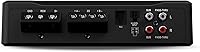
High-level speaker inputs mean this mono amp works with factory head units that lack dedicated RCA preamp outputs, which significantly broadens its compatibility with OEM audio setups. The wide supply voltage range (from 9V DC upward) also makes it stable across a variety of vehicle electrical profiles.
Buyers using high-impedance or lower-sensitivity subwoofers may find the amp's gain range doesn't provide quite enough headroom without a line output converter in the signal chain. The amp also doesn't support bridging or multi-sub wiring configurations, which limits its flexibility for more complex builds.
Remote Level Control
89%
The included wired remote knob consistently ranks among the most praised accessories by daily drivers, letting them dial back bass at a red light or push it up on the highway without awkward reaching. The knob itself feels responsive and doesn't introduce channel noise when rotated.
The included wiring for the remote knob is adequate but not long enough for all mounting scenarios — buyers installing the amp in a trunk while wanting the knob near the driver's seat occasionally needed to source an extension. The knob housing also feels slightly plasticky compared to the amp's overall build.
Bass Tuning Flexibility
77%
23%
The combination of the variable infrasonic filter, Punch EQ, and the remote level control gives users three independent ways to shape their bass response, which is more tuning latitude than many entry-tier amps provide. This flexibility helps the amp adapt to different enclosure types and subwoofer pairings.
Advanced users accustomed to parametric EQ, adjustable crossover slopes, or app-based DSP tuning will find the onboard controls fairly rudimentary. There is no phase adjustment dial, which some installers flagged as a meaningful omission when integrating the sub with door speakers tuned by a separate amplifier.
Subwoofer Protection
84%
The variable infrasonic filter is a genuinely protective feature — particularly for ported enclosure users where unloaded cone excursion at extremely low frequencies can stress a subwoofer's suspension over time. Buyers who understood and used it reported no subwoofer failures attributable to over-excursion.
The protection circuitry doesn't include a user-accessible indicator for when thermal or overload protection has been triggered, leaving some users guessing whether sudden silence was a fuse blow, a shutdown, or a wiring fault. A simple status LED for protection events would meaningfully improve the diagnostic experience.
Form Factor
93%
At 1.9″ x 6.8″ x 8.1″ and just 5 pounds, this is one of the more genuinely compact mono amplifiers in its wattage class — buyers repeatedly cited successful under-seat installs in vehicles where a standard-size amp simply wouldn't fit. The surface-mount design also keeps installation hardware requirements minimal.
The small chassis means terminal spacing is tighter than on full-size units, which a few installers found fiddly when using thicker gauge wire. Those running 4-gauge power cable in particular noted that the terminal had to be carefully managed to avoid contact with adjacent connections.
Long-term Reliability
81%
19%
Owners who've logged 12 to 24 months with this Prime-series amplifier under regular daily use report a strong reliability track record, with very few accounts of spontaneous failures or performance degradation over time. Rockford Fosgate's parts availability and customer service response also received positive mentions in longer-term reviews.
The 1-year warranty window is shorter than some buyers would prefer for an amplifier installed into a vehicle and subjected to vibration, temperature swings, and humidity over time. A few users reported issues surfacing just outside the warranty period, which left a sour impression despite overall satisfaction with the product during ownership.

Suitable for:

The Rockford Fosgate R2-250X1 Prime Mono Amplifier is a practical choice for everyday drivers who want noticeably better bass without committing to a complex, high-power build. It suits people upgrading from a factory head unit or a passive stock system who are adding their first dedicated subwoofer — the guided C.L.E.A.N. gain setup is genuinely helpful for DIYers who don't own a multimeter or oscilloscope. Its compact 1.9″ x 6.8″ x 8.1″ chassis makes it realistic for under-seat or shallow enclosure installs where space is genuinely limited. Buyers running a single subwoofer at a 2Ω or 4Ω load will find 250W RMS more than adequate for clean, enjoyable daily listening. It also appeals to anyone who values purchasing from a recognized brand with a track record, rather than gambling on an unfamiliar import at a similar price.
Not suitable for:

The Rockford Fosgate R2-250X1 Prime Mono Amplifier is not the right tool for anyone chasing high-output SPL builds or planning to push a power-hungry subwoofer in a large enclosure — 250W RMS simply has a ceiling, and you'll hit it fast in those scenarios. Buyers who want to run multiple subwoofers or a dual-voice-coil woofer in parallel at very low impedances will need to look at higher-wattage mono options in Rockford Fosgate's own lineup or elsewhere. This amp also isn't designed for bridging or powering door speakers, so if you need a multi-purpose amplifier for a full system build, a multi-channel unit would serve you better. Those accustomed to professional-grade amplifiers with advanced DSP, crossover flexibility, or remote tuning apps may find the feature set here fairly basic. And if your vehicle's electrical system is already strained — aging battery, weak alternator — you'll want to address those issues before adding any amplifier, this one included.
Specifications

  • Channel Count: Single-channel (mono) design dedicated entirely to subwoofer amplification.
  • RMS Power (4Ω): Delivers 150 watts RMS into a 4-ohm load under standard test conditions.
  • RMS Power (2Ω): Delivers 250 watts RMS into a 2-ohm load, which is the rated peak continuous output.
  • Circuit Topology: Class D switching amplifier, optimized for thermal efficiency and low current draw on the vehicle's electrical system.
  • Dimensions: Measures 1.9″ high by 6.8″ wide by 8.1″ deep, enabling under-seat and space-constrained installations.
  • Weight: Weighs approximately 5 pounds, making handling and repositioning during installation straightforward.
  • Min. Voltage: Operates reliably from a minimum supply voltage of 9V DC, providing stability during engine-start voltage dips.
  • Mounting Type: Surface mount configuration; the amp can be secured flat to trunk floors, under seats, or on enclosure walls.
  • Gain Setup: Features C.L.E.A.N. (Circuit Level Evaluation and Adjustment Network) circuitry to guide accurate input gain calibration without specialized test equipment.
  • Bass Control: Integrated Punch EQ provides a shelving bass boost to compensate for acoustic absorption common in carpeted vehicle interiors.
  • Infrasonic Filter: Variable infrasonic (subsonic) filter attenuates ultra-low frequencies below audible range to protect the subwoofer from over-excursion.
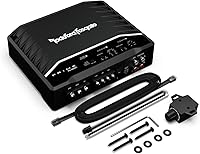
  • Remote Control: Includes a wired remote level control knob so the driver can adjust bass output without reaching the amplifier directly.
  • Power Supply: P.O.W.E.R. (Patented Optimized Wattage Energy Resource) supply increases output wattage as vehicle voltage rises above nominal 12V.
  • Primary Use: Designed exclusively for subwoofer amplification; not intended for powering full-range speakers or tweeters.
  • Brand Tier: Sits within Rockford Fosgate's Prime series, the brand's entry-to-mid product line positioned below the Punch and Power tiers.
  • Warranty: Backed by a 1-year limited manufacturer warranty covering defects in materials and workmanship.

Related Reviews
Rockford Fosgate R2-750X1 Mono Amplifier
79%
88%
Sound Output Quality
83%
Power Delivery
91%
Gain Setup & Tuning
89%
Thermal Performance
79%
Build Quality
More
Rockford Fosgate R250X1 Prime 1-Channel Mono Block Amplifier
84%
89%
Power Output
91%
Ease of Installation
85%
Sound Clarity
88%
Heat Dissipation
84%
Build Quality
More
Rockford Fosgate R2-750X5 5-Channel Car Amplifier
80%
83%
Sound Quality
86%
Build Quality
76%
Value for Money
81%
Installation Experience
71%
Power Output
More
Rockford Fosgate R2-500X4 4-Channel Car Amplifier
80%
86%
Sound Quality
78%
Power Output
88%
Installation Ease
83%
Build Quality
67%
Thermal Management
More
Rockford Fosgate R2-300X4 4-Channel Amplifier
82%
86%
Sound Quality
83%
Build Quality
79%
Power Output
91%
Ease of Installation
62%
Thermal Management
More
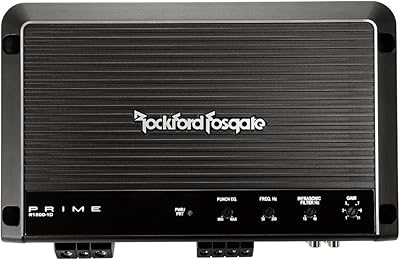
Rockford Fosgate R1200-1D Mono Amplifier
78%
91%
Power Output Accuracy
83%
Value for Money
76%
Thermal Management
78%
Build Quality
58%
Gain Control Usability
More
Rockford Fosgate P1000X1BD Mono Car Amplifier
85%
93%
Power Accuracy
91%
Bass Sound Quality
89%
Build Quality
87%
Thermal Management
84%
Onboard Tuning Controls
More
Rockford Fosgate R300X4 Prime 4-Channel Amplifier
87%
88%
Performance
91%
Ease of Installation
85%
Build Quality
87%
Thermal Management
84%
Sound Output
More
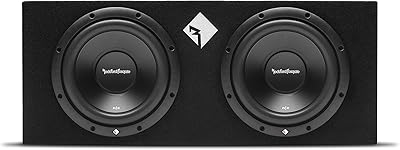
Rockford Fosgate R2-2X10 Dual 10″ Subwoofer Enclosure
76%
83%
Bass Output Quality
91%
Ease of Installation
86%
Build Quality
78%
Value for Money
44%
Listing Accuracy
More
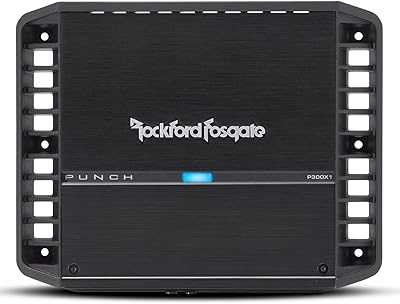
Rockford Fosgate P300X1 Mono Car Amplifier
75%
83%
Ease of Installation
79%
Sound Quality
81%
Build Quality
58%
Thermal Management
72%
Value for Money
More

FAQ

No — the R2-250X1 is a mono amplifier built specifically for subwoofer duty. It outputs a single channel and is voiced for low-frequency content. If you want to run door speakers alongside a sub, you'll need a separate multi-channel amp for that.

You'll need to present a 2-ohm load to the amplifier to hit the rated 250W RMS output. At 4 ohms, output drops to 150W RMS. If your subwoofer is a dual-voice-coil model, wiring the coils in parallel typically achieves a 2-ohm final impedance — just double-check your specific woofer's specs before wiring.

The C.L.E.A.N. system uses onboard LEDs to indicate when your input gain is set correctly — green means clean signal, red means you're clipping. You play a test tone from your head unit, then slowly raise the gain until the LED transitions, and back it off slightly. No oscilloscope or multimeter required, which makes it genuinely useful for DIY installs.

Yes, it can. The amp accepts high-level speaker wire inputs, so you can tap directly from your factory speaker wiring. The sensitivity range is wide enough to handle the lower voltage output typical of OEM head units. That said, a dedicated aftermarket head unit with RCA outputs will generally give you a cleaner signal.

Some warmth is expected from any amplifier under sustained use, and Class D designs run cooler than most, but they're not completely cool to the touch. If the amp is getting very hot or going into thermal protection, check that airflow around the chassis isn't blocked, and make sure your power and ground wiring is a sufficient gauge for the current draw.

For a 250W RMS amplifier, most installers recommend 8-gauge or 4-gauge power and ground wiring depending on the cable run length from the battery. Shorter runs under about 10 feet can get away with 8-gauge; longer runs benefit from 4-gauge to minimize voltage drop. Subwoofer output wiring is typically 16- or 14-gauge depending on your subwoofer's specs.

This mono amp does not include a full wiring kit — you'll need to source power cable, ground cable, RCA interconnects, and a fuse holder separately. The remote level control knob is included, which is a nice touch, but budget for a wiring kit when calculating your total install cost.

The Punch EQ applies a shelving boost that lifts bass frequencies to counteract the natural acoustic dampening inside a carpeted vehicle cabin. Whether to leave it on depends on your ear and your enclosure — some setups sound better with it bypassed, especially if you already have bass boost from your head unit. Start flat, then engage the Punch EQ and decide based on how it sounds in your specific vehicle.

That really depends on your expectations and the efficiency of your subwoofer. A high-sensitivity woofer in a well-tuned ported box can sound impressively loud at 250W in an average-sized car. If you're building for a large SUV, want to feel bass in your chest at high volumes, or plan to compete, you'll likely want more headroom — something in the 500W-plus range.

The infrasonic filter cuts extremely low frequencies — typically below 20–30Hz — that you can't really hear but that can push a subwoofer cone beyond its safe travel limits, especially in a ported enclosure. Yes, you should set it: tune it just above your enclosure's port tuning frequency as a general rule. It's a simple protective step that can extend your subwoofer's life considerably.