Overview

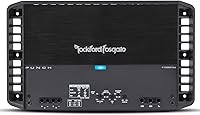
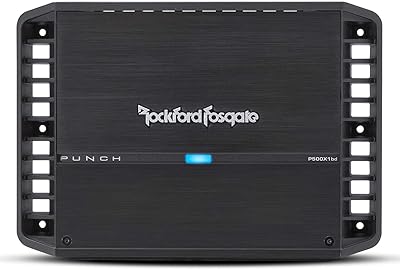
The Rockford Fosgate P1000X1BD Mono Car Amplifier is a dedicated subwoofer amp from one of the most trusted names in car audio — a brand that has earned its reputation over decades of real-world installs. What sets it apart from conventional designs is its Class-BD topology, which borrows the sonic character of Class-AB while running with thermal efficiency closer to Class-D. That matters when you're pushing hard for extended sessions. This is a premium-tier amp, priced accordingly, and it's aimed squarely at enthusiasts who know what they want and won't settle. Despite its substantial output, the chassis stays surprisingly compact, and having been on the market since 2013, the community knowledge and install documentation surrounding it are genuinely extensive.
Features & Benefits

The real story with the P1000X1BD is how its onboard controls reduce the need for external processors. The Punch EQ boost — a +18dB lift centered at 45Hz — adds genuine low-end authority without requiring a separate equalizer, and it's adjustable, so you're not locked into one sound. The variable Butterworth low-pass crossover lets you dial in exactly where your subwoofer hands off from the mids, keeping bass focused and clean. Impedance flexibility is a practical win too: wire your sub at 4, 2, or 1 Ohm and this Rockford Fosgate mono amp scales its output accordingly, hitting a full 1000 watts RMS at 1 Ohm. The Hi/Low level inputs mean you can connect directly to a factory head unit without hunting for a line output converter, and RCA pass-throughs keep multi-amp builds tidy.

Best For

This Punch series amplifier is a natural fit for anyone building around a single high-excursion subwoofer — the kind of install where output quality matters as much as raw volume. If you're stepping up from a budget amp and want proper tuning controls without buying outboard gear, this is the tier where that becomes possible. It's also a strong choice for factory radio setups, where the Hi-Level input saves both money and installation complexity. That said, 1-Ohm stable operation is not something to take lightly — your charging system and wiring gauge need to be up to the task, or you'll be chasing electrical gremlins. Buyers who prioritize tight, accurate bass over sheer loudness will feel right at home here.

User Feedback

With a 4.7-star rating across hundreds of reviews, the consensus around the P1000X1BD is clear: buyers trust it. The most consistent praise centers on long-term reliability — people reporting years of hard use without thermal issues, which speaks well of the fanless convection cooling design. Experienced installers tend to confirm that the rated wattage figures hold up under real-world measurement, a rarity worth noting. On the less positive side, some users find the C.L.E.A.N. gain setup more involved than expected, particularly those newer to car audio. A handful also flag that running at 1 Ohm demands a solid electrical foundation — upgraded alternator, proper big-three wiring — otherwise performance suffers. The price draws occasional hesitation, but most buyers conclude it's justified once the amp is properly dialed in.

Pros

  • Rated power figures hold up under real-world measurement — a level of honesty that isn't universal at this price tier.
  • Class-BD topology runs cooler and more efficiently than traditional Class-AB designs, especially during extended hard use.
  • Onboard Punch EQ and variable crossover reduce the need for separate signal processors in most builds.
  • Hi-Level inputs make integration with factory head units genuinely straightforward — no extra converter hardware required.
  • Fanless convection cooling keeps the install quiet and eliminates one more potential point of failure.
  • Flexible impedance support gives you real options when matching to different subwoofer configurations.
  • RCA pass-through outputs simplify multi-amp wiring without signal degradation.
  • The C.L.E.A.N. gain system helps DIY installers set levels accurately without professional test equipment.
  • Compact chassis dimensions make this Rockford Fosgate mono amp feasible even in constrained trunk or under-seat installs.
  • A well-established product with years of community documentation, install guides, and user experience to draw from.

Cons

  • Running at 1 Ohm demands a properly upgraded electrical system — stock wiring and alternators often can't keep up.
  • The 1-year manufacturer warranty is shorter than what some competitors offer at comparable price points.
  • The C.L.E.A.N. setup process has a learning curve that can frustrate less experienced installers.
  • No wireless remote or optional bass knob is included in the box, which requires a separate purchase for remote level control.
  • Non-bridgeable design limits flexibility for builders who might want to repurpose the amp in a different system later.
  • The recommended 140A fuse requirement means additional investment in high-current fusing and heavy gauge power wire.
  • At this price, buyers expecting turnkey simplicity may find the setup and tuning process more demanding than anticipated.
  • Limited to subwoofer duty only — it cannot drive full-range drivers, narrowing its use case strictly to low-frequency applications.

Ratings

The scores below reflect our AI-driven analysis of verified global buyer reviews for the Rockford Fosgate P1000X1BD Mono Car Amplifier, with spam, incentivized submissions, and bot activity actively filtered out before any scoring was calculated. Across hundreds of real-world install experiences — from daily drivers to dedicated build projects — this Punch series amplifier earned strong marks in most categories, though a few friction points around setup complexity and system requirements kept certain scores from climbing higher. Both the strengths and the genuine pain points are reflected transparently here.

Power Accuracy
93%
One of the most consistent compliments from experienced installers is that the P1000X1BD actually delivers what it claims. Verified measurements repeatedly confirm the rated RMS figures hold up under real listening conditions, which is a meaningful differentiator in a market full of inflated peak numbers.
A small number of reviewers noted that achieving the full 1000W output requires a properly upgraded electrical system — without that foundation, you may never actually hear what this amp is capable of, which can create a misleading first impression.
Bass Sound Quality
91%
The Class-BD topology produces bass that users describe as tight, controlled, and textured rather than bloated or one-dimensional. Long listening sessions at high volumes don't expose the kind of harmonic fatigue that cheaper Class-D designs can introduce, which experienced listeners pick up on quickly.
A handful of reviewers who prefer an aggressive, heavily colored low-end found the output slightly too clean and accurate for their taste. This is more a preference mismatch than a true flaw, but it's worth noting for buyers chasing raw thump over precision.
Build Quality
89%
The chassis feels substantial and purposeful — binding posts are solid, the heatsink fins are well-machined, and the board layout reflects years of refinement. Users who have owned this Rockford Fosgate mono amp for three or more years frequently report zero hardware failures, which speaks to the manufacturing standard.
The exterior finish can show scuffs and wear fairly quickly in high-traffic install locations, and a couple of reviewers noted that the terminal labels could be larger and clearer for easier identification during complex wiring runs.
Thermal Management
87%
Despite having no cooling fan, the convection heatsink manages sustained high-volume listening sessions without triggering thermal protection shutdowns in the vast majority of installs. Users mounting it in trunk builds with reasonable airflow around the chassis report stable temperatures even in warm climates.
Installs where the amp is mounted in poorly ventilated locations — flush against carpet or sealed in a tight cavity — do generate overheating complaints. The fanless design shifts responsibility for thermal management entirely onto the installer's placement decisions.
Onboard Tuning Controls
84%
Having both the Punch EQ and a variable Butterworth crossover onboard reduces the need for outboard signal processors in most builds, which simplifies wiring and lowers total system cost. Buyers upgrading from amps with no onboard EQ frequently cite these controls as a significant quality-of-life improvement.
The control range and adjustment feel are adequate but not exceptional — some advanced users noted they still preferred dialing in precise tuning via an external DSP rather than relying solely on the onboard options. The controls also lack detent markers, making repeatable settings harder to document.
C.L.E.A.N. Setup System
74%
26%
For installers who have never set amplifier gain properly before, the LED-guided C.L.E.A.N. system provides a meaningful safety net against driving the amp with a clipped input signal. Several reviewers specifically credited it with helping them get cleaner bass on their first DIY install without professional help.
More experienced installers tend to find the system overly simplified and prefer measuring with an oscilloscope for accuracy. A portion of newer users also reported confusion during the setup steps, suggesting the documentation could be clearer and more step-by-step in its guidance.
Input Flexibility
88%
The inclusion of both Hi-Level and Low-Level inputs is genuinely practical — it means this Punch series amplifier can slot into a factory radio setup or an aftermarket head unit without requiring additional hardware. Users working with OEM stereos particularly praised this feature for keeping install costs down.
The Hi-Level input sensitivity range is adequate but not the widest available at this price point, and a few users with unusually low-output factory head units noted they had to push gain settings higher than comfortable to get adequate input level into the amp.
Installation Friendliness
71%
29%
The compact chassis makes physical placement easier than many high-output mono amps, and the labeled input/output sections are logically arranged. Experienced installers report that a clean, complete install is straightforward once wiring is planned properly and the electrical system is prepped.
The 140A fuse requirement and the need for 1/0 AWG or larger power wiring add real cost and complexity that first-time installers sometimes underestimate. Running at 1-Ohm in particular demands electrical system upgrades that are outside the scope of a basic amp swap, and the manual doesn't stress this loudly enough.
Value for Money
77%
23%
For buyers who intend to use the amp at its full capability — proper wiring, upgraded electrical, matched subwoofer — the price is well-justified by the honest power output and build longevity. Several long-term owners noted they would have spent more on cheaper amps that failed and needed replacing.
For buyers who end up running the amp at 2-Ohm or 4-Ohm because their electrical system can't support 1-Ohm operation, the value equation becomes harder to defend at this price. Competing amps at lower price points can deliver comparable performance at higher impedance loads.
Long-Term Reliability
92%
Multi-year ownership reviews are disproportionately positive for this amp, with many users reporting daily use for three to five years without component failures. The absence of a cooling fan eliminates one of the most common failure points in amplifiers used in hot, dusty vehicle environments.
The 1-year manufacturer warranty is on the shorter end for a premium-priced amplifier, and a small number of owners who experienced early failures found the warranty claim process more cumbersome than expected. Extended use reliability is strong, but the coverage period doesn't reflect that confidence.
Impedance Stability
91%
Stable 1-Ohm operation is not a marketing claim here — real-world installs confirm the amp handles low-impedance loads without oscillating, going into protection, or losing audible composure under hard driving. This is the foundation that makes it a credible choice for single high-excursion subwoofer builds.
The electrical system requirements that come with 1-Ohm stability shift the total cost of ownership upward significantly. Buyers who aren't prepared to invest in supporting infrastructure may find the theoretical impedance capability unusable in their specific vehicle.
Factory Integration
86%
The Hi-Level input is implemented cleanly, and users connecting directly to factory speaker taps report no significant noise floor issues in most vehicle platforms. This makes the amp a viable upgrade path even for buyers not ready to replace their head unit.
A few users with certain import vehicles reported ground loop noise when using Hi-Level inputs, requiring additional grounding care. The amp does not include an integrated high-pass filter for any speakers that might be tapped off the factory system alongside the sub.
Chassis Compactness
83%
At under 13.5 inches in depth and under 2.5 inches tall, the P1000X1BD fits comfortably in trunk builds, under-seat applications, and false-floor enclosures where larger amps simply won't go. Users frequently cite this as the deciding factor when comparing it against physically larger competitors at similar output levels.
While compact for its power class, the chassis is still substantial enough to require planning around in truly space-constrained installs. Users attempting to hide the amp behind factory trim panels in smaller vehicles occasionally found it didn't fit as cleanly as hoped.

Suitable for:

The Rockford Fosgate P1000X1BD Mono Car Amplifier is the right call for enthusiasts who are serious about subwoofer performance and want an amp that delivers honest, measured power rather than inflated peak claims. It's particularly well-suited to builders running a single high-excursion subwoofer who need a stable 1-Ohm load handled cleanly over long listening sessions. If you're upgrading from a budget or mid-tier amp and want onboard tuning tools that actually replace external gear — like a crossover unit or equalizer — this Punch series amplifier covers that ground without adding rack space. It's also a strong pick for anyone integrating into a factory head unit setup, since the Hi-Level input support removes the usual headache of sourcing and wiring a line output converter. Builders working within tight enclosure spaces will appreciate the compact chassis, which punches well above its physical weight.

Not suitable for:

The Rockford Fosgate P1000X1BD Mono Car Amplifier is not the right tool for every buyer, and it's worth being direct about that. If your electrical system hasn't been upgraded — think stock alternator, factory ground points, and thin wiring runs — running this amp at 1 Ohm will expose every weak link in that chain, likely causing voltage sag, thermal shutdowns, or worse. Buyers on a tight budget should also think carefully; the asking price is a genuine commitment, and if you're not pairing it with a quality subwoofer and proper enclosure, the amp's capability will simply go to waste. This is a mono-only, non-bridgeable design, so anyone who needs to power full-range speakers or wants a multi-channel solution should look elsewhere from the start. Casual listeners who just want a modest bass bump and aren't interested in tuning crossovers or EQ settings will likely find the feature set more involved than they need.

Specifications

  • Circuit Class: Uses Class-BD topology, which combines the audio fidelity characteristics of Class-AB with the thermal efficiency advantages of Class-D, making it particularly well-suited for continuous bass reproduction.
  • RMS Power Output: Delivers 300W at 4-Ohm, 500W at 2-Ohm, and 1000W at 1-Ohm — all RMS figures, not peak, which means these are sustained, real-world output ratings.
  • Channels: Single-channel (mono) design, optimized exclusively for subwoofer duty and not suitable for driving full-range or midrange speakers.
  • Impedance Range: Stable down to 1-Ohm, giving installers flexibility when wiring single or dual voice coil subwoofers in various configurations.
  • Dimensions: Full chassis measures 2.38″ (H) x 7.76″ (W) x 13.28″ (D), keeping the physical footprint manageable relative to its power output.
  • Cooling Method: Relies on passive convection cooling with no internal fan, which keeps the amp silent during operation and removes a common mechanical failure point.
  • Low-Pass Crossover: Features a variable 12 dB/Oct Butterworth low-pass crossover, allowing precise adjustment of the frequency cutoff point to match the subwoofer and enclosure tuning.
  • Punch EQ: Onboard Punch EQ provides up to +18dB of boost centered at 45Hz, enabling low-end emphasis without requiring an external equalizer in the signal chain.
  • Input Options: Accepts both Hi-Level (speaker-level) and Low-Level (RCA) inputs, allowing direct connection to factory head units without a separate line output converter.
  • RCA Outputs: Includes RCA pass-through outputs so the amplifier's processed signal can be looped to a second amplifier in multi-amp installations.
  • Gain Setup System: Equipped with Rockford Fosgate's C.L.E.A.N. system, which uses onboard LED indicators to guide accurate gain setting without the need for an oscilloscope or multimeter.
  • Recommended Fuse: Requires a 140A external fuse (not included), necessitating appropriately rated fuse holders and heavy-gauge power wiring for safe and stable operation.
  • Bridgeable: This is a non-bridgeable amplifier; it is designed as a dedicated mono output stage and cannot be configured in a bridged mode.
  • Warranty: Covered by a 1-year manufacturer warranty from Rockford Fosgate, which applies to defects in materials and workmanship under normal use conditions.
  • Availability: Originally introduced in March 2013 and still actively manufactured, meaning parts, documentation, and community install support are widely accessible.

Related Reviews
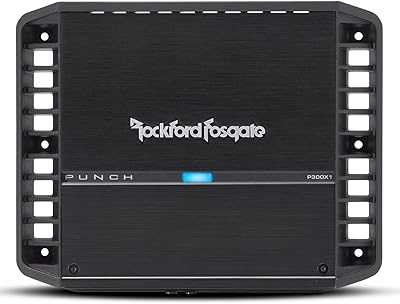
Rockford Fosgate P300X1 Punch 300 Watt Mono Amplifier
85%
88%
Sound Quality
91%
Build Quality
90%
Power Output at 2-Ohm
85%
Ease of Setup
86%
Size & Portability
More
Rockford Fosgate T1000-1bdCP Mono Amplifier
75%
93%
Power Delivery Accuracy
91%
Build Quality
74%
Thermal Management
89%
Constant Power Technology
86%
Onboard Signal Processing
More
Rockford Fosgate R2-750X1 Mono Amplifier
79%
88%
Sound Output Quality
83%
Power Delivery
91%
Gain Setup & Tuning
89%
Thermal Performance
79%
Build Quality
More
Rockford Fosgate R250X1 Prime 1-Channel Mono Block Amplifier
84%
89%
Power Output
91%
Ease of Installation
85%
Sound Clarity
88%
Heat Dissipation
84%
Build Quality
More
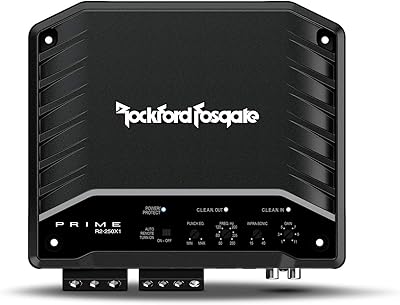
Rockford Fosgate R2-250X1 Prime 250-Watt Mono Amplifier
87%
88%
Bass Performance
85%
Power Output
91%
Ease of Installation
87%
Build Quality
84%
Sound Clarity
More
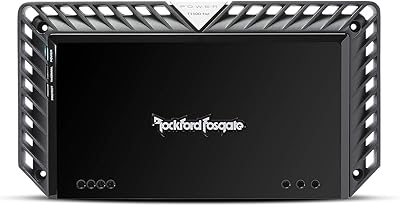
Rockford Fosgate T750X1bd Power 750 Watt Class-bd Mono Amplifier
89%
94%
Power Output
89%
Sound Quality
91%
Build Quality
88%
Size/Portability
84%
Ease of Installation
More
Rockford Fosgate P500X1BD Punch 500 Watt Class-bd Mono Amplifier
88%
93%
Bass Performance
90%
Power Output
88%
Build Quality
85%
Ease of Installation
91%
Efficiency & Power Consumption
More
Rockford Fosgate Power T1500-1bdCP 1500-Watt Class-BD Mono Amplifier
86%
94%
Power Output
92%
Bass Performance
91%
Efficiency
89%
Build Quality
80%
Ease of Installation
More
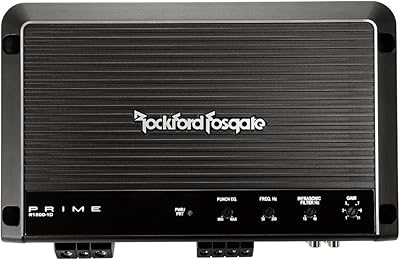
Rockford Fosgate R1200-1D Mono Amplifier
78%
91%
Power Output Accuracy
83%
Value for Money
76%
Thermal Management
78%
Build Quality
58%
Gain Control Usability
More
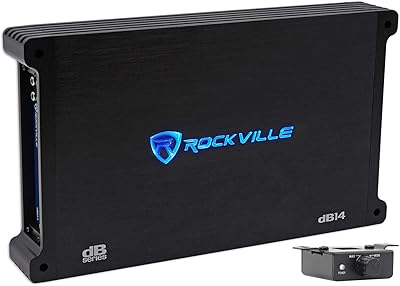
Rockville dB15 Mono Car Amplifier
73%
83%
Value for Money
78%
Bass Output
86%
Ease of Installation
61%
Thermal Management
58%
Power Accuracy
More

FAQ

Yes, and this is one of the more useful real-world features of the P1000X1BD. The Hi-Level inputs let you tap directly into your factory speaker outputs without needing a separate line output converter. Just make sure your signal wiring is clean and you set the gain carefully to avoid sending a clipped signal into the amp.

The 1000W figure is RMS at 1-Ohm — not a peak or burst rating, which are the inflated numbers you typically see on budget amps. Experienced installers who have measured this Punch series amplifier on a dyno consistently report that the rated figures are honest and accurate, which is not always the case in this industry.

Running at 1-Ohm puts real demand on your vehicle's electrical system. You should have proper big-three wiring upgrades in place — that means upgrading the ground, the alternator-to-battery cable, and the battery-to-chassis ground. A quality AGM battery and ideally an upgraded alternator will help prevent voltage sag under heavy load. Skipping these steps is the most common reason people experience shutdowns or performance issues with high-current mono amps.

Yes. Because the amp is stable down to 1-Ohm, you have wiring options for both SVC and DVC subwoofers. A dual 2-Ohm voice coil sub wired in parallel gives you a 1-Ohm load, for example, which is where this amp produces its full rated output. Just know your subwoofer's power handling before pushing it to that level.

It's not plug-and-play, but it's far more accessible than using an oscilloscope. The system uses onboard LEDs to signal when your gain is set correctly relative to the input signal. If you follow the steps in the manual carefully and use a decent test tone, most people get it right on the first try. That said, if you've never set amp gain before, watching a walkthrough video specific to Rockford Fosgate's C.L.E.A.N. process will save you a lot of guesswork.

It runs warm, as any high-output amp does, but users consistently report that the fanless convection cooling handles sustained use well without triggering thermal protection shutdowns — provided there's adequate airflow around the chassis. Don't mount it flush against a carpeted surface or sealed inside a tight enclosure with no air movement. Leave at least a couple of inches of clearance on the sides and top.

You can, as long as the combined impedance load stays within the amp's stable range. Two 2-Ohm SVC subs wired in parallel, for instance, would present a 1-Ohm load, which is fine. Two 4-Ohm SVC subs in parallel gives you 2-Ohm, which also works well. Just plan your wiring configuration before purchasing your subwoofers so everything matches up properly.

Given the 140A fuse recommendation, you should be running at least 1/0 AWG power and ground wire for a clean, low-resistance connection. Some installers prefer 2/0 AWG if the run from the battery is particularly long. Using undersized wire is one of the most common causes of performance loss and overheating with high-output amplifiers, so it's worth doing this right the first time.

No remote knob is included in the box. Rockford Fosgate does offer an optional aftermarket remote level control that is compatible with this amp, which you can purchase separately. If adjusting bass on the fly from the driver's seat matters to you, it's worth factoring that add-on into your budget and installation plan.

Standard Class-D amplifiers are highly efficient but use a switching design that can sometimes introduce a slightly harsh or sterile quality to the audio at lower output levels. Class-BD is Rockford Fosgate's hybrid approach — it operates more like a linear Class-AB amp at lower power levels where sound quality is most critical, then transitions into switching efficiency as power demands increase. For subwoofer use specifically, most listeners find the difference in perceived bass texture and depth to be audible, particularly on complex low-frequency material.

Where to Buy