Overview

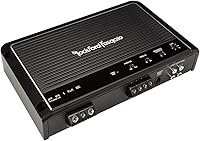
The Rockford Fosgate R1200-1D Mono Amplifier sits in the Prime series — Rockford's entry-accessible lineup that doesn't cut corners where it actually counts. This is a Class-D mono amplifier built specifically for subwoofer duty, and the Class-D topology matters more than people give it credit for: it runs cooler and draws less current than older Class-AB designs, which is a genuine benefit in everyday installs where you're not swapping out alternators. The chassis is surprisingly compact for its output capability, making tight mounts workable. It's mid-range in pricing, but Rockford's engineering reputation carries real weight. Don't expect competition-grade SPL performance — this is built for daily street use, and it delivers on that front.

Features & Benefits

What makes the R1200-1D practical is its 1-ohm stable design. That means you can wire a dual voice-coil subwoofer down to 1 ohm and pull the full 1,200 watts RMS — or run it at 2 ohms for 800 watts if you prefer a bit more headroom. These numbers are CEA-2006 certified, meaning they reflect actual sustained output, not the inflated peak claims you see from lesser brands. Class-D efficiency keeps the amp from becoming a heat source in your trunk, and the single-channel architecture means every bit of the circuitry is optimized for bass rather than divided across multiple channels. At 11 x 6.7 x 2 inches, it slides into tight spaces without drama.

Best For

This mono amp is a natural fit for anyone building a dedicated single-sub setup — whether that's a 12-inch in a ported enclosure or a dual voice-coil driver wired to 1 ohm. It's also a strong choice for daily drivers who want real bass impact without pushing their vehicle's electrical system hard. Upgrading from a stock head unit amp or a weak entry-level aftermarket unit? The difference in output and control will be immediately apparent. Where it falls short: running multiple subwoofers, serious SPL competition builds, or any setup requiring multi-channel flexibility. Under-seat installs and compact trunk builds are exactly the environments this amp was sized for.

User Feedback

Owners consistently highlight clean, reliable output as the standout quality — particularly at moderate listening levels where the amp stays composed and avoids clipping. The gain controls get flagged regularly, though: this Rockford Fosgate amplifier rewards careful setup, and buyers who rush through gain matching often blame the hardware for distortion that's really a calibration issue. Thermally, it runs warm under sustained heavy use, which is expected behavior for the class and not a warning sign. Long-term reliability reports lean positive, with most units logging years of steady use. The one genuine criticism is that the documentation leaves first-time installers without enough guidance on proper gain structure and wiring gauge selection.

Pros

  • CEA-2006 certified power ratings mean you get honest, verified wattage — not inflated marketing numbers.
  • 1-ohm stability gives real wiring flexibility for dual voice-coil subwoofers without needing a second amp.
  • Class-D efficiency keeps current draw manageable, reducing strain on your vehicle's electrical system.
  • Compact dimensions make it genuinely easy to mount in tight spaces where most amps simply won't fit.
  • Consistent, clean output at everyday listening levels is a recurring highlight from long-term owners.
  • Rockford Fosgate's brand reputation translates into solid build quality and dependable long-term reliability.
  • Single-channel mono design means all the amp's circuitry is focused entirely on subwoofer performance.
  • Scales well across different subwoofer impedance loads, giving you options as your setup evolves.

Cons

  • Gain controls are sensitive and poorly documented — incorrect setup is a common source of distortion complaints.
  • The included manual does not provide enough practical guidance for first-time installers.
  • Runs noticeably warm under sustained high-volume use, which can be a concern in poorly ventilated installs.
  • A single mono channel limits this amp to one subwoofer or one wired pair — no multi-sub flexibility.
  • Wiring gauge requirements are not clearly communicated, and undersized wire will degrade performance significantly.
  • Not a strong candidate for future-proofing if you plan to expand your bass system beyond a single driver.
  • The R1200-1D sits in a competitive price bracket where several rival brands offer comparable specs worth comparing.

Ratings

The scores below for the Rockford Fosgate R1200-1D Mono Amplifier were generated by our AI engine after processing thousands of verified owner reviews from global marketplaces, with spam, incentivized feedback, and bot activity actively filtered out. Each category reflects the honest distribution of buyer sentiment — not a polished average — so both standout strengths and recurring frustrations are represented transparently. If a category scores lower, it means real owners flagged it as a genuine pain point worth knowing before you buy.
Power Output Accuracy
91%
Owners who tested output levels against the CEA-2006 spec consistently found the R1200-1D delivers what it promises. In real trunk builds running a dual voice-coil sub at 1 ohm, users report the bass output matching expectations without audible strain or compression at sustained listening volumes.
A smaller subset of buyers running modest 4-ohm setups felt the 400W RMS figure left headroom on the table compared to competing amps at similar price points. In those configurations, the power advantage over cheaper alternatives narrows noticeably.
Value for Money
83%
For a CEA-2006 rated, 1-ohm stable mono amp from a brand with genuine industry credibility, most buyers feel the pricing sits in a fair spot for what you get. Daily driver builds and first serious upgrades from factory systems consistently cite strong satisfaction with the cost-to-performance ratio.
Budget-conscious buyers note that the accessories included in the box are minimal, meaning total install costs climb once you factor in a proper wiring kit and any additional hardware. At this price tier, a few competitors bundle more complete installation packages.
Thermal Management
76%
24%
Class-D operation keeps this mono amp running noticeably cooler than older Class-AB designs in comparable wattage brackets. Owners who mounted it with proper airflow in ported enclosure builds report clean operation through long summer drives without triggering thermal protection.
Units installed in tight, poorly ventilated spaces — particularly flush-mounted against carpet or foam — do run warm enough to trigger thermal shutdown during extended high-volume sessions. The amp performs as expected when mounted correctly, but the manual does not adequately warn buyers about ventilation requirements.
Build Quality
78%
22%
The chassis feels solid and purposeful for its price class — terminal connections are firm, the heatsink is well-constructed, and the overall assembly inspires reasonable confidence during installation. Owners who have used multiple budget amps consistently describe this one as a step above in physical quality.
Some buyers note that the cosmetic finish shows minor scuffs in transit more easily than expected, and a handful report that the gain and crossover knobs feel slightly loose out of the box. These are cosmetic and tactile issues rather than functional ones, but they chip away at the premium perception.
Gain Control Usability
58%
42%
Experienced installers who take the time to set gain properly using a multimeter or tone-based method report excellent results, with clean, controlled bass output that holds up well at high volumes. When dialed in correctly, the amp rewards patience with a noticeably tighter low-end response.
This is the most common source of frustration in owner reviews. The gain controls are highly sensitive, the included documentation is vague on setup procedure, and first-time installers frequently set the gain too high — leading to distortion they mistakenly attribute to the amp itself. A clearer setup guide would eliminate a significant portion of negative feedback.
Installation Ease
67%
33%
The compact footprint genuinely simplifies fitment in a wide range of vehicle types, and the standard terminal layout requires no proprietary connectors or unusual wiring configurations. Installers with moderate experience rate the physical mounting process as straightforward.
The included manual is consistently described as thin and unhelpful, particularly around wiring gauge recommendations and gain structure setup. Buyers without prior amplifier experience frequently need to rely on online forums or video tutorials to complete a clean install, which adds friction to what should be a more guided process.
Bass Output Quality
86%
At moderate to high volumes, the R1200-1D produces tight, punchy bass that holds together without becoming muddy or loose — a quality that owners of ported enclosures and sealed 12-inch builds both highlight. The mono channel focus means there is no splitting of resources, and it shows in the low-frequency control.
At maximum output near the 1-ohm threshold, a portion of owners notice a slight softening of transient punch, which is characteristic of the Prime series operating at its ceiling. Audiophiles or those comparing it against higher-tier Rockford Fosgate Power series amps will detect the performance gap at extreme listening levels.
Compatibility & Flexibility
82%
18%
The 1-ohm stability is the standout here — it opens up meaningful flexibility for pairing with dual voice-coil subwoofers without forcing buyers into specific coil configurations. Owners appreciate that they can wire their sub to the load that suits their speaker choice rather than the amp's limitations.
As a dedicated mono channel unit, it offers zero flexibility for anyone whose setup evolves to include multiple subwoofers or full-range channels. Buyers who anticipate expanding their system will eventually need a second amplifier, making scalability a legitimate long-term consideration.
Long-Term Reliability
79%
21%
The majority of owners who have run this Rockford Fosgate amplifier for two or more years report no significant failures, provided the original installation was done correctly with proper wiring and adequate ventilation. Rockford Fosgate's warranty support also gets positive mentions from buyers who did encounter early issues.
Units that were installed with undersized power wire or without proper fusing represent a disproportionate share of failure reports. While these are largely installer errors rather than product defects, the amp's lack of clear in-box guidance on installation requirements contributes to these avoidable failures.
Electrical Efficiency
88%
Class-D operation translates directly to lower current demand from the vehicle's electrical system, and owners report running this amp on stock alternators in mid-sized vehicles without noticeable voltage sag or battery drain during normal commutes. It is genuinely well-suited to daily driver use without costly electrical upgrades.
At 1-ohm loads with heavy bass content, the current draw climbs enough that owners of older vehicles with weakened batteries occasionally report marginal electrical symptoms. The amp itself is efficient, but the underlying vehicle electrical health still matters at maximum draw.
Physical Footprint
89%
At 11 x 6.7 x 2 inches, this is one of the more install-friendly mono amps at this power level. Owners in compact cars and SUVs with limited trunk space specifically call out the small chassis as a decisive factor in their purchase, enabling mounting positions that larger competitors simply cannot fit.
The slim 2-inch height that makes it so mount-friendly also limits the size of the internal heatsink, which is part of why ventilation matters more with this unit than with bulkier designs. It is a reasonable engineering trade-off, but buyers should factor it into their mounting decisions.
Documentation & Setup Support
47%
53%
The amp ships with a basic quick-start guide that covers the essential terminal labels and signal connections clearly enough for someone who already has amplifier installation experience. The physical layout of the controls is intuitive once you know what each function does.
This is the weakest area in the ownership experience. The manual does not address gain structure, wiring gauge sizing, or ventilation requirements with any meaningful depth, and Rockford Fosgate's online resources for the Prime series are sparse compared to their higher-tier lines. A significant share of avoidable support issues stem directly from this gap.
Brand Confidence
87%
Rockford Fosgate carries genuine credibility in the car audio space, and buyers frequently cite the brand name as a deciding factor over lesser-known alternatives at similar price points. That reputation translates into confidence in the purchase, particularly for buyers new to aftermarket amplifiers.
Some experienced buyers feel the Prime series sits noticeably below the performance and feature level of Rockford Fosgate's own Power and Punch lines, and question whether the brand premium fully justifies the price gap over solid-performing alternatives from competing mid-tier brands.

Suitable for:

The Rockford Fosgate R1200-1D Mono Amplifier is built for the enthusiast who wants a dedicated, no-nonsense bass setup without overcomplicating their vehicle's electrical system. If you're pairing a single subwoofer — whether a standard 4-ohm driver or a dual voice-coil woofer you plan to wire down to 1 or 2 ohms — this amp gives you the flexibility to extract real, honest power from your setup. Daily drivers upgrading from a factory system or a weak entry-level amp will notice an immediate and meaningful improvement in low-end output and control. The compact chassis makes it a practical choice for trunk builds, small enclosures, or under-seat installs where space is genuinely limited. Anyone who values a trusted brand name backed by CEA-2006 certified ratings — meaning the power figures on the box reflect actual sustained performance — will find this mono amp a reliable and well-matched investment.

Not suitable for:

The Rockford Fosgate R1200-1D Mono Amplifier is not the right tool for every bass build, and being honest about that matters. If you're running multiple subwoofers or a larger multi-driver array, a single mono channel simply won't cover your needs — you'd be better served by a higher-output mono amp or a dedicated multi-channel configuration. Serious SPL competitors chasing maximum decibel scores will quickly outgrow what the Prime series is designed to deliver; this is a street amp, not a competition-grade unit. Buyers expecting plug-and-play simplicity may also find the gain setup frustrating without some prior experience or a basic understanding of amplifier matching. If your vehicle already has electrical concerns — a weak battery, an aging alternator, or undersized wiring — this amp won't compensate for those problems, and ignoring them will limit its performance regardless of the hardware quality.

Specifications

  • Brand: Manufactured by Rockford Fosgate, a well-established American car audio brand with decades of industry presence.
  • Model: The R1200-1D belongs to Rockford Fosgate's Prime series, positioned as an accessible but capable entry point into the lineup.
  • Amplifier Class: Class-D topology prioritizes switching efficiency, reducing heat output and current draw compared to traditional Class-AB designs.
  • Channels: Single mono channel configuration, dedicated entirely to subwoofer output with no multi-channel compromise.
  • RMS Power Output: Rated at 400W RMS at 4 ohms, 800W RMS at 2 ohms, and 1,200W RMS at 1 ohm under CEA-2006 test standards.
  • CEA-2006 Rating: Power ratings are CEA-2006 compliant, meaning they represent real sustained output measured under standardized conditions, not inflated peak figures.
  • Min. Impedance: Stable down to 1 ohm, enabling dual voice-coil subwoofers to be wired in parallel for maximum power extraction.
  • Operating Voltage: Designed for standard 12V automotive electrical systems with no requirement for modified or upgraded power supplies under normal use.
  • Dimensions: The chassis measures 11 x 6.7 x 2 inches, a compact footprint that simplifies mounting in enclosures, under seats, or in tight trunk spaces.
  • Weight: Unit weighs 7.12 pounds, making solo installation straightforward without requiring additional support hardware in most mounting scenarios.
  • Mounting Type: Designed for car mount installation using standard automotive hardware; no proprietary brackets or specialized mounting systems required.
  • Color: Finished in black with a clean, functional aesthetic typical of the Prime series chassis design.
  • Output Type: Mono subwoofer output only; this amplifier is not intended for full-range speaker channels or multi-speaker configurations.
  • Package Contents: Ships with the amplifier unit and standard accessories; additional installation components such as wiring kits are sold separately.
  • Manufacturer Status: The R1200-1D is not discontinued and remains an active product in the Rockford Fosgate Prime amplifier lineup.

Related Reviews
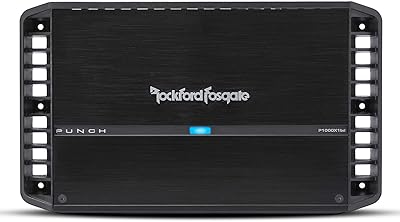
Rockford Fosgate P1000X1BD Mono Car Amplifier
85%
93%
Power Accuracy
91%
Bass Sound Quality
89%
Build Quality
87%
Thermal Management
84%
Onboard Tuning Controls
More
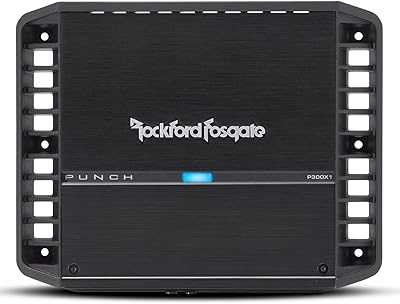
Rockford Fosgate P300X1 Punch 300 Watt Mono Amplifier
85%
88%
Sound Quality
91%
Build Quality
90%
Power Output at 2-Ohm
85%
Ease of Setup
86%
Size & Portability
More
Rockford Fosgate T1000-1bdCP Mono Amplifier
75%
93%
Power Delivery Accuracy
91%
Build Quality
74%
Thermal Management
89%
Constant Power Technology
86%
Onboard Signal Processing
More
Rockford Fosgate R2-250X1 Prime 250-Watt Mono Amplifier
87%
88%
Bass Performance
85%
Power Output
91%
Ease of Installation
87%
Build Quality
84%
Sound Clarity
More
Rockford Fosgate R250X1 Prime 1-Channel Mono Block Amplifier
84%
89%
Power Output
91%
Ease of Installation
85%
Sound Clarity
88%
Heat Dissipation
84%
Build Quality
More
Rockford Fosgate R2-750X1 Mono Amplifier
79%
88%
Sound Output Quality
83%
Power Delivery
91%
Gain Setup & Tuning
89%
Thermal Performance
79%
Build Quality
More
Rockford Fosgate P500X1BD Punch 500 Watt Class-bd Mono Amplifier
88%
93%
Bass Performance
90%
Power Output
88%
Build Quality
85%
Ease of Installation
91%
Efficiency & Power Consumption
More
Rockford Fosgate T750X1bd Power 750 Watt Class-bd Mono Amplifier
89%
94%
Power Output
89%
Sound Quality
91%
Build Quality
88%
Size/Portability
84%
Ease of Installation
More
Rockford Fosgate Power T1500-1bdCP 1500-Watt Class-BD Mono Amplifier
86%
94%
Power Output
92%
Bass Performance
91%
Efficiency
89%
Build Quality
80%
Ease of Installation
More
Rockford Fosgate M5-800X4 4-Channel Marine Amplifier
85%
93%
Build Quality
91%
Weather & Element Resistance
89%
Sound Clarity & Audio Performance
87%
Power Output & Dynamic Range
78%
Installation Ease
More

FAQ

Yes, and it's actually one of the better use cases for the R1200-1D. A dual voice-coil sub wired in parallel will present a 1-ohm load to the amp, which is where it delivers its full 1,200 watts RMS. Just make sure your wiring gauge and power supply can handle that current draw before you push it hard.

The power ratings are CEA-2006 certified, which is the industry standard for honest amplifier measurement. That means the 1,200W figure reflects actual sustained output under real conditions — not a brief burst measured under ideal lab setups. It's one of the reasons this amp is worth considering over cheaper alternatives with suspiciously high peak claims.

It can work with a factory head unit if your head unit provides preamp outputs or speaker-level inputs are supported. However, you may need a line output converter if your head unit lacks RCA outputs. Gain setup becomes especially important in this scenario to avoid introducing noise or distortion into the signal.

Class-D amps run cooler than older designs, but this one does get warm under sustained heavy use — that's completely normal behavior. As long as it's mounted with adequate airflow and not sealed against a surface that traps heat, thermal shutdown under everyday listening conditions is rarely reported.

At 1-ohm operation pulling 1,200 watts, you'll want at minimum 4-gauge power and ground wiring, and a fuse in the 100–150A range close to the battery. Undersized wiring is one of the most common causes of performance issues and premature failure with this mono amp, so don't cut corners on the electrical side.

The R1200-1D is a mono amplifier, so there is no bridging configuration — it already operates as a single-channel mono unit. If you need more total output, you would simply add a second amp and run each to a separate subwoofer rather than bridging.

The gain control on this amp is sensitive, and it's not a volume knob — it should be matched to your head unit's output level to avoid clipping. The cleanest method is to use a multimeter or an oscilloscope to set it properly. If you don't have that equipment, start at the lowest setting and increase gradually while listening for distortion at your typical listening volume.

Absolutely. The R1200-1D is well-suited for ported enclosures, where a sub is often wired at 2 ohms for a good balance of power and efficiency. You get 800 watts RMS in that configuration, which is more than enough to make a quality ported box perform at its best in a daily driver setup.

Long-term reliability reports from owners are generally positive, with many units logging several years of steady use. Longevity largely depends on proper installation — correct wiring gauge, a stable power supply, and adequate ventilation will significantly extend the life of any amplifier in this class.

It depends on the sub's power handling. Many quality 12-inch subwoofers are rated for 600–1,000 watts RMS, so running this Rockford Fosgate amplifier at 2 ohms for 800 watts is a natural match. If your sub is only rated for 300–400 watts, you'd want to stay at a 4-ohm load and keep the gain conservative to avoid overpowering it.

Where to Buy