
Overview

The ROARBATT 3000W Power Inverter arrived in mid-2023 as a mid-range contender aimed at RV owners, off-grid enthusiasts, and households that want serious emergency backup without overspending. It combines aluminum alloy housing, a clear LCD readout, and dual AC outlets — solid hardware at a price that competes with more established names. Worth noting upfront: ROARBATT is a relatively young brand, so long-term durability data is still building. Practically speaking, this unit runs off a 12V DC source — a car or truck battery, or a dedicated battery bank — so it belongs in mobile and off-grid setups, not as a plug-in home appliance. Think capable workhorse for moderate loads, not a whole-home generator replacement.

Features & Benefits

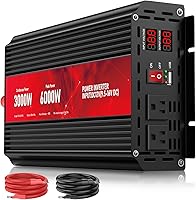
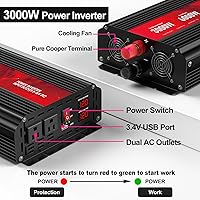
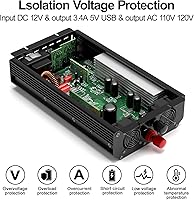
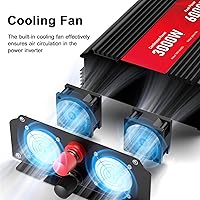
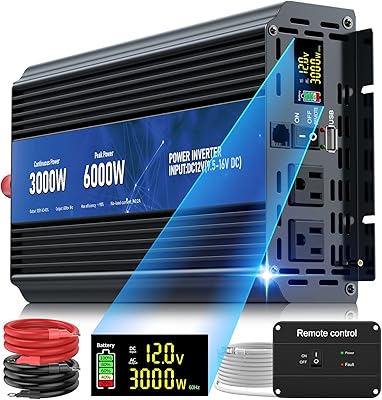
The headline spec is a continuous 3000W output with a 6000W surge peak, which is enough headroom to run a mid-size refrigerator, corded power tools, or a small window AC unit — though pushing close to that continuous ceiling demands a robust battery bank. The LCD display is a real practical advantage: it shows live input voltage, output voltage, and fault indicators, so you know exactly what the unit is doing rather than decoding a blinking LED. Two standard AC outlets handle most appliances side by side, and the 2.4A USB port covers phone or tablet charging without an adapter. A five-layer protection system addresses over-voltage, under-voltage, overload, short circuit, and thermal shutdown, backed by a built-in cooling fan and the aluminum chassis to help shed heat under load.

Best For

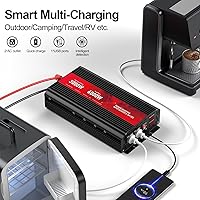
This 3000W inverter is built for people who already have a 12V battery system and need dependable AC power away from the grid. RV and van-life owners will get the most out of it, particularly when paired with a quality deep-cycle battery bank. It also suits emergency home backup scenarios — keeping a refrigerator or critical devices running through a short outage. Contractors working remote sites can run corded tools without hauling a generator, and boaters will appreciate having standard outlets aboard without a complicated install. For solar cabin setups running off a 12V battery array, the low standby draw helps preserve stored capacity when the inverter is idle but switched on.

User Feedback

The ROARBATT unit holds a 4.6-star average across nearly 400 reviews, which is a genuinely strong result for a brand this new. Buyers consistently praise the quick, intuitive setup and the clarity of the LCD readout — a step up from inverters that leave you guessing. Build quality gets positive mentions too, with most users finding the aluminum housing reassuringly solid. The criticism worth taking seriously: the cooling fan gets noticeably loud under heavy load, and several reviewers flagged that the included battery cables feel light for sustained high-amperage use — upgrading them is worth considering. A smaller number of buyers reported unit failures when running near the rated continuous limit. Those who sized their loads realistically and conservatively came away happy; those who stressed the unit close to its ceiling had less consistent experiences.

Pros

  • Continuous 3000W output handles real appliances like refrigerators, power tools, and small window AC units.
  • The LCD display delivers live input and output voltage readings plus fault alerts — a genuine step up from single-LED competitors.
  • Dual AC outlets let you power two devices at once without hunting for a power strip.
  • Five-layer protection covering overload, short circuit, thermal shutdown, and voltage extremes adds meaningful safety redundancy.
  • Aluminum alloy housing feels solid in hand and actively helps shed heat during sustained operation.
  • Low standby current draw helps preserve battery capacity when the ROARBATT unit is on but idle.
  • Setup is approachable — included battery cables and clearly labeled terminals get most users running without special tools.
  • A 4.6-star average across nearly 400 reviews suggests the factory is shipping consistent, well-built units.
  • At under 10 pounds, this 3000W inverter is portable enough to move between a truck, RV, and boat as needed.

Cons

  • The cooling fan gets noticeably loud under sustained heavy load, which can be disruptive in quiet settings like a sleeping cabin.
  • Included battery cables feel lightweight for high-amperage use; heavier-gauge aftermarket cables are likely a near-term added cost.
  • A recurring pattern in negative reviews involves unit failures when users consistently operate close to the continuous wattage ceiling.
  • As a brand launched in mid-2023, ROARBATT carries real uncertainty around long-term reliability that more established names do not.
  • The instruction manual draws mixed feedback for clarity, which can frustrate less technical buyers during first-time installation.
  • Only one USB port is included, which feels limiting for users juggling multiple devices in an RV or on a worksite.
  • No remote on/off switch ships in the box, requiring physical access to the unit every time you need to power it down.
  • The chassis runs warm under sustained high loads, and some buyers note this is worth monitoring in enclosed or poorly ventilated installs.

Ratings

The scores below reflect AI analysis of verified buyer reviews for the ROARBATT 3000W Power Inverter, with bot-generated, incentivized, and duplicate submissions actively filtered out before any category was scored. Both where this inverter earns genuine praise and where real buyers have run into frustration are transparently represented — no category has been softened to protect the overall average. Scores weight practical, real-world performance heavily, not just what the spec sheet promises.

Build Quality
83%
The aluminum alloy enclosure draws genuine praise from RV owners and off-grid users who have put this 3000W inverter through bumpy road trips and outdoor environments. The housing feels noticeably more substantial than plastic-bodied competitors at similar price points, and the chassis provides meaningful passive heat dissipation during sustained operation.
A consistent cluster of reviewers noted the chassis runs warm to the touch when the inverter works near its continuous wattage ceiling for extended periods. While the protection system does intervene, some users found the outer temperature uncomfortable in confined installations like under-seat RV compartments.
Power Output Accuracy
78%
22%
Most buyers confirm that this 3000W inverter handles the loads it claims — running a full-size fridge alongside a microwave or power tools without unexpected shutdowns in typical use. The 6000W surge headroom means high-draw startups like compressors rarely trip the protection system under normal operating conditions.
A recurring pattern in negative reviews involves failures when the unit is pushed to its rated continuous limit for extended run times. Some buyers found that real-world sustained 3000W draw is more demanding than advertised, with a small percentage experiencing unit failures, suggesting the rated ceiling is best treated as a brief burst limit rather than a steady operating point.
Value for Money
86%
For what this car power inverter delivers — aluminum housing, a real LCD, dual outlets, and a solid protection stack — buyers consistently feel the price is well-justified compared to competing units with less functionality. RV owners and emergency-prep buyers in particular see strong value, given that comparable specs from household names often cost meaningfully more.
The value proposition takes a small hit when you factor in that many buyers end up purchasing upgraded battery cables separately, since the included ones are considered undersized for sustained heavy-load use. For buyers who experience a unit failure after moderate use, the cost-benefit math changes considerably given ROARBATT's limited warranty history and track record.
Ease of Setup
88%
Setup gets consistently high marks across buyer feedback — most users have the unit running within minutes of unboxing, thanks to clearly labeled terminals and the included battery cables. Van-lifers and RV owners with no prior inverter experience describe the process as approachable, with the LCD immediately confirming voltage as soon as connections are made.
The user manual draws criticism from a meaningful portion of buyers, with several reporting that the documentation lacks detail for non-technical users trying to size their battery bank correctly or wire the unit safely for higher-draw scenarios. A clearer quick-start guide for complete beginners would reduce the volume of setup-related support questions.
LCD Display
91%
The LCD readout is one of the most consistently praised aspects of the ROARBATT unit among buyers upgrading from basic inverters. Being able to watch live input and output voltage — and immediately see a fault code when something trips — turns troubleshooting from guesswork into a two-second diagnosis, which RV users and off-grid cabin owners find genuinely useful day to day.
A minority of users note that the LCD can be difficult to read in direct sunlight or bright outdoor environments, which is a practical frustration for boat owners and outdoor worksite users. A higher-contrast or backlit display would address this, though most indoor and vehicle-mounted users do not encounter it as a consistent issue.
Thermal Management
67%
33%
The combination of aluminum housing and a variable-speed cooling fan provides adequate thermal management for moderate, intermittent loads — the kind most RV owners realistically place on the inverter when running appliances for a few hours at a time. Under those conditions, the unit runs at acceptable temperatures without triggering thermal protection.
Under sustained heavy loads — especially in warm environments or poorly ventilated installs — several buyers noted the chassis becomes uncomfortably warm and thermal shutdowns occur more frequently than expected. Users in hot climates running the inverter in enclosed spaces like under-seat RV compartments reported this as a recurring frustration.
Noise Level
61%
39%
At low to moderate loads, the cooling fan stays relatively quiet — van-lifers and RV owners doing light daytime use report the fan noise is barely noticeable over ambient road or environmental sound. The variable-speed design means it is not constantly running at full speed, which is a real advantage over fixed-speed alternatives.
When the inverter is working hard — running power tools, a microwave, or a window AC unit — the fan becomes loud enough to be clearly disruptive in quiet environments like a sleeping van or cabin. Buyers who expected near-silent overnight operation were notably disappointed, as sustained heavy loads keep the fan running at high speed continuously.
Protection System
84%
The five-layer protection stack — covering over-voltage, under-voltage, overload, short circuit, and thermal cutoff — gives buyers real confidence, especially in unattended or overnight use scenarios. Most users who pushed the unit into an overload condition reported that protection tripped correctly and the unit restarted cleanly after addressing the cause.
A small percentage of reviewers noted that thermal protection tripped earlier than anticipated during sustained moderate-to-heavy loads, particularly in warm ambient conditions. While protection triggering is preferable to a failure, frequent trips in real-world use suggest the thermal threshold could be more generously calibrated for the rated output.
Cable Quality
54%
46%
The included red and black battery cables are functional for getting the unit connected quickly out of the box, which buyers appreciate for initial testing and light-duty use. For users running the inverter at lower wattage — charging devices or running lights — the stock cables perform without issue.
For sustained high-amperage use, the included cables are consistently flagged as a weak point — thin-gauge wire that heats up under heavy load, introducing resistance, wasting power, and raising a legitimate safety concern. Enough reviewers raised this independently that upgrading to heavier-gauge aftermarket cables before any serious use is strongly advisable.
Conversion Efficiency
79%
21%
The claimed above-90% conversion efficiency translates to real battery savings that RV users and off-grid cabin owners notice during longer runs — more stored energy reaches appliances rather than being lost as heat. The low standby draw of roughly 1A is a genuine benefit for users who keep the inverter on but idle for extended periods.
Independent verification of the 90-plus-percent efficiency claim is not available, and some users running extended sessions noticed battery drain faster than anticipated, suggesting real-world efficiency may vary with load type and battery health. At or near maximum continuous output, efficiency likely drops, as is typical for inverters at this tier.
Portability
82%
18%
At just under 10 pounds with a manageable form factor, this 3000W inverter moves between a truck bed, RV, and boat cabin without being a chore. Contractors who want to take it to a job site one weekend and store it in an emergency kit the next find the weight-to-power ratio genuinely practical.
At 24 x 10 x 9 inches, the unit occupies meaningful space in tight installations — some van-build owners reported difficulty finding a mounting spot that also maintains adequate airflow clearance. It is not a compact emergency tool; users expecting something discreet or easy to tuck away will need to recalibrate expectations.
Brand Reliability
69%
31%
Current buyer satisfaction is genuinely positive — a 4.6-star average across nearly 400 reviews for a brand that launched in mid-2023 is an encouraging early signal. Customer service responses appear active, and buyers who had issues report receiving relatively prompt follow-up support from the manufacturer.
ROARBATT has been on the market for less than two years, so multi-year durability data simply does not exist yet — there is no established track record for how these units hold up after two to three years of regular use. Buyers who prioritize proven longevity from a brand with a documented long-term history may find this uncertainty difficult to overlook.
USB Charging
73%
27%
Having a dedicated 2.4A USB port built into the inverter is a practical convenience that van-lifers and RV users appreciate — it eliminates the need for a separate USB adapter occupying one of the AC outlets just to charge a phone or tablet alongside running appliances.
With only a single USB port, users managing multiple devices quickly find themselves tying up an AC outlet with a USB hub instead. For a unit targeting RV and van-life setups where several people share the space, the single 2.4A port and the absence of USB-C feel like missed opportunities.

Suitable for:

The ROARBATT 3000W Power Inverter is a strong fit for anyone who already runs a 12V battery system and needs dependable AC power away from the grid. RV owners and van-lifers will find it particularly well-matched — it can handle a refrigerator, a CPAP machine, and keep phones charged simultaneously without straining a quality deep-cycle battery bank. It is equally practical for emergency preparedness: having this car power inverter on hand means keeping essential appliances running through a short-term outage without the bulk or fuel cost of a gas generator. Contractors and tradespeople working off-grid job sites benefit from the dual AC outlets, letting them run corded power tools where no grid connection exists. Boaters and solar cabin users will appreciate the low standby draw, which preserves battery capacity during idle periods. If you are already building or maintaining a 12V off-grid or mobile power setup, this 3000W inverter slots in as a practical core component.

Not suitable for:

The ROARBATT 3000W Power Inverter is not the right tool for anyone hoping to run an entire household through an extended outage — it is not built for that scale of demand. Operating this unit at or near its full continuous output requires a large, high-quality 12V battery bank; without one, you will drain your batteries rapidly or trigger protection shutdowns before your appliances complete their cycle. This car power inverter also requires proper 12V DC connections and correctly sized cables to run safely under heavy loads, and the included cables may fall short for the most demanding scenarios, adding an unplanned cost. Buyers who prioritize a brand with a long, documented reliability track record may want to consider more established names, since ROARBATT has only been on the market since mid-2023 and multi-year durability data simply does not exist yet. If your actual power needs are modest — mostly laptops, phones, or small electronics — a lighter and less expensive inverter in the 1000W range would serve you better.

Specifications

  • Continuous Power: Delivers a true continuous output of 3000W, sufficient for running full-size refrigerators, corded power tools, and similar mid-draw appliances.
  • Peak Surge Power: Handles surge loads up to 6000W to cover the brief high-current spike that motors and compressors require on startup.
  • Input Voltage: Requires a DC 12V power source, such as a car or truck battery, or a dedicated 12V deep-cycle battery bank.
  • Output Voltage: Provides AC 110V–120V output through two standard household-style outlets for powering common North American appliances.
  • USB Output: Includes one USB charging port rated at 5V / 2.4A for charging phones, tablets, and similar USB-powered devices.
  • AC Outlets: Equipped with two standard three-prong AC outlets capable of powering most household appliances simultaneously.
  • Standby Draw: No-load current consumption is approximately 1A plus or minus 0.2A, helping preserve battery capacity when the inverter is on but idle.
  • Efficiency Rating: Claimed power conversion efficiency exceeds 90%, reducing energy lost as heat during the DC-to-AC conversion process.
  • LCD Display: An onboard LCD screen shows real-time input voltage, output voltage, and active protection or fault status indicators.
  • Housing Material: The outer enclosure is built from aluminum alloy, providing structural rigidity and passive heat dissipation under sustained load.
  • Cooling System: A built-in variable-speed fan activates automatically under load to manage internal temperatures and reduce the risk of thermal shutdown.
  • Protection Features: Five onboard protection circuits guard against over-voltage, under-voltage, overload, short circuit, and overheating conditions.
  • Item Weight: The unit weighs 9.13 pounds, making it portable enough to move between a vehicle, boat, or storage without significant effort.
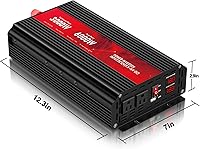
  • Dimensions: Package dimensions measure 24 x 10 x 9 inches, sized for mounting or storage in an RV, truck bed, or boat cabin.
  • In the Box: Each unit ships with one pair of battery clamp cables (one red, one black) and a printed user manual.

Related Reviews
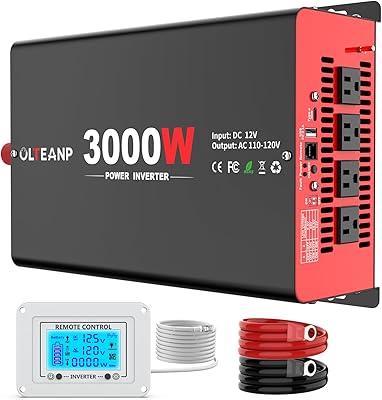
OLTEANP 3000W Power Inverter
87%
91%
Power Output
88%
Portability & Size
85%
Ease of Use
87%
Durability & Build Quality
92%
Safety Features
More
HONOURLIGHT 3000W Power Inverter
79%
88%
Value for Money
83%
Power Performance
91%
Ease of Setup
89%
LED Display Clarity
84%
Remote Control
More
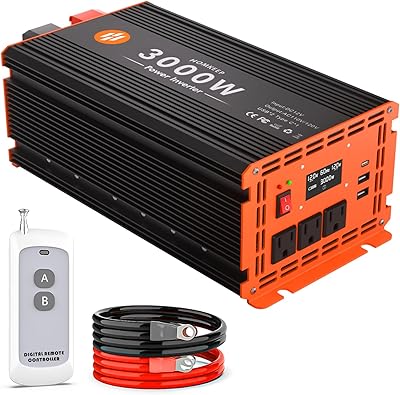
Homkeep 3000W Power Inverter
86%
91%
Value for Money
88%
Performance
85%
Build Quality
93%
Ease of Use
89%
Energy Efficiency
More
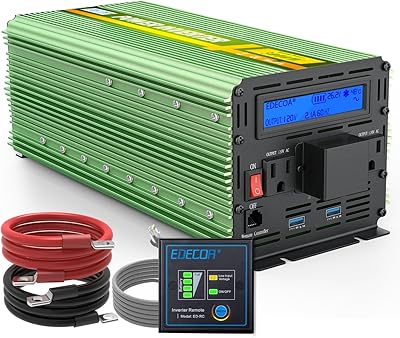
EDECOA DPM30 3000W 24V Power Inverter
73%
82%
Value for Money
76%
Build Quality
79%
Output Reliability
84%
Surge Performance
88%
Display & Remote
More
Homkeep 3000W Pure Sine Wave Power Inverter
88%
93%
Power Performance
88%
Ease of Use
90%
Build Quality
85%
Noise Level
91%
Safety Features
More
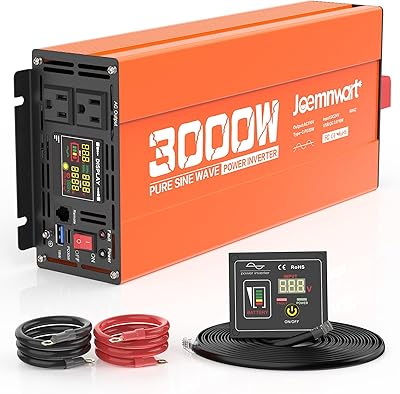
Joemnwart 3000W 24V Pure Sine Wave Inverter
78%
88%
Waveform Quality
74%
Power Output Accuracy
72%
Build Quality
83%
Value for Money
86%
Noise Level
More
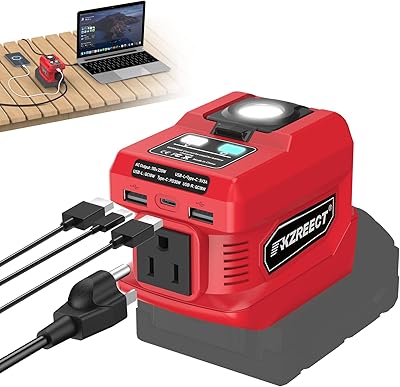
Kzreect Inverter-MK 220W Portable Power Inverter
85%
94%
Portability and Size
89%
Charging Speed (USB-C & USB-A)
82%
Battery Compatibility
88%
Ease of Use
90%
Safety Features (Overload, Overcurrent)
More
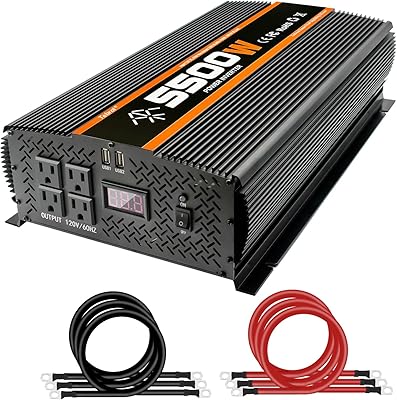
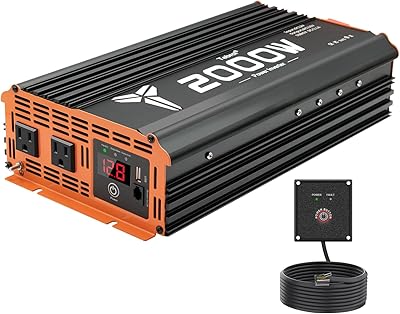
Tebrol 5500W Power Inverter
83%
88%
Performance
91%
Ease of Setup
85%
Build Quality
73%
Cooling System Efficiency
80%
Portability
More
Cantonape 1500W 24V Power Inverter
76%
82%
Power Output Reliability
91%
Ease of Setup
88%
LED Display & Diagnostics
74%
Build Quality
69%
Thermal Management
More
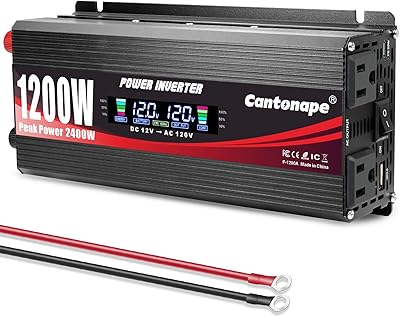
Cantonape 1200W Power Inverter
76%
78%
Power Output Reliability
88%
LCD Display Usefulness
74%
Build Quality
61%
Modified Sine Wave Compatibility
83%
USB Charging Performance
More

FAQ

You need a 12V DC source — typically a deep-cycle battery bank rather than a standard car starter battery. At full 3000W draw, you are pulling roughly 250 amps at 12V, which drains a single battery fast. For anything beyond short bursts, a high-capacity deep-cycle or AGM battery bank is the right pairing, and your cables need to be rated for that current too.

At a continuous 3000W you can run a full-size refrigerator, a microwave, corded power tools, or a small window AC unit — and the 6000W surge peak covers the startup spike that compressors and motors demand. Running two or three moderate appliances simultaneously is reasonable. What it cannot handle is large central air systems, electric water heaters, or whole-home loads.

The product listing does not explicitly state the wave type, which typically indicates modified sine wave output in this price tier. Modified sine wave works reliably for most common appliances — refrigerators, fans, power tools, and lights. For sensitive equipment like certain medical devices or high-end audio gear, you should verify compatibility before committing.

Nothing is wrong — that is normal behavior. The fan is variable-speed and stays quiet at low loads, but ramps up noticeably as the inverter works harder. If you are running it near its continuous limit, expect real noise. In a quiet vehicle cabin or sleeping area at night, it can be disruptive, so factor that into where and how you mount it.

Many RV and van users do run it overnight for a refrigerator, but it requires the right conditions: adequate ventilation around the unit, a battery bank sized for the overnight draw, and a low-voltage cutoff to prevent battery damage. Never run it in an enclosed, unventilated space. If those conditions are met and your setup is correct, extended unattended operation is common practice.

For light to moderate loads the included cables are fine to get started. For sustained use near 3000W, several buyers found them undersized — they can heat up and introduce resistance, which wastes power and creates a safety concern. If you plan to draw significant wattage regularly, upgrading to properly rated heavier-gauge cables is worth the small extra cost upfront.

Yes, as long as your solar system maintains a 12V battery bank — the inverter connects to the battery, not directly to the panels. A solar charge controller keeps the bank topped up while this car power inverter draws from it and converts that stored energy to AC power. It is a standard pairing in off-grid cabin and van-life setups.

The LCD display is your main diagnostic window — it shows live input and output voltage and will flag a fault indicator when the protection system trips due to overload, low battery voltage, overheating, or a short circuit. When protection activates, the unit typically shuts off and holds the indicator so you can identify the cause before restarting. It is considerably more informative than basic LED-only units.

The inverter itself produces no exhaust or carbon monoxide, so it is safe to use inside in that regard. What it does produce is heat under load, so you need airflow clearance on all sides — particularly around the fan vents. Avoid mounting it in a sealed cabinet or any location where heat can accumulate, and it will operate safely.

The main differences at this tier versus budget options are the LCD readout instead of a single status LED, the aluminum alloy housing instead of plastic, and the five-layer protection stack. Cheaper units often run hotter, offer no real-time diagnostics, and use lighter internal components. Whether the upgrade is worth it depends on how frequently and how hard you plan to use the ROARBATT unit — for occasional light use, a budget inverter may be sufficient, but for regular heavy-duty work it is a meaningful step up.