

Overview

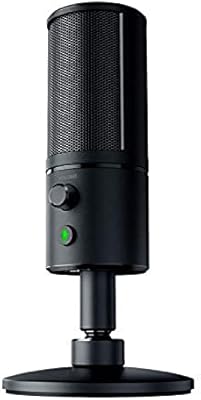
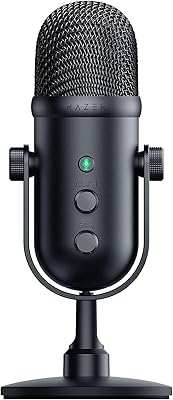
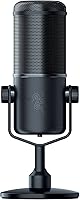
The Razer Seiren Elite USB Microphone sits in an interesting middle ground — it's aimed at streamers and podcasters who want broadcast-quality audio without the hassle of an audio interface. Where most USB mics at this price lean on condenser capsules, the Seiren Elite goes with a dynamic capsule design, which is a deliberate choice for content creators dealing with less-than-ideal room acoustics. The all-metal chassis and broadcast-style form factor set it apart visually from the plastic competition. Launched in 2018, it's not the newest option on the market, but it was built with a clear, focused purpose: clean voice audio for live streaming, nothing more.

Features & Benefits

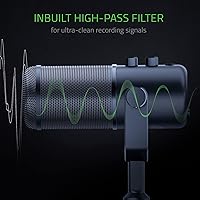
The dynamic capsule is the defining technical choice here. Unlike condenser mics that pick up every keyboard click and air conditioning hum in the background, a dynamic capsule is naturally less sensitive — meaning this Razer streaming mic focuses on your voice and largely ignores the room around it. The built-in high-pass filter pushes that further by rolling off low-end rumble from desk vibrations without any post-processing software. There's also a vocal limiter that catches sudden volume spikes before they clip, which is genuinely useful when you're mid-game and reacting loudly. Plug it in via USB and it works immediately — no drivers, no setup headaches.

Best For

This dynamic USB mic is tailor-made for live streamers and podcasters who record in real-world environments — think a home office with an HVAC system running, or a gaming setup where mechanical keyboards are part of the scenery. Anyone upgrading from a headset mic will notice a meaningful improvement in vocal warmth and presence. That said, the Seiren Elite is not a do-it-all microphone. The fixed cardioid pattern means it only captures sound from one direction, so co-hosted recordings or music production are off the table. If you need 24-bit resolution or multiple polar patterns, look elsewhere.

User Feedback

Across its 327 ratings, the Seiren Elite lands at 3.9 out of 5 — a score that reflects a genuinely mixed reception. Buyers who love it consistently praise the warm vocal tone, calling it a noticeable step above comparably priced condensers. The all-metal build gets repeated mentions for feeling solid and stable. Where things get complicated: some users find the limiter too aggressive, producing an audible pumping effect during loud reactions. Others flag that the default gain level runs quiet and needs adjustment on certain systems. Nobody complains about the build — but a few wish for more flexibility in polar pattern options.

Pros

  • Dynamic capsule naturally rejects background noise, making it ideal for untreated or noisy home setups.
  • The all-metal chassis feels genuinely premium and holds up far better than the plastic-bodied competition.
  • Built-in high-pass filter eliminates desk rumble and low-frequency hum without touching any software.
  • Zero-latency headphone monitoring lets you hear your own voice in real time with no audible delay.
  • Plug-and-play USB connection means it works immediately on PC with no drivers or interface required.
  • Vocal tone is consistently described by users as warm and full — a clear step up from headset mics.
  • The built-in limiter prevents loud reactions from clipping your stream audio during intense gaming moments.
  • Stable desktop stand is included and sturdy enough for daily use without an aftermarket arm.

Cons

  • The built-in limiter can be overly aggressive, creating an audible pumping effect during sudden loud moments.
  • Default gain sensitivity runs quiet on some systems, requiring manual adjustments to get a strong enough signal.
  • Fixed cardioid pattern means there is no flexibility for co-hosted recordings or alternative capture scenarios.
  • 16-bit resolution is adequate for streaming but falls short for anyone interested in music or voiceover production.
  • Launched in 2018, the Seiren Elite faces stiff competition from newer models with updated specs at similar prices.
  • No software ecosystem for EQ or gain control means any fine-tuning must be handled through your OS or streaming app.
  • Heavier than most USB mics at this price, which can be a consideration if you need a boom arm with a lower weight rating.
  • No mute button on the body itself, which is a practical omission for streamers who need quick audio cutoffs mid-broadcast.

Ratings

Our AI-generated scores for the Razer Seiren Elite USB Microphone were produced by analyzing hundreds of verified buyer reviews from around the world, with spam, bot activity, and incentivized feedback actively filtered out before any score was assigned. Every category reflects both the genuine strengths that loyal users praise and the recurring frustrations that hold this mic back for certain buyers. Nothing has been glossed over — the numbers represent the full, unvarnished picture.

Audio Quality
82%
18%
The dynamic capsule delivers a warmer, fuller vocal tone than most condenser USB mics at a similar price — a difference that streamers and podcasters frequently notice when comparing recordings side by side. Voices sound round and broadcast-like, which makes a real impression when presenting on stream or recording a solo podcast episode.
The 16-bit/48kHz resolution cap is adequate for Twitch and YouTube but becomes a noticeable ceiling the moment you push toward music or voiceover production. Fine detail and dynamic headroom fall short of the 24-bit standard that serious post-production work demands, which narrows the mic's long-term usefulness considerably.
Noise Rejection
88%
In practical terms, the dynamic capsule is the single most compelling reason to choose this mic over a condenser for a busy home setup. Users streaming from rooms shared with PCs, air conditioning, or street noise report a dramatically cleaner vocal signal compared to what similarly priced condenser mics would capture in the same environment.
While the dynamic capsule handles ambient noise well, it is not a fix for poor mic technique — positioning the mic too far from your mouth or off-axis from the cardioid sweet spot will still introduce noise floor issues. The built-in high-pass filter helps with rumble, but very loud environments still require careful placement and gain management.
Build Quality
91%
The all-metal chassis is one of the most consistently praised aspects across user reviews, and it genuinely earns those compliments. Picking this mic up feels immediately different from the plastic-bodied competition — it sits firmly on the desk, does not wobble, and has the kind of weight that signals it will last through years of daily streaming use.
The same metal build that makes it feel premium also makes it noticeably heavier than most USB mics — nearly two pounds — which matters if you plan to mount it on a lightweight boom arm. A few users also note that the all-black finish is a fingerprint magnet and can look scuffed quickly without regular maintenance.
Ease of Setup
93%
USB plug-and-play means there is genuinely nothing to configure — connect the cable and your OS recognizes it as an audio device within seconds. For streamers who have lost an afternoon to driver conflicts and interface settings, this simplicity is a real benefit that reduces pre-stream friction to almost nothing.
The lack of any dedicated companion software means gain adjustments and EQ have to be handled through your operating system or streaming app, which is less intuitive for newer users who expect a centralized control panel. There is also no onboard mute button — a small but genuinely frustrating omission during live sessions.
Value for Money
67%
33%
At the time of its release, this Razer streaming mic offered a compelling combination of dynamic capsule performance, premium build quality, and broadcast aesthetics that was genuinely difficult to match in the USB category. Buyers who find it at a reduced price today still get a durable, capable streaming mic with a tone that stands out from the crowd.
Launching in 2018 puts this mic in an awkward spot against newer rivals that have since arrived with comparable or better specs, updated feature sets, and more modern software ecosystems at similar prices. Without a meaningful discount off its original launch price, the value proposition is harder to justify today than it was when it first shipped.
Vocal Limiter
61%
39%
For streamers who react loudly during games — sudden shouts, bursts of laughter, or competitive moments — the built-in limiter provides a safety net that prevents sharp clipping artifacts from ruining VODs and stream recordings. Under normal conversational volume, most users will not notice it is active at all.
The limiter becomes a real problem for streamers who are naturally expressive or loud. Multiple users describe an audible pumping effect during high-energy gaming moments where the audio ducks noticeably and then recovers — a compression artifact that is hard to work around and can be genuinely distracting to viewers on the receiving end.
Headphone Monitoring
78%
22%
The 3.5mm monitoring jack delivers genuinely zero-latency playback of your own voice — you hear yourself as you speak, with no perceptible digital lag. This is a meaningful quality-of-life feature for streamers who want to self-monitor their vocal level throughout a long session without relying on software metering alone.
The monitoring output gives you only your mic signal — there is no onboard blend control to mix in game audio or desktop sound alongside your voice. If you want a combined feed of your voice and system audio in the same headphones, that balance has to be managed entirely through your OS mixer or streaming software.
Gain & Sensitivity
58%
42%
Once the gain is properly calibrated — whether through your OS settings or inside OBS or Streamlabs — the Seiren Elite holds a clean, consistent signal level throughout long streaming sessions. Users who invest a few minutes in setup consistently report stable audio without unexpected drops or signal inconsistencies.
Out of the box, the default sensitivity setting runs conspicuously quiet on many systems — a recurring complaint across reviews that catches buyers off guard after an otherwise easy setup. There are no physical gain controls on the mic itself, so troubleshooting means navigating OS audio panels or software sliders rather than a simple dial.
Design & Aesthetics
84%
The broadcast-style cylindrical form factor and all-black metal finish give this mic a look that feels deliberate and professional — noticeably more serious than the rounded, plastic aesthetics common among USB microphones. On a streaming desk, it reads like a piece of studio equipment rather than a budget peripheral.
The design includes no RGB lighting, which will disappoint buyers in the Razer ecosystem who associate the brand with its signature illuminated aesthetic. The matte-black finish also tends to show fingerprints and dust quickly, requiring regular wiping to maintain the polished appearance it arrives with.
Versatility
43%
57%
Within its intended scope — solo streaming and solo voice recording — this dynamic USB mic performs its role with real consistency. The deliberate design choices around the cardioid pattern and dynamic capsule make it very capable at the specific job it was engineered for.
Outside of solo streaming and voice chat, the mic's usefulness drops off sharply. The fixed cardioid pattern rules out co-hosted interviews, the 16-bit resolution limits production work, and there is no way to switch polar patterns or capsule modes for different scenarios — a hard constraint for anyone whose recording needs are likely to grow over time.
Streaming Performance
86%
For live streaming specifically, this dynamic USB mic delivers on almost every front — warm, controlled vocal audio that holds up across long sessions, a noise floor that stays clean in imperfect rooms, and instant USB setup that never interrupts a broadcast. Viewers consistently notice the quality improvement over headset microphones.
The aggressive limiter behavior remains the single biggest complaint from active streamers, particularly those with loud or expressive styles. The pumping artifact it creates during high-volume moments can undermine an otherwise clean stream, and with no hardware adjustment available, the only workaround is managing compression behavior through external software.
Durability
89%
The metal construction translates directly into long-term reliability — this is not a mic that will crack, warp, or deteriorate with regular desk use. Users who have owned it for several years consistently report that it functions exactly as it did when new, with no degradation in audio performance or physical condition.
The USB cable is fixed and non-detachable, which introduces a long-term reliability risk — if the cable develops a fault at the connector end or frays from repeated movement, the entire unit essentially needs replacement. Fixed-cable designs are a known durability concern regardless of how well the rest of the build holds up.
Compatibility
76%
24%
On Windows and macOS, the Seiren Elite behaves exactly as expected: no drivers, no configuration, and immediate recognition as a standard USB audio device. It integrates cleanly with every major streaming and recording application — OBS, Streamlabs, Audacity, Discord, and Zoom all detect it without any manual input.
Console compatibility is inconsistent — while PS4 and PS5 generally recognize USB audio devices, Xbox consoles have historically imposed stricter limitations on USB microphone support with no official confirmation for current-generation hardware. Mobile and tablet use is also not guaranteed without an appropriate USB adapter, limiting its reach beyond PC.

Suitable for:

The Razer Seiren Elite USB Microphone was built with a very specific buyer in mind: the solo content creator who streams or records in a real home environment, not a treated studio. If you run a Twitch or YouTube channel from a room with background noise — a running PC, an HVAC unit, street sounds bleeding through the window — the dynamic capsule gives you a meaningful advantage over the condenser-based USB mics that dominate this price range. Podcasters recording solo episodes will appreciate the warm, broadcast-style tone and the solid desktop presence without needing any additional hardware. Gamers stepping up from a headset mic will notice an immediate improvement in how their voice cuts through on Discord or stream audio. The plug-and-play USB setup also makes it genuinely accessible: there is no audio interface to configure, no drivers to install, and no software required to get a clean signal on day one.

Not suitable for:

If your recording goals extend beyond streaming and voice communication, the Razer Seiren Elite USB Microphone is likely to leave you frustrated. The 16-bit resolution cap and single cardioid polar pattern make it a poor fit for music production — whether you are tracking vocals, acoustic instruments, or anything that benefits from higher fidelity capture. Co-hosted podcast setups are also a problem, since the fixed unidirectional pattern cannot be switched to omnidirectional or figure-eight modes to accommodate two speakers at one desk. Buyers who frequently shift between recording scenarios — interviews, musical ideas, ASMR, voiceover work — will find the lack of pattern flexibility limiting quickly. It is also worth noting that this mic launched in 2018, and several newer rivals now offer comparable or better audio specs with more modern feature sets at similar prices, so shoppers who prioritize getting the latest hardware should factor that into their decision.

Specifications

  • Capsule Type: Uses a single dynamic capsule, which is inherently less sensitive to ambient noise than condenser capsules and better suited to untreated home recording environments.
  • Polar Pattern: Fixed unidirectional (cardioid) pattern captures sound primarily from the front of the microphone while rejecting audio from the sides and rear.
  • Resolution: Records at 16-bit / 48kHz, which is sufficient for live streaming and voice communication but does not reach the 24-bit standard preferred for music production.
  • Frequency Response: Covers a full 20Hz–20kHz range, encompassing all audible frequencies relevant to vocal and speech capture.
  • Signal-to-Noise Ratio: Rated at 87dB, indicating a clean output signal with low self-noise relative to the recorded source.
  • Sensitivity: Operates at -58dB sensitivity, meaning a reasonably close speaking distance of roughly 6–12 inches is needed to achieve an optimal recording level.
  • Impedance: Output impedance of 250 Ohm is compatible with standard USB bus-powered connections and does not require an external headphone amplifier for typical monitoring use.
  • Connection: Connects via USB and operates as a plug-and-play audio device on both Windows and macOS with no drivers or additional software required.
  • Headphone Output: Includes a 3.5mm headphone jack with zero-latency monitoring, allowing users to hear their own voice in real time without any digital processing delay.
  • High-Pass Filter: Built-in high-pass filter rolls off low-frequency interference — such as desk vibrations and HVAC hum — before the signal is digitized, eliminating the need for post-processing.
  • Vocal Limiter: A hybrid digital/analog limiter is built into the signal chain to prevent sudden loud volume peaks from clipping or distorting the recorded audio.
  • Body Material: All-metal chassis construction provides greater durability and a more stable desktop presence than the plastic-bodied USB microphones common at this price tier.
  • Weight: Weighs 1.72 lbs (0.78kg), which is heavier than most USB microphones and should be verified against the weight rating of any boom arm or third-party stand.
  • Dimensions: Measures 8.9 x 3.54 x 26.97 inches overall, including the integrated desktop stand included in the box.
  • Power Source: Powered entirely through the USB connection at 5V, requiring no external power adapter, batteries, or phantom power supply.

Related Reviews
Razer Seiren X USB Streaming Microphone
87%
88%
Sound Quality
90%
Noise Reduction
95%
Ease of Setup
85%
Build Quality
78%
Microphone Sensitivity
More
Razer Seiren V3 Mini
76%
83%
Audio Clarity
78%
Background Noise Rejection
96%
Ease of Setup
88%
Tap-to-Mute Reliability
74%
Build Quality & Materials
More
Razer Seiren V2 X
Razer Seiren V2 X
79%
88%
Voice Clarity
84%
Background Noise Rejection
93%
Ease of Setup
86%
Clipping & Distortion Control
67%
Build Quality
More
Razer Seiren V3 Chroma Microphone
84%
88%
Sound Clarity
85%
Noise Cancellation
91%
RGB Lighting Features
93%
Ease of Use
80%
Microphone Durability
More
NZXT Capsule Elite
NZXT Capsule Elite
76%
94%
Ease of Setup
81%
Audio Clarity
88%
Build Quality
91%
Mute Button
74%
Value for Money
More
Neat Microphones Skyline USB Desktop Condenser Microphone
89%
94%
Audio Quality
91%
Ease of Use
89%
Build Quality
90%
Mute Button Functionality
92%
Value for Money
More
RØDE NT-USB Microphone
87%
94%
Sound Quality
92%
Ease of Setup
89%
Build Quality
85%
Noise Isolation
87%
Mic Sensitivity
More
CMTECK XM600 USB Microphone
81%
91%
Value for Money
94%
Ease of Setup
72%
Audio Clarity
83%
Build Quality
89%
Mute Button & LED
More
JLab Talk USB Microphone
72%
83%
Sound Clarity
88%
Polar Pattern Versatility
93%
Ease of Setup
61%
Background Noise Rejection
58%
Build Quality
More
Samson Meteor USB Microphone
86%
89%
Audio Quality
95%
Ease of Use
83%
Build Quality
91%
Portability
94%
Setup Process
More

FAQ

It is genuinely plug-and-play. Connect it to a USB port on Windows or macOS and your computer recognizes it as a standard audio input device immediately. You can use it with OBS, Streamlabs, Discord, or any recording app without installing anything extra.

It works on both. The USB connection is recognized natively by macOS and Windows alike, so there is nothing platform-specific to configure on either system.

Yes, and this is genuinely the strongest reason to choose the Razer Seiren Elite USB Microphone over a condenser-based option. Dynamic capsules are less sensitive by design, so keyboard clicks, fan noise, and room reflections have far less impact on your audio. You will still want to speak at a reasonable distance from the mic, but the background rejection is noticeably better in most real home environments.

Nothing is wrong — this is a known quirk. The default sensitivity runs on the conservative side, and some systems produce a lower signal than expected without adjustment. The fix is straightforward: raise the mic gain in your OS audio settings or inside your streaming or recording software. Most users who report this find a modest gain increase resolves it completely.

During normal conversation, the limiter is essentially transparent. Where it becomes audible is during sudden sharp peaks — like yelling mid-game or a burst of laughter. Some users report a mild pumping effect at those moments. For most streamers it is a worthwhile trade-off to avoid clipped audio, but if you are sensitive to compression artifacts, it is worth knowing it is active.

Technically it can capture a vocal, but it is not built for music production. The 16-bit resolution limits dynamic range compared to the 24-bit standard used in recording workflows, and the fixed cardioid pattern offers no flexibility for instrument miking. If music recording is part of your plan, a dedicated microphone paired with an audio interface will serve you far better.

The key difference is the capsule type. The Seiren Elite is the only USB mic in the Razer lineup built around a dynamic capsule — the X and V2 use condenser capsules. That single difference shapes the entire character of the mic: the Elite rejects more background noise but is less detailed in quiet environments. If your room is treated or quiet, the condenser models may suit you better; if noise rejection is the priority, the Elite is the one to consider.

PS4 and PS5 generally recognize USB audio devices without issue, so it should work on PlayStation. Xbox consoles have historically been more restrictive with USB microphone support, so it is worth checking current Xbox USB audio compatibility before purchasing if console use is your primary goal.

The integrated stand is genuinely solid — the all-metal build gives it enough weight and stability for reliable desktop use. If you want to position the mic closer to your face or free up desk space, a standard boom arm with a 5/8-inch thread adapter works fine. Just make sure the arm you choose is rated for at least two pounds, since this mic is heavier than most USB options.

The 3.5mm jack delivers real-time zero-latency monitoring of your microphone input — you hear your own voice with no perceptible delay. However, there is no onboard blend knob to mix your mic signal against your game or system audio. Any mixing between your voice and other audio sources needs to be handled through your OS audio settings or your streaming software mixer.

Where to Buy