Overview

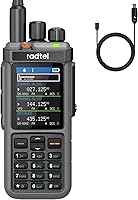
The Radtel RT-880 Portable Ham Radio arrived in March 2025 as a genuinely feature-packed entry in the mid-range handheld market, aimed squarely at licensed amateur operators who want cross-band repeater capability without paying flagship prices. At 12 inches tall and 1.5 lbs, it is noticeably longer than the typical ham handheld — closer to a slim flashlight than a compact radio, and that length takes some getting used to. The 1024-channel capacity sets it well apart from budget walkie-talkies, and early buyers seem cautiously impressed, with a 4.4-star average across 128 ratings — a promising start, though still a relatively small sample.
Features & Benefits

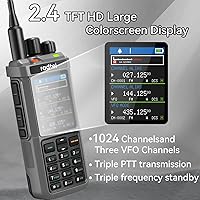
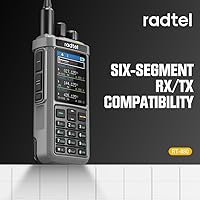
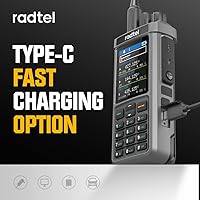
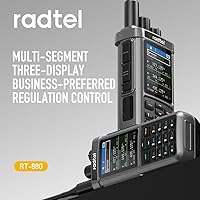
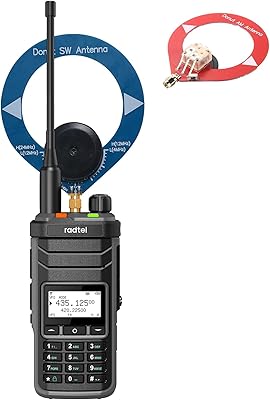
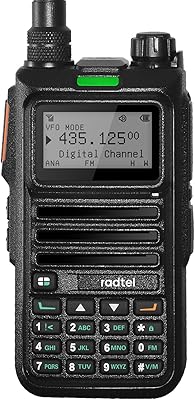
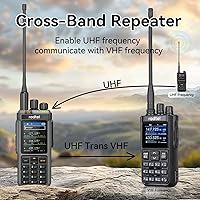
The standout capability here is the cross-band repeater function, which bridges UHF and VHF simultaneously — a practical tool when coordinating between groups using different frequency bands in the field. Beyond that, the RT-880's receive coverage is remarkably broad for its price tier: AM, FM, SSB, USB, LSB, CW, CB, shortwave, longwave, and air-band all handled without swapping devices. A dedicated external shortwave antenna port genuinely improves weak-signal reception. The 2.4-inch TFT display is noticeably larger and crisper than what you typically get on handhelds in this range, and USB-C charging paired with a 2400mAh battery adds real field convenience. Customizable side keys let experienced operators build a faster, personal workflow.

Best For

This ham handheld is built for licensed amateur operators first — full stop. If you do not hold an amateur radio license, transmitting on these frequencies is not legal, so this is not an FRS replacement. That said, it is a strong fit for licensed operators who want repeater linking on a budget, emergency preparedness enthusiasts who need wide-band receive coverage from a single device, and outdoor types — hikers, campers — who need reliable VHF/UHF comms over a long day without hunting for a charger. Shortwave and air-band listeners will appreciate the monitoring depth. It also makes a natural step up for anyone who has outgrown a basic programmable radio.

User Feedback

With just 128 ratings collected since launch, it is too early to call this a settled verdict — keep that caveat in mind. Early buyers tend to highlight display clarity and build quality as genuine strengths, and several note that the wide receive range performs as advertised. On the critical side, programming complexity comes up more than once; users familiar with Baofeng radios may find the menu logic a bit different, and third-party software compatibility is not universally praised. Real-world range predictably falls short of the 5km spec in anything but open terrain. SSB receive quality and the shortwave antenna port have not been discussed widely enough yet to draw firm conclusions.

Pros

  • Cross-band repeater bridges VHF and UHF groups — a rare capability at this price point.
  • Wide-band receive covers AM, FM, shortwave, air-band, and SSB in a single handheld device.
  • The 2.4-inch TFT display is noticeably sharper and more readable than most budget competitors.
  • USB-C charging means one less proprietary cable to manage on trips or during emergencies.
  • 1024 channels gives licensed operators room to organize local, regional, and travel frequencies without compromise.
  • The dedicated shortwave antenna port meaningfully improves HF reception when paired with an external wire antenna.
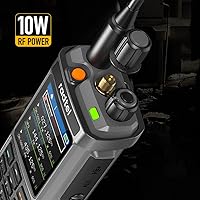
  • At 10W output, the RT-880 has enough power to reliably hit local repeaters under normal conditions.
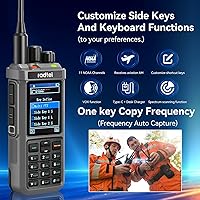
  • Customizable side keys let experienced operators speed up common tasks and reduce menu-diving during active use.
  • Solid early buyer sentiment, with build quality and display clarity highlighted across multiple independent reviews.

Cons

  • PC programming software has reported compatibility issues that make bulk channel setup more painful than it should be.
  • The 12-inch body length does not fit standard radio holsters and can feel unwieldy clipped to a belt or harness.
  • Real-world range falls well short of the 5km spec in anything other than flat, open terrain.
  • No water resistance rating makes it a liability in wet outdoor conditions where a proper field radio should cope.
  • SSB receive works but lacks the refinement needed to serve as a serious HF monitoring tool.
  • Stock antenna performance on shortwave bands is weak — a separate antenna purchase is practically required to get real value from that feature.
  • Manual channel programming via the keypad is tedious at scale, given how many channels the radio supports.
  • With under 130 ratings since its March 2025 launch, long-term reliability data simply does not exist yet.
  • Battery drain accelerates noticeably when transmitting consistently at full 10W output in the field.

Ratings

The scores below reflect an AI-driven analysis of verified global buyer reviews for the Radtel RT-880 Portable Ham Radio, with spam, bot activity, and incentivized feedback actively filtered out before scoring. Each category is rated independently based on what real operators reported in the field — not manufacturer claims. Both the genuine strengths and the recurring frustrations are reflected transparently so you can make a properly informed decision.

Cross-Band Repeater Performance
83%
For operators coordinating between VHF and UHF groups — think search-and-rescue volunteers or club nets covering mixed equipment — the repeater function works reliably out of the box. Users found setup straightforward once they understood the menu logic, and the coverage extension in open terrain was genuinely useful.
In dense urban or heavily wooded environments, the real-world repeater gain is modest. A handful of buyers noted that getting optimal cross-band performance required experimenting with antenna positioning, which is not something a newcomer would intuitively know to do.
Receive Coverage Breadth
89%
This is where the RT-880 punches well above its price tier. Being able to monitor shortwave, air-band, CB, and SSB on a single handheld — without swapping devices — is a genuine practical advantage for hobbyists who like to listen widely while also transmitting on ham frequencies.
SSB receive quality, while functional, is not on par with dedicated shortwave portables. Users with more discerning ears noted some audible noise floor on weaker SW signals, and the lack of fine-tuning controls makes SSB a convenience feature rather than a serious monitoring tool.
Display Quality
86%
The 2.4-inch TFT screen stands out clearly in this segment. Reviewers consistently praised its readability in bright sunlight and the crispness of the channel and frequency readouts. Compared to the dim, low-contrast screens on older Baofeng-style handhelds, this is a noticeable step forward.
A few users mentioned that screen brightness adjustment is not as granular as they would like, and at maximum brightness the battery drain is perceptibly higher during extended field sessions. Night use with full brightness can also be slightly harsh on the eyes.
Battery Life & Charging
81%
19%
The 2400mAh cell delivers a solid full-day session for most users — hikers and campers reported getting through 8 to 10 hours of intermittent use without needing a top-up. USB-C charging is a welcome modernization that lets you share cables with phones and other gear.
Heavy transmitters running at full 10W will drain the battery noticeably faster, and the stock charging speed is not particularly fast by current smartphone standards. There is no indication of wireless or rapid-charge support, so overnight charging before a field day is the practical rhythm.
Build Quality & Ergonomics
71%
29%
The RT-880 feels reasonably solid in hand — the chassis does not creak or flex, and the buttons have a positive tactile response. Several buyers coming from older budget handhelds were pleasantly surprised by how purposeful the construction feels at this price point.
The 12-inch length is a real ergonomic trade-off that divides opinion. Operators used to compact handhelds like the Baofeng UV-5R find it noticeably longer and harder to holster comfortably. There is also no water resistance rating, which limits confidence in wet outdoor conditions.
Programming & Menu Logic
58%
42%
Experienced operators familiar with Chinese-brand ham radios will find enough familiar structure to get up and running fairly quickly. The customizable side keys help frequent users shortcut past repetitive menu navigation once they have invested time in the initial setup.
Programming is a recurring friction point in early reviews. New users report a steep learning curve, and third-party software compatibility is inconsistent — some users struggled to get their preferred programming tools to connect reliably, which is a meaningful pain point for anyone managing large channel lists.
Transmit Power & Range
67%
33%
At 10W, the RT-880 has enough power output to hit most local repeaters comfortably and hold a clear signal across several kilometers in open terrain. For club activities, camping trips, and urban simplex communication, it performs adequately for a licensed operator.
The 5km talking range figure is a best-case spec, and real-world performance in anything other than flat open ground falls short of that. Urban users and those in hilly terrain reported practical ranges closer to 1 to 2 km on simplex, which is typical for handhelds but worth setting realistic expectations about.
Value for Money
78%
22%
Stacking cross-band repeater, 1024 channels, wide-band receive, and USB-C charging into a single handheld at this price is objectively competitive. Buyers who researched alternatives acknowledged that matching this feature set at the same cost is genuinely difficult in the current market.
The value equation depends heavily on how much you will actually use the advanced features. Operators who only need basic VHF/UHF communication may find they are paying for capabilities they rarely touch, and some of those capabilities — like SSB receive — are not refined enough to replace dedicated gear.
Audio Quality
72%
28%
Received audio on VHF and UHF is clear and sufficiently loud for outdoor use. Users monitoring busy repeaters during group activities found the speaker volume adequate even in breezy conditions, and the audio does not exhibit the harsh tinny quality common on cheaper handhelds.
The built-in microphone picks up wind noise more than users would like during outdoor transmissions, and a few operators noted that their audio reports from contacts sounded slightly muffled compared to radios with external mic options. An aftermarket speaker-mic would be a worthwhile addition for serious field use.
Channel Capacity & Organization
82%
18%
Having 1024 channels available is a genuine differentiator for operators who work across multiple repeater networks, travel between regions, or coordinate on many frequencies. Programming a full set of local, regional, and travel channels without running out of memory is straightforwardly handled.
The sheer number of channels becomes a liability without good software support. Manually programming even a fraction of those 1024 slots via the keypad is tedious, and as noted in programming feedback, getting the PC software working smoothly adds friction to what should be a setup-day task.
Shortwave Antenna Port
74%
26%
The dedicated external SW antenna connection is an uncommon and practical inclusion. Users who hooked up a proper wire antenna reported a meaningful improvement in shortwave signal quality, which transforms the RT-880 into a capable portable monitoring station for HF bands.
The port is only for receive — and the stock antenna that ships with the radio is barely adequate for shortwave monitoring. Getting real benefit from this feature requires purchasing a separate antenna, which adds cost and setup complexity that not every buyer anticipates.
Display & Button Customization
76%
24%
The ability to remap side keys to frequently used functions is something operators genuinely appreciate once they have spent a few sessions with the radio. It cuts down on multi-step menu navigation during active use, which matters when conditions are demanding your attention.
The customization options, while useful, are not as deep as what some competing radios offer. A few power users noted they could not map every function they wanted, and the default key assignments are not particularly intuitive, meaning most buyers will need to reconfigure before the radio feels natural.
Software & PC Programming Support
54%
46%
When the software does cooperate, it makes bulk channel programming significantly faster and gives access to configuration options not easily reachable through the front panel. For operators migrating from other Radtel models, the interface will feel somewhat familiar.
Compatibility issues are the most consistent technical complaint across early reviews. Driver problems, cable recognition failures, and software crashes were reported by a meaningful subset of users. This is a known weakness of the broader budget Chinese ham radio segment, and the RT-880 has not fully escaped it.
Portability & Carry Comfort
63%
37%
At 1.5 lbs it is not excessively heavy, and the overall weight distribution is manageable for belt clip carry during moderate outdoor activities. The slim profile at least keeps it from being bulky side-to-side even if the length is unusual.
That 12-inch height is simply hard to overlook. Standard radio holsters and pouches often do not fit it well, and operators who like to clip their radio to a chest harness or backpack strap will find the length awkward. It is a radio that practically demands a dedicated carry solution.
Warranty & After-Sales Support
61%
39%
A one-year manufacturer warranty is included, and Radtel has an established enough presence in the amateur radio space that getting a response to a warranty claim is generally feasible. The brand is not an anonymous flash-in-the-pan operation.
User experiences with after-sales support vary considerably. With only 128 ratings and the product being new to market, there is limited data on how warranty claims are actually handled in practice. Buyers outside major markets may face longer resolution times or shipping complications for replacements.

Suitable for:

The Radtel RT-880 Portable Ham Radio is built for licensed amateur radio operators who want more capability than a basic dual-band handheld without crossing into the price territory of professional-grade gear. If you hold a Technician or General class license and regularly work local repeaters, coordinate nets, or participate in emergency communication groups, the cross-band repeater function alone makes this a compelling option — it lets you bridge VHF and UHF groups without deploying separate equipment. Outdoor enthusiasts who spend extended time in the field will appreciate the USB-C charging and the full-day battery capacity, especially on trips where every cable you carry has to earn its place in the pack. Emergency preparedness operators who want a single device that can monitor shortwave, air-band, and ham frequencies simultaneously will find genuine practical value here. It also suits hobbyist listeners — those who enjoy scanning HF bands and air traffic without necessarily transmitting — given the unusually wide receive coverage and the dedicated shortwave antenna port.
Not suitable for:

The Radtel RT-880 Portable Ham Radio is a poor fit for anyone who does not hold a valid amateur radio license, full stop — this is not a legal FRS or GMRS replacement, and transmitting on its frequencies without authorization carries real legal consequences. Buyers looking for a rugged, outdoors-ready radio will be disappointed too: there is no water resistance rating, which makes it a risky choice for rainy hikes or marine environments where a brief downpour could become a problem. If you are new to ham radio and expecting a plug-and-play experience, the programming complexity and inconsistent PC software support will likely frustrate you before you get to enjoy the features. Operators who prioritize a compact, pocketable handheld will find the 12-inch length difficult to live with daily — it simply does not fit most standard holsters and sits awkwardly on a belt. Finally, if your primary need is refined SSB or HF monitoring quality, a dedicated shortwave portable receiver will outperform this dual-band radio on those tasks by a meaningful margin.
Specifications

  • Brand & Model: Manufactured by Xiamen Radtel Electronics Co., Ltd under the model designation RT-880.
  • Power Output: Transmits at up to 10W, providing sufficient output to reach local repeaters reliably under typical conditions.
  • TX Frequency: Transmit coverage spans 144–148 MHz on VHF and 420–450 MHz on UHF, requiring a valid amateur radio license to operate legally.
  • RX Frequency: Wide receive coverage runs from 136 to 520 MHz, enabling monitoring across VHF, UHF, air-band, and portions of the HF spectrum.
  • Channels: Supports up to 1024 programmable memory channels, accommodating extensive repeater and frequency lists across multiple operating regions.
  • Receive Modes: Full receive mode support includes AM, FM, USB, LSB, CW, CB, LW, MW, SW, SSB, and air-band for broad monitoring capability.
  • Cross-Band Repeater: Built-in cross-band repeater function bridges simultaneous VHF and UHF operation to extend effective communication coverage in the field.
  • Display: Features a 2.4-inch TFT color screen with high-definition resolution for clear frequency readouts and menu navigation in varied lighting conditions.
  • Battery: Powered by an included 2400mAh rechargeable lithium-ion battery pack rated at 7.38V for extended field use.
  • Charging: Charges via a modern USB-C port, allowing use of standard cables shared with smartphones and other contemporary devices.
  • Dimensions: Body measures 1.26″ deep by 2.36″ wide by 12″ tall, making it notably longer than most conventional handheld transceivers.
  • Weight: Complete unit weighs approximately 1.5 lbs, which is manageable for carry but worth considering for extended belt or holster use.
  • SW Antenna Port: Includes a dedicated external shortwave antenna connection port to significantly improve HF receive signal quality beyond the stock antenna.
  • Water Resistance: Carries no water resistance or ingress protection rating, meaning it should be kept away from rain, moisture, and wet environments.
  • Talking Range: Manufacturer-specified maximum talking range is 5 km, achievable only under ideal open-terrain line-of-sight conditions.
  • Key Customization: Side keys and select keyboard functions can be remapped by the user to create a personalized shortcut layout for faster operation.
  • Warranty: Covered by a one-year manufacturer warranty provided by Radtel through the point of purchase.
  • Availability: First listed in March 2025, making the RT-880 a very recent market entry with a growing but still limited owner review base.

Related Reviews

Radtel RT-860 Multiband Ham Radio Transceiver
75%
88%
Value for Money
76%
Reception Range & Sensitivity
59%
SSB & HF Audio Quality
83%
Build Quality & Durability
62%
Ease of Programming & Setup
More
Radtel RT-4D DMR Two-Way Radio
67%
88%
Value for Money
91%
Feature Set
79%
DMR Performance
48%
Ease of Programming
67%
Build Quality
More
Radtel RT-493 GMRS Radio 10W
86%
91%
Range Performance
89%
Durability (Waterproofing & Build Quality)
81%
Battery Life
88%
Usability & Interface
90%
Charging Convenience (USB-C)
More
C. Crane CCRadio-2E Enhanced Portable AM FM Weather and 2-Meter Ham Band Radio
85%
94%
Battery Life
89%
AM Reception
90%
NOAA Weather Alerts
70%
Portability
85%
Durability
More
LEOTEC Portable AM FM Bluetooth Radio
77%
91%
Ease of Use
83%
FM Reception Quality
61%
AM Reception Quality
72%
Bluetooth Functionality
68%
Speaker Volume & Clarity
More
XHDATA D808 Portable Multiband Radio
78%
91%
Reception Quality
93%
Band Coverage
86%
DSP Performance
67%
SSB Usability
82%
Display & Interface
More
Ailunce HD1 Ham Radio
82%
93%
Durability & Build Quality
89%
Battery Life
75%
Ease of Use
90%
Range & Signal Performance
91%
Waterproofing
More
ByronStatics AM66 Portable Radio
84%
85%
Reception & Sound Quality
90%
Ease of Use
88%
Portability & Size
80%
Build Quality
92%
Power Options (AC/Battery)
More
SIHUADON R108 Portable Radio
86%
88%
Reception Performance
93%
Portability
84%
Sound Quality
90%
Ease of Use
78%
Build Quality
More
Raddy RF75A Portable Shortwave Radio
84%
91%
Reception Quality
70%
Battery Life
95%
Portability
88%
Bluetooth Connectivity
84%
App Control Experience
More

FAQ

Yes, absolutely. The Radtel RT-880 Portable Ham Radio is a licensed amateur radio transceiver, not an FRS or GMRS walkie-talkie. Transmitting on its frequencies without a valid ham radio license is illegal in the US and most other countries. You can listen freely, but for transmitting you will need at least a Technician class license from the FCC in the US, or the equivalent in your country.
Yes, you can program channels manually through the keypad, but it is genuinely tedious once you are dealing with more than a handful of channels. For anything approaching a full channel list, most operators find it much more practical to use the PC programming software. Just be aware that some users have reported driver and connectivity issues with the software on certain operating systems, so it is worth checking compatibility before you rely on it.

The cross-band repeater lets the RT-880 simultaneously receive on one band and retransmit on another — for example, picking up a UHF signal and rebroadcasting it on VHF. This is useful when you have two groups operating on different band plans and need them to communicate through a single relay point. Setup requires configuring both frequencies correctly in the menu, which takes a bit of practice but is manageable for an operator with some experience.

It is not water resistant at all — there is no IP rating or any form of moisture protection specified. Using it in rain or near water without protection is a real risk. If you are heading into wet conditions, a simple zip-lock bag or a purpose-made radio cover is worth considering until something more rugged is in your kit.

Most users get a solid full day of intermittent use from the 2400mAh battery — roughly 8 to 10 hours is a commonly reported figure for typical receive-heavy sessions. If you are transmitting frequently at full 10W power, expect that to drop meaningfully. USB-C charging is convenient and the cable situation is easy since you likely already have compatible cables in your bag.

The RT-880 sits a clear step above standard Baofeng UV-5R territory in terms of feature depth. The cross-band repeater, 1024 channels, wider receive coverage, and the sharper color display are all meaningful upgrades. The trade-off is that it is physically larger and the programming software experience is similarly hit-or-miss. If you have already maxed out a UV-5R and want more capability without jumping to a Yaesu or Kenwood, the RT-880 is a logical next step.

Yes — the wide receive coverage includes air-band and shortwave in receive-only mode, so you can listen freely without any license concern. The stock antenna performance on shortwave is fairly limited, but the dedicated SW antenna port means you can connect a simple wire antenna and get noticeably better reception on HF bands.

That really depends on what you are used to. At 12 inches tall, it is significantly longer than a UV-5R or most standard handhelds, which catches a lot of buyers off guard. It does not fit most common radio holsters, so you may need to source a compatible carry solution separately. The weight at 1.5 lbs is not extreme, but the length makes it feel larger than that in hand.

The dual-band radio covers AM, FM, SSB, USB, LSB, CW, CB, LW, MW, SW, and air-band on receive. SSB is functional and useful for casual HF listening — it works well enough to follow amateur SSB conversations and some shortwave broadcasts. That said, it is not a substitute for a dedicated SSB receiver if serious HF monitoring is your primary goal; the noise floor and fine-tuning controls are not in the same league as purpose-built equipment.

The radio ships with the battery, a charging cable, a wrist strap, and the stock antenna. The stock antenna is adequate for VHF and UHF work but mediocre for shortwave reception. If you plan to use the SW antenna port seriously, a simple wire dipole or a whip antenna designed for HF will make a real difference. A quality aftermarket speaker-mic is also worth considering if you plan to use it for extended field days or emergency communications exercises.

Where to Buy