Overview

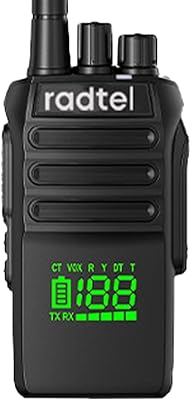
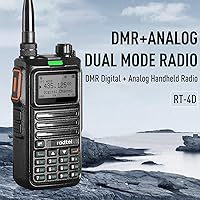
The Radtel RT-4D DMR Two-Way Radio arrived in late 2024 as a genuinely interesting option for ham operators ready to explore digital radio without abandoning their analog roots. This dual-mode walkie-talkie sits in a comfortable middle ground — capable enough to satisfy experienced users, yet accessible enough for those just stepping into DMR territory. It ships with a 3500mAh battery already in the box, measures just over 12 inches tall, and weighs just over a pound. With around 85 early ratings averaging 4.1 stars, buyer sentiment is positive, though the sample size is still modest enough to warrant a measured read.

Features & Benefits

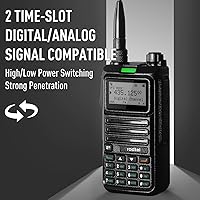
The RT-4D packs a serious amount of functionality into a handheld form. 1024 programmable channels with support for 2000 digital contacts means most club or repeater setups can be fully loaded without hitting a ceiling. DMR Tier 1 and Tier 2 dual time slot operation opens up both simplex and repeater-based digital links, which is genuinely useful once you start working local infrastructure. The AES-256 encryption support stands out at this price — it is not just a checkbox feature; coordinated groups can actually use it. Receiving aviation band signals, NOAA weather broadcasts, and sending SMS to other RT-4D units round out a surprisingly capable feature set. USB-C charging is a welcome and overdue standard.

Best For

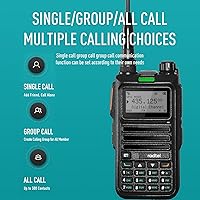
This DMR handheld is a strong fit for licensed ham radio operators who want to experiment with digital without buying a dedicated single-mode radio. Emergency preparedness folks will appreciate having NOAA weather built in alongside a wide receive window — that kind of coverage matters when you need information fast. Clubs and teams that need group call, individual call, and the option to add encryption on sensitive channels will find the contact capacity more than sufficient. That said, this is not an ideal pick for casual users expecting a plug-and-play experience. Programming DMR radios takes patience, software, and some learning — budget time for that upfront.

User Feedback

Buyer sentiment at this stage is cautiously positive, with most praise centered on value for money — people are genuinely surprised by how many features they get at this price. Build quality gets reasonable marks; it feels solid enough for a handheld, though nobody is mistaking it for a ruggedized unit. The lack of water resistance comes up occasionally, and that is a real consideration for anyone planning outdoor use in unpredictable weather. On the critical side, a handful of buyers flag the programming learning curve as steep for first-timers, and some find the included manual thin on detail. Real-world range tends to fall short of 5km in anything but open terrain — worth knowing going in.

Pros

  • Dual analog and digital modes give licensed operators genuine flexibility without buying two separate radios.
  • AES-256 encryption support is a rare and practical feature at this price tier.
  • 1024 channels and 2000 digital contacts handle even large club or repeater setups with room to spare.
  • Aviation band receive turns this DMR handheld into a capable wide-range scanner as well.
  • NOAA weather monitoring adds real emergency-preparedness value beyond standard radio functions.
  • USB-C charging means no hunting for proprietary cables or legacy connectors.
  • The 3500mAh battery ships included and provides solid runtime for extended use.
  • SMS messaging between RT-4D units is a handy team coordination feature in the field.
  • DMR Tier 1 and Tier 2 support means it works both simplex and through repeater infrastructure.
  • One-year manufacturer warranty offers reasonable peace of mind for a newer product.

Cons

  • Programming this radio requires third-party software and a real time investment — it is not intuitive for beginners.
  • The included user manual is thin and leaves too many setup questions unanswered.
  • No water resistance rating makes it a risky choice for outdoor or field use in wet conditions.
  • Real-world range falls well short of the stated 5km maximum in anything other than open terrain.
  • The review base is still small, so long-term reliability data is limited at this stage.
  • Build quality is functional but plastic-forward, which may feel underwhelming compared to pricier alternatives.
  • First-time DMR users may find the contact and channel structure confusing without prior experience.
  • Transmitting legally requires an amateur radio license, which narrows the practical buyer pool significantly.

Ratings

The scores below reflect AI-assisted analysis of verified global buyer reviews for the Radtel RT-4D DMR Two-Way Radio, with spam, bot-submitted, and incentivized feedback actively filtered out to protect accuracy. The result is a transparent, balanced picture that weighs both what users genuinely love and where real frustrations surfaced. Strengths and pain points are reflected equally — nothing has been glossed over.

Value for Money
88%
This is consistently the most praised aspect of the RT-4D among verified buyers. Users repeatedly express surprise at getting AES-256 encryption, DMR Tier 2 support, and 1024 channels at this price point — features that typically cost significantly more on competing brands. For budget-conscious ham operators, the perceived value is a genuine differentiator.
A handful of buyers feel the value equation weakens once they factor in the time and optional accessories needed to get it fully programmed and operational. If you need a third-party programming cable or additional software support, those hidden costs add up slightly.
Feature Set
91%
Buyers in the amateur radio community consistently highlight how much this handheld punches above its weight in terms of raw features. Aviation band receive, NOAA weather monitoring, dual time slot DMR, SMS messaging, and wide-band RX in one unit genuinely impresses users who have compared it against peers at similar or slightly higher prices.
Having so many features crammed into one device creates a steeper configuration burden. Some users note that not all features are equally polished — the SMS function, for example, is praised in concept but limited to other RT-4D units, which reduces its real-world usefulness unless your whole group uses the same radio.
DMR Performance
79%
21%
Users who have successfully programmed the radio and connected it to local DMR repeaters — including Brandmeister-linked networks — generally report clean audio and reliable digital decoding. The dual time slot implementation works as expected for Tier 2 operation, and several buyers note smooth switching between digital and analog modes in mixed-use environments.
A portion of buyers who struggled with initial setup report difficulty getting stable DMR connections, which may partly reflect programming errors rather than hardware faults. Audio reports on DMR are positive, but a few users note occasional dropout on weaker repeater signals that analog handles more gracefully.
Ease of Programming
48%
52%
Users with prior DMR or Baofeng-style programming experience tend to get up and running without major complaints. The USB-C connection for programming is universally appreciated, and those familiar with codeplug-based workflows find the Radtel software functional enough for the task.
For first-time DMR users, this is where the experience breaks down most. The included manual provides little real guidance on building a codeplug or configuring talk groups, and the PC software has a learning curve that multiple buyers describe as intimidating without external tutorials. This is the single most common complaint across the review base.
Build Quality
67%
33%
Most buyers accept the plastic construction as appropriate for the price tier and describe the unit as feeling sturdy enough for regular indoor and portable use. The buttons have decent tactile feedback, and the overall assembly does not feel loose or cheap in hand — which is not always a given at this price point.
The radio is heavier than some users expect for a plastic-bodied handheld, and a few buyers note that the casing feels less refined than comparable units from more established brands. It is functional, not impressive — and for outdoor or rough-use environments, the lack of any water resistance rating makes the build feel genuinely limiting.
Battery Life
82%
18%
The included 3500mAh battery earns consistent praise from buyers who use the radio for day-long portable or club operations. Most report comfortably covering a full day of moderate use on a single charge, and the desktop charger included in the box is a nice convenience that many competing kits skip.
Heavy transmitters — users doing extended nets or field day operations — report needing a top-up by late afternoon. There is currently no widely available slim spare battery from Radtel, which means power users are left sourcing compatible third-party options with varying reliability.
Audio Clarity
76%
24%
On analog, audio quality is rated positively by most buyers, with clear receive even at moderate distances. Digital audio through DMR is described as noticeably cleaner than analog in noisy environments, which is one of the reasons buyers upgrading from basic analog handhelds tend to be pleasantly surprised.
Speaker volume at maximum is adequate but not exceptional — buyers in loud environments like construction sites or busy events wish it were louder. A small number of users also report a faint background hiss on analog receive that becomes noticeable during quiet monitoring sessions.
Range
58%
42%
In open rural terrain, several buyers report solid direct handheld-to-handheld performance at distances well beyond basic FRS radios. Through a well-placed repeater, the practical communication range extends dramatically, which is the more realistic use case for a DMR radio of this class.
The 5km direct range claim is frequently contested in buyer feedback. Suburban users typically see 1 to 2km of reliable coverage before signal degrades noticeably, which disappoints buyers who took the maximum figure at face value. Real-world terrain and obstructions hit this radio harder than the spec sheet suggests.
Analog Reception
83%
Wide-band analog receive — including the aviation AM band from 108 to 136 MHz — is a genuine highlight for buyers who use the radio as a scanner alongside its primary two-way functions. NOAA weather monitoring receive works reliably and adds meaningful utility for emergency preparedness users who want one radio to handle multiple monitoring tasks.
Analog transmit performance is solid but not exceptional at range, and a few buyers note that sensitivity on the lower end of the receive spectrum is slightly inconsistent. For pure analog scanning performance, dedicated receivers still edge this out, but for a dual-purpose use case the balance is reasonable.
Display & Interface
71%
29%
The display is clear and readable in most lighting conditions, and the dual-frequency standby view lets users monitor two channels at once without diving into menus. Customizable side keys are appreciated by users who want quick access to specific monitoring or scanning functions without interrupting active use.
Navigating the menu system can feel unintuitive, particularly when trying to switch modes or adjust settings in the field without the programming software open on a laptop. Users coming from simpler analog radios often find the interface requires a patience and familiarity period before it feels natural.
Encryption Usability
62%
38%
For coordinated groups running multiple RT-4D units, the AES-256 encryption capability is a standout feature that buyers in security-sensitive or privacy-conscious applications genuinely value. Having 256 storable keys gives groups real flexibility in managing channel-level privacy across different use cases.
Encryption is only practically useful when all communicating radios share the same standard and key — which means it only works between RT-4D units in most real scenarios. Buyers who expected broader cross-brand encrypted communication were disappointed to discover this limitation after purchase.
Included Accessories
74%
26%
The package contents are more generous than many competing entry-level DMR kits — a desktop charger, USB-C cable, dual-band antenna, and belt clip all ship in the box without upselling. Buyers appreciate not having to immediately purchase extras just to make the radio functional from day one.
The included antenna is functional but average, and more experienced users typically swap it out for an aftermarket option fairly quickly. The belt clip, while included, is described by several buyers as flimsy and prone to loosening under regular use.
Manual & Documentation
41%
59%
The English manual is at least present and covers basic operational functions clearly enough for users who only need a quick reference once they have already set the radio up via software. Layout and print quality are acceptable.
This is one of the weakest points flagged by new buyers. The manual does not adequately explain DMR programming concepts, codeplug structure, or how to connect to a repeater network — which are exactly the things a first-time DMR user needs most. Most buyers end up relying on online forums or YouTube tutorials to fill the gaps.
Water Resistance
29%
71%
The radio performs as expected in dry conditions, and buyers using it primarily indoors or in controlled environments have no complaints related to environmental exposure. For fair-weather portable use, the lack of sealing has not been an issue for most.
The complete absence of any water or dust resistance rating is a real limitation that surfaces repeatedly in outdoor-use contexts. Rain, high humidity, or accidental drops near water are genuine risks, and buyers who planned to use this radio during hiking, boating, or emergency field operations were left wishing for at least a basic IP rating.
Software & Compatibility
55%
45%
The Radtel programming software is free to download and handles the essential codeplug functions adequately once users get past the initial learning curve. USB-C connectivity for programming is a welcome modern touch that eliminates the need for legacy adapter cables common with older radios.
The software is Windows-only, leaving Mac and Linux users without a native solution. Several buyers report driver issues on Windows 11 that required troubleshooting before the radio would be recognized by the computer, adding friction to an already complex setup process.

Suitable for:

The Radtel RT-4D DMR Two-Way Radio is a well-matched choice for licensed ham radio operators who want to step into the DMR world without completely leaving analog behind — the dual-mode design means you are not forced to choose one or the other right away. Emergency preparedness users will find real value here too, since the combination of NOAA weather receive, wide-band scanning, and a solid battery means the radio stays useful when conditions get unpredictable. Amateur radio clubs and coordinated teams benefit from the deep contact capacity and the availability of encrypted channels, which is not something you typically find at this price point. If you are already using Radtel gear and want something that fits naturally into your existing setup, the RT-4D slots in cleanly. Budget-minded digital radio enthusiasts who have been on the fence about DMR will find this one of the more complete entry points available without a heavy financial commitment.

Not suitable for:

The Radtel RT-4D DMR Two-Way Radio is not the right tool for buyers expecting a ready-to-use experience straight out of the box. DMR programming is genuinely complex — you will need third-party software, likely a USB-C data cable setup, and some patience before the radio is properly configured for your local repeaters or talk groups. Casual users or families looking for simple point-to-point communication will find the learning curve far steeper than it is worth. The radio is also not water resistant in any meaningful way, which is a real limitation for anyone planning to use it in rain, on a boat, or during outdoor emergencies where wet conditions are likely. Buyers who need guaranteed long-range coverage should also temper expectations — the 5km figure reflects ideal open-air conditions, and real-world suburban or wooded terrain will fall noticeably short of that. Finally, if you have no amateur radio license, many of the transmit functions on this radio are legally restricted, making it a poor fit for unlicensed buyers.

Specifications

  • Dimensions: The radio measures 1.18 x 2.48 x 12.28 inches, making it a full-sized handheld that fits comfortably in hand without being overly bulky.
  • Weight: At 1.06 pounds with battery, it is heavier than basic analog handhelds but well within the typical range for feature-rich DMR portables.
  • Frequency TX: Transmit coverage spans VHF 136–174 MHz and UHF 400–470 MHz in DMR mode, with analog TX across 136–174 MHz and 350–470 MHz.
  • Frequency RX: Receive range extends from 108–136 MHz for aviation AM band through to 520 MHz analog, providing broad monitoring capability beyond just the ham bands.
  • Channel Capacity: Supports up to 1024 programmable channels, accommodating extensive zone and repeater configurations for active club or regional use.
  • Digital Contacts: Stores up to 2000 digital call contacts and 256 receive group lists, enabling flexible DMR talk group management without hitting storage limits.
  • DMR Standard: Compliant with DMR Tier 1 and Tier 2 dual time slot operation, supporting both direct simplex links and repeater-based digital infrastructure.
  • Encryption: Offers ARC, AES-128, and AES-256 voice encryption with up to 256 stored keys, providing meaningful communication privacy for coordinated groups.
  • Battery: Ships with a 3500mAh lithium-ion battery that provides extended runtime and charges via the included USB-C cable and desktop charger.
  • Charging: Uses a standard USB-C connection for charging, compatible with modern cables and power sources without requiring a proprietary adapter.
  • Weather Receive: Includes dedicated NOAA weather channel receive, allowing users to monitor official weather broadcasts without a separate device.
  • Text Messaging: Supports DMR SMS text messaging to other RT-4D units on the same network, useful for silent coordination in the field.
  • FM Radio: Built-in FM radio reception covers standard broadcast bands, adding casual listening capability beyond two-way communication functions.
  • Water Resistance: The RT-4D carries no official water resistance rating and should be treated as unsuitable for use in rain or wet outdoor environments.
  • Antenna: Ships with a dual-band antenna covering both VHF and UHF ranges; the connector is standard and compatible with aftermarket antenna upgrades.
  • Display: Features a clear multi-function display showing channel, frequency, signal, and mode information for both analog and digital operation.
  • Side Keys: Includes programmable side keys and customizable keypad functions that can be assigned to user-preferred shortcuts or monitoring modes.
  • Standby Mode: Dual-frequency standby allows the radio to monitor two channels or frequencies simultaneously and alert on either when activity is detected.
  • Warranty: Covered by a one-year manufacturer warranty from Xiamen Radtel Electronics Co., Ltd., providing basic protection against manufacturing defects.
  • Box Contents: Package includes the radio body, 3500mAh battery, desktop charger, USB-C cable, dual-band antenna, belt clip, and an English user manual.

Related Reviews
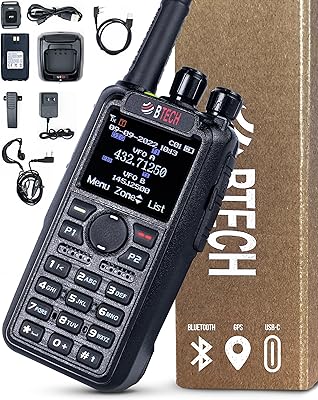
BTECH DMR-6X2 PRO Two-Way Radio
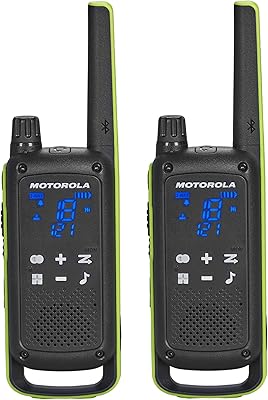
87%
88%
Performance & Signal Quality
91%
Bluetooth Functionality
85%
GPS & APRS Features
83%
Battery Life
92%
Build Quality & Durability
More
Motorola T803 Two-Way Radio
83%
84%
Range Performance
88%
Battery Life
78%
Bluetooth Functionality
90%
Build Quality & Durability
85%
Ease of Use
More
Radtel RT-493 GMRS Radio 10W
86%
91%
Range Performance
89%
Durability (Waterproofing & Build Quality)
81%
Battery Life
88%
Usability & Interface
90%
Charging Convenience (USB-C)
More
Baofeng AR-5RM Handheld Ham Radio
77%
93%
Value for Money
78%
Ease of Use
61%
Transmission Range
67%
Build Quality
74%
Battery Life
More
Motorola T470 Talkabout Two Way Radios
84%
88%
Range Performance
91%
Ease of Use
85%
Build Quality & Durability
83%
Weather Resistance
80%
Battery Life
More
Motorola DLR1060 Business Two Way Radios
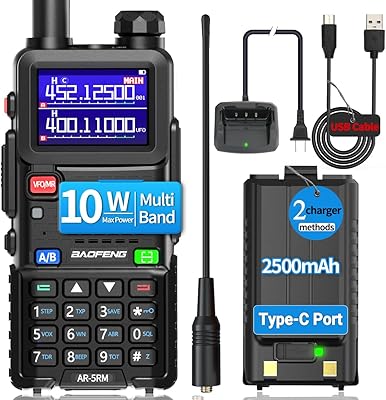
85%
92%
Battery Life
88%
Ease of Use
75%
Range
87%
Build Quality
90%
Portability
More
Midland MXT115VP3 GMRS MicroMobile Radio
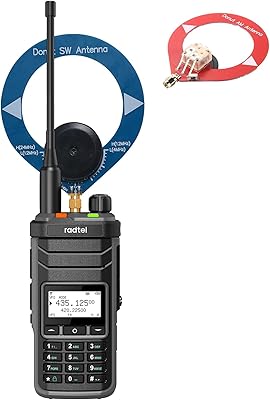
76%
78%
Transmission Range
84%
Audio Clarity
81%
Repeater Functionality
76%
Ease of Installation
79%
Build Quality
More
Radtel RT-860 Multiband Ham Radio Transceiver
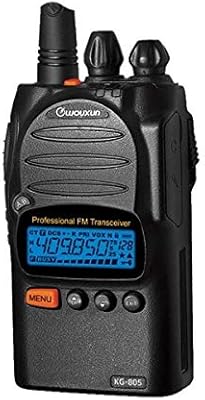
75%
88%
Value for Money
76%
Reception Range & Sensitivity
59%
SSB & HF Audio Quality
83%
Build Quality & Durability
62%
Ease of Programming & Setup
More
Wouxun KG-805G GMRS Two Way Radio
81%
88%
Battery Life
91%
Water Resistance
75%
Communication Range
85%
Portability
70%
Ease of Use
More
Garmin Rino 700 Handheld GPS and Two-Way Radio
83%
87%
Battery Life
91%
Communication Range
84%
GPS Accuracy
90%
Durability
88%
Ease of Use
More

FAQ

Yes, transmitting on the frequencies this radio supports legally requires an amateur radio license in most countries. In the US, that means at minimum a Technician class license from the FCC. Receiving only does not require a license, but if you plan to transmit on VHF or UHF ham bands or through DMR repeaters, get licensed first.

It depends on the network setup. The RT-4D follows the standard DMR protocol, so it can communicate with other DMR-compliant radios on the same talk group and time slot. However, proprietary features — like Motorola-specific enhancements or manufacturer-locked encryption — will not cross over. For open DMR networks and repeaters, compatibility is generally solid.

Basic channel edits are possible from the keypad, but for any meaningful setup — loading repeater data, assigning talk groups, configuring contacts — you will want to use Radtel's PC programming software. You connect via USB-C, load your codeplug, and write it to the radio. It is worth spending an hour or two learning the software before your first session; trying to do it all from the keypad will be frustrating.

The 5km figure is an open-field best case. In practice, suburban use with buildings and trees typically lands somewhere in the 1–2km range for direct handheld-to-handheld. Through a well-placed repeater, effective range can extend dramatically — that is where DMR really shines compared to simplex analog.

Yes, as long as the repeater is set up for standard DMR Tier 2 operation, the RT-4D can connect to networks like Brandmeister once it is properly programmed with the correct color code, time slot, and talk group information. You will need to look up your local repeater details and enter them into a codeplug via the programming software.

No, it carries no water or splash resistance rating at all. Keep it dry. If you are planning to use it outdoors in variable weather, a protective pouch or case is worth considering. It is not built for rain exposure or field conditions where moisture is likely.

Yes, the receive range covers 108–136 MHz for aviation AM band, which means you can listen to air traffic and airport communications. This is receive-only — transmitting on aviation frequencies without proper certification is illegal — but it makes the radio genuinely useful as a wide-band scanner alongside its DMR functions.

The AES-128 and AES-256 encryption will only work with radios that share the same encryption standard and key. In practice, this usually means other Radtel RT-4D units using the same stored key. Encrypted communication with radios from other manufacturers is generally not interoperable unless they support the exact same encryption method and key exchange.

Radtel provides free programming software for the RT-4D on their website. You will also need a USB-C data cable — the one included in the box should work for programming as well as charging. The software is Windows-based, so Mac users may need a virtual machine or workaround to run it natively.

With the included 3500mAh battery, you can reasonably expect a full day of moderate use — typical estimates for radios in this class run 8 to 12 hours depending on how often you transmit. Standby time is considerably longer. Heavy transmit-heavy use will drain it faster, so having a spare battery or access to USB-C charging during the day is a smart backup plan.

Where to Buy