Overview

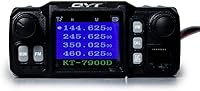
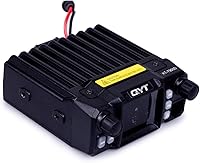
The QYT KT-7900D Quad Band Ham Radio is a compact desktop unit that gives licensed amateur radio operators genuine multi-band capability without the price tag of a flagship rig. Sitting across four frequency bands with quad standby monitoring, it lets you watch multiple repeaters simultaneously — a genuinely useful feature for active operators. The included accessory kit covers the basics well: speaker mic, DC power cable, brackets, mounting hardware, and a programming cable right in the box. Just keep expectations grounded. This is a budget-tier radio, and it performs like one — competently for the price, but without the polish you would find on higher-end gear.
Features & Benefits

The real story here is the band coverage. The KT-7900D spans VHF 136-174 MHz, the often-overlooked 1.25M band at 220-270 MHz, and two UHF ranges stretching from 350 MHz up to 480 MHz. Output power hits 25W on VHF and 20W on UHF, with a switchable low setting for situations where you do not need full power. The 200-channel memory handles repeater networks handily, and the feature list — DTMF, PTT ID, remote stun/kill, alarm, and FM radio — is surprisingly deep for the price. Running at 13.8V DC, it works with a standard shack power supply or a vehicle connection, and the compact footprint barely occupies desk space.

Best For

This quad-band base radio is a natural fit for newly licensed hams — Technician and General class operators who want to explore more than just the standard 2M and 70cm bands without spending heavily. Keep in mind that a valid amateur radio license is legally required to transmit. The 1.25M band inclusion is a genuine rarity at this price tier; most competing radios simply skip it. Operators needing to monitor several local repeaters at once will appreciate quad standby. Front-panel programming is clunky by most accounts, so it suits people comfortable using CHIRP or the supplied software for setup. There is no water resistance, so keep it sheltered.

User Feedback

Across 72 ratings, the KT-7900D sits at 3.9 out of 5 — decent, though the spread tells a nuanced story. Owners frequently praise receive audio clarity and the genuine value of four-band coverage in one small box, with the included programming cable drawing consistent appreciation. On the other side, several users flag that the bundled microphone delivers only average transmit audio, and front-panel menu navigation is genuinely frustrating without the manual close at hand. A few longer-term owners have noted the unit running warm during extended sessions. Worth keeping in mind: some of the harsher reviews come from experienced operators comparing this desktop ham radio against gear that costs considerably more.

Pros

  • Four-band coverage including the rarely supported 1.25M band sets it apart from most rivals at this price.
  • Quad standby lets you monitor repeaters across all four bands at the same time — genuinely useful for active operators.
  • 25W VHF output is solid for a desktop unit in this category.
  • 200-channel memory is more than enough for most local and regional repeater setups.
  • The included accessory kit — mic, brackets, DC cable, and programming cable — adds real out-of-the-box value.
  • PC04FTDI programming cable works with Windows 10, making CHIRP-based setup straightforward.
  • Compact dimensions mean it fits comfortably on a cluttered desk or in a vehicle installation.
  • Feature set punches above its weight: DTMF, PTT ID, repeater support, remote stun/kill, and FM radio are all present.
  • Operating at standard 13.8V DC means it integrates easily with existing shack power supplies.

Cons

  • Bundled microphone delivers only average transmit audio quality — an upgrade mic is worth considering.
  • Front-panel menu navigation is unintuitive and poorly documented in the included user guide.
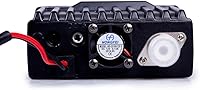
  • The unit can run noticeably warm during extended operating sessions, which is worth monitoring.
  • No water resistance at all — any moisture exposure is a real risk.
  • Real-world range is highly dependent on terrain, antenna quality, and repeater access; advertised figures should be taken with caution.
  • Only 72 user ratings total, which limits the confidence you can have in aggregate feedback patterns.
  • Some reported inconsistencies in build finish and component feel compared to radios in higher price tiers.
  • Not ideal for operators who need reliable, polished performance in a net-control or emergency communications role.

Ratings

Our AI-generated scores for the QYT KT-7900D Quad Band Ham Radio are derived from systematic analysis of verified global buyer reviews, with spam, bot activity, and incentivized feedback actively filtered out before scoring. Each category reflects the honest balance of what real operators praised and what genuinely frustrated them — nothing is glossed over. Whether this desktop ham radio suits your shack depends heavily on context, and these ratings are designed to surface exactly that nuance.
Value for Money
83%
For operators building a first home shack on a modest budget, the sheer breadth of band coverage offered here is difficult to match at this price tier. Getting four bands, 200 channels, repeater support, and a usable accessory kit in a single package strikes most buyers as a genuinely fair deal.
A handful of experienced hams feel the price should buy a more polished product overall — particularly given the microphone quality and front-panel usability issues. If you compare it against imported alternatives, the value proposition narrows slightly.
Band Coverage
91%
The inclusion of the 1.25M band (220-270 MHz) is the single biggest differentiator this radio offers — most competing units at this price simply omit it entirely. Operators in areas with active 220 MHz repeaters consistently highlight this as the reason they chose the KT-7900D over alternatives.
The 350-390 MHz UHF sub-band sees limited practical activity in most regions of North America, meaning one of the four bands may sit largely unused for many buyers. Coverage breadth is impressive on paper but real-world utility depends entirely on local band activity.
Ease of Programming
58%
42%
When paired with CHIRP software and the included PC04FTDI cable, most users report a relatively painless setup experience — loading a full set of local repeater channels takes under half an hour for anyone comfortable with a spreadsheet-style interface.
Front-panel manual programming is where things fall apart. The menu structure is non-intuitive, the user guide provides minimal guidance, and multiple reviewers describe spending an hour or more just to enter a handful of channels without a PC. This is a real barrier for operators who prefer working without a computer.
Receive Audio Quality
77%
23%
Received audio through the built-in speaker is consistently described as clear and sufficiently loud for typical shack use, with good sensitivity on busy repeater systems. Operators monitoring multiple bands simultaneously appreciate that signals cut through cleanly even at lower volume settings.
At the edges of a repeater's coverage footprint, some users notice the squelch behavior becoming slightly erratic. The internal speaker is adequate but not exceptional — in a noisy environment like a workshop or vehicle cab, it can struggle to compete with background noise.
Transmit Audio Quality
61%
39%
Transmitted audio is functional and generally intelligible on local repeaters, with most contacts reporting they can copy the operator without issue under normal conditions. The included DTMF mic handles tone access reliably, which matters for repeater systems that require it.
The bundled microphone is the most commonly cited disappointment — audio reports from other operators frequently describe it as thin, slightly muffled, or lacking presence compared to even modestly priced aftermarket mics. For regular net participation or emergency communications use, a replacement mic is a practical necessity.
Build Quality
66%
34%
The chassis feels reasonably solid for a radio in this class, and the front panel controls have a satisfying tactile response that does not feel flimsy in everyday use. Most users report the unit holding up fine under normal shack or vehicle conditions over months of use.
The finish quality is inconsistent — some units arrive with minor cosmetic imperfections, and the overall material feel does not inspire confidence the way a Yaesu or Kenwood product does. Long-term durability data beyond 12-18 months of ownership is limited given the review sample size.
Thermal Management
54%
46%
Under typical intermittent use — keying up for a few minutes, then monitoring — the radio stays at a manageable temperature without any cause for concern. Operators running it for casual QSOs and repeater monitoring report no issues in normal shack conditions.
Extended transmit sessions at full power push the unit into noticeably warm territory, and several long-term owners have flagged heat buildup as a concern during sustained operation. There is no active cooling, so ensuring adequate airflow around the unit is genuinely important rather than optional.
Quad Standby Performance
79%
21%
The ability to monitor all four bands simultaneously is a practical and well-executed feature, particularly useful for operators who want to keep an ear on a local 2M repeater while also watching 70cm and 220 MHz activity. The display handles multi-band monitoring without becoming confusing.
Priority channel handling in quad standby mode is not especially sophisticated — in busy RF environments with multiple simultaneous signals, the radio does not always prioritize intelligently. Users coming from higher-end radios may find the standby logic somewhat basic.
Accessory Kit Completeness
74%
26%
Including brackets, mounting hardware, a DC power cable, a DTMF speaker mic, and a programming cable in the box represents genuine added value — most budget radios ship with far less. New operators can get the radio mounted and operational without an immediate trip to an accessory supplier.
The DC power cable is shorter than many users expect, which can create challenges depending on where the radio is mounted relative to the power supply. Cable quality across the included accessories is functional rather than durable, and some owners replace them fairly quickly.
Software Compatibility
71%
29%
CHIRP compatibility is a significant plus — it is free, widely supported, and the ham radio community has extensive documentation for programming this specific model. The included PC04FTDI cable works reliably with CHIRP on Windows systems without requiring obscure driver workarounds in most cases.
Official manufacturer software is basic and does not offer the same flexibility or community support as CHIRP. Windows 11 compatibility with the included cable requires a manual FTDI driver installation step that trips up less tech-savvy buyers, and Mac users face a steeper setup curve.
Compactness & Portability
86%
At under 16 ounces and roughly the footprint of a thick paperback book, this quad-band base radio is genuinely easy to position in a cramped shack, mount under a vehicle dash, or pack for portable operation with a regulated DC supply. Its size is one of its least contested strengths.
The compact chassis means internal component density is high, which contributes to the heat buildup noted by some users. There is also no battery option or built-in portable power — it is strictly a corded unit, so true field portability requires external power planning.
Feature Depth
81%
19%
Remote stun and kill functions, PTT ID, DTMF encode/decode, repeater operation, and a built-in FM broadcast receiver give this radio a feature list that genuinely punches above its price bracket. For a new ham exploring what their radio can do, there is more to discover here than in many similarly priced alternatives.
Several of the advanced functions — particularly remote stun and kill — are sparsely documented in the included user guide, leaving operators to rely on community forums or YouTube tutorials to understand them fully. The gap between available features and accessible documentation is frustrating.
Repeater Performance
78%
22%
On well-established local repeaters within reasonable range, the KT-7900D performs reliably — CTCSS and DCS tone access works cleanly, and the radio keys up and drops off repeaters without significant timing issues that would cause courtesy-tone problems.
On weaker or distant repeaters at the edge of coverage, some operators report marginal performance that a higher-powered or more sensitive radio would handle better. The radio is adequate for local repeater work but is not the tool for pushing the limits of a weak-signal path.
Documentation & Support
43%
57%
The ham radio community has partially filled the documentation gap — CHIRP guides, YouTube programming walkthroughs, and forum threads specific to this model exist and are reasonably easy to find. For operators comfortable doing their own research online, usable help is available.
The included user guide is widely criticized as inadequate — vague on menu navigation, missing key operational details, and poorly translated in places. QYT does not maintain a robust customer support infrastructure for international buyers, meaning troubleshooting often relies entirely on community resources rather than official channels.

Suitable for:

The QYT KT-7900D Quad Band Ham Radio is a strong match for newly licensed Technician and General class operators who want to explore multi-band amateur radio without committing to a high-end rig. If your goal is to monitor and access local repeaters across VHF and UHF bands simultaneously, the quad standby capability makes that genuinely practical from a single compact unit. The inclusion of the 1.25M band (220-270 MHz) is a real differentiator — most radios in this class simply omit it, so operators with activity on that band will find the KT-7900D particularly relevant. It also suits hams building out a small home shack on a tight budget, since the included accessories — brackets, DC cable, speaker mic, and programming cable — mean you are not piecing together a starter kit from scratch. Operators comfortable using CHIRP or the manufacturer software for channel setup will have a much smoother experience than those expecting intuitive front-panel programming.
Not suitable for:

The QYT KT-7900D Quad Band Ham Radio is not the right choice for experienced operators who prioritize audio fidelity, advanced DSP filtering, or the build quality associated with established brands like Yaesu, Kenwood, or Icom. This is a budget-tier radio, and the compromises show in areas like microphone transmit quality and long-session heat management — neither is a dealbreaker for casual use, but both matter if you are running nets or extended operating sessions. Anyone expecting plug-and-play simplicity should look elsewhere; legal transmission requires a valid amateur radio license, and the radio itself demands some patience during initial setup. It is also not suited for outdoor or field use, as it carries no water resistance rating whatsoever. Finally, if front-panel programming is important to you and you prefer not to rely on a PC for setup, the menu navigation on this desktop ham radio will likely frustrate more than it helps.
Specifications

  • Band Coverage: Covers four bands: VHF 136-174 MHz, 220-270 MHz (1.25M), and UHF 350-390 MHz and 400-480 MHz.
  • Max Output Power: Delivers up to 25W on VHF bands and up to 20W on UHF bands at full power setting.
  • Power Settings: Offers two selectable output levels: High (25W) and Low (10W) for situations requiring reduced transmission power.
  • Channel Memory: Stores up to 200 programmable channels across all four bands.
  • Operating Voltage: Requires a 13.8V DC power source, compatible with standard amateur radio shack power supplies and vehicle connections.
  • Dimensions: The radio body measures 3.86 x 4.96 x 1.69 inches, making it one of the more compact base-station units in its class.
  • Weight: The unit weighs approximately 15.8 ounces (about 0.45 kg), not including the microphone or mounting hardware.
  • Display: Features a quad standby display capable of showing activity across all four bands simultaneously.
  • Core Functions: Supports DTMF, PTT ID, remote stun, remote kill, repeater operation, alarm, FM radio reception, and monitor mode.
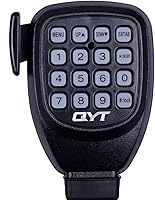
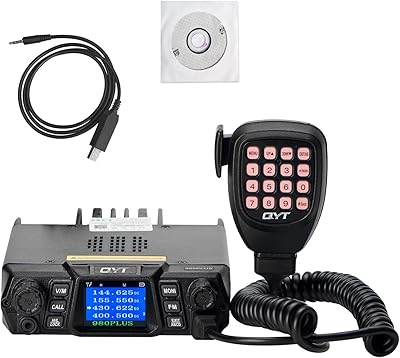
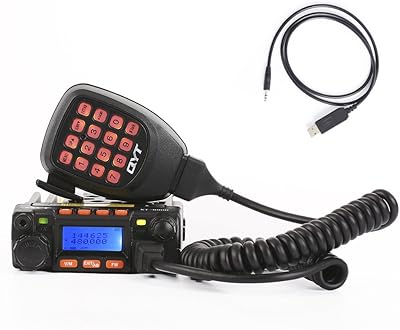
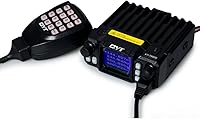
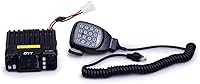
  • Included Accessories: Ships with a DTMF-capable speaker microphone, DC power cable, radio and mic brackets, mounting hardware, programming cable, and a user guide.
  • Programming Cable: Includes a PC04FTDI USB programming cable confirmed compatible with Windows 10 and Windows XP.
  • Water Resistance: Carries no water or dust resistance rating and should be kept away from moisture at all times.
  • Manufacturer: Designed and produced by QYT, a Chinese manufacturer known for budget-oriented amateur radio equipment.
  • Market Debut: This model was first made available in December 2016 and remains in active production as of the time of this review.
  • License Requirement: Legal transmission on all bands requires a valid amateur radio license issued by the relevant national authority (e.g., FCC Technician class or higher in the US).

Related Reviews

QYT KT-980PLUS Dual Band Mobile Ham Radio
63%
71%
Value for Money
58%
Output Power
39%
Programming Experience
83%
Display Readability
78%
Quad-Standby Functionality
More
QYT KT-8900 Dual Band Mobile Radio
74%
91%
Value for Money
83%
Audio Clarity
78%
Ease of Programming
63%
Build Quality
74%
RF Performance
More
Retevis RT95 Dual Band Mobile Ham Radio
77%
88%
Audio Clarity
67%
Ease of Programming
91%
Display & Readability
86%
Value for Money
74%
Build Quality
More
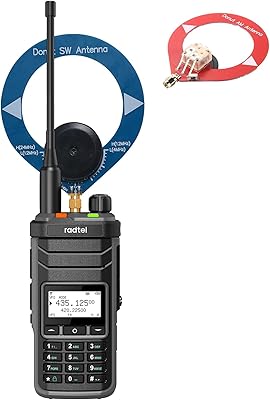
Radtel RT-860 Multiband Ham Radio Transceiver
75%
88%
Value for Money
76%
Reception Range & Sensitivity
59%
SSB & HF Audio Quality
83%
Build Quality & Durability
62%
Ease of Programming & Setup
More
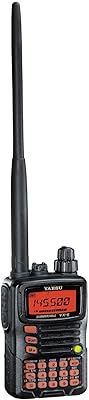
Yaesu VX-6R Tri-Band Ham Radio Transceiver
80%
93%
Build Quality & Durability
91%
Waterproofing & Weather Resistance
88%
Receiver Performance
86%
Audio Clarity
77%
Transmit Power & Range
More
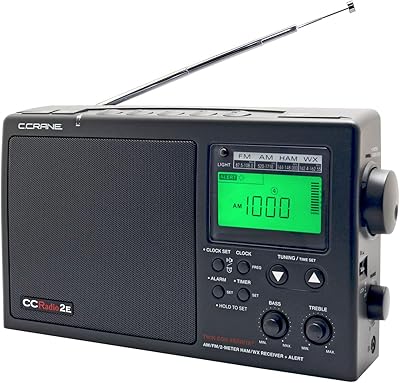
C. Crane CCRadio-2E Enhanced Portable AM FM Weather and 2-Meter Ham Band Radio
85%
94%
Battery Life
89%
AM Reception
90%
NOAA Weather Alerts
70%
Portability
85%
Durability
More
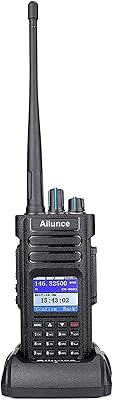
Ailunce HD1 Ham Radio
82%
93%
Durability & Build Quality
89%
Battery Life
75%
Ease of Use
90%
Range & Signal Performance
91%
Waterproofing
More
ONCHEER AM/FM/SW Portable Retro Radio
74%
83%
Value for Money
89%
Design & Aesthetics
86%
Ease of Use
74%
AM/FM Reception
51%
Shortwave Reception
More
TIDRADIO TD-H3 Ham Multi-Band Two-Way Radio
75%
91%
Value for Money
83%
Ease of Programming
88%
Battery Life
61%
Firmware Stability
67%
Build Quality
More
BAOFENG UV-17R Dual Band Ham Radio
73%
91%
Value for Money
63%
Ease of Setup
54%
Real-World Range
67%
Build Quality
61%
Audio Quality
More

FAQ

Yes, absolutely. You need a valid amateur radio license to legally transmit on any of the bands this radio covers. In the US, a Technician class license from the FCC is the minimum required. The radio itself can be purchased and set up without a license, but keying up the mic without one puts you on the wrong side of federal law.

Technically yes, but it is not a pleasant experience. Front-panel programming on the KT-7900D is widely reported as unintuitive, and the user guide does not make it much easier. Most owners strongly recommend using CHIRP (free, open-source software) with the included PC04FTDI cable to program channels — it takes about 20 minutes and saves a lot of frustration.

The cable is officially rated for Windows 10 and XP, but many users have reported it working on Windows 11 after installing the correct FTDI driver manually. If it does not connect automatically, download the FTDI VCP driver from the official FTDI website and try again. Mac and Linux users can also use this cable with CHIRP after installing the appropriate drivers.

The radio runs on 13.8V DC, which is the standard voltage used by most amateur radio base station setups. Any regulated 13.8V power supply rated for at least 5-6 amps will handle it comfortably at full power. If you are already running other ham gear at home, there is a good chance your existing supply will work.

Treat that figure as a best-case theoretical number, not something you should expect in typical conditions. Real-world range depends heavily on your antenna, local terrain, building density, and whether you are hitting a repeater or communicating simplex. In flat, open terrain with a good external antenna and repeater access, decent range is achievable — but in a hilly or urban area, direct simplex range will be much shorter.

That depends entirely on your local ham community. The 1.25M band has limited but dedicated activity in many parts of the US and Canada, often through regional repeaters. Before buying this radio specifically for 1.25M, check resources like RepeaterBook to see if there are active repeaters near you. If there are, this quad-band base radio is one of the most affordable ways to access that band.

Honestly, average. The bundled speaker mic is functional and includes DTMF capability, which is useful for repeater access tones. But audio reports from other operators tend to describe it as thin or slightly muffled compared to aftermarket microphone options. If you plan to use this radio regularly for nets or extended conversations, budgeting for a replacement mic is a worthwhile consideration.

Some owners have noted that the unit runs warm after extended use, particularly at full power output. It is not reported as alarmingly hot, but it is worth ensuring the radio has adequate airflow around it — do not stack gear directly on top of it or box it into a tight shelf space. Switching to the low power setting when full power is not needed also helps keep temperatures in check.

Yes, the QYT KT-7900D Quad Band Ham Radio is designed to work in a vehicle installation. It includes a DC cable with a cigarette lighter plug connector along with radio and mic brackets for mounting. Just keep in mind it is not water resistant, so a dry interior location is essential. The compact dimensions make it easier to mount than many base-station radios.
It is a reasonable choice if you want multi-band capability right away without spending heavily. The main caveats are the learning curve for programming and the fact that the included accessories are functional rather than impressive. For a new operator who is comfortable using CHIRP, wants to explore more than just 2M and 70cm, and understands this is a budget-class radio, it offers solid value as a starter setup.

Where to Buy