Overview

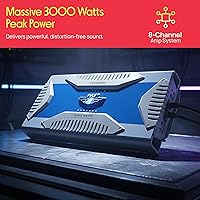
The Pyle PLMRA820 8-Channel Marine Amplifier has been a fixture in the budget-to-mid marine audio market since 2014, and by now there is enough real-world experience with it to give an honest picture. It targets boaters who want to power multiple speakers from a single unit without spending serious money — a segment also occupied by names like Boss and Rockville. The core pitch is an 8-channel bridgeable design with an IP-01 waterproof rating. One important clarification upfront: the advertised 3000W figure is a peak power rating, not a continuous one — the actual rated output is 500W, a distinction that matters when you are planning an install.
Features & Benefits

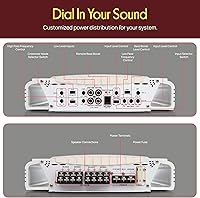
This marine amp runs on a MOSFET power supply, which in practical terms means it draws less current, generates less heat, and delivers a cleaner signal than older transformer-based designs. The tri-mode channel configuration lets you run it as 8 separate channels, bridge pairs down to 4, or mix the two — useful when you are juggling subwoofers and full-range speakers on the same install. Built-in high- and low-pass crossover filters handle basic speaker management without adding an external processor to the mix. Gold-plated output terminals resist corrosion better than standard connectors in a saltwater environment, and thermal overload protection with an LED indicator rounds out a safety package adequate for most recreational use.

Best For

This waterproof amplifier makes the most sense for recreational boaters building out a multi-speaker system on a reasonable budget — think pontoon boats, ski boats, or mid-size center consoles where you want sound across several zones but do not need competition-grade output. It is a solid pick for anyone stepping up from a factory head unit, especially if you are comfortable doing your own wiring. High-level speaker inputs mean you do not need an aftermarket receiver with RCA outputs to get started. Where it falls short is for anyone chasing serious SPL or running demanding bridged subwoofer loads; in that case, a unit with higher rated RMS output is the smarter investment.

User Feedback

The Pyle 8-channel unit sits at 3.4 stars across over a hundred reviews — not a strong score, and it reflects a genuine split in buyer experience. On the positive side, users often highlight the channel count value, the relatively painless installation process, and solid build quality at this price point. The frustrations are just as consistent: some units show early failure, particularly under heavier bridged loads, and the gap between peak and real-world output leaves buyers feeling misled. A fair portion of negative reviews trace back to installation errors rather than product defects, which muddies the picture. The 1-year limited warranty provides basic coverage, though customer service responses appear inconsistent based on buyer reports.

Pros

  • Covers up to 8 speakers from a single amp, making multi-zone boat audio straightforward to set up.
  • Bridgeable and tri-mode configurable, giving you flexibility to adapt the channel layout to your speaker mix.
  • Accepts both RCA and high-level speaker inputs, so you can connect it to almost any head unit without extra adapters.
  • Built-in crossover filters let you tune highs and lows without buying a separate signal processor.
  • Gold-plated output terminals hold up better against salt air and humidity than standard connectors.
  • MOSFET power supply runs cooler and draws current more efficiently than older amplifier designs.
  • Thermal overload and short-circuit protection help safeguard your boat's electrical system during fault conditions.
  • IP-01 marine waterproof rating provides adequate protection for exposed deck installations.
  • At its price point, the channel count and feature set are hard to match from direct competitors.
  • Physical build quality, including the aluminum alloy heatsink, feels sturdier than the price suggests.

Cons

  • The 3000W headline figure is peak-only; continuous rated output is 500W total, which can disappoint buyers expecting more headroom.
  • Several users report unit failure within the first season, particularly when running bridged loads near the amp's limits.
  • Customer service and warranty claim experiences appear inconsistent, with some buyers finding the 1-year coverage difficult to action.
  • At 18.45 pounds and over 27 inches long, this waterproof amplifier is bulky and requires careful space planning for installation.
  • No remote turn-on lead details are documented, which can create wiring confusion for first-time installers.
  • Gain controls and crossover filters are functional but basic — fine-tuned audio setups will quickly outgrow them.
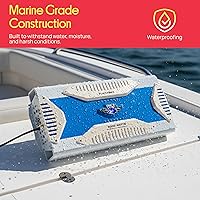
  • The IP-01 waterproof rating is the lowest tier of marine protection; it is splash-resistant rather than submersion-proof.
  • Polarized user reviews make it genuinely hard to predict whether your specific unit will perform reliably long-term.

Ratings

The scores below reflect an AI-driven analysis of verified buyer reviews for the Pyle PLMRA820 8-Channel Marine Amplifier, collected from multiple global sources with spam, incentivized, and bot-generated feedback actively filtered out. Ratings are calibrated to reflect real ownership patterns — not manufacturer claims — so both the strengths and the recurring frustrations are represented transparently. Where scores diverge from expectations, the explanations below clarify exactly what is driving them.

Value for Money
71%
29%
For boaters on a tighter budget who need to cover multiple speaker zones, the channel count per dollar is genuinely competitive. Getting 8 bridgeable channels with built-in crossover filters at this price point is difficult to match from comparable brands like Boss or Rockville.
The value calculation shifts once buyers realize the 3000W headline is peak-only and sustained output is 500W across all channels. Those who expected more continuous power for the price feel the deal is less compelling than the spec sheet suggested.
Channel Flexibility
83%
The tri-mode configuration is a practical advantage for boaters juggling different speaker types across a vessel. Being able to run full-range speakers on some channels while bridging others for a subwoofer — all from one unit — saves real money and installation complexity.
While the flexibility is appreciated, the bridged mode puts more strain on the amp and is where failure reports tend to cluster. Users who push the bridged configuration hard report the unit running hot and, in some cases, shutting down under sustained load.
Reliability & Longevity
47%
53%
Units that are installed correctly and run in standard 8-channel mode within reasonable power demands have shown acceptable longevity for a budget-tier marine amp. Some owners report multiple seasons of trouble-free use on smaller boats with modest speaker setups.
A meaningful proportion of buyers report failure within the first season, which is the single biggest concern across the review base. Early failure patterns — particularly in bridged or high-load scenarios — drag this score down significantly and are difficult to ignore given how consistently they appear.
Waterproofing & Marine Protection
66%
34%
The IP-01 marine rating and gold-plated terminals give this waterproof amplifier a credible baseline for open-air boat use. Buyers running the unit in splash-prone deck locations generally report the housing holding up against incidental water exposure without immediate issues.
IP-01 is the lowest tier of marine waterproofing, and buyers who assumed it meant full weather resistance were sometimes disappointed after heavy rain exposure. It handles spray and humidity, but it is not a substitute for a properly sheltered install location on vessels with no cabin protection.
Power Output Accuracy
38%
62%
When expectations are calibrated correctly to the 500W rated output rather than the 3000W peak figure, the amp delivers reasonable volume and clarity for recreational listening on mid-size boats. Users with modest speaker systems and realistic expectations generally find the output adequate.
This is the most polarizing aspect of the entire product. The gap between the advertised peak wattage and the real continuous output has generated widespread frustration, and buyers who sized their speaker systems expecting sustained high power have been consistently disappointed. It is the leading driver of negative reviews.
Ease of Installation
76%
24%
The dual input options — RCA and high-level speaker inputs — make this marine amp adaptable to almost any head unit situation, which DIY installers appreciate. Wiring labeling is clear enough that buyers with basic car audio experience report a smooth setup process.
The physical size of the unit (over 27 inches long and nearly 18.5 pounds) makes finding a suitable mounting location on smaller boats genuinely challenging. A few buyers also noted that the included documentation could be more detailed for first-time marine amp installers.
Build Quality
69%
31%
The aluminum alloy heatsink feels solid in hand, and the overall chassis construction is sturdier than many buyers expect at this price tier. The gold-plated terminals and reinforced connector points suggest the designers paid attention to the marine environment's unique demands.
While the exterior build impresses at first glance, some internal component quality concerns surface over time — particularly when the unit is run hard. The mismatch between a solid-feeling shell and occasionally underwhelming internal durability is a recurring theme in longer-term owner reviews.
Thermal Management
61%
39%
The aluminum heatsink and MOSFET power supply work reasonably well together under normal 8-channel listening conditions. Buyers running moderate volumes across standard 4-ohm speakers report the unit staying at manageable temperatures during typical use.
Under bridged loads or extended high-volume sessions, the unit runs noticeably warm and the thermal protection circuit trips more frequently than users would like. In warmer climates or poorly ventilated mounting locations, heat management becomes a real operational concern.
Audio Signal Quality
72%
28%
The MOSFET power supply contributes to a cleaner audio signal than equivalent transformer-based amps, and buyers stepping up from factory head unit output notice a clear improvement in clarity and separation across their speakers. For casual recreational listening on the water, the signal quality is satisfying.
Audiophiles or buyers accustomed to dedicated marine amps from premium brands will find the signal-to-noise ratio and channel separation underwhelming at higher volumes. The built-in crossover filters are functional but basic, limiting how much fine-tuning is realistically achievable.
Crossover & Tuning Controls
67%
33%
Having both high-pass and low-pass filters built in saves buyers from needing a separate line output converter or signal processor for basic speaker management. The dual GAIN controls add a useful layer of adjustment for balancing different speaker sensitivities across the boat.
The crossover implementation is entry-level — there are no adjustable frequency points, just filter type selection — so buyers wanting precise tuning will outgrow these controls quickly. The GAIN range, while adequate, lacks the granularity that more experienced installers prefer.
Corrosion Resistance
73%
27%
Gold-plated output terminals are a genuine functional upgrade in saltwater environments, slowing the oxidation that degrades connection quality on standard terminals over time. Buyers in coastal regions with year-round boat use report the terminals holding up noticeably better than previous budget amps they have owned.
Corrosion resistance beyond the terminals is harder to verify over a short ownership window, and the IP-01 rating does not guarantee the internal components are fully sealed against salt-heavy air over multiple seasons. Long-term durability in harsh marine climates remains an open question based on available reviews.
Warranty & Support
44%
56%
A 1-year limited warranty is standard for this product category at this price tier, and buyers who filed straightforward claims with complete purchase documentation report resolution in some cases. The warranty at least provides a minimum safety net for early failures.
Customer service experiences vary widely, and a notable share of buyers describe the warranty claim process as slow or unhelpful. For a product with a documented early-failure pattern, inconsistent support response is a serious drawback that amplifies the reliability concern rather than offsetting it.
Size & Mounting Practicality
58%
42%
The surface-mount design is straightforward for boaters with accessible under-seat or under-console space, and the unit does not require any specialized mounting hardware beyond standard screws. For larger vessels with dedicated amp compartments, the footprint is manageable.
At over 27 inches long and nearly 18.5 pounds, the Pyle 8-channel unit is a substantial piece of hardware that simply does not fit neatly into smaller boats. Several buyers on compact fishing boats or day cruisers found themselves struggling to locate a viable mounting spot with adequate ventilation.

Suitable for:

The Pyle PLMRA820 8-Channel Marine Amplifier is a practical choice for recreational boaters who want to power multiple speaker zones across a mid-size boat without committing to a high-end audio budget. If you are running a pontoon, ski boat, or similar vessel and want sound at the bow, stern, and cabin simultaneously, the 8-channel layout gives you that flexibility from a single unit. It suits DIY installers particularly well — the inclusion of both RCA and high-level speaker inputs means you can integrate it with a basic factory head unit without upgrading your entire source setup. Boaters in saltwater environments will appreciate the gold-plated terminals and IP-01 marine rating, which offer a reasonable level of corrosion resistance for the price. For someone whose priority is broad channel coverage and weather resilience rather than raw wattage, this marine amp delivers a sensible value proposition.
Not suitable for:

The Pyle PLMRA820 8-Channel Marine Amplifier is not the right fit for boaters who need serious, sustained output — the rated power sits at 500W across all channels, and the frequently advertised 3000W figure is a peak number that does not reflect real-world continuous performance. If you are planning to run power-hungry subwoofers in bridged mode or build a high-SPL system for a large vessel, this waterproof amplifier will likely disappoint and may struggle under the load. Audio enthusiasts who prioritize long-term reliability should also weigh the 3.4-star rating carefully — a meaningful portion of buyers report early unit failures, and the 1-year limited warranty offers only basic protection. Those unfamiliar with proper marine amp installation should proceed carefully, since wiring mistakes in a demanding marine environment tend to accelerate the failure rate on budget units like this one. If your expectations lean toward premium, consistent output over multiple seasons, a higher-rated unit from a brand with stronger quality control is the smarter path.
Specifications

  • Channels: The amplifier operates with 8 channels that can be bridged in pairs or configured in tri-mode to suit different speaker layouts.
  • Peak Power: Maximum peak power output is rated at 3000W, a figure that reflects momentary burst capacity rather than sustained continuous output.
  • Rated Output: Continuous rated output across all channels is 500W, which is the figure that matters for real-world system planning.
  • Power Supply: A MOSFET-based power supply is used internally, providing more efficient current draw and lower operating heat compared to older transformer designs.
  • Inputs: Connectivity includes premium RCA stereo inputs as well as high-level speaker inputs for integration with head units that lack RCA output jacks.
  • Crossover Filters: Built-in high-pass and low-pass electronic crossover filters allow basic frequency routing without requiring a separate signal processor.
  • GAIN Controls: Two independent adjustable GAIN controls are included, compatible with speaker impedances up to 10k Ohm.
  • Marine Rating: The unit carries an IP-01 marine waterproof rating, providing protection against splash and moisture exposure in open-air boat environments.
  • Output Terminals: Speaker output terminals are gold-plated to resist oxidation and corrosion from saltwater exposure over extended use.
  • Heatsink: A heavy-duty aluminum alloy heatsink is integrated into the chassis to dissipate heat and support the thermal overload protection system.
  • Protection: Onboard protection circuitry covers thermal overload and speaker short conditions, with an LED indicator that signals fault states.
  • Dimensions: The unit measures 13″ wide by 27.25″ long by 4.25″ tall, requiring adequate clearance for both mounting and airflow.
  • Weight: Shipping weight is 18.45 pounds, which should be factored into mounting location planning and structural support requirements.
  • Voltage: The amplifier is designed to operate on a 12V DC power supply, standard for marine and automotive electrical systems.
  • Mounting Type: Surface mount installation is the intended method, requiring a flat, stable mounting surface with sufficient ventilation around the unit.
  • Warranty: Pyle covers this amplifier with a 1-year limited manufacturer warranty from the date of original purchase.

Related Reviews

Pyle PT8000CH
Pyle PT8000CH
70%
84%
Ease of Installation
78%
Multi-Zone Audio Performance
51%
Rated Power Accuracy
62%
Build Quality
57%
Thermal Management & Fan Noise
More
Pyle PLMTR4A 4-Channel Marine Amplifier
69%
78%
Value for Money
73%
Weatherproof Durability
41%
Power Accuracy
58%
Build Quality
86%
Installation Ease
More
Pyle PLMRMP4A 4-Channel Marine Amplifier
64%
61%
Value for Money
53%
Build Quality
67%
Waterproofing
58%
Power Output
79%
Ease of Installation
More
Pyle PLMRA402 4-Channel Marine Amplifier
69%
83%
Value for Money
81%
Ease of Installation
67%
Sound Quality
49%
Power Accuracy
62%
Build Quality
More
Pyle PLMRMB4CB 4-Channel Marine Amplifier
67%
78%
Value for Money
54%
Power Output
63%
Bluetooth Connectivity
61%
Water Resistance
58%
Build Quality
More
Pyle PLMRA630BT 6-Channel Bluetooth Marine Amplifier
83%
88%
Build Quality and Durability
90%
Bluetooth Connectivity
85%
Power Output
91%
Ease of Setup
83%
Sound Performance
More
Pyle PLMRMP3B 4-Channel Marine Amplifier
68%
83%
Ease of Installation
71%
Value for Money
62%
Sound Quality
68%
Waterproof Performance
44%
Actual Power Output
More
Pyle PLMRA200 2-Channel Marine Amplifier
71%
83%
Value for Money
81%
Ease of Installation
57%
Power Output
63%
Build Quality
61%
Water Resistance
More
Pyle PLMRMB2CW Marine Amplifier
86%
85%
Sound Quality
92%
Waterproof Durability
88%
Bluetooth Connectivity
80%
Power Output
87%
Installation Ease
More
Pyle PLMRA400 4-Channel Marine Amplifier
75%
88%
Value for Money
86%
Ease of Installation
71%
Water Resistance
63%
Power Output
79%
Build Quality
More

FAQ

Not in continuous use, no. The 3000W figure is a peak rating, meaning it reflects a brief maximum burst under ideal conditions. The continuous rated output across all 8 channels is 500W total. For planning your speaker setup, always work from the 500W figure — that is what the amp can sustain during normal listening.

Yes, and this is actually one of the more useful features on this marine amp. It includes high-level speaker inputs, so you can tap directly into the speaker output wires from your existing head unit even if it has no RCA jacks. No receiver upgrade required to get started.

In its standard 8-channel configuration, you can run up to 8 speakers independently. If you bridge pairs of channels, you reduce the channel count but increase the output per pair, which is useful if you are running a subwoofer alongside full-range speakers. The tri-mode option lets you mix both approaches on the same unit.

It carries an IP-01 marine rating, which means it is built to handle splashing and moisture exposure — a realistic expectation on a boat deck. It is not designed to be submerged or hosed down directly. Think of it as weather-resistant rather than fully waterproof, and mount it in a spot that avoids direct water spray when possible.

Over time, yes. Standard terminals on budget amps tend to corrode faster in humid, salt-heavy air, which leads to connection resistance and signal loss. Gold plating does not eliminate corrosion completely, but it slows it down meaningfully. Pairing good terminals with proper wire connectors and dielectric grease will extend the install's lifespan further.

It is a reasonable fit. You would have two channels left over, which you could leave unused or eventually add a small subwoofer to. The Pyle PLMRA820 8-Channel Marine Amplifier is specifically designed for this kind of multi-zone coverage scenario, so 6 speakers is well within its intended use case.
If you have wired a car amplifier before, the process here is very similar. The labeling is fairly clear, and having both RCA and speaker-level inputs available gives you flexibility. The main things to get right are proper fusing close to the battery, a solid ground connection, and not overdriving the gain controls — those mistakes account for a disproportionate share of the early failures buyers report.

For 8-channel operation, standard 4-ohm marine speakers are the practical choice. If you plan to bridge channels for a subwoofer, make sure that sub handles at least 4 ohms in bridged mode, since running too low an impedance under bridged loads is one of the situations where this unit tends to struggle. Stick to quality marine-rated speakers to get the most out of the install.

There is. A noticeable share of the negative reviews involve either bridged high-load use cases pushing the amp hard, or installation errors like inadequate power wiring, poor grounding, or gain settings cranked too high. Units used in straightforward 8-channel configurations with proper installs tend to get more positive feedback. That said, there are legitimate reports of unit failures unrelated to installation, so the reliability picture is not entirely explained by user error.

Pyle offers a 1-year limited warranty, but buyer experiences with the claims process have been inconsistent based on reported feedback. If you do need to make a claim, keep your proof of purchase and document the issue clearly with photos if possible. Reaching out through the retailer where you bought it can sometimes be more effective than going directly to the manufacturer support line.

Where to Buy