Overview

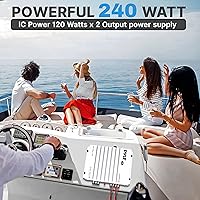
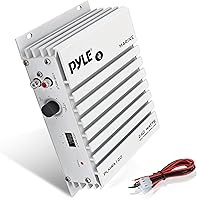
The Pyle PLMRA120 4-Channel Marine Amplifier has been holding its ground in the boat audio market since 2007 — a long run that speaks to consistent reliability rather than any lack of alternatives. Built for boaters who want a real amplifier without spending a fortune, this marine amp carries an IP-01 waterproof rating and a compact surface-mount body measuring 8.5 x 8.4 x 2.7 inches at just 2.7 pounds. Its 240W peak output translates to 70W x 2 RMS in practice — enough to drive a full set of marine coaxials cleanly. First-time upgraders will find the price point particularly hard to argue with.
Features & Benefits

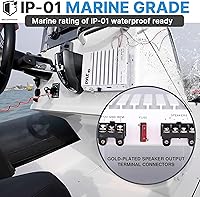
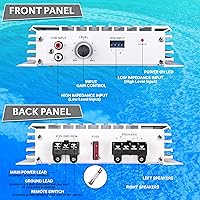
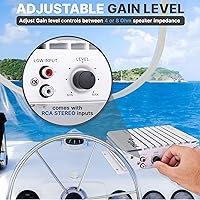
The Pyle 4-channel amp covers the essentials well. Dual RCA stereo inputs handle most aftermarket head units, and if your receiver lacks RCA outputs, the high-level terminal inputs let you tap speaker wires directly — a handy fallback many budget amps skip entirely. Adjustable GAIN controls accommodate both 4-ohm and 8-ohm speakers, giving you flexibility when mixing speaker brands. The aluminum alloy heatsink manages heat passively, while built-in thermal overload and short-circuit protection guard against wiring mistakes. Gold-plated output terminals fight corrosion, which matters on salt water. A front-panel LED confirms the unit is powered without any guesswork.

Best For

This boat amplifier is a natural fit for first-time boat audio builders who want something straightforward to install without chasing complex wiring diagrams. Pontoon owners and small-boat enthusiasts get the corrosion resistance they need without paying for audiophile-grade components they probably won't notice anyway. The connection layout is clean enough that a confident DIYer can have it running in an afternoon. Pair it with two sets of marine-rated coaxial speakers and you will have solid stereo coverage across the deck. If you expect concert-hall dynamics, look elsewhere — but for casual listening on the water, this marine amp delivers at its price.

User Feedback

Across its 519 ratings, the Pyle 4-channel amp earns a 3.9 out of 5, and the pattern in reviews is telling. Most buyers lead with how easy it was to wire up — the labeled terminals and logical layout save real frustration on a cramped boat console. Durability gets consistent praise; multiple owners report it surviving full seasons of spray, humidity, and sun. On the critical side, heat buildup surfaces during long high-volume sessions, so mounting it in an enclosed space without airflow is not ideal. A few buyers also note that real-world output runs noticeably lower than the peak wattage figure on the box, which is worth setting expectations around upfront.

Pros

  • Installs quickly thanks to clearly labeled terminals and a logical, beginner-friendly layout.
  • Supports both RCA and high-level inputs, so it works with nearly any head unit on the market.
  • Gold-plated output terminals hold up well against salt air and moisture over multiple seasons.
  • IP-01 waterproof rating provides real protection for open-boat and spray-heavy environments.
  • Built-in thermal overload and short-circuit protection add a meaningful safety layer for DIY installs.
  • At its price point, the build quality consistently surprises buyers who expect more flex and cheap plastic.
  • Accommodates both 4-ohm and 8-ohm speakers, giving you flexibility when mixing speaker brands.
  • The LED power indicator makes it easy to confirm the unit is live without digging behind panels.
  • Long market history since 2007 means installation guides, forum threads, and tips are easy to find.
  • Compact and lightweight enough to tuck into tight under-console spaces on small boats.

Cons

  • Advertised peak wattage is significantly higher than actual RMS output, which can mislead buyers during spec comparisons.
  • Heat buildup during long high-volume sessions is a genuine concern if the amp is mounted in an enclosed space.
  • No dedicated subwoofer output channel limits your ability to add a sub to the system later.
  • Basic GAIN controls offer limited fine-tuning compared to amps with built-in crossovers or EQ options.
  • IP-01 is a minimal waterproof rating — it handles splashes but is not rated for submersion or heavy water exposure.
  • The aluminum heatsink relies entirely on passive cooling, so airflow around the unit is essential, not optional.
  • Real-world stereo output at moderate impedance loads may feel underpowered on larger boats with wind and engine noise.
  • No remote bass control or turn-on lead output, which limits integration with more complex audio setups.

Ratings

The scores below reflect our AI-powered analysis of verified global buyer reviews for the Pyle PLMRA120 4-Channel Marine Amplifier, with spam, bot-submitted, and incentivized feedback actively filtered out before scoring. Each category captures what real owners experienced across seasons of on-water use — the genuine strengths and the honest frustrations alike. Nothing has been smoothed over: where this marine amp earns praise, you will see it; where it falls short of expectations, that shows up too.

Ease of Installation
88%
Owners consistently single out the installation experience as one of the clearest wins with this boat amplifier. The labeled terminals, dual input options, and compact footprint make the wiring process approachable even for first-timers working alone in a cramped console space.
A small number of buyers ran into confusion matching the remote turn-on wire with non-standard head units, and the included documentation could be more detailed for complete beginners. Nothing that a quick forum search cannot solve, but the manual itself leaves gaps.
Value for Money
83%
Given the price tier, buyers repeatedly express surprise at how much usable functionality this marine amp delivers. Gold-plated terminals, dual input modes, and protection circuitry are features that cost meaningfully more on competing units, and that spread of functionality at this cost point earns consistent goodwill.
A portion of buyers feel the value equation shifts once they realize the real-world RMS output is considerably lower than the peak figure. If you purchased expecting 240W of sustained power, the actual performance can feel like a letdown relative to what was paid.
Build Quality
76%
24%
The aluminum alloy chassis feels more substantial than many competing amps at this price, and multiple long-term owners report the unit holding together physically after years of vibration, heat cycling, and exposure to humid marine air. The gold-plated terminals in particular show minimal corrosion even after multiple seasons.
The plastic components around the input panel and faceplate feel noticeably less premium than the metal chassis, and a handful of reviewers noted minor cosmetic wear after heavy use. It is not fragile, but it does not feel engineered to the standard of a mid-range dedicated marine brand.
Waterproofing & Weather Resistance
71%
29%
The IP-01 rating provides meaningful protection for the most common marine scenarios — spray from passing wakes, humidity, and the occasional splash during boarding. Several buyers confirmed the unit survived full boating seasons without any water-related failures when mounted in sensible locations.
IP-01 is a minimal protection rating by current marine standards, and buyers who mounted the amp in more exposed locations reported anxiety about heavier spray or rain events. It is waterproof enough for sheltered surface mounting, but not for anything close to open exposure.
Sound Quality
67%
33%
For casual listening on a small boat — background music at the dock, moderate volume underway — the Pyle 4-channel amp delivers acceptably clean sound through a standard set of marine coaxials. Buyers pairing it with decent speakers report a satisfying step up from a head unit running speakers unamplified.
At higher volumes, some buyers note a flatness to the sound and limited dynamic range compared to amps in the next price tier. Audiophiles or anyone accustomed to quality car audio will find the output lacks the depth and detail that more purpose-engineered amplifiers provide.
Thermal Management
58%
42%
Under normal listening conditions — moderate volume, reasonable ambient temperature, good airflow — the aluminum heatsink does its job and the amp stays stable. Owners who mounted it with clearance around all sides report no thermal shutdowns even during full-day outings.
Heat buildup under sustained high-volume use is one of the more frequently mentioned pain points in critical reviews. Buyers who installed the unit in enclosed spaces without ventilation encountered thermal protection shutdowns, which interrupts listening and points to a passive cooling system that is working near its limits in demanding conditions.
Power Output Accuracy
52%
48%
The amp does produce amplified output that meaningfully improves on what a head unit alone can push, and for modest 4-ohm or 8-ohm speaker setups on a small vessel, the available power is adequate for comfortable everyday listening levels.
The gap between the 240W peak claim and the 70W x 2 RMS reality is wide enough to frustrate buyers who purchased based on the headline number. This is a common industry practice, but the disconnect is notable here, and several reviewers flagged feeling misled before understanding the distinction.
Corrosion Resistance
81%
19%
The gold-plated speaker output terminals are a tangible benefit that shows up in real-world feedback. Owners who boat in saltwater environments specifically call out the terminal condition after extended use as noticeably better than cheaper amps they had previously used with standard connectors.
The corrosion protection is concentrated at the output terminals; the input connectors and internal components are not described to the same protection standard. Buyers in particularly aggressive saltwater environments may still find some oxidation appearing on the RCA inputs and chassis screws over time.
Compatibility
84%
The combination of RCA and high-level inputs makes this boat amplifier compatible with an unusually wide range of head units for its price class. Whether your marine receiver has dedicated RCA outputs or only speaker-level outputs, the amp accommodates both without additional adapters.
There is no built-in crossover or signal processor, which limits compatibility with more complex audio setups. Buyers wanting to integrate a subwoofer or run component speakers with separate tweeters will quickly find the feature set too basic for those configurations.
Mounting & Footprint
79%
21%
The compact surface-mount form factor is genuinely practical on smaller vessels where space is at a premium. At 2.7 lbs and with a relatively flat profile, it tucks neatly under consoles or into storage areas that deeper or heavier amps simply would not fit.
The surface-mount design requires adequate clearance on all sides for heat dissipation, which can eat into the practical installation space more than the footprint dimensions alone suggest. In very tight compartments, buyers sometimes have to compromise between a clean install and the ventilation the unit needs.
LED Indicator & Usability
72%
28%
The LED power indicator is a small but genuinely useful touch that lets you confirm the amp is live from a distance without pulling panels. First-time installers particularly appreciate the immediate visual feedback during initial wiring and troubleshooting.
The indicator only signals power status — there is no clipping indicator, signal presence light, or protection mode alert. When the unit thermal-protects and shuts down, there is no visual distinction from a normal powered-off state, which adds troubleshooting time when heat issues occur.
Long-Term Reliability
74%
26%
The unit has been commercially available since 2007, and a notable portion of reviews come from buyers on their second or third season of ownership, which speaks to a base level of durability that many budget-tier competitors cannot match. Replacement parts and installation guidance are also easy to source given the product's age.
Longevity reports are mixed enough that some caution is warranted. A subset of buyers reports failures within the first year, often linked to heat or wiring issues, and the warranty terms are not well detailed in the product listing. Reliability appears to correlate strongly with installation quality and mounting conditions.
Channel Configuration
77%
23%
Four channels in a compact, affordable unit is a genuine advantage for small-boat owners who want front and rear speaker coverage without adding a second amp. The adjustable GAIN controls per channel let you at least roughly balance the output between speaker pairs.
There is no bridging flexibility communicated clearly in the documentation, and the GAIN adjustment range is limited compared to amps with more sophisticated input sensitivity controls. Buyers wanting precise tuning across channels will quickly find the controls too coarse for their needs.
Protection Circuitry
82%
18%
The built-in thermal overload and short-circuit protection are legitimate safety features that give DIY installers an important safety net. Buyers who made minor wiring errors during installation reported the protection kicking in and preventing damage rather than causing a failure cascade.
While the protection systems work as intended, their activation can be abrupt and leaves users without a clear indicator of what triggered the shutdown. Without a diagnostic LED or audible alert, diagnosing whether a shutdown was thermal or electrical requires some trial-and-error troubleshooting.

Suitable for:

The Pyle PLMRA120 4-Channel Marine Amplifier is a strong match for boaters who are making their first real audio upgrade and want a reliable, no-fuss solution without committing to a high-end budget. If you own a pontoon, fishing boat, or small recreational vessel and mostly want clear, audible music over engine noise and wind, this marine amp delivers exactly that. DIY installers will appreciate the straightforward wiring layout — both RCA and high-level inputs are covered, so you're not locked into a specific head unit type. Buyers who boat in humid, salt-spray environments will also find the corrosion-resistant gold-plated terminals and IP-01 waterproof rating genuinely useful for long-term durability. For weekend boaters pairing this with two sets of standard marine coaxial speakers, it provides enough clean output to cover a small deck comfortably.
Not suitable for:

The Pyle PLMRA120 4-Channel Marine Amplifier is not the right call for buyers expecting high-fidelity sound or serious wattage headroom — the real-world RMS output of 70W x 2 is considerably lower than the advertised peak figure, and that gap will frustrate anyone who takes the spec sheet literally. Audiophiles or boaters with larger vessels and multiple speaker zones should look at dedicated 4-channel amps in a higher price tier, where signal clarity and sustained output are more carefully engineered. This boat amplifier also shows its limits during extended high-volume sessions, where heat buildup can become a concern if mounting space is tight or ventilation is poor. If you plan to run a subwoofer alongside your speakers, this amp lacks the dedicated sub output channel you would need for that setup. Buyers who want professional installation results with minimal tuning effort may also find the basic GAIN controls insufficient for dialing in a precise sound profile.
Specifications

  • Output Power: This marine amp delivers a maximum output of 240W total (120W x 2 channels), with a realistic RMS output of 70W x 2 under sustained conditions.
  • Channels: The unit operates as a 4-channel amplifier, allowing you to power two pairs of speakers from a single compact unit.
  • Speaker Impedance: Compatible with both 4-ohm and 8-ohm speaker loads, with dual adjustable GAIN controls to match your specific speaker configuration.
  • Input Type: Accepts dual RCA stereo inputs for standard aftermarket head units, plus high-level terminal inputs for receivers without RCA output jacks.
  • Waterproof Rating: Rated IP-01, meaning it is protected against vertically dripping water, suitable for splash-prone marine environments but not submersion.
  • Operating Voltage: Designed to run on a 12V DC power supply, compatible with standard marine and automotive electrical systems.
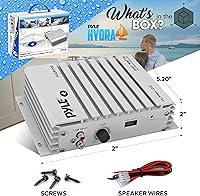
  • Dimensions: The unit measures 8.5 x 8.4 x 2.7 inches, making it compact enough for surface mounting in tight under-console spaces.
  • Weight: At 2.7 lbs, this boat amplifier is lightweight enough for single-person installation without additional mounting hardware assistance.
  • Heatsink Material: The chassis incorporates a heavy-duty aluminum alloy heatsink for passive thermal management during operation.
  • Max Operating Temp: The amplifier is rated for operation up to 85 degrees Celsius, with automatic thermal protection triggering before that threshold is reached.
  • Terminal Connectors: Speaker output terminals are gold-plated to resist oxidation and corrosion in humid, salt-air marine environments over long-term use.
  • Thermal Protection: Built-in thermal overload protection automatically shuts the unit down if internal temperatures reach unsafe levels, preventing damage to the amp and connected speakers.
  • Short Circuit Protection: Onboard short-circuit protection guards both the amplifier and the boat's electrical system against wiring faults or speaker load issues.
  • LED Indicator: A front-panel LED power indicator provides immediate visual confirmation that the unit is receiving power and operating normally.
  • Mounting Type: Designed for surface mounting, with a flat-bottom form factor suited to installation on bulkheads, under consoles, or inside storage compartments.
  • Manufacturer: Produced by Pyle, a consumer electronics brand with a broad catalog of marine and automotive audio products available since the early 2000s.
  • Model Number: The official model designation is PLMRA120, which is useful for identifying compatible accessories, wiring harnesses, and installation guides online.

Related Reviews

Pyle PLMTR4A 4-Channel Marine Amplifier
69%
78%
Value for Money
73%
Weatherproof Durability
41%
Power Accuracy
58%
Build Quality
86%
Installation Ease
More
Pyle PLMRMP4A 4-Channel Marine Amplifier
64%
61%
Value for Money
53%
Build Quality
67%
Waterproofing
58%
Power Output
79%
Ease of Installation
More
Pyle PLMRA402 4-Channel Marine Amplifier
69%
83%
Value for Money
81%
Ease of Installation
67%
Sound Quality
49%
Power Accuracy
62%
Build Quality
More
Pyle PLMRMB4CB 4-Channel Marine Amplifier
67%
78%
Value for Money
54%
Power Output
63%
Bluetooth Connectivity
61%
Water Resistance
58%
Build Quality
More
Pyle PLMRMP3B 4-Channel Marine Amplifier
68%
83%
Ease of Installation
71%
Value for Money
62%
Sound Quality
68%
Waterproof Performance
44%
Actual Power Output
More
Pyle PLAM1600 4-Channel Car Amplifier
69%
74%
Value for Money
67%
Sound Quality
51%
Power Output Accuracy
83%
Ease of Installation
59%
Build Quality
More
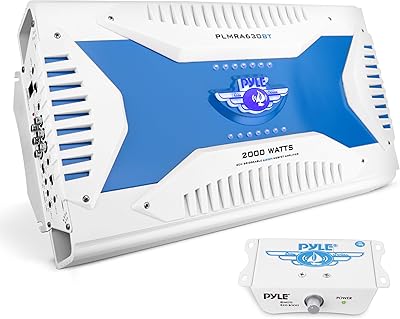
Pyle PLMRA630BT 6-Channel Bluetooth Marine Amplifier
83%
88%
Build Quality and Durability
90%
Bluetooth Connectivity
85%
Power Output
91%
Ease of Setup
83%
Sound Performance
More
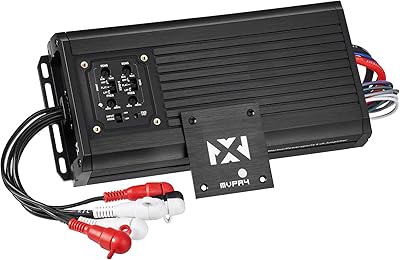
NVX MVPA4 4-Channel Marine Amplifier
80%
91%
Waterproof Protection
88%
Power Accuracy
84%
Build Quality
83%
Sound Quality
92%
Compact Form Factor
More
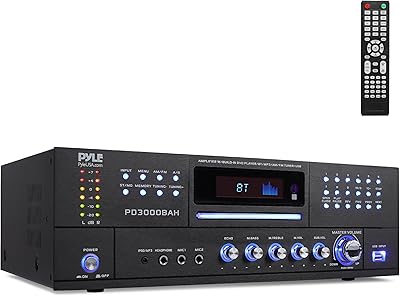
Pyle PD3000BAH 4-Channel Bluetooth Amplifier
73%
83%
Value for Money
61%
Power & Amplification
88%
Connectivity & Input Range
74%
Bluetooth Performance
77%
CD/DVD Player Functionality
More
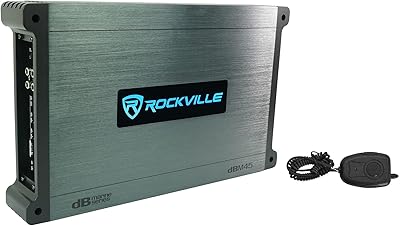
Rockville DBM45 4-Channel Marine Amplifier
71%
78%
Sound Quality
74%
Build Quality
71%
Waterproofing
69%
Power Delivery
57%
Thermal Management
More

FAQ

A regular car amp will technically work short-term, but the difference is the corrosion resistance. Boat environments — especially saltwater — chew through unprotected terminals and circuitry fast. This marine amp uses gold-plated connectors and has an IP-01 water-resistance rating, which buys you significantly longer life in humid, spray-heavy conditions.

Yes, absolutely. The Pyle PLMRA120 4-Channel Marine Amplifier includes high-level terminal inputs specifically for this situation. You run speaker wire from your head unit's speaker output leads directly into those terminals, and the amp handles the signal from there. It is one of the more practical features on a unit at this price.
The 240W figure is peak or maximum wattage, which you will never actually sustain in real use. The honest number to plan around is 70W RMS per channel. That is still enough to drive a pair of marine coaxial speakers clearly on a small to mid-size boat, but do not expect to shake the hull.

Heat buildup is a legitimate concern, particularly at higher volume levels over extended sessions. The aluminum heatsink handles everyday use fine, but if you mount this amp in a sealed compartment with no airflow, it can thermal-protect and shut off. Leave a few inches of clearance around the unit and you should be in good shape.

Not ideally. This boat amplifier does not have a dedicated subwoofer output channel or a built-in low-pass crossover, so it is designed around full-range speaker setups. You can bridge channels for more power to a sub, but for a clean sub integration, a purpose-built 5-channel amp or a separate mono sub amp would serve you better.

It is genuinely one of the more beginner-friendly amps in this category. The terminals are clearly labeled, the input options cover most head unit types, and there are plenty of forum threads and video guides online given how long this model has been available. If you can follow a basic wiring diagram and are comfortable with a 12V system, you should be fine.

IP-01 covers dripping water from directly above — think light splash or occasional spray — but it is not designed for direct rain exposure or any kind of ponding water. If your intended mounting location takes direct rainfall, a housing enclosure or sheltered position would be a smart precaution.

You can connect up to four speakers — one per channel. Standard 6-inch or 6.5-inch marine coaxials are the most common pairing and work well at the power levels this amp delivers. Just make sure whatever speakers you choose are rated for 4 or 8 ohms to match the amp's impedance range.

You connect the remote turn-on lead from your head unit to the amp's remote input wire, and it powers up and down with the head unit automatically. If your head unit does not have a dedicated remote lead, a simple accessory switch wired to an ignition-controlled power source works just as well.

Real-world owner feedback is fairly encouraging on durability. Multiple buyers report the unit surviving multiple seasons of regular use on the water, including exposure to spray and high humidity. The gold-plated terminals appear to do their job in preventing early corrosion. Longevity is more consistent when the amp is mounted in a reasonably ventilated, sheltered location rather than fully exposed to the elements.