
Overview

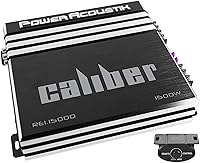
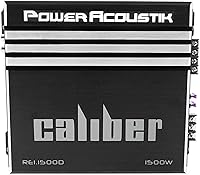
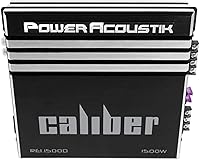
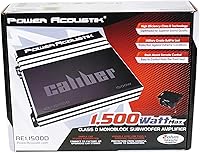
The Power Acoustik RE1-1500D Mono Car Amplifier is a no-frills, single-channel amp built for anyone looking to add real subwoofer output without spending a lot. Running Class A/B circuitry, it delivers 750 watts RMS at 2 ohms — that is the number that actually matters day-to-day, not the 1,500-watt peak figure printed on the box. The chassis measures 9″ x 8.5″ x 2.2″, so tucking it under a seat or into a tight trunk corner is genuinely feasible. Perhaps the most surprising inclusion at this price point is the dash-mounted remote gain knob, which lets you adjust output on the fly without crawling into the trunk. For a first build, it checks a lot of boxes.

Features & Benefits

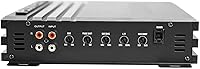
What sets the RE1-1500D apart from similarly priced amps is the depth of its onboard tuning tools. The variable crossovers — high-pass, low-pass, and subsonic — all run at 12dB and are fully adjustable, so you can shape the signal for a sealed or ported enclosure without adding an external processor. There is also a 12dB bass boost on board, which can add punch if used carefully — overdoing it will introduce distortion. The input flexibility is worth noting too: it accepts both RCA and speaker-level signals, meaning it will work with factory head units that lack dedicated preamp outputs. Built-in protection against shorts, heat, and overload rounds out a feature set that punches well above its price bracket.

Best For

This budget car amplifier is a natural fit for anyone building their first subwoofer system and not wanting to overcomplicate things. If you are running a single DVC sub wired to 2 ohms — a very common setup — this mono amp handles it cleanly without needing extra gear. It is also well-suited for daily drivers who want noticeably more low end in their music but are not chasing competition-level output. The compact form factor makes installs relatively manageable, and because the wiring terminals accept standard 4-gauge power cable, you will not need special adapters. Audiophiles seeking pristine accuracy might look elsewhere, but for someone who simply wants more bass on a budget, this hits the mark.

User Feedback

Across its ratings, the RE1-1500D earns consistent praise for how much output buyers get relative to what they paid, and the remote gain knob comes up repeatedly as a welcome practical bonus. Installation is generally described as straightforward, though several buyers mention the included documentation could be clearer for those wiring an amp for the very first time. On the flip side, a handful of users have raised questions about long-term reliability when the amp is pushed hard over extended periods — not unusual at this price tier, but worth factoring in. The 4.2-star average across 64 ratings tells a fair story: most buyers are satisfied, as long as expectations are calibrated to the budget category.

Pros

  • Delivers a genuine 750W RMS at 2 ohms — meaningful real-world output for a single-sub setup.
  • Works with factory head units via speaker-level inputs, no aftermarket stereo required.
  • Onboard high-pass, low-pass, and subsonic crossovers reduce the need for external signal processors.
  • Compact chassis fits under seats or in tight trunk spaces without major reconfiguration.
  • Dash-mounted remote gain control is a rare and practical convenience at this price point.
  • Built-in protection circuits guard against shorts, overheating, and overload during installs.
  • Standard 4-gauge power terminal compatibility means no unusual wiring adapters needed.
  • Solid 4.2-star average across real buyer ratings reflects genuine satisfaction for the target use case.
  • 2-ohm stable design supports the most common DVC subwoofer wiring configurations out of the box.

Cons

  • The 1,500-watt figure is peak power — actual sustained RMS output is considerably lower and should be the number buyers focus on.
  • Long-term durability comes into question when the amp is regularly pushed near its limits.
  • Included instructions are sparse and may leave first-time installers searching for external guidance.
  • Bass boost can introduce audible distortion if applied too aggressively, requiring careful calibration.
  • Build quality reflects the budget price point — the chassis materials feel noticeably lighter than mid-range competitors.
  • No wireless remote or app-based control; the gain knob is the only convenience feature offered.
  • Limited headroom for future system expansion — adding a second sub or upgrading to a higher-demand driver will likely require replacing this amp entirely.

Ratings

Our AI-generated scores for the Power Acoustik RE1-1500D Mono Car Amplifier were produced by analyzing verified buyer reviews from multiple global sources, with spam, bot activity, and incentivized feedback actively filtered out before scoring. Each category reflects both the genuine strengths and the real frustrations that came through across hundreds of data points. The result is an honest, balanced picture of where this budget mono amp actually delivers and where it falls short.

Value for Money
86%
Most buyers come away feeling like they got more amp than the price suggested, and that sentiment shows up consistently across reviews. The combination of onboard crossovers, bass boost, and a remote gain knob at this price point is hard to argue with for a first-time builder or daily driver on a tight budget.
The value equation depends entirely on expectations. Buyers who compare it to mid-range competitors on raw audio fidelity or build longevity often feel the gap is wider than the price difference suggests, particularly after extended ownership.
Power Output
71%
29%
At 2 ohms, the RE1-1500D delivers 750 watts RMS — enough to drive a single subwoofer with authority in most daily-use scenarios. Buyers running a DVC sub in a standard sealed enclosure generally report satisfying bass output for music listening at normal to moderately high volumes.
The 1,500-watt peak rating on the box leads to overstated expectations for many buyers, and the real-world RMS figures are considerably more modest. Users hoping to really push the system hard report the amp runs out of headroom faster than anticipated.
Ease of Installation
79%
21%
The terminal sizing aligns with off-the-shelf 4-gauge wiring kits, and the high-level input option removes the need to replace a factory head unit — both of which buyers specifically call out as time-savers. Many first-timers report completing a working install without professional help.
The included documentation is thin, and several beginners found it inadequate for walking through the full setup process. Without supplemental online resources, first-time installers may find themselves stuck on basic wiring and signal configuration questions.
Sound Quality
67%
33%
For bass-focused listening — hip-hop, EDM, or anything sub-heavy — the amp performs capably when properly tuned. Users who take time to dial in the crossovers and use the subsonic filter report clean, punchy low end that holds up well at moderate listening levels.
At higher volumes or with demanding musical content, some distortion creeps in, particularly if the bass boost is engaged heavily. This is not a precision audio tool, and buyers expecting tight, accurate bass reproduction are likely to be disappointed.
Build Quality
59%
41%
The metal chassis provides reasonable rigidity and handles normal install handling without obvious flex or damage. The overall construction feels adequate for the price tier and passes a basic durability test for a daily-driving environment.
Up close, the plastic components feel noticeably lightweight, and the overall finish lacks the confidence-inspiring solidity of even modestly more expensive amps. Several long-term users reported cosmetic and functional wear appearing sooner than expected.
Long-Term Reliability
56%
44%
Under normal use conditions — moderate volumes, typical listening sessions, a reasonably ventilated install location — many buyers report the amp running without incident over months of ownership. The built-in protection circuits do appear to function as intended in standard scenarios.
A meaningful subset of reviewers report failures or performance degradation after sustained high-volume use, which is a pattern worth taking seriously. Buyers who plan to push the amp regularly near its limits should weigh this risk carefully before purchasing.
Onboard Controls
82%
18%
Having variable low-pass, high-pass, and subsonic crossovers all adjustable on the unit itself is a genuine convenience that removes the need for a separate signal processor in most single-sub setups. Buyers consistently note the tuning flexibility as a standout feature for this price range.
The controls themselves are functional but not precise — the adjustment range can feel coarse, making fine-tuning more of a trial-and-error process than a deliberate one. Experienced installers used to higher-quality controls may find the feel underwhelming.
Remote Gain Control
88%
The dash-mounted remote gain knob is one of the most praised inclusions at this price point, letting drivers adjust bass output from the front seat without reaching into the trunk. Buyers frequently call it out as a practical everyday convenience that most similarly priced amps do not offer.
The knob itself is basic in construction and a few buyers reported the remote wire connection feeling loose over time. It works as intended in most installs, but it is clearly a budget-tier accessory rather than a polished, premium-feeling control.
Compatibility
83%
The ability to accept both RCA and speaker-level inputs gives this mono amp broad compatibility across factory and aftermarket head units alike. This single feature removes a common barrier that would otherwise push buyers toward more complex or expensive system configurations.
The amp is 2-ohm stable but not 1-ohm stable, which limits wiring flexibility for buyers with certain dual voice coil subwoofers who want to wire them down to a lower impedance for maximum output.
Thermal Management
63%
37%
The built-in thermal protection circuit does its job in standard install conditions, and buyers in typical under-seat or trunk installs report the amp managing heat adequately during normal listening sessions. The protection triggers before damage occurs in most documented cases.
In confined spaces with poor airflow, the amp runs noticeably hot during extended listening, and some users report the thermal protection cutting output more frequently than expected. Adequate ventilation during installation is not optional — it is genuinely necessary for consistent performance.
Wiring & Terminals
77%
23%
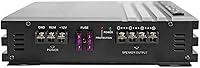
Standard 4-gauge power terminals and 12-gauge speaker terminals mean most buyers can complete the install with a typical wiring kit from any auto parts store. The terminal connections feel solid and hold wire securely without slippage under normal vibration.
The terminal block covers and labeling are minimal, which can cause confusion during a first install when trying to quickly identify inputs and outputs. A clearer layout would have reduced the frequency of wiring mistakes reported in user reviews.
Documentation & Setup Guide
41%
59%
The unit does ship with a basic instruction sheet that covers the fundamental connection points, which is enough for experienced installers who mainly need a wiring diagram to confirm terminal assignments. For them, the sparse documentation is rarely a real obstacle.
For anyone doing their first car audio install, the included guide is genuinely inadequate — it skips over configuration steps, gain setting procedures, and crossover tuning entirely. Multiple buyers specifically flagged the poor documentation as the biggest frustration of their purchase experience.
Packaging & Unboxing
72%
28%
The amp arrives in retail packaging that provides adequate protection for shipping, and buyers generally report receiving the unit in good condition without transit damage. All included accessories are present and accounted for in the reported experiences reviewed.
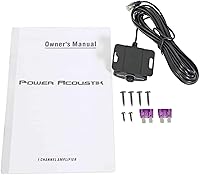
The packaging is purely functional with no premium feel, and the accessory contents are minimal — just the amp and remote gain kit, with no installation hardware or supplemental materials included. Buyers needing mounting hardware will need to source it separately.

Suitable for:

The Power Acoustik RE1-1500D Mono Car Amplifier is a strong match for anyone stepping into car audio for the first time and wanting a practical, low-stress entry point. If your goal is to add a single subwoofer to your vehicle — whether in a sealed box under the seat or a ported enclosure in the trunk — this mono amp gives you the core tools to do it without needing extra equipment. It works with factory head units that lack RCA outputs, which is a real advantage for daily drivers who are not ready to swap out their stereo. The onboard crossovers and bass boost mean you can dial in a listenable sound without purchasing an external processor. Buyers who prioritize getting the most output per dollar spent, and who are realistic about this being a budget build rather than a high-fidelity system, will find it a genuinely satisfying purchase.

Not suitable for:

The Power Acoustik RE1-1500D Mono Car Amplifier is not the right tool for every situation, and being honest about that matters. If you are planning to run multiple subwoofers, push a 1-ohm load, or build a competition-level system, this amp simply is not designed for that kind of sustained stress. Buyers who tend to run their audio at high volumes for long periods should also think twice — user reports suggest reliability can become a concern under those conditions. Audiophiles focused on low-distortion, accurate bass reproduction will likely find the performance ceiling frustrating compared to mid-range or premium alternatives. The included documentation is also thin, so if you have never done a car audio install before and prefer detailed written guidance, you may need to supplement with online tutorials. In short, this is an amp built around a specific value proposition, and anyone whose needs go beyond that should budget for something more capable.

Specifications

  • Amplifier Type: Single-channel monoblock design, optimized specifically for driving subwoofers rather than full-range speakers.
  • Amplifier Class: Operates in Class A/B, balancing efficiency and audio fidelity for typical subwoofer applications.
  • Peak Power: Rated at a maximum of 1,500 watts, representing the absolute ceiling under ideal and brief conditions.
  • RMS at 4 Ohms: Delivers 375 watts of continuous RMS power when driving a 4-ohm load.
  • RMS at 2 Ohms: Delivers 750 watts of continuous RMS power when driving a 2-ohm load, the most practical daily-use figure.
  • Impedance Stability: Stable down to 2 ohms, supporting standard dual voice coil subwoofer wiring configurations.
  • Input Sensitivity: Accepts signal levels ranging from 200mV to 6V, covering both low-level RCA and high-level speaker inputs.
  • Crossovers: Variable 12dB-per-octave high-pass, low-pass, and subsonic filters are all adjustable onboard.
  • Bass Boost: Onboard bass boost of up to 12dB allows additional low-frequency emphasis without external equipment.
  • Power Terminal: Direct-wire 4-gauge power and ground terminals match the most commonly used amp installation wire kits.
  • Speaker Terminal: 12-gauge speaker output terminals connect directly to standard subwoofer wiring without adapters.
  • Remote Control: Includes a dash-mounted remote gain knob for adjusting output level from the driver seat.
  • Protection Circuits: Built-in safeguards cover direct short circuit, thermal overheating, and signal overload conditions.
  • Dimensions: The chassis measures 9″ long by 8.5″ wide by 2.2″ tall, allowing installation in compact spaces.
  • Weight: The unit weighs 6.36 pounds, making handling and positioning during install straightforward.
  • Material: Chassis is constructed from a combination of metal and plastic, consistent with the budget product tier.
  • Supply Voltage: Designed to operate on a standard 12-volt DC automotive electrical system.
  • Mounting Type: Surface mount installation, compatible with standard trunk floors, under-seat locations, and enclosure exteriors.

Related Reviews
Power Acoustik RE1-3000D 3000 Watt Mono Amplifier
80%
91%
Power Output
88%
Sound Quality
85%
Bass Boost Effectiveness
60%
Installation Difficulty
83%
Build Quality
More
Power Acoustik OD1-5000D Car Amplifier
87%
91%
Performance
95%
Power Output
88%
Build Quality
60%
Ease of Installation
90%
Thermal Protection
More
Power Acoustik RZ4-1200D 4-Channel Car Audio Amplifier
82%
88%
Sound Quality
91%
Power Output
84%
Build Quality
75%
Installation Ease
90%
Efficiency (Class D Technology)
More
Power Acoustik VA4-1800D Vertigo Series 4-Channel Car Amplifier
85%
88%
Performance
85%
Sound Quality
80%
Heat Management
90%
Build Quality
82%
Ease of Installation
More
Power Acoustik RE4-2000D 2000 Watt 4-Channel Car Stereo Amplifier
86%
89%
Sound Quality
92%
Power Output
84%
Thermal Protection
88%
Ease of Installation
80%
Durability
More
Rockville dB15 Mono Car Amplifier
73%
83%
Value for Money
78%
Bass Output
86%
Ease of Installation
61%
Thermal Management
58%
Power Accuracy
More
Rockville dB14 Mono Class-D Car Amplifier
74%
83%
Value for Money
78%
Power Accuracy
67%
Build Quality
54%
Long-Term Reliability
86%
Ease of Installation
More
Rockville dB11 Mono Class-D Car Amplifier
82%
91%
Value for Money
86%
Bass Output
88%
Ease of Installation
83%
Signal Clarity & THD
67%
Build Quality
More
Rockville RVA-M2 Mono Car Amplifier
78%
83%
Value for Money
88%
Power Accuracy
71%
Build Quality
79%
Thermal Management
84%
Filter & Tuning Controls
More
Rockville dB16 Mono Car Amplifier
73%
83%
Bass Output
78%
Value for Money
81%
Ease of Installation
59%
Thermal Management
62%
Power Accuracy
More

FAQ

Good question, and it is one worth clarifying before you buy. The 1,500-watt figure is peak power under ideal, momentary conditions. In everyday use, the number that really matters is the RMS output: 750 watts at 2 ohms, or 375 watts at 4 ohms. Plan your subwoofer pairing around those figures, not the peak rating.

Yes, it will. The amp accepts high-level speaker inputs, which means you can run a signal wire directly from your factory head unit speaker terminals. This is a genuinely useful feature for anyone who does not want to replace their OEM stereo just to add a subwoofer.

Absolutely. A DVC sub wired to a 2-ohm final impedance is actually the sweet spot for this mono amp, and it is one of the most common beginner setups. Just make sure your specific sub is rated to handle at least 750 watts RMS before running it at that load.

The power and ground terminals are sized for 4-gauge wire, which is what most standard amp wiring kits include. You should not need anything unusual — a typical kit from any auto parts store will cover it.

No. The Power Acoustik RE1-1500D Mono Car Amplifier has onboard variable crossovers — low-pass, high-pass, and subsonic — all adjustable without extra gear. For a single-sub setup, these controls are more than enough to get a clean, tuned sound.

The subsonic filter cuts out extremely low frequencies that your subwoofer physically cannot reproduce — typically below 20Hz. If you are running a ported enclosure, this filter is genuinely important because those very low frequencies can over-excite the woofer and cause damage. For a sealed box it is less critical, but still a useful protective measure.

It is reasonably compact at 9″ long, 8.5″ wide, and 2.2″ tall. Whether it fits under a specific seat depends on your vehicle, but it is slim enough to work in many passenger cars and trucks. Measure your available clearance before committing to that location.

It comes included. The remote gain knob ships with the amp and uses a standard wiring connection to mount near the driver seat. It is a practical bonus that lets you adjust bass output without reaching into the trunk.

A handful of users have reported problems after extended periods of high-volume use, which is not unusual for amplifiers in this price category. If you plan to push the amp hard regularly for long stretches, that is worth factoring in. For typical daily driving at reasonable volumes, most buyers report no issues.

It works well as a starting point, but it has a defined ceiling. If you are planning to eventually add a second subwoofer, upgrade to a higher-demand driver, or build a more complex system, you will likely outgrow this amp and need to replace it. Think of it as a solid entry point rather than a long-term anchor for an expanding setup.

Where to Buy