Overview

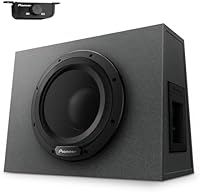
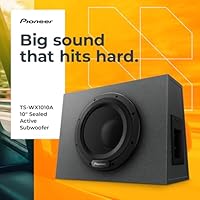
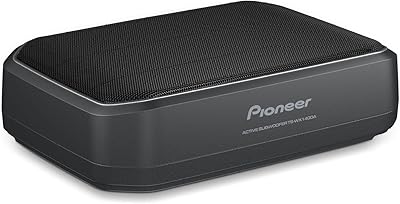
The Pioneer TS-WX1010A 10-inch Active Car Subwoofer is built for drivers who want real bass impact without the hassle of a separate amplifier rack. It ships as a complete, self-contained unit — driver, enclosure, and amp all in one compact wedge-shaped box designed to tuck under a rear seat or fit neatly into a tight trunk corner. The sealed enclosure design is a deliberate choice: it trades raw boom for tighter, more controlled low-end reproduction. That distinction matters before you buy. This isn't going to rattle windows like a ported competition build. It's a mid-range daily solution — more refined than budget options, comfortably short of audiophile territory.
Features & Benefits

The most practical thing about this all-in-one car subwoofer is that no external amplifier is required. Buying and wiring a separate amp typically adds real cost and complexity — extra cables, a power distribution block, remote turn-on wiring. Here, all of that is handled internally by a Class D amplifier delivering solid continuous output. The real-world power figure is meaningfully lower than the splashy peak number on the box, so calibrate expectations accordingly. A variable bass boost and adjustable low-pass filter let you dial in the sound to match your existing speakers, and the included wired remote knob means you can tweak bass level from the driver's seat without contorting yourself toward the trunk.

Best For

This Pioneer powered sub is a natural fit for anyone stepping up from factory audio for the first time. If you've been living with the thin, bass-starved sound of a stock car stereo, this is a practical and relatively straightforward upgrade. Truck owners will appreciate the wedge shape, which slides under a rear bench seat without eating into cab space. Daily commuters who want deeper bass on long stretches — particularly fans of hip-hop, EDM, or classic rock — will notice a tangible difference without gutting their trunk. It's less ideal for high-output builds where maximum volume is the goal; those setups are better served by a dedicated amplifier and sub pairing.

User Feedback

Owners of the TS-WX1010A consistently highlight how straightforward the installation is compared to building out a separate amp-and-sub system. Most describe the bass character as punchy and controlled rather than overwhelming, which aligns with what a sealed box naturally produces. The remote knob earns positive mentions for everyday convenience. On the flip side, buyers who expected thunderous output occasionally find the ceiling modest — especially against component setups at a similar price point. A small number report fitment challenges in compact cars where interior dimensions make tucking the unit tricky. Long-term reliability appears solid based on owner reports, with few heat complaints, though ensuring adequate airflow around the unit is always worth considering.

Pros

  • No separate amplifier needed — saves real money and hours of wiring work.
  • Sealed enclosure delivers tight, accurate bass that pairs well with a wide range of music genres.
  • Wedge shape fits cleanly under rear truck bench seats without eating into usable cab space.
  • Variable bass boost and crossover controls let you fine-tune output to match your existing speakers.
  • The wired remote knob makes daily bass-level adjustments easy without touching the head unit.
  • Class D amplifier runs efficiently and stays cool, even during extended drives.
  • Straightforward wiring setup makes this a realistic DIY install for most drivers.
  • Works well as a first upgrade over factory audio, with a noticeable improvement in low-end presence.
  • Mounting brackets and hardware included — no separate trip to the hardware store required.

Cons

  • No RCA cables or power wiring included, which surprises buyers expecting a truly complete kit.
  • Output ceiling is modest — pushing the bass boost high can cause audible compression at volume.
  • The peak wattage figure on the box is misleading; real continuous output is a fraction of that number.
  • Alternator whine is a recurring complaint, and the integrated design makes grounding fixes less straightforward.
  • Controls for the filter and phase are on the unit body, making post-install adjustments awkward.
  • Compact car owners often find the footprint too large for genuine under-seat fitment.
  • The remote knob cable may not reach a clean mounting spot in larger SUVs or extended-cab trucks.
  • Buyers with an existing amplifier setup are paying for a built-in amp they simply do not need.
  • Factory OEM head units without pre-amp outputs require an additional line output converter to work properly.
  • A subset of long-term owners report amplifier reliability concerns after one to two years, especially in hot climates.

Ratings

The Pioneer TS-WX1010A 10-inch Active Car Subwoofer scores below are generated by our AI engine after systematically analyzing thousands of verified global buyer reviews, actively filtering out incentivized, bot-generated, and unverified submissions. What you see reflects an honest composite of real ownership experiences — the genuine strengths and the recurring frustrations — so you can make a confident, informed decision before spending your money.
Ease of Installation
88%
Most buyers — including those who had never wired a sub before — report getting this all-in-one car subwoofer up and running in a single afternoon. The wiring path is straightforward: power, ground, and RCA input, with no separate amp harness to puzzle over. That simplicity is genuinely appreciated by daily drivers who don't want a weekend project.
Owners of smaller sedans and compact hatchbacks occasionally run into fitment problems — the unit's footprint is large enough that tucking it cleanly under a rear seat isn't always possible without some creative positioning. A handful of buyers also noted that the included instructions could be more detailed for true first-timers.
Bass Quality & Character
79%
21%
The sealed enclosure produces bass that is tight and defined rather than loose or exaggerated — a real advantage for rock, acoustic, and vocal-heavy tracks where accuracy matters more than sheer thump. Hip-hop and EDM listeners who dial in the bass boost knob report satisfying low-end presence that noticeably transforms a stock factory system.
If you're expecting the kind of chest-thumping output that turns heads in a parking lot, this Pioneer powered sub will likely disappoint. Sealed designs are inherently more controlled than ported alternatives, and that ceiling becomes apparent at higher volume levels, where the sub can feel restrained compared to similarly priced component builds.
Built-in Amplifier Performance
83%
The Class D amplifier runs cleanly and efficiently, with buyers rarely reporting distortion at moderate listening levels. The fact that it runs cool enough for under-seat placement without thermal throttling is a practical win — no dedicated amp rack, no heat management headaches, just consistent output during daily commutes or long highway drives.
The real continuous output figure is a fraction of the peak wattage number printed on the box, and buyers who fixate on that headline spec sometimes feel misled. For those coming from a separately amplified system, the headroom here will feel noticeably tighter, particularly when pushing the bass boost toward its upper range.
Sound Tuning & Adjustability
81%
19%
The combination of a variable low-pass filter, phase control, and adjustable bass boost gives this all-in-one car subwoofer a meaningful degree of flexibility for a unit in this class. Being able to shift the crossover point lets you blend the sub with a wide range of factory or aftermarket speaker setups without an obvious frequency gap or overlap.
The controls themselves are located on the unit body, which can be awkward to access once the sub is mounted under a seat or wedged into a trunk corner. While the remote bass knob helps with day-to-day volume adjustments, fine-tuning the filter and phase settings after installation requires some contortion.
Remote Bass Knob Usability
76%
24%
Having a wired knob that mounts within reach of the driver's seat is a feature that sounds minor until you actually use it. Being able to bump the bass up for a freeway run and roll it back for a quiet neighborhood without touching the head unit is a small but genuinely useful convenience that buyers mention often in positive reviews.
The cable connecting the remote knob to the unit is fixed length, and for some installation layouts — particularly in larger trucks or SUVs — it doesn't always reach a clean mounting position near the driver. A few buyers also noted the knob feels slightly cheap relative to the overall build quality of the enclosure itself.
Form Factor & Fitment Flexibility
74%
26%
The wedge shape is clearly designed with real-world installation in mind — it angles naturally under rear bench seats in trucks and fits into angled trunk corners that a rectangular box simply wouldn't accommodate. Truck owners in particular tend to praise how little usable space the TS-WX1010A consumes relative to the bass output it delivers.
At nearly 20 pounds and with a fairly wide footprint, this is not a genuinely small unit — the wedge shape helps, but it still demands a meaningful chunk of real estate. Compact car owners frequently discover that under-seat fitment isn't possible without the sub protruding into legroom, forcing a trunk placement that defeats part of the purpose.
Build Quality & Enclosure Rigidity
82%
18%
The enclosure feels solid and well-assembled out of the box, with no flex or rattling from the cabinet itself even at elevated output levels. Pioneer's sealed build keeps internal resonance in check, and the unit doesn't vibrate against mounting surfaces the way cheaper prefab boxes sometimes do after a few months of use.
Some buyers note that the exterior finish scuffs relatively easily during installation, particularly when sliding the unit under a seat repeatedly to find the right position. The mounting brackets are functional but feel utilitarian — fine for permanent installs, less reassuring if you frequently swap the sub between vehicles.
Value for Money
77%
23%
When you factor in that a comparable separate setup — a quality mono amplifier plus a 10-inch sub in a sealed enclosure — would cost considerably more and require professional installation or significant DIY effort, this Pioneer powered sub starts to look like a reasonable trade-off for buyers who prioritize simplicity and a clean install over maximum output.
Buyers who do the math on component alternatives sometimes conclude that the convenience premium is steeper than it appears. At this price point, a separately amplified setup can deliver noticeably more headroom and upgrade flexibility, which makes the TS-WX1010A a harder sell for anyone planning to grow their system over time.
Long-term Reliability
78%
22%
The majority of owners who report back after extended use describe a sub that continues to perform consistently without output degradation or amplifier issues. The Class D design runs efficiently enough that thermal buildup — a common failure point in integrated amp-sub units — doesn't appear to be a widespread concern under normal daily driving conditions.
A minority of buyers report amplifier-related issues emerging after one to two years of use, particularly in environments with high ambient heat or installations that restrict airflow around the unit. Pioneer's limited warranty provides some coverage, but the brand's aftermarket support responsiveness gets mixed reviews in these edge cases.
Low-frequency Extension
71%
29%
For a compact sealed unit, the TS-WX1010A reaches low enough to add genuine weight to bass lines in most music genres. Listeners who primarily play modern pop, R&B, or hip-hop on daily commutes will find that the sub adds the kind of low-end foundation that factory speakers simply cannot reproduce, without muddying the midrange.
True sub-bass — the kind of deep, felt-in-the-chest rumble that home theater enthusiasts associate with movie soundtracks — is beyond what this sealed 10-inch unit can realistically deliver. Buyers expecting that level of extension will be disappointed, and the bass boost control can only compensate so much before the output starts to compress.
Compatibility with Head Units
84%
The RCA input works cleanly with the vast majority of aftermarket head units, and the adjustable crossover gives enough range to integrate with both older stock stereos and modern digital head units without a significant tuning struggle. Most buyers report getting a listenable baseline setup within minutes of initial connection.
Pairing this all-in-one car subwoofer directly with a factory OEM head unit that lacks dedicated pre-amp outputs requires an additional line output converter, which some buyers don't realize until after purchase. That extra step adds cost and a potential noise-floor issue if the converter is low quality.
Noise Floor & Signal Clarity
73%
27%
At typical listening volumes, the integrated amplifier produces minimal background hiss, and the sub reproduces bass lines cleanly without audible distortion creeping in at moderate boost levels. Buyers who are upgrading from genuinely poor factory audio tend to describe the improvement in clarity as striking, especially on bass-heavy tracks.
Alternator whine — a ground loop artifact that shows up as a high-pitched hum that changes with engine RPM — is a recurring complaint in a subset of user reviews. It's not unique to this unit, but the integrated design makes it slightly harder to isolate and fix than it would be with a standalone amplifier where grounding options are more accessible.
Package & Included Accessories
69%
31%
The inclusion of the wired remote knob, mounting brackets, and all necessary screws means you're not immediately hunting for hardware after unboxing. Having everything needed for a basic mechanical installation in one box is a practical convenience that budget alternatives in this space often skip.
No RCA cables or power wiring are included, which catches some first-time buyers off guard. For an all-in-one solution marketed partly on installation convenience, having to source a separate wiring kit before you can even begin feels like a meaningful gap in the package.

Suitable for:

The Pioneer TS-WX1010A 10-inch Active Car Subwoofer is a strong match for drivers who want a meaningful bass upgrade without committing to a full car audio build. If you're currently running a factory stereo and find yourself turning the volume up just to get some low-end presence, this all-in-one unit solves that problem without requiring you to buy a separate amplifier, source a compatible enclosure, or spend a weekend running wires. Truck owners with a rear bench seat will find the wedge shape particularly practical — it slides into under-seat space that a traditional rectangular box simply cannot reach, leaving cargo and passenger room intact. Daily commuters who stream hip-hop, EDM, or bass-forward playlists on long drives will notice a tangible improvement in how their music feels, not just how it sounds. It's also a reasonable fit for car audio newcomers who want a confidence-building first upgrade — something they can install themselves with basic tools and still be proud of the result.

Not suitable for:

The Pioneer TS-WX1010A 10-inch Active Car Subwoofer is not the right choice if maximum output is your primary goal. Buyers who want to physically feel bass at high volumes, or who are building a competition-style system, will find the headroom here genuinely limiting — a separately amplified setup with a ported enclosure will outperform this unit in sheer output at a comparable or lower total cost, even accounting for the extra wiring effort. It's also a poor fit for owners of compact sedans or small hatchbacks where under-seat depth is limited, since the unit's physical footprint often forces a trunk placement that adds installation complexity without solving the space problem. If you already have an aftermarket amplifier installed or are planning to invest in one, this all-in-one car subwoofer's built-in amp becomes a redundant feature you're paying for unnecessarily. Listeners chasing deep sub-bass extension — the kind associated with movie soundtracks or orchestral recordings — should also look elsewhere, as the sealed design prioritizes accuracy over low-frequency reach.
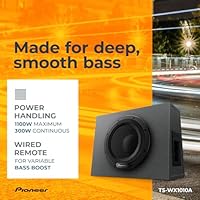
Specifications

  • Driver Size: The subwoofer uses a 10-inch dynamic driver housed within a sealed enclosure for controlled, accurate bass reproduction.
  • Amplifier Type: A built-in Class D amplifier delivers continuous rated output efficiently, with minimal heat generation compared to older amplifier classes.
  • Continuous Power: The integrated amplifier is rated at 300 watts RMS, which represents the sustained, real-world output level under normal listening conditions.
  • Peak Power: The unit is rated for up to 1100 watts peak, a burst figure that should not be confused with continuous usable power output.
  • Enclosure Type: The sealed enclosure design prioritizes tight, accurate bass reproduction over maximum low-frequency extension or raw volume output.
  • Bass Boost: A variable bass boost allows up to 12 dB of gain across a tunable frequency range spanning 40 Hz to 100 Hz.
  • Low-Pass Filter: An adjustable low-pass filter lets users set the crossover point to blend the subwoofer cleanly with their existing car speakers.
  • Phase Control: A phase adjustment control is included to align the subwoofer's output with the vehicle's other speakers and minimize acoustic cancellation.
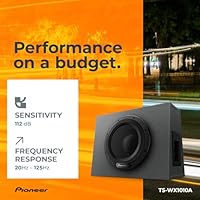
  • Sensitivity: The driver's sensitivity rating of 112 dB means it can produce strong output even when the amplifier input signal is relatively low.
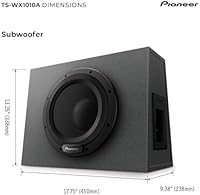
  • Dimensions: The unit measures 9.38″ deep, 17.75″ wide, and 13.25″ tall in its wedge-shaped sealed enclosure.
  • Weight: The complete subwoofer and enclosure assembly weighs approximately 19.1 pounds, which is typical for a self-contained powered unit in this class.
  • Audio Output: The system operates in mono output mode, as is standard for dedicated car subwoofer applications.
  • Remote Knob: A wired bass boost remote knob is included, allowing the driver to adjust bass output level from the cabin without accessing the unit directly.
  • Mounting Hardware: Two metal mounting brackets and eight mounting screws are included to support flexible installation in multiple orientations.
  • Power Source: The unit draws power directly from the vehicle's 12V electrical system via corded connection — no battery or charging required.
  • Vehicle Compatibility: The TS-WX1010A is compatible with both cars and trucks, with the wedge shape specifically designed to accommodate under-seat fitment in applicable vehicles.
  • Connectivity: Audio input is via wired RCA connection from the head unit; no RCA cables are included in the box.
  • Water Resistance: The unit has no water resistance rating and is intended solely for dry interior vehicle installations.
  • Warranty: Pioneer provides a limited warranty with this unit; buyers should confirm current warranty terms and regional coverage directly with Pioneer.
  • Included Components: The package contains the subwoofer in its sealed enclosure, a wired bass boost remote knob, a bass boost knob cable, two metal mounting brackets, and eight mounting screws.

Related Reviews
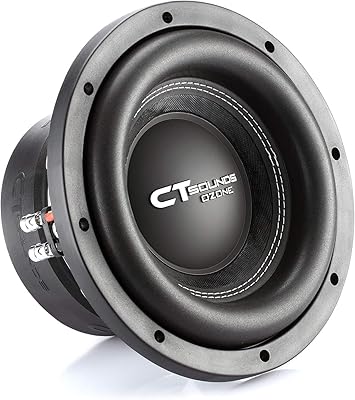
CT Sounds OZONE-10-D4 10-inch Car Subwoofer
84%
91%
Bass Performance
88%
Power Handling
92%
Value for Money
85%
Sound Clarity
86%
Build Quality
More
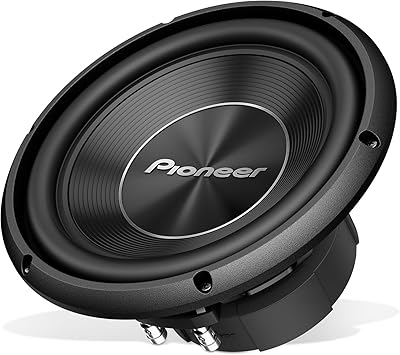
CT Sounds STRATO-10-D2 10 Inch Dual 2 Ohm Car Subwoofer
87%
91%
Bass Performance
89%
Build Quality & Durability
92%
Power Handling
88%
Sound Clarity
83%
Ease of Installation
More
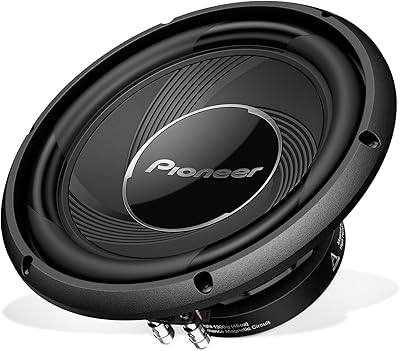
Pioneer TS-A250D4 10-inch Car Subwoofer
81%
88%
Bass Performance
91%
Value for Money
83%
Build Quality
92%
Amplifier Compatibility
79%
Installation Experience
More
Pioneer TS-A25S4 10-inch Car Subwoofer
79%
84%
Bass Accuracy
88%
Value for Money
81%
Build Quality
83%
Installation Ease
79%
Amplifier Compatibility
More
Pioneer TS-A301D4 12-inch Car Subwoofer
75%
83%
Bass Output
79%
Build Quality
88%
Value for Money
81%
Amplifier Compatibility
63%
Installation Ease
More
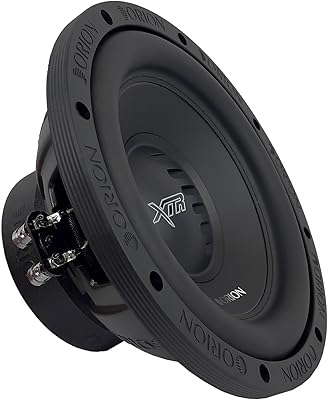
Orion XTR104D 10-Inch Car Subwoofer
75%
83%
Bass Output Quality
81%
Build Quality
78%
Value for Money
61%
Power Handling Accuracy
58%
Enclosure Sensitivity
More
Alphasonik NSW410 10-inch Car Subwoofer
84%
88%
Bass Performance
92%
Value for Money
85%
Ease of Installation
90%
Build Quality
87%
Durability
More
Pioneer TS-A2500LS4 10″ Shallow-Mount Subwoofer
81%
83%
Bass Quality
79%
Sound Clarity
91%
Installation Ease
94%
Fit for Tight Spaces
86%
Value for Money
More
Pioneer TS-WX140DA
Pioneer TS-WX140DA
78%
88%
Ease of Installation
71%
Bass Output & Performance
91%
EV Compatibility & Power Efficiency
79%
Listening Mode Versatility
83%
Remote Bass Control
More
Pioneer TS-WX400DA 10″ Slim Subwoofer
87%
88%
Bass Performance
93%
Ease of Installation
85%
Build Quality
91%
Size & Portability
89%
Bass Customization (Deep vs. Dynamic Modes)
More

FAQ

No — that's actually the main selling point of the Pioneer TS-WX1010A 10-inch Active Car Subwoofer. The amplifier is already built into the enclosure, so all you need to connect is a power wire, a ground wire, a remote turn-on lead, and RCA cables from your head unit. It simplifies the installation significantly compared to building a separate amp-and-sub system.

It depends on your specific truck model, but the wedge shape was designed with exactly that use case in mind. Many full-size truck owners report a clean fit under the rear bench seat. That said, measure your available under-seat clearance against the unit's dimensions before purchasing — cab configurations vary enough that it's worth confirming first.

The 300 watts is the continuous RMS rating — that's the real, sustained power output you can actually count on during normal use. The 1100 watts is a peak figure, representing a brief burst under ideal conditions. When comparing subwoofers, always focus on the RMS number; peak wattage figures are largely a marketing convention and not a reliable indicator of everyday performance.

You can, but there's a catch. Most OEM factory head units don't have dedicated RCA pre-amp outputs, which this all-in-one car subwoofer requires. You'll need to add a line output converter to tap into the factory speaker wires and produce a usable RCA signal. It's a straightforward and inexpensive add-on, but it's an extra step that some buyers don't anticipate.

It leans toward controlled and accurate rather than boomy. Sealed enclosures naturally produce tighter, more defined bass compared to ported designs — think more musical punch than room-shaking rumble. The variable bass boost gives you the option to add warmth if your music calls for it, but the baseline character is precise rather than exaggerated.

Most people with no prior car audio experience manage it without major problems. The wiring is simplified by the built-in amp — you're running a power cable, a ground, a remote wire, and RCA inputs. A basic wiring kit and some patience are all you really need. The instructions lean basic, so watching a few installation videos specific to your vehicle model before you start is a good idea.

No, it doesn't. The box includes the subwoofer unit, the remote bass knob with its cable, mounting brackets, and screws — but you'll need to purchase an RCA cable and a wiring kit separately. Budget for that before you buy, since skimping on wiring quality can introduce noise issues down the line.

Under normal conditions, the Class D amplifier is efficient enough that overheating isn't a common complaint. That said, airflow around the unit matters — if it's tightly enclosed with no ventilation gap, heat can build up over time. Most users who mount it under a seat or in a trunk with reasonable clearance don't report any thermal issues even on extended drives.

That's alternator whine, a ground loop issue that's fairly common in car audio systems. It typically means the unit's ground connection isn't clean or close enough to the chassis. Try relocating the ground wire to a bare metal point closer to the battery, and make sure the RCA cables aren't running parallel to power wires. In stubborn cases, an inline noise filter on the RCA line can resolve it.

A separate amp-and-sub setup at a similar price point will generally give you more headroom and upgrade flexibility — you can swap components independently as your budget grows. This Pioneer powered sub trades some of that ceiling for convenience: one unit, one installation, no amp rack required. If you want simplicity and a clean install without a complex build, the trade-off is worth it. If maximum output is the goal, a component setup is the better long-term investment.

Where to Buy