Overview

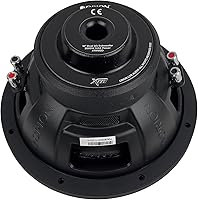
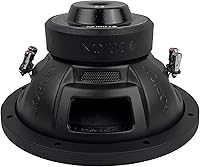
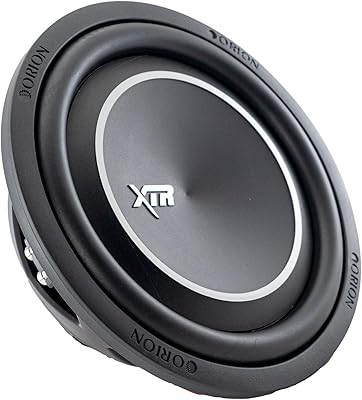
The Orion XTR104D 10-Inch Car Subwoofer sits comfortably in the mid-range car audio segment — a space where Orion has built a loyal following over decades of competing in SPL events and street builds alike. The XTR series represents the brand's performance-focused tier: real output, solid construction, without the price tag of flagship drivers. This 10-inch Orion sub runs a dual 4-ohm voice coil configuration, which gives installers meaningful flexibility when matching it to an amplifier. Just set expectations accordingly — the XTR104D is built for tight, punchy bass response, not the chest-rattling low end you'd get from a ported 15-inch setup.
Features & Benefits

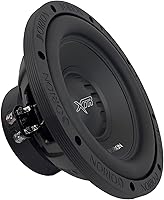
The XTR104D's rated handling is 500W RMS — that's the number that actually matters for sustained, long-term listening. The peak figure of 2000W is a momentary ceiling, not a daily operating target, so pair it with an amplifier rated around 300–600W RMS and you're in good shape. The dual 4-ohm voice coils can be wired down to a 2-ohm or up to an 8-ohm load, making this dual voice coil subwoofer easier to integrate with whatever amp you already own. A custom-cast aluminum frame keeps the structure rigid under stress, while the oversized NBR surround supports the long excursion needed to push real low-end frequencies. It works in sealed and ported enclosures, though each will give you noticeably different results in output character and punch.

Best For

This 10-inch Orion sub is a natural fit for daily drivers and compact vehicles — think sedans, hatchbacks, or Jeeps where trunk space is limited and you can't sacrifice half your cargo area to a massive enclosure. If you're building your first serious car audio setup and pairing it with a mid-tier amplifier, it's a dependable starting point. Musically, it skews toward genres where bass texture matters: hip-hop, EDM, and bass-heavy rock all come through controlled and defined rather than loose and boomy. The flexible impedance options also mean you don't need a new amp if you already have one on hand — just wire the coils to match your amplifier's stable load.

User Feedback

With a 4.4-out-of-5-star average across over 230 ratings, the XTR104D holds up well in real-world use. Buyers consistently highlight clean, accurate bass and build quality that outpaces expectations at this price tier. That said, the feedback isn't uniformly glowing. A recurring concern involves enclosure sensitivity — some owners found the sub underwhelming in a sealed box and only got satisfying output after switching to a ported design, so your enclosure choice genuinely matters here. A handful of reviewers also questioned the gap between advertised peak wattage and real-world power handling. On the installation side, most DIYers found wiring the dual coils straightforward, though first-timers should brush up on impedance wiring basics before making any connections.

Pros

  • 500W RMS power handling is genuinely usable headroom for a mid-tier amplifier setup.
  • Dual 4-ohm voice coils offer real wiring flexibility — run it at 2 or 8 ohms depending on your amp.
  • Cast aluminum frame feels noticeably more rigid and durable than stamped steel alternatives in this price range.
  • Oversized NBR surround keeps bass controlled and linear even at higher output levels.
  • Works in both sealed and ported enclosures, giving installers options without buying a second driver.
  • Compact footprint makes it a practical fit for sedans, hatchbacks, and space-limited vehicles.
  • Build quality earns consistent praise from buyers relative to what you pay for it.
  • High-temperature aluminum voice coil handles heat better during extended loud listening sessions.
  • Strong owner approval rate across a meaningful number of verified purchases adds buying confidence.

Cons

  • Output ceiling is limited by the 10-inch driver size — do not expect it to compete with larger subs.
  • Real-world performance in a sealed box disappoints some buyers; a ported enclosure is almost always the better choice.
  • The advertised 2000W peak figure is misleading for newcomers — sustainable power is a fraction of that number.
  • Not ideal for listeners chasing ultra-low sub-bass extension below 30Hz.
  • At nearly 11 pounds, it is heavier than some competing 10-inch drivers, which can complicate mounting in tight spaces.
  • Limited warranty coverage leaves some buyers wanting more long-term protection given the power levels involved.
  • First-time DIYers unfamiliar with dual voice coil wiring may need to do homework before installation.
  • Enclosure tuning sensitivity means poor box design can significantly undercut overall performance.

Ratings

Our AI scoring system analyzed verified global buyer reviews for the Orion XTR104D 10-Inch Car Subwoofer, actively filtering out incentivized, bot-generated, and spam feedback to surface what real owners actually experience. The scores below reflect a transparent picture of both the strengths that make this sub a popular mid-range pick and the friction points that have frustrated a meaningful portion of buyers. Nothing has been smoothed over — the wins and the trade-offs are both represented honestly.

Bass Output Quality
83%
Owners consistently describe the bass as punchy and defined rather than loose or muddy — a quality that comes through clearly on hip-hop and EDM during daily commutes. For a 10-inch driver at this price tier, the low-end control impresses buyers who previously ran entry-level subs.
A recurring thread in critical reviews notes that the sub-bass extension below 40Hz is limited compared to larger drivers, which leaves listeners chasing that deep, felt-in-the-chest rumble somewhat disappointed. Output in a sealed box specifically underwhelms a noticeable portion of buyers.
Build Quality
81%
19%
The cast aluminum frame earns repeated positive mentions from installers who have handled stamped-steel budget subs — it simply feels more substantial in hand and holds its shape under the mechanical stress of high excursion. The oversized NBR surround also shows no cracking or deformation even after extended use in hot car environments.
A few buyers noted that the dust cap finish and cone cosmetics look less refined up close than the frame suggests, and the polypropylene cap has drawn minor criticism for feeling lightweight relative to the overall build. These are aesthetic gripes more than functional ones, but they matter to detail-oriented enthusiasts.
Value for Money
78%
22%
Relative to what you pay, the XTR104D delivers a level of build and output that regularly surprises first-time buyers expecting a budget-tier experience. Owners building their first system frequently call it a smart starting point that holds its own alongside more expensive competing drivers.
Buyers who already own higher-end subwoofers from brands like Sundown or Rockford Fosgate may find the value proposition less compelling, as the performance gap becomes more noticeable at that reference level. The limited warranty also tempers the long-term value calculation for some buyers.
Power Handling Accuracy
61%
39%
At the rated 500W RMS level, the driver handles sustained playback without audible distress during typical daily listening sessions, and owners running conservative amplifier setups report reliable long-term performance. The thermal management design does appear to buffer the voice coil during moderate continuous use.
The 2000W peak figure misleads a meaningful number of buyers into pairing this sub with amplifiers far above its sustainable operating range, sometimes resulting in premature failure. Several reviewers explicitly flagged the gap between advertised peak wattage and what the driver can realistically handle in practice, which damages trust in the spec sheet.
Enclosure Sensitivity
58%
42%
When installed in a well-tuned ported enclosure, the XTR104D can deliver output levels that punch noticeably above its price class, which pleases buyers willing to invest time in proper box design. Owners who built ported boxes to Orion's general recommendations report a satisfying improvement in low-end extension and volume.
This sub is meaningfully sensitive to enclosure choice — buyers who dropped it into a generic sealed box without optimizing volume or tuning frequently reported underwhelming results and left critical reviews. The performance delta between a good ported build and a poor sealed build is wide enough to feel like two different products.
Wiring & Installation Ease
74%
26%
Experienced DIY installers appreciate the dual voice coil format because it gives genuine amp-matching flexibility without requiring any adapters or additional hardware. The terminal connections are clearly labeled, and the overall physical mounting process follows standard 10-inch sizing without surprises.
First-time installers unfamiliar with dual voice coil wiring configurations run into confusion more often than they should, and the included manual does not provide enough impedance wiring guidance for beginners. A handful of one-star reviews trace back directly to incorrect wiring rather than product defects.
Thermal Management
77%
23%
The high-temperature aluminum voice coil with Kapton former handles the heat generated during extended loud listening better than typical paper-former voice coils found in competing budget drivers. Owners who drive long distances with the system running consistently report no thermal issues when the sub is powered within its RMS rating.
Buyers who push the driver beyond its RMS rating for extended periods — sometimes inadvertently due to misunderstanding the peak spec — report voice coil damage that is consistent with thermal failure. The thermal headroom above 500W RMS is thin, and there is little margin for error during sustained high-volume use.
Sound Accuracy & Definition
76%
24%
For music genres where bass note definition matters — funk, jazz, live recordings — the XTR104D tracks individual bass lines with more precision than many subs at this price point. The NBR surround's controlled excursion contributes to this accuracy by keeping cone movement linear even at moderate output levels.
At higher volume levels, some buyers detect a slight hardening or compression in the bass character that affects the naturalness of acoustic bass instruments in particular. This is less noticeable on electronic music but becomes a legitimate complaint from listeners with more critical ears.
Compatibility with Amplifiers
82%
18%
The dual 4-ohm voice coil configuration opens up genuine flexibility — buyers can wire to 2 ohms for more power from a high-current amp, or to 8 ohms for a gentler load on a lower-tier amplifier, which makes this sub workable across a wide range of existing setups. This versatility comes up repeatedly as a purchase motivator in verified reviews.
Amplifiers stable only at 4 ohms cannot take full advantage of the DVC wiring options, which reduces the flexibility benefit for owners working with older or more restricted amplifier designs. A small number of reviewers also note that the sub's sensitivity rating is not widely published, making precise amplifier gain calibration less straightforward.
Fit for Compact Vehicles
86%
The 10-inch format is a natural match for sedans, Jeeps, and hatchbacks where enclosure space is a constraint, and owners of these vehicle types consistently rate their experience higher than average among all XTR104D reviewers. The physical dimensions make it possible to build a functional enclosure that fits behind a rear seat or in a shallow trunk.
Buyers in larger vehicles like full-size SUVs or trucks sometimes feel the 10-inch output gets lost in the cabin volume, and a 12-inch or 15-inch driver would have been a better choice for those platforms. The sub is well-suited to compact cars but it is not a one-size-fits-all solution.
Long-Term Durability
69%
31%
Owners who run the sub within its rated power range and with a properly tuned enclosure generally report stable performance over multiple years of daily use. The cast aluminum frame resists the fatigue and flexing that shortens the life of cheaper stamped-steel alternatives in the same conditions.
Durability feedback splits sharply between buyers who respected the RMS rating and those who pushed the peak figure — the latter group reports significantly higher rates of voice coil failure within the first year. The limited warranty provides little recourse in those cases, which amplifies buyer frustration in negative reviews.
Packaging & Unboxing
71%
29%
Most buyers report the sub arriving well-protected, with no shipping damage to the cone or surround — a common complaint with heavier subwoofers shipped in inadequate packaging. The standard retail box is functional and the driver is adequately secured during transit.
The included documentation is sparse, with only a basic manual and no enclosure specification sheet or wiring diagram included in the box. Buyers who needed setup guidance beyond the basics had to seek it out independently, which added friction for less experienced installers.
Brand Reputation & Trust
75%
25%
Orion has a legitimately established history in the car audio market, particularly in SPL competition circles, which lends some credibility to the XTR series as a performance-oriented lineup rather than a generic rebrand. Long-time car audio hobbyists tend to regard Orion as a real brand with a genuine engineering background.
Orion's brand perception has shifted over the years, and some experienced buyers view the current product lineup as leaning on legacy reputation more than active innovation. A portion of the negative sentiment in reviews is less about the driver itself and more about expectations shaped by Orion's older, higher-regarded models.

Suitable for:

The Orion XTR104D 10-Inch Car Subwoofer is a strong pick for everyday drivers who want a meaningful bass upgrade without overhauling their entire audio setup. It fits naturally into compact vehicles — sedans, hatchbacks, smaller SUVs, and Jeeps — where available trunk space rules out a bulky 15-inch enclosure. First-time system builders will appreciate the dual 4-ohm voice coil design, which makes it easier to wire to a mid-range amplifier you may already own rather than buying new gear just to match impedance. Musically, it rewards listeners who care about punch and definition over sheer volume — hip-hop, EDM, and bass-driven rock all come through with clarity and control. If your goal is a clean, noticeable bass upgrade on a sensible budget, the XTR104D hits that mark reliably.
Not suitable for:

If you are chasing serious output levels or building a competition-grade system, the Orion XTR104D 10-Inch Car Subwoofer will likely leave you underwhelmed. A 10-inch driver simply cannot move the air that a 12-inch or 15-inch sub can, and no amount of amplifier headroom changes that physical reality. Buyers who plan to run a high-powered amplifier well above the 500W RMS rating should also look elsewhere — pushing this sub beyond its thermal limits over time will shorten its lifespan. Those committed to a sealed enclosure should be aware that real-world owner feedback suggests the sub performs more impressively in a ported box, so if you have a fixed sealed build in mind, temper your expectations accordingly. Finally, listeners who prioritize ultra-low sub-bass extension — the kind felt more than heard — will find a 15-inch driver in a tuned ported enclosure far better suited to that goal.

Specifications

  • Driver Size: The woofer cone measures 10 inches in diameter, making it compatible with standard 10-inch enclosure cutouts.
  • RMS Power: Continuous RMS power handling is rated at 500W, which represents the sustained wattage the driver can handle during normal listening use.
  • Peak Power: Maximum peak power is rated at 2000W, reflecting the brief momentary ceiling rather than a safe continuous operating level.
  • Voice Coil Type: The subwoofer uses a dual voice coil (DVC) configuration with each coil rated at 4 ohms, allowing wiring to a 2-ohm or 8-ohm final load.
  • Voice Coil: The 2.5-inch diameter voice coil is wound on a Kapton former using high-temperature aluminum wire to manage heat under sustained output.
  • Frame Material: The basket is constructed from custom-cast aluminum, which provides greater structural rigidity and thermal dissipation compared to stamped steel frames.
  • Cone Material: The cone is made from a UV-coated paper and fiber blend, balancing stiffness and mass for controlled bass reproduction.
  • Surround Material: An oversized NBR (nitrile butadiene rubber) surround provides a linear, long-excursion travel path suited to deep bass frequencies.
  • Dust Cap: A polypropylene dust cap protects the voice coil gap from debris while contributing minimal added mass to the moving assembly.
  • Enclosure Type: The driver is compatible with both sealed and ported enclosure designs, with each type producing a distinct bass character and output level.
  • Dimensions: Overall product dimensions measure 12″ deep by 12″ wide by 6″ tall, including the frame and mounting hardware.
  • Weight: The unit weighs approximately 10.78 pounds, which is on the heavier side for a 10-inch driver due to the cast aluminum frame construction.
  • Input Voltage: The subwoofer operates on a 12V DC power supply, making it compatible with standard automotive electrical systems.
  • Connectivity: All signal and power connections are wired; no wireless or Bluetooth input is supported.
  • Impedance: Each voice coil carries a nominal impedance of 4 ohms, with a combined final impedance of 2 ohms (parallel) or 8 ohms (series) depending on wiring configuration.
  • Warranty: Orion covers this subwoofer under a limited warranty; buyers should confirm the specific duration and terms directly with the manufacturer or retailer at time of purchase.
  • Included Items: The package includes the subwoofer driver unit and a user manual; no enclosure, amplifier, or wiring harness is included.

Related Reviews

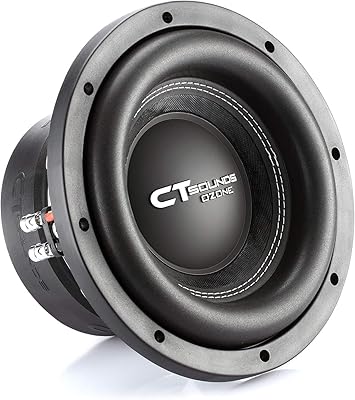
CT Sounds OZONE-10-D4 10-inch Car Subwoofer
84%
91%
Bass Performance
88%
Power Handling
92%
Value for Money
85%
Sound Clarity
86%
Build Quality
More
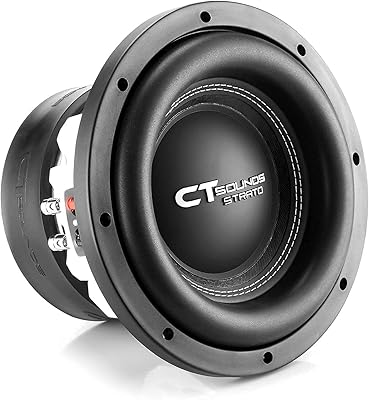
CT Sounds STRATO-10-D2 10 Inch Dual 2 Ohm Car Subwoofer
87%
91%
Bass Performance
89%
Build Quality & Durability
92%
Power Handling
88%
Sound Clarity
83%
Ease of Installation
More
DS18 SLC-10S 10-Inch Car Subwoofer
78%
88%
Value for Money
79%
Bass Output & Impact
83%
Build Quality
67%
Power Handling (RMS)
86%
Ease of Installation
More
Alphasonik NSW410 10-inch Car Subwoofer
84%
88%
Bass Performance
92%
Value for Money
85%
Ease of Installation
90%
Build Quality
87%
Durability
More
Pyramid PW1048USX 10-Inch 500W Car Subwoofer
83%
88%
Bass Performance
92%
Value for Money
85%
Build Quality
90%
Ease of Installation
82%
Sound Clarity
More
ORION XTR10SWD2 Shallow Mount 10″ Car Subwoofer
85%
88%
Bass Performance
84%
Sound Clarity
90%
Ease of Installation
85%
Build Quality
82%
Durability
More
Pyramid WH10 10-Inch Car Subwoofer Speaker
83%
92%
Value for Money
85%
Sound Quality
89%
Installation Ease
74%
Bass Depth
80%
Build Quality
More
Seventour HR-DTSUB 10″ Car Subwoofer
73%
88%
Value for Money
79%
Bass Output
83%
Install Friendliness
71%
Build Quality
74%
Amplifier Compatibility
More
Planet Audio P10AWK 10-Inch Amplified Car Subwoofer
71%
83%
Ease of Installation
71%
Bass Output & Impact
76%
Sound Tuning & Flexibility
86%
Compatibility & Input Options
58%
Build Quality & Materials
More
ALIESTFDNO IT-CA01 10-Inch Under-Seat Car Subwoofer
67%
82%
Ease of Installation
61%
Bass Output & Performance
78%
Value for Money
67%
Build Quality
71%
Fit & Compatibility
More

FAQ

A stable amplifier rated between 300W and 600W RMS at your chosen wiring impedance is the sweet spot for the XTR104D. Running it at 500W RMS continuously is its rated ceiling, so there is no benefit to pairing it with a 1000W amplifier and pushing it hard. Match the amp to the sub's RMS rating, not its peak figure, and you will get reliable long-term performance.

It depends on what kind of bass you want. A sealed enclosure will give you tighter, more accurate bass that works well for music where punch and definition matter, like rock or acoustic-heavy tracks. A ported enclosure will generally produce louder, more extended low-end output, which suits hip-hop and EDM better. Several owners have noted that this 10-inch Orion sub performs more impressively in a ported setup, so if maximum output is your goal, go ported.

A dual 4-ohm subwoofer has two separate voice coils, each rated at 4 ohms. You wire them together either in parallel (resulting in a 2-ohm load) or in series (resulting in an 8-ohm load). This matters because your amplifier has a stable minimum impedance — most car amps are stable at 2 ohms, some only at 4 ohms. Wiring the Orion XTR104D 10-Inch Car Subwoofer to match your amplifier's stable load gets you the best power transfer and protects the amp from running too hot.
Yes, and it is actually a practical choice for those vehicles. A 10-inch driver fits into a more compact enclosure than a 12 or 15-inch sub, which helps in vehicles where cargo space is limited. The XTR104D's output is well-suited to the cabin size of a Jeep or smaller SUV — it can fill that space without needing a competition-level amplifier.

Not really — at least not in the way the marketing implies. The 2000W figure is a momentary peak, not a number the driver can sustain. The 500W RMS rating is the one that actually governs how you should build your system. Shopping for an amplifier based on the peak number is a common mistake that leads to either underpowering or overpowering the sub.

Orion recommends consulting their published enclosure specifications for the XTR104D, as ideal volume varies between sealed and ported designs. As a general starting point for a 10-inch driver, sealed boxes typically run between 0.5 and 1.0 cubic feet, while ported designs often sit between 1.0 and 1.5 cubic feet with a tuning frequency between 35 and 45Hz. Using an enclosure far outside the recommended volume can noticeably hurt output quality.

Most experienced DIYers find it straightforward. The dual voice coil wiring is the one step that trips up first-timers — if you are new to it, look up a wiring diagram specific to your amplifier's impedance rating before you connect anything. The physical mounting is standard for a 10-inch driver and does not require any unusual hardware.

Most budget subwoofers use stamped steel baskets, which are lighter but less rigid and less effective at shedding heat. The cast aluminum frame on the XTR104D holds its shape better under the mechanical stress of long excursion travel and also helps pull heat away from the voice coil during extended use. It is a meaningful material upgrade that contributes to the driver's durability over time.

Within its rated power range, yes. The high-temperature aluminum voice coil and Kapton former are specifically designed to handle the thermal buildup that comes from sustained loud listening. That said, if you're regularly running it at the absolute top of its RMS rating for hours at a time, giving it occasional breaks is a reasonable precaution. Thermal damage from prolonged overuse is the most common cause of voice coil failure in any subwoofer.

The XTR104D is built for punchy, defined bass rather than the ultra-deep, low-frequency rumble you might associate with a larger driver. It excels with hip-hop, EDM, and bass-heavy rock where the kick drum and bass lines need presence and impact. Listeners who are after that sub-30Hz infrasonic bass experience will find a larger driver in a tuned ported box more satisfying.

Where to Buy

Elite Auto Gear
In stock $139.95
The Wires Zone
In stock $139.95
Onlinecarstereo.com
In stock $139.95
store.soundsolutionsaudio.com
In stock $139.95