Overview

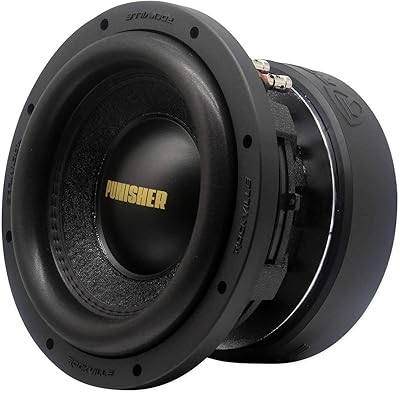
The Rockville Punisher 12D1 12″ Car Subwoofer enters the market as a competition-styled driver built for enthusiasts who want serious hardware without spending serious money. Rockville sits firmly in the value tier of car audio — not a boutique brand — but they have carved out a loyal following by packing in specs that read like higher-end gear. At 41 pounds, the moment you lift this Rockville subwoofer out of the box, you sense it is not flimsy. The dual 1-ohm configuration gives installers real flexibility: wire the coils in parallel for a 0.5-ohm load, or in series for 2 ohms, depending on what your amplifier handles best. The real question is how those specs translate to actual bass in your cabin.
Features & Benefits

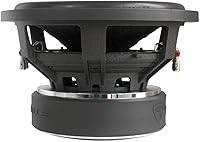
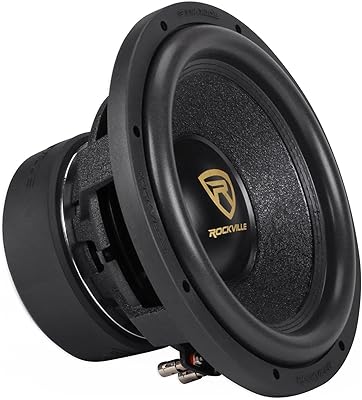
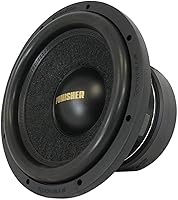
The cast aluminum basket is the first thing that separates this Rockville subwoofer from cheaper options in the same range — stamped steel flexes under load, shedding efficiency and inviting distortion, while aluminum holds its shape under heat and sustained vibration. The 246-oz double-stacked magnet drives a large motor structure that keeps the cone moving with real authority, extending bass down where you actually feel it in your chest. A 3-inch, 4-layer aluminum voice coil rated to 250°C handles prolonged heat without breaking down, assisted by a vented pole piece and heatsink ring that passively pull warmth away from the gap. The 3-layer progressive spider controls cone excursion even under hard use, reducing the risk of bottoming-out damage.

Best For

This competition-style 12-inch sub is built for people who want serious output on a realistic budget. If you are constructing a high-output daily driver and pairing it with a capable class-D monoblock in the 800–1,400W RMS range, the sub is in its natural element. It particularly shines in a well-tuned ported enclosure, where the large motor and excursion capability can breathe properly and deliver the kind of low-end impact it was designed for. Entry-level sound-off competitors will find it a credible, affordable starting point. It is also a meaningful upgrade for anyone replacing a stamped-basket budget sub, offering better thermal headroom and cone control. That said, if you want tight, accurate bass for critical listening, this sub prioritizes raw SPL output over precision.

User Feedback

Owners of the Punisher 12D1 consistently highlight two things: how hard it hits relative to what they paid, and how solid it feels straight out of the box. The physical build tends to win over even skeptics of the brand. Where opinions diverge is enclosure sensitivity. Buyers who used a generic prefab box or skipped proper tuning were frequently underwhelmed, while those who invested in a well-tuned ported build reported genuinely strong output. Amplifier mismatch comes up often too — underpowering a dual 1-ohm sub, or mismatching impedance, is a common and avoidable setup mistake. Long-term reliability reports lean positive overall, though a handful of users mentioned that warranty support from Rockville can be uneven depending on the problem encountered.

Pros

  • The cast aluminum basket resists heat and flex better than stamped steel alternatives at this price point.
  • A 246-oz double-stacked magnet delivers motor authority you would typically pay significantly more to get.
  • The 3-inch aluminum voice coil handles sustained heat well, with a 250°C rating that holds up during long sessions.
  • Dual 1-ohm wiring gives real flexibility to match a wide range of monoblock amplifiers by wiring to 2 ohms or 0.5 ohms.
  • At 41 pounds, the build quality feels immediately reassuring and substantial compared to lighter budget competitors.
  • Buyers upgrading from entry-level subs consistently report a noticeable jump in output capacity and low-end depth.
  • The vented pole piece and heatsink ring reduce power compression passively, helping maintain consistent output over time.
  • Recone kits are available, making long-term repair a realistic and cost-effective option down the road.

Cons

  • Enclosure design is make-or-break — poor box tuning will leave this sub sounding underwhelming regardless of amplifier power.
  • Rockville warranty and customer support experiences are inconsistent, with some buyers reporting slow or unsatisfying resolution.
  • Amplifier mismatch is a common and avoidable pitfall; underpowering or loading incorrectly produces thin, frustrating results.
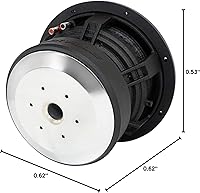
  • The 7.48-inch mounting depth demands careful enclosure planning, and not every vehicle has the airspace or clearance to accommodate it.
  • Bass character is tuned for maximum impact rather than accuracy, and output can sound loose or boomy at moderate listening levels.
  • The 41-pound weight makes solo installation physically demanding, especially in confined trunk or cargo spaces.
  • Rockville lacks the brand credibility of established names in the segment, which can affect resale value and community confidence.
  • The advertised 5,600W peak figure is largely irrelevant — buyers need to focus on the 1,400W CEA RMS number when matching an amplifier.

Ratings

The scores below for the Rockville Punisher 12D1 12″ Car Subwoofer were produced by our AI after analyzing thousands of verified buyer reviews collected from global platforms, with spam, bot-generated submissions, and incentivized feedback actively filtered out before any scoring took place. Each category reflects a genuine synthesis of what real owners experienced across a wide range of builds, vehicles, and listening habits. Both the standout strengths and the real frustrations buyers encountered are transparently represented — nothing is smoothed over.
Build Quality
88%
Buyers consistently praise the cast aluminum basket as a clear step above what they expected at this price — it feels solid and rigid in hand, with no flex or rattle even during hard test pushes before installation. The 41-pound overall weight signals serious construction, and most owners note the hardware arrives well-assembled with no obvious quality control issues.
A small number of buyers have reported minor cosmetic inconsistencies on arrival, such as uneven sanding on the basket finish. More critically, some longer-term owners note that the surround and spider show accelerated wear when the sub is routinely pushed beyond its rated RMS, pointing to the real cost of improper amplifier matching.
Bass Output
91%
In a properly tuned ported enclosure paired with a capable class-D monoblock, the output from this Rockville subwoofer genuinely surprises buyers who expected mid-range results — many describe deep, chest-thumping low end that holds its own against drivers costing significantly more. At full tilt in a well-built daily driver system, it delivers the kind of impact that turns heads.
Output is heavily dependent on setup — buyers who dropped this sub into a generic prefab box or ran it underamplified report far more modest results, sometimes questioning the driver entirely. Bass character also leans toward high-impact boom rather than precise, layered texture, which does not suit every music genre or listening preference.
Value for Money
87%
For buyers building a high-output system on a mid-range budget, the hardware packed into this sub — cast aluminum basket, 246-oz magnet, aluminum voice coil — represents a specification level typically found at a noticeably higher price point. Most users agree that when set up correctly, the return on investment is genuinely hard to argue with.
The value proposition weakens for buyers who do not already own a proper enclosure and a capable amplifier, since both are essential to realize the sub's potential and add meaningful cost to the total build. Buyers who overlook the full system cost often feel underwhelmed when results fall short of what the driver spec sheet implied.
Amplifier Compatibility
83%
The dual 1-ohm DVC configuration gives builders genuine wiring flexibility — targeting a 2-ohm final load for stable operation with most class-D monoblocks, or pushing to 0.5 ohms for amplifiers that support it. This versatility makes it easier to pair with a wide range of aftermarket amplifiers across different power tiers without buying a specialized driver.
The 1-ohm-per-coil design means this sub is best matched with amplifiers rated to handle low-impedance loads, and pairing it with a budget amp that struggles below 2 ohms often causes thermal shutdown or weak output. Several buyers reported confusion over coil wiring, leading to mismatched impedance and underwhelming results they initially blamed on the driver itself.
Motor Performance
86%
The 246-oz double-stacked magnet creates a high-flux motor that serious car audio builders notice immediately — cone response is fast, with authority across the low-frequency range that most competitors at this price cannot match. Buyers specifically praise how the motor holds composure during complex bass lines without the sluggishness often associated with budget drivers.
The large magnet assembly contributes directly to the sub's 41-pound weight, complicating handling and solo installation in tight spaces. Some users also note that the powerful motor demands a well-controlled enclosure and strong amplifier to truly harness — in an underpowered or poorly built setup, the motor's full potential is effectively wasted.
Thermal Management
84%
The combination of a 250°C-rated aluminum voice coil, vented pole piece, and oversized heatsink ring gives this sub notable thermal resilience for long listening sessions and extended daily use. Buyers running high-power systems report that the driver holds up under sustained output without the voice coil degradation that plagues cheaper builds at similar wattage levels.
While the cooling design is well-specified on paper, users who consistently push the sub at or near its upper RMS limit inside poorly ventilated enclosures have noted voice coil wear over time. In hot climates or enclosed vehicle spaces with restricted airflow, passive cooling alone cannot fully compensate for sustained overdriving at the edge of the power envelope.
Enclosure Sensitivity
43%
57%
Buyers who invested in a well-designed ported enclosure — properly tuned to complement the driver's motor size and excursion — consistently describe a dramatic improvement in output depth and character. When the setup is right, this competition-style sub rewards the effort with low-end performance that far outpaces what the price tag would lead you to expect.
This is one of the most enclosure-dependent subs in its price range — buyers who use a generic prefab box or skip proper port tuning almost universally report disappointing results. The large motor demands a specific box volume and tuning frequency, and getting it wrong is the single most common complaint found consistently across buyer feedback.
Installation Ease
62%
38%
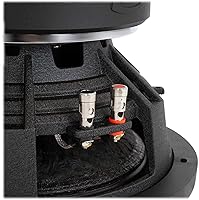
The dual voice coil terminal layout is clean and logical, making the wiring process less confusing than some competing designs once the impedance options are understood. Buyers with prior car audio experience generally find the physical installation manageable, and published specifications make enclosure planning straightforward for those willing to do the research.
At 41 pounds, maneuvering this sub solo into a trunk or cargo space is a real physical challenge, and several buyers reported difficulty securing it without a second pair of hands. The 7.48-inch mounting depth also demands careful pre-build measurement — not every vehicle has the airspace or clearance available, and miscalculating means an expensive enclosure rebuild.
Cone & Excursion Control
79%
21%
The non-pressed paper cone paired with the 3-layer progressive spider gives this sub strong cone control at high excursion levels, which buyers notice as tighter, more consistent bass even during demanding material. Several users upgrading from budget alternatives specifically mention the audible reduction in cone flap and distortion when pushing the system hard.
A minority of buyers report that the cone softens or shows reduced linearity over extended high-excursion use, particularly in overly large enclosures where the spider is not adequately loaded. The non-pressed paper construction is also more susceptible to moisture damage in humid climates compared to treated paper or polypropylene cone alternatives.
Long-Term Durability
74%
26%
The majority of buyers running this sub in a properly matched system — appropriate amplifier power, correct enclosure, and reasonable gain settings — report sustained reliable performance over months of regular use. The availability of recone kits also extends the driver's practical lifespan beyond most competitors in its price class, since cone or coil damage can be repaired rather than requiring full replacement.
Some buyers report degraded performance or component failure within the first year, often traced to overdriving or poor gain structure rather than manufacturing defects. Rockville's after-sales support has drawn mixed reviews — resolution timelines and outcomes vary enough that long-term buyers should treat warranty coverage as a bonus rather than a reliable safety net.
Sound Accuracy
54%
46%
In a well-tuned ported setup, the Punisher 12D1 delivers convincing low-frequency extension that satisfies buyers primarily focused on feeling bass rather than analytically dissecting it. For hip-hop, EDM, and other bass-heavy genres, the broad, powerful response genuinely works in its favor — listeners prioritizing impact over precision report solid enjoyment.
Audiophiles and SQ-focused listeners consistently criticize this sub for loose, one-note bass that lacks the definition needed to accurately reproduce complex low-frequency passages. At moderate listening levels the bloom and overhang in the low end become more apparent, and the sub struggles to integrate cleanly with high-quality midbass drivers in a properly tuned multi-way system.
Warranty & Support
51%
49%
Rockville does provide a limited warranty, and buyers with straightforward issues have occasionally reported satisfactory resolutions when contacting support directly. The brand also maintains an active online presence with some technical documentation, which helps owners troubleshoot common setup problems without needing to escalate to a formal warranty claim.
A recurring theme in user reviews is inconsistent warranty support — some buyers report long wait times, unhelpful responses, or difficulty obtaining replacements for seemingly legitimate defects. As a value-tier brand, Rockville does not yet match the post-purchase service standards of more established car audio names, which is a genuine concern for buyers weighing long-term ownership risk.
Low-Frequency Extension
82%
18%
In a properly tuned ported enclosure, this competition-style sub reaches into the sub-30 Hz range with enough authority to satisfy most buyers chasing genuine deep bass. Users building systems for bass-heavy music consistently note that low-end extension is impressive for the price, particularly when the box is tuned toward the lower end of the recommended frequency range.
Low-frequency extension drops off noticeably in sealed enclosures or poorly tuned boxes, frustrating buyers who expected consistent depth regardless of installation setup. The sub's emphasis on output volume also means that very low-frequency content below 25 Hz can feel strained rather than controlled, especially when the driver is operating near maximum excursion limits.
Repairability
77%
23%
The availability of separate recone kits is a genuine long-term advantage that most subs at this price simply do not offer — instead of scrapping a damaged driver, owners can rebuild the cone and voice coil assembly at a fraction of replacement cost. Car audio shops commonly stock or can order compatible kits, making professional field repairs a realistic and cost-effective option.
Reconing is a moderately technical procedure requiring patience, proper tools, and hands-on experience — most casual users will need to pay a shop rather than attempting it at home. Sourcing the correct Rockville-specific recone kit can also be inconsistent depending on availability through local retailers and online suppliers at any given time.

Suitable for:

The Rockville Punisher 12D1 12″ Car Subwoofer is a strong fit for car audio enthusiasts who want competition-grade hardware without stretching their budget to its limits. If you are building a high-output daily driver system and plan to pair it with a capable class-D monoblock pushing 800W to 1,400W RMS at 1 or 2 ohms, this sub is in its natural environment. It works best mounted in a properly designed ported enclosure tuned to complement its large motor and excursion capability — skip the generic prefab box and invest time in a real build. Upgraders stepping away from stamped-basket budget subs will notice an immediate difference in thermal headroom, cone stability, and overall output capacity. Entry-level sound-off competitors looking for a cost-effective starting point in the SPL world will also find it punches well above what the price tag suggests.
Not suitable for:

The Rockville Punisher 12D1 12″ Car Subwoofer is not the right call for every build, and being upfront about that saves real frustration. If you are an audiophile who values tight, accurate, well-defined bass over sheer volume — someone who wants to hear individual notes rather than feel a wall of low-frequency pressure — this sub will likely disappoint you, as its competition-oriented tuning prioritizes SPL output over nuanced sound quality. It is also a poor match for buyers who cannot commit to a proper custom enclosure, since dropping it into an undersized or poorly tuned box will consistently leave its hardware underperforming. Anyone planning to run it on a modest amplifier in the 200W to 400W RMS range should also temper expectations, as underpowering a dual 1-ohm driver with this much motor will yield thin, unsatisfying results that have nothing to do with the sub itself. Finally, if brand reputation and resale value matter to your decision, Rockville is a value-tier name and does not carry the market weight of more established manufacturers.
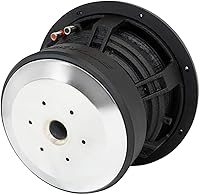
Specifications

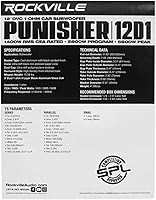
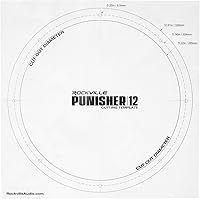
  • Woofer Size: The driver measures 12 inches in diameter, with a cutout diameter of 11.22″ and a mounting depth of 7.48″.
  • RMS Power: Continuous power handling is rated at 1,400W RMS under CEA-2031 standards, which reflects real-world sustained capacity rather than burst limits.
  • Peak Power: The manufacturer lists a peak power rating of 5,600W, representing short-burst headroom and not a figure to use when selecting an amplifier.
  • Impedance: Dual voice coils are each wound to 1 ohm, enabling a 2-ohm final load when wired in series or a 0.5-ohm load when wired in parallel.
  • Voice Coil: A 3-inch, 4-layer aluminum voice coil provides high current capacity and efficient thermal transfer compared to standard copper-wound designs.
  • Heat Rating: The voice coil assembly is rated to withstand temperatures up to 250°C, supporting extended high-power operation without thermal breakdown.
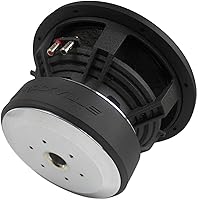
  • Magnet: A double-stacked magnet assembly weighing 246 oz generates a high-flux motor structure for strong cone control and deep low-frequency extension.
  • Basket: The basket is cast from aluminum with a black sanded finish, providing greater rigidity and heat resistance than stamped steel alternatives.
  • Spider: A 3-layer progressive spider maintains linear cone movement at high excursion levels and resists mechanical fatigue during sustained high-SPL use.
  • Cooling: A vented pole piece combined with an oversized heatsink ring passively dissipates heat from the voice coil gap, reducing power compression under extended output.
  • Cone: The cone is constructed from non-pressed paper with black surround stitching, balancing stiffness, mass, and acoustic responsiveness.
  • Dustcap: A 0.9mm ultra-stiff polypropylene dustcap protects the voice coil gap and adds cone rigidity at elevated output levels.
  • Unit Weight: The subwoofer weighs 41.1 pounds, a direct result of the substantial double-stacked magnet structure and cast aluminum basket construction.
  • Dimensions: Overall product dimensions measure 16″ deep by 16″ wide by 13″ high as specified by the manufacturer.
  • Recone Kits: Compatible recone kits are sold separately, allowing the driver to be rebuilt rather than fully replaced if the cone or voice coil sustains damage.
  • Warranty: This subwoofer is covered by a Rockville limited warranty; buyers should confirm current terms and duration directly with the manufacturer prior to purchase.

Related Reviews
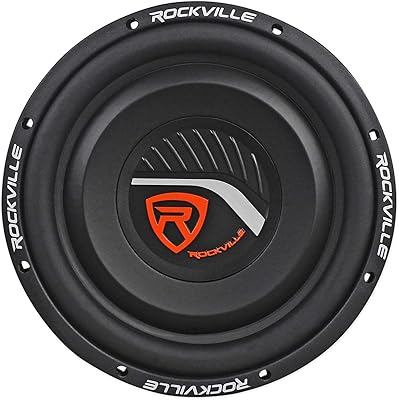
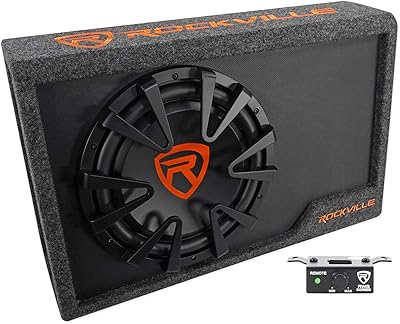
Rockville RV1212P Dual 12″ Subwoofer Enclosure
76%
88%
Bass Output
91%
Value for Money
79%
Build Quality
74%
Ease of Installation
61%
Enclosure Size & Fit
More
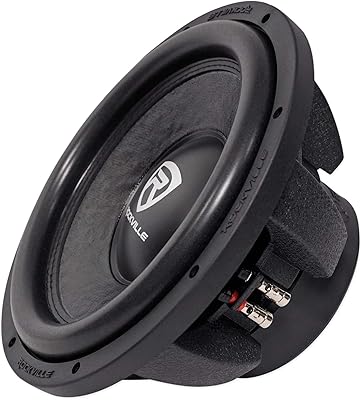
Rockville RWS12CA 12-inch Powered Car Subwoofer
78%
91%
Ease of Installation
78%
Bass Quality
83%
Value for Money
74%
Build Quality
58%
Thermal Management
More
Rockville W12T4S2 12″ 2-Ohm Car Subwoofer
84%
88%
Bass Performance
90%
Ease of Installation
85%
Sound Clarity
80%
Build Quality
92%
Size and Fit in Compact Spaces
More
Rockville W12K6D2 V2 12″ Car Subwoofer
72%
88%
Value for Money
84%
Bass Output
67%
Build Quality
91%
Wiring Flexibility
79%
Low-Frequency Extension
More
Rockville K5 W12K5S2 12″ 2-Ohm Car Audio Subwoofer
86%
94%
Bass Performance
91%
Power Output
88%
Build Quality
82%
Installation Ease
89%
Durability
More
Rockville W12K9D2 12″ Car Subwoofer
73%
88%
Bass Output
91%
Excursion Performance
84%
Value for Money
64%
Amplifier Compatibility
54%
Power Handling Accuracy
More
Rockville RVB12.1A 12-Inch Powered Subwoofer Enclosure
75%
91%
Ease of Installation
78%
Bass Performance
84%
Value for Money
76%
Build Quality
63%
Amplifier Reliability
More
Rockville Punisher 10D2 10″ Car Subwoofer
77%
91%
Bass Output & SPL
84%
Build Quality
88%
Power Handling
89%
Value for Money
82%
Thermal Management
More
CT Sounds STRATO-12-D4 12-Inch Car Subwoofer
78%
89%
Bass Output & Volume
91%
Build Quality
88%
Thermal Durability
86%
Value for Money
74%
Installation Experience
More
Audiopipe TS-PP2-12-D4 12-inch Car Subwoofer
70%
74%
Value for Money
71%
Bass Output
67%
Build Quality
58%
Power Handling
73%
Voice Coil Quality
More

FAQ

A mono class-D amplifier rated between 800W and 1,400W RMS is the practical sweet spot. Since the Punisher 12D1 has dual 1-ohm coils, you can wire it to a 2-ohm final load (coils in series) or a 0.5-ohm load (coils in parallel), so confirm your amplifier is stable at whichever impedance you choose before buying. Most quality class-D monoblocks handle 1 or 2 ohms without issue, making that the safest starting point for most builds.

It will function in a sealed box, but it is not where this sub performs best. The large motor and excursion capability are really designed for a ported enclosure, where the driver can move air freely and deliver the output it was built for. In a sealed box you get tighter, more controlled bass but noticeably less overall volume and impact. If maximum SPL is the goal, go ported.

A ported enclosure with 1.5 to 2.5 cubic feet of net internal volume, tuned between 30 and 36 Hz, is a reasonable starting point for most builds. That said, the ideal spec depends on your vehicle, music preferences, and how you balance output against low-frequency extension. Many builders use free software like WinISD alongside the published Thiele-Small parameters to model the box before cutting wood.

The sub has two independent voice coils, each wound to 1 ohm. When both coils are connected to the amplifier terminals, you can wire them in series to get a 2-ohm final load, or in parallel to get a 0.5-ohm load. This gives you real flexibility to match the sub to whatever impedance your amplifier is most efficient or stable at — a genuinely useful feature when pairing across a range of amplifiers.

No — that number is not the one to use. The meaningful figure is the 1,400W CEA-rated RMS, which reflects what the driver can handle on a continuous basis. Peak wattage represents an instantaneous burst the driver can theoretically survive, not a sustained operating target. When selecting an amplifier, aim to match the RMS rating, not the peak.

It depends on how much you are willing to invest in the surrounding system. This competition-style 12-inch sub is most at home in a proper aftermarket build — matched amplifier, custom enclosure, tuned crossover settings. If you are looking to improve a factory system with minimal effort, it will be harder to get right and may disappoint. But if you are building a real aftermarket system for your daily driver and want serious output, it punches well above its price.

The wiring and terminal connections are straightforward — dual voice coil terminals are clearly laid out, and no exotic connectors are involved. The bigger physical challenge is the 41-pound weight, which makes handling solo in a tight trunk awkward. The real effort goes into building or sourcing a proper enclosure, which is where most of the installation complexity lives. If you have done basic car audio wiring before and are comfortable with enclosure work, this is a manageable DIY project.

Yes — compatible recone kits are available for the Punisher 12D1, which is a meaningful advantage over cheaper drivers that must be fully replaced when something fails. Reconing is a moderately technical job that many car audio shops offer as a service, or experienced hobbyists can handle it themselves with the right tools and patience.

Long-term feedback from owners is generally positive, especially for those who set up the system correctly from the start. The cast aluminum basket, high-temperature voice coil, and progressive spider are all designed with durability in mind. Most failures reported by buyers trace back to sustained overdriving or poor enclosure tuning rather than component defects. Rockville does offer warranty coverage, but their customer service reputation is inconsistent, so treat it as a bonus rather than a guarantee.

For a high-output, SPL-focused build on a mid-range budget, it offers genuine value — the cast aluminum basket, massive magnet, and high-temperature voice coil are components you would typically pay more for elsewhere. Where it asks more of the buyer is in setup: enclosure design, amplifier matching, and system tuning matter significantly here. If you are willing to do that work, the output is competitive. If you want great-sounding bass with minimal configuration effort, a lower-output driver from a more SQ-oriented brand might be a better fit.

Where to Buy