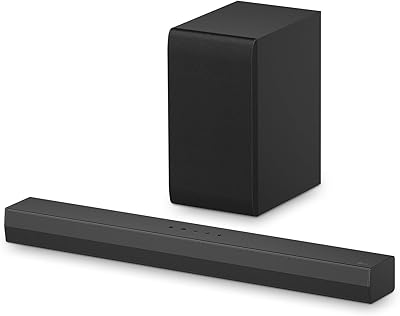
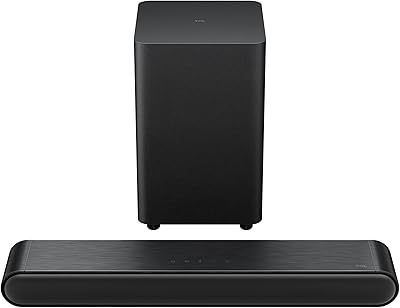
Overview

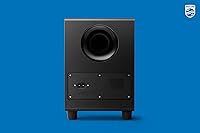
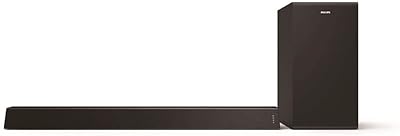
The Philips B5306 2.1-Channel Soundbar with Subwoofer is a straightforward, no-frills audio upgrade aimed squarely at Roku TV owners and casual listeners who want noticeably better sound without a complicated setup or a steep price tag. The wireless subwoofer is the real draw at this price tier — most competing systems make you choose between bass and cable clutter, and this one skips that trade-off entirely. With 140W of total output and a compact footprint, it fits comfortably in smaller living rooms, bedrooms, or apartments. Just be clear going in: this is a mainstream entry-level bar, not a system built for critical listening or large open spaces.
Features & Benefits

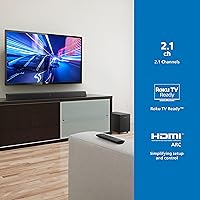
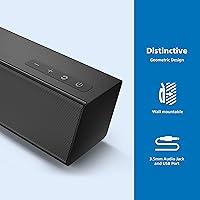
Where this Philips soundbar earns its keep is in the day-to-day convenience it offers Roku TV households. Roku TV Ready certification means the bar appears in your TV's sound settings automatically, letting you adjust volume and EQ presets directly from your existing Roku remote — no hunting for a second device. The HDMI ARC connection keeps things tidy with a single cable handling both audio and control signals. Beyond Roku, the system accepts Bluetooth streaming, USB playback, and a 3.5mm audio-in jack, so pairing a phone or an older audio source is never an issue. Integrated wall-mount brackets and a low-profile trapezoid design round out a genuinely practical package.

Best For

The B5306 system is a natural fit for anyone who already owns a Roku TV and simply wants audio that works without a setup headache. Apartment dwellers and bedroom users will appreciate the compact bar and the freedom to place the wireless sub across the room without running a cable. If you're a first-time soundbar buyer tired of your TV's flat built-in speakers but not ready to invest in a full surround setup, this 2.1-channel bar hits that middle ground well. Casual streamers and background music listeners will find it more than adequate — just don't expect the precision audio that satisfies a dedicated home theater enthusiast.

User Feedback

With a 4.1-star average across more than 1,000 ratings, the reception for this Philips soundbar has been broadly positive, though far from unanimous. Most satisfied owners highlight two things: how painlessly it paired with their Roku TV and how much fuller their content sounded once the wireless subwoofer kicked in. Critics tend to cluster around a few consistent pain points — some users report occasional sub dropouts, and others find that dialogue can get muddy at higher volumes, with limited EQ options to compensate. Notably, a fair share of lower ratings read less like product failures and more like buyers who expected a mid-range or premium audio experience from an entry-level system.

Pros

  • Roku TV Ready integration works exactly as advertised — the bar shows up in your TV menu and responds to your existing Roku remote.
  • The wireless subwoofer delivers a genuine, noticeable bass improvement over flat built-in TV speakers.
  • HDMI ARC setup takes minutes and keeps your entertainment center cable-tidy.
  • Bluetooth, USB, and 3.5mm audio-in give you flexible options for connecting phones, tablets, and older devices.
  • Integrated wall-mount brackets mean you don't need to buy extra hardware to hang the bar.
  • The compact trapezoid profile fits most TV stands without blocking the TV's IR sensor.
  • At this price tier, getting a wireless subwoofer included is a real value advantage over competing systems.
  • A 4.1-star average across more than 1,000 real-world ratings reflects a broadly satisfied user base.
  • The full manufacturer warranty adds a reasonable layer of purchase confidence for a budget-tier buy.

Cons

  • EQ customization options are very limited, leaving little room to fine-tune the sound to your preference.
  • Some users report intermittent wireless subwoofer dropouts, particularly over time or at longer distances.
  • Dialogue clarity can soften and become harder to follow when volume is pushed toward the higher end.
  • The system lacks Dolby Atmos or any virtual surround processing, so the soundstage stays fairly narrow.
  • With no voice assistant support and no app control, adjustability beyond the remote is minimal.
  • 140W total output is adequate for small rooms but may feel underpowered in larger or open-plan spaces.
  • The remote is functional but basic — there is no backlight and button feedback feels budget-grade.
  • No Play-Fi or multi-room audio support limits this bar to single-room use only.

Ratings

The scores below reflect our AI-driven analysis of verified global user reviews for the Philips B5306 2.1-Channel Soundbar with Subwoofer, with spam, bot-generated, and incentivized feedback actively filtered out before scoring. Every category captures the honest consensus from real buyers — the things people genuinely praised and the friction points they ran into after living with the system. Both sides of the picture are reflected transparently so you can make a well-informed call.

Ease of Setup
91%
Buyers consistently describe the initial setup as one of the fastest they have experienced at this price level. Roku TV owners in particular appreciate that the bar appears automatically in the TV sound menu after a single HDMI ARC connection, with no app download or code-entry required.
A small number of users on non-Roku TVs found the optical input setup slightly less intuitive, particularly when toggling between input sources. The quick-start guide covers basics but offers little troubleshooting help if the subwoofer fails to auto-pair on first boot.
Roku TV Integration
88%
The Roku TV Ready certification delivers on its core promise: volume control, input switching, and sound mode access all work through the standard Roku remote without any reprogramming. For households already in the Roku ecosystem, this level of out-of-the-box compatibility is a genuine convenience that competitors at this tier rarely match.
The integration only fully applies to Roku-branded TVs, so buyers with other smart TV platforms get none of these menu-level benefits. A handful of users also noted that after firmware updates on their Roku TV, the soundbar occasionally lost its automatic recognition and required re-pairing.
Bass Performance
83%
The wireless subwoofer delivers a noticeably fuller low-end than any built-in TV speaker system, and most casual listeners find it satisfying for action movies, streaming shows, and background music. Users in apartments and bedrooms specifically mention that the bass feels present without being overwhelming for shared-wall living situations.
Audiophiles and anyone used to dedicated home theater subwoofers will find the bass extension limited, with less punch at very low frequencies than the marketing imagery might suggest. At higher volume levels, the sub can also feel slightly one-note, lacking the textured rumble that better-tuned woofers produce.
Dialogue Clarity
66%
34%
At low to moderate volumes — typical for bedroom or smaller living room use — dialogue is clear and significantly more intelligible than flat TV speakers. The 2.1-channel separation gives voices a bit more presence and helps them cut through background scoring in most streaming content.
Push the volume past roughly two-thirds of maximum and vocal clarity starts to soften noticeably, a recurring complaint among users who watch content in larger or noisier rooms. There is no dedicated center channel or dialogue enhancement mode to compensate, which is a real limitation for anyone who regularly watches content with dense audio mixes.
Wireless Subwoofer Reliability
61%
39%
For many users, the wireless sub works without issue from day one and maintains a stable connection during normal daily use within a typical room distance. The convenience of placing it freely — behind a couch, in a corner — without cable management is genuinely appreciated by buyers in furnished or compact spaces.
A recurring pattern in lower-rated reviews involves the subwoofer dropping its wireless connection intermittently, particularly after extended use or in environments with more RF interference. Some buyers report the issue worsening over time, suggesting the wireless link may degrade as units age, which undercuts the long-term reliability picture.
Sound Quality Overall
72%
28%
For casual streaming, TV binge-watching, and everyday music playback, the B5306 system produces a full and well-rounded sound that is a clear step above stock TV audio. The 140W output fills small to medium rooms comfortably, and the stereo separation gives content a sense of width that flat speakers cannot provide.
This is not a system that will satisfy buyers who have spent time with mid-range or premium soundbars. The soundstage is narrow, there is no virtual surround processing, and the dynamic range compression becomes obvious during louder cinematic sequences.
EQ & Sound Customization
48%
52%
The remote provides access to a few basic preset sound modes that work adequately for switching between music and movie content, giving casual users a minimal but functional level of control over the listening experience.
The lack of any granular EQ adjustment is a persistent frustration, and there is no companion app to fill that gap. Buyers who want to boost treble for clearer highs or dial back an overpowering bass preset are essentially stuck with what the presets offer, which feels limiting even at this price point.
Build Quality
74%
26%
The steel enclosure gives the soundbar a more solid feel than the all-plastic competitors at the same price, and the overall construction feels sturdy enough for long-term tabletop or wall placement. The finish holds up well to routine handling and does not show fingerprints or smudges easily.
The subwoofer enclosure feels noticeably lighter and more plastic-heavy than the bar itself, and a few users have noted some cabinet vibration at higher bass levels. The remote feels budget-grade — lightweight with no backlight — which undermines the otherwise decent hardware impression.
Connectivity Options
81%
19%
The combination of HDMI ARC, optical, Bluetooth, USB, and 3.5mm audio-in covers nearly every connection scenario a casual buyer is likely to encounter. Being able to switch between a TV source and a Bluetooth phone without touching any cables is a day-to-day convenience that users regularly single out as a strong point.
There is no Wi-Fi, no multi-room audio support, and no HDMI passthrough, so buyers hoping to expand the system or integrate it into a broader smart home audio setup will hit a wall quickly. The lack of eARC also means high-bitrate Dolby and DTS formats from streaming apps are not supported.
Value for Money
84%
When you factor in the wireless subwoofer, Roku TV Ready certification, multiple input types, and integrated wall brackets, the overall package represents strong value at its price point compared to similarly priced bars that either lack a sub or require separate mounting hardware. First-time soundbar buyers consistently rate the price-to-performance ratio highly.
Buyers who stretch to this system expecting near-mid-range performance sometimes feel disappointed, which skews the value perception in negative reviews. If your expectations are calibrated to the actual tier this system sits in, the value argument holds up well — but the gap to better-performing bars is smaller than some shoppers realize.
Remote Control
57%
43%
The included remote covers all essential functions — volume, input selection, sound modes, and power — and pairs reliably with the soundbar out of the box. Roku TV users have the added option of using their TV remote for most functions, which reduces how often they need the dedicated remote at all.
The remote itself feels cheap, with no backlight making it difficult to use in dim rooms, and the button travel is shallow with little tactile feedback. A number of users also report the remote becoming less responsive over time, suggesting the IR emitter or button contacts may degrade with regular use.
Wall Mountability
79%
21%
Integrated wall brackets are a thoughtful inclusion that removes the common frustration of sourcing compatible third-party mounts. Users who wall-mount the bar report a clean, low-profile result that pairs well with wall-mounted TVs in living rooms and bedrooms alike.
The bracket hardware included is basic, and users mounting into drywall without studs will need to source appropriate anchors separately, which the packaging does not make obvious. Alignment during installation can be slightly fiddly without a second pair of hands.
Design & Aesthetics
77%
23%
The matte black steel finish and understated trapezoid profile blend into most home setups without drawing attention to themselves, which is exactly what most buyers want from a soundbar. The compact length means it works visually with TVs from around 40 inches upward without looking disproportionate.
The design is functional but unremarkable, with no premium visual touches that would make it stand out in a more styled living space. The subwoofer in particular has a plain rectangular shape that looks utilitarian rather than considered when placed in a visible part of the room.

Suitable for:

The Philips B5306 2.1-Channel Soundbar with Subwoofer is purpose-built for Roku TV owners who want a straightforward audio upgrade without juggling multiple remotes or reading through a 40-page manual. If your TV's built-in speakers feel thin and lifeless but you have no desire to wire up a full surround system, this 2.1-channel bar hits a practical sweet spot. Apartment dwellers and bedroom users will find the compact bar easy to place, and the wireless subwoofer means you can add real bass presence without running a cable across the floor. It also works well for casual streamers, background music listeners, and anyone who primarily watches TV shows and movies in a smaller room. First-time soundbar buyers on a sensible budget will find the learning curve nearly nonexistent, which counts for a lot when you just want things to work.
Not suitable for:

The Philips B5306 2.1-Channel Soundbar with Subwoofer is not the right call for buyers who care deeply about audio precision, wide soundstage, or fine-tuned EQ control. If you have a large living room or an open-plan space, 140W from a single compact bar will likely feel underpowered and directionally flat. Audiophiles and home theater enthusiasts who want Dolby Atmos, DTS:X, or dedicated surround channels will need to look considerably further up the product ladder. The wireless subwoofer, while convenient, has drawn complaints about occasional dropout issues, which can be frustrating during immersive content. If long-term reliability and consistent sub connectivity are non-negotiable for you, it is worth reading recent user reviews carefully before committing. Anyone who regularly listens at high volumes and expects crisp dialogue throughout may also find this system falls short.
Specifications

  • Channels: The system operates in a 2.1-channel configuration, combining a soundbar with a dedicated wireless subwoofer for stereo plus bass output.
  • Total Power: Total system output is 140W, distributed across the soundbar drivers and the wireless subwoofer unit.
  • Soundbar Size: The soundbar measures 37.87″ deep by 14.8″ wide by 8.54″ high, making it well-suited for smaller TV stands and shelves.
  • System Weight: The combined system weighs 17.81 lbs, accounting for both the soundbar and the wireless subwoofer unit.
  • HDMI: An HDMI ARC port is included, allowing a single cable to carry audio and pass control signals back to a compatible TV remote.
  • Optical Input: An optical digital audio input is provided as an alternative connection method for TVs and devices without HDMI ARC support.
  • Bluetooth: Bluetooth wireless connectivity allows direct audio streaming from smartphones, tablets, and other paired devices without any cables.
  • USB Playback: A USB port on the soundbar supports direct playback of audio files stored on a flash drive or compatible USB storage device.
  • Analog Input: A 3.5mm stereo audio-in jack enables wired connection from headphone outputs or older audio sources.
  • Roku TV Ready: The system carries official Roku TV Ready certification, enabling automatic detection, in-menu sound control, and full compatibility with standard Roku remotes.
  • Subwoofer Link: The subwoofer connects to the soundbar wirelessly, allowing flexible placement around the room without requiring a physical cable run.
  • Wall Mounting: Wall-mount brackets are integrated into the soundbar design, so no additional mounting hardware purchase is required for wall installation.
  • Audio Driver: The soundbar uses dynamic driver technology across its speaker array to reproduce audio across the frequency range.
  • Material: The soundbar enclosure is constructed from steel, providing a rigid cabinet that limits unwanted resonance at higher output levels.
  • Power Source: The system is corded electric and requires a standard AC wall outlet; there is no battery or portable operation mode.
  • Remote Control: A dedicated remote control is included in the box and requires two AAA batteries, which are also included at purchase.
  • Color & Style: The system is finished in black with a trapezoid-profile soundbar shape designed to sit unobtrusively on a TV stand or mounted surface.
  • Warranty: Philips provides a full manufacturer warranty with the system, covering manufacturing defects under standard warranty terms.

Related Reviews

Philips TAB7305 2.1 Soundbar with Wireless Subwoofer
69%
81%
Bass Performance
67%
Dialogue Clarity
89%
Setup & Installation
62%
Wireless Subwoofer Reliability
78%
Value for Money
More
Creative Stage 2.1 Soundbar
78%
84%
Bass & Low-End Performance
73%
Audio Clarity & Midrange
91%
Connectivity & Input Range
86%
TV ARC Reliability
67%
Bluetooth Performance
More
PyleUsa PSBV28HB 2.1 Channel Soundbar with Wireless Subwoofer
84%
85%
Sound Quality
76%
Bass Performance
90%
Connectivity Options
88%
Ease of Setup
92%
Value for Money
More
Hosyond TDA7498E 2.1 Channel Bluetooth Amplifier Board 160W×2+220W
73%
88%
Value for Money
76%
Power Output & Headroom
83%
Bluetooth Connectivity
79%
Build & Component Quality
62%
Thermal Management
More
Hisense HS214 2.1 Channel Soundbar
86%
84%
Sound Quality
88%
Bass Performance
91%
Setup and Installation
92%
Roku TV Integration
83%
Build Quality
More
Philips B4208 2.0 Channel Soundbar
84%
85%
Sound Quality
92%
Ease of Setup
91%
Value for Money
70%
Bass Performance
88%
EQ Customization
More
TCL Q75H 5.1.2 Channel Soundbar
85%
91%
Sound Quality
88%
Ease of Setup
92%
Bass Performance
89%
Dialogue Clarity
84%
Build Quality
More
LG S40T 2.1ch Soundbar with Wireless Subwoofer
75%
76%
Audio Quality
68%
Bass Performance
83%
Dialogue Clarity
91%
Setup & Installation
79%
WOW Interface & Smart Integration
More
TCL Alto 7 2.0 Channel Soundbar with Built-in Subwoofer
84%
85%
Sound Quality
83%
Bass Performance
92%
Ease of Setup
89%
Value for Money
90%
Connectivity Options
More
TCL S210W 2.1 Channel Sound Bar with Wireless Subwoofer
84%
88%
Audio Performance
90%
Bass Quality
85%
Ease of Setup
80%
Build Quality
92%
Value for Money
More

FAQ

The Roku TV Ready certification is a standardized program, so it works with a broad range of Roku TV models rather than just one or two. Once connected via HDMI ARC, the bar should appear automatically in your Roku TV sound settings and respond to your existing Roku remote. It is always worth confirming your specific TV model supports HDMI ARC to get the full experience.

Yes, the Roku TV Ready feature is a bonus, not a requirement. You can connect this Philips soundbar to virtually any TV using HDMI ARC, optical, or even Bluetooth. The Roku-specific menu integration simply won't be available, but the core audio performance is the same regardless of your TV brand.

In most home setups, a distance of around 10 to 15 feet works reliably, though results can vary based on walls, interference, and the specific room layout. Some users have reported occasional dropouts at greater distances or when there are obstructions between the two units. Keeping the sub within a clear line of sight from the bar tends to reduce connectivity issues.

Setup is genuinely straightforward. Plug the soundbar into your TV via HDMI ARC, power everything on, and the Philips B5306 2.1-Channel Soundbar with Subwoofer should pair with the subwoofer automatically. Roku TV owners will see it appear in the TV sound menu almost immediately. The included quick-start guide covers the basics in a few simple steps.
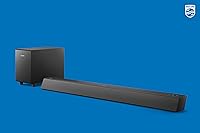
The subwoofer and soundbar pair automatically on power-up once they have been linked initially out of the box. You should not need to re-pair them manually each time under normal circumstances. If the connection drops after a power outage or move, most users find a simple power cycle restores the link.

Basic bass adjustment is available through the remote control and the soundbar's sound settings. However, the EQ options on this system are fairly limited compared to mid-range competitors, so you won't find granular control over individual frequency bands. If precise audio tuning matters a lot to you, that is a real limitation worth considering.

The low-profile trapezoid design is specifically shaped to minimize the risk of blocking the TV's IR receiver when placed flat on a stand. That said, TV designs vary, so it is worth checking your TV's sensor position before finalizing placement. If there is an issue, wall-mounting the bar entirely sidesteps the problem.

Yes. The Bluetooth connection is independent of the TV, so you can pair your phone or tablet directly to the soundbar and stream music without needing the TV powered on at all. USB playback from a flash drive works the same way for stored audio files.

The included remote is the primary control method, and there is no dedicated smartphone app or smart home integration for this system. Roku TV users can also use their Roku remote for volume and basic sound settings, which covers most day-to-day needs. If you were hoping for app-based control or voice assistant support, this system does not offer either.

For moderate listening levels, most users find dialogue reasonably clear and a significant improvement over built-in TV speakers. At higher volumes, some buyers have noted that voices can become slightly muddied or harder to follow, particularly during action-heavy scenes. There is no dedicated dialogue enhancement mode, which is a common omission at this price level.

Where to Buy