


Overview

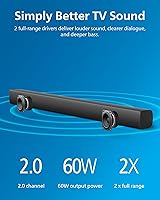
The Philips B4208 2.0-Channel Soundbar is exactly what it looks like: a no-fuss audio upgrade for anyone tired of their flat-panel TV's thin, hollow sound. At 43.3 inches wide but barely 2.6 inches tall, the slim metal grille sits unobtrusively in front of most screens without blocking the picture. It pushes 60 watts across two channels — enough to fill a medium-sized room with noticeably cleaner audio, particularly for dialogue-heavy content. Roku TV owners get a genuinely useful bonus here, since the bar carries Roku TV Ready certification for native integration. Just go in knowing this is built for clarity and presence, not cinematic bass depth.

Features & Benefits

This Philips soundbar covers the connectivity basics without overcomplicating things. The HDMI ARC connection is the standout here — plug it in once, and your TV remote controls the volume from that point forward, no juggling required. Bluetooth 5.3 handles wireless streaming reliably, and the USB port means you can play audio files directly from a drive without touching a phone or app. The four EQ presets — Movie, Music, Voice, and Stadium — aren't dramatic transformations, but Voice mode does make a real difference for news and dialogue-driven dramas. Treble and bass are also adjustable via the remote, which is a small but practical touch for dialing in your preferred sound at any given time.

Best For

The B4208 makes the most sense for people upgrading from a TV's built-in speakers in a smaller space — a bedroom, apartment living room, or den where you're not trying to fill a vast room with sound. If you've been straining to catch dialogue in quieter scenes, this entry-level bar will fix that problem quickly. It's equally well-suited to Roku TV households, where the single-remote setup removes any frustration around switching inputs or managing two remotes. Cable minimalists will appreciate that one HDMI cable handles everything. That said, if action movies and bass-heavy music are your main priorities, spending a bit more on a 2.1 system with a dedicated subwoofer will leave you more satisfied long-term.

User Feedback

With over 1,000 ratings averaging 4 out of 5 stars, the B4208 has earned a respectable track record for its price tier. Buyers consistently highlight how quickly it gets running and how much cleaner TV dialogue sounds afterward — especially for anyone coming from thin built-in TV speakers. The complaints that surface most often center on bass. Without a physical subwoofer, action sequences and bass-forward music feel underwhelming compared to 2.1 alternatives at a similar price. A few users also mention the remote feeling basic and the volume steps being a little chunky rather than smooth. Overall, the positive-to-negative ratio leans clearly favorable, though expectations around low-end audio should be set realistically from the start.

Pros

  • Setup takes minutes — HDMI ARC means one cable and one remote handles everything from day one.
  • Dialogue clarity improves noticeably over flat-panel TV speakers, especially for news and drama content.
  • Bluetooth 5.3 connects reliably to phones and tablets for wireless music without pairing headaches.
  • The low-profile metal grille design looks clean and sits flat without blocking most TV screens.
  • USB audio playback lets you stream files directly from a drive — no phone or streaming service required.
  • Roku TV Ready certification means native integration for Roku households with zero extra configuration.
  • Wall brackets are included in the box, so mounting options are available right away at no added cost.
  • Four EQ modes offer a practical way to tailor sound for different content types, particularly boosting voices.
  • Over 1,000 verified ratings averaging 4 out of 5 stars suggests consistent real-world satisfaction for the price.
  • The slim 2.6-inch height keeps it unobtrusive, making it a realistic fit for tight TV stand setups.

Cons

  • No physical subwoofer means bass during action sequences and music playback feels genuinely underwhelming.
  • The included remote feels cheap and basic — volume steps are coarse, which is noticeable during quiet late-night viewing.
  • At 2.0 channels, there is no surround or spatial audio effect; sound stays firmly in front of the viewer.
  • Does not support Dolby Digital Plus, which limits compatibility with higher-quality audio streams from some services.
  • Larger rooms will expose the 60W output ceiling — the B4208 was not built to fill open-plan spaces.
  • Long-term Bluetooth stability has drawn occasional complaints, with some users reporting intermittent dropouts over time.
  • No companion app means EQ customization is limited to four presets and basic treble and bass adjustments.
  • The optical and aux inputs are useful, but the lack of eARC means it will not pass through high-resolution audio formats.

Ratings

Our AI scoring model evaluated the Philips B4208 2.0-Channel Soundbar by analyzing thousands of verified global user reviews, actively filtering out incentivized, repeated, and bot-generated submissions to surface genuine buyer sentiment. The scores below reflect both where this entry-level bar consistently delivers and where real owners have pushed back, giving you a fully transparent picture before you decide. Every category — from dialogue clarity to remote usability — is calibrated to the specific expectations and use cases that matter most at this price tier.

Sound Quality
73%
27%
For everyday TV content — streaming dramas, news, and talk shows — the B4208 produces noticeably cleaner, more present audio than any built-in flat-panel speaker. Voices sit forward in the mix and the overall sound has more body, which makes a real difference during casual daily watching in a smaller room.
The 2.0-channel configuration means the soundstage stays narrow and flat — there is no sense of width or depth during films or concert recordings. Users who have owned even a mid-range 2.1 system will likely find the overall presentation thin, particularly when switching between content types in a single evening.
Dialogue Clarity
84%
This is the most praised aspect across verified buyer reviews. Viewers who had been turning their TV volume up past 50 just to follow conversation reported an immediate, noticeable fix after connecting the bar. Voice mode on the EQ helps further by gently pulling spoken audio forward relative to background sound.
The improvement is real but it has clear limits — in scenes with heavy background music or dense sound design, some users still find dialogue gets slightly buried. The bar does not perform any active voice isolation, so content that is poorly mixed at the source level will still present challenges.
Bass Performance
41%
59%
For the specific content it was designed around — news, drama, and casual streaming — the bass is adequate and unobtrusive. Low frequencies from voices and ambient TV sound come through without being completely absent, which is a reasonable baseline for a bar in this category.
Without a physical subwoofer, action sequences, explosions, and bass-forward music all feel notably thin. This is the single most consistent complaint across verified reviews, and it is not something adjusting the EQ can fully compensate for — the drivers simply do not move enough air to reproduce genuine low-end impact.
Setup & Installation
91%
Getting the bar running takes under ten minutes for the vast majority of buyers, and that speed is consistently highlighted in reviews. HDMI ARC makes the connection process genuinely foolproof — plug in one cable, enable CEC on the TV if needed, and the TV remote takes over volume control automatically.
A small number of users report CEC handshake issues between the bar and certain non-Roku TVs that required troubleshooting before the single-remote setup functioned correctly. Wall mounting, while doable with the included brackets, requires basic DIY comfort — buyers without experience locating wall studs should factor in extra time.
Value for Money
78%
22%
For a first-time soundbar buyer upgrading from flat TV audio, the jump in perceived quality relative to cost is hard to argue with. The inclusion of wall brackets, a remote with batteries, and a broad range of inputs means you are not paying extra for accessories to get it fully functional.
The value proposition weakens considerably for buyers who want real bass or a bigger soundstage, since 2.1 systems in a comparable price range exist and offer meaningfully better low-end performance. If your priority is cinematic audio rather than dialogue clarity, the cost difference to a step-up model is worth considering from the start.
Connectivity Options
83%
Having HDMI ARC, optical, aux-in, USB, and Bluetooth 5.3 on a bar at this price tier is more than most competitors offer. The USB playback option stands out — being able to plug in a drive and play audio without a phone or app is a practical convenience that buyers consistently appreciate.
The bar lacks eARC support, meaning high-resolution audio formats like Dolby TrueHD and DTS-HD Master Audio will not pass through from a connected source device. There is also no Wi-Fi or multi-room audio capability, so buyers expecting smart speaker-like features will find the connectivity more traditional than modern.
Build Quality
76%
24%
The metal grille front gives the bar a more substantial feel than the fabric-wrapped options common at this price point, and reviewers generally describe it as feeling solid and well-constructed. The low-profile design holds up well to daily handling, and the bar does not flex or creak under normal use.
The internal components and driver enclosures are fairly standard for an entry-level product, and some users have raised questions around long-term durability beyond the first year of use. The remote feels notably cheaper than the bar itself — light, plasticky, and a notch below what the overall product presentation suggests.
EQ & Customization
67%
33%
Having four presets plus manual treble and bass adjustment available directly from the remote — without needing an app — is genuinely convenient for quick switching between content types. Voice mode is the standout here, delivering a perceptible improvement for spoken content that many users rely on daily without ever touching the other presets.
Movie and Stadium modes produce changes that many reviewers describe as subtle to the point of being barely noticeable during casual listening. There is no companion app, no per-band equalizer, and no way to save custom sound profiles — so buyers who like to fine-tune their audio in detail will find the options quite limited.
Remote Control
53%
47%
The remote covers the core functions buyers need — volume, input selection, EQ switching, and treble and bass adjustment — without requiring any pairing or programming. For users who primarily rely on their TV remote via HDMI ARC for volume, the soundbar remote acts as a useful fallback rather than the primary control.
A recurring complaint in reviews is that volume increments feel coarse — there are not enough steps between whisper-quiet and uncomfortably loud, which is especially noticeable during late-night viewing. The physical build of the remote is consistently described as cheap and lightweight, and several users report that button response can feel imprecise.
Bluetooth Performance
71%
29%
Bluetooth 5.3 provides a more stable connection than older versions found on competing bars at this price, and most users report reliable pairing with phones and tablets for casual music listening. Initial pairing is quick and does not require navigating through any app or settings menu on the bar itself.
A subset of reviewers mention occasional Bluetooth dropouts or brief audio stuttering, particularly when the connected phone moves to a different room. The bar does not support aptX, AAC, or other high-quality Bluetooth audio codecs, so playback quality for music is capped at standard SBC compression — audible to attentive listeners.
Design & Aesthetics
79%
21%
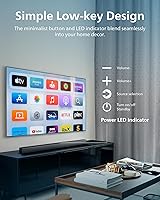
The metal grille and slanted low-profile chassis look cleaner and more considered than similarly priced fabric-wrapped bars from other brands. At just 2.63 inches tall, it slides in front of most TVs without blocking the bottom edge of the screen — something a surprising number of competing budget bars fail to achieve.
At 43.3 inches wide, the bar suits 50-inch and larger TVs well but looks visually oversized paired with a smaller screen. There are also no LED indicators or display elements to confirm input or volume status, so users often have to guess what mode the bar is currently in without looking at the remote.
Mounting Flexibility
82%
18%
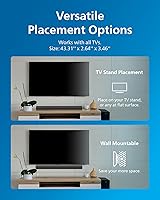
Shipping with wall brackets already in the box removes a step that many competing soundbars leave as an afterthought or paid add-on. The bar works equally well sitting flat on a TV stand, so buyers are not committed to a particular placement approach before they settle on a final setup.
The wall mounting process requires locating studs or using appropriate drywall anchors, and the included instructions are described by some buyers as too brief to be helpful for first-timers. There is no articulating or angled mount option, so the bar can only be positioned flush against the wall directly below the TV.
Volume Range
74%
26%
The 60W output is more than adequate for a small-to-medium room, and users in apartments and bedrooms consistently report that it reaches volumes well beyond what they actually need for comfortable TV watching. Low-volume performance is also clean, making it a good fit for late-night viewing without audio feeling compressed or muddy.
In larger, open-plan rooms the maximum output starts to feel strained, with some buyers reporting that audio loses clarity and sounds slightly harsh at the upper end of the volume range. The coarse volume stepping on the remote makes finding the precise sweet spot harder, particularly in shared living spaces where fine noise control matters.

Suitable for:

The Philips B4208 2.0-Channel Soundbar is a strong match for anyone who finds their TV's built-in audio muffled, thin, or struggle to hear dialogue clearly — without wanting to spend a lot or spend an afternoon configuring equipment. It fits naturally into smaller living spaces like apartments, studio setups, and bedrooms, where a 43.3-inch bar provides a meaningful audio upgrade without dominating the room or requiring a dedicated entertainment console. Casual viewers who rotate between news, streaming dramas, and weekend sports will find the four EQ modes genuinely useful day-to-day, even if the differences are modest rather than dramatic. Roku TV households in particular get a frictionless experience, since the bar integrates natively without a second remote or any app pairing. First-time soundbar buyers who simply want cleaner, louder TV sound and a tidy single-cable setup will likely be satisfied from day one.

Not suitable for:

The Philips B4208 2.0-Channel Soundbar is not the right call for anyone who watches a lot of action films, plays console games, or listens to bass-heavy music through their TV setup — the absence of a physical subwoofer means low-end frequencies feel noticeably thin compared to 2.1 systems available at a similar price point. Buyers who are serious about home theater audio, or who regularly host movie nights in larger rooms, will outgrow this bar quickly and should budget for something with wider soundstage and dedicated bass reproduction. The remote, while functional, is barebones, and the coarse volume increments may frustrate users who like precise volume control during late-night watching. Those who prioritize Dolby Digital Plus or advanced audio decoding should also look elsewhere, as this entry-level bar does not support it. If you already own a mid-range or premium soundbar, there is genuinely nothing here that represents an upgrade.

Specifications

  • Dimensions: The soundbar measures 43.3″ wide, 3.46″ deep, and 2.63″ tall, keeping a genuinely low-profile footprint in front of most television screens.
  • Weight: The unit weighs 7.39 pounds, light enough for straightforward wall mounting without requiring heavy-duty anchoring hardware.
  • Audio Channels: The system operates as a 2.0 stereo configuration with no dedicated subwoofer channel or external woofer unit included.
  • Max Output: Total maximum audio output is rated at 60W across both stereo channels combined.
  • Bluetooth: Bluetooth 5.3 is supported for wireless audio streaming from smartphones, tablets, laptops, and other compatible source devices.
  • Inputs: Physical and wireless connections include HDMI ARC, optical, 3.5mm aux-in, USB for direct file playback, and Bluetooth.
  • EQ Modes: Four selectable presets — Movie, Music, Voice, and Stadium — are available via the included remote, alongside manual treble and bass adjustment.
  • Mounting Options: Wall mounting brackets are included in the box, and the bar also sits flat on a TV stand or any stable flat surface.
  • Grille Material: The front grille is constructed from metal, giving the enclosure a structured, durable finish rather than a fabric or plastic face.
  • Driver Type: Sound is reproduced through dynamic drivers housed within the single-unit bar enclosure.
  • Power Source: The soundbar draws power via a corded electric connection using the included AC power adapter.
  • Remote Control: A dedicated remote control is included along with two AAA batteries, so the unit is fully operable straight out of the box.
  • Roku TV Ready: The bar carries Roku TV Ready certification, allowing native volume and power control directly through a compatible Roku TV remote without additional setup.
  • Audio Output Mode: Output is standard stereo, delivering left and right channel separation without virtual surround or spatial audio processing.
  • Box Contents: The package includes the soundbar unit, remote control, two AAA batteries, power adapter, wall mount bracket, quick start guide, and warranty documentation.

Related Reviews
Philips TAB7305 2.1 Soundbar with Wireless Subwoofer
69%
81%
Bass Performance
67%
Dialogue Clarity
89%
Setup & Installation
62%
Wireless Subwoofer Reliability
78%
Value for Money
More
Philips B5306 2.1-Channel Soundbar with Subwoofer
74%
91%
Ease of Setup
88%
Roku TV Integration
83%
Bass Performance
66%
Dialogue Clarity
61%
Wireless Subwoofer Reliability
More
TCL Alto 7 36″ Soundbar
78%
91%
Value for Money
93%
Ease of Setup
88%
Dialogue Clarity
67%
Bass Performance
72%
Sound Mode Usefulness
More
Samsung HW-T400 2.0 Channel Soundbar
78%
78%
Audio Clarity
61%
Bass Performance
94%
Ease of Setup
82%
Bluetooth Connectivity
67%
NFC Pairing
More
ELAC Debut 2.0 C5.2 Center Channel Speaker
85%
94%
Dialogue Clarity
91%
Vocal Midrange
87%
High-Frequency Detail
83%
Off-Axis Performance
61%
Bass Extension
More
Samsung HW-N300 2-Channel Soundbar
86%
85%
Sound Quality
88%
Bass Performance
92%
Setup & Installation
90%
Connectivity (Bluetooth & USB)
81%
Build Quality
More
Hisense HS214 2.1 Channel Soundbar
86%
84%
Sound Quality
88%
Bass Performance
91%
Setup and Installation
92%
Roku TV Integration
83%
Build Quality
More
LG S20A 2.0ch Soundbar
73%
93%
Ease of Setup
88%
Dialogue Clarity
61%
Bass Performance
91%
LG TV Integration
63%
Volume Output
More
Westinghouse WS200AM 2.0 Compact Soundbar
73%
91%
Ease of Setup
88%
Roku Integration
84%
Dialogue Clarity
53%
Bass & Low-End Response
58%
Dolby Atmos Performance
More
JBL Bar 2.0 All-in-One MK2 Soundbar
76%
83%
Audio Clarity
58%
Bass Performance
91%
Setup Experience
78%
Bluetooth Reliability
81%
Value for Money
More

FAQ

It works with any TV that has a compatible connection — HDMI ARC, optical, or aux-in. The Roku TV Ready feature simply adds a layer of convenience for Roku households by letting the Roku remote control the soundbar natively, but that certification is a bonus, not a requirement for basic use.

For everyday TV watching — news, dramas, talk shows — the B4208 sounds perfectly fine on its own. However, if action movies, gaming, or bass-heavy music are a big part of how you use your TV, you will notice the low-end limitations. In that case, a 2.1 system with a built-in subwoofer would be a better starting point rather than adding a separate sub later.

HDMI ARC is the recommended connection if your TV supports it — one cable handles both audio and control signals. If your TV only has an optical output, that works well too. The aux-in is there as a fallback, but HDMI ARC gives you the cleanest experience and removes the need for a separate soundbar remote.

When connected via HDMI ARC, your TV remote should control the soundbar volume directly in most cases. On Roku TVs specifically, the integration is officially certified, so it works out of the box. On other TV brands, HDMI ARC volume passthrough usually works but may require enabling CEC in your TV settings.

Pairing follows the standard Bluetooth process — put the bar in pairing mode and select it from your device. Bluetooth 5.3 offers a more stable connection than older versions, and most users report it working reliably for casual streaming. A small number of reviewers have mentioned occasional dropouts over time, which is worth keeping in mind if rock-solid wireless audio is a priority for you.

Not at all — wall brackets come included in the box, which saves you the hassle of sourcing compatible hardware separately. The bar is light enough at under 8 pounds that standard wall anchors handle it without issue. Just make sure to locate a wall stud or use appropriate drywall anchors for a secure hold.

The B4208 does not explicitly support Dolby Digital Plus or DTS decoding, which means high-resolution audio streams from some services may be downmixed before playback. For standard Dolby Digital stereo output — which covers most cable TV, streaming apps, and Blu-ray sources — it handles the signal without issue.

The improvement is genuinely noticeable, particularly for dialogue clarity and overall loudness. Most people find they stop struggling to hear voices in quiet scenes almost immediately after switching. Where it does not transform the experience is bass and spatial depth — the jump from built-in speakers to this bar is real, but it is a practical upgrade rather than a dramatic one.

Yes — the USB port supports direct audio file playback, so you can plug in a drive loaded with music without needing a phone, app, or Bluetooth connection. It is a convenient option that is easy to overlook given how rarely soundbars at this price include it.

Voice mode subtly boosts the mid-range frequencies where spoken dialogue sits, making voices sound more forward and distinct relative to background music or ambient sound. It is probably the most practically useful of the four presets for everyday TV watching, especially for news programs, interviews, and dramas where following conversation matters more than cinematic impact.