




Overview

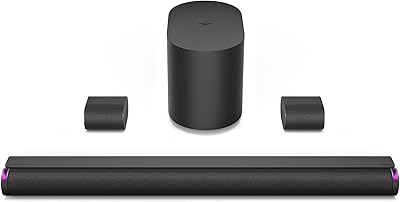
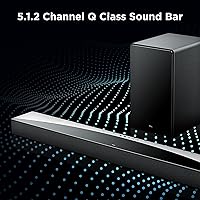
The TCL Q75H 5.1.2 Channel Soundbar sits in a sweet spot for anyone who wants a genuine home theater upgrade without running speaker wire through walls or decoding a rack of components. One HDMI cable gets you up and running, which matters more than it sounds in a category full of systems that look simple on the box but turn into weekend projects. TCL has built a reputation making capable electronics at accessible prices, and this 5.1.2 system reflects that ambition — solid on paper, competitive in a crowded field. That said, real-world performance has some nuances worth understanding before you buy.

Features & Benefits

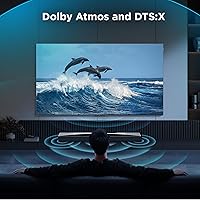
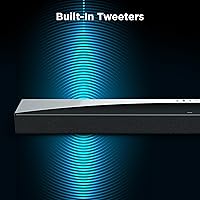
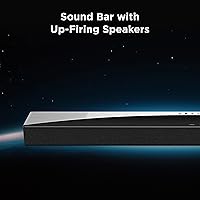
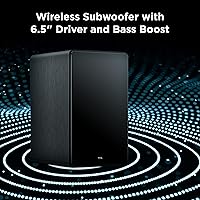
The Q75H's channel configuration puts dedicated up-firing drivers to work for Dolby Atmos and DTS:X content, giving overhead effects a fighting chance compared to a basic stereo bar. TCL's Ray Danz technology uses acoustic reflectors to push the soundstage noticeably wider than the physical bar would suggest — useful in rooms where mounting rear speakers is not realistic. The wireless subwoofer handles low-end duty cleanly, and bass integration is generally well-tuned rather than thumpy for its own sake. A built-in center channel keeps dialogue locked in during busy scenes, while built-in tweeters add enough high-frequency detail to stop the overall sound from feeling compressed.

Best For

This TCL soundbar makes the most sense for people upgrading from flat-panel TV audio for the first time — the jump in fullness and spatial presence is immediately obvious. It works especially well in mid-to-large living rooms where the total output has room to spread out; smaller spaces may find the subwoofer a touch overpowering without some level adjustment. Gamers and movie fans who want spatial audio cues without calibrating a separate receiver will feel at home here. If you are the type who wants to manually tune every crossover frequency and tweak EQ bands, this system is simply not built for that level of control.

User Feedback

Owners consistently mention how much better the Q75H sounds compared to their TV speakers — that part seems universal, and setup earns frequent praise for being genuinely quick. Where opinions start to diverge is on the Atmos height effects: buyers stepping down from premium bars often find the overhead imaging modest rather than dramatic, which is honest and worth factoring in. Subwoofer integration draws mostly positive comments at moderate volumes, though some users note bass can loosen up when pushed hard. Dialogue clarity and remote usability attract little complaint, and most buyers in mid-sized rooms report coming away satisfied with the overall value.

Pros

  • Single HDMI cable setup means most buyers are up and running in under ten minutes.
  • The jump from flat-panel TV audio to this TCL soundbar is immediately and obviously noticeable.
  • Ray Danz acoustic reflector technology produces a soundstage that feels wider than the bar itself.
  • The wireless subwoofer integrates cleanly, with bass that supports the mix rather than overpowering it.
  • Built-in center channel keeps dialogue clear and locked in even during loud, busy scenes.
  • Bluetooth streaming works reliably for casual music listening without switching inputs.
  • Dolby Atmos and DTS:X support add genuine spatial value for movies and compatible games.
  • Built-in tweeters give the Q75H more high-frequency detail than many soundbars in its class.
  • Optical and HDMI inputs provide enough connectivity for most living room setups.
  • Relatively compact bar dimensions make placement straightforward on most TV stands.

Cons

  • Atmos height effects are subtle enough that listeners coming from premium bars may feel underwhelmed.
  • No companion app means there is no room correction or advanced EQ adjustment available.
  • Subwoofer bass can feel loose or overpowering in smaller rooms when pushed to higher volumes.
  • The remote is functional but basic, with no backlight and limited shortcut options.
  • No rear satellite speakers are included, so true surround immersion depends entirely on the bar and reflectors.
  • Very large rooms may expose the ceiling on how loud and controlled the system can stay.
  • Limited customization options make it hard to adapt the sound profile to personal preference.
  • Wireless subwoofer pairing occasionally requires re-syncing after power cycles, according to some users.
  • No HDMI eARC support reported across some configurations, which can limit compatibility with newer TVs.

Ratings

Our AI rating system analyzed thousands of verified global user reviews for the TCL Q75H 5.1.2 Channel Soundbar, actively filtering out incentivized submissions, duplicate accounts, and suspected bot activity to surface what real buyers actually experienced. The scores below reflect an honest synthesis of both the genuine strengths and the recurring frustrations that emerged across different room sizes, use cases, and listener profiles. Nothing has been softened — where users found limitations, those are reflected just as clearly as the praise.

Sound Quality
78%
22%
For a mid-range system, the Q75H delivers a notably full and layered sound that immediately impresses anyone coming from built-in TV speakers. The combination of dedicated tweeters, a center channel, and a wireless subwoofer gives the overall mix a sense of scale that single-bar competitors often lack.
Critical listeners, particularly those familiar with higher-end systems, notice a degree of compression at louder volumes and a mid-range that can feel slightly recessed during complex musical passages. It performs better with cinematic content than with nuanced studio recordings.
Atmos Performance
67%
33%
Dolby Atmos content does produce a perceptibly wider and more enveloping soundstage compared to standard stereo bars, and overhead effects like rainfall or passing aircraft register clearly enough to enhance the viewing experience in a meaningful way.
The up-firing height channels are modest in their precision — buyers stepping down from dedicated ceiling speakers or flagship soundbars will find the overhead imaging shallow rather than truly immersive. Height effects work better in rooms with lower, flat ceilings than in open or vaulted spaces.
Subwoofer Integration
82%
18%
At normal to moderately loud listening levels, the wireless subwoofer blends well with the main bar, producing bass that feels supportive and purposeful rather than boomy or disconnected. Movie explosions and low-end music content both benefit from the added depth it provides.
Pushing the system toward its upper volume limits exposes some looseness in the low end, with bass occasionally overwhelming the midrange rather than complementing it. A few users in smaller rooms found the subwoofer's default output level too aggressive straight out of the box.
Dialogue Clarity
86%
The built-in center channel is one of the Q75H's more practical strengths — dialogue remains clear and forward even during chaotic action sequences or densely layered soundtracks, which is exactly what most TV watchers actually need day to day.
In very loud listening environments or at maximum volume, some users noted that dialogue can occasionally get pulled back into the mix. This is not a common complaint, but it does surface in reviews from users with larger, more reverberant rooms.
Setup Experience
93%
The single-HDMI connection approach genuinely delivers on its promise: most buyers report being fully set up and listening within ten minutes. The subwoofer pairs automatically, the remote is plug-and-play, and there is no app or account required to get started.
A small number of users encountered HDMI handshake issues with specific TV brands, requiring a switch to optical as a workaround. The quick start guide is minimal and assumes a basic familiarity with HDMI ARC, which can trip up first-time soundbar buyers.
Build Quality
74%
26%
The soundbar feels solid and well-assembled at this price tier, with a fabric grille and matte finish that hold up well in everyday use. At nearly 30 pounds, the bar has a reassuring physical presence that suggests durability over time.
The subwoofer housing feels noticeably less premium than the main bar, with a plastic finish that some users described as looking inexpensive compared to competing systems. A few buyers also noted that the bar's rubber feet leave marks on certain furniture surfaces.
Remote Control
61%
39%
The included remote covers all the essential functions — volume, input switching, subwoofer level, and sound mode selection — without requiring any additional setup or pairing beyond pointing it at the bar.
There is no backlight, which makes it frustrating to use in dark viewing environments, and the button layout is not especially intuitive. Several reviewers mentioned accidentally triggering the wrong input or mode because the buttons feel too similar in size and spacing.
Connectivity
79%
21%
Having HDMI, optical, and Bluetooth available simultaneously covers the realistic needs of most living room setups, including older TVs without ARC, newer eARC-capable displays, and wireless music streaming from phones or tablets.
There is no Wi-Fi, no support for Apple AirPlay or Google Cast, and no multi-room audio capability, which feels like a notable omission as wireless streaming platforms become the norm. Buyers expecting app-based control or voice assistant integration will be disappointed.
Value for Money
84%
Relative to what the Q75H actually delivers — a true 5.1.2 channel layout, Atmos and DTS:X decoding, a wireless subwoofer, and Ray Danz technology — the asking price represents a genuinely competitive package that would cost considerably more from premium audio brands.
The value proposition depends heavily on your expectations going in. Buyers who compare the Q75H directly to higher-priced competitors on pure audio performance may feel the gap in quality justifies spending more, particularly if Atmos height imaging or app control are priorities.
Soundstage Width
77%
23%
Ray Danz acoustic reflector technology does produce a noticeably wider stereo image than you would expect from a 41.5-inch bar, with stereo content in particular sounding more spread and open than the unit's physical size would suggest.
The widening effect is most convincing with stereo music and standard surround content; dedicated spatial audio recordings reveal that the perceived width has a ceiling beyond which the effect plateaus. Room geometry plays a significant role in how much benefit the technology actually provides.
Bass Depth
76%
24%
The 6.5-inch wireless subwoofer adds genuine low-end weight to movies and action-heavy content, producing the kind of physical presence that makes home theater feel different from simply watching TV with better speakers.
Deep sub-bass extension below around 40Hz is limited, meaning very low organ notes, certain electronic music, and ultra-low movie LFE effects lose some impact. Users who are used to a dedicated powered subwoofer from a full AV system may notice the difference.
High-Frequency Detail
73%
27%
The built-in tweeters add a layer of crispness to high-end frequencies — cymbal hits, ambient foley, and string instruments all come through with more texture and air than flat TV speakers can manage.
At higher volumes, some brightness can creep into the upper frequencies, which occasionally makes the sound feel slightly fatiguing during extended listening sessions. There is no dedicated treble adjustment on the remote to address this.
Room Size Adaptability
69%
31%
In mid-sized rooms, the system performs confidently, filling the space with enough output to create a cinematic feel without straining. The total power on tap means it rarely sounds underpowered for standard living room scenarios.
In very large open-plan spaces, the system's limits become audible — the rear and overhead effects in particular thin out at greater distances, and the subwoofer can struggle to maintain tight, controlled bass when the room is pushing its boundaries.
Gaming Performance
76%
24%
DTS:X decoding makes a practical difference for gaming, particularly in competitive titles where directional audio cues — footsteps, distant gunfire, ambient positional sound — contribute to spatial awareness in a way a standard stereo bar cannot.
Without a dedicated gaming mode or low-latency Bluetooth profile, some users reported a slight audio delay when connecting via Bluetooth for gaming. HDMI is the better connection route for gaming use cases to avoid latency issues.
Long-Term Reliability
71%
29%
Most buyers report that the system continues to perform consistently after several months of regular use, with no significant degradation in driver performance or wireless subwoofer connection stability under normal conditions.
A subset of users encountered wireless subwoofer dropout issues over time, particularly after firmware updates or power interruptions. TCL's customer support responsiveness on these cases has drawn mixed reactions, with some buyers resolving issues quickly and others finding the process slow.

Suitable for:

The TCL Q75H 5.1.2 Channel Soundbar is a strong fit for first-time home theater buyers who are tired of thin TV audio but have no interest in managing a receiver, running speaker cable, or spending a weekend on installation. If your living room is mid-to-large sized and you mostly watch movies, stream shows, or play games, this system delivers a meaningful and immediate upgrade in fullness and spatial presence. The wireless subwoofer and plug-and-play HDMI setup make it particularly appealing for renters or anyone who wants clean aesthetics without visible wiring. Gamers benefit from the DTS:X spatial cues, which help with directional audio in ways a standard stereo bar simply cannot replicate. It also works well as a household system where different people use it for different things — movies one evening, music streaming via Bluetooth the next.

Not suitable for:

Buyers who have owned a premium soundbar or a dedicated surround sound system should go in with calibrated expectations, because the TCL Q75H 5.1.2 Channel Soundbar does not compete at that level, particularly when it comes to Atmos height imaging. The up-firing drivers do their job, but the overhead effect is modest — perceptible rather than immersive in the way a high-end bar or ceiling-mounted speaker setup would be. Audiophiles who expect granular EQ control, a companion app with room correction, or deep customization options will likely find this system frustrating in its relative simplicity. Very large open-plan spaces or home theater rooms with acoustic treatment may also expose the limits of what the wireless subwoofer can do at sustained high volumes. If spatial audio precision or fine-tuned sound shaping is your primary reason for buying, there are better-suited options at a higher price point.

Specifications

  • Channel Config: The system operates in a 5.1.2 configuration, meaning five main channels, one subwoofer channel, and two up-firing height channels for overhead audio effects.
  • Total Power: Combined system output reaches 620 watts, providing enough headroom to fill mid-to-large living rooms at comfortable listening volumes.
  • Subwoofer: The included wireless subwoofer uses a 6.5-inch driver and connects to the soundbar without any physical cable between the two units.
  • Atmos & DTS:X: Both Dolby Atmos and DTS:X spatial audio formats are supported natively, decoded directly through the soundbar without requiring an external receiver.
  • Ray Danz Tech: TCL's proprietary Ray Danz acoustic reflector technology is built into the bar to widen the perceived soundstage beyond the unit's physical footprint.
  • Center Channel: A dedicated center channel speaker is built directly into the soundbar to prioritize vocal clarity and dialogue intelligibility during playback.
  • Tweeters: Built-in tweeters handle high-frequency reproduction, adding detail and air to the overall sound without requiring separate satellite speakers.
  • Bar Dimensions: The soundbar measures 41.5″ wide, 4.86″ tall, and 2.68″ deep, making it compatible with most standard TV stands and consoles.
  • Weight: The soundbar unit alone weighs approximately 29.9 pounds, which is worth factoring in if wall mounting is part of the plan.
  • Connectivity: Input options include HDMI, optical audio, and Bluetooth, covering the most common connection scenarios for modern TVs and source devices.
  • Bluetooth: Bluetooth connectivity allows wireless audio streaming directly from smartphones, tablets, and other Bluetooth-enabled devices without switching to a physical input.
  • Mounting Type: The system is designed primarily for floor-standing placement in front of a TV, though wall-mount compatibility should be verified before purchasing brackets separately.
  • Included Items: The box contains the soundbar, wireless subwoofer, remote control, power cable, quick start guide, and a warranty card.
  • Model Number: The official model designation is Q75H, which is part of TCL's Q Class soundbar series released in mid-2024.
  • Warranty: TCL includes a limited manufacturer warranty with this system; buyers should confirm the specific duration and coverage terms directly with TCL or the retailer.
  • Release Date: The Q75H became available for purchase in July 2024, placing it among TCL's more recent mid-range audio offerings.

Related Reviews
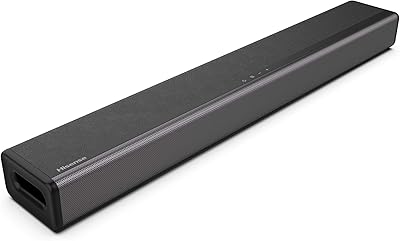
Hisense HS214 2.1ch Soundbar
72%
74%
Sound Quality
58%
Bass Performance
81%
Dialogue Clarity
88%
Setup & Connectivity
79%
Value for Money
More
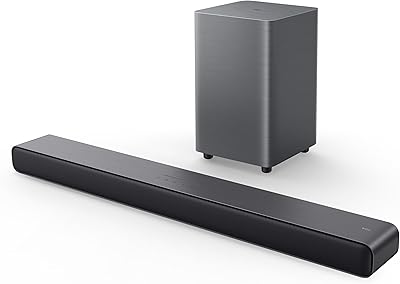
TCL S55H 2.1 Channel Soundbar
80%
88%
Bass Performance
91%
Value for Money
67%
Dialogue Clarity
72%
Spatial Audio (Atmos & DTS)
94%
Setup & Installation
More
VIZIO Elevate SE SL512X 5.1.2 Soundbar
75%
86%
Dolby Atmos Performance
83%
Surround Sound Immersion
71%
Subwoofer Bass Quality
88%
Build Quality & Design
81%
Setup & Installation
More
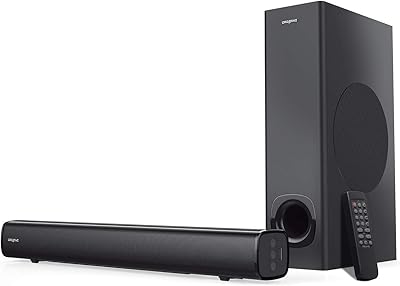
Creative Stage 2.1 Soundbar
78%
84%
Bass & Low-End Performance
73%
Audio Clarity & Midrange
91%
Connectivity & Input Range
86%
TV ARC Reliability
67%
Bluetooth Performance
More
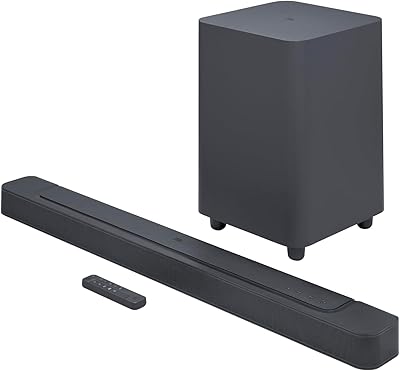
JBL Bar 500
JBL Bar 500
81%
88%
Sound Quality
91%
Bass Performance
86%
Dialogue Clarity
93%
Streaming & Connectivity
89%
Setup & Installation
More
Philips B5306 2.1-Channel Soundbar with Subwoofer
74%
91%
Ease of Setup
88%
Roku TV Integration
83%
Bass Performance
66%
Dialogue Clarity
61%
Wireless Subwoofer Reliability
More
Pyle PSBV28HB 2.1 Channel Soundbar with Subwoofer
67%
74%
Value for Money
78%
Bass Performance
83%
Setup & Installation
71%
Connectivity Range
63%
Audio Clarity
More
Philips TAB7305 2.1 Soundbar with Wireless Subwoofer
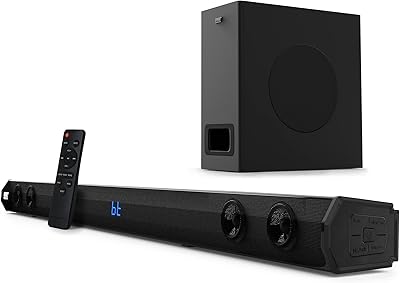
69%
81%
Bass Performance
67%
Dialogue Clarity
89%
Setup & Installation
62%
Wireless Subwoofer Reliability
78%
Value for Money
More
TCL S210W 2.1 Channel Soundbar with Subwoofer
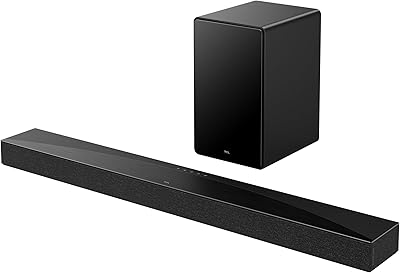
74%
88%
Value for Money
83%
Bass Performance
91%
Setup & Ease of Use
67%
Dialogue Clarity
62%
Surround Sound Experience
More
TCL Q65H 5.1 Channel Soundbar
77%
78%
Sound Quality
84%
Bass Performance
88%
Setup & Installation
86%
Value for Money
63%
Dialogue Clarity
More

FAQ

It's genuinely straightforward. You connect the soundbar to your TV with a single HDMI cable, plug in the power, and the wireless subwoofer pairs automatically. Most people have everything running within ten minutes without consulting the manual.

Yes, the Q75H also has an optical audio input, so you can connect it to TVs that lack HDMI ARC. You'll lose some functionality like volume control through your TV remote, but the audio itself will still work fine.

Honest answer: they're perceptible, especially during movie scenes with overhead elements like rain, aircraft, or environmental effects. That said, if you're comparing to a high-end bar with dedicated ceiling drivers, you'll notice the difference. For most buyers upgrading from TV speakers, the spatial improvement feels meaningful.

It's designed to stay in the same room as the soundbar. The wireless connection is reliable within a typical living room, but walls and long distances can cause dropout. Keeping it within about 30 feet in an open space is a safe guideline.

Yes, as long as your streaming device connects to your TV, the soundbar will receive audio through the HDMI or optical connection. If you're using a gaming console, HDMI is the better route since it carries higher-quality audio signals including Dolby Atmos where supported.

Yes, the remote allows basic level adjustments for the subwoofer independently from the main volume. It's not a deep EQ system, but you can dial back or boost the low end to suit your room and preference.

Movie soundtracks are where this system is most at home, but it handles music quite well for a home theater bar. Bluetooth streaming for casual listening is solid. Audiophiles looking for a dedicated hi-fi music system might want to look elsewhere, but for everyday streaming it performs comfortably.

At just under 5 inches tall, the Q75H sits low enough that it generally won't block the bottom of a 65-inch screen, especially if your TV stand raises the panel. That said, it's worth measuring your specific setup, since some TV legs position the screen lower than others.

TCL includes a limited warranty with the system. For exact duration and what's covered, it's best to check directly with TCL's support site or the retailer you purchase from, since warranty terms can vary by region.

No dedicated companion app is available for this system. Control is handled through the included remote, which covers the core functions but doesn't offer the kind of granular adjustment you'd find in app-controlled soundbars from some competing brands.

Where to Buy