Pyle PSBV28HB 2.1 Channel Soundbar with Subwoofer
Pyle PSBV28HB 2.1 Channel Soundbar with Subwoofer — image 1
Pyle PSBV28HB 2.1 Channel Soundbar with Subwoofer — image 2

Pyle PSBV28HB 2.1 Channel Soundbar with Subwoofer — image 3

Pyle PSBV28HB 2.1 Channel Soundbar with Subwoofer — image 4
Pyle PSBV28HB 2.1 Channel Soundbar with Subwoofer — image 5
Pyle PSBV28HB 2.1 Channel Soundbar with Subwoofer — image 6
Pyle PSBV28HB 2.1 Channel Soundbar with Subwoofer — image 7
67%
33%

Overview

The Pyle PSBV28HB 2.1 Channel Soundbar with Subwoofer is Pyle's answer to the growing demand for affordable home theater audio that does more than just replace tinny TV speakers. Made by Sound Around under the Pyle brand, it occupies a comfortable spot in the budget-to-mid-range AV segment — a space where expectations should be set realistically. The 36-inch bar pairs with a wireless subwoofer to give you genuine stereo separation and some actual low-end punch, and HDMI-ARC support makes hooking it up to a modern TV refreshingly straightforward. This is not a system built for critical listening, but for everyday TV watching and casual streaming, it performs reasonably well for its price tier.

Features & Benefits

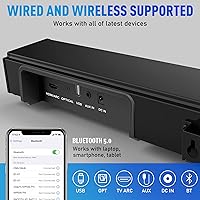
The wireless subwoofer is arguably the standout feature here — its 6.5-inch driver adds genuine bass depth without a single cable running across your floor. Connectivity is broad: HDMI-ARC, Optical, USB, AUX, and Bluetooth all make an appearance, which means this bar-and-sub combo will plug into almost anything you own. Bluetooth reaches about 9.75 meters, plenty for a standard living room. The built-in Class D amplifier delivers a real-world output closer to 120 watts — the 500W figure in the marketing copy is a peak or total rating, so keep that in perspective. At 36 inches, the bar's slim profile sits comfortably on most TV stands, and the included remote handles volume and input switching without fuss.

Best For

This Pyle soundbar set makes the most sense for people upgrading from factory TV speakers in a small-to-medium room — think apartments, bedrooms, or compact living spaces where you want noticeably better audio without a major investment. The wireless subwoofer is a genuine selling point for anyone who hates cable clutter; there is simply no subwoofer wire to hide or manage. Casual streamers and light gamers will appreciate the bass improvement during action scenes or in-game explosions. If your TV has HDMI-ARC, setup is essentially plug-and-play. First-time soundbar buyers will find this system approachable, though anyone upgrading from a mid-tier or premium bar should temper their expectations accordingly.

User Feedback

Buyers who have spent time with the PSBV28HB system generally agree on two things: setup is easy, and the bass improvement over built-in TV speakers is immediately noticeable. Those are real wins. On the flip side, Bluetooth reliability comes up repeatedly as a weak point — occasional dropouts and pairing inconsistencies frustrate users who simply want wireless audio to work consistently. The initial subwoofer pairing can also require a few attempts before it holds. At higher volumes, some owners report that clarity softens noticeably, and the remote feels a touch cheap in hand. Long-term durability feedback is mixed, with a handful of users noting performance issues after a year or more of regular use.

Pros

  • The wireless subwoofer genuinely eliminates cable clutter, making living room setup clean and hassle-free.
  • HDMI-ARC support means one cable handles both audio and remote control through your TV.
  • Setup is fast and approachable, even for buyers with no prior soundbar experience.
  • The 36-inch bar fits neatly on most mid-size TV stands without awkward overhang.
  • Connectivity options are broad — Optical, USB, AUX, Bluetooth, and HDMI-ARC cover nearly every device.
  • Bass improvement over factory TV speakers is noticeable and immediately satisfying for casual viewing.
  • Bluetooth reaches across a typical living room comfortably at around 9.75 meters.
  • The included remote handles day-to-day controls without requiring you to dig through a TV menu.
  • At its price tier, the bar-and-sub combo delivers a solid entry-level home theater experience.

Cons

  • Bluetooth connectivity is inconsistent, with reported dropouts that interrupt wireless listening sessions.
  • Initial subwoofer wireless pairing can require multiple attempts before it holds reliably.
  • Audio clarity softens at higher volume levels, limiting how loud you can push the system cleanly.
  • The 500W marketing figure is misleading — real-world output is closer to 120 watts.
  • The remote control feels lightweight and cheap, which undercuts the overall build quality impression.
  • EQ customization is limited, leaving users with little control over tonal balance beyond basic adjustments.
  • Long-term durability is questionable based on user reports of performance issues after extended use.
  • The system struggles to fill larger rooms or open-plan spaces with consistent, even sound.
  • No app or voice assistant integration means the control experience stays basic and dated.

Ratings

The scores below reflect our AI-driven analysis of verified global buyer reviews for the Pyle PSBV28HB 2.1 Channel Soundbar with Subwoofer, with spam, bot-generated, and incentivized feedback actively filtered out before scoring. We have weighed both the genuine enthusiasm from first-time soundbar buyers and the candid frustrations reported by more experienced users. Every category score — high or low — tells an honest story about where this bar-and-sub combo delivers and where it falls short.

Value for Money
74%
26%
For buyers coming straight from TV built-in speakers, the improvement in audio quality relative to the asking price feels substantial. The inclusion of a wireless subwoofer and multi-input connectivity at this price point gives this system a tangible edge over similarly priced single-unit bars.
Buyers stepping down from a mid-tier brand or comparing against competing 2.1 systems in the same price bracket may feel the value proposition is thinner than it first appears. The misleading 500W marketing claim also erodes trust and makes the real-world output feel underwhelming by comparison.
Bass Performance
78%
22%
The 6.5-inch wireless subwoofer driver produces a noticeably fuller low end than any flat TV speaker could hope to match, making movie explosions and bass-heavy music genuinely more engaging. Users in smaller rooms consistently report that the bass feels punchy and present without needing extra configuration.
In larger or open-plan rooms the subwoofer starts to feel underpowered, with the low-end impact thinning out at distance. At higher volume settings some users noticed the bass becoming slightly boomy rather than tight and controlled, which is a common limitation at this driver quality level.
Setup & Installation
83%
The overall unboxing-to-audio experience is fast and low-stress for most users — HDMI-ARC in particular makes TV integration genuinely plug-and-play on compatible televisions. First-time soundbar buyers frequently highlight how quickly they got the system running without reading through a manual.
The wireless subwoofer pairing process is the one consistent friction point, with a meaningful number of buyers needing multiple power cycles before the connection stabilizes on first use. Users without HDMI-ARC on their TV also need to navigate optical or AUX setup, which is slightly less intuitive.
Connectivity Range
71%
29%
Having HDMI-ARC, Optical, USB, AUX, RCA, and Bluetooth all on one budget system is genuinely practical — it means almost any device in a typical household can connect without adapters. The Bluetooth range of roughly 9.75 meters covers standard living room distances comfortably for casual streaming from a couch or kitchen.
Bluetooth reliability is where the connectivity story gets complicated, with reported dropouts and re-pairing issues frustrating users who rely on wireless as their primary connection. The Bluetooth implementation feels like an afterthought compared to the wired inputs, which perform more consistently.
Audio Clarity
63%
37%
At low to moderate volume levels the soundbar produces clean, intelligible dialogue — a clear step up from the flat, compressed sound most flat-panel TVs produce on their own. Casual TV watchers and streamers in smaller rooms tend to be satisfied with the mid-range clarity during everyday use.
Push the system beyond about 70 percent volume and clarity noticeably degrades, with vocals losing definition and treble becoming slightly harsh. The limited EQ options give users no practical way to compensate, which is a real frustration for anyone who watches in a noisier environment.
Build Quality
58%
42%
The soundbar chassis has a clean, understated rectangular profile that looks tidy under most TVs and does not feel flimsy at a quick glance. The all-black finish resists visible fingerprints reasonably well and blends into most living room setups without drawing attention.
Closer inspection reveals that the plastics used feel thin, and the remote control in particular draws consistent criticism for its lightweight, hollow feel. Long-term structural confidence is low among users who have owned the system for more than a year, with reports of degraded performance and loose connections surfacing with some regularity.
Wireless Subwoofer
76%
24%
The absence of a subwoofer cable is genuinely appreciated by apartment dwellers and anyone managing a tidy living room setup — it removes what is typically the messiest cable-management challenge in a 2.1 system. Once paired successfully, the wireless link holds up well during normal sitting-distance use.
The wireless pairing is the most frequently cited source of frustration throughout user reviews, both at initial setup and occasionally after power interruptions. A small but notable group of buyers reported the subwoofer dropping its connection intermittently during regular use, requiring a manual re-pair.
Remote Control
52%
48%
The remote covers the functional basics — volume, input switching, and a few audio preset adjustments — which is enough for straightforward day-to-day use without touching the TV remote. Its IR range is adequate for normal living room distances.
The physical construction of the remote is widely described as cheap, with a hollow feel and buttons that offer little tactile feedback. There is no backlight, which makes nighttime use in a darkened home theater setup genuinely inconvenient, and the button layout is not particularly intuitive for new users.
Volume Output
61%
39%
For small rooms and apartments the maximum volume is adequate — it gets loud enough to fill a bedroom or a compact living room during a movie night without straining. Users in those contexts rarely feel the system is leaving power on the table during casual use.
Larger rooms expose the system's ceiling quickly, and the audio quality degradation at high volumes means you cannot simply push it harder to compensate. Buyers expecting the system to power a medium-to-large open space will be left wanting considerably more headroom.
EQ & Sound Tuning
44%
56%
The remote does offer basic sound adjustment options that allow minor tonal tweaks, which is enough for users who simply want to nudge the bass up or down slightly from the default preset. For casual listeners who do not think much about audio calibration, the default tuning is acceptable out of the box.
There is no companion app, no parametric EQ, and no meaningful preset variety beyond basic modes, which is a real limitation for anyone who wants to dial in the sound for different content types. Users who watch sports, music concerts, and action movies in the same sitting will find the one-size-fits-all tuning frustrating.
Durability
53%
47%
The majority of buyers who use the system at moderate volumes in a stable, dry environment report no hardware failures in the first six to twelve months of ownership. For light, casual use the system holds together adequately in the short term.
User feedback beyond the one-year mark becomes noticeably more negative, with connectivity issues, subwoofer dropout problems, and general performance degradation appearing more frequently. The build materials and component quality do not inspire confidence for buyers looking for a long-term investment.
Aesthetics & Design
79%
21%
The slim 36-inch bar has a clean, modern look that complements most flat-screen TVs without overwhelming the setup visually. The all-black rectangular profile is neutral enough to fit into a range of room styles, from minimalist to more traditional home theater decors.
The design is functional rather than distinctive — it does not stand out in any meaningful way compared to similarly priced competitors. Some buyers noted that the bar sits quite low-profile at only 2.6 inches tall, which, while space-efficient, can make it feel visually insignificant beneath larger screens.
Compatibility
81%
19%
The breadth of input options means this system works with an unusually wide range of TVs, consoles, laptops, and mobile devices without requiring extra adapters or workarounds. HDMI-ARC compatibility with modern smart TVs in particular makes integration smooth for the majority of buyers.
The 240-volt input specification warrants attention for international buyers or users in regions with different voltage standards, as it may require a voltage converter. There is also no optical cable included in the box, which catches some buyers off guard when setting up with older televisions.

Suitable for:

The Pyle PSBV28HB 2.1 Channel Soundbar with Subwoofer is a practical choice for anyone who has grown tired of their flat-screen TV's built-in speakers and wants a meaningful audio upgrade without spending a lot of money or dealing with complex installation. It works especially well in apartments, bedrooms, and smaller living rooms where a full surround sound receiver setup would be overkill — both physically and financially. First-time soundbar buyers will appreciate how approachable the whole system is: plug in the HDMI-ARC cable, let the subwoofer pair wirelessly, and you are essentially done. Cord-averse users will find the wireless subwoofer particularly appealing, since it removes the most annoying cable-management headache in any living room audio setup. Casual streamers, binge-watchers, and light gamers who want more impactful bass during action scenes or movies will get genuine value out of this bar-and-sub combo at its price point.

Not suitable for:

Buyers who have already owned a mid-tier or premium soundbar should think carefully before considering this system, as the step up in audio quality may not be as dramatic as expected and could even feel like a lateral move. The Pyle PSBV28HB 2.1 Channel Soundbar with Subwoofer is not engineered for critical listening — audiophiles or home theater enthusiasts who prioritize precise soundstaging, clean high-frequency detail, or reference-level volume will likely walk away disappointed. Large open-plan living rooms or dedicated home theater spaces will also expose the system's limitations, since output clarity can soften at higher volumes and the overall power delivery does not scale well to bigger environments. Anyone who relies heavily on Bluetooth as their primary connection method may also run into frustration, given the reported dropout issues. Finally, buyers looking for a long-term, set-and-forget investment should weigh the mixed durability feedback before committing.

Specifications

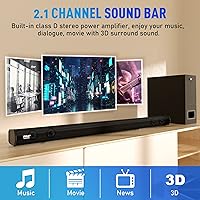
  • Speaker Config: This system uses a 2.1 channel configuration consisting of a soundbar and a separate wireless subwoofer.
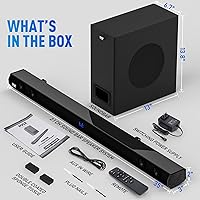
  • Bar Dimensions: The soundbar measures 2.6″ deep by 36″ wide by 2.6″ tall, fitting neatly on most standard TV stands.
  • Rated Output: The built-in Class D amplifier delivers a real-world rated output of 120 watts.
  • Subwoofer Driver: The wireless subwoofer houses a 6.5-inch dynamic driver designed to reproduce low-frequency audio.
  • Tweeter Size: The soundbar includes 2-inch tweeters to handle higher-frequency audio reproduction.
  • Impedance: The system operates at a 4 Ohm impedance rating.
  • Connectivity: Supported inputs include HDMI-ARC, Optical, USB, 3.5mm AUX, RCA, and Bluetooth wireless.
  • Bluetooth Range: Bluetooth connectivity is rated up to approximately 9.75 meters under typical conditions.
  • Subwoofer Link: The subwoofer connects to the soundbar wirelessly, requiring no dedicated subwoofer cable.
  • Remote Control: A dedicated remote control is included for managing volume, input selection, and audio adjustments.
  • Item Weight: The full system weighs approximately 15.52 pounds combined.
  • Power Source: The soundbar is powered via corded electric connection; the remote operates on battery power.
  • Frequency Response: The system is rated with a frequency response extending up to 20 kHz.
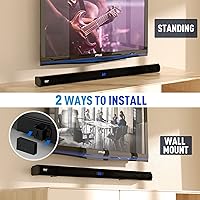
  • Mounting Type: The soundbar supports bar-mount installation for wall placement if preferred over stand use.
  • Warranty: Pyle includes a limited warranty with this system; buyers should confirm coverage terms at time of purchase.
  • Water Resistance: This system has no water resistance rating and should be kept away from moisture at all times.
  • Color: The soundbar and subwoofer are finished in black to complement most modern TV setups.
  • Manufacturer: This system is manufactured by Sound Around and sold under the PyleUsa brand name.

Related Reviews
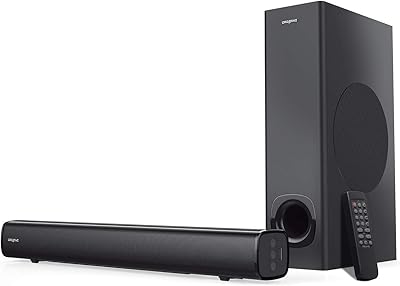
Creative Stage 2.1 Soundbar
78%
84%
Bass & Low-End Performance
73%
Audio Clarity & Midrange
91%
Connectivity & Input Range
86%
TV ARC Reliability
67%
Bluetooth Performance
More
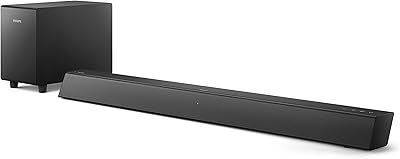
Philips TAB7305 2.1 Soundbar with Wireless Subwoofer
69%
81%
Bass Performance
67%
Dialogue Clarity
89%
Setup & Installation
62%
Wireless Subwoofer Reliability
78%
Value for Money
More
Philips B5306 2.1-Channel Soundbar with Subwoofer
74%
91%
Ease of Setup
88%
Roku TV Integration
83%
Bass Performance
66%
Dialogue Clarity
61%
Wireless Subwoofer Reliability
More
Hosyond TDA7498E 2.1 Channel Bluetooth Amplifier Board 160W×2+220W
73%
88%
Value for Money
76%
Power Output & Headroom
83%
Bluetooth Connectivity
79%
Build & Component Quality
62%
Thermal Management
More
Hisense HS214 2.1ch Soundbar
72%
74%
Sound Quality
58%
Bass Performance
81%
Dialogue Clarity
88%
Setup & Connectivity
79%
Value for Money
More
TCL Q75H 5.1.2 Channel Soundbar
76%
78%
Sound Quality
67%
Atmos Performance
82%
Subwoofer Integration
86%
Dialogue Clarity
93%
Setup Experience
More
LG S40T 2.1ch Soundbar with Wireless Subwoofer
75%
76%
Audio Quality
68%
Bass Performance
83%
Dialogue Clarity
91%
Setup & Installation
79%
WOW Interface & Smart Integration
More
TCL Alto 7 36″ Soundbar
78%
91%
Value for Money
93%
Ease of Setup
88%
Dialogue Clarity
67%
Bass Performance
72%
Sound Mode Usefulness
More
TCL S210W 2.1 Channel Soundbar with Subwoofer

74%
88%
Value for Money
83%
Bass Performance
91%
Setup & Ease of Use
67%
Dialogue Clarity
62%
Surround Sound Experience
More
Nakamichi Shockwafe Ultra 9.2.4 SSE Max
77%
94%
Bass Performance
88%
Surround Sound Immersion
67%
Height Channel & Atmos Accuracy
53%
Rear Speaker Placement Flexibility
61%
Setup & Installation Experience
More

FAQ

Yes, it does support HDMI-ARC, and any standard high-speed HDMI cable will work. Just plug it into the ARC-labeled port on your TV and the soundbar, then enable the ARC setting in your TV audio menu. Most modern TVs handle the rest automatically.

For most buyers it pairs on its own during first power-up, but a fair number of users have reported needing a few attempts before the connection holds reliably. Give it a minute after both units are powered on before assuming something is wrong — patience on that first setup goes a long way.

That figure is best treated as a peak or total marketing number. The actual rated amplifier output is closer to 120 watts, which is still more than enough for small-to-medium rooms. Just keep that in mind so your expectations for raw volume are calibrated correctly.

Absolutely. The system includes an optical input alongside HDMI-ARC, so older TVs without ARC support are fully compatible. Just use the included or a standard TOSLINK optical cable and you are good to go.

Yes, Bluetooth is an independent input, so you can pair your phone or tablet directly to the bar and stream audio without the TV being involved. The Bluetooth range covers most standard living rooms comfortably.

No, there is no built-in voice assistant support on this system. Control is handled entirely through the included remote or the physical buttons on the bar itself. If voice control matters to you, this system does not offer that feature.

It does support bar-mount wall installation. The mounting type is listed as bar mount, so hardware and a compatible wall bracket should allow you to mount it below your TV if you prefer that look over stand placement.

At moderate volumes the system sounds reasonably clear for its price tier, but several owners have noted that clarity starts to soften when you push it toward its upper limits. It is not a system built for filling large or open spaces at high volume — it performs best in smaller rooms at sensible listening levels.

Functionally it does the job, but the build quality is on the lighter side — multiple users have described it as feeling a bit cheap in hand. It covers the essentials like volume, input switching, and basic audio tweaks, but do not expect premium tactile feedback.

User feedback on long-term durability is mixed. Many owners report no issues for the first year or so of regular use, but a noticeable portion have flagged performance problems — particularly with connectivity and subwoofer pairing — emerging after extended ownership. It is a budget-tier system, and the build quality reflects that over time.