Overview

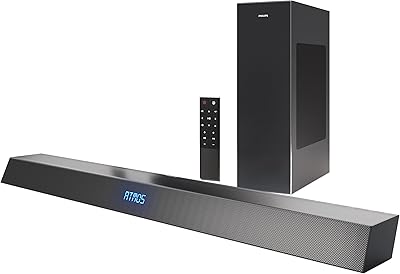
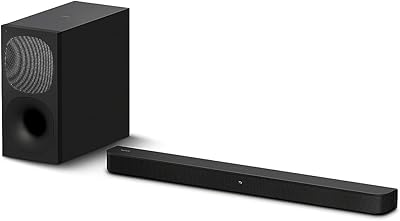
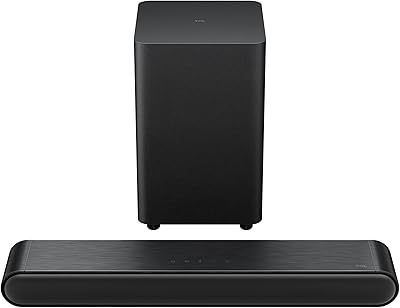
The Philips TAB7305 2.1 Soundbar with Wireless Subwoofer sits in an interesting spot — it's one of the few systems at this price point that actually includes a separate wireless subwoofer rather than relying on a built-in bass driver. Philips has been making consumer audio gear for decades, and this model reflects a pragmatic, no-frills approach to home sound. That said, its 3.7-star average across over 600 ratings tells you it's not without trade-offs. If you're furnishing a small to medium living room and want a genuine step up from flat TV audio, this 2.1 soundbar system is worth a serious look — just go in with calibrated expectations.

Features & Benefits

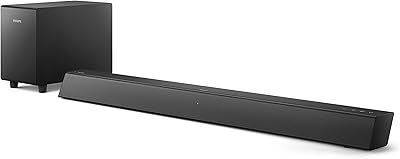
Under the hood, this 2.1 soundbar system runs two midrange drivers and two tweeters in the main bar, paired with a 6.5-inch wireless subwoofer. That wireless connection matters more than it sounds — no cable running across your floor means genuinely flexible placement. The 300W figure is the spec sheet number, but in practice what you notice is solid headroom; it handles action movie peaks without obvious distortion at reasonable room volumes. Dolby Digital Plus support adds real depth to streaming content, and HDMI ARC means your TV remote controls the volume directly. Bluetooth covers casual music listening up to about 10 meters away, and the wall-mount bracket ships in the box.

Best For

This Philips soundbar makes the most sense for someone stepping away from their TV's built-in speakers for the first time and not wanting to spend a lot doing it. It's well-suited to smaller living rooms and bedrooms — spaces where a full surround setup would be both overkill and physically impractical. Streaming fans who want clearer dialogue and some actual bass during action scenes will feel the difference immediately. It's also a strong pick for renters who appreciate the included wall-mount option without committing to a permanent installation. One thing to know upfront: if you like fine-tuning your sound with apps or EQ presets, this system keeps things deliberately simple.

User Feedback

Across verified buyer reviews, two things come up most consistently in the praise column: people notice a meaningful bass bump compared to what their TV was doing before, and the HDMI ARC setup gets credit for being genuinely painless. On the flip side, the absence of any EQ controls or companion app frustrates users who want to shape the sound beyond the single remote. A smaller but recurring concern involves the wireless subwoofer losing sync intermittently over time — not universal, but worth knowing. The design itself tends to get compliments; the slanted profile sits cleanly under most modern screens. Dialogue intelligibility draws split opinions once volume climbs past the midpoint.

Pros

  • A separate wireless subwoofer at this price tier is genuinely uncommon and makes a real difference in bass quality.
  • HDMI ARC integration means no extra remote — your TV's existing remote handles volume control from day one.
  • Setup is about as simple as it gets: unbox, connect one cable, pair the subwoofer, and you are done.
  • Dolby Digital Plus support adds noticeable depth to streaming content compared to standard TV audio.
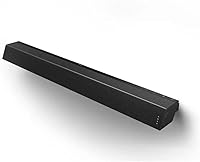
  • The slanted low-profile design fits cleanly under most modern flat-screen TVs without blocking the IR sensor.
  • Wall-mount hardware is included in the box, saving you an extra purchase for above-fireplace or bedroom installs.
  • Bluetooth streaming from a phone or tablet works reliably across a typical room for casual music listening.
  • The compact wireless subwoofer tucks easily behind furniture, keeping your living space visually clean.
  • For first-time soundbar buyers, the jump in audio quality over built-in TV speakers is immediately obvious.

Cons

  • No EQ controls or companion app means you cannot adjust bass, treble, or sound modes to your preference.
  • Some owners report the wireless subwoofer losing sync intermittently after months of use — a reliability concern worth noting.
  • Dialogue clarity can become muddier at higher volume levels, which is a real drawback for late-night TV watching.
  • The remote is basic; there is no backlit design or advanced function layout for quick adjustments in the dark.
  • No voice assistant integration means smart home users will need to control this system manually.
  • The 2.1 channel configuration offers no virtual surround expansion, so the soundstage stays fairly front-focused.
  • Heavier than expected at over 27 pounds combined, which requires wall studs or a solid surface for safe mounting.
  • No optical audio input limits compatibility with older TVs that lack HDMI ARC on their ports.

Ratings

The scores below reflect an AI-driven analysis of verified global buyer reviews for the Philips TAB7305 2.1 Soundbar with Wireless Subwoofer, with spam, bot-generated, and incentivized submissions actively filtered out before scoring. Each category is scored independently based on what real owners reported over time — not what the spec sheet promises. Both the genuine strengths and the recurring frustrations are weighted honestly, so you get a clear picture before committing.

Bass Performance
81%
19%
The wireless subwoofer is the single biggest reason buyers feel good about this purchase. Owners consistently describe a night-and-day difference compared to their TV's built-in speakers, with action scenes and music feeling physically present in a way flat panels simply cannot replicate.
The bass can lean toward being one-note at higher output levels, lacking the tightness that better-tuned subwoofers in higher price brackets deliver. Users watching content with rapid low-frequency transitions — fast EDM or complex film scores — occasionally find it slightly muddy.
Dialogue Clarity
67%
33%
At moderate listening volumes, dialogue reproduction is noticeably better than most entry-level TV speakers. Vocal frequencies have reasonable separation from background effects, making casual TV watching and streaming shows a more comfortable experience.
This is where the TAB7305 draws the most mixed feedback. As volume climbs past roughly two-thirds of its range, dialogue intelligibility softens noticeably — a real issue for anyone hard of hearing or watching in a louder household environment.
Setup & Installation
89%
Nearly every reviewer who mentions setup describes it as genuinely painless. The subwoofer auto-pairs with the soundbar on first power-up, and HDMI ARC connects to compatible TVs with a single cable — most people are listening within ten minutes of opening the box.
Buyers with older TVs lacking HDMI ARC will need to rely on Bluetooth, which adds a small friction layer and may introduce audio latency depending on the TV. The quick start guide is light on troubleshooting detail for edge-case setups.
Wireless Subwoofer Reliability
62%
38%
For the majority of owners in the first several months of use, the wireless link between the soundbar and subwoofer holds steady without any intervention. In a standard living room layout, signal dropouts are uncommon and the connection re-establishes quickly when they do occur.
A meaningful minority of longer-term owners report the subwoofer becoming progressively less stable over time — cutting out mid-movie or failing to reconnect after standby. This is one of the more consistent quality concerns across reviews and is worth factoring into the decision.
Value for Money
78%
22%
Getting a physically separate wireless subwoofer at this price tier is genuinely uncommon, and that alone makes this 2.1 soundbar system feel like a fair deal for buyers coming from bare TV audio. The included wall-mount bracket further reduces out-of-pocket setup costs.
Buyers who stretch the budget slightly to compare alternatives will find systems with better EQ flexibility and more stable wireless performance. The value proposition is strongest for buyers with modest expectations — it thins out for anyone hoping this punches far above its weight class.
Sound Stage & Imaging
61%
39%
The 2.1 configuration does produce a noticeably wider sound field than a single-bar system, and Dolby Digital Plus content benefits from a mild sense of audio separation that makes movie watching feel more enveloping than raw stereo.
There is no virtual surround processing or height simulation, so the sound stage remains largely front-focused. Buyers expecting any rear-channel illusion will be disappointed — this is fundamentally a forward-facing system with bass support, not a surround experience.
HDMI ARC Performance
84%
When HDMI ARC works as intended, it is one of the most praised aspects of this Philips soundbar. The ability to adjust volume using only the TV remote — no switching between remotes — is something owners mention repeatedly as a daily quality-of-life improvement.
A small subset of users with certain TV brands report lip-sync delays or intermittent CEC handshake failures that require manual fixes. These issues are not unique to this soundbar, but they do surface in reviews and are worth checking against your specific TV model.
Bluetooth Streaming
71%
29%
Pairing a phone or tablet is quick and stable for casual music playback, and the 10-meter range is sufficient for most living room or bedroom setups. Owners use it regularly for background music when the TV is off, which adds useful flexibility.
Bluetooth audio quality is adequate but not impressive — compressed streaming from a phone reveals some flatness in the mid-range that HDMI-connected sources handle better. There is also no NFC pairing or multipoint connection for switching between devices smoothly.
Build Quality
69%
31%
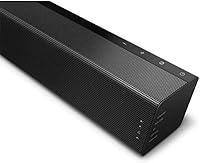
The soundbar has a reasonably solid physical presence, and the geometric slanted casing feels more considered than typical budget soundbars that look like simple black rectangles. The matte black finish resists fingerprints and blends well with most TV setups.
The plastic construction telegraphs the price point up close — it does not feel premium when handled. A few owners note that the grille fabric shows dust accumulation relatively quickly, and the remote feels noticeably lightweight and cheap in hand.
Design & Aesthetics
77%
23%
The angled geometric design gets genuine compliments for standing out from the standard soundbar template. Its low profile makes it practical under 55-inch and larger screens without creating an awkward visual gap between the bar and the TV panel.
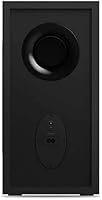
The subwoofer, while compact for its driver size, is a fairly plain rectangular box that some buyers feel looks out of place in minimalist or design-forward rooms. The overall aesthetic is attractive for the category but still clearly budget-tier when scrutinized closely.
EQ & Sound Customization
38%
62%
The factory sound tuning is decent enough for general TV watching straight out of the box, meaning buyers who have no interest in adjusting audio settings can simply leave it alone and still get a satisfying result.
There is no companion app, no dedicated EQ presets, and no way to independently adjust bass or treble through the remote. This is the most commonly cited frustration across all reviews — buyers who care about personalizing their audio will find this system entirely inflexible.
Volume Headroom
73%
27%
The 300W rated output translates to enough real-world loudness to fill a small to mid-sized room comfortably. For apartment living or average-sized bedrooms and living rooms, owners rarely feel the need to push it near its limits.
In larger open-plan spaces or rooms with high ceilings, the system starts to feel underpowered before it reaches maximum volume. Audio quality also softens audibly when pushed hard, suggesting the amplification is working close to its practical ceiling in demanding environments.
Long-Term Durability
58%
42%
Many owners report using this 2.1 soundbar system daily for a year or more without major hardware failures, and the corded power design eliminates battery degradation as a long-term concern.
The wireless subwoofer reliability concerns reported by longer-term users do cast some doubt on multi-year durability. Combined with the plastic construction and a limited warranty, buyers should weigh the risk of issues emerging outside the coverage window.
Remote Control Usability
55%
45%
The remote covers all core functions — volume, input switching, power — and the ability to use the TV remote via HDMI ARC reduces how often the dedicated remote is needed at all for everyday use.
The remote itself feels lightweight and insubstantial, and the button layout is minimal to the point of being limiting. There is no backlight, which makes nighttime adjustments frustrating, and advanced functions like sound mode cycling are not accessible at all.

Suitable for:

The Philips TAB7305 2.1 Soundbar with Wireless Subwoofer is a strong fit for anyone who has grown tired of their flat-panel TV's thin, hollow audio and wants a meaningful upgrade without diving into a complicated multi-speaker setup. It's particularly well-suited to first-time soundbar buyers in apartments or smaller homes — the kind of setup where a 2.1 system genuinely fills the room without the overkill of a full surround configuration. Renters who move frequently will appreciate that the included wall-mount bracket makes installation easy without major commitment. Streaming and movie fans who care primarily about clearer dialogue and a bit of real bass during action scenes will notice an immediate improvement over what most TVs produce on their own. If you want to plug in, press one button on your existing TV remote via HDMI ARC, and just have things work — this system is built around exactly that experience.
Not suitable for:

The Philips TAB7305 2.1 Soundbar with Wireless Subwoofer is not the right call for buyers who want precise control over their listening experience. There are no EQ presets, no companion app, and no way to adjust bass or treble beyond whatever the single remote allows — so audio enthusiasts who like to fine-tune their sound will find it frustrating quickly. Larger living rooms or open-plan spaces may also outpace what this system can realistically deliver; the output headroom is decent for a mid-sized room but not built to fill a large open area with authority. Anyone who already owns or is considering a dedicated AV receiver and bookshelf speaker setup is shopping in the wrong category here. And if wireless reliability is a non-negotiable priority, the reported subwoofer sync issues that some long-term owners have flagged are worth weighing carefully before committing.

Specifications

  • Channel Config: This system runs a 2.1 channel configuration with two midrange drivers and two tweeters built into the soundbar, paired with a dedicated wireless subwoofer.
  • Max Output: Total maximum output is rated at 300W, providing enough headroom to handle dynamic audio peaks in movies without audible strain at moderate room volumes.
  • Subwoofer Driver: The wireless subwoofer houses a 6.5″ dynamic driver, which handles low-frequency reproduction independently from the main soundbar unit.
  • Audio Format: The system supports Dolby Digital Plus decoding, enabling more spatially detailed audio from compatible streaming services and Blu-ray sources.
  • Primary Connection: HDMI ARC is the primary TV connection method, allowing bidirectional audio signal transfer and volume control through the TV's existing remote.
  • Wireless Audio: Bluetooth connectivity supports audio streaming from smartphones, tablets, and laptops with a rated wireless range of up to 10 meters.
  • Subwoofer Link: The subwoofer connects to the soundbar wirelessly, eliminating any cable run between the two units for flexible placement around the room.
  • Dimensions: The soundbar measures 8.9″ deep, 34.5″ wide, and 16.7″ tall (per listed orientation), with a low-profile slanted design intended to sit cleanly beneath a TV.
  • Total Weight: The combined system weight is 27.3 pounds, which should be factored in when planning wall-mount installation to ensure appropriate wall anchor support.
  • Mounting: A wall-mount bracket is included in the box, giving buyers the option to mount the soundbar without purchasing additional hardware.
  • Control Method: The system ships with a dedicated remote control, and volume can also be managed through a connected TV remote when using HDMI ARC.
  • Color: The soundbar and subwoofer are finished in matte black, designed to blend with most modern TV setups and furniture.
  • Power Source: Both the soundbar and subwoofer are corded electric devices; neither unit operates on battery power for primary use.
  • In the Box: The package includes the soundbar, wireless subwoofer, remote control, power cord, wall-mount bracket, quick start guide, and one CR2025 battery for the remote.
  • Warranty: Philips covers this product under a limited warranty, the specific duration and terms of which should be confirmed with the retailer or Philips support at time of purchase.
  • Compatible Devices: Beyond TV use, the TAB7305 connects via Bluetooth to smartphones, tablets, and laptops for casual audio streaming.
  • Driver Type: All drivers in the system — including the subwoofer — use a dynamic driver design, which is the standard approach for this class of consumer soundbar.

Related Reviews

Philips B5306 2.1-Channel Soundbar with Subwoofer
74%
91%
Ease of Setup
88%
Roku TV Integration
83%
Bass Performance
66%
Dialogue Clarity
61%
Wireless Subwoofer Reliability
More
LG S40T 2.1ch Soundbar with Wireless Subwoofer
75%
76%
Audio Quality
68%
Bass Performance
83%
Dialogue Clarity
91%
Setup & Installation
79%
WOW Interface & Smart Integration
More
Pyle PSBV28HB 2.1 Channel Soundbar with Subwoofer
67%
74%
Value for Money
78%
Bass Performance
83%
Setup & Installation
71%
Connectivity Range
63%
Audio Clarity
More
Philips B6309 2.1 Soundbar with Wireless Subwoofer
73%
74%
Audio Quality
68%
Bass Performance
81%
Dialogue Clarity
86%
Setup Experience
83%
Roku TV Integration
More
Philips TAB8405 2.1-Channel Soundbar
76%
74%
Sound Quality
81%
Bass Performance
62%
Dolby Atmos Experience
88%
Wireless Subwoofer Convenience
77%
Smart Home Integration
More
Philips B5309 2.1 Soundbar with Wireless Subwoofer
73%
73%
Sound Quality
69%
Bass Performance
82%
Dialogue Clarity
88%
Setup & Installation
61%
Wireless Subwoofer Reliability
More
Creative Stage 2.1 Soundbar
78%
84%
Bass & Low-End Performance
73%
Audio Clarity & Midrange
91%
Connectivity & Input Range
86%
TV ARC Reliability
67%
Bluetooth Performance
More
Sony HT-S400 2.1ch Soundbar with Wireless Subwoofer
76%
83%
Audio Quality
79%
Bass Performance
86%
Dialogue Clarity
91%
Setup & Installation
77%
Value for Money
More
Klipsch Cinema 600 3.1 Soundbar System
75%
91%
Bass Performance
78%
Dialogue Clarity
61%
Wireless Subwoofer Reliability
88%
Setup & Installation
54%
App & Software Experience
More
Hisense HS2100 2.1 Soundbar with Wireless Subwoofer
78%
91%
Value for Money
83%
Bass Performance
94%
Ease of Setup
71%
Dialogue Clarity
67%
Wireless Subwoofer Reliability
More

FAQ

Yes, the wireless subwoofer has its own power cord and needs its own outlet. The wireless part refers to the audio signal between the subwoofer and the soundbar — both units still need to be plugged into mains power to operate.

It depends on what ports your TV does have. The TAB7305 is primarily designed around HDMI ARC, but you can also use Bluetooth to stream audio from a device connected to your TV if your TV supports Bluetooth output. If neither is available, you may run into compatibility issues, so it's worth checking your TV's specs before buying.

Philips doesn't publish a specific maximum separation distance for the wireless subwoofer link, but in practice most users find it works reliably within the same room. Placing it behind a couch or in a nearby corner is generally fine — just avoid putting it in a completely separate room or behind thick walls.

Unfortunately, no. The Philips TAB7305 2.1 Soundbar with Wireless Subwoofer does not offer independent bass or treble adjustment through the remote, and there is no companion app. What you get is the default sound tuning from Philips, with no option to dial the subwoofer up or down to personal taste.
Setup is genuinely straightforward. Plug in both units, connect the HDMI ARC cable to your TV, and the subwoofer pairs automatically with the soundbar in most cases. Most buyers report being up and running in under ten minutes without needing to dig into the manual beyond the quick start guide.

No, this 2.1 soundbar system supports Dolby Digital Plus but not Dolby Atmos. Atmos requires upward-firing drivers or a more sophisticated channel configuration to simulate height. If Atmos support is important to you, you would need to look at a step-up model.

Yes, you can connect a gaming console through HDMI ARC via your TV, and the soundbar will handle the audio output. Just note that it doesn't support the more advanced audio formats that dedicated gaming soundbars offer, so it's fine for casual gaming but not optimized for competitive or immersive audio setups.

It comes up enough in long-term owner reviews to be worth flagging, though it doesn't appear to affect every unit. Some users report the wireless link between the soundbar and subwoofer becoming unstable after extended use. It's not a universal complaint, but if rock-solid wireless reliability is critical to you, it's a real consideration before buying.

In most cases, yes. The soundbar's low-profile slanted design keeps the height modest, and the angled front face is specifically intended to avoid obstructing the TV's IR sensor. That said, TV stand configurations vary, so it's worth measuring your current setup before assuming a perfect fit.

No, this system does not support multi-room audio, Play-Fi wireless expansion, or any form of networked audio. It's a self-contained 2.1 system with no ability to add rear speakers or connect to other rooms. If multi-room or expandable audio is on your wish list, you'd need to consider a different platform entirely.

Where to Buy