Overview

The Patriot Signature DDR5 8GB 5600MHz SODIMM RAM is an entry-level laptop memory upgrade aimed at buyers who want to move to DDR5 without spending heavily. Patriot Memory has long occupied the value end of the memory market — reliable enough for everyday use, priced to move. DDR5 brings higher bandwidth and lower operating voltage compared to DDR4, which translates to snappier multitasking and slightly better battery life rather than dramatic speed gains most users will notice immediately. Coming as a single 8GB module, it leaves a second slot free for a matched stick later if you need more capacity. This is baseline DDR5, not a binned performance kit — set expectations accordingly.
Features & Benefits

At 5600MHz, this Patriot DDR5 stick sits comfortably in the middle of the DDR5 speed range — faster than the 4800MHz base-spec modules that shipped with early DDR5 platforms, but well short of the premium 6000MHz-plus kits. On-Die ECC quietly catches and corrects single-bit memory errors in the background; you never configure it, you just benefit from fewer random crashes. The onboard temperature sensor lets the system pull back before heat becomes a real problem, which matters during sustained workloads like long render jobs or extended gaming sessions. Running at 1.1V, it also draws less power than a DDR4 equivalent — a tangible plus in any laptop where thermal headroom and battery life both count.

Best For

This SODIMM module makes the most sense for someone running an Intel 12th or 13th Gen laptop that shipped with 8GB and has started hitting walls — tabs crashing, apps stuttering during calls. If you already have an identical 8GB stick, adding this one to enable dual-channel will noticeably help integrated graphics performance and general responsiveness. First-time DDR5 buyers will find this a low-risk entry point. That said, be honest about your workload: for heavy video editing, 3D work, or serious gaming, you will want more capacity and higher speeds. For web browsing, Office tasks, and light photo edits, this value-tier option covers the ground without unnecessary cost.

User Feedback

Across roughly 144 ratings averaging 4.4 stars, the most consistent praise is simple: buyers say this memory upgrade installed without fuss and their system recognized it at the rated speed immediately. A notable share specifically call out that no BIOS adjustments were needed on their Intel laptops. Where complaints arise, they cluster around compatibility mismatches — some buyers discovered their laptop, though Intel-based, did not support DDR5 in that specific configuration. A few DOA reports surface as well, which is not unusual at this price tier and volume. Those comparing it to Crucial or Kingston value alternatives generally land in the same ballpark for reliability, with price being the deciding factor rather than any clear performance edge.

Pros

  • Priced at the accessible end of the DDR5 market, making a DDR4-to-DDR5 upgrade realistic for most laptop owners.
  • On-Die ECC silently corrects memory errors in the background, reducing random crashes without any user configuration needed.
  • The 5600MHz speed sits a genuine step above baseline 4800MHz DDR5 entry-level modules.
  • Low 1.1V operation runs cooler and conserves battery life — a practical, everyday benefit in portable systems.
  • Onboard temperature sensor helps protect the system during sustained workloads like long video exports or extended gaming sessions.
  • Single-module format makes it easy to slot in alongside an existing 8GB stick for a quick dual-channel 16GB configuration.
  • Installation on compatible Intel 12th and 13th Gen laptops requires no BIOS tinkering for most users.
  • Patriot Memory's established brand presence means warranty support and return processes are more reliable than no-name alternatives.
  • The onboard PMIC contributes to stable power delivery, which matters more for daily reliability than peak clock speed alone.

Cons

  • DDR5 SODIMM compatibility varies by laptop model — confirming support before ordering is essential, even on Intel 12th and 13th Gen systems.
  • A solo 8GB stick runs in single-channel mode, leaving meaningful bandwidth unrealized and visibly limiting integrated graphics performance.
  • Some buyers report the module does not always post at the full 5600MHz without enabling an XMP profile in the BIOS.
  • AMD laptop users face real compatibility uncertainty; this memory upgrade carries no official validation for AMD-based platforms.
  • At 8GB total, multitasking headroom is thin for anyone routinely running multiple heavy applications at the same time.
  • A small but recurring number of buyers have reported receiving DOA units, suggesting quality control is not perfectly consistent.
  • No overclocking headroom whatsoever — the speed is fixed at 5600MHz, which will frustrate enthusiasts who want to push further.
  • Competing value brands like Crucial and Kingston offer nearly identical specifications, so brand loyalty alone is not a strong differentiator here.

Ratings

The Patriot Signature DDR5 8GB 5600MHz SODIMM RAM has been scored by our AI-powered analysis engine, which processed verified global buyer reviews while actively filtering out incentivized, bot-generated, and duplicate submissions. The ratings below reflect a transparent, unbiased composite of real-world user experiences — capturing what this SODIMM module genuinely delivers in everyday use alongside the friction points that have frustrated a meaningful subset of buyers. Both the compelling case for this memory upgrade and its real limitations are represented without softening.
Value for Money
84%
For a DDR5 SODIMM at this price point, buyers consistently feel they are getting a fair deal — especially given the On-Die ECC and temperature sensor features that pricier sticks do not always include. First-time DDR5 upgraders in particular appreciate that the barrier to entry is low without feeling like they are compromising on a sketchy off-brand product.
Competing options from Crucial and Kingston occasionally undercut or match this price while offering similarly solid specs, meaning this SODIMM module does not hold an exclusive price advantage at all times. The value calculus also shifts considerably if a compatibility mismatch forces a return, eating up time and potential shipping costs.
Installation Ease
88%
The majority of buyers on compatible Intel 12th and 13th Gen laptops describe installation as genuinely effortless — open the panel, seat the stick, close it up, and boot into Windows without touching BIOS. That experience holds especially well for users who have never upgraded laptop memory before, making this a welcoming first step.
A meaningful minority report that their system initially booted at 4800MHz rather than the rated 5600MHz, requiring a trip into BIOS to enable an XMP profile — a step not always mentioned upfront. For less tech-savvy users, this unexpected behavior creates real confusion about whether the module is working correctly at all.
Speed Accuracy
76%
24%
When running at the full 5600MHz, this Patriot DDR5 stick delivers a perceptible step up from the 4800MHz baseline modules shipped with many early DDR5 laptops — the difference is most noticeable when switching between multiple open applications or loading large files quickly. Buyers who enabled XMP manually consistently confirm the rated speed is achievable.
Reaching 5600MHz is not always automatic — some platforms require manual XMP profile activation in BIOS, and in rare cases buyers report their specific laptop simply cannot post at the full rated speed regardless of settings. The gap between advertised and actual operating speed has genuinely frustrated buyers who expected true out-of-box frequency performance.
System Compatibility
67%
33%
On confirmed-compatible Intel 12th and 13th Gen laptops, this memory upgrade installs and runs without issue in the large majority of cases, and the model number makes QVL cross-referencing relatively straightforward. Buyers who verified compatibility before purchasing largely report zero friction from first boot onward.
Compatibility mismatches are the single most common source of negative reviews — AMD laptop users, owners of Intel DDR4-slot variants within 12th and 13th Gen lineups, and buyers who skipped the QVL check all face potential incompatibility. DDR5 SODIMM support varies enough by specific laptop model that assuming Intel generation support equals guaranteed compatibility has burned a notable share of buyers.
Multitasking Performance
79%
21%
For the target user — someone juggling a browser with a dozen tabs, a video call, and a document editor on an Intel laptop — this memory upgrade provides a meaningful and noticeable reduction in sluggishness compared to an overtaxed 8GB DDR4 setup. Everyday productivity tasks respond faster and more reliably after installation.
Running as a single module in single-channel mode caps the available memory bandwidth, which limits multitasking headroom more than the capacity number alone suggests — integrated graphics users notice this most acutely. For anyone regularly running memory-hungry creative applications, the 8GB ceiling combined with single-channel operation will surface as a bottleneck fairly quickly.
System Stability
86%
Once correctly installed and running at rated speed, this SODIMM module earns consistently strong marks for day-to-day stability — buyers running it for months report no unexpected crashes, memory errors, or instability during regular workloads including extended browsing sessions, spreadsheet work, and light media consumption.
A small cluster of reports describes instability during intensive sustained tasks, particularly in systems with weak overall thermal management where the module's temperature sensor cannot compensate for inadequate laptop airflow. DOA units, while a minority outcome, appear consistently enough in the feedback pool to represent a real if uncommon risk at purchase.
Thermal Management
83%
The onboard temperature sensor is a genuine differentiator at this price tier — during long video exports or sustained gaming sessions, users with monitoring tools confirm that the module reports stable and reasonable heat levels, giving the system actionable data to manage workloads effectively. It adds a layer of protection without adding any cost.
Without a physical heat spreader, the module relies entirely on the sensor and system airflow for cooling, making it more dependent on the laptop's internal thermal design than a spreader-equipped stick would be. In poorly ventilated ultrabooks running sustained heavy tasks, this limitation becomes noticeably more relevant and can affect long-session stability.
Power Efficiency
87%
The 1.1V operating voltage delivers a real benefit that laptop users notice over time: slightly lower fan activity during moderate workloads and marginally better battery endurance compared to equivalent DDR4 systems. For users who work away from a charger regularly, the efficiency profile is a quiet but consistent practical advantage.
The power efficiency advantage is relative rather than dramatic — users moving from DDR4 may notice the difference in thermal behavior over extended sessions, but it is not the kind of improvement that transforms a short-battery laptop into an all-day machine. It is a background benefit rather than a headline selling point.
Build Quality
82%
18%
The physical module feels solid and seats snugly into SODIMM slots without the looseness or alignment issues occasionally reported with cheaper no-name sticks. Buyers who have installed multiple memory modules over the years comment positively on the consistent, reliable physical fit of this one across different laptop models.
There is no heat spreader or any visual premium — this is a bare PCB module, standard for the value tier, and it shows. For buyers who care about a clean internal build aesthetic or want the psychological reassurance of a more substantial-looking component, the functional-but-plain appearance is a minor but real letdown.
Dual-Channel Potential
71%
29%
For buyers who purchase two matching sticks and run them together, this module pairs cleanly and delivers the bandwidth improvement that makes a real and measurable difference for integrated graphics workloads and general responsiveness. The path to 16GB dual-channel is straightforward once both sticks are properly seated.
Sold as a single module, this stick runs in single-channel mode by default — a meaningful bandwidth reduction that is especially impactful for users relying on integrated Intel graphics for photo editing or light gaming. A surprising number of buyers discovered this limitation only after purchase, having expected inherent dual-channel performance from the DDR5 spec alone.
Brand & Warranty
81%
19%
Patriot Memory's limited lifetime warranty gives buyers a tangible fallback, and the brand's established infrastructure means claims are processed more smoothly than with lesser-known alternatives. Long-term buyers who have engaged with Patriot support describe the process as functional and more accessible than dealing with obscure import brands.
Patriot does not carry the same immediate recognition as Corsair or Kingston among less experienced buyers, which creates hesitation at the point of purchase despite a comparable track record. Some users have also reported longer-than-expected response times from Patriot's support team, which reduces confidence when something does go wrong.
Long-Term Reliability
78%
22%
Units purchased around the November 2022 launch are still appearing in positive follow-up comments years later, suggesting the module holds up well under regular daily use over a multi-year period. The presence of On-Die ECC and thermal monitoring likely contributes to the generally low attrition rate observed among verified long-term buyers.
The DOA and early-failure reports, while statistically small relative to 144 ratings, are consistent enough to suggest batch-level quality control is not perfectly uniform across production runs. Buyers who experience a failure outside an easy return window may find the warranty exchange process more time-consuming than a straightforward store return.
BIOS Integration
73%
27%
On platforms that support automatic XMP detection, this memory upgrade integrates cleanly — the laptop boots, reads the module's SPD data, and runs at the correct speed without any user intervention. Most Intel laptop owners in the confirmed-compatible bracket report this frictionless experience as the expected norm.
A recurring complaint is that some laptops initialize the module at 4800MHz and require manual XMP profile selection to reach the rated 5600MHz — an unfamiliar and anxiety-inducing step for users who have never navigated BIOS menus. There is no included documentation to guide buyers through this process when it arises unexpectedly.
Integrated Graphics Impact
68%
32%
When paired with a matching 8GB stick in dual-channel configuration, this module provides a noticeable boost to integrated Intel graphics performance — light gaming and photo editing tasks run more fluidly, and the improvement is clearly attributable to the bandwidth gain from running both sticks together rather than any speed overclaim.
As a standalone single-channel module, the impact on integrated graphics performance is underwhelming — iGPU workloads are heavily bandwidth-constrained without a matched pair. Buyers expecting improved light gaming or smoother photo editing from a solo stick alone are likely to be disappointed. A second matching module is effectively required to unlock the bandwidth improvement.
Out-of-Box Experience
85%
The module arrives in clean, simple packaging and the physical installation process takes most buyers under five minutes once the laptop panel is open. That simplicity is consistently appreciated across the review pool — there is nothing to configure, assemble, or decipher beyond seating the stick and closing the panel.
The minimalist packaging includes no installation guide, compatibility checklist, or QR code linking to a setup resource — an omission that would genuinely help first-time upgraders who encounter unexpected BIOS behavior. Buyers who need speed-profile guidance or pre-purchase compatibility help are left to source that information entirely on their own.

Suitable for:

The Patriot Signature DDR5 8GB 5600MHz SODIMM RAM is a smart pick for laptop owners who moved to an Intel 12th or 13th Gen system and find that the factory-installed 8GB is no longer keeping up with daily demands. If your laptop slows noticeably when you have a dozen browser tabs open alongside a video call and a spreadsheet, this SODIMM module addresses exactly that bottleneck. It also makes strong sense for anyone who already has a single 8GB DDR5 stick installed and wants to add a matched module — running two sticks in dual-channel meaningfully improves bandwidth, which is especially noticeable when the processor relies on integrated graphics. Budget-conscious buyers making their first move from DDR4 to DDR5 will find this a low-pressure entry: installation is straightforward on compatible Intel platforms, and Patriot's warranty provides a reasonable safety net. Light productivity users — people who spend most of their computing time in Office apps, web browsers, or casual photo editing — will get genuine, perceptible improvement without paying a premium for speed headroom they simply do not need.

Not suitable for:

The Patriot Signature DDR5 8GB 5600MHz SODIMM RAM is not the right answer for users who need a workhorse memory setup for demanding tasks. If your workflow regularly involves 4K video editing, 3D rendering, large virtual machine environments, or gaming that leans on integrated graphics, 8GB at this speed tier will quickly become a ceiling rather than a comfort zone — you should be looking at 16GB or 32GB kits running at 6000MHz or higher. AMD laptop users should also think twice: this module is optimized for Intel platforms, and DDR5 SODIMM compatibility with AMD-based systems varies enough that you risk buying something your machine will not accept at rated spec. Even within Intel laptops, not every 12th or 13th Gen model supports DDR5 — some shipped with DDR4 slots despite the same processor branding, so checking your specific laptop's memory specification before purchasing is non-negotiable. Finally, if you are buying a single stick expecting maximum memory bandwidth, be aware that a solo module runs in single-channel mode, leaving noticeable performance on the table compared to a matched pair.

Specifications

  • Capacity: Sold as a single 8GB DDR5 SDRAM stick in a 1 x 8GB configuration — not a dual-stick kit.
  • Form Factor: Uses the SODIMM form factor, designed exclusively for laptops and compact systems, not standard full-size desktop motherboards.
  • Memory Type: DDR5 SDRAM, the current-generation memory standard offering higher bandwidth and improved power efficiency compared to DDR4.
  • Operating Speed: Rated at 5600MHz, a step above the DDR5 base spec of 4800MHz and below the premium 6000MHz-plus performance tier.
  • Voltage: Operates at 1.1V, slightly lower than DDR4's typical 1.2V, which reduces heat output and power draw during use.
  • Error Correction: Features On-Die ECC that automatically detects and corrects single-bit memory errors in real time, with no user configuration required.
  • Thermal Sensor: An onboard temperature sensor continuously monitors the module's heat level, allowing the system to respond before thermal issues affect stability.
  • Power Management: Includes a high-quality onboard PMIC (Power Management IC) for stable and efficient power delivery during sustained operation.
  • Platform Support: Officially designed for plug-and-play use on Intel 12th and 13th Gen laptop platforms; AMD platform compatibility is not guaranteed.
  • Device Type: Intended for laptops with DDR5 SODIMM memory slots; it is not compatible with standard desktop DIMM slots.
  • Module Count: Ships as a single module; a second identical stick can be added to the spare slot to enable dual-channel operation.
  • Dimensions: Measures 0.28 x 5.39 x 1.69 inches, conforming to the standard 260-pin SODIMM physical specification.
  • Weight: Each module weighs 0.635 ounces, consistent with standard SODIMM component density.
  • Model Number: The official part number is PSD58G560041S, useful for cross-referencing against a laptop manufacturer's QVL compatibility list.
  • Release Date: First available in November 2022, placing it among the earlier consumer-grade value DDR5 SODIMM offerings to reach the market.
  • Manufacturer: Produced by Patriot Memory, a value-focused brand that backs its Signature line with a limited lifetime warranty against manufacturing defects.

Related Reviews
Patriot Signature 32GB DDR5 SODIMM Laptop RAM
84%
88%
Value for Money
93%
Ease of Installation
91%
System Stability
84%
Real-World Performance
79%
Memory Speed Rating
More
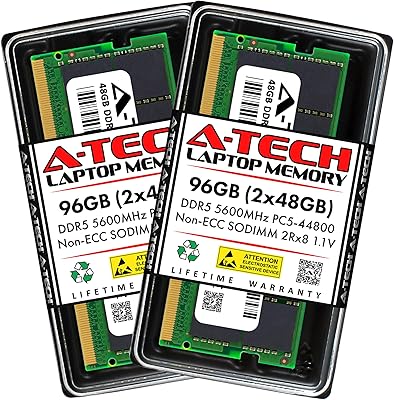
A-Tech 96GB DDR5 5600MHz SODIMM Laptop RAM
84%
83%
System Compatibility
91%
Installation Experience
88%
Real-World Performance
76%
Value for Money
86%
Speed & Bandwidth
More
Crucial 64GB DDR5 5600MHz SODIMM Laptop Memory Kit (CT2K32G56C46S5)
89%
94%
System Responsiveness
97%
Multitasking Capacity
91%
Installation Ease
86%
Thermal Management
78%
Value for Money
More
Adamanta 16GB DDR5 5600MHz SODIMM Laptop RAM
78%
88%
Value for Money
74%
Compatibility
91%
Installation Ease
83%
Performance Gain
87%
Silicon Quality
More
Crucial 32GB DDR5-5600MHz SODIMM Kit (CT2K16G56C46S5)
90%
94%
Multitasking Performance
97%
Ease of Installation
92%
Value for Money
89%
Compatibility
86%
Gaming Stability
More
Crucial 16GB DDR5 5600MHz SODIMM Laptop RAM
81%
93%
Installation Experience
81%
Speed & Real-World Performance
77%
Platform Compatibility
94%
Build & Component Quality
58%
Dual-Channel Value
More
Corsair Vengeance SODIMM DDR5 32GB Laptop RAM
80%
93%
Installation Ease
89%
Speed Detection & XMP
84%
Real-World Performance
76%
Platform Compatibility
67%
Latency & Timings
More
Crucial 8GB DDR5 4800MHz SODIMM Laptop RAM
89%
91%
Performance Boost
88%
Installation Ease
94%
Compatibility with Intel 12th Gen & AMD Ryzen 7000
85%
Power Efficiency
90%
Multitasking Support
More
Patriot Memory Signature 16GB DDR5 RAM Kit
75%
84%
Value for Money
91%
Ease of Installation
88%
System Stability
67%
Raw Performance
79%
Thermal Management
More
KLEVV DDR5 32GB (2x16GB) 5600MHz SODIMM Laptop RAM
88%
94%
Performance for Gaming
91%
Speed and Responsiveness
87%
Compatibility with Laptops
88%
Energy Efficiency
89%
System Stability
More

FAQ

The most reliable way is to look up your exact laptop model on the manufacturer's support or specifications page and check what memory type the slots accept. Intel 12th and 13th Gen processors are a common pairing, but not every laptop built on those platforms uses DDR5 — some shipped with DDR4 slots on the same chip generation. If you are unsure, Patriot's own compatibility tool or a third-party advisor (such as Crucial's RAM finder, useful for cross-referencing even when buying elsewhere) can help narrow it down quickly.

For most compatible Intel laptops, no — the system will detect the module automatically and run it at the correct frequency. That said, a subset of users have found their machine initializes at 4800MHz rather than 5600MHz, in which case enabling the XMP profile in BIOS settings brings it up to the rated speed.

Yes, and that is genuinely one of the strongest use cases for this SODIMM module. Pairing two 8GB DDR5 sticks activates dual-channel mode, which improves memory bandwidth noticeably — you will feel it most in multitasking and in tasks that lean on integrated graphics. Ideally the two sticks should be identical or at least the same speed rating; check your laptop manual to confirm which slots are occupied and how dual-channel is triggered on your specific model.

On-Die ECC is a built-in feature of DDR5 chips that catches and fixes single-bit memory errors before they can cause a crash or corrupt data — and it runs entirely in the background without any setup. You will not notice it working, which is exactly the point; its value shows up as fewer random freezes or unexplained reboots during longer sessions, particularly under sustained workloads.

It can be, but it depends on how you use the machine. Straightforward tasks like email, document editing, and web browsing are workable, though a browser with many tabs plus a few background apps will start to feel congested. If your typical session involves a browser, a communication tool, and a productivity app all running at once, 16GB is a noticeably more comfortable target — achievable by adding a second 8GB stick to this one.

The Patriot Signature DDR5 8GB 5600MHz SODIMM RAM competes closely with Crucial and Kingston value-tier DDR5 offerings at this speed class — real-world performance differences between them are negligible for everyday use. The practical decision points come down to price at the time of purchase, which brand appears on your specific laptop's QVL list, and personal preference for warranty processes.

No. SODIMM modules are physically sized for laptops and certain compact desktop systems (like Intel NUC units) that specifically use SO-DIMM slots. Standard desktop motherboards use full-length DIMMs with a different notch position — this stick will not physically seat in those slots.

It adds a layer of awareness rather than acting as a standalone cooling solution. The sensor reports live temperature data to the system, which allows the laptop firmware or OS to throttle activity or ramp up fans before heat causes instability. It is a useful safeguard during sustained workloads like long video exports or gaming sessions, but it works alongside — not instead of — adequate system airflow.

Not necessarily, but the outcome is uncertain enough that you should research before buying. The module will physically fit a DDR5 SODIMM slot in an AMD laptop, but whether it initializes correctly at 5600MHz depends on the specific AMD platform and your laptop's firmware. Patriot's compatibility claims focus on Intel; if you are on an AMD system, check your laptop manufacturer's memory compatibility list or reach out to Patriot support directly.

Patriot Memory covers their Signature line with a limited lifetime warranty against defects in materials and workmanship. If you receive a non-functional module or it fails under normal conditions, you can initiate a claim through Patriot's support portal — keep your purchase receipt and have the model number (PSD58G560041S) ready, as both will be needed to process the return efficiently.