Overview

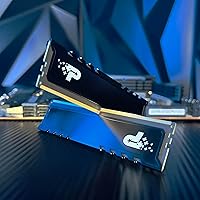
The Patriot Memory Signature 16GB DDR5 RAM Kit arrived on the market in April 2024 as a straightforward, no-frills option for desktop builders ready to move to DDR5 without overspending. Patriot Memory has spent years carving out a reputation as a reliable value brand, and this kit reflects that approach — it ships as a dual-channel 2x8GB pair designed for standard desktop platforms from Intel and AMD. There is no pretense here of chasing enthusiast benchmarks or extreme overclocking headroom. This is DDR5 at its most accessible: a practical on-ramp for upgraders who want the platform compatibility of the newer standard without the price tag of faster kits.
Features & Benefits

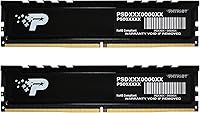
Running at 4800MHz with CL40 timings, this DDR5 kit operates at DDR5's base specification — which, in plain terms, means it delivers solid throughput for everyday tasks without the tighter latency of pricier options. The aluminum heatspreader keeps temperatures in check under sustained workloads, a practical touch even on a module not designed for pushing voltage limits. Each stick runs at just 1.1 volts, benefiting from DDR5's inherent efficiency advantage over DDR4 at the platform level. The UDIMM form factor means this is strictly a desktop module — it will not fit laptops or server configurations. One thing worth noting: Patriot does not prominently advertise XMP or EXPO profile support, so users should verify compatibility with their specific motherboard before expecting one-click speed activation.

Best For

The Patriot Signature DDR5 16GB set makes the most sense for builders putting together a first DDR5 desktop system on a budget — particularly those using Intel 12th, 13th, or 14th Gen processors, or AMD's Ryzen 7000 series, where DDR5 is either required or the native choice. Office workloads, web browsing, and general productivity tasks will run without issue on this memory upgrade, since those applications rarely stress memory bandwidth to the point where faster speeds would noticeably matter. It also suits compact or mini-ITX builds where bulkier, RGB-laden modules create thermal or clearance headaches. If you are planning to push frequencies beyond stock or run memory-intensive creative applications at scale, stepping up to a faster kit would be the smarter call.

User Feedback

With a 4.3-star average drawn from around 70 ratings, the response to this DDR5 kit has been cautiously positive — but that sample size is modest enough that the picture could shift with more reviews over time. Buyers who leave positive feedback tend to highlight hassle-free installation and stable operation straight out of the box, with no need to fiddle with BIOS settings to hit rated speeds. On the critical side, some users have flagged that the performance ceiling is predictably modest compared to faster kits, and a handful mention wanting clearer documentation around memory profile support. Motherboard compatibility concerns appear occasionally, though these seem isolated rather than systemic. Overall, the feedback suggests a dependable, unexciting performer that does exactly what it promises.

Pros

  • Ships as a matched dual-channel pair, ensuring the system runs in the more efficient two-channel memory mode out of the box.
  • The aluminum heatspreader keeps module temperatures stable during sustained workloads without requiring active cooling.
  • At 1.1V, this DDR5 kit draws less power than a comparable DDR4 setup, which adds up over long daily use.
  • The UDIMM form factor fits virtually any standard desktop motherboard supporting DDR5, reducing compatibility guesswork.
  • Installation is straightforward — most buyers report the kit running at rated speed without any BIOS adjustments needed.
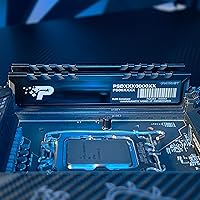
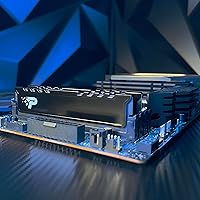
  • The low-profile, no-RGB design fits easily into compact cases with limited clearance above the memory slots.
  • Patriot Memory has a long track record in the value RAM space, offering reasonable confidence in build quality for the price tier.
  • Non-ECC unbuffered design means plug-in simplicity for home and office PCs without unnecessary configuration overhead.

Cons

  • 4800MHz is DDR5's baseline speed; faster kits at 6000MHz or higher are available for only a modest price difference and offer better headroom.
  • No clearly documented XMP or EXPO profile support means one-click frequency activation via BIOS may not be reliable on all boards.
  • The 16GB total capacity may feel limiting for users who run virtual machines, professional creative tools, or memory-heavy browser sessions.
  • The Patriot Signature DDR5 16GB set offers no upgrade path within the kit itself — adding more RAM means buying separately and hoping for timing compatibility.
  • With roughly 70 ratings at time of review, the feedback pool is too small to draw firm conclusions about long-term reliability.
  • Buyers have occasionally reported uncertainty around motherboard compatibility, with documentation not always clarifying supported chipsets explicitly.
  • The performance gap between this kit and higher-frequency DDR5 is most noticeable on AMD Ryzen 7000 platforms, where memory speed has a direct impact on CPU throughput.
  • No lifetime warranty information is prominently surfaced in product listings, which can be a concern for buyers prioritizing long-term peace of mind.

Ratings

The Patriot Memory Signature 16GB DDR5 RAM Kit has been scored below by our AI system after analyzing verified buyer reviews from global marketplaces, with spam, bot-generated, and incentivized submissions actively filtered out. Scores reflect the honest consensus of real desktop builders and everyday users — strengths and frustrations weighted equally. Where the feedback pool is limited, scores lean conservative to avoid overstating confidence.
Value for Money
84%
Buyers consistently note that this DDR5 kit hits a price point that makes DDR5 adoption feel accessible without demanding a significant financial leap. For someone building a budget Intel or AMD DDR5 desktop, the cost-to-capacity ratio is one of the stronger arguments in its favor.
A handful of reviewers point out that faster DDR5 kits — particularly 6000MHz options — are sometimes available for only a modest premium, which makes the value case slightly less clear-cut for anyone willing to stretch their budget a little further.
Ease of Installation
91%
Most buyers report a smooth, tool-free installation with no unexpected compatibility issues. The sticks seated cleanly into DDR5 slots on both Intel and AMD boards, and a majority of users saw the system post at 4800MHz on first boot without any manual BIOS intervention.
A small number of users had to manually enable the rated speed in BIOS, which caught a few first-time builders off guard. The lack of prominent XMP or EXPO documentation means some buyers go in without knowing this extra step might be needed.
System Stability
88%
Day-to-day stability is one of the more praised aspects of this memory upgrade — users running it for office work, web browsing, and light multitasking report no crashes or blue screens over extended periods. For its intended use case, it performs reliably.
Because the review pool sits around 70 ratings, long-term reliability data is still thin. A few users flagged intermittent instability on specific motherboard and BIOS version combinations, though these cases appear isolated rather than systemic.
Raw Performance
67%
33%
At 4800MHz, this DDR5 kit handles productivity workloads — spreadsheets, document editing, browser-heavy sessions — without becoming a bottleneck. Users who came from DDR4 systems note a clean platform transition with no perceived slowdowns in everyday use.
Benchmarks and power users make the performance ceiling obvious: 4800MHz CL40 is the slowest DDR5 configuration available, and faster kits at 6000MHz or beyond deliver measurably better results in gaming frame rates and memory-bandwidth-sensitive applications. This is not a kit for pushing limits.
Thermal Management
79%
21%
The included aluminum heatspreader does its job passively — module temperatures stay reasonable during typical desktop workloads, and users in compact cases with limited airflow report no heat-related issues under normal operating conditions.
The heatspreader is functional rather than impressive; it offers no meaningful advantage over bare-PCB modules at stock speeds and voltage. Users who run sustained compute workloads for hours at a time may want a case with decent airflow to support it.
Motherboard Compatibility
73%
27%
The Patriot Signature DDR5 16GB set works correctly on a range of Intel 600 and 700 series boards as well as AMD X670 and B650 platforms, with most users reporting clean detection without needing to hunt for specific BIOS versions.
Some buyers have noted that Patriot does not maintain a prominently accessible QVL (qualified vendor list) for this kit, which creates unnecessary uncertainty when cross-referencing with specific motherboard brands. A few users encountered issues on less common boards that required BIOS updates to resolve.
Dual-Channel Configuration
86%
Shipping as a matched 2x8GB pair means buyers can drop both sticks in, follow their motherboard's slot guidance, and immediately benefit from dual-channel bandwidth — no extra configuration needed. This is the correct way to run 16GB and Patriot packages it properly.
The 2x8GB split leaves no room to add a third or fourth stick later without replacing the kit entirely, which limits upgrade flexibility compared to a single 16GB module that keeps slots open for future expansion.
Build & Physical Quality
77%
23%
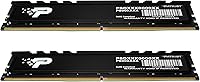
The modules feel solid in hand, with the aluminum heatspreader adding a degree of structural rigidity that cheaper bare-PCB sticks lack. The all-black aesthetic blends unobtrusively into most build color schemes without clashing with other components.
The heatspreader finish is utilitarian at best — it shows fingerprints easily and lacks the polished look of premium-tier RAM. Buyers who care about aesthetics or window-panel visibility may find the presentation underwhelming compared to competitors at similar price points.
XMP/EXPO Profile Support
54%
46%
Some users have successfully run this memory upgrade at its rated speed using manual BIOS settings, and on certain boards it does appear at the correct frequency without any profile activation — suggesting basic JEDEC compliance is solid.
The absence of clearly documented XMP or EXPO profiles is a genuine gap for less experienced builders who expect one-click speed activation. This uncertainty has frustrated buyers who assume all DDR5 kits come with profile support as standard, which is not the case here.
Overclocking Headroom
41%
59%
For users who simply want the system to run at rated spec without touching voltages or timings, this kit delivers exactly that — no tuning required, no instability from pushing margins.
This is not an overclocking kit by any measure. Running at DDR5's baseline frequency with no confirmed high-speed profiles means there is effectively no safe headroom to push further. Enthusiasts interested in tuning memory speeds should look at purpose-built kits from the outset.
Documentation & Packaging
62%
38%
The physical packaging is clean and functional, with both sticks protected adequately for shipping. The product arrives ready to install without any superfluous extras cluttering the box.
In-box documentation is minimal — there is no quick-start guide specifically addressing DDR5 BIOS configuration, which would genuinely help first-time DDR5 builders who are unfamiliar with enabling memory speeds manually. Patriot's online support resources for this specific series are also not prominently signposted.
Energy Efficiency
83%
Operating at 1.1V, the Patriot Signature DDR5 16GB set benefits from DDR5's platform-level efficiency advantage over DDR4. For users building home office systems that run long hours daily, the lower voltage translates to a small but real reduction in heat output and power draw.
The efficiency gains are a platform-level characteristic of DDR5 broadly, not a feature unique to this kit. Buyers should not expect meaningfully different power consumption compared to other DDR5 modules running at the same voltage and speed.
Form Factor Suitability
85%
The standard UDIMM footprint and absence of RGB lighting make this an excellent fit for small form factor and mini-ITX builds where tall heatspreaders or wide lighting fixtures create clearance problems near CPU coolers or case panels.
Being a desktop-only UDIMM means anyone who mistakenly purchases this for a laptop or compact workstation is entirely out of luck — the form factor incompatibility is absolute. Product listings could do more to surface this limitation before checkout.

Suitable for:

The Patriot Memory Signature 16GB DDR5 RAM Kit is a solid fit for desktop builders who are stepping into the DDR5 era for the first time and want to do so without stretching their budget. It pairs naturally with Intel 12th, 13th, and 14th Gen platforms, as well as AMD Ryzen 7000 systems, where DDR5 is the native memory standard. The dual-channel 2x8GB configuration gives the system enough bandwidth to handle everyday computing — web browsing, document editing, video calls, and light multitasking — without breaking a sweat. Users building compact mini-ITX systems will appreciate the understated, heatspreader-only design that avoids the bulk and heat of RGB-heavy alternatives. If your goal is simply to get a DDR5-ready desktop up and running reliably at a sensible cost, this memory upgrade checks the right boxes.
Not suitable for:

The Patriot Memory Signature 16GB DDR5 RAM Kit is not the right choice for anyone who wants to push memory frequencies beyond factory spec or extract extra performance through manual overclocking, as this kit is built around DDR5's baseline 4800MHz standard with no confirmed high-frequency XMP or EXPO profile support. Enthusiast builders chasing benchmark numbers, or those running memory-sensitive workloads like 3D rendering, large video exports, or professional simulation software, will likely find the performance ceiling limiting compared to faster 6000MHz or 6400MHz kits. This is also strictly a desktop UDIMM module, so laptop users and anyone configuring a server or ECC-dependent workstation should look elsewhere entirely. Gamers who have read that faster DDR5 speeds can meaningfully improve frame rates on AMD Ryzen 7000 systems — where memory bandwidth directly feeds the CPU — may want to budget for a higher-frequency kit from the start rather than upgrading again later. At 16GB total, power users running multiple virtual machines or heavy creative suites simultaneously may also find the capacity a tighter fit over time.
Specifications

  • Total Capacity: The kit provides 16GB of total system memory, split across two 8GB sticks designed to run in dual-channel mode.
  • Memory Type: Uses DDR5 Non-ECC Unbuffered (UDIMM) technology, the standard choice for consumer desktop platforms.
  • Speed: Rated at 4800MT/s, which is the base specification for DDR5 and suitable for everyday desktop workloads.
  • Latency Timings: Operates at CL40-40-40-77 primary timings, consistent with DDR5 baseline specifications at this frequency.
  • Voltage: Runs at 1.1V, reflecting DDR5's lower operating voltage compared to DDR4, which typically runs at 1.2V or higher.
  • Form Factor: UDIMM format designed exclusively for standard desktop motherboards; not compatible with laptops, servers, or workstation ECC slots.
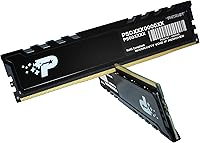
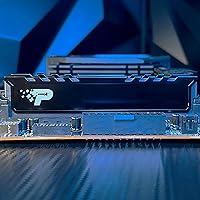
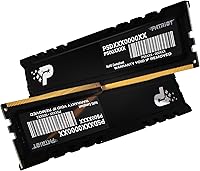
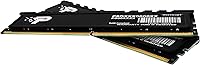
  • Heatspreader: Each module includes a black aluminum heat shield to assist with passive thermal dissipation during sustained use.
  • Module Dimensions: Each stick measures 0.24 x 5.24 x 1.46 inches, a standard DIMM profile that fits most desktop cases and cooler clearances.
  • Kit Weight: The full two-stick kit weighs approximately 3.17 ounces combined, which is typical for aluminum-shielded DDR5 UDIMMs.
  • Color: Both modules ship in a matte black finish with no RGB lighting, making them a clean fit for any build aesthetic.
  • Channel Config: Ships as a matched dual-channel pair, allowing the system to operate in dual-channel mode when installed in the correct slots.
  • ECC Support: Does not support Error-Correcting Code (ECC) memory, which is an intentional design choice for home and office desktop use.
  • Compatible Platforms: Works with Intel 12th, 13th, and 14th Gen platforms and AMD Ryzen 7000 series motherboards that support DDR5 UDIMM memory.
  • Series: Part of Patriot Memory's Signature line, which targets value-oriented buyers who prioritize stability over extreme performance tuning.
  • Model Number: The official model identifier is PSP516G4800KH1, which can be used to verify compatibility with specific motherboard QVL lists.
  • Manufacturer: Produced by Patriot Memory, a brand with over two decades of experience in the consumer and enthusiast memory market.
  • XMP/EXPO Profiles: Patriot does not prominently document XMP or EXPO profile support for this kit; buyers should confirm with their motherboard's QVL before assuming automatic profile activation.
  • Release Date: This kit became available in April 2024, positioning it within the broader DDR5 mainstream adoption wave for consumer desktop builders.

Related Reviews
Patriot Signature 32GB DDR5 SODIMM Laptop RAM
84%
88%
Value for Money
93%
Ease of Installation
91%
System Stability
84%
Real-World Performance
79%
Memory Speed Rating
More
Patriot Memory Signature 16GB DDR4 RAM Kit
80%
93%
Compatibility
91%
Ease of Installation
78%
Performance at Rated Speed
89%
System Stability
88%
Value for Money
More
Patriot Signature 16GB DDR4 3200MHz RAM Kit
79%
93%
Ease of Installation
88%
Compatibility
91%
Stability & Reliability
84%
Performance at Rated Speed
47%
Overclocking Headroom
More
Patriot Signature DDR5 32GB 4800MHz RAM Kit
76%
83%
Value for Money
91%
Installation & Setup
78%
Compatibility
72%
Performance at Speed
86%
Stability & Reliability
More
A-Tech 16GB DDR5 5600MHz RAM Kit
88%
96%
Installation Ease
89%
Performance Boost
92%
Value for Money
88%
Energy Efficiency
91%
Compatibility
More
Crucial 16GB DDR5 4800MHz Desktop RAM Kit
82%
83%
Value for Money
91%
Compatibility
94%
Installation Ease
79%
Real-World Performance
93%
Stability & Reliability
More
Patriot Memory Signature Line DDR4 16GB RAM
78%
88%
Value for Money
91%
Compatibility
93%
Installation Experience
71%
Performance at Rated Speed
89%
Stability & Reliability
More
Patriot Signature DDR5 8GB 5600MHz SODIMM RAM
79%
84%
Value for Money
88%
Installation Ease
76%
Speed Accuracy
67%
System Compatibility
79%
Multitasking Performance
More
Patriot Memory Signature 16GB DDR4 SODIMM RAM
79%
91%
Value for Money
88%
Installation Ease
74%
Compatibility
83%
Day-to-Day Performance
87%
Stability & Reliability
More
Patriot Viper Venom 64GB DDR5 Desktop RAM
83%
88%
Value for Money
91%
Performance at Rated Speed
93%
XMP Setup & Ease of Use
89%
Stability & Reliability
74%
Platform Compatibility
More

FAQ

Yes, as long as your motherboard supports DDR5 UDIMM memory. Most Intel 12th, 13th, and 14th Gen boards with DDR5 slots are compatible. To be safe, check your motherboard's QVL (qualified vendor list) using the model number PSP516G4800KH1 before purchasing.

Yes, AMD Ryzen 7000 series platforms run on DDR5 natively, and this DDR5 kit is compatible in principle. That said, Ryzen 7000 CPUs benefit more noticeably from faster memory speeds, so if gaming performance is a priority, a 6000MHz kit may serve you better. For general productivity use, 4800MHz works fine.

Patriot does not clearly document XMP or EXPO profile support for the Patriot Memory Signature 16GB DDR5 RAM Kit. It should run at its rated 4800MHz on compatible platforms, but you may need to manually enable that speed in the BIOS rather than relying on a one-click profile. This is not an overclocking-focused kit, so do not expect frequency headroom beyond 4800MHz.

For most gaming at 1080p and 1440p, 16GB is still a workable amount, though some newer titles are beginning to push toward 16GB as their recommended spec rather than minimum. If you also run a browser, Discord, and streaming software in the background while gaming, you may occasionally brush against the limit. For pure office and productivity use, 16GB is more than adequate.

No — this is a UDIMM module, which is a full-size desktop form factor. Laptops use SO-DIMM memory, which is a different, smaller size and will not physically fit in a desktop slot, and vice versa. You will need to look for DDR5 SO-DIMM modules specifically designed for laptops.

You can technically install just one 8GB stick, but doing so means the system runs in single-channel mode, which reduces memory bandwidth noticeably. To get the best performance out of this memory upgrade, install both sticks in the correct paired slots as indicated in your motherboard manual — that activates dual-channel mode, which is meaningfully faster for most workloads.

Your motherboard manual will specify which slots to use for dual-channel operation — on most boards, this is slots A2 and B2, but it varies by brand and model. Installing the sticks in the wrong slots will still work, but you may lose dual-channel performance. Check the diagram in your manual before snapping them in.

Patriot Memory generally backs its Signature series products with a warranty, but the exact terms are not prominently displayed in standard product listings. It is worth checking Patriot Memory's official website or contacting their support team directly to confirm the warranty period and claim process before purchasing.

This is more common with DDR5 than DDR4 because some motherboards default to a lower JEDEC speed on first boot. Head into your BIOS and look for the memory frequency setting or an XMP/DOCP option. Setting the speed manually to 4800MHz should resolve it. If the system remains unstable, reseat the sticks and verify your motherboard supports DDR5 at this speed.

Mixing RAM is generally not recommended, even if the sticks are the same speed on paper. Different modules from different manufacturers can have subtle timing or voltage differences that cause instability. If you need more than 16GB, the cleaner path is to buy a second matched kit of the Patriot Signature DDR5 16GB set or replace everything with a single higher-capacity kit.