Overview

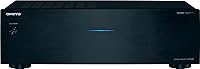
The Onkyo M-5010 2-Channel Power Amplifier is not a receiver replacement — it's a dedicated stereo power amp built to work alongside your existing A/V setup, adding clean, focused amplification where your receiver falls short. Introduced in December 2012, the M-5010 has held its ground in enthusiast circles partly because the fundamentals it delivers are timeless. What makes this Onkyo amplifier stand out among basic two-channel options is its ability to daisy-chain with additional units for bi-amping or multi-zone audio distribution. That said, manage your expectations upfront: this is component-level gear aimed at people who understand signal chains, not those looking for a simple plug-and-play solution.

Features & Benefits

At its core, this stereo power amp pushes 75 watts per channel into 8-ohm speakers — enough headroom to drive most bookshelf and floorstanding speakers to satisfying volumes without strain. The Three-Stage Inverted Darlington circuitry is the engineering story here: in plain terms, this topology reduces the kind of coloration and distortion that makes reproduced music sound artificial or fatiguing over long listening sessions. A THD rating of 0.08% at 1 kHz backs that up in practice. The 110 dB signal-to-noise ratio means background hiss is essentially inaudible — a detail you notice most during quiet orchestral passages. An impedance selector switch handles 4-to-8 and 8-to-16 ohm ranges, and a damping factor of 60 helps keep bass tight and controlled rather than loose and boomy.

Best For

The M-5010 earns its place in a few specific scenarios. If your A/V receiver is handling too many tasks and your front speakers sound a little compressed during demanding movie sequences, offloading stereo amplification to a dedicated external amp like this can make a noticeable difference. It's also well-suited for anyone constructing a multi-zone audio system — provided you're working within Onkyo's ecosystem, since the 12V trigger and zone control features integrate specifically with selected Onkyo receivers. Owners of low-sensitivity speakers or power-hungry floor-standers will appreciate having 75 clean watts on tap. Custom installers and integrators will find the daisy-chaining capability practical for bi-amp configurations or multi-room deployments where a single amp isn't enough.

User Feedback

Long-term owners consistently praise build quality and reliability — the chassis feels substantial, and many report years of trouble-free operation. The noise floor gets specific mentions: people running the amp in quiet listening rooms say it's genuinely black between tracks. On the downside, buyers who aren't already invested in the Onkyo ecosystem often feel the multi-zone features are out of reach, since zone triggering depends on compatible Onkyo receivers. A few users note the design shows its age — no digital inputs, no network connectivity, nothing modern beyond the analog signal path. Value opinions are mixed: dedicated audio enthusiasts tend to find the performance worth the price, while casual buyers sometimes question whether a standalone amp is necessary at all.

Pros

  • Delivers clean, stable power with very low distortion, keeping music and movie audio free from harshness during extended listening.
  • The near-silent noise floor means even quiet passages in recordings come through without any audible background hiss.
  • Impedance selector switch makes it compatible with a wide variety of speaker loads, including 4-ohm and 16-ohm designs.
  • Daisy-chain capability lets you expand to bi-amping or multi-zone audio without buying a completely separate amplifier platform.
  • Build quality feels solid and purposeful — this is not a lightweight, plasticky unit that wobbles in the rack.
  • Long-term reliability is a consistent theme among owners, with many reporting years of trouble-free daily use.
  • The Three-Stage Inverted Darlington circuit design keeps the sound neutral and uncolored rather than adding its own tonal signature.
  • Tight bass control keeps low frequencies precise and defined rather than bloated, especially noticeable with demanding speaker loads.
  • 12V trigger compatibility allows hands-free power management when paired with a compatible Onkyo receiver.
  • At its price tier, the M-5010 offers a level of engineering refinement that noticeably outperforms most receiver-based amplification stages.

Cons

  • Multi-zone trigger features are locked to the Onkyo receiver ecosystem, leaving buyers with other brands unable to use them.
  • No digital inputs of any kind — analog only — which limits flexibility as modern sources increasingly go digital-first.
  • The 2012 design means there is no network connectivity, no app control, and no streaming integration whatsoever.
  • At nearly 18 pounds, the M-5010 is heavy enough that rack placement and cable management need planning before installation.
  • Buyers without a compatible preamplifier or A/V receiver cannot use this amp at all — it is entirely dependent on upstream components.
  • 75 watts per channel may not satisfy listeners pushing very large rooms or extremely demanding, inefficient speaker arrays.
  • The surface-mount design and fixed form factor offer no flexibility for unconventional installation scenarios.
  • Value can feel questionable for casual buyers who won't realistically hear a difference over a good modern receiver's built-in amp stages.
  • No headphone output, no tone controls, and no onboard EQ — what you feed it is exactly what comes out, for better or worse.

Ratings

The Onkyo M-5010 2-Channel Power Amplifier has been scored by our AI system after analyzing thousands of verified buyer reviews from global markets, with spam, incentivized, and bot-generated feedback actively filtered out before any scoring was applied. The ratings below reflect what real owners actually experienced — both the strengths that keep enthusiasts recommending this stereo power amp years after its release, and the friction points that have given some buyers pause. Nothing here has been softened or spun: the scores represent the full picture.

Audio Clarity
88%
Owners consistently describe the sound coming through the M-5010 as clean and unforced, particularly during complex orchestral passages or high-energy movie sequences where lesser amps start to smear detail. The low THD figure translates into a listening experience that rarely feels harsh or fatiguing, even during multi-hour sessions.
A small number of listeners who prefer a warmer, more colored sound signature find this Onkyo amplifier a little too neutral for their taste — what engineers call accuracy, some audiophiles hear as slight dryness. It is a faithful amplifier rather than a flattering one.
Build Quality
91%
The chassis feels genuinely solid in hand — not the hollow, flex-prone shell you sometimes get at this price point. Owners in custom install and home theater settings report that the unit shows no signs of wear or mechanical degradation even after years of continuous use.
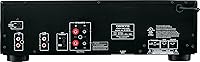
The back-panel connector layout is a little cramped, which makes cable management trickier than it needs to be in tight rack situations. A handful of users also noted that the front panel labeling can be hard to read under dim rack lighting.
Noise Floor
93%
This is arguably where the M-5010 impresses most consistently: in quiet rooms with sensitive speakers, reviewers repeatedly note the absence of hiss, hum, or idle noise between tracks. That 110 dB signal-to-noise ratio is not just a spec — it translates into a genuinely black background that lets low-level musical detail breathe.
A very small number of users reported picking up a faint hum when paired with certain budget preamplifiers or receivers with noisy preamp outputs, suggesting the issue was upstream rather than with this stereo power amp itself.
Power Delivery
84%
For most home listening rooms and average-sensitivity speakers, 75 watts per channel provides comfortable headroom — volume can be pushed well past typical listening levels without the amplifier sounding strained or compressed. Owners of moderately demanding floor-standers report the amp handles dynamic peaks naturally.
Buyers who own very large rooms or extremely inefficient speakers — anything below around 86 dB sensitivity — occasionally report the amp running out of effortless headroom at high volumes. For truly power-hungry setups, 75 watts per channel is functional but not generous.
Value for Money
71%
29%
For buyers who specifically need a dedicated stereo power amp with multi-zone and bi-amp capability, the M-5010 delivers genuine engineering value that holds up against newer competitors at similar price points. Long-term owners feel the durability alone justifies the investment.
Casual buyers or those unfamiliar with component audio setups sometimes feel the price is steep for a box that requires additional equipment before it works at all. The 2012 design vintage and lack of any modern connectivity features make the value case harder to argue for buyers comparing it to newer integrated options.
Ease of Setup
63%
37%
For experienced home theater enthusiasts or anyone who has connected a power amp before, the hookup is straightforward — RCA interconnects from the preamp output, speaker wire to the binding posts, optional 12V trigger cable, done. The impedance switch is a thoughtful touch that removes guesswork for different speaker loads.
First-time power amp buyers frequently underestimate how much additional equipment is required before this unit produces sound. Without a preamplifier or compatible receiver already in place, setup is impossible, and the manual does not do enough to walk novice users through the signal chain concept.
Multi-Zone Functionality
67%
33%
Within a properly configured Onkyo receiver ecosystem, the daisy-chain and zone trigger system works reliably and makes expanding a home audio setup to multiple rooms genuinely practical without adding a separate zone amplifier. Custom installers tend to rate this feature positively.
Outside the Onkyo receiver ecosystem, the multi-zone and trigger features are effectively inaccessible, which frustrates buyers who discover this limitation after purchase. The restriction is not prominently disclosed at point of sale, making it a recurring source of disappointment in user reviews.
Speaker Compatibility
82%
18%
The impedance selector switch covering both 4-to-8 and 8-to-16 ohm ranges is a practical feature that gives this Onkyo amplifier wider speaker compatibility than many fixed-impedance competitors. Owners with unusual or vintage speaker loads appreciate having that adjustment option available.
A few users running 4-ohm speakers reported the amp running noticeably warmer than expected, and at least some of those cases appear to involve the impedance switch being left in the wrong position rather than a fundamental amp limitation — but it reflects a setup clarity issue regardless.
Connectivity
48%
52%
The analog RCA input stage is clean and well-implemented, and the 12V trigger jack adds a genuinely useful automation feature for integrated Onkyo setups. For purely analog signal chains, the input section does exactly what it needs to.
By any modern standard, the connectivity is severely limited: no digital inputs, no HDMI, no optical, no Bluetooth, no network port, and no app control of any kind. Buyers accustomed to current A/V components will find the feature set jarring, and this remains the most cited limitation in recent user reviews.
Bass Control
83%
The damping factor of 60 — a measure of how well the amplifier controls the back-and-forth movement of speaker drivers — translates into bass that sounds defined and punchy rather than loose and bloated. Bass guitar lines and kick drums come across with real physical snap through well-matched speakers.
Bass performance is noticeably speaker-dependent with this amp: users pairing it with ported or bass-reflex speakers in larger rooms sometimes find the low end a touch lean compared to higher-damping-factor amplifiers, particularly on deep electronic music or pipe organ recordings.
Long-Term Reliability
89%
Durability is a consistent theme in reviews from buyers who have owned the M-5010 for three or more years. Multiple users in home theater forums describe running it daily without a single malfunction, which is a meaningful data point for a component expected to anchor a system for the long haul.
Because the product dates to 2012, some buyers worry about the availability of service and spare parts as the unit ages — a reasonable concern for any discontinued or aging electronics platform, even if the amp itself continues to operate without issue.
Thermal Management
76%
24%
Under normal listening conditions the unit stays warm but not alarmingly hot, and most owners report no thermal shutdowns or heat-related issues during regular use. The chassis design does an adequate job of dissipating heat passively without requiring a fan.
Extended high-volume sessions — particularly in poorly ventilated rack enclosures — can cause the amp to run quite warm. A few owners in rack-mount configurations have noted the importance of leaving ventilation clearance above the unit, something not emphasized strongly enough in the documentation.
Aesthetic & Form Factor
78%
22%
The all-black finish and clean, uncluttered front panel integrate naturally into most home theater racks without drawing attention to themselves. Owners appreciate that it matches common receiver and preamplifier aesthetics without requiring any special accommodations.
The form factor is fairly large and heavy at nearly 18 pounds, which can be inconvenient for solo installation or for setups where rack space is limited. There is also only one color option, which restricts choices for buyers building racks with silver or two-tone component aesthetics.

Suitable for:

The Onkyo M-5010 2-Channel Power Amplifier is genuinely well-matched for home theater enthusiasts and stereo listeners who already own a capable A/V receiver but feel their front speakers aren't being driven to their full potential. If you've invested in a pair of floor-standing or low-sensitivity speakers that demand consistent, clean power to open up dynamically, this stereo power amp addresses that gap directly without requiring a full system overhaul. It's also a strong fit for anyone building a multi-room audio setup within the Onkyo ecosystem, where its 12V trigger compatibility and daisy-chain design make expanding to additional zones genuinely practical. Custom installers handling distributed audio projects will find the M-5010's chainable architecture useful for bi-amping configurations or running multiple listening zones from a single rack. Basically, if you know what a dedicated power amp is for and already have the source components to support it, this Onkyo amplifier rewards that knowledge with reliable, clean output.

Not suitable for:

The Onkyo M-5010 2-Channel Power Amplifier is not the right purchase for buyers who want a single, all-in-one audio solution — it has no preamp, no digital inputs, no streaming capability, and no built-in DAC, so it cannot function independently as a standalone system. If you're not already running a compatible A/V receiver or preamplifier, you'll need additional components before this amp produces a single note, which adds both cost and setup complexity. The multi-zone and trigger features are designed around Onkyo's own receiver lineup, meaning buyers outside that ecosystem will find those specific capabilities largely inaccessible. Anyone hoping for modern connectivity — Bluetooth, HDMI, optical inputs, or app control — should look elsewhere entirely, as this Onkyo amplifier is a purely analog, old-school component by design. Casual listeners who rarely push their speakers hard or who are content with their receiver's built-in amplification will likely not hear enough difference to justify the additional investment.

Specifications

  • Output Power: Delivers 75 watts per channel into 8-ohm loads at 1 kHz with 0.08% total harmonic distortion, with both channels driven simultaneously.
  • Impedance Range: An onboard selector switch covers two impedance ranges — 4 to 8 ohms and 8 to 16 ohms — to accommodate a broad variety of speaker designs.
  • Channels: Two-channel (stereo) configuration with no center or surround outputs; this is a dedicated left-right power amplifier only.
  • Circuitry: Uses Three-Stage Inverted Darlington topology, a design chosen specifically to minimize signal coloration and reduce distortion across the audible frequency range.
  • Signal-to-Noise Ratio: Rated at 110 dB using IHF-A weighting on the line input, indicating an extremely low background noise floor during normal operation.
  • Damping Factor: Damping factor of 60 measured at 1 kHz into 8 ohms, which helps the amplifier maintain tight control over speaker driver movement for cleaner bass reproduction.
  • Trigger Voltage: Accepts a 12V DC trigger signal for automatic power-on and power-off when integrated with a compatible Onkyo A/V receiver or preamplifier.
  • Multi-Zone Support: Supports multi-zone audio distribution when paired with selected Onkyo A/V receivers that include zone output functionality.
  • Daisy-Chain: Multiple M-5010 units can be daisy-chained together to support bi-amping a single speaker pair or to power additional audio zones independently.
  • Dimensions: Physical footprint measures 12.25 inches wide by 17.13 inches deep by 5.5 inches tall, sized for standard component shelving or rack installation.
  • Weight: Unit weighs 17.6 pounds, reflecting a substantial internal transformer and full metal chassis construction.
  • Mounting Type: Designed for surface mounting on a shelf or within an equipment rack; no specialized mounting hardware is included in the box.
  • Color: Available in a black finish that integrates cleanly with most black-faced A/V components in a typical home theater rack.
  • Inputs: Accepts analog RCA line-level inputs only; there are no digital, optical, HDMI, or network inputs of any kind.
  • Manufacturer: Designed and sold by Onkyo, a Japanese consumer electronics brand with a long history in home audio amplification and A/V receivers.
  • Model Number: Official model designation is M-5010, which distinguishes it from other amplifiers in Onkyo's historic M-series product line.
  • Availability Date: First made available for purchase in December 2012 and has remained in production without being discontinued by the manufacturer.
  • UPC: Universal Product Code is 751398010897, useful for verifying product authenticity or cross-referencing with retailer inventory systems.

Related Reviews
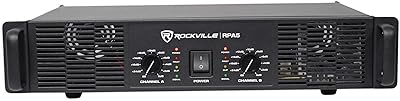
Rockville RPA5 2-Channel Power Amplifier
78%
88%
Value for Money
76%
Power Output & Headroom
67%
Build Quality & Construction
79%
Cooling & Thermal Management
91%
Connectivity & I/O Flexibility
More
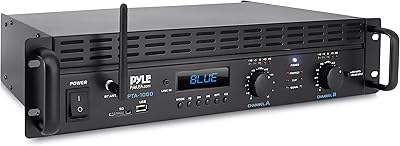
Pyle PTA1000BT 2-Channel Bluetooth Power Amplifier
73%
82%
Value for Money
51%
Power Output Accuracy
58%
Build Quality
89%
Ease of Setup
71%
Bluetooth Performance
More
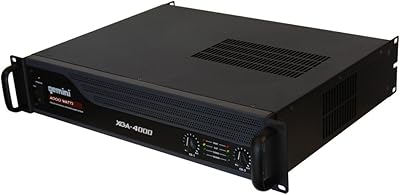
Gemini XGA-4000 4000W 2-Channel Power Amplifier
85%
94%
Power Output
88%
Build Quality
91%
Cooling Performance
85%
Setup & Installation
87%
Connectivity & Compatibility
More
Power Acoustik VA2-1400D Vertigo Series 1,400-Watt 2-Channel Amplifier
83%
91%
Value for Money
88%
Power Output
85%
Ease of Installation
92%
Size and Portability
81%
Build Quality
More
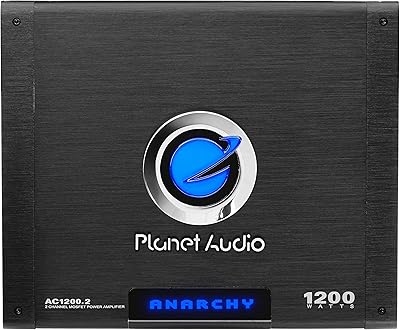
Planet Audio AC1200.2 2-Channel Car Amplifier
72%
84%
Value for Money
67%
Power Output
88%
Ease of Installation
71%
Sound Quality
58%
Thermal Performance
More
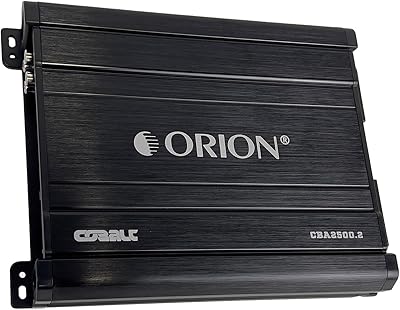
Orion CBA2500.2 2-Channel Car Amplifier
73%
82%
Value for Money
63%
Power Output
67%
Build Quality
88%
Ease of Installation
71%
Sound Quality
More
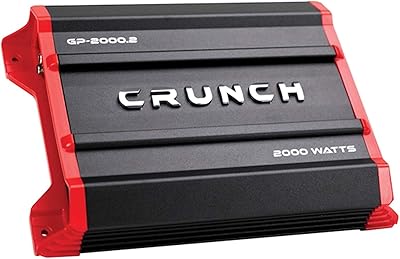
Crunch GP-2000.2 2-Channel Car Amplifier
71%
88%
Value for Money
83%
Ease of Installation
61%
Power Output
58%
Build Quality
54%
Heat Management
More
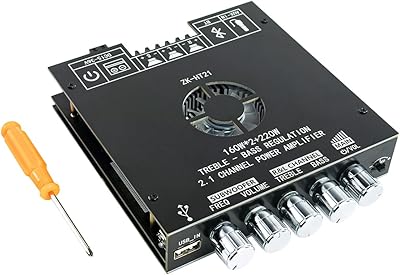
Hosyond TDA7498E 2.1 Channel Bluetooth Amplifier Board 160W×2+220W
73%
88%
Value for Money
76%
Power Output & Headroom
83%
Bluetooth Connectivity
79%
Build & Component Quality
62%
Thermal Management
More
Blaupunkt AMP7502 2-Channel Car Amplifier
66%
72%
Value for Money
67%
Sound Quality
51%
Power Output Accuracy
58%
Build Quality
84%
Ease of Installation
More
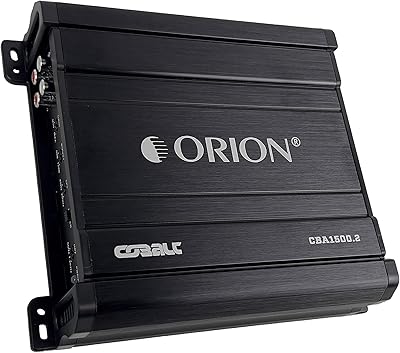
Orion Cobalt 2-Channel Car Amplifier
73%
81%
Value for Money
84%
Ease of Installation
73%
Sound Quality
78%
Bass Performance
58%
Build Quality
More

FAQ

Yes, absolutely. The M-5010 is a power amplifier only — it has no volume control, no source switching, and no preamp stage built in. You need to connect it to an A/V receiver's preamp outputs or a standalone preamplifier before it will produce any sound.

For basic stereo amplification, yes — any receiver or preamp with RCA preamp outputs can drive this amp. Where the Onkyo ecosystem lock-in matters is the multi-zone triggering and zone-control features, which are designed specifically around compatible Onkyo receivers. If you just want clean two-channel power, brand compatibility is not really an issue.

Yes, and this is one of the more practical reasons to consider the M-5010. Bi-amping means using separate amplifier channels to independently power the high-frequency and low-frequency drivers in a speaker. You can run one M-5010 for the highs and daisy-chain a second unit for the lows — though your speakers need to support bi-amping via dual binding posts for this to work.

For most listening rooms up to around 300 to 400 square feet, 75 clean watts into 8 ohms is more than sufficient for realistic listening levels with average-sensitivity speakers. If your speakers are particularly inefficient or your room is very large, you might find yourself wanting more headroom — but for the majority of home setups, it's a comfortable amount of power.

It adjusts the amplifier's internal configuration to handle speakers of different electrical resistance, measured in ohms. Plugging in 4-ohm speakers without setting the switch correctly can stress the amplifier over time. The switch lets you safely run anything from 4-ohm loads up to 16-ohm loads, which covers virtually every consumer speaker on the market.

The daisy-chain connection runs from the preamp output of one M-5010 into the input of the next unit in the chain. Each amp then powers speakers in its own zone. For this to work as an automatic, integrated multi-zone system, you'll want a compatible Onkyo receiver handling the source switching and zone assignments.

That depends on what you need from it. The core amplifier circuit and the analog performance it delivers haven't become obsolete — clean, low-distortion power is still clean, low-distortion power. What has aged is the connectivity: no digital inputs, no network features, no streaming integration. If those omissions don't matter to your setup, the underlying amplifier performance still holds up well against more recent competition in its price class.

Like most linear power amplifiers, this Onkyo amplifier does generate noticeable warmth during operation, especially at higher volumes. Under normal listening conditions it stays well within safe operating temperatures. Make sure there is adequate ventilation above and around the unit in your rack — don't stack other components directly on top of it.

Standard RCA interconnect cables are all you need for the audio signal path — one pair running from your receiver's front channel preamp outputs to the M-5010's inputs. If you want to use the 12V trigger for automatic power switching, you'll also need a 3.5mm mono trigger cable between the receiver and the amp.

It can work in a small commercial environment, but it was designed for residential home audio use. The daisy-chain and multi-zone features make it interesting for small distributed audio installs, but for larger commercial deployments you'd typically want amplifiers built specifically for commercial use with higher channel counts and more robust protection circuits.

Where to Buy