Overview

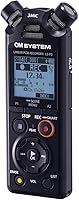
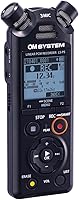
The OM System LS-P5 carries forward a respected lineage from Olympus — a brand many audio enthusiasts still search by its old name, though OM Digital Solutions now holds the reins. This pocket recorder sits firmly in the prosumer tier: capable enough for field professionals, compact enough to forget it is in your shirt pocket. It weighs barely 3 ounces and arrives ready to use straight away, with 16GB built-in memory and a pair of AAA batteries already included. For anyone who has missed a recording opportunity while fumbling with setup, that kind of out-of-box readiness matters far more than any bullet point on a spec sheet.

Features & Benefits

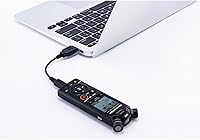
The hardware centerpiece is the tresmic 3-microphone array — three capsules arranged left, center, and right — letting users shift between wide stereo capture and tighter directional recording depending on the situation. Audio is stored at up to 96 kHz/24-bit in PCM or FLAC, producing rich, workable quality that holds up in post-production. Bluetooth enables wireless remote control via the companion app, useful when the recorder is placed at a distance. Less obvious but genuinely practical: connect it to a laptop via USB and it functions as a composite USB microphone, removing the need for a separate desktop mic. A low-cut filter and noise cancelling mode help tame wind, hum, and ambient noise when conditions are less than ideal.

Best For

This OM System recorder is built for a fairly specific — but sizeable — crowd. Journalists and interviewers will value how fast and discreet it is to deploy in the field. Musicians can treat it as a hi-res idea sketchpad, capturing song fragments at full fidelity before inspiration fades. Podcasters who want one device to handle both field sessions and desktop recording will find the USB mic mode genuinely useful. Students recording long lectures benefit from the generous onboard storage, while nature recordists and light travelers appreciate how little room it takes up in a bag. It is not built for multi-track studio work, but for solo capture across varied real-world scenarios, it covers a wide range.

User Feedback

Buyers who have used the LS-P5 regularly tend to praise its audio clarity and the flexibility the three-mic configuration provides across different recording situations. The pricing prompts debate: many feel it is well justified once they experience the hi-res output, while others point to the plastic chassis and wish the physical build felt more substantial at this tier. The menu system has a genuine learning curve — first-timers should plan on reading the manual. Battery life on AAA cells is acceptable under moderate use but falls short during long, continuous sessions. Bluetooth pairing is reliable for most users, though occasional connection hiccups are mentioned. Overall, satisfaction is high once the initial setup friction is worked through.

Pros

  • The OM System LS-P5 captures hi-res audio at 96 kHz/24-bit, producing recordings that hold up well in post-production editing.
  • Three onboard microphones allow flexible switching between wide stereo and focused directional capture without extra accessories.
  • At under 3 ounces, the LS-P5 genuinely fits in a shirt pocket and adds no meaningful weight to a bag.
  • Plug it into a laptop via USB and it functions as a no-driver microphone — one device replaces two.
  • 16GB of built-in storage and included batteries mean it is ready to record straight out of the box.
  • PCM, FLAC, and MP3 format support covers everything from archival-quality masters to compact, shareable files.
  • The low-cut filter and noise cancellation make a real difference when recording in imperfect acoustic environments.
  • Auto gain mode handles variable speakers and dynamic sound sources competently for users who want grab-and-go simplicity.
  • Bluetooth remote control via the companion app is useful when placing the recorder at a distance from the operator.

Cons

  • The all-plastic chassis feels noticeably lightweight in a way that does not inspire confidence during frequent handling.
  • Battery life drops faster than expected when Bluetooth is active or continuous hi-res recording is running.
  • No rechargeable internal battery means carrying spare AAAs on longer shoots or full-day assignments.
  • The menu system requires multiple button presses to change key settings, which is frustrating mid-recording.
  • No microSD expansion slot limits long-form or archival recording to the fixed 16GB onboard capacity.
  • The companion app has drawn criticism for being unintuitive and unreliable on certain Android devices.
  • Manual gain adjustment uses button steps rather than a physical dial, making fine-tuning less tactile and slower.
  • USB mic mode audio quality is slightly compressed compared to standalone recording, limiting its use for critical voiceover work.
  • Small, closely spaced buttons increase the risk of accidental presses when handling the unit in the dark or with gloves.

Ratings

The OM System LS-P5 earns its place as one of the more capable compact recorders in its class, and these scores reflect what real buyers across the globe actually experience — not marketing promises. Our AI has analyzed verified purchase reviews worldwide, actively filtering out incentivized, bot-generated, and spam feedback, so the numbers reflect honest day-to-day use. Both where the LS-P5 genuinely shines and where it falls short for certain users are transparently captured below.

Audio Recording Quality
91%
The hi-res PCM and FLAC output consistently impresses buyers who compare playback on studio monitors or quality headphones. Journalists report that interview recordings captured in noisy cafes or outdoor settings retain surprising clarity and warmth, making transcription and editing noticeably easier.
A small number of users noticed faint self-noise at maximum gain settings, which becomes audible in very quiet recording environments. Those chasing pristine acoustic or orchestral recordings may find the onboard preamps slightly limiting compared to dedicated field recorders at a higher price point.
Microphone Versatility
88%
The three-capsule tresmic array is the standout hardware feature for most buyers — the ability to switch between wide stereo and tighter directional capture without swapping accessories is genuinely useful for run-and-gun recording situations. Musicians especially appreciate being able to capture a rehearsal room in stereo and then focus on a single instrument without moving the unit.
Switching between microphone modes requires navigating the menu, which slows things down when a spontaneous recording opportunity arises. Users recording in very loud environments also report that even the directional mode picks up more background bleed than they expected.
Portability & Form Factor
93%
At under 3 ounces and roughly the footprint of a thick pen, the LS-P5 disappears into a jacket pocket or camera bag without any real bulk. Field journalists and travel bloggers frequently cite the form factor as the single biggest reason they chose it over bulkier alternatives.
The slim profile means the buttons are small and closely spaced, which causes occasional accidental presses — particularly mid-recording when handling the device in low-light conditions. Users with larger hands flag this as a recurring frustration during extended outdoor sessions.
Build Quality & Durability
67%
33%
The unit feels solid enough for everyday carry, and buyers who use it routinely for commutes, lectures, and casual field work report no structural issues over months of use. The fit of the battery door and port covers is tighter than some budget recorders in the category.
The all-plastic chassis draws the most consistent criticism from buyers who feel the price point warrants a more premium material. A few users report scuffing and surface wear after relatively light use, and the overall tactile impression does not match what the audio performance suggests about the device's ambitions.
USB Microphone Mode
84%
Plug the LS-P5 into a laptop and it immediately registers as a USB microphone — no drivers, no configuration, no extra software required. Podcasters and remote workers who discovered this feature after purchase frequently describe it as the detail that justified the cost, replacing a separate desktop mic entirely.
Audio routed through USB mic mode sounds slightly more compressed than the standalone recording quality, which limits its appeal for high-stakes broadcast or studio voiceover work. There is also no dedicated monitoring mix control when using it as a USB mic, which some podcasters find restrictive.
Bluetooth Connectivity
72%
28%
Pairing with the companion app works reliably in most conditions, and the wireless remote control feature is a genuine convenience when the recorder is positioned at a distance — on a podium, for instance, or at the center of a meeting table. Stable connectivity within a normal room range is consistently reported.
Outside of straightforward room-distance pairing, users report intermittent drop-outs, particularly in environments with dense wireless traffic. The companion app itself has drawn criticism for being unintuitive and occasionally unresponsive on newer Android devices, which undermines the Bluetooth feature for users who rely on it heavily.
Battery Life
69%
31%
For moderate recording sessions — an hour-long interview here, a rehearsal there — two AAA batteries provide adequate runtime without requiring a mid-session swap. The inclusion of batteries in the box means buyers can start recording the moment it arrives, which is a genuinely appreciated practical touch.
Real-world battery life falls noticeably short of optimistic spec-sheet estimates when Bluetooth is active or hi-res recording modes are engaged continuously. Buyers who use the LS-P5 for full-day field work or multi-hour lecture recording consistently recommend carrying spares, adding a small ongoing cost and inconvenience that a rechargeable internal battery would eliminate.
Menu & Ease of Use
63%
37%
Once the settings are configured to a preferred workflow, day-to-day operation is fairly straightforward — pressing record and stop is quick, and the auto gain mode means casual users can skip manual setup entirely. First-time Olympus or OM System buyers familiar with the brand's camera menus will find the interface logic recognizable.
New users face a real learning curve. The menu structure is nested and non-intuitive, and accessing key features like microphone mode or low-cut filter during a live recording requires multiple button presses. Several reviewers explicitly mention needing to consult the manual repeatedly during the first week of ownership.
Noise Cancellation & Filtering
79%
21%
The low-cut filter is effective at eliminating the low-frequency rumble of air conditioning, traffic, and handling noise — a practical benefit for anyone recording in real-world environments rather than treated studios. The noise cancellation mode makes a perceptible difference for voice-focused recordings like interviews and lectures.
In very noisy environments — busy street corners, crowded conference floors — the noise reduction introduces occasional audio artifacts that require cleanup in post. The processing also cannot be applied retroactively, so users who forget to activate filtering before recording are left with noisier files than they expected.
Onboard Storage
86%
16GB of built-in memory provides substantial headroom for most use cases — students recording a full semester of lectures, or journalists on a week-long assignment, can store files without constantly offloading. Having the storage built in rather than relying solely on a card slot eliminates one potential point of failure in the field.
There is no microSD expansion slot, which frustrates power users who want virtually unlimited capacity for long-format projects or archiving. Users recording exclusively in high-resolution PCM will chew through the 16GB faster than expected and must transfer files to a computer before the storage fills up.
File Format Flexibility
83%
Support for PCM, FLAC, and MP3 in a single device covers a wide range of practical needs — archival-quality masters in FLAC, broadcast-ready WAV-equivalent in PCM, and compact MP3 for quick sharing or long-duration meetings where file size matters more than audiophile fidelity.
There is no direct in-device format conversion, meaning users who record in PCM and later need MP3 versions must run the conversion on a computer. For non-technical buyers who expected a simpler on-device workflow, this adds an extra step that some find unnecessarily cumbersome.
Value for Money
74%
26%
Buyers who make full use of the tresmic array, hi-res recording, and USB mic mode consistently feel the price is reasonable relative to what they would pay for equivalent separate devices. Professionals who replace a standalone USB mic and a field recorder with one pocket-sized unit often report strong satisfaction with the overall cost equation.
Users who primarily want a simple voice recorder and never engage Bluetooth or USB mic mode question whether they are paying for features they do not need. The plastic build quality adds to the sense that the premium pricing is not fully reflected in physical craftsmanship, leading some buyers to feel the value equation is unbalanced.
Headphone Monitoring
77%
23%
The 3.5mm headphone jack allows real-time monitoring during recording, which journalists and field recorders rely on to catch audio problems before they become irretrievable. The output volume is sufficient for most standard headphones without an external amplifier.
Latency during USB mic mode monitoring is noticeable enough that some users find it distracting when recording voice. The headphone amplifier also struggles slightly with high-impedance headphones, producing lower-than-ideal volume levels that can obscure subtle audio details during critical monitoring.
Gain Control & Level Management
81%
19%
The combination of auto and manual gain control makes the pocket recorder genuinely adaptable — beginners can lean on auto mode and get clean results, while experienced recordists can dial in precise levels for controlled environments. The auto gain handles dynamic speakers and variable sound sources competently without excessive pumping.
Manual gain adjustment uses a button-step system rather than a physical dial, which makes fine-tuning mid-recording slower and less tactile than users accustomed to hardware knobs would prefer. At the highest manual gain settings, headroom becomes noticeably tighter and clipping risk increases in unpredictable acoustic environments.

Suitable for:

The OM System LS-P5 is a strong fit for anyone whose work or creative life regularly demands reliable, high-quality audio capture in a device small enough to carry without thinking about it. Journalists and documentary researchers will appreciate how quickly it can be deployed in an interview setting — slip it onto a table, press record, and the three-mic array handles the rest. Musicians who want to capture song ideas at full fidelity rather than a compressed phone recording will find the hi-res formats genuinely useful when revisiting those sketches in a proper studio later. Podcasters and content creators running a lean setup can replace a separate USB desktop microphone entirely by plugging the LS-P5 into their laptop, which is a real cost and clutter saving. Students recording long seminars, academics conducting field interviews, and nature enthusiasts who want clean ambient soundscapes without lugging dedicated field gear will all find the compact form factor and solid audio performance a practical combination.

Not suitable for:

Buyers expecting premium build quality to match the price point are likely to feel let down — the LS-P5 is housed in a plastic shell that feels functional rather than durable, and it will not withstand the kind of rough handling that metal-bodied alternatives can absorb. Anyone needing truly all-day recording without interruption should know that AAA batteries under continuous hi-res or Bluetooth use run out faster than the optimistic figures suggest, and the absence of a rechargeable internal battery is a genuine inconvenience for heavy users. The menu system has a real learning curve, so buyers who want to grab the recorder and use every feature intuitively from day one will likely feel frustrated during the first week. If you are primarily looking for a simple voice recorder for the occasional meeting and have no interest in hi-res formats, USB mic mode, or Bluetooth, the feature set here exceeds your needs and the cost is harder to justify. Multi-track recording, instrument direct-input, or any kind of mixer-level field production work is also completely outside what this OM System recorder is designed to do.

Specifications

  • Recording Formats: Supports PCM (WAV), FLAC, and MP3 recording formats to accommodate everything from archival-quality masters to compact, shareable files.
  • Sample Rate: Records at up to 96 kHz/24-bit in hi-res modes, delivering audio detail well beyond standard CD quality.
  • Microphone Type: Features a built-in 3-capsule tresmic array with left, center, and right elements for switchable stereo and directional capture modes.
  • Built-in Memory: Ships with 16 GB of onboard storage, with no microSD expansion slot available.
  • Connectivity: Connects via Bluetooth for wireless remote control and via USB for file transfer and composite USB microphone mode.
  • USB Mic Mode: Functions as a plug-and-play USB microphone when connected to a computer, requiring no additional drivers or software installation.
  • Headphone Jack: Includes a 3.5 mm headphone output for real-time monitoring during recording sessions.
  • Battery: Powered by 2 x AAA batteries, which are included in the box; there is no rechargeable internal battery option.
  • Dimensions: Measures 4.4 x 1.6 x 0.6 inches, making it slim enough to fit in a shirt or jacket pocket without noticeable bulk.
  • Weight: Weighs approximately 2.72 oz (77 g), light enough that most users forget it is in their bag.
  • Noise Cancellation: Includes a dedicated noise cancelling mode designed to reduce ambient background noise in voice-focused recording scenarios.
  • Low-Cut Filter: An onboard low-cut filter attenuates low-frequency rumble from wind, handling noise, and air conditioning during recording.
  • Gain Control: Offers both automatic and manual gain control, giving users the choice between hands-off simplicity and precise level management.
  • Display: Equipped with a small built-in screen measuring 3.5 (display unit) for navigating menus and monitoring recording status.
  • Brand Lineage: Manufactured by OM Digital Solutions, the company formerly known as Olympus, continuing the LS-series recorder heritage.
  • Item Model: Official model number is V409180BG000, sold under the OM System brand umbrella.
  • Body Material: Constructed primarily from plastic, prioritizing lightweight portability over a premium metal build.
  • In-Box Contents: Includes the recorder unit, 2 x AAA batteries, and associated documentation; no carrying case or external windscreen is bundled.

Related Reviews
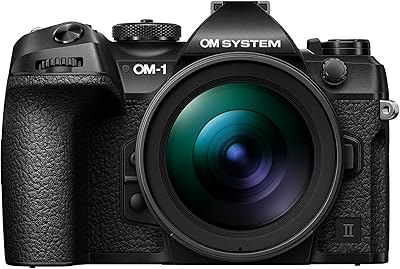
OM System OM-1 Mark II with M.Zuiko 12-40mm f/2.8 PRO II
81%
93%
Autofocus Performance
91%
Weather Sealing & Durability
84%
Image Quality
71%
Autofocus in Low Light
92%
Lens Quality (M.Zuiko 12-40mm f/2.8 PRO II)
More
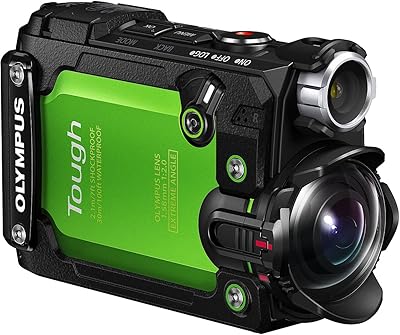
OM SYSTEM Olympus TG-Tracker Action Camera
81%
91%
Build Quality & Durability
88%
4K Video Performance
94%
Waterproofing & Ruggedness
68%
Battery Life
85%
Portability & Size
More
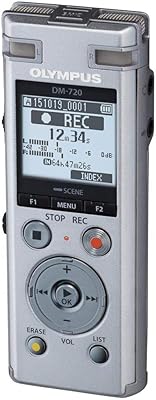
OM SYSTEM Olympus DM-720 Voice Recorder
85%
94%
Audio Quality
91%
Portability
89%
Ease of Use
86%
Battery Life
84%
Build Quality
More
OM System WS-882 Digital Voice Recorder
78%
88%
Audio Clarity (PCM Mode)
63%
Background Noise Handling
84%
Battery Life
74%
Ease of Use
77%
Build Quality & Durability
More
OM System Olympus Tough TG-7 Underwater Camera
86%
94%
Build Quality & Durability
88%
Image Quality
71%
Battery Life
85%
Usability & Ease of Use
92%
Waterproof Performance
More
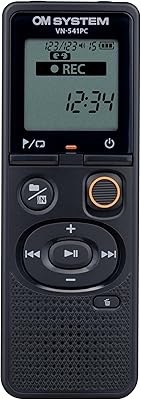
OM SYSTEM VN-541PC
OM SYSTEM VN-541PC
77%
93%
Ease of Use
71%
Audio Recording Quality
68%
Noise Cancellation
84%
Battery Life
62%
Build Quality & Durability
More
OM SYSTEM Olympus M.Zuiko Digital ED 60mm F2.8 Macro Lens
85%
94%
Image Quality
76%
Autofocus Performance
88%
Build Quality
90%
Weather Resistance
85%
Ease of Use
More
OM System E-M10 Mark IV
77%
83%
Image Quality
89%
Image Stabilization
86%
Build Quality & Design
71%
Autofocus Performance
68%
Video Capabilities
More
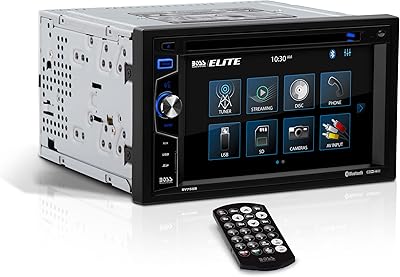
BOSS Audio Systems BV755B Car Stereo System
85%
85%
Display Clarity
90%
Bluetooth Connectivity
88%
Setup and Installation
82%
Audio Quality
91%
Compatibility with Smartphones
More
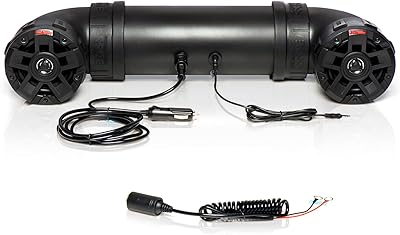
BOSS Audio Systems UTV4B Weatherproof Sound System
84%
89%
Ease of Installation
83%
Sound Quality
91%
Bluetooth Connectivity
88%
Weatherproofing & Durability
76%
Mounting & Compatibility
More

FAQ

It is essentially the same recorder — the OM System LS-P5 is the product formerly associated with the Olympus brand, now sold under the OM System name after OM Digital Solutions took over Olympus's camera and audio division. The hardware and feature set are the same; only the branding on the packaging and unit has changed.

Yes, and it works well for that purpose. Plug the LS-P5 into your computer via USB and it registers as a microphone automatically — no drivers needed on Windows or macOS. The audio quality in USB mic mode is solid for voice calls, interviews, and podcast recording, though it is slightly more compressed than the standalone hi-res recording quality.

It depends heavily on what you are doing. In standard MP3 recording mode with Bluetooth off, most users get several hours of continuous use. Turn on hi-res PCM recording or keep Bluetooth active, and that runtime drops noticeably. For full-day field work, it is worth carrying a spare pair of AAA batteries — the lack of a rechargeable internal battery means you cannot just top it up with a power bank.

There is no memory card slot — you are working with the 16GB of onboard storage only. For most users that is plenty, but if you record exclusively in high-resolution PCM or FLAC for extended sessions, you will need to offload files to a computer periodically before the storage fills up.

Honestly, the menu has a learning curve. Basic recording — press record, press stop — is simple enough for anyone. But accessing features like microphone mode switching, the low-cut filter, or manual gain adjustments involves navigating nested menus that are not always intuitive. Setting aside an hour to read through the manual before your first important recording session is genuinely recommended.

The tresmic array gives you a few different pickup patterns. Wide stereo is great for capturing room ambience, music performances, or nature soundscapes. A narrower directional mode focuses capture toward whatever the recorder is pointed at, which helps in noisy environments like a busy cafe or a crowded press conference. The center capsule can be used for more focused mono voice recording. In practice, wide stereo suits music and ambient capture, while directional works better for one-on-one interviews.

Yes, the 3.5 mm headphone jack supports real-time monitoring during standalone recording. When using it as a USB microphone connected to a computer, monitoring is still possible but there is a slight audio latency that some users find distracting, particularly during close-up voice recording.

You pair the recorder with a smartphone running the companion app, which then lets you start and stop recordings, adjust some settings, and check levels from a distance. It is most useful when the recorder is placed on a table at the center of a meeting or positioned somewhere you cannot easily reach. Pairing is generally reliable within a normal room range, though dense wireless environments can occasionally cause drop-outs, and the app itself has drawn mixed reviews for its interface design.

For everyday carry in a bag or pocket, it holds up fine under normal conditions. The plastic chassis is not fragile, and the buttons and port covers feel adequately fitted. That said, it does not feel like a rugged, knock-around device — it is not weather-sealed and the surface is prone to scratching with regular use. If you are using it in genuinely harsh outdoor conditions, a small protective pouch is worth having.

The noise cancellation and low-cut filter are genuinely useful for common interference like air conditioning hum, light wind, and consistent background noise — they make a real, audible difference in voice recordings. However, they are not a cure-all for very loud or chaotic environments. Heavy crowd noise or unpredictable ambient sound will still bleed through, and the processing can introduce minor artifacts if pushed hard, so some post-production cleanup may still be needed in challenging conditions.