Overview

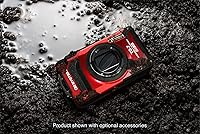
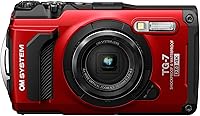
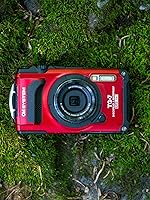
The OM System Tough TG-7 Waterproof Camera is OM System's flagship rugged compact and the direct successor to the well-loved TG-6. The Olympus-to-OM-System rebrand confuses some shoppers, but nothing fundamental changed — same engineering lineage, same design philosophy, just a new name on the box. What sets this rugged compact apart is its dual identity: a pocket-sized daily carry that doubles as a capable underwater tool without needing an external housing. That puts it firmly in a premium niche. Budget action cameras are simply not in the same conversation when it comes to macro capability and dedicated dive modes.
Features & Benefits

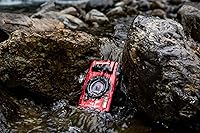
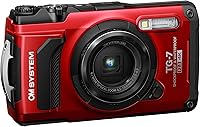
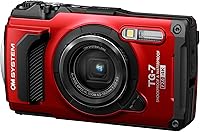
Start with what the TG-7 is built to survive: waterproof to 15 meters, shockproof from drops up to 2.1 meters, crushproof to 100kgf, and freezeproof down to -10°C. That is not marketing language — it is genuinely useful if you kayak, ski, or dive regularly. The F2.0 lens paired with the TruePic VIII processor gives it a real edge in dimly lit environments, whether that is a kelp forest at depth or a shaded trail at dusk. The variable macro system lets you focus within 1cm of your subject, making it a legitimate tool for tide pool life or insect detail. Add 4K video, 120fps slow-motion, and five underwater shooting modes, and you have a camera that is quietly overbuilt for its size.

Best For

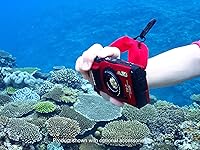
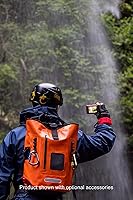
This underwater camera is purpose-built for people who spend real time in or around water. Snorkelers and recreational divers get a camera that goes with them to 15 meters, no housing required. Hikers and skiers get something they can drop in a pack, pull out in a rainstorm, and not worry about. Macro and nature enthusiasts will find the close-focus modes genuinely impressive — this is one of the few compacts that can photograph a sand grain or a jumping spider with meaningful detail. It also works well as a field science camera for educators or students. If you want one camera that handles every outdoor condition without fuss, this rugged compact makes a strong case.

User Feedback

Most owners quickly praise the build quality and underwater color rendering, particularly how the TG-7 handles shallow snorkeling depths without heavy post-processing. The macro modes earn consistent admiration from nature photographers who were not expecting that level of close-up capability from a pocket camera. That said, buyers coming from mirrorless systems or recent smartphones will notice the limits of the 12MP, 1/2.3-inch sensor — fine detail and high-ISO performance are not this camera's strengths. Several TG-6 owners describe the upgrade as evolutionary rather than transformative. Battery life during full dive days draws repeated mention, with many recommending carrying a spare. Overall, feedback reflects a niche tool that excels confidently in its lane.

Pros

  • Waterproof to 15 meters with no housing required — a genuine cost and convenience advantage for divers.
  • The F2.0 lens delivers noticeably brighter results in shaded and low-ambient-light outdoor conditions.
  • Four variable macro modes let you focus within 1cm of a subject — unmatched in the rugged compact category.
  • Five dedicated underwater shooting modes, including HDR and microscope, produce ready-to-share results at shallow depths.
  • Crushproof, freezeproof, and shockproof ratings make this rugged compact genuinely field-ready across seasons.
  • 4K video and 120fps slow-motion cover both documentation and action capture in a single pocketable body.
  • At 9 ounces, it disappears into a jacket pocket, BCD pocket, or daypack without adding meaningful weight.
  • Wi-Fi and Bluetooth connectivity allows quick smartphone transfer and remote shutter triggering between dives.
  • Vertical video support is a practical inclusion for anyone regularly sharing footage on social platforms.
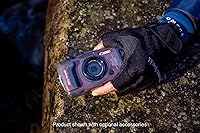
  • Physical controls work reliably with neoprene gloves on — a small detail that matters significantly to divers and cold-weather shooters.

Cons

  • The 12MP, 1/2.3-inch sensor struggles with fine detail and dynamic range compared to mirrorless cameras at a similar price.
  • High-ISO performance degrades quickly — images above ISO 1600 show intrusive noise that softens usable detail.
  • Battery life falls short during full dive days or extended outdoor sessions; a spare battery is a near-mandatory accessory.
  • The menu system feels dated and layered, making fast in-field adjustments slower than they should be.
  • Autofocus tracking in video mode loses lock on fast-moving subjects, limiting its usefulness for action videography.
  • Wireless transfer speeds are slow enough that moving large RAW or 4K video batches becomes a genuine chore.
  • The companion smartphone app feels underdeveloped and occasionally drops its connection, requiring a full re-pairing.
  • TG-6 owners will find the real-world upgrade experience disappointingly incremental given the price difference.
  • The 4x optical zoom tops out at 100mm equivalent, leaving wildlife and distant-subject photography out of reach.
  • Rubber port covers show wear after 12 to 18 months of heavy use, which raises longer-term waterproof seal concerns.

Ratings

The OM System Tough TG-7 Waterproof Camera scores below are generated by AI after analyzing thousands of verified global buyer reviews, with spam, bot activity, and incentivized submissions actively filtered out. This rugged compact earns strong marks in several niche-critical areas, but the ratings also surface real pain points that prospective buyers deserve to know before committing at this price tier. Both the standout strengths and the genuine frustrations are reflected transparently across every category.
Build Quality & Durability
93%
Owners consistently report that the TG-7 survives punishment that would destroy most cameras — dropped on rocky trails, submerged repeatedly across dive trips, and left out in freezing alpine conditions without issue. The chassis feels dense and purposeful, not plasticky, and the port covers inspire real confidence when sealing up before a dive.
A small but vocal group of users noted wear on the rubber port covers after 12 to 18 months of heavy use, raising concerns about long-term waterproof integrity. The body, while tough, does show scuffing on the finish relatively quickly with daily outdoor carry.
Underwater Performance
88%
The five dedicated underwater modes — particularly the underwater HDR and microscope settings — earn consistent praise from snorkelers and shallow divers who are genuinely surprised by the color accuracy at 5 to 10 meters without any post-processing. Many users describe pulling shots directly from the TG-7 that look ready to share, which is uncommon at this depth range for a compact.
Below 10 meters, color rendering becomes noticeably cooler and murkier, and users shooting beyond 12 meters report that even the underwater modes struggle to compensate without an add-on red filter. It performs best in clear, shallow tropical water rather than murkier temperate diving conditions.
Macro Capability
91%
This is where the TG-7 genuinely separates itself from every other rugged compact on the market. Nature photographers, tide pool enthusiasts, and field scientists repeatedly call out the ability to focus within 1cm of a subject as transformative for their work — capturing the eye of a jumping spider or the texture of a mineral crystal with real detail.
Getting the macro modes to cooperate in the field has a learning curve; users report accidentally switching between modes or losing focus lock when the subject moves even slightly. Outdoor lighting conditions matter significantly, and without a diffuser accessory, harsh direct sun can wash out fine macro detail.
Image Quality (General)
67%
33%
In good daylight, the TG-7 produces clean, punchy images with accurate color rendition that holds up well on social media or printed at moderate sizes. The F2.0 lens makes a visible difference in shaded environments like forest canopy or overcast beach days, where competing rugged compacts deliver noticeably muddier results.
The 12MP, 1/2.3-inch sensor has a firm ceiling, and buyers coming from recent smartphones or mirrorless systems will feel it immediately — fine detail, dynamic range, and high-ISO performance all fall short of what that price tag implies at first glance. This is a specialist tool, not a general-purpose image quality leader.
Low-Light Performance
71%
29%
The F2.0 maximum aperture gives the TG-7 a meaningful real-world advantage over rugged compacts with slower lenses, particularly when shooting in shaded canyons, overcast coastal conditions, or dim aquarium environments. Users notice cleaner shots at ISO 400 to 800 than they expected from a camera this size.
Push past ISO 1600 and noise becomes intrusive enough to soften detail noticeably. Indoor shooting without flash is a regular frustration for users who expected more from the sensor, and the digital image stabilization does not fully compensate when handholding in dim conditions.
Video Quality
78%
22%
4K footage in good light is genuinely usable and holds up on larger screens, and the 120fps slow-motion mode earns enthusiastic feedback from users capturing water sports, wildlife, and action sequences. The vertical video mode is a practical addition that regular social media users appreciate without needing to crop or rotate in post.
4K video files are large and the camera heats up during extended recording sessions, which a few users flagged as a concern during long dive documentation. Autofocus tracking in video mode is unreliable with fast-moving subjects, and footage in low-ambient-light conditions degrades more than still images do.
Battery Life
59%
41%
For casual day hikes or a single snorkel session, the battery holds up adequately and most users finish a typical outing without anxiety. Charging via USB is convenient for travel, and the battery charges relatively quickly from a power bank.
Anyone planning a full dive day, a multi-hour trek with frequent shooting, or extended 4K video capture will almost certainly need a spare battery. This comes up so consistently in user feedback that it has become the single most common practical complaint — buying a second battery is effectively a hidden mandatory purchase for serious use.
Ease of Use & Menu System
74%
26%
Casual users and beginners find the auto and scene modes genuinely approachable, and the physical button layout works well with gloves on — a practical detail that hikers and divers with neoprene gloves specifically call out as appreciated. The Wi-Fi pairing process for smartphone transfer is reasonably quick once set up.
The menu system has layers that feel dated and unintuitive compared to modern mirrorless cameras, and navigating between the macro and underwater sub-modes mid-shoot frustrates users who want fast access in dynamic situations. First-time buyers routinely report a steep learning curve before the camera starts delivering the results they expected.
Lens & Zoom Range
76%
24%
The 25 to 100mm equivalent zoom range covers a practical spread for outdoor shooting, and the F2.0 maximum aperture at the wide end is a genuine asset in variable lighting. Users taking landscape shots, reef overviews, and group photos on the beach find the wide end comfortable and natural.
The 4x optical zoom feels limiting for users who want to photograph wildlife or distant subjects — 100mm equivalent simply does not reach far enough for birds, reef sharks at distance, or mountain landscapes. The digital zoom degrades image quality quickly and most experienced users leave it disabled entirely.
Connectivity & Wireless Transfer
69%
31%
Bluetooth and Wi-Fi connectivity works reliably for basic image transfer and remote shutter triggering from a smartphone, which travel photographers and divers use to review shots between dives without carrying a laptop. The OI.Share app pairing process is more stable than it was in earlier TG-series generations.
Transfer speeds over Wi-Fi are slow enough that moving large batches of RAW files or 4K video becomes a chore, and several users report the wireless connection dropping and requiring a restart of the pairing process. The app itself feels underdeveloped compared to what competing brands offer.
Value for Money
62%
38%
For the specific buyer who needs a housing-free dive camera with serious macro capability and a proven rugged pedigree, the TG-7 is genuinely difficult to replace at any price — no direct competitor matches its combination of underwater modes and close-focus performance in a pocketable body.
For anyone outside that specific niche, the price is hard to justify against a modern smartphone plus a budget waterproof case for casual snorkeling. The incremental improvement over the TG-6 also leaves existing TG-6 owners struggling to rationalize the upgrade cost, and that sentiment appears repeatedly across buyer reviews.
Upgrade from TG-6
58%
42%
The TruePic VIII processor delivers a measurable if modest improvement in color processing and noise handling compared to the TG-6, and users who shoot frequently in underwater HDR mode report a noticeable lift in shadow detail in that specific context.
The honest consensus among TG-6 owners who upgraded is that the real-world shooting experience is nearly identical day to day. The core sensor, lens, and physical form factor are unchanged, which makes the TG-7 a much stronger recommendation for first-time TG-series buyers than for those already owning a TG-6 in good condition.
Size & Portability
86%
At 9 ounces, the TG-7 sits comfortably in a jacket pocket, a dive BCD pocket, or clipped to a pack hipbelt without becoming a burden. Travelers who want one capable camera without a dedicated camera bag consistently highlight how easy it is to carry all day without thinking about it.
The body is slightly thicker than some users expect from the photos, and the lens protrusion means it does not sit truly flat in tight pockets. It is not a shirt-pocket camera, and users who expected something closer to smartphone dimensions are occasionally surprised by the actual footprint.
GPS & Location Logging
72%
28%
Hikers and naturalists who want to geotag specimen photos or document dive site locations find the GPS tagging via the connected smartphone app genuinely useful for cataloguing field work. The location data embeds cleanly into EXIF metadata and integrates well with photo management software.
The TG-7 does not have a built-in GPS chip — location tagging depends entirely on the smartphone app remaining connected, which is not always practical underwater or in areas with poor signal. Users expecting standalone GPS logging as found on some competing outdoor cameras will be disappointed.

Suitable for:

The OM System Tough TG-7 Waterproof Camera is built for a specific kind of buyer, and it serves that buyer exceptionally well. Snorkelers and recreational scuba divers are the obvious primary audience — this rugged compact goes to 15 meters without any housing, which eliminates a significant gear investment and a lot of pre-dive anxiety. Outdoor adventurers who move through varied and punishing conditions — alpine skiing, whitewater kayaking, coastal hiking in wet weather — will find it handles daily abuse without requiring any special care. Macro and nature enthusiasts, particularly those photographing insects, tide pool organisms, minerals, or botanical detail, get a close-focus capability that no competing rugged compact can match. Field educators, science teachers, and parents who want a camera tough enough to hand to students or children in outdoor settings will also find it fits that role comfortably. Travelers who want a single, pocketable camera that works reliably both above and below water, without building a separate kit for each context, are exactly who this camera was designed for.
Not suitable for:

If your primary motivation is outright image quality — sharp detail, wide dynamic range, strong high-ISO performance — the OM System Tough TG-7 Waterproof Camera will leave you underwhelmed at this price point. The 12MP, 1/2.3-inch sensor has real limits that become obvious when comparing results against a recent mirrorless camera or even a current flagship smartphone in good light. Buyers who mostly shoot indoors, in low-light social settings, or in controlled studio-like conditions will find little here to justify the cost over far cheaper alternatives. If you already own a TG-6 that is in solid working condition, the upgrade case is genuinely weak — the day-to-day shooting experience is nearly identical, and the sensor and lens remain unchanged. Anyone expecting the zoom range to cover wildlife or distant subjects will be frustrated; 100mm equivalent simply does not reach. And if long shooting days are the norm — full dive trips, multi-day trekking without resupply — plan on purchasing a spare battery before your first outing, because the stock battery will not carry you through.
Specifications

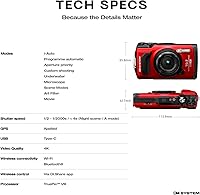
  • Waterproof Depth: Rated waterproof to 15 meters (50ft) without any additional housing or case required.
  • Shockproof Rating: Withstands drops from up to 2.1 meters (7ft) onto hard surfaces without damage to function or sealing.
  • Crushproof Rating: Built to survive static pressure of up to 100kgf (220lbf), protecting against accidental compression in bags or under gear.
  • Freezeproof Rating: Operates reliably in temperatures as low as -10°C (14°F), making it functional in alpine and winter environments.
  • Sensor: Features a 12MP, 1/2.3-inch back-illuminated CMOS sensor paired with the TruePic VIII image processor.
  • Lens Aperture: Bright F2.0 maximum aperture at the wide end, ranging to F4.9 at full 4x optical zoom (25–100mm equivalent).
  • Macro System: Variable macro system with 4 modes enables focusing as close as 1cm from the front of the lens.
  • Underwater Modes: Includes 5 dedicated underwater shooting modes: underwater snapshot, underwater wide, underwater macro, underwater HDR, and underwater microscope.
  • Video Capability: Records 4K (2160p) video in MOV format, with a 120fps high-speed mode for slow-motion footage and vertical video support.
  • Continuous Shooting: Capable of continuous shooting at up to 20 frames per second for capturing fast-moving subjects.
  • ISO Range: Native ISO sensitivity spans from 100 to 12800, with the TruePic VIII processor managing noise reduction across the range.
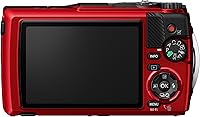
  • Display: Fixed 3-inch LCD screen with 1,037,000 dots of resolution for clear image review in outdoor conditions.
  • Connectivity: Equipped with Wi-Fi, Bluetooth, Micro HDMI, and Micro USB ports for wireless transfer, remote control, and wired output.
  • Memory Support: Single SD/SDXC memory slot supporting UHS Speed Class 3 or higher cards, required for smooth 4K video recording.
  • File Formats: Captures stills in JPEG and RAW formats with 12-bit depth, and records video in MOV format.
  • Autofocus System: Contrast-detection autofocus system with 9 active points, offering automatic AF-A mode and manual focus override.
  • Weight: Camera body weighs 9 ounces, keeping it genuinely pocketable for outdoor and travel use.
  • Battery Type: Powered by a rechargeable Lithium-Ion battery pack, included in the box with the camera body and accessories.
  • Shutter Speed: Shutter speed range runs from 1/2000 second at the fastest to 1/2 second at the slowest in standard modes.
  • Warranty: Covered by a 1-year manufacturer warranty, valid only when purchased from a US-authorized dealer for US warranty eligibility.

Related Reviews

OM SYSTEM Olympus TG-Tracker Action Camera
81%
91%
Build Quality & Durability
88%
4K Video Performance
94%
Waterproofing & Ruggedness
68%
Battery Life
85%
Portability & Size
More
ZEROXCLUB B3C 3-Camera Wireless Backup Camera System
76%
84%
Video Signal Reliability
83%
Image Quality
76%
Night Vision Performance
71%
Installation Experience
88%
Weather & Build Durability
More
OM System OM-1 Mark II with M.Zuiko 12-40mm f/2.8 PRO II
81%
93%
Autofocus Performance
91%
Weather Sealing & Durability
84%
Image Quality
71%
Autofocus in Low Light
92%
Lens Quality (M.Zuiko 12-40mm f/2.8 PRO II)
More
VECLESUS 7″ HD Backup Camera System
86%
89%
Image Quality
82%
Ease of Installation
90%
Night Vision Performance
94%
Weather Resistance (IP68)
85%
Overall Reliability
More
AMTIFO A23 7-Inch Backup Camera System
84%
92%
Image Clarity
88%
Night Vision Performance
91%
Ease of Installation
93%
Waterproof Durability
85%
Field of View
More
eRapta AY7 7-inch Backup Camera Kit
77%
83%
Image Clarity (Daytime)
71%
Night Vision Performance
91%
Ease of Installation
89%
Waterproof & Weather Resistance
62%
Monitor Mount Stability
More
Kairiyard 7-Inch Dual RV Backup Camera System
76%
83%
Daytime Image Quality
61%
Nighttime Visibility
91%
Signal Stability
87%
Dual-Channel Flexibility
78%
Monitor Display Quality
More
ATPTK 7-Inch 1080P AHD Backup Camera System
81%
93%
Camera Durability
91%
Vibration Resistance
88%
Image Clarity
79%
Night Vision Performance
74%
Monitor Build Quality
More
OM System E-M10 Mark IV
77%
83%
Image Quality
89%
Image Stabilization
86%
Build Quality & Design
71%
Autofocus Performance
68%
Video Capabilities
More
GKTZ Kids Waterproof Action Camera
79%
78%
Waterproofing Reliability
91%
Ease of Use for Kids
83%
Build Durability
61%
Image Quality
67%
Video Quality
More

FAQ

Yes, absolutely. The OM System Tough TG-7 Waterproof Camera is rated waterproof to 15 meters straight out of the box, so casual snorkeling and reef diving are well within its design limits. Just make sure the port covers are fully seated and locked before you get in the water.
Honest answer: it is largely the same camera with a new processor and the updated OM System branding. The sensor, lens, and physical body are unchanged. If your TG-6 is working well, the upgrade is hard to justify. If you are buying for the first time, the TG-7 is the better buy simply because it is current and supported.

You need a UHS Speed Class 3 (U3) or higher SD or SDXC card — anything slower will cause dropped frames or recording interruptions during 4K capture. A card rated V30 or above is a safe, reliable choice for this camera.

The variable macro system has four modes you cycle through, and yes, you do need to navigate into the shooting mode menu to select them. It is not a one-button shortcut, which can feel slow in the field. Once you learn the button sequence it becomes faster, but expect a short learning curve before it feels natural under pressure.

For most people, the answer is no — not a full day of active shooting. Battery life is one of the most consistently flagged limitations by real-world users. If you are planning a dedicated dive day or a long outdoor session, budget for a spare battery before your first trip. It is genuinely one of the most useful accessories you can buy alongside this camera.

It is the same engineering team and the same design lineage — the imaging division of Olympus was spun off into a separate company called OM Digital Solutions, which now sells cameras under the OM System brand. Nothing changed in how the cameras are designed or supported; it is purely a corporate restructuring. If you loved Olympus Tough cameras, this is their direct continuation.

On a dry land, well-lit shot, a current flagship smartphone will outresolve the TG-7 in terms of fine detail and dynamic range — the 1/2.3-inch sensor has real limits. Where this rugged compact pulls ahead is in conditions where a smartphone simply cannot go: submerged to 15 meters, dropped on a rock, or operating in freezing temperatures. It is a different tool for different situations, not a general-purpose image quality champion.

Yes, with some limitations. The OI.Share app connects via Wi-Fi and lets you use your smartphone as a remote viewfinder and shutter trigger, which works well from the surface when the camera is just below. At depth, the Wi-Fi signal will not penetrate the water reliably, so true remote control during a dive is not realistic.

It shoots in both RAW and JPEG, including simultaneously if you prefer. RAW files give you much more flexibility in post-processing for things like white balance correction, which matters particularly for underwater shots where color shifts significantly with depth.

It is genuinely well suited for that use case — the rugged build handles the kind of accidental drops and rough handling that happen with younger users, and the auto and scene modes are approachable enough that kids can get decent results without understanding manual settings. The macro modes also make it a natural fit for science fieldwork and specimen documentation, which teachers consistently call out as a real practical benefit.

Where to Buy