Overview

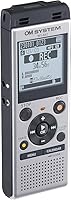
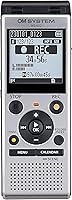
The OM System WS-882 Digital Voice Recorder carries on a long tradition of reliable audio capture from a brand that has been in the recording space for decades. Now operating under the OM System name after Olympus's restructuring, this compact recorder sits comfortably in the mid-range tier — solid enough for daily professional use without the premium price tag of broadcast-grade equipment. It's genuinely pocket-sized, with a slim pen-like build that slips into a shirt pocket without a second thought. Power comes from two standard AAA batteries, which means you're never hunting for a proprietary charger or a specialty cable in a pinch.
Features & Benefits

Where this voice recorder earns its keep is in the recording format options. You get Linear PCM recording for lossless audio — ideal when you need every nuance of a conversation captured faithfully — and MP3 for when storage efficiency matters more than raw fidelity. The internal 4GB memory handles most use cases, and adding a flash card bumps that to 32GB. In compressed mode, you're looking at over a thousand hours of recording time, a staggering figure for fieldwork or archiving. USB Direct means plugging straight into a laptop transfers files immediately, and variable playback speed proves genuinely useful when transcribing dense recorded material afterward.

Best For

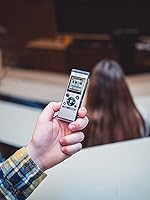
Students are the obvious fit — recording a two-hour lecture and offloading it to a laptop afterward is exactly what this compact recorder does well. Journalists and researchers will appreciate the PCM option during interviews, where audio quality directly affects transcription accuracy. It's also a practical choice for professionals who sit through a lot of meetings and want a discreet, dedicated recording device rather than propping up a phone on the table. Travelers who need a reliable backup for spontaneous audio notes will find the standard AAA battery format reassuring. Anyone relying solely on a smartphone should weigh whether the WS-882 offers better consistency and less friction.

User Feedback

Buyers using this voice recorder for lectures and interviews tend to be satisfied with audio clarity in PCM mode, often noting it sounds noticeably cleaner than smartphone recordings in quiet rooms. Battery life generally matches advertised claims, which is a real confidence booster for extended fieldwork. That said, some buyers — particularly those new to standalone recorders — find the menu navigation a bit fiddly initially, with button placement requiring a short adjustment period. A recurring concern involves the built-in microphone struggling in noisier settings, picking up more ambient sound than expected. Build quality feedback leans positive overall, though a few long-time Olympus WS-series users occasionally note a preference for the feel of older models.

Pros

  • Linear PCM recording captures voice with impressive clarity in quiet environments, making transcription much easier.
  • Standard AAA batteries mean you can find a replacement virtually anywhere — no proprietary charging required.
  • The slim, pen-sized body fits in a shirt pocket and does not draw attention during meetings or interviews.
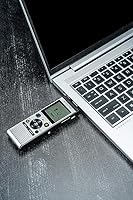
  • USB Direct lets you plug straight into a laptop for instant file transfer without hunting for a separate cable.
  • Variable playback speed is a genuine time-saver when reviewing or transcribing long recorded sessions.
  • Internal storage pairs with expandable flash memory, giving flexible capacity for short or extended recording assignments.
  • Individual file erase prevents accidental bulk deletion — a small but important safeguard for important recordings.
  • File index marking lets you flag key moments during a live recording without interrupting the session.
  • Battery life in real-world conditions tracks closely with advertised figures, which is not always guaranteed in this category.
  • The OM System brand heritage brings decades of recorder engineering credibility that newer generic alternatives simply cannot match.

Cons

  • Background noise handling is weak — the microphone picks up ambient clutter in any moderately busy environment.
  • Menu navigation has a noticeable learning curve, especially for first-time standalone recorder users.
  • Closely spaced buttons on the slim body are easy to mis-press, particularly for users with larger hands.
  • USB 2.0 transfer speeds feel dated when moving large Linear PCM files to a computer regularly.
  • No precise battery level indicator makes it hard to gauge how much recording time remains mid-session.
  • On-device file management becomes cumbersome with large libraries; most users end up organizing files on a PC instead.
  • Playback scrubbing within long recordings is tedious without a visual timeline or accurate timestamp display.
  • The plastic casing, while functional, does not match the perceived solidity of older Olympus WS-series predecessors.
  • No wireless or Bluetooth transfer option means you are always tethered to a cable for file offloading.
  • Microphone sensitivity is not adjustable enough to compensate well for varied room acoustics or recording distances.

Ratings

The OM System WS-882 Digital Voice Recorder has been scored by our AI system after processing verified buyer reviews from around the world, with spam, bot activity, and incentivized feedback actively filtered out. The result is a balanced, honest snapshot of what real users — students, journalists, field professionals, and everyday recorders — actually experience. Both the standout strengths and the genuine friction points are reflected in every score below.
Audio Clarity (PCM Mode)
88%
In quiet, controlled environments like lecture halls or one-on-one interviews, the Linear PCM recording mode consistently draws praise for capturing voices with impressive fidelity. Users transcribing interviews report significantly fewer drop-outs and muffled passages compared to smartphone recordings made in similar conditions.
The quality advantage narrows noticeably once ambient noise enters the picture. In busier environments — a café, an open-plan office, or outdoor fieldwork — the built-in microphone picks up background sounds more aggressively than some users expect at this price tier.
Background Noise Handling
63%
37%
For users recording in quiet rooms or controlled settings, background noise is largely a non-issue. Several buyers note that voice isolation during sit-down interviews holds up well when the recorder is placed directly on a desk close to the speaker.
This is one of the more frequently flagged weaknesses. The built-in microphone lacks advanced noise filtering, so recordings in moderately noisy spaces — classrooms, hallways, outdoor events — can end up with distracting ambient clutter that complicates later transcription or playback.
Battery Life
84%
Running on two standard AAA batteries is a practical choice that users genuinely appreciate, especially during travel or fieldwork where specialty chargers are inconvenient. Most buyers confirm that real-world battery performance tracks closely with the advertised figures, which is not always a given with smaller electronics.
Heavy users relying on MP3 mode for continuous long-session recording occasionally note faster drain than expected. There is also no battery percentage indicator precise enough to give confident advance warning before power cuts out during an active recording session.
Ease of Use
74%
26%
For users with any prior experience with Olympus or similar recorders, setup and daily operation feel intuitive almost immediately. Non-technical users who just need to press record and go — students, in particular — tend to get comfortable with the core functions within a day or two.
First-time recorder buyers frequently mention a learning curve with the menu system and button layout. The controls are compact by necessity given the slim form factor, but that means some buttons feel closely spaced and easy to mis-press, especially for users with larger hands.
Build Quality & Durability
77%
23%
The WS-882 feels solid for its weight class — at under 3 ounces, it does not feel flimsy or hollow. Buyers who have carried it daily in a bag or pocket for several months generally report no significant wear or structural issues.
Some long-time users of older Olympus WS-series models note a slight regression in perceived build solidity compared to their previous devices. The plastic casing, while acceptable, does not inspire the same confidence as more premium metal-bodied competitors at a higher price point.
Portability & Form Factor
91%
The pen-like dimensions make this one of the more genuinely pocketable recorders available. It disappears into a shirt pocket, slips into a jacket, or fits alongside a pen in a bag without taking up meaningful space — a real advantage for buyers who need to carry it all day.
The very slim profile that makes it so portable also means there is limited surface area for controls, which contributes to the button placement complaints. A slightly wider body might have resolved the ergonomic tension between compactness and usability.
Recording Format Flexibility
86%
Having both Linear PCM and MP3 available in a single device gives users the ability to match format to situation — lossless for important interviews, compressed for long passive recordings or archiving. This dual-format support is a meaningful practical advantage over recorders locked to a single format.
The lack of additional format options or adjustable bit-rate settings for MP3 means advanced users have less granular control than they might want. Buyers accustomed to higher-end recorders with more encoding options may find the format menu a bit sparse.
Storage & Memory
82%
18%
The combination of 4GB internal storage plus support for external flash memory up to 32GB gives the WS-882 a genuinely flexible storage setup. For most use cases — even extended multi-day fieldwork — running out of space is rarely a real concern.
The 4GB base internal memory, while functional, feels modest by current standards. Users who forget to bring an additional memory card and rely solely on internal storage during a long assignment could find themselves managing files more actively than they would like.
USB Connectivity & File Transfer
83%
USB Direct is one of those features that sounds minor but proves useful consistently. Plugging the recorder directly into a laptop without hunting for a separate cable or adapter saves small amounts of friction that add up over daily use. Most users report fast, reliable transfers.
USB 2.0 rather than the faster USB 3.0 standard means transfers of large PCM files take slightly longer than they would on newer hardware. It is not a dealbreaker, but buyers who record in high-quality PCM mode frequently will notice the wait.
Playback Controls
78%
22%
Variable playback speed is a feature that earns consistent appreciation from users who transcribe their recordings. Being able to slow audio down without pitch distortion is a practical time-saver, and volume adjustment during playback adds useful flexibility for different listening environments.
The playback interface itself is functional but not refined. Navigating within a long recording to find a specific moment takes more button presses than it should, and the absence of a visual waveform or timestamp display makes precise scrubbing somewhat tedious.
File Management
71%
29%
The ability to add index markers during recording and erase individual files rather than wiping entire folders reflects thoughtful design for real-world use. Index marking in particular is useful for journalists flagging key moments during a long interview without interrupting the session.
The overall file management interface feels dated compared to smartphone apps or newer competing recorders. Organizing, renaming, or sorting large numbers of files on-device becomes cumbersome, and most users default to managing files on a connected PC rather than handling it on the recorder itself.
Microphone Sensitivity
67%
33%
In close-range recording situations — a recorder placed on a desk during a meeting, or held near a speaker — the built-in microphone captures clear, intelligible audio without the user needing to adjust settings or get technically involved.
The microphone sensitivity is not highly adjustable, which limits how well the recorder adapts to varied acoustic environments. Users recording at a distance, in large rooms, or in settings with reflective surfaces report that audio can sound thin or echo-laden without any good remedy available on-device.
Value for Money
79%
21%
At its mid-range price point, the WS-882 delivers a feature set that justifies the cost for users who need a reliable, dedicated recorder rather than just a phone app. The OM System brand heritage adds a layer of trust that newer generic alternatives cannot easily match.
The competition at similar price points has intensified. A few buyers note that some newer alternatives offer comparable or better noise handling for similar money, making the WS-882 a strong but no longer uncontested choice in its tier.
Headphone Monitoring
72%
28%
The 3.5mm headphone jack enables direct audio monitoring during playback, which journalists and interviewers find useful for quickly reviewing a recording immediately after capture. Standard earbuds work fine, so there is no need for specialized accessories.
Live monitoring during active recording is not well-supported, limiting real-time audio checks while a session is running. Users accustomed to recorders with full monitoring capability will feel this gap, particularly during fieldwork where checking levels mid-session matters.

Suitable for:

The OM System WS-882 Digital Voice Recorder is a strong fit for anyone who needs a reliable, dedicated audio capture device without the complexity or cost of professional broadcast equipment. Students are probably the most natural audience — recording a two-hour lecture, slipping the recorder into a pocket, and offloading files to a laptop afterward is exactly the workflow this device is built around. Journalists and researchers conducting interviews will appreciate the Linear PCM mode, which captures voice with enough fidelity to make transcription noticeably easier and more accurate. Professionals who sit through dense meetings and want a discreet, purpose-built recorder rather than a propped-up phone will find the slim form factor and long battery life practical advantages. It also suits travelers and field workers who value the peace of mind that comes with standard AAA batteries — no proprietary charging cables to forget, no dead device in a location where a USB outlet is not guaranteed.
Not suitable for:

Buyers expecting broadcast-level audio quality or advanced acoustic management will likely find the OM System WS-882 Digital Voice Recorder falling short of their standards. The built-in microphone, while competent in quiet environments, does not include meaningful noise filtering, which makes it a questionable choice for anyone regularly recording in loud or acoustically challenging spaces like crowded events, outdoor venues, or busy offices. Audio professionals or podcasters who need adjustable gain controls, XLR inputs, or external microphone flexibility should be looking at a different class of device entirely. Users who are deeply embedded in smartphone ecosystems and expect the intuitive touch-based interface of a modern app will find the physical button layout and menu system old-fashioned and somewhat fiddly to navigate. Anyone primarily looking for wireless connectivity, Bluetooth transfer, or cloud sync functionality will also come away disappointed, as this compact recorder stays firmly in the wired, standalone tradition.
Specifications

  • Brand: Manufactured by OM System, the rebranded successor to Olympus, a company with decades of experience in audio recording hardware.
  • Model: Model designation is WS-882, part of the long-running WS-series line of compact digital voice recorders.
  • Dimensions: The recorder measures 4.39″ long by 1.54″ wide by 0.71″ deep, giving it a slim, pen-like profile.
  • Weight: The device weighs 2.72 ounces (77 grams), light enough to carry all day in a pocket without any noticeable bulk.
  • Recording Formats: Supports Linear PCM for lossless, high-fidelity audio capture and MP3 for compressed, storage-efficient recordings.
  • Internal Memory: Comes with 4GB of built-in internal storage for recordings, accessible immediately out of the box.
  • Expandable Storage: Accepts external flash memory cards, allowing total storage to be extended up to 32GB for extended or high-quality recording sessions.
  • Max Recording Time: In the most compressed recording mode, the device supports up to 1,040 hours of total recording time using internal memory.
  • Microphone: Features a built-in microphone integrated directly into the body of the recorder, requiring no external microphone for standard use.
  • Headphone Jack: Includes a 3.5mm headphone output port for direct audio monitoring and playback review through standard earphones.
  • Connectivity: Uses USB 2.0 Direct, allowing the recorder to plug straight into a laptop or PC for file transfer without a separate cable or adapter.
  • Compatible Devices: Designed for use with Windows and Mac laptops and desktop computers for file management and audio transfer.
  • Power Source: Powered by 2 AAA batteries, which are included in the box, with no proprietary charging method required.
  • Playback Controls: Offers variable playback speed adjustment and volume control, making it practical for transcription and detailed audio review.
  • File Management: Supports index marking to flag moments within a recording and allows selective erasure of individual files without deleting entire folders.
  • Audio Output: Playback volume is adjustable directly on the device, suitable for use with the built-in speaker or connected headphones.

Related Reviews
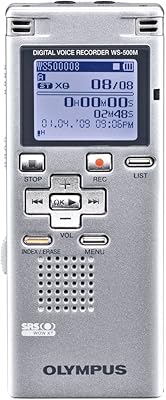
OM Digital Solutions WS-500 Digital Voice Recorder
81%
94%
Battery Life
91%
Ease of Use
78%
Sound Quality
96%
Recording Time
85%
Portability
More
OM SYSTEM VN-541PC
OM SYSTEM VN-541PC
77%
93%
Ease of Use
71%
Audio Recording Quality
68%
Noise Cancellation
84%
Battery Life
62%
Build Quality & Durability
More
Olympus WS-883 Digital Voice Recorder
84%
91%
Sound Quality
95%
Portability
63%
Battery Life
85%
Ease of Use
90%
Recording Time
More
OM SYSTEM Olympus DM-720 Voice Recorder
85%
94%
Audio Quality
91%
Portability
89%
Ease of Use
86%
Battery Life
84%
Build Quality
More
EVIDA 64GB Digital Voice Recorder
84%
88%
Recording Quality
79%
Battery Life
91%
Ease of Use
70%
Voice Activation Functionality
85%
Noise Reduction Performance
More
ZIPCIDE 64GB Digital Voice Recorder
84%
85%
Audio Quality
92%
Battery Life
88%
Noise Reduction Effectiveness
90%
Portability
65%
Voice Activation Sensitivity
More
Vormooi O1 160GB Digital Voice Recorder
78%
93%
Battery Life
88%
Storage Capacity
81%
Audio Recording Quality
67%
Noise Reduction Performance
84%
External Microphone Usefulness
More
Wucotc Z1 264GB Digital Voice Recorder
75%
71%
Audio Clarity
93%
Storage Capacity
84%
Battery Life
82%
Ease of Use
76%
Build Quality & Portability
More
MDalong P10 128GB Digital Voice Recorder
75%
78%
Audio Recording Quality
67%
Transcription Accuracy
61%
Simultaneous Interpretation
91%
Portability & Form Factor
88%
Magnetic Attachment
More
Xelarvex 64GB Voice Recorder
77%
83%
Audio Clarity
71%
Noise Cancellation
91%
Battery Life
78%
Voice-Activated Recording
94%
Storage & Capacity
More

FAQ

It works with both. The recorder connects via USB Direct and is recognized as a standard storage device on both Windows and Mac systems, so you can drag and drop files without installing any special software in most cases.

The WS-882 supports external flash memory cards to bring total storage up to 32GB. You will want to check the user manual for the exact supported card formats, but standard microSD or SD cards in the supported capacity range are typically compatible.

In quiet environments — a classroom, a meeting room, a sit-down interview — the Linear PCM mode produces noticeably cleaner, more stable audio than most smartphone recordings. The dedicated hardware and fixed microphone placement tend to reduce handling noise and interference. That said, in noisy environments, the gap narrows considerably since this recorder lacks advanced noise filtering.

It is reasonably straightforward once you spend some time with it, but there is a short adjustment period. The physical button layout can feel a bit cramped for first-time users, and the menu navigation is more traditional than what you get with a touchscreen app. Most people feel comfortable with core functions within a day or two of regular use.

Most users report that battery life in real-world conditions holds up well and roughly matches the advertised figures. For everyday use cases like lecture recording or interview capture, a fresh pair of AAA batteries will typically carry you through multiple sessions before needing replacement.

Yes, the 3.5mm headphone jack lets you monitor playback directly through standard earbuds or headphones. It is a handy way to quickly review a recording on the spot without transferring files first.

The device does not overwrite existing files automatically. The selective erase function lets you delete individual files deliberately, so accidental bulk deletion is not a typical risk. That said, it is always a good habit to transfer important recordings to a computer promptly as a backup.

The compact recorder does have a small built-in speaker for playback, so you can listen back without headphones in a pinch. The speaker is modest in output and quality given the size of the device, so headphones are the better option for careful review or transcription work.

Basic recording mode adjustments are available through the menu, but the microphone sensitivity controls are relatively limited compared to more advanced field recorders. There is no real-time gain display or precise level metering, which means you have less control in unpredictable acoustic environments.

The WS-882 was introduced in early 2023 under the OM System brand following Olympus's restructuring, so it is a current-generation product with active availability. OM System has continued supporting the WS-series lineup, though it is always worth checking the manufacturer site for the latest firmware or documentation updates.